5 min read

The Husband Who Staged Adultery to Keep Her Dowry

A tired husband and his friend staged a false affair so he could keep her dowry. A sharp disciple broke their stories apart in court.

Curated by Arthur · Told by Maggid ·
Table of Contents
  1. The Dowry That Would Not Leave
  2. Two Stories That Would Not Match
  3. When the Witness Refuses the Oath
  4. Justice for the Needy in Deeds
  5. What the Court Leaves Standing

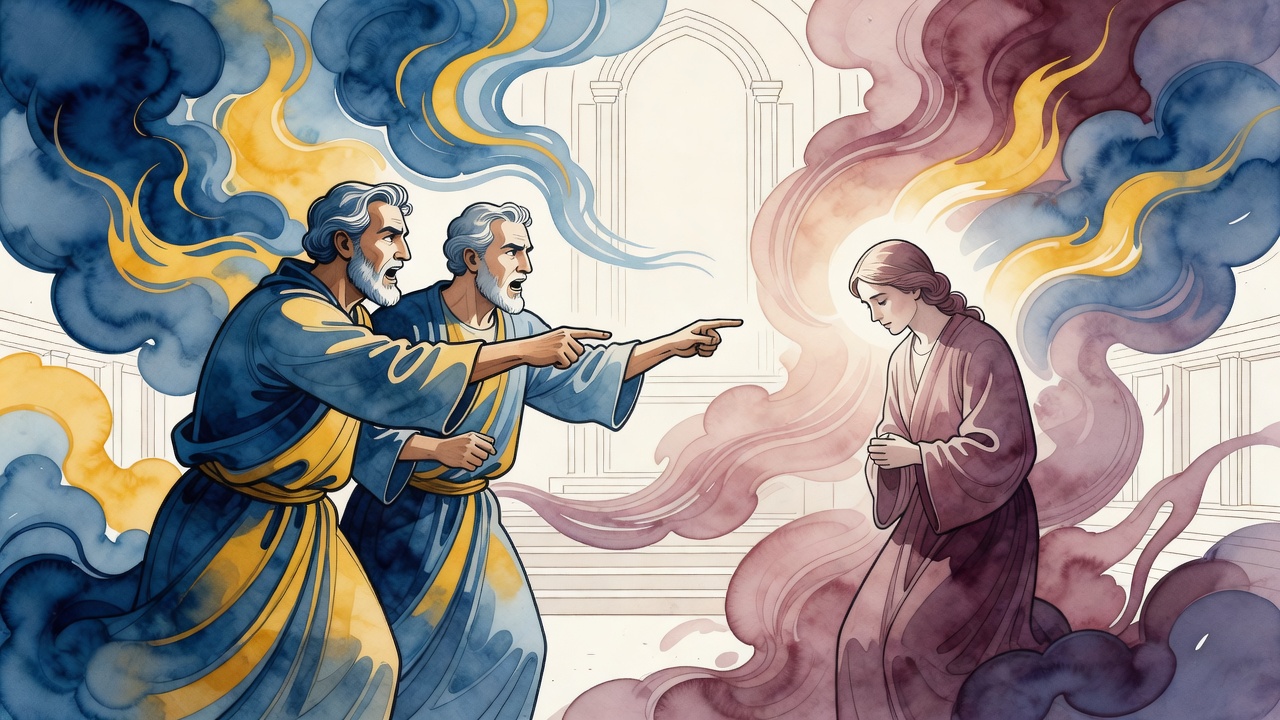
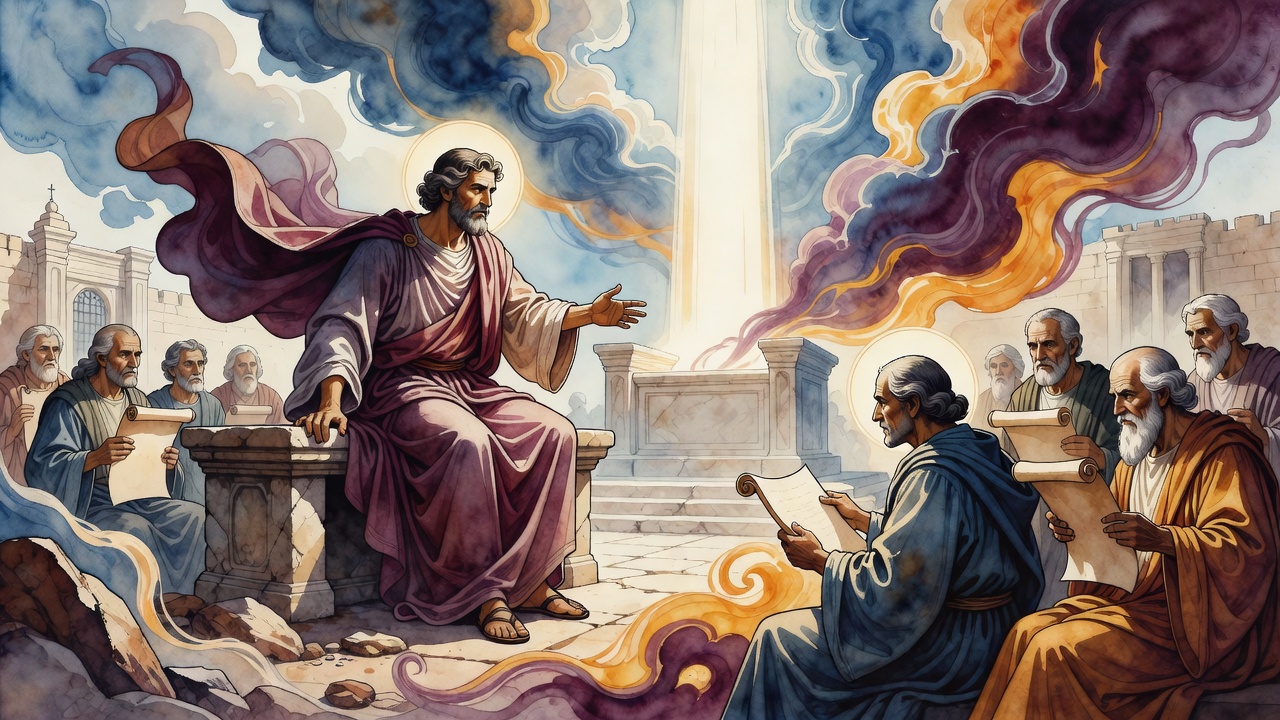
The husband waited until the market was loud enough to hide a lie. He raised his voice so the fruit sellers and the cloth merchants would hear. His wife, he said, had been alone with another man. The other man was his best friend, standing a few paces off with a carefully blank face. By evening the town had a story, and the wife sat behind a shut door while her name walked the streets without her.
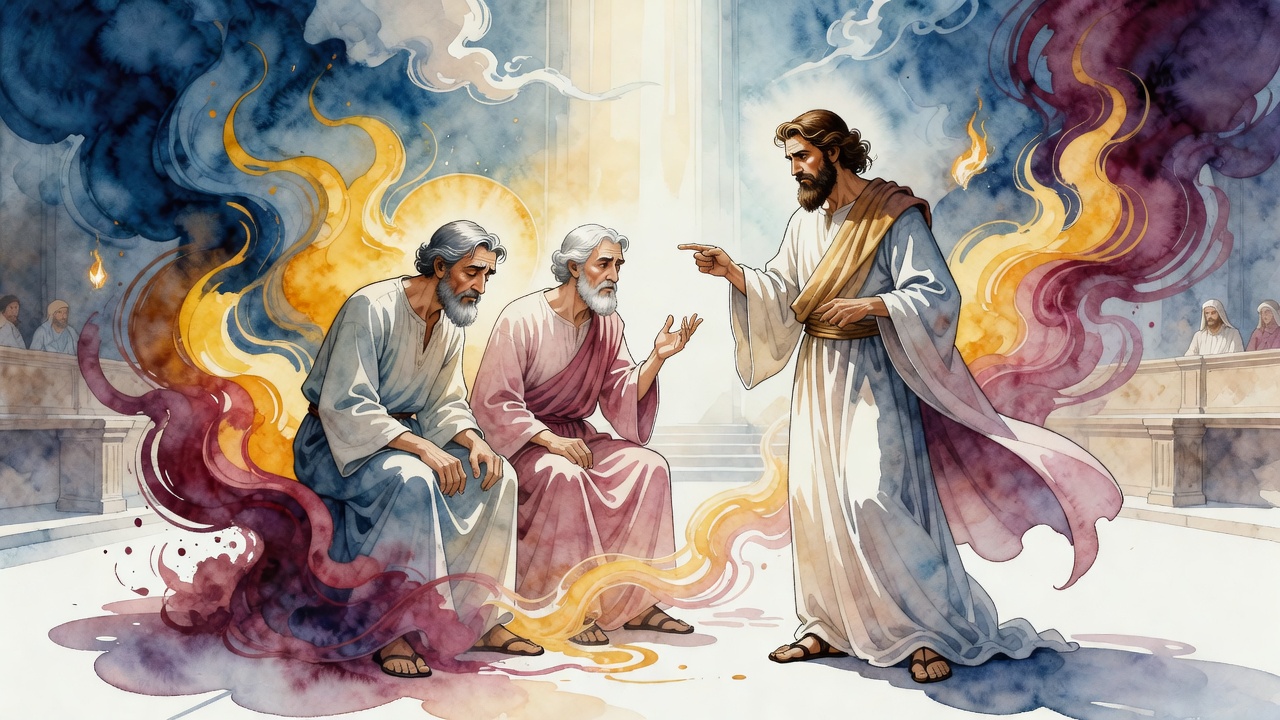
The Husband Who Staged Adultery to Keep Her Dowry Click for full size

The Dowry That Would Not Leave

He had grown tired of a wealthy wife. Divorce without scandal would force him to return the full bridal gift. An accusation of unfaithfulness, if it stuck, could cut that rope. The friend agreed to play the lover. They chose times and places and rehearsed them once, then again, until the words felt almost true in the mouth.

She did not know the plot. She only knew the market had turned. Women who had borrowed her salt now looked past her shoulder. The case reached the court, and the husband arrived with the calm of a man who thinks paper and witnesses will do the rest.

Two Stories That Would Not Match

Among the judges sat a young disciple from the school of Shammai, trained to notice the seam in a claim. He separated the two men. He asked for the hour, the place, the light on the wall. The husband said dusk in a garden. The friend said noon on a rooftop. The garden had no rooftop, and noon does not wear dusk's clothes.

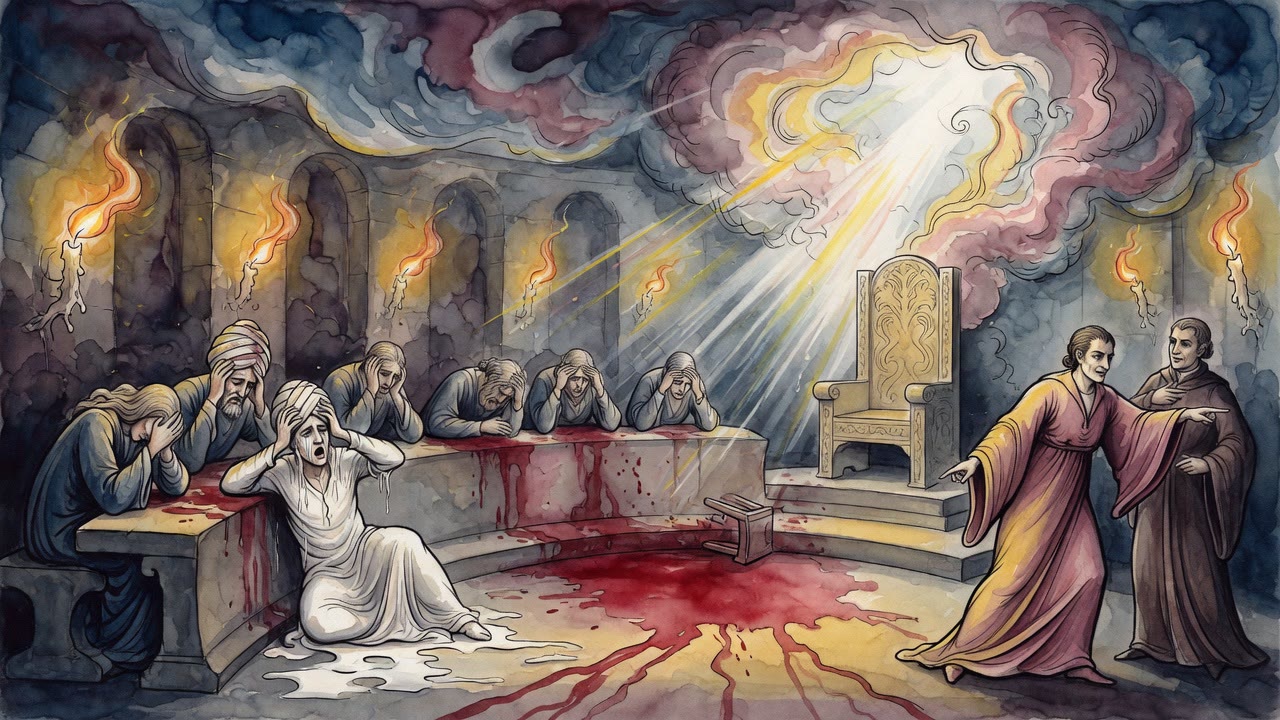
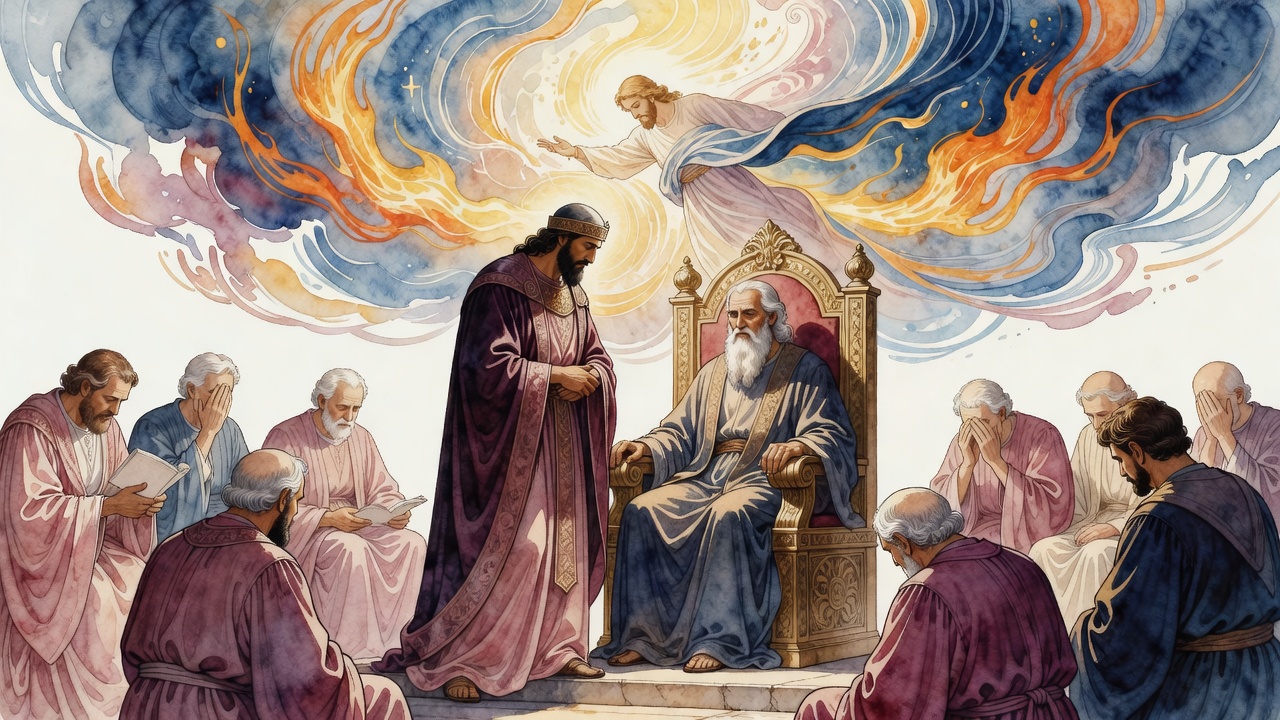
He pressed again. Who entered first? Who left last? What was said? The answers frayed. The disciple of Shammai set the contradictions before the full court like two cracked jars. The husband's plot collapsed in the open. The wife was declared innocent. Her honor returned harder than it had left. The husband had to restore the full dowry and pay damages for the shame he had cast.

When the Witness Refuses the Oath

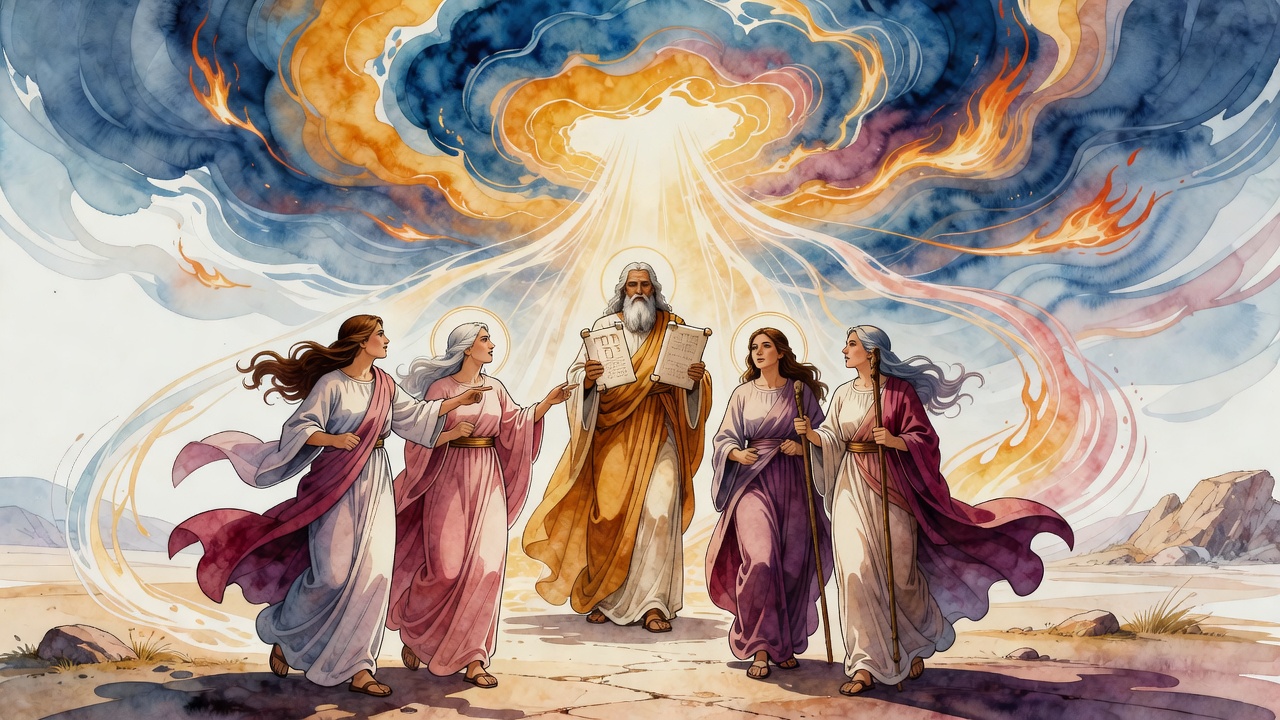
Elsewhere the law remembers another pressure on a mouth. A person who hears an adjuration and withholds testimony stands under a different kind of fire. The Holy One says, if you will testify, testify; if you will not, I Myself stand as witness. Heaven does not shrug when a voice that knows the truth chooses silence. The courtroom on earth and the court above both hunt the same thing: a word that matches what happened.

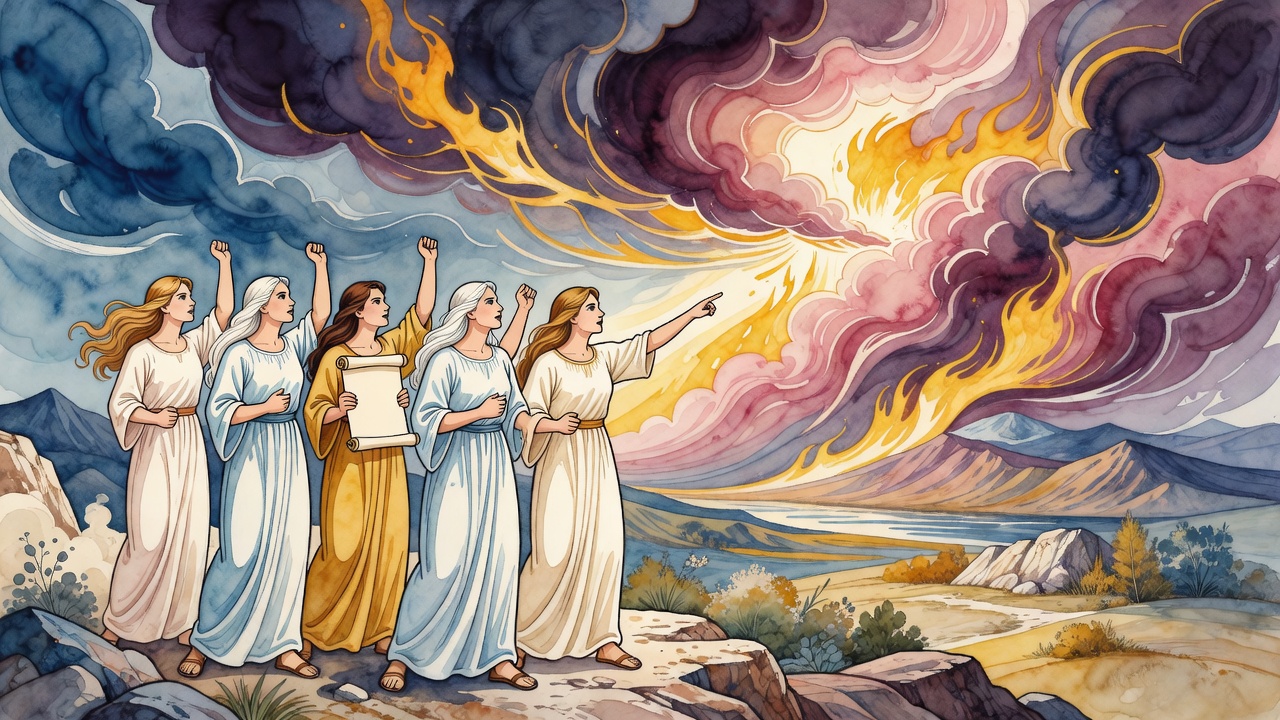
False speech and withheld speech both twist the scales. The husband spoke too much. Another sinner may speak too little. Either way, a body under accusation waits for a sentence that will not come clean without honest mouths.

Justice for the Needy in Deeds

The Torah already forbids twisting judgment for rich or poor. Then it adds a sharper warning about "your needy one." The sages hear not only empty pockets but empty deeds: a known scoundrel before the bench. The honest judge feels the pull. This man is bad; the other looks upright; lean the verdict. The verse forbids it. A man poor in character still owns the truth of his claim. Steal that truth on a hunch and you have perverted justice as surely as if gold changed hands.

In the market case the wife was not a sinner of deeds. She was only wealthy and inconvenient. The law that protects the scoundrel's true claim protects her true name as well. Character is not evidence. Reputation is not a garden at dusk.

What the Court Leaves Standing

When the disciple finished, the friend would not meet the husband's eyes. The wife walked home through the same market that had chewed her. Some faces still turned away. Shame moves slower than a verdict. Still the court had done its work. The dowry returned. The extra payment for shame sat in her hands like a second name, written properly this time.

The old collections keep the tale beside other false charges of unfaithfulness, the kind that can bury a person while the accuser counts coins. One sharp questioner, two mismatched hours, and a lie that could not share a single noon.

Before the market plot, he had counted the dowry in private, piece by piece, the way a thief counts another house. Gold weight. Land rights. The silver that had arrived with her on the wedding week. He told himself he was reclaiming what marriage had trapped. The friend only asked for a share of silence and a little of the silver later. They drank once to seal it and did not drink again, afraid the second cup would make them honest.

On the day of judgment the wife stood without jewelry. She had taken it off so no one would say she came to dazzle the court. The disciple of Shammai watched her hands, not her face. Steady. Empty. He watched the husband's hands next. They kept finding the edge of his cloak and worrying it. Liars often invent a garden. Bodies invent less well.

When the damages were named, a murmur moved the benches. Shame has a price in this court. Not only return of property, but payment for the public wound. The friend left by a side door. The husband stayed long enough to hear the full sentence, then walked into a street that already knew. False accusation is a fire. Once lit, it burns the arsonist as readily as the neighbor's field.


← All myths

From the tradition

Sources

3 sources

The texts behind this telling. Some cards carry a translation of the source; others are our own retelling of it, and each card says which. Every card links out to the original.

Exempla of the Rabbis, No. 74Exempla of the Rabbis (Gaster, 1924)

Retold in our words. Read the original at the link below.The Exempla of the Rabbis, Moses Gaster (1924) · Public Domain

Gaster's Exempla lists tale 74, "Accusation of Unfaithfulness Disproved," pointing to Gittin 27a and Midrash HaGadol on Genesis Vayyesheb (Cod. G. 184, No. 189).

The original is a bibliographic index card, not the narrative of the accusation itself.

Full source
Mekhilta DeRabbi Shimon Ben Yochai 23:6Mekhilta DeRabbi Shimon Ben Yochai

Translation of the source text.Mechilta de-Rabbi Simon b. Jochai, ed. D. Hoffmann, Frankfurt 1905 · Public Domain

"You shall not pervert the judgment of your needy one" (Exodus 23:6). Why do I need this? Has it not already been said, "You shall not pervert judgment" (Deuteronomy 16:19), whether of poor or rich? What then does "You shall not pervert the judgment of your needy one" teach? This is one who is needy in commandments [poor in good deeds]. You should not say: he is wicked, his presumption is that he lies, and this other man's presumption is that he does not lie; let me pervert the judgment against him. Therefore Scripture teaches, "You shall not pervert the judgment of your needy one."

Another interpretation: "the judgment of your needy one" you may not pervert, but you may incline the judgment of another. From here they said: an Israelite and a gentile who came to judgment, if Israel has the right under our law, we judge for him by our law and tell him, "This is our law"; and if Israel has the right under the laws of the nations, we judge for him by their laws and tell them, "This is your law."

Full source
Midrash Tanchuma Buber, Vayikra 15:1Midrash Tanchuma Buber, Vayikra

Translation of the source text.Midrash Tanchuma (Buber), Public Domain, on Sefaria · CC-BY-SA

"If a soul sins and hears the voice of an adjuration [and he is a witness, or has seen, or has known]" (Leviticus 5:1). The Holy One, blessed be He, said: If you wish to testify, testify; and if not, I Myself testify, as it is said, "and he is a witness." And whence do we know that the Holy One, blessed be He, is called a witness? As it is said, "And I am the One who knows and a witness, says the Lord" (Jeremiah 29:23).

Come and see: in all the sections written in this book the word "unintentional error" (shegagah) is written, except for this section, in which "unintentional error" is not said. Concerning him Solomon said, "Do not let your mouth bring your flesh into sin [and do not say before the angel that it was an unintentional error]" (Ecclesiastes 5:5). A parable: it is like two who pelted an image (ikonin) of the king, one drunk and one in his right mind. The two of them were seized and brought up to the tribunal (bima); and a verdict (apophasis) was given against the one in his right mind, and the drunk one was released. So too: everyone who sins, "unintentional error" is written concerning him: "If a soul sins by unintentional error" (Leviticus 4:2, etc.); "And if the whole congregation of Israel errs" (Leviticus 4:13). And all of them, because they sin by unintentional error, bring an offering and it is forgiven them, as it is said, "And it shall be forgiven to all the congregation of the children of Israel, and to the stranger who sojourns among them, for it happened to all the people by unintentional error" (Numbers 15:26). But the blasphemer receives a verdict (apophasis), as it is said, "And he who blasphemes the name of the Lord shall surely be put to death" (Leviticus 24:16).

[And it is written:] "And you shall swear, 'As the Lord lives,' in truth, in justice, and in righteousness [and nations shall bless themselves by Him, and by Him shall they glory]" (Jeremiah 4:2). And the Scripture says, "The Lord your God you shall fear, and Him you shall serve, and to Him you shall cleave" (Deuteronomy 10:20), and afterward, "and by His name you shall swear." "The Lord your God you shall fear", that you be like those three of whom it is written "fearing God." Of Abraham it is written, "for now I know that you fear God" (Genesis 22:12). And of Joseph it is written, "I fear God" (Genesis 42:18). And of Job it is written, "fearing God and turning away from evil" (Job 1:2). "And Him you shall serve", that you be occupied with Torah and with the commandments. "And to Him you shall cleave", that you honor the disciples of the wise and benefit them from your possessions. Moses said to Israel: Do not suppose that perhaps I have permitted you to swear by My name even in truth; rather, if all these qualities are in you, you are permitted to swear by My name, and if not, you are not permitted to swear by My name even in truth. Do not be like those of whom it is written, "swearing falsely and offering incense to Baal" (Jeremiah 7:9). Fulfill all these qualities, and afterward you are Mine, as it is said, "If you return, O Israel, says the Lord, return to Me," and afterward, "and you shall swear, 'As the Lord lives'" (Jeremiah 4:1-2).

Full source