Parshat Yitro5 min read

Twenty-Three Judges Refused a Majority of One

In a capital court the young spoke first, acquittal needed only one extra voice, and death demanded a majority of two so life could lean.

Curated by Arthur · Told by Maggid ·
Table of Contents
  1. The Young Speak First
  2. Majority of Two
  3. What a Judge May Not Do
  4. The Count Prefers Breath

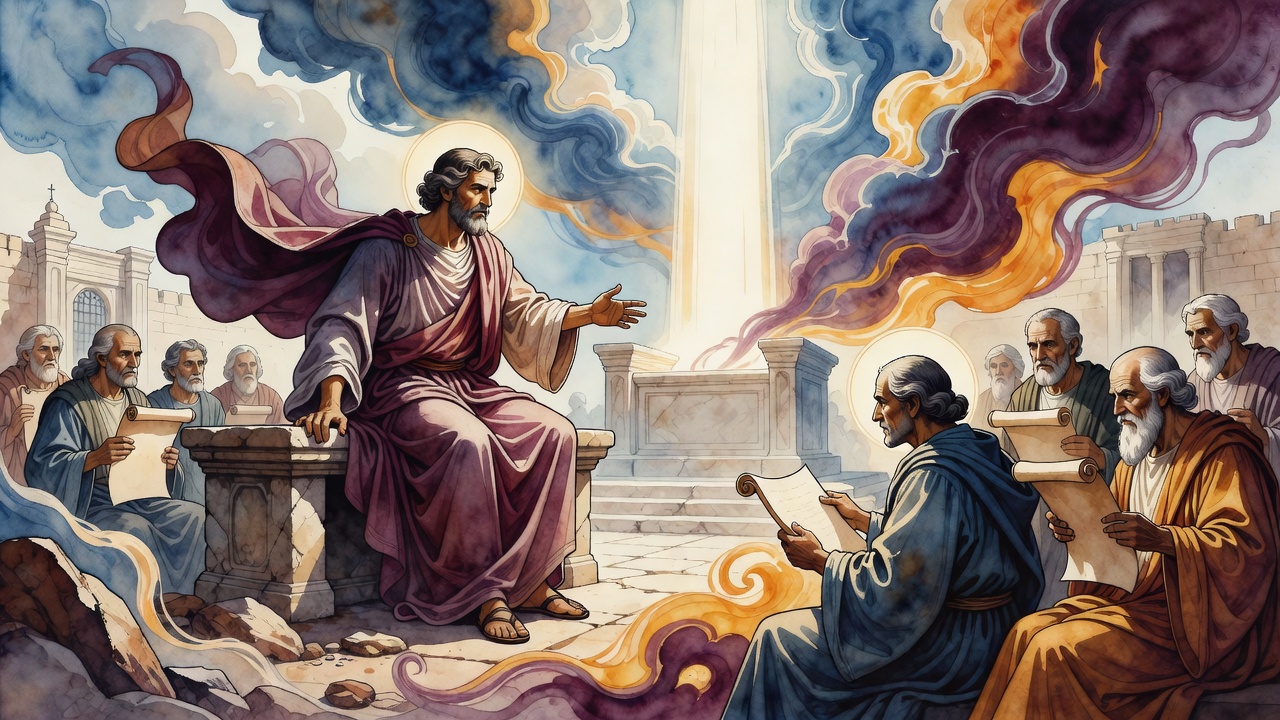
The accused man sat where every eye could count his breaths. Twenty-three judges faced him, and the youngest was told to speak first. An elder's voice can bend a room. A young judge must empty his mind before famous mouths begin.
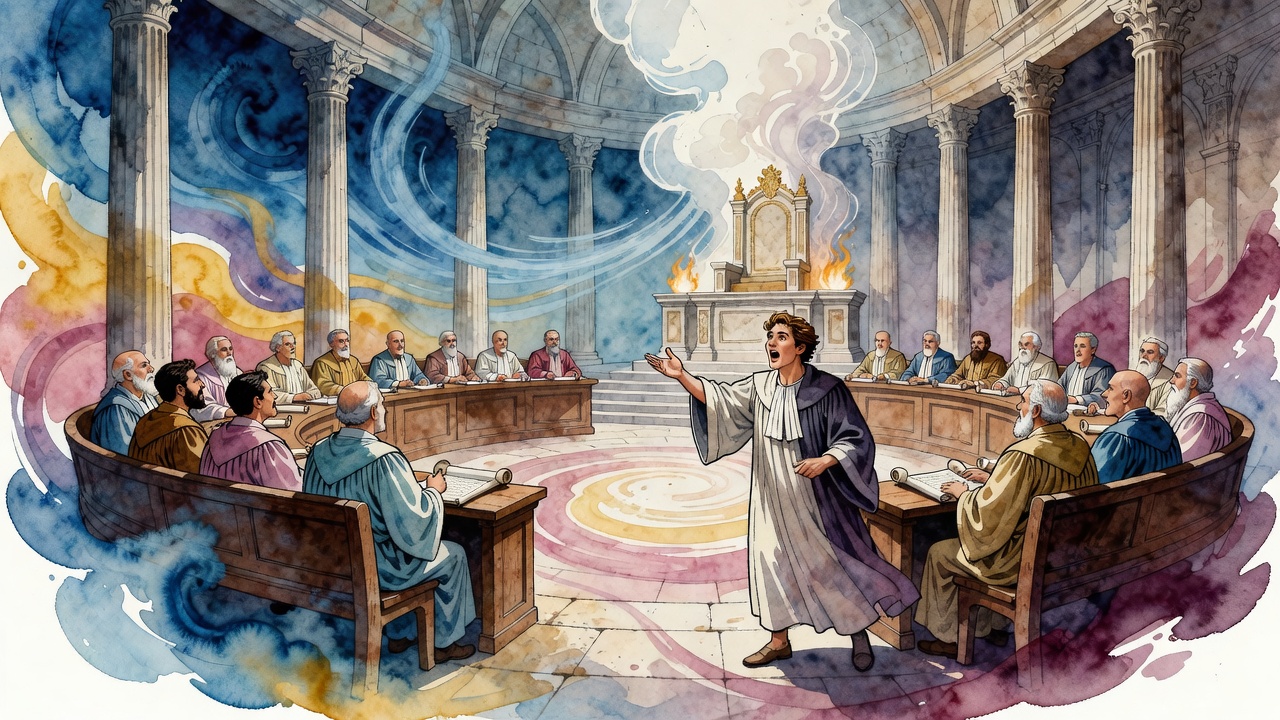
Twenty-Three Judges Refused a Majority of One Click for full size

"You shall not follow the majority to do evil." From that clause the sages built a court that refuses to kill on a shrug.

The Young Speak First

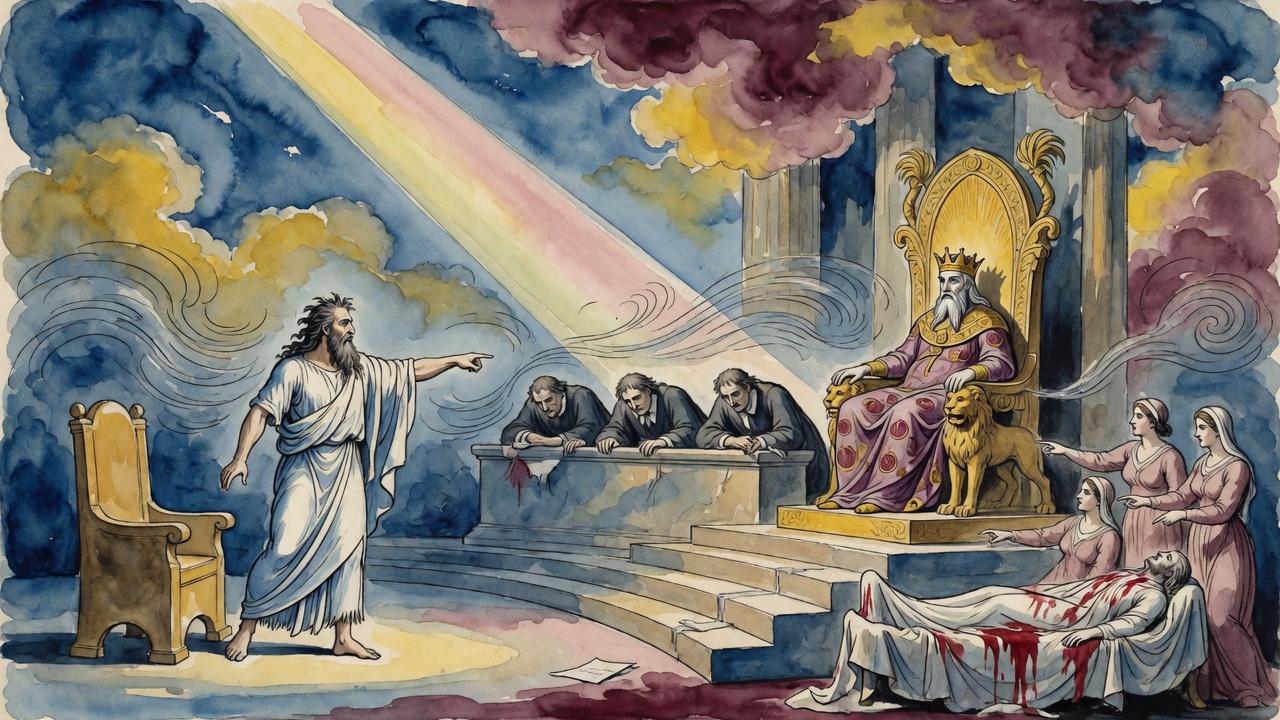
The man's hands were bound. His eyes moved from face to face looking for a door. The law had already built the door into the count itself.

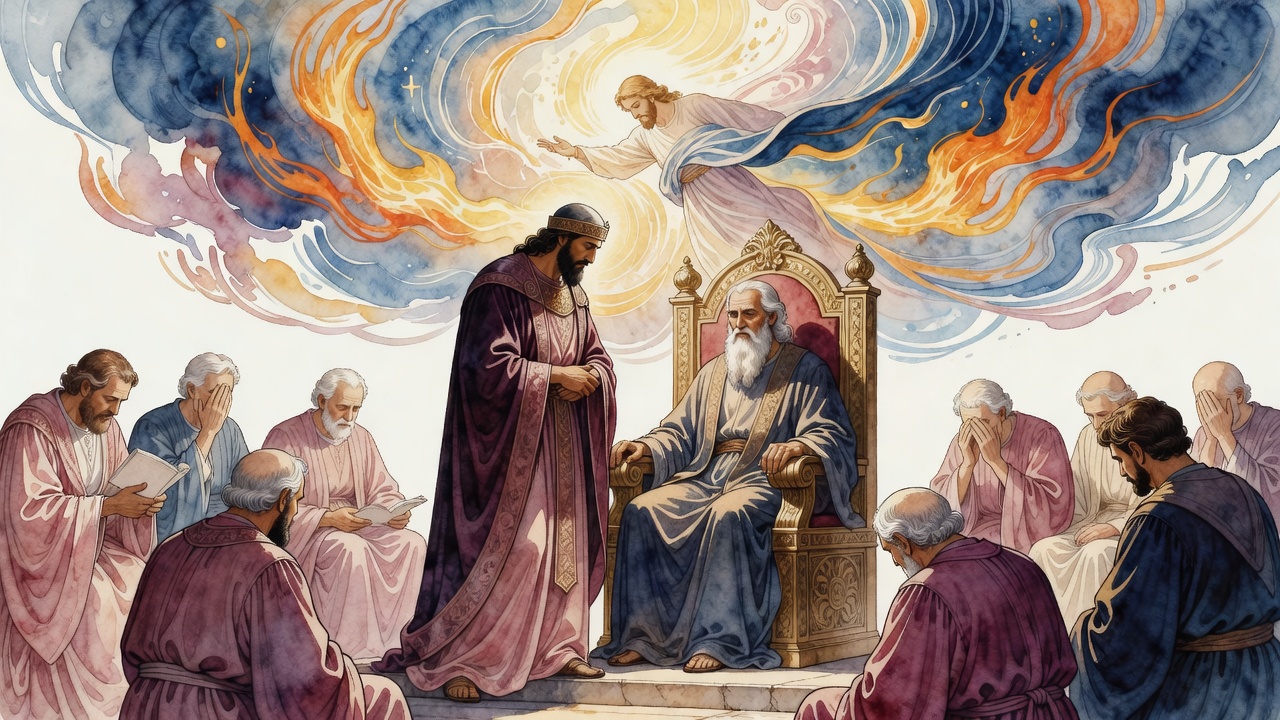
Deliberation begins with arguments for innocence. The king is never seated among them. A crown bends scales without speaking.

Majority of Two

Ten and ten from congregations that judge and deliver, plus three from the ban on a bare majority for evil, make twenty-three. Conviction may not rest on one swing vote.

Acquittal may rest on a majority of one. Condemnation demands a majority of two. The law leans toward life the way a body leans away from a cliff.

What a Judge May Not Do

A judge must say his own view, not hide behind a colleague. One who argued for acquittal may not switch to guilt. The court may reverse toward acquittal but never toward conviction once mercy has opened.

These are rails on a roof. Without them, blood enters the house of judgment. Pressure will try to make the court follow evil while calling it order.

The Count Prefers Breath

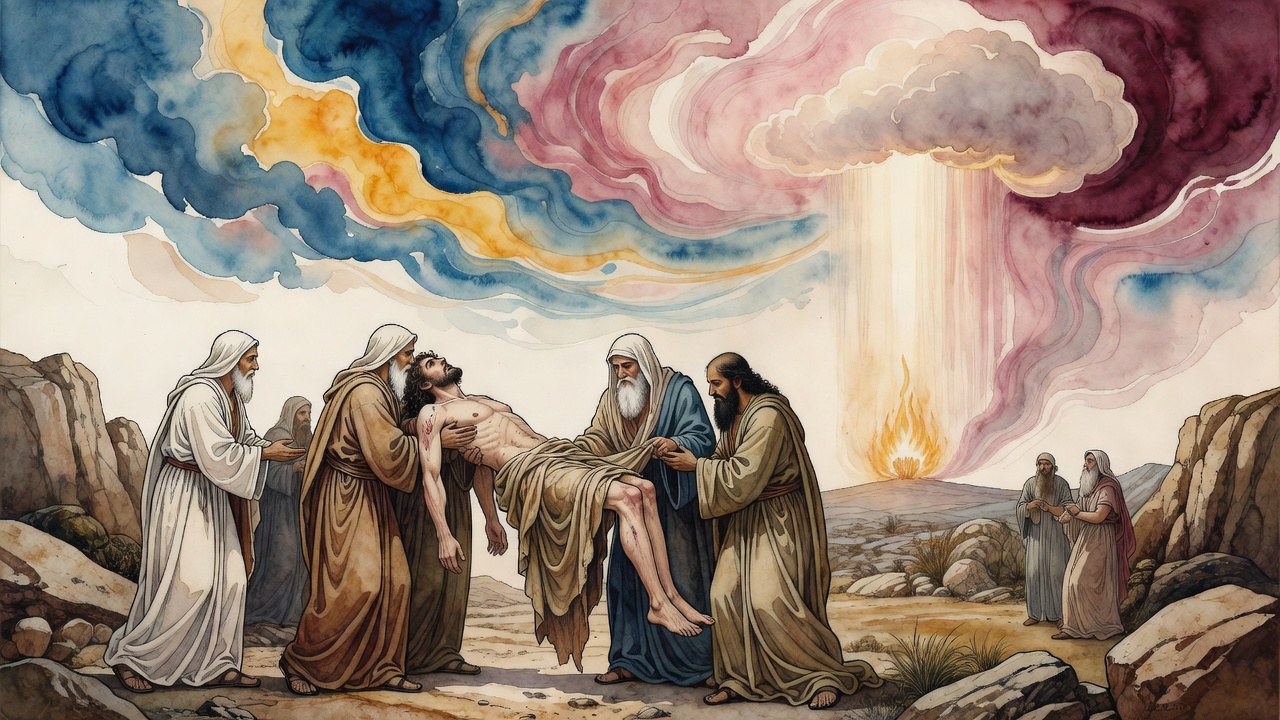
Wrongly spilled blood is trespass against the Lord as much as against a family. Capital process is that truth at its extreme. Every shortcut aims upward as offense.

If twelve say guilty and eleven say innocent, death does not pass. The man may walk under a cloud. He walks alive. Outside, the street will have opinions. Inside, sleeplessness is part of the design.

The pressure did not lift for those standing inside this hour. Someone swallowed. Someone clenched a fist around cloth or staff or coin. The next breath decided more than any later summary would admit. What looked like a small refusal or a small courage became the hinge the whole house turned on. Neighbors would argue the details by morning, but the people inside the moment carried the exact weight in their bones.

The pressure did not lift for those standing inside this hour. A throat tightened. Someone clenched a fist around cloth or staff or coin. The next breath decided more than any later summary would admit. What looked like a small refusal or a small courage became the hinge the whole house turned on. Neighbors would argue the details by morning, but the people inside the moment carried the exact weight in their bones.

The pressure did not lift for those standing inside this hour. A sandal scraped stone. Someone clenched a fist around cloth or staff or coin. The next breath decided more than any later summary would admit. What looked like a small refusal or a small courage became the hinge the whole house turned on. Neighbors would argue the details by morning, but the people inside the moment carried the exact weight in their bones.

The pressure did not lift for those standing inside this hour. A child went still. Someone clenched a fist around cloth or staff or coin. The next breath decided more than any later summary would admit. What looked like a small refusal or a small courage became the hinge the whole house turned on. Neighbors would argue the details by morning, but the people inside the moment carried the exact weight in their bones.

The pressure did not lift for those standing inside this hour. A door latch clicked. Someone clenched a fist around cloth or staff or coin. The next breath decided more than any later summary would admit. What looked like a small refusal or a small courage became the hinge the whole house turned on. Neighbors would argue the details by morning, but the people inside the moment carried the exact weight in their bones.

The pressure did not lift for those standing inside this hour. Oil smoke stung eyes. Someone clenched a fist around cloth or staff or coin. The next breath decided more than any later summary would admit. What looked like a small refusal or a small courage became the hinge the whole house turned on. Neighbors would argue the details by morning, but the people inside the moment carried the exact weight in their bones.

The pressure did not lift for those standing inside this hour. A coin rolled and stopped. Someone clenched a fist around cloth or staff or coin. The next breath decided more than any later summary would admit. What looked like a small refusal or a small courage became the hinge the whole house turned on. Neighbors would argue the details by morning, but the people inside the moment carried the exact weight in their bones.


← All myths
From the tradition

Sources

2 sources

The texts behind this telling. Some cards carry a translation of the source; others are our own retelling of it, and each card says which. Every card links out to the original.

Mekhilta DeRabbi Shimon Ben Yochai 23:2Mekhilta DeRabbi Shimon Ben Yochai

Translation of the source text.Mechilta de-Rabbi Simon b. Jochai, ed. D. Hoffmann, Frankfurt 1905 · Public Domain

"You shall not follow the majority to do evil" (Exodus 23:2). From where do we learn that capital cases are judged by twenty-three? Scripture says, "And the congregation shall judge, and the congregation shall deliver" (Numbers 35:24-25): a congregation that judges and a congregation that delivers, ten to acquit and ten to condemn. From where do the [other] three come? From the implication of what is said, "You shall not follow the majority to do evil," it follows that you may not be with them for evil [by a bare majority], but you may be with them for good. One might think you may not be with them for evil at all. Scripture says, "after the majority to incline" [a majority may condemn, but a greater one]. Say from now: since the Torah said execute by the testimony of witnesses and execute by those who incline [the verdict], just as witnesses are no fewer than two, so those who incline are no fewer than two. A court must not be evenly balanced, so one more is added to them: thus twenty-three.

Rabbi says: from the implication of what is said, "You shall not follow the majority to do evil," I might hear that you should be with them for good. If so, why does it say "after the majority to incline"? That your inclining for good should not be like your inclining for evil: your inclining for good is by one, and for evil by two.

"You shall not respond concerning a case so as to turn aside" (Exodus 23:2): that you should not say at the time of counting, "it is enough for me to be like so-and-so," but rather state what is before you. [One might think the same applies even to monetary cases. Scripture says "after the majority to incline."] Another interpretation: "You shall not respond concerning a case so as to turn aside": that one who argued for acquittal should not then teach guilt in capital cases. Another interpretation: from here we learn that they may reverse a verdict for acquittal but not for guilt. Another interpretation: from here we learn that in capital cases they do not open first with guilt but with acquittal. Another interpretation: from here we learn that in capital cases they do not begin with the greatest but from the side, for it is written "concerning a case [the great one]." Another interpretation: "You shall not respond concerning a case": from here we learn that they do not seat a king in the Sanhedrin.

Full source
Bamidbar Rabbah 8:1Bamidbar Rabbah

Retold in our words. Read the original at the link below.The Sefaria Midrash Rabbah, 2022 · CC-BY

Bamidbar Rabbah, a collection of Midrashic (rabbinic interpretive commentary) teachings on the Book of Numbers, tackles this very question, and the answer might surprise you.

The passage begins with a seemingly straightforward verse from (Numbers 5:6): “Speak to the children of Israel: A man or woman, when they will perform any sin of a person, to commit a trespass against the Lord, and that individual shall be guilty.” But as is so often the case, the Rabbis see much more beneath the surface.

Rabbi Abbahu, in a beautiful interpretation, connects this verse to (Hosea 14:8), "Those who dwell in His shadow will return." He says this refers to proselytes – converts – who "come and take refuge in the shadow of the Holy One, blessed be He." They are not just accepted, but cherished.

The connection goes even deeper. The verse in Hosea continues, "They will give life to grain." The Midrash interprets "grain" as an allusion to the Talmud. Just as grain nourishes the body, the Talmud nourishes the soul (Etz Yosef, Maharzu). And "will blossom like the vine" refers to Aggadah, the storytelling and wisdom traditions, which are considered sweet like wine. This suggests that converts are not just recipients of Jewish wisdom, but active participants in its growth and flourishing!

The text continues, "Their repute is like the wine of Lebanon." The Holy One, blessed be He, says that the names of proselytes are as dear as the wine poured as a libation on the altar. But why Lebanon? Because, the Midrash explains, Lebanon "whitens [malbin] the sins of Israel like snow," echoing (Isaiah 1:18): "If your sins will be like scarlet, they will be whitened as snow." Converts, in a sense, help to purify and elevate the entire community.

Rabbi Shimon ben Yoḥai adds that Lebanon is associated with joy: "all the hearts [halevavot] are joyous in it," as in (Psalms 48:3), "Beautiful in its view, joy of all the world." The Rabbis offer another reason, linking it to I (Kings 9:3): "My eyes and My heart [velibi] will be there always." Lebanon, and by extension, converts, are close to God's heart.

The Midrash then draws a parallel between the treatment of native-born Israelites and converts. Just as the Torah outlines restitution for wrongs committed against an Israelite in (Leviticus 5:21), so too does it emphasize the importance of fair treatment of converts. If someone robs a convert, it's as if they robbed an Israelite. The same language of sin, trespass, guilt, and restitution applies to both. The passage emphasizes that the same rules and protections apply equally to both groups.

We find that the same consequences of sin apply in both cases: "A person who shall sin… commit a trespass against the Lord… and that individual shall be guilty," and so on. The message is clear: converts are not second-class citizens. They are fully integrated into the covenant.

Bamidbar Rabbah teaches us that converts are not merely welcomed into the Jewish community, but are considered vital and cherished members. They are likened to grain and vines, essential for nourishment and growth. They help to purify and bring joy to the community. They are just as important as those born into the tradition. It’s a powerful reminder that Judaism isn't about bloodlines, but about embracing a way of life and being welcomed with open arms.

Full source