6 min read

Moses Told Israel That God Never Punishes the Innocent for the Guilty

Moses comes down Sinai with the tablets still warm. Israel asks what justice is like on high, and the answer leaves no room to swap guilt for innocence.

Curated by Arthur · Told by Maggid ·
Table of Contents
  1. No Swapping on the Books of Heaven
  2. Sons Full of Blemishes
  3. When He Appointed Judges
  4. Guilt on the Heads of the Judges
  5. The Slope Still Remembered the Answer

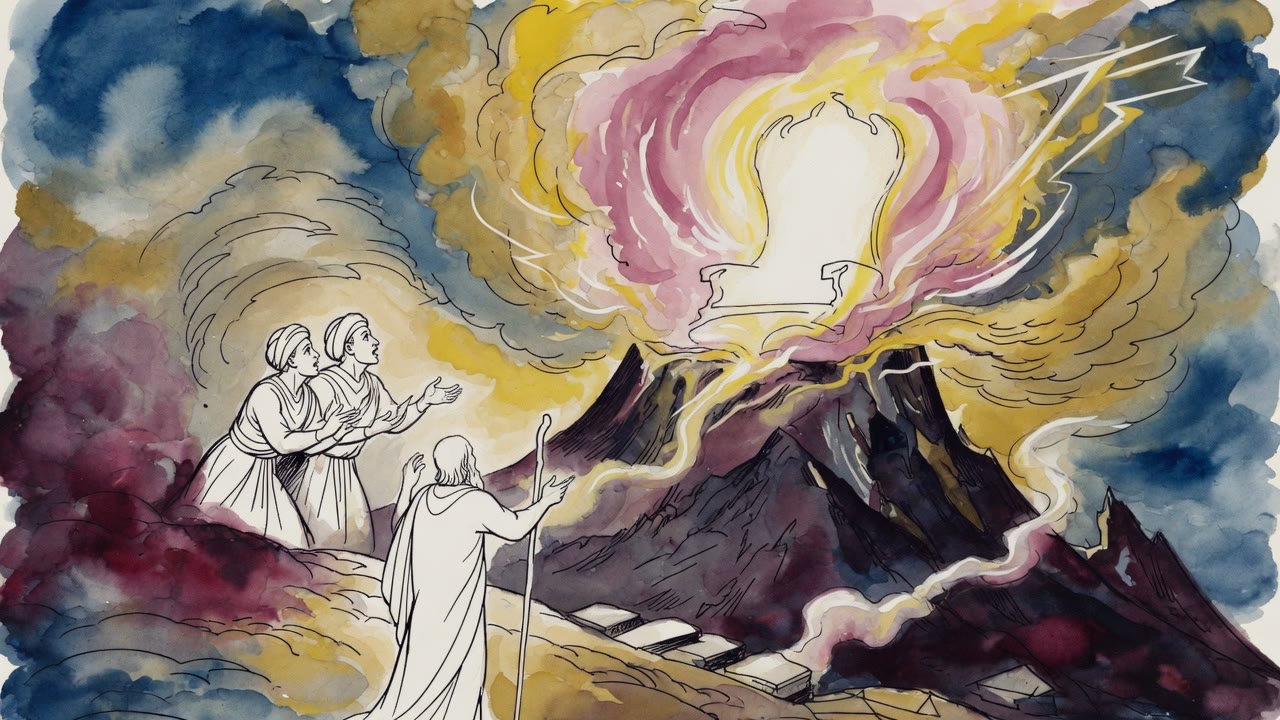
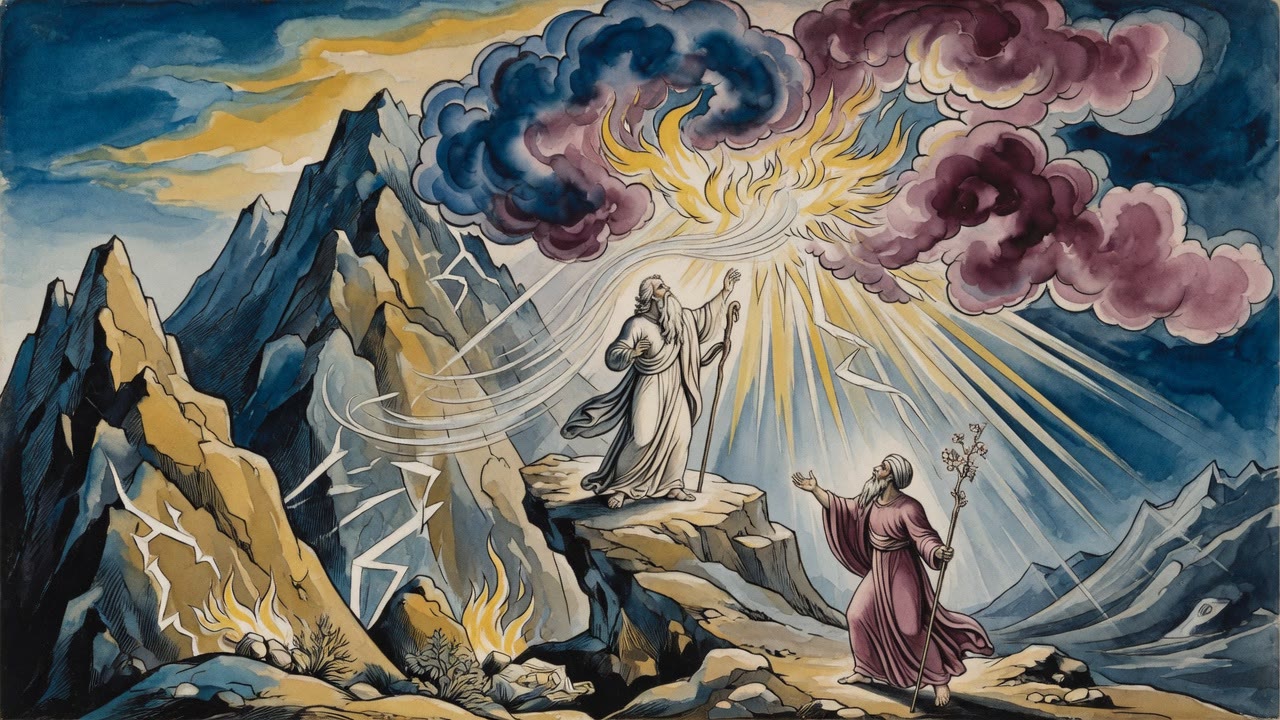
Moses came down the mountain with the tablets pressed to his ribs and dust already in the cut of his sandals. The cloud still clung to the upper rock. Heat rose off the stone under his feet. Below, the camp of Israel thickened into a single waiting face, thousands of eyes, thousands of throats, and no one moved until he set the weight of the stone on the packed earth.
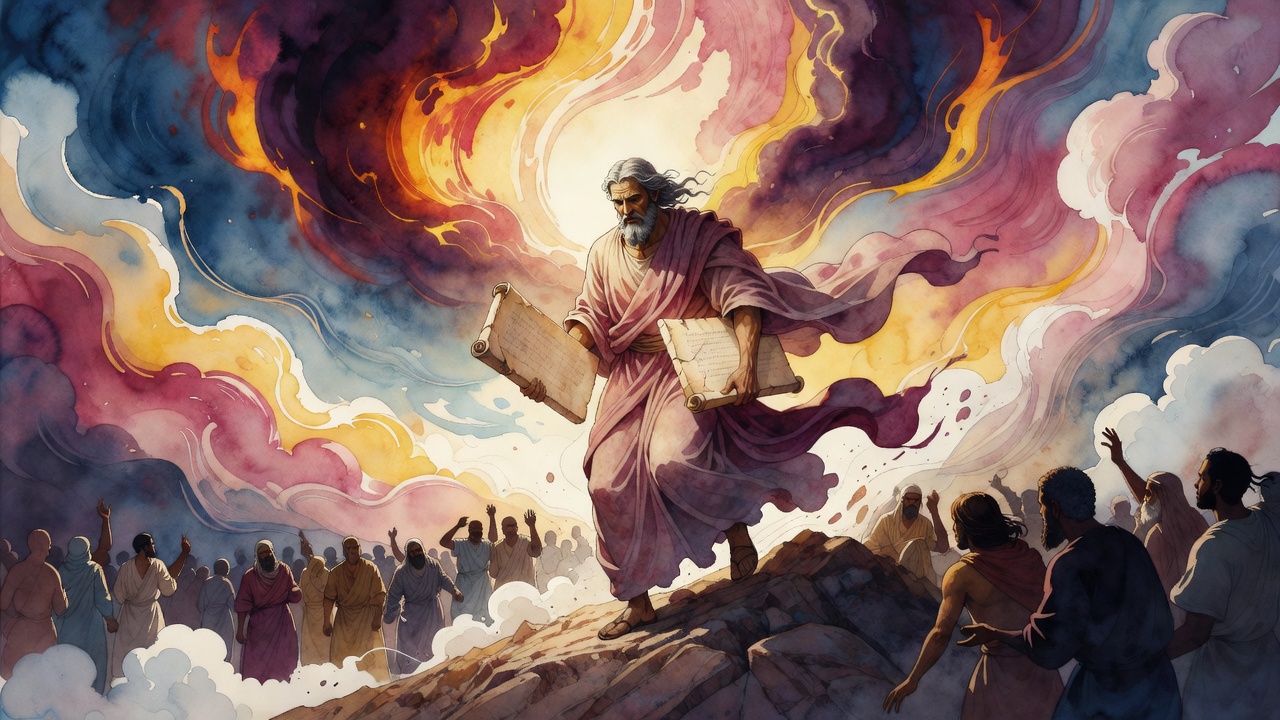
Moses Told Israel That God Never Punishes the Innocent for the Guilty Click for full size

Someone near the front found a voice. "Moses, our teacher, what is the attribute of justice like on high?"

The question hung. Children climbed onto shoulders. The wind off Sinai pushed ash and grit into open mouths. Moses did not answer with a soft story.

No Swapping on the Books of Heaven

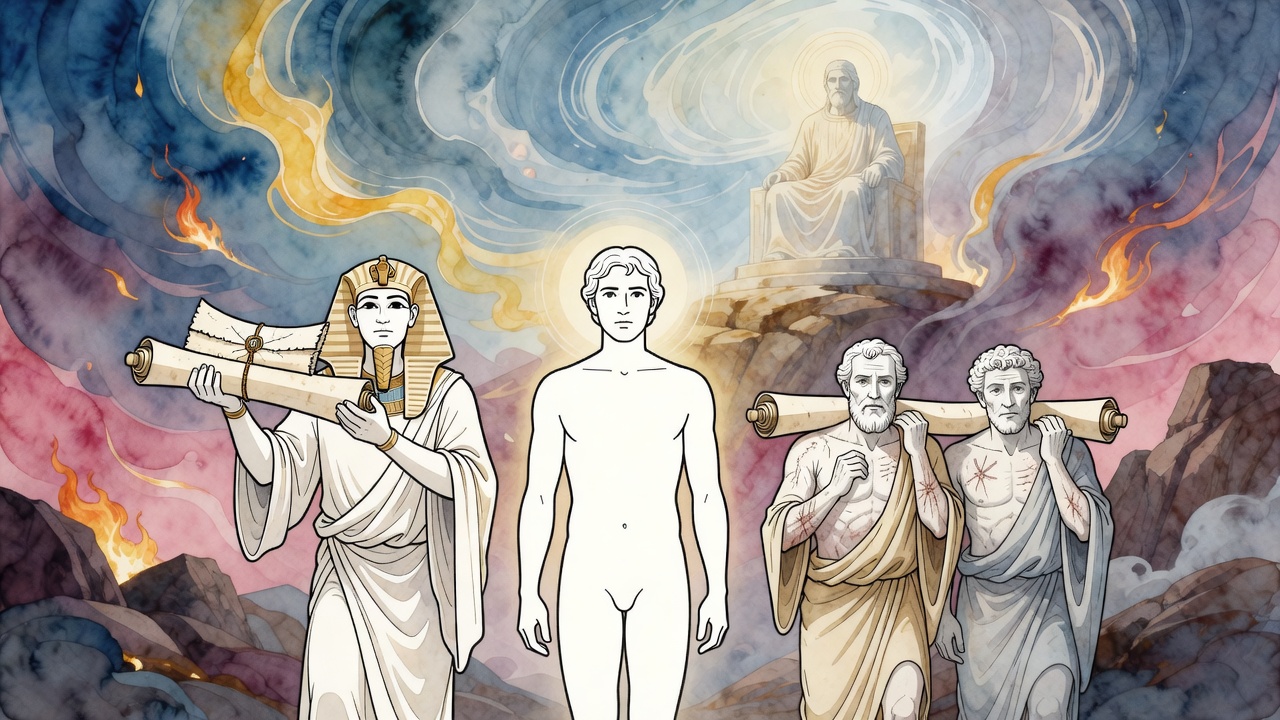
He said that God does not clear the guilty and load the innocent. He does not balance the ledger by trading one soul against another, as if a clean man could be marked down to save a stained one. Even the fine accounting, the tiny deductions people hope heaven will overlook, still sits under a God of trust without wrong. "The Rock, perfect is His work" (Deuteronomy 32:4). Perfection here is not a compliment. It is a closed door. No favoritism. No quiet exchange of one name for another on the docket of heaven.

A man in the second rank shifted his weight. He had hoped for a softer math. Moses kept the hard line. On high, justice does not fudge.

The tablets cooled. Fingers still left damp prints on the stone. No one cheered. The answer had the weight of a verdict already written.

Sons Full of Blemishes

Later, in the plains when the song of Ha'azinu still burned in his mouth, Moses pressed another claim that did not cancel the first. "Even though they are full of blemishes, they are still called sons" (Deuteronomy 32:5). The Hebrew cuts hard: corruption sits on them, and still the name banim holds.

Rabbi Meir would later drive the point further. If they are called sons when they are full of flaws, how much more when they stand clean. Isaiah still names them sons while calling them a seed of evil (Isaiah 1:4). Jeremiah still calls them wise while they are wise only for wrong (Jeremiah 4:22). The bond does not snap when the people fail. Sons who are not discarded are sons who still answer.

Moses had already lived that bond. Forty days and forty nights on the mountain without bread or water (Exodus 34:28). He had come down once to a calf and a broken tablet. He had gone up again. The people still wore the name.

When He Appointed Judges

When the load of cases crushed him, Moses set men over thousands and hundreds and fifties and tens (Deuteronomy 1:14-15). He needed help. The nation said, "Good is the thing that you have spoken to do." The words sounded right. The faces did not all match the words.

Some mouths praised the plan while the heart muttered another question. Why should this man who sat forty days with God's hand the teaching to lesser judges? Why not keep the fire in one throat? The public "good" and the private hunger for a single famous mouth lived in the same camp.

Moses heard both. He still appointed. The work of justice could not wait for every Israelite to stand at his feet alone. He set heads over the people, and then he bound those heads to a terror larger than prestige.

Guilt on the Heads of the Judges

"I shall set them at your heads," the teaching pressed. If the people guard their ways, their leaders stand guarded with them. If the people turn aside, the heads falter too. The guilt of Israel sits on the heads of their judges. A watchman who sees the sword and stays silent owns the blood (Ezekiel 33:7-9). The judge is not a decoration over a quiet town. He is a sentinel. Silence after he knows is not patience. It is blood on the skull that wore the title.

A man chosen for the bench felt that sentence land in the gut. He could not hide behind the crowd. He could not hide behind Moses. The Rock that does not swap guilt and innocence also does not let a judge trade his warning for comfort. The people wanted Moses's mouth forever. Heaven wanted living mouths that would speak when wrong rose, even when the speaker was smaller than Sinai.

Dust from the appointment day still clung to robes long after the ink of the lists dried. Some of those new judges slept poorly. That was part of the job.

The Slope Still Remembered the Answer

Years later, when Moses's own death stood near and the people still carried blemish and brilliance in the same tents, the two teachings stayed knotted. Heaven's justice does not trade a clean man for a guilty one. Israel's bond does not drop the name "sons" when the blemish shows. The judges who stand between those truths cannot shrug. They warn, or they bleed for the silence.

On the slope the day the tablets came down, the first answer had been pure iron: no swapping on high. In the camp the day the courts multiplied, the second answer was iron of another kind: your heads carry the people's blood if your mouths stay shut. Between them walked a nation still called sons, still under a Rock that does not cheat.

Moses set the tablets where the people could see the writing. He set the judges where the people could not pretend no one stood watch. The mountain kept its shadow. The camp kept its noise.


← All myths
From the tradition

Sources

2 sources

The texts behind this telling. Some cards carry a translation of the source; others are our own retelling of it, and each card says which. Every card links out to the original.

Sifrei Devarim 14:1Sifrei Devarim

Retold in our words. Read the original at the link below.Sifrei by Rabbi Shraga Silverstein · CC-BY

The ancient text of Sifrei Devarim, a commentary on the Book of Deuteronomy, grapples with this very question, and it's a surprisingly potent message for us today.

There's a powerful, almost unsettling idea tucked away in its verses: "and I shall set them at your heads." But this isn’t about some literal act. Instead, it's a reflection on the intertwined fates of a community and its leaders. According to Sifrei Devarim, if the people "guard their ways," meaning if they live ethically and justly, then their leaders, their “heads” (the judges), will also be guarded, protected, and upright. But the flip side is equally true – and far more sobering. If the people stray from the right path, their leaders will also falter.

This leads to a stark conclusion: "whence we are taught that the guilt of Israel is on the heads of their judges." Heavy stuff. It echoes the prophet Ezekiel's warning (33:7-9): A leader is like a sentinel, a watchman. If they see wrongdoing and fail to warn the people, then they bear responsibility for the consequences. "If you do not warn the wicked one and he dies, his blood will be on your head." It's a terrifying burden, and one that emphasizes the immense power – and responsibility – that comes with leadership.

It doesn't stop there. Sifrei Devarim also explores the complex relationship between Moses, the ultimate teacher, and the people he led. Remember when Moses appointed judges to help ease his burden? (Deuteronomy 1:14). The people responded, "Good is the thing that you have spoken to do." But Sifrei Devarim suggests their response was far from sincere.

Moses, who spent forty days and forty nights with God on Mount Sinai, practically suffering to bring the Torah to the people – as we read in (Exodus 34:28), "And he was there with the L-rd forty days and forty nights." And yet, the commentary suggests the people might have been thinking, "Why is he appointing judges? Shouldn't we be learning Torah directly from him? Or at least from his closest disciples?"

the verse says, Moses may have suspected some less-than-pure motives lurking beneath their polite agreement. Perhaps they thought, "Now he's appointing all these judges… if one of them doesn't listen to us, we'll just bribe him!" Hence, the somewhat sarcastic interpretation of their words: "And you answered me, and you said. 'that you have spoken to do'… let him 'do,' quickly." It's as if they were saying, "Just get it over with!"

What’s so striking about this passage is its raw honesty about the human condition. It acknowledges the potential for corruption, the skepticism towards authority, and the sometimes-hidden agendas that can drive our actions.

So, what does it all mean for us today? Perhaps it's a reminder to choose our leaders wisely, but also to hold ourselves accountable. A healthy society requires both ethical leadership and an engaged, responsible citizenry. It's a two-way street, a constant dialogue, and a shared commitment to doing what's right, even when it's difficult. And maybe, just maybe, it encourages us to look beyond the surface and consider the deeper motivations behind our words and actions, both our own and those of the people around us. Because, as Sifrei Devarim suggests, the consequences of our choices rest on all of our heads.

Full source
Sifrei Devarim 308:1Sifrei Devarim

Retold in our words. Read the original at the link below.Sifrei by Rabbi Shraga Silverstein · CC-BY

One particularly striking passage from Sifrei Devarim explores this very idea, starting with a poignant scene.

Moses, descending from Mount Sinai, tablets in hand, after that earth-shattering encounter with the Divine. The entire Israelite nation gathers, filled with awe and, perhaps, a little trepidation. They ask him a direct question: "Moses, our teacher, what is the attribute of justice like on high?"

Moses's answer isn't what you might expect. He doesn’t describe some cold, calculating system. Instead, he says that God "not only does He not exculpate the guilty and inculpate the innocent, but even vis-à-vis 'exchanging' (i.e. deducting one from the other), 'He is a G-d of trust, without wrong.'" This is based on the verse in Devarim (Deuteronomy) 32:4: "The Rock, perfect is His work." In other words, Divine justice is utterly fair and trustworthy. There’s no fudging the numbers, no shading the truth. It's a system where even in the most minute calculations, divine integrity reigns supreme.

The passage doesn't stop there. It goes on to explore the idea of God's relationship with the Jewish people, even when they fall short. Here, the text quotes (Deuteronomy 32:5): "Shicheth lo lo. Banav mumam" – "Even though they are full of blemishes, they are still called sons (banim)."

Rabbi Meir beautifully expands on this concept. He says, “If when they are full of blemishes they are called 'banim,' if they are unblemished, how much more so!" It's a powerful a fortiori argument, a qal vachomer in Hebrew, moving from the lesser to the greater. If even in imperfection, the connection remains, how much stronger is it in perfection?

The passage continues with similar arguments, drawing from other prophetic books. Take (Isaiah 1:4): "Evil seed, corrupt sons." If even when corrupt they are still called "sons," how much more so if they were not corrupt! Or consider (Jeremiah 4:22): "They are wise to do evil. And again, "They are foolish sons, and not understanding." If they are called "sons" even when foolish, how much more so if they were understanding!

The final example comes from (Ezekiel 23:31): "And they come to you as a people comes, and My people sit before you and hear your words." The verse continues, "but they do not fulfill them." Even when they hear God's word but fail to act upon it, they are still called "My people." How much more so, then, when they hear and fulfill!

What’s the takeaway here? This passage from Sifrei Devarim, through the lens of Rabbi Meir's interpretations, offers a profound and comforting message. It highlights the enduring, unbreakable bond between God and the Jewish people. Even when we stumble, even when we fall short, the connection remains. It's evidence of a love that persists, a relationship that endures. It’s a reminder that even in our imperfections, we are still cherished, still considered banim – children. And perhaps, that unwavering love is the most profound form of justice of all.

Full source