Parshat Yitro5 min read

God Sent Moses Down to Fetch Aaron for Sinai

At the burning bush Moses said no for seven days running. God told him there would be a bill for that, and it came due at the door of the Tabernacle.

Curated by Arthur · Told by Maggid ·
Table of Contents
  1. Seven Days at the Thornbush
  2. Go and Call Your Teacher
  3. Seven Days He Did Not Leave the Door
  4. The Eighth Day
  5. The Stones Went on the Heart That Was Glad
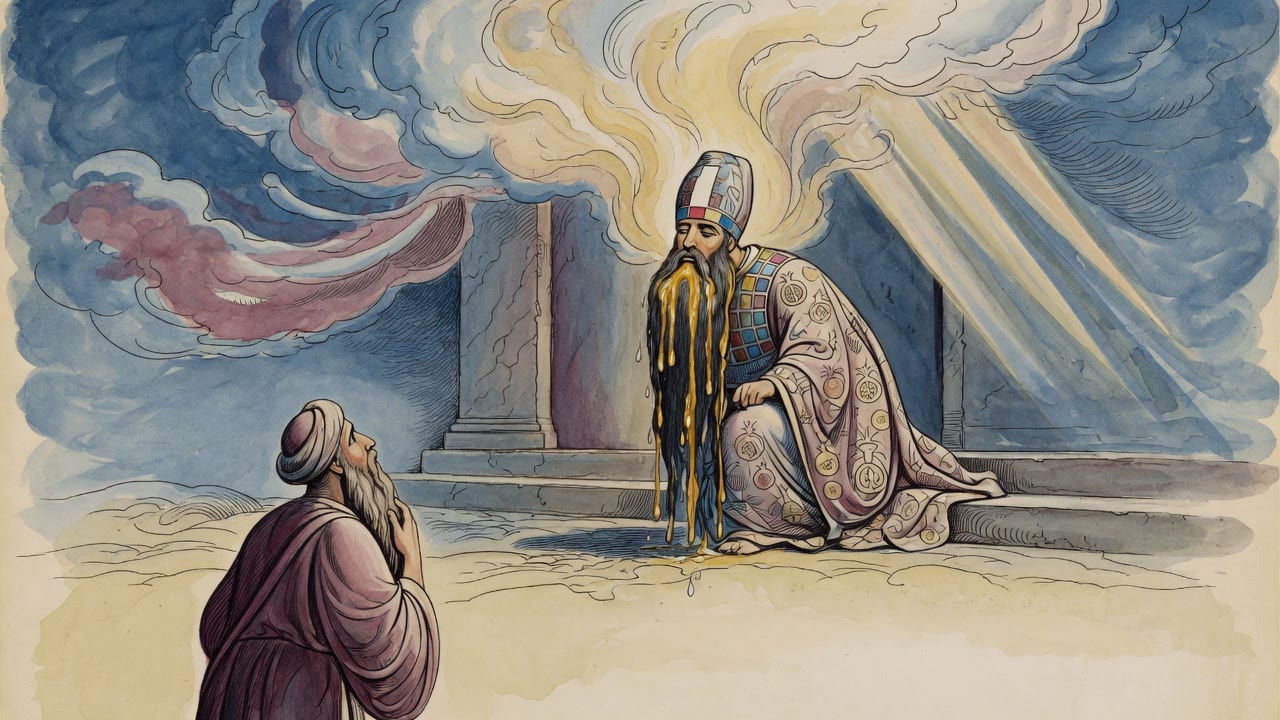
God Sent Moses Down to Fetch Aaron for Sinai Click for full size

Seven Days at the Thornbush

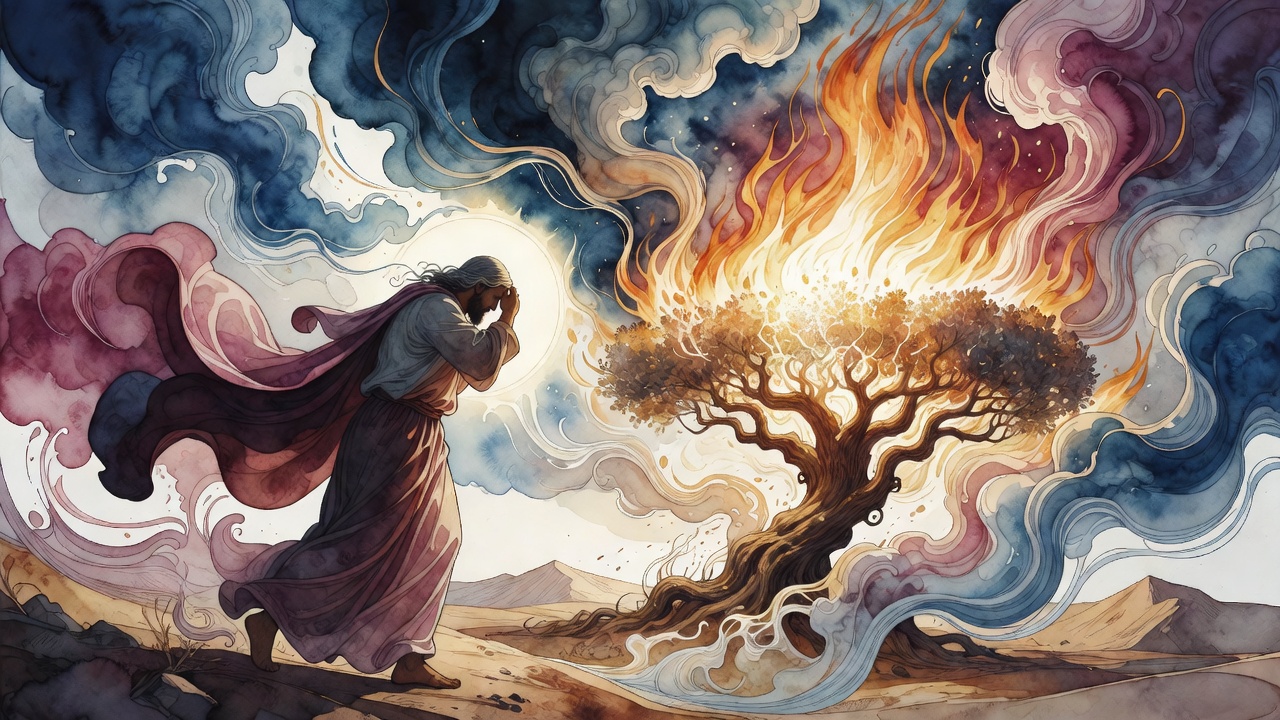
The bush burned for a week and the argument inside it went the whole week.

"Go on My errand," God said.

Moses said, "Please send somebody else." That was the first day. On the second day God said go, and Moses said send somebody else. It ran on like that.

He had a reason, and it was not only fear. "My brother is older than I am," he said, "and I am going out ahead of him."

"You have spoken rightly," God said. "And when he sees you, he will be glad in his heart." Twelve stones would be laid on that heart before it was over, four rows of three, each one cut with the name of a tribe.

But on the seventh day Moses was still saying send somebody else, and God stopped negotiating.

"I tell you go, and you tell Me send somebody else. By your life, I am paying you back for this. Soon enough, when that Tabernacle is being built, you are going to be thinking privately that you should be the one serving as high priest. And I am going to say to you: call Aaron to serve."

Moses picked up the staff and went down to Egypt.

Go and Call Your Teacher

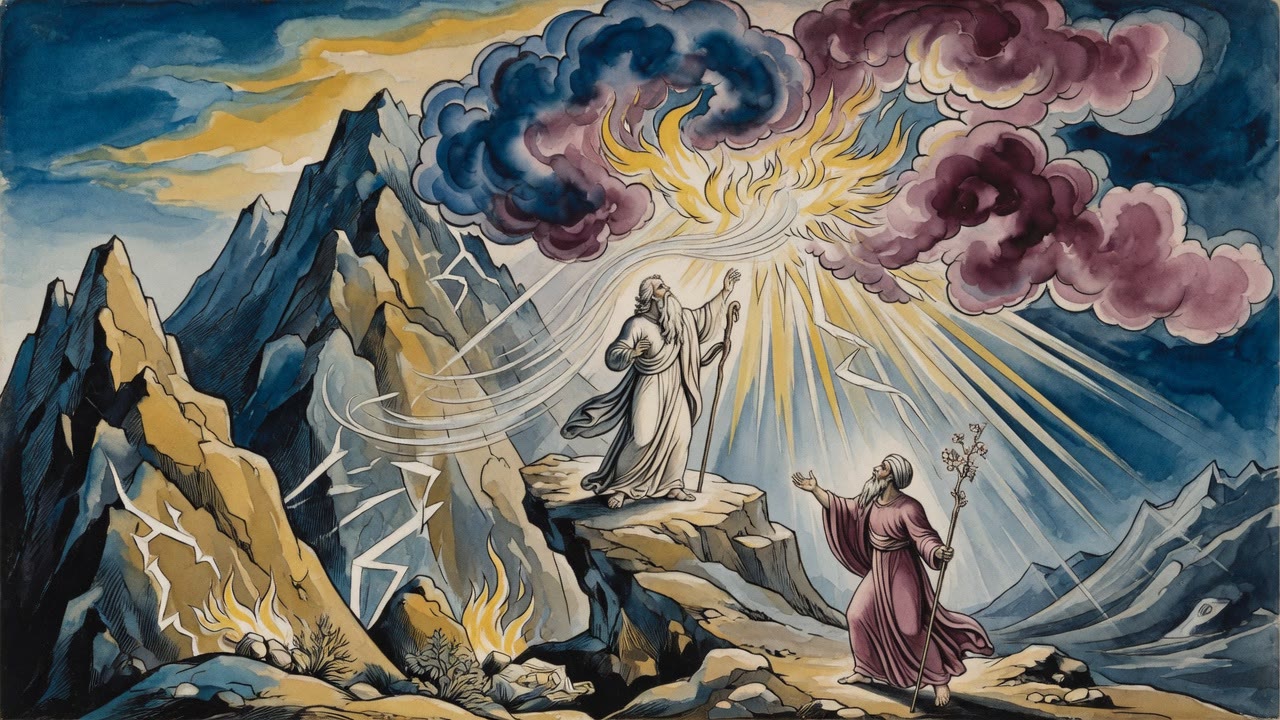
A year later Sinai was smoking, the camp was pressed up against the boundary rope at the bottom of it, and Moses was near the top where the air had gone strange.

"Go down. Warn the people," God said, "in case they break through to look."

"I have already warned them," Moses said.

He had. He had set the boundary himself and told them twice and the whole camp had washed its clothes and kept back for three days. He wanted to be standing exactly where he was standing when the Voice came, and he said so.

"Go," God said, "and call your teacher."

Aaron. Go and get Aaron.

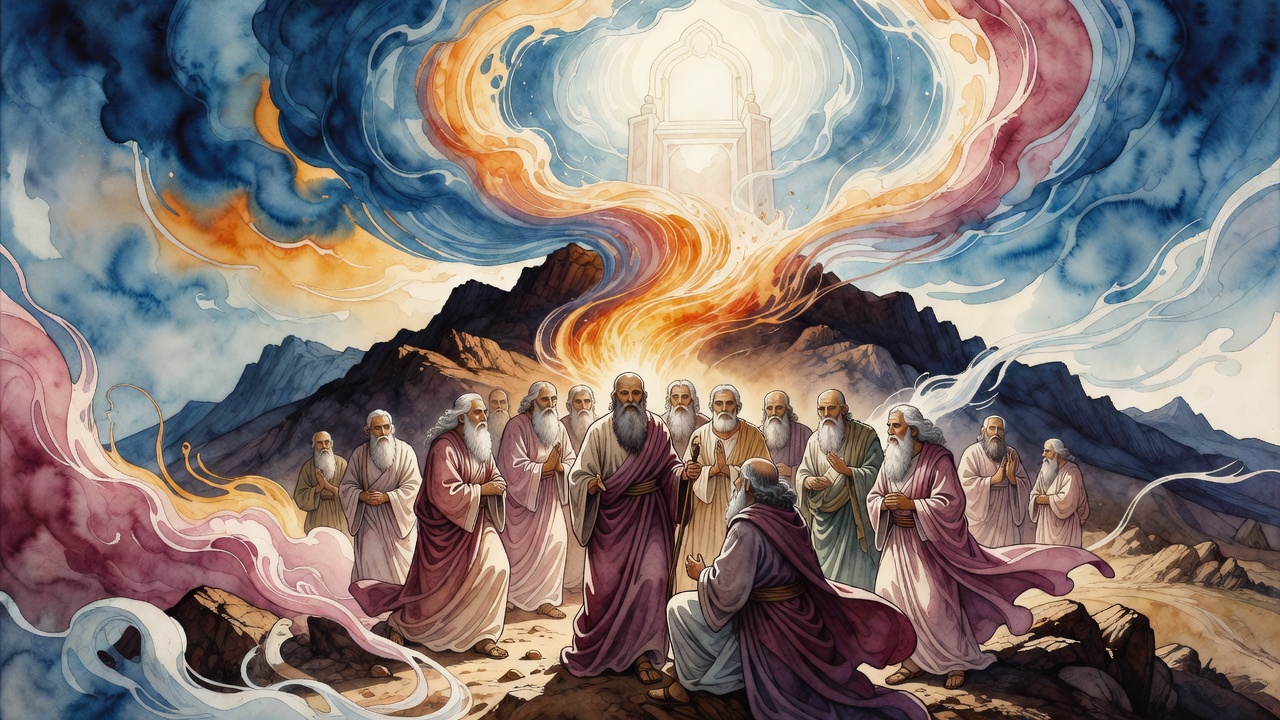
So God sent him down the slope to fetch his brother out of the camp, and while Moses was on the mountainside with his back to the summit, God began. I am the LORD your God, who brought you out of the land of Egypt, out of the house of bondage.

He had wanted to be up there for that. He was down among the tents, looking for Aaron.

Seven Days He Did Not Leave the Door

Then the Tabernacle went up in the wilderness, and for seven days Moses did not go out from the door of the tent of meeting.

He did the whole service himself. He slaughtered. He caught the blood in a basin and threw it against the sides of the altar. He burned the fat and the kidneys and the lobe of the liver, washed the inner parts, dressed Aaron and Aaron's sons in the tunics and the sashes and the caps, and left them standing at the door while he went back in.

Seven mornings of it, with his arms red to the elbow.

"What are you thinking?" God said to him. "That you are the high priest? Call your brother, and let him serve."

The Eighth Day

On the eighth day Moses called Aaron, and Aaron's sons, and the elders of Israel. God had been specific about the elders. Call them, and ordain him in front of them, so that nobody says afterward that he took the priesthood on his own.

Moses said it flat out. "The Holy One has told me to make you high priest."

Aaron did not reach for it.

"You did the work on the Tabernacle," he said. "You have not been out of that doorway in a week. And I am the one to be made high priest?"

"By your life," Moses said, "even though it is you being made high priest, it is as if I were being made high priest. You were glad for me when I was raised over you. I am glad for you now."

The elders stood in a half circle and watched him say it.

The Stones Went on the Heart That Was Glad

They put the tunic on Aaron and the robe over the tunic and the ephod over the robe, and then the breastplate, and into the breastplate the twelve stones, four rows of three. Sardius, topaz, carbuncle, and the rest, and every one of them cut with the name of a tribe. It sat on his chest and it was heavy.

That was the heart that had been glad in Egypt, forty years earlier, when the younger brother came back from Midian with a mission.

Later in the wilderness, Aaron's staff, a dead length of almond wood, was left overnight in the tent and by morning it had sprouted, blossomed, and put out ripe almonds. Most trees go up as one trunk and stop. A palm sends shoots out on every side. Aaron's went out the same way. His son Eleazar, and Eleazar's son Phinehas, and Phinehas's son Abishua, and Bukki after him, planted in the house of the LORD.

Moses' own sons are not on that list, and never were.


← All myths
From the tradition

Sources

3 sources

The texts behind this telling. Some cards carry a translation of the source; others are our own retelling of it, and each card says which. Every card links out to the original.

Pirkei DeRabbi Eliezer 41:11Pirkei DeRabbi Eliezer

Retold in our words. Read the original at the link below.Pirke de Rabbi Eliezer, trans. Rabbi Gerald Friedlander, London (1916) · CC-BY

The story, as we find it in Pirkei DeRabbi Eliezer 41, is quite fascinating. God, ready to proclaim the Torah, tells Moses to go down to the Israelite camp. "Go down, charge the people," God says, quoting (Exodus 19:21). Moses, eager to witness this momentous occasion, assures God that he's already charged the people. He's ready! Let's go!

God insists. “Go, and call thy Rabbi.”

Why would God do that? Moses, the ultimate leader, the one who brought them out of Egypt, needs to go fetch… Aaron?

Moses, in his excitement, was perhaps jumping the gun. Maybe he needed a co-leader, a partner, someone to share the weight of this incredible moment. Perhaps it wasn't just about relaying instructions, but about the importance of shared leadership and communal responsibility.

So, Moses descends to the camp to call Aaron. And then, Pirkei DeRabbi Eliezer tells us, the Holy One, blessed be He, proclaimed His Torah to His people, as (Exodus 19:25) says, "So Moses went down unto the people, and told them."

Notice the subtle shift. Moses went down, but the proclamation came directly from God. Moses prepared the people, but the Divine Voice delivered the commandments.

What follows immediately after in (Exodus 20:1-2)? The Ten Commandments. "And God spake all these words, saying, I, the Lord, am thy God, who brought thee out of the land of Egypt, out of the house of bondage."

It's a powerful sequence. First, a seemingly minor detour to fetch Aaron. Then, the earth-shattering revelation of God's word.

What does this teach us? Maybe it's a reminder that even the greatest leaders need support. Maybe it's about the importance of patience, of trusting in the divine timing. Maybe it's about the idea that even the most profound moments are often preceded by seemingly insignificant actions.

Or maybe, just maybe, it's a gentle nudge to remember that even when we're ready to run, sometimes we need to slow down and call our rabbi… whoever that may be for you. Someone who grounds you, guides you, and reminds you that even the most solitary journeys are best taken with a little bit of community.

Full source
Midrash Tanchuma, Shmini 3Midrash Tanchuma

Retold in our words. Read the original at the link below.Townsend 1989 translation of Midrash Tanhuma, S. Buber Recension · CC-BY

Midrash Tanchuma reads the eighth day of the Tabernacle service through Aaron, the righteous one who flourishes like a palm.

The verse says, "The righteous one shall flourish like the palm" (Psalms 92:13). The midrash hears Aaron in that image because his staff sprouted, blossomed, and bore almonds in the wilderness (Numbers 17:23). A palm does not rise alone. It sends growth outward on every side. So Aaron planted a priestly line, and his sons and descendants rose from him in the house of God.

Then the midrash turns to Moses. At the burning bush, Moses resisted the mission for seven days and asked God to send someone else (Exodus 4:13). God answered him later through the Tabernacle. Moses would labor through the seven days of inauguration, but on the eighth day he had to call Aaron forward. Aaron had rejoiced in Moses' greatness, and Moses now rejoiced in Aaron's. The high priesthood begins with a brother's honor, not rivalry.

Full source
Pirkei DeRabbi Eliezer 43:10Pirkei DeRabbi Eliezer

Retold in our words. Read the original at the link below.Pirke de Rabbi Eliezer, trans. Rabbi Gerald Friedlander, London (1916) · CC-BY

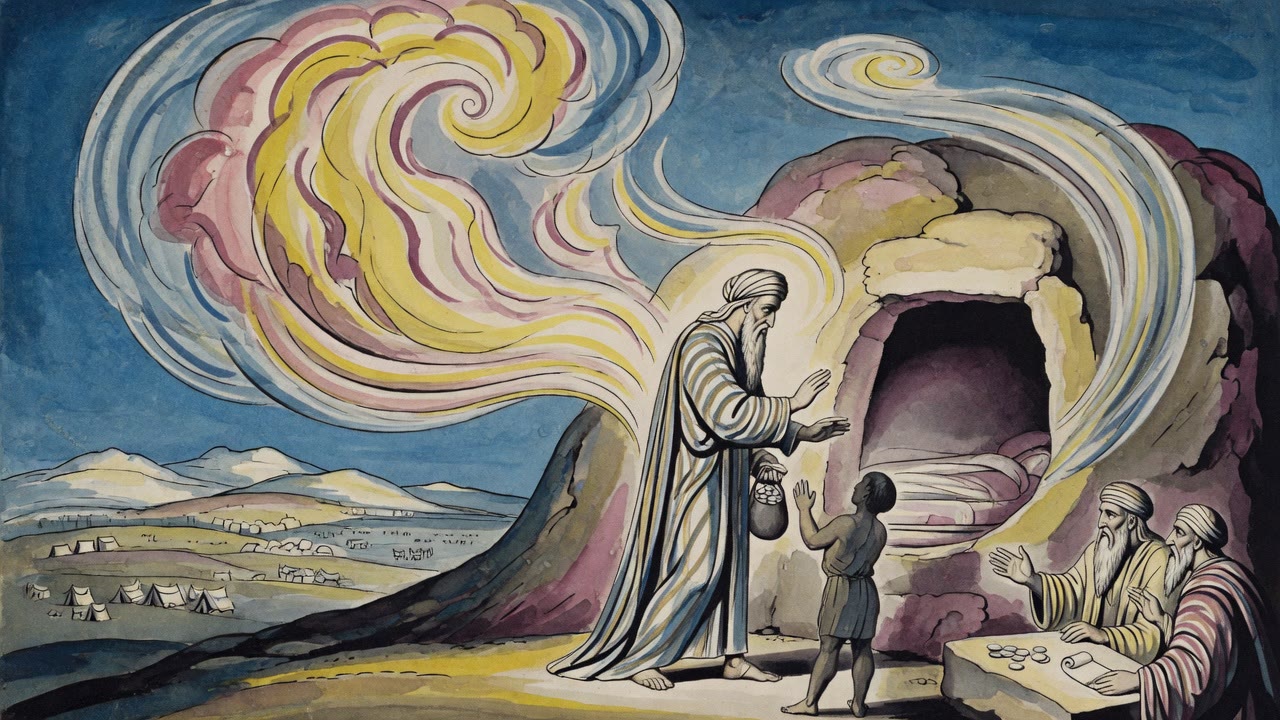
The prophets of Israel knew that feeling all too well. They saw their people straying, falling, losing their way. And they weren't afraid to call it out. But more importantly, they offered a path back. A path paved not with gold or silver, but with something far more precious.

The passage In chapter 43, it homes in on a specific verse from the prophet Hosea: "O Israel, return unto the Lord thy God." (Hos. 14:1). for a second. Return. Go back. But back to what? Back to whom?

The text immediately clarifies: return "unto Him whose voice ye heard at Mount Sinai, saying, 'I, the Lord, am to be thy God' (Ex. 20:2)."

Mount Sinai. The defining moment. The covenant. The giving of the Torah. It’s a call to remember who they are, whose they are.

But then comes a stark admission. The passage continues with another quote from Hosea: "For thou hast fallen by thine iniquity" (Hos. 14:1). Notice the emphasis here. The text points out, almost with a sigh, that it doesn't say "For thou hast fallen by thy wealth." It's not about lacking material possessions. The fall, the stumble, the separation – it comes from wrongdoing, from straying from the path of righteousness.

Okay, so we've fallen. We’ve messed up. What now? How do we even begin to climb back up?

Hosea offers a surprising answer, and Pirkei DeRabbi Eliezer really emphasizes it. The prophet doesn’t say, "Take with you silver and gold," but "Take with you words" (Hos. 14:2). It's not about grand gestures or expensive offerings. It's about words. Sincere, heartfelt expressions of repentance and a renewed commitment.

And it continues: It is not written, "And we will render silver and gold," but "And we will render as bullocks (the offering of) our lips" (ibid.). Instead of sacrificing animals, the offering is the words of our lips. This phrase, "parim sefateinu," "the bullocks of our lips," is striking. It suggests that our words, when offered with sincerity and intention, can be as powerful and meaningful as the most elaborate sacrifice. It's a profound shift in perspective.

We may not be ancient Israelites facing the pronouncements of prophets. We all stumble. We all fall short. We all make mistakes. The key isn't to avoid falling, because that's simply not possible. The key is to know how to get back up.

And according to this ancient text, the path back isn't paved with riches or grand gestures. It's paved with words. Honest words. Words of remorse, words of commitment, words of prayer. Words that connect us back to something bigger than ourselves.

What words will you choose today? What offering will you bring from the bullocks of your lips?

Full source