Seventy Elders Saw God at Sinai and Then Ate and Drank
The pavement under His feet was sapphire, clear as sky. The seventy did not dissolve. Hunger returned, and they answered it with a meal.
Table of Contents
 Click for full size
He Wrote It Down Before He Built Anything
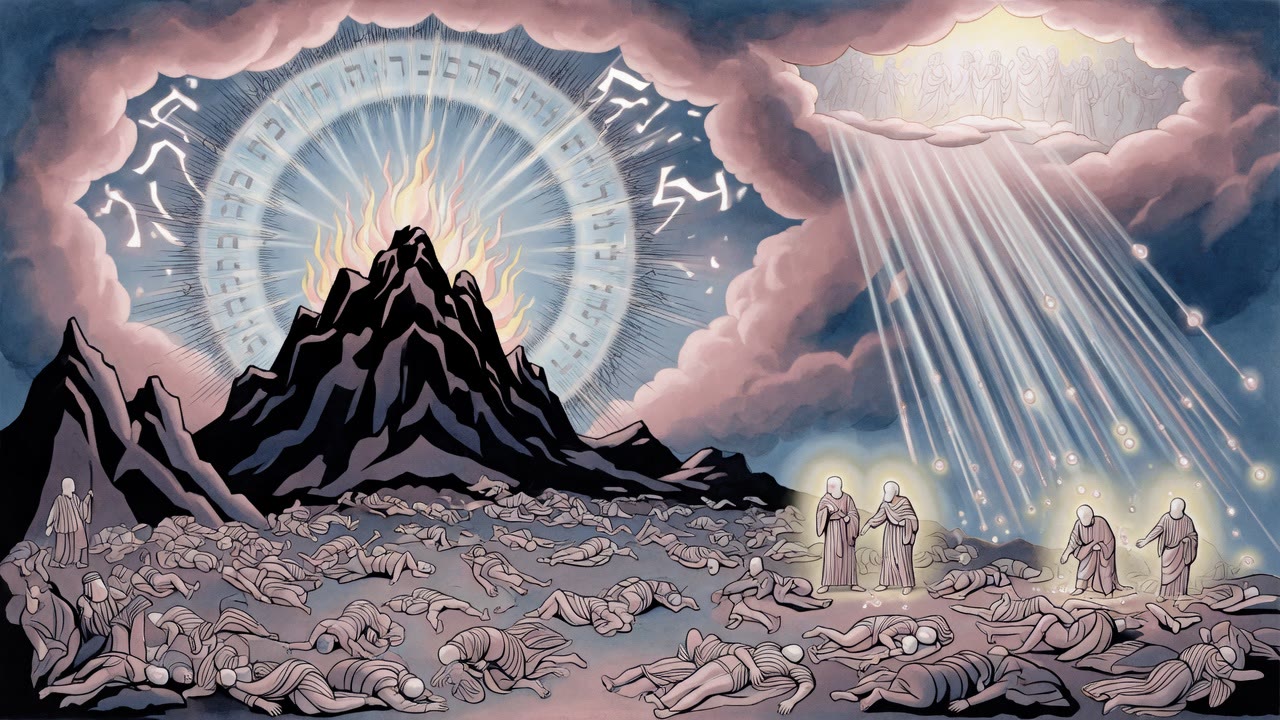
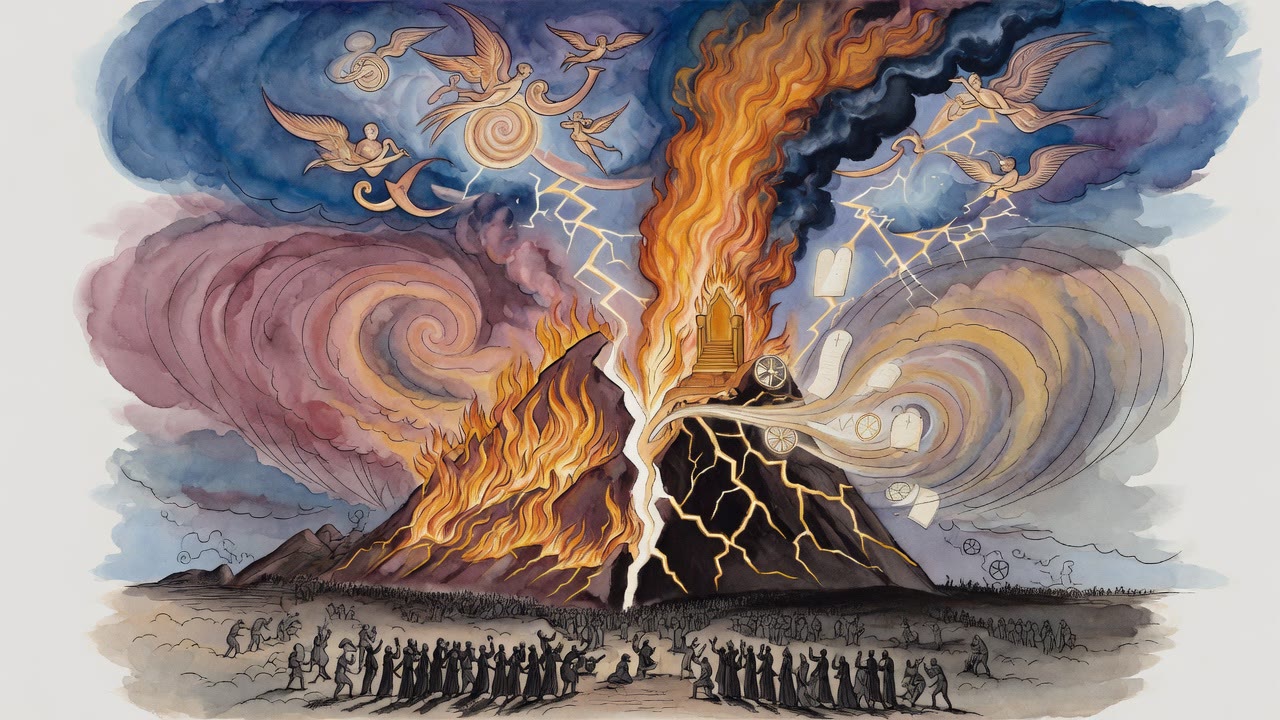
Moses came down off the mountain and did not go straight to the altar. He wrote first. The words went onto the scroll while the mountain was still smoking behind him, because a covenant that lives only in what people remember hearing is a covenant that can be argued about in a generation.
Then he got up at first light and built. One altar at the lower part of the mountain, low enough that the whole camp could see it. Around it he set twelve standing stones, one for each tribe, and there was no priesthood yet to object to where he put them. Reuben. Simeon. Levi. Judah. Dan. Naphtali. Gad. Asher. Issachar. Zebulun. Joseph. Benjamin. Twelve rough pillars in the dust facing one center.
Young men went up with the bulls.
Michael Held His Hand Steady
The animals were slaughtered and the blood went into basins, and then came the part of the morning that could go wrong.
It had to be halved. Not roughly halved. Exactly halved, one portion for the altar and one for the people, and a man pouring by eye in the open air does not get exactness. Michael came and stood at his elbow and guided his hand, and the blood went into the two basins with not one drop more on either side.
Moses stood between them holding nothing, with the mountain at his back and the whole camp watching a man do arithmetic with blood.
Half on the Stone and Half on the People
The first half went on the altar. The words came with it. Sprinkle that half as a token that I will not exchange this people for any other nation.
The second half went on the people, and it carried the other side of the same sentence. As a token that they will not trade My glory for the gods of anybody else.
Which raised a plain problem. There were six hundred thousand men in that camp and their households behind them, and what Moses had in his hand was the blood of a small number of bulls. He went out into the crowd anyway and started sprinkling, and it reached them. All of them. Every person standing in that valley wore a mark from a basin that should have run dry in the first row.
Nobody in the camp got to say afterward that the covenant had been made over their heads by other people.
The Pavement Under His Feet
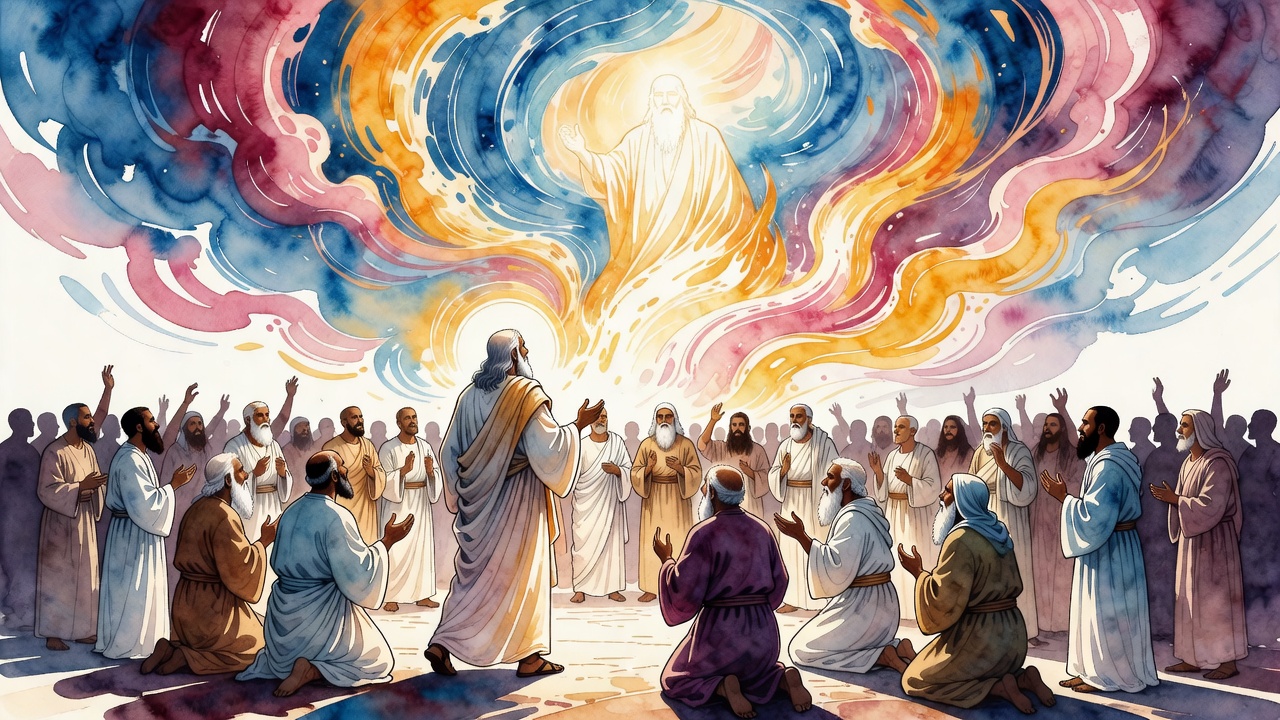
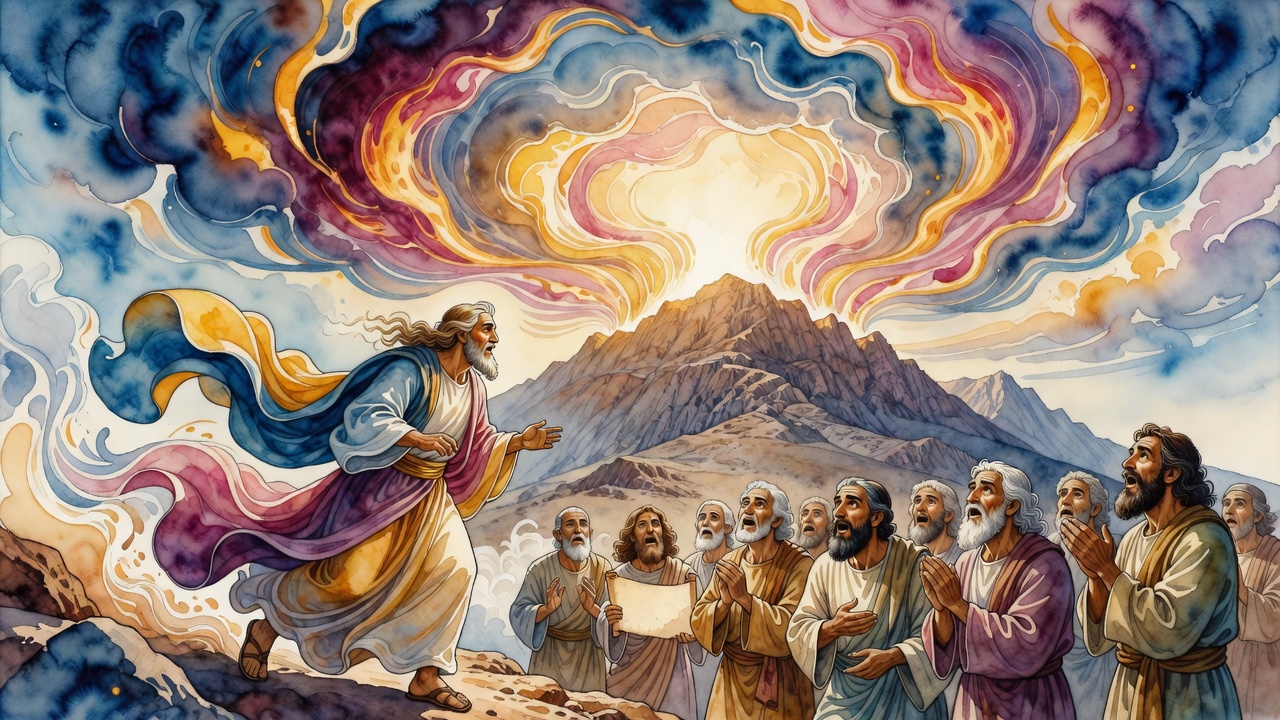
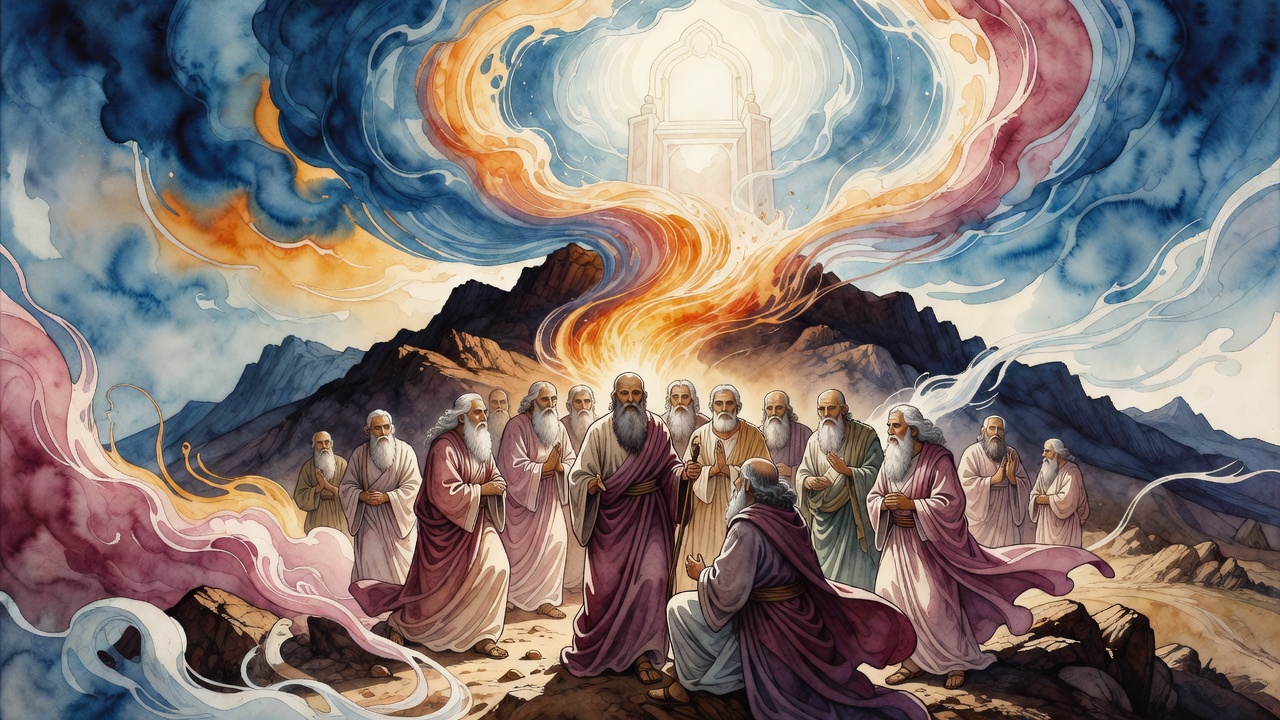
Then Moses went up, and Aaron went with him, and Nadav and Avihu, and seventy elders of Israel.
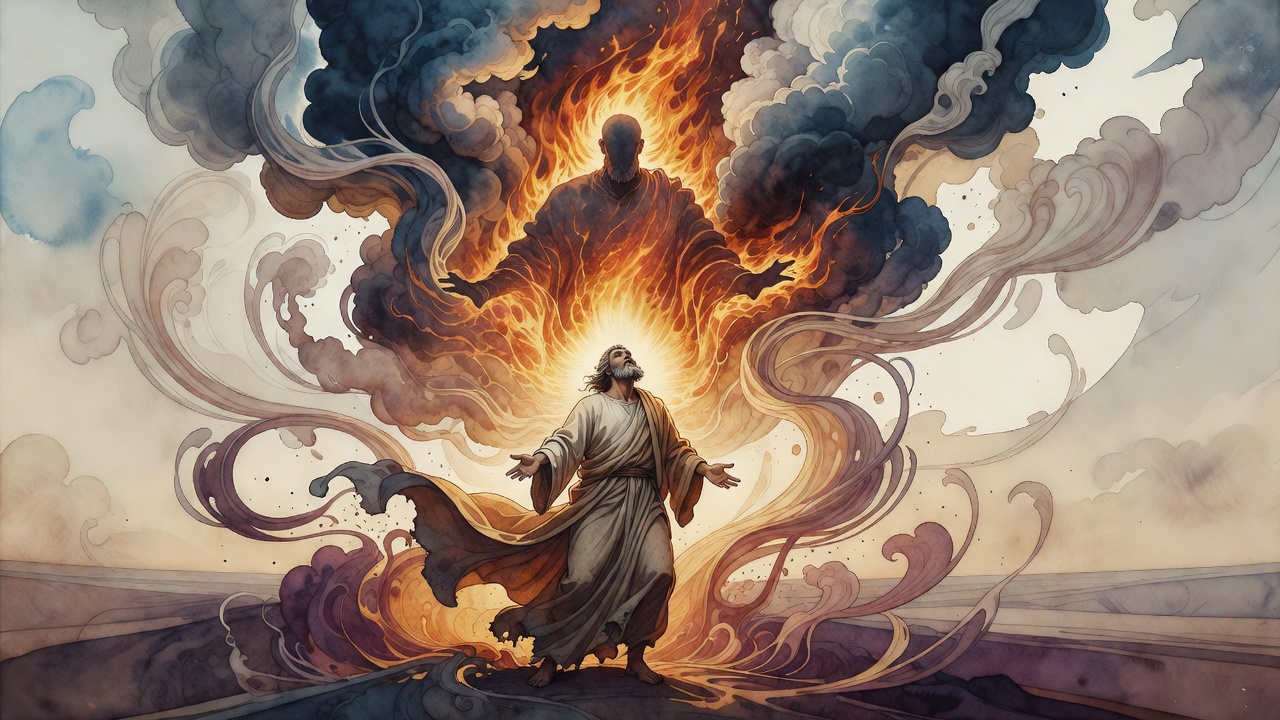
What happened at the top is stated without a hedge. They saw the God of Israel. Under His feet was something like a pavement of sapphire, and it was clear the way the sky is clear on the one day a year when the sky is completely clear.
At the sea He had come at them like a soldier, and the water had stood up and the chariots had gone down. On this mountain He came in the other aspect entirely, the one that is all mercy, and the same voice said I am the Lord your God so that nobody could climb back down and start telling people there were two powers up there running different departments.
Then seventy old men and three others sat down on the mountain and ate and drank.
They did not dissolve. They did not go blind. Hunger came back the way hunger does, and they answered it, and the ordinary thing they did next is the strangest detail in the whole ascent.
Ask Your Father and He Will Tell You
They came back down and went to work at the altar. There was no Temple, no organized priesthood, nobody whose job this was. The elders did it themselves, and the old ones among them handled the offerings with the strength of men forty years younger, because whatever had happened above the sapphire had not taken anything out of them.
A man destroyed by what he sees cannot report it, and witnesses were exactly what Israel was going to need. These seventy walked back into their tents and told their children, and their children told theirs. Every elder in Israel since who has been asked a question and known the answer stands at the end of that line.
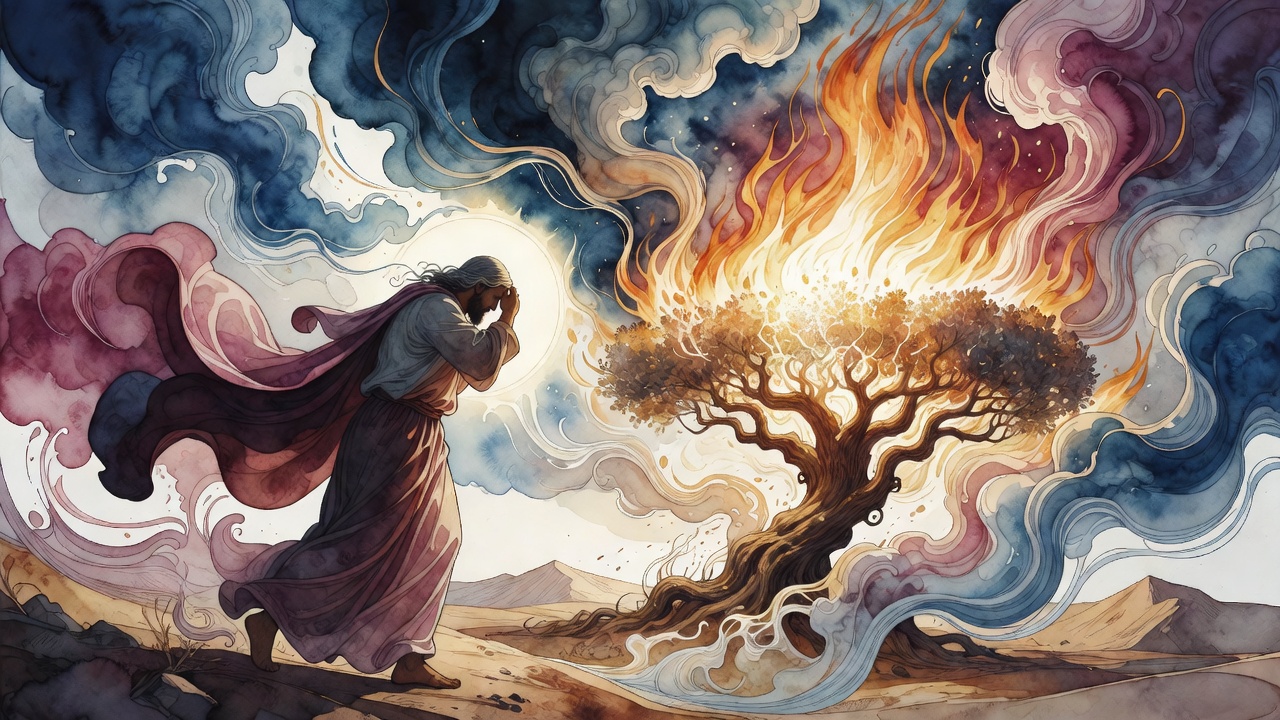
Moses would warn them later, hard, that they had seen no form at Horeb and should not go carving one. Both things were true at once. They had seen something real, and it had been bounded, held down to what a person can carry, refracted through sapphire and open sky. What they were forbidden was not remembering it. What they were forbidden was making anything out of it.
So the elders sat with the taste of a meal in their mouths, on a mountain, above a pavement, with the blood of the morning still drying on their clothes.
← All myths