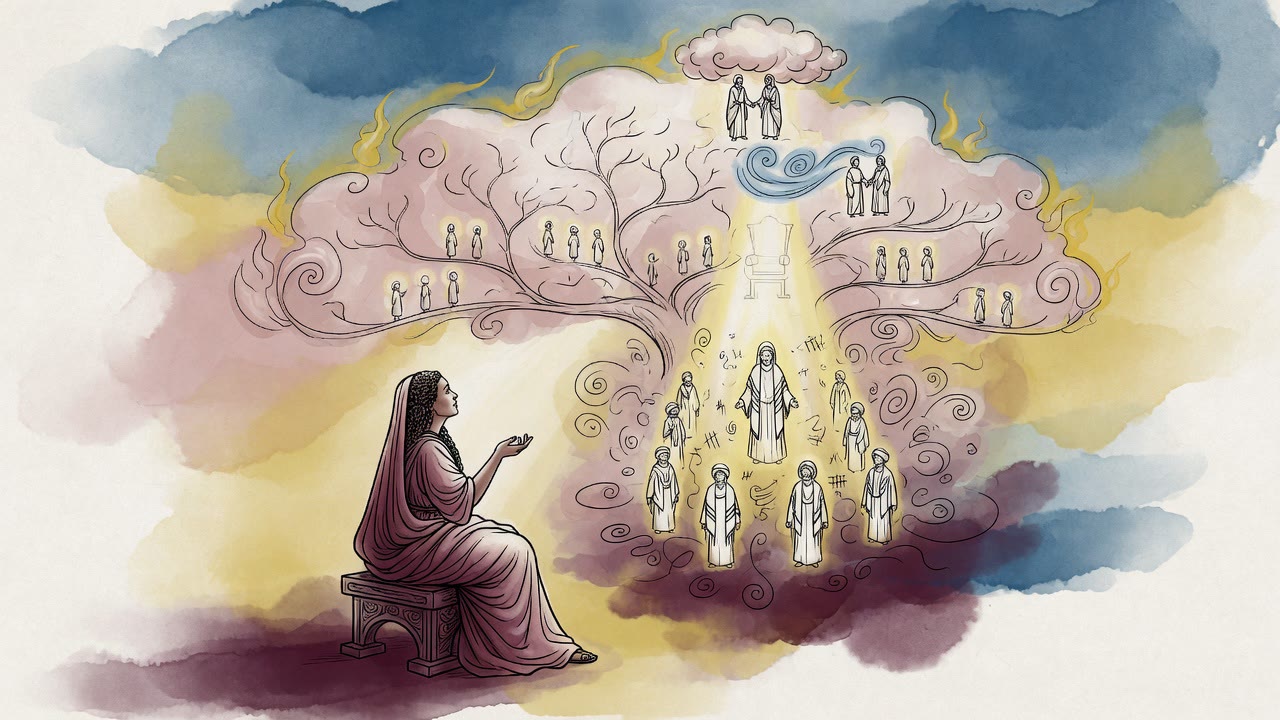
Moses Hid His Face at the Bush and Paid for It Later
The voice that called him out of the fire was his father's voice, and Amram had been dead for years. Moses answered it before he knew who was speaking.
Table of Contents
 Click for full size
The Voice in the Fire Belonged to Amram
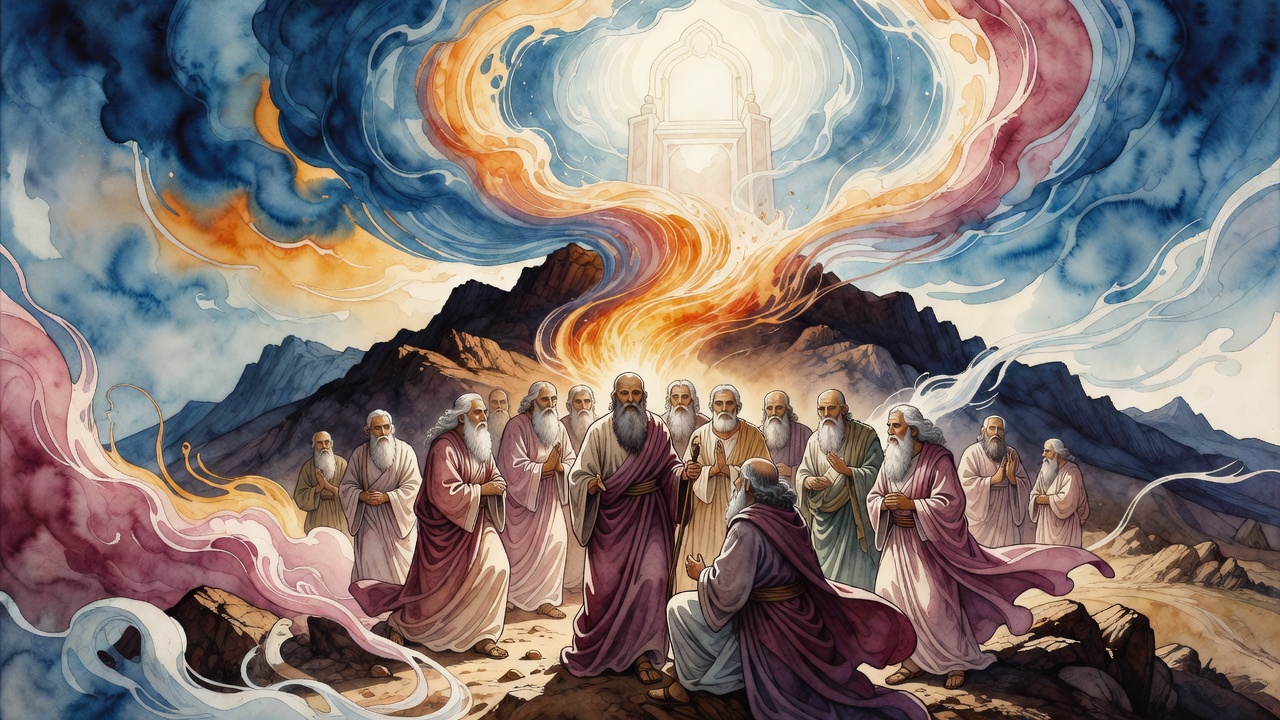
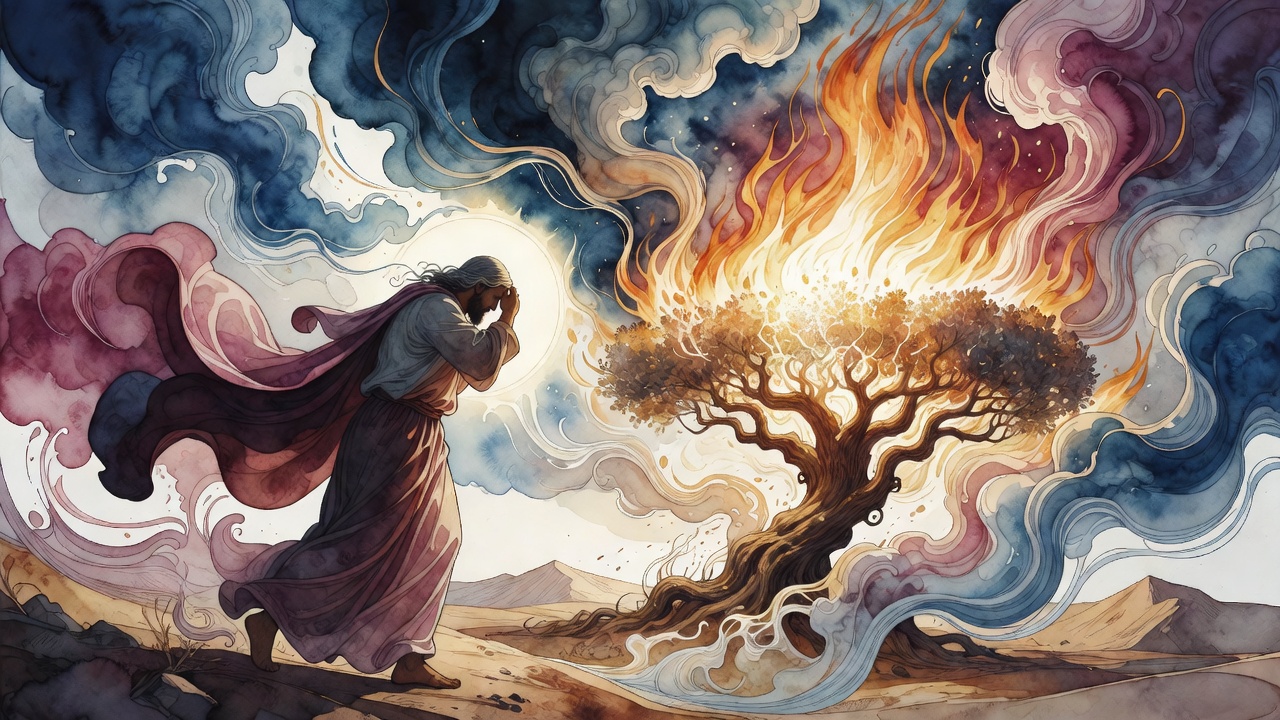
The sheep had gone up the slope ahead of him and Moses went after them, and that is when he saw it. Not a cedar. Not a terebinth. A low tangle of thorn, the kind that snags wool and tears skin, and a flame was sitting inside it and would not eat it.
Then his name, twice. "Moses, Moses."
He knew that voice. It was his father's voice, Amram's voice, and Amram was buried in Egypt. Moses said it out loud the way a man says a thing he wants badly to be true. My father has come. My father is alive. Then he answered the only way a son answers, with one word, the same word Abraham had used on the mountain with the knife in his hand. "Hineni." Here I am. Here I am for the priesthood. Here I am for the kingship. Whatever crown Israel would ever need, he offered to wear it before he knew who was asking.
The answer took the joy out of him in a single breath. "I am not your father. I am the God of your father, the God of Abraham, the God of Isaac, the God of Jacob."
Moses put his hands over his eyes.
Everything at That Bush Was Chosen to Calm Him
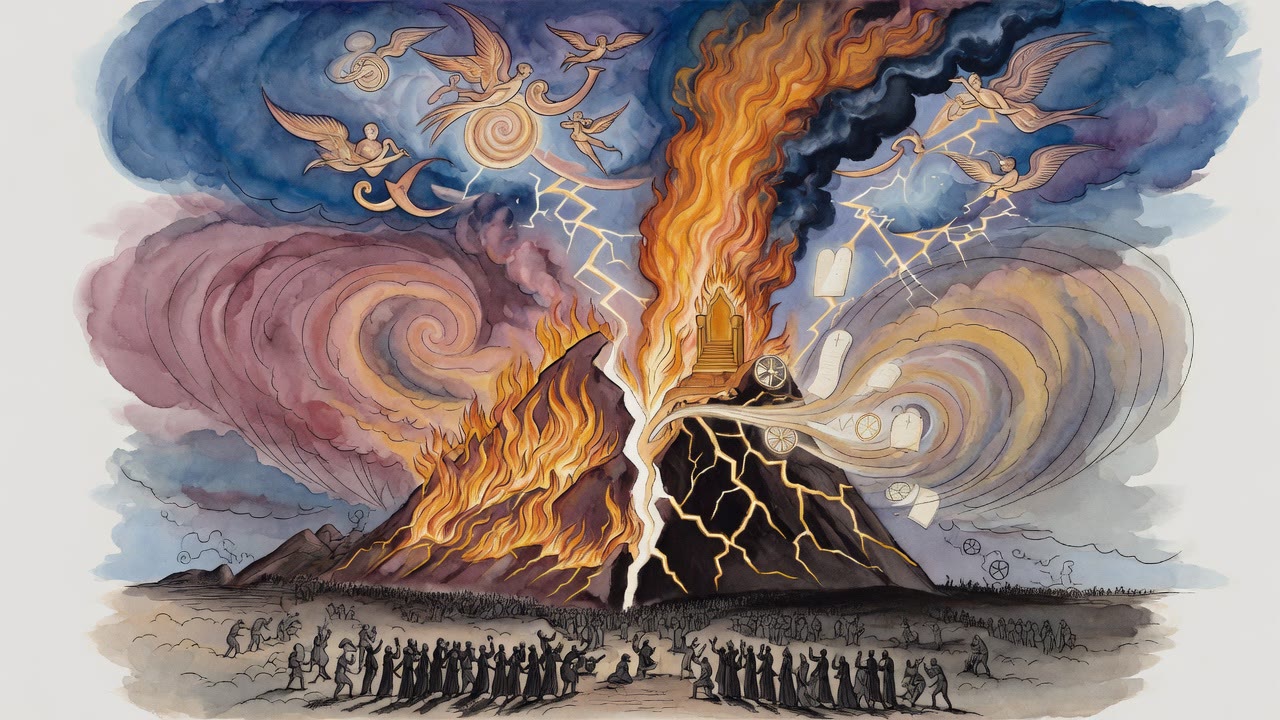
He was new at this. A prophet of a few seconds. A loud voice would have knocked him flat, and a quiet one he would have brushed off as wind, so God borrowed a dead man's voice to get him close. The fire was chosen too, set in the thorn to work on his heart, so that when he came back to this same mountain and found the whole of it burning he would not turn and run. And the bush was low because Israel was low. God would not speak out of a tall comfortable tree while His people sat in thorns.
All of that care, and the man covered his face anyway.
Seven Days of Backing Away From the Fire
God stayed at that bush and worked on him for seven days, and for seven days Moses edged toward the exit. "I am not a man of words." "Send by the hand of whoever You will send." He had a slow tongue. He had a killing behind him in Egypt and a flock in front of him in Midian. He had reasons, and they were good ones, and underneath all of them his eyes were still shut.
Rabbi Joshua ben Korḥa refused to call that piety. Moses did not do well, he said, when he hid his face. Had the man kept his eyes open in front of that flame, God would have shown him on the spot what stands above, what lies below, and everything still coming. The whole of it, at once, in Midian, before a single plague. He shut his eyes and the offer closed with them.
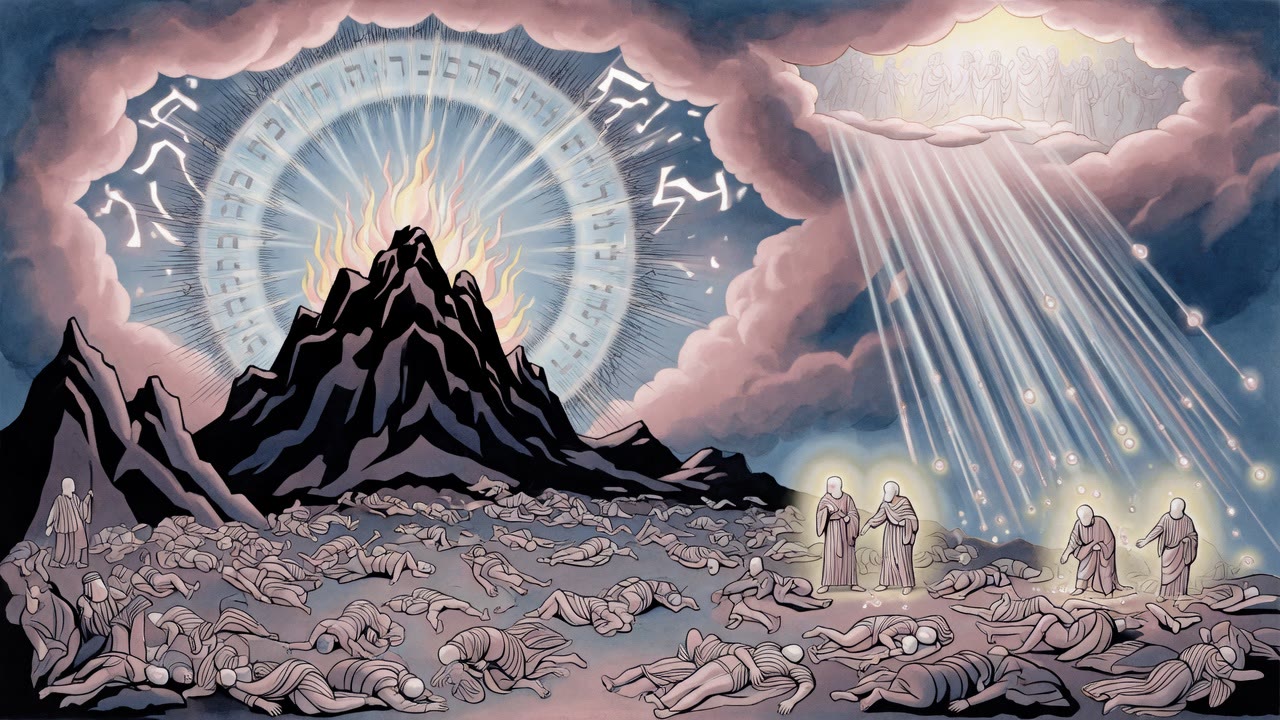
Rabbi Hoshaya heard it the other way and said Moses had shown his Maker a great courtesy. Nadav and Avihu did the opposite at Sinai. They bared their heads, fed their eyes on the divine presence, ate and drank, and no hand came down on them. Not that day.
Show Me Your Glory
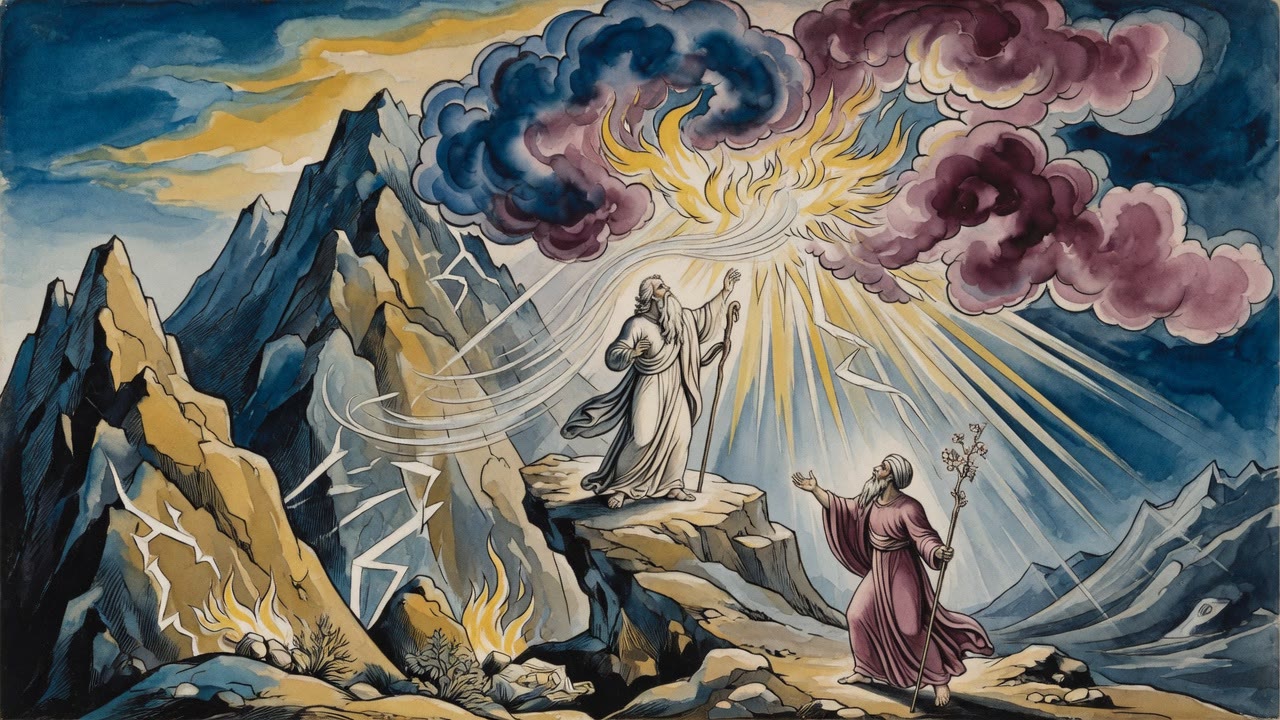
Forty years of arguing later, after the plagues and the sea and the calf and the smashed tablets, Moses stood in the tent and asked for the one thing he had turned away from. "Show me, please, Your glory."
The angels came apart when they heard it. We stand here night and day, they said, and we are not shown Your glory, and this one, born of a woman, asks to see it. They closed on him to kill him, and they would have done it, except that God put a hand between them and the man.
Then the answer, quiet, and worse than the angels. "When I sought you, you did not seek Me. Now you seek Me, and I do not seek you."
The Cave Without a Needle's Opening
What he was given instead was rock. God set him in a cleft, in the cave on Horeb where Elijah would later sleep with Jezebel's men hunting him. Solid stone on every side. If that cave had held one gap the width of a needle's point, the light going past outside would have burned both prophets to ash, centuries apart, for the same reason.
Sealed in the dark, Moses caught nothing but the glare that bounced off the walls as the retinue went by. It was enough. His skin took the light and held it.
They Would Not Come Near His Face
He came down the mountain lit up and did not know it. Aaron stopped walking. The princes of the assembly stopped behind him. Nobody would close the distance, and Moses had to call them back one group at a time.
So the gesture came home. Because he hid his face at the thorn bush, God spoke with him mouth to mouth. Because he was afraid to look, they were afraid to approach. Because he would not lift his eyes to God, it was written of him that he beholds the likeness of the Lord, more than any prophet before or after. Three refusals, three payments, and the vision he actually asked for never came.
He reached for a cloth and tied it across his face, and he wore it in the camp from then on, and took it off only when he went back inside to speak.
← All myths