Parshat Behaalotecha6 min read

Moses Lit Seventy Lamps From One Unspent Flame

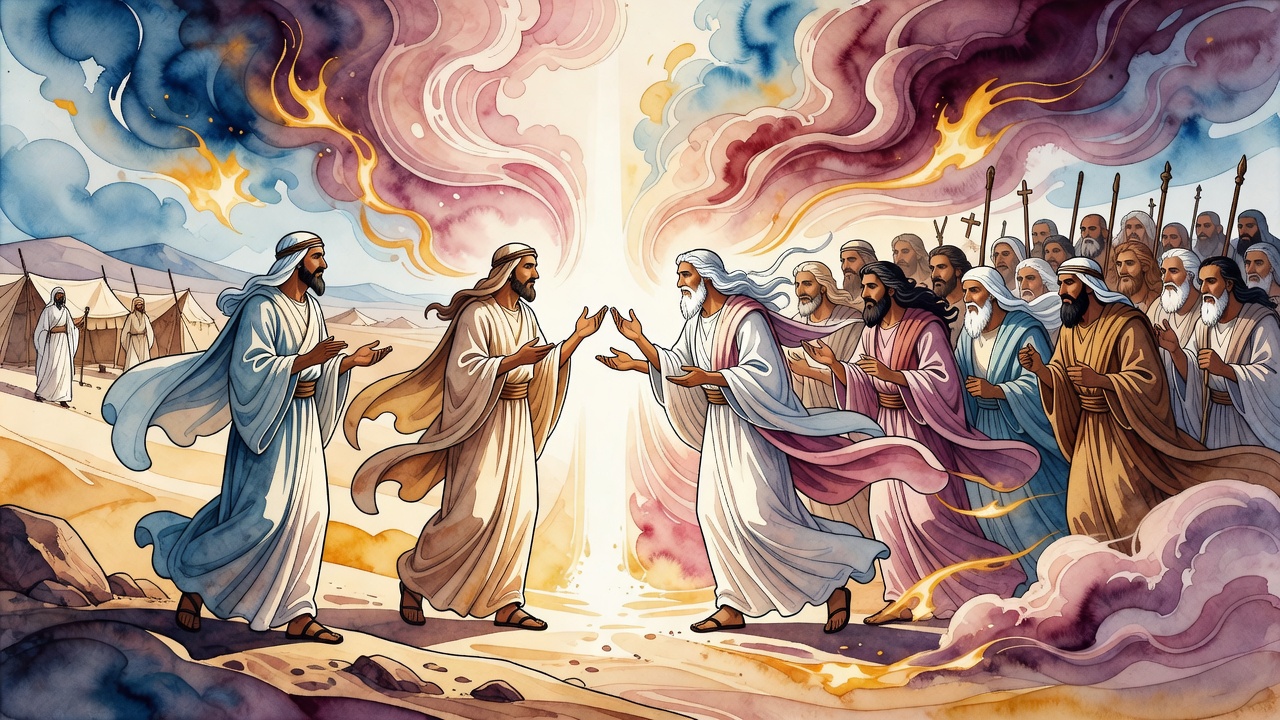
Moses broke under Israel's complaints. God took spirit from him like light from a menorah lamp and set it on seventy elders.

Curated by Arthur · Told by Maggid ·
Table of Contents
  1. He Broke in Front of God
  2. The Men Who Took the Blows in Egypt
  3. The Fear That He Would Be Less
  4. Into the Tent of Meeting
  5. Seventy Backs
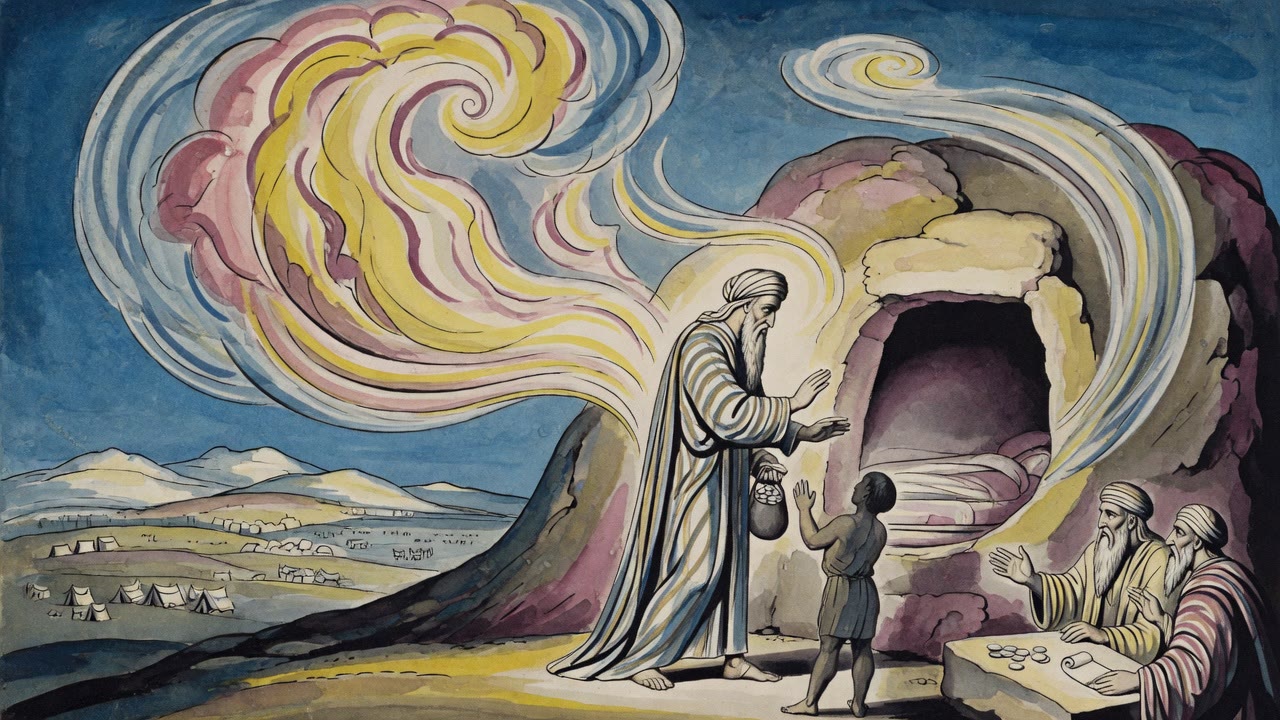
Moses Lit Seventy Lamps From One Unspent Flame Click for full size

He Broke in Front of God

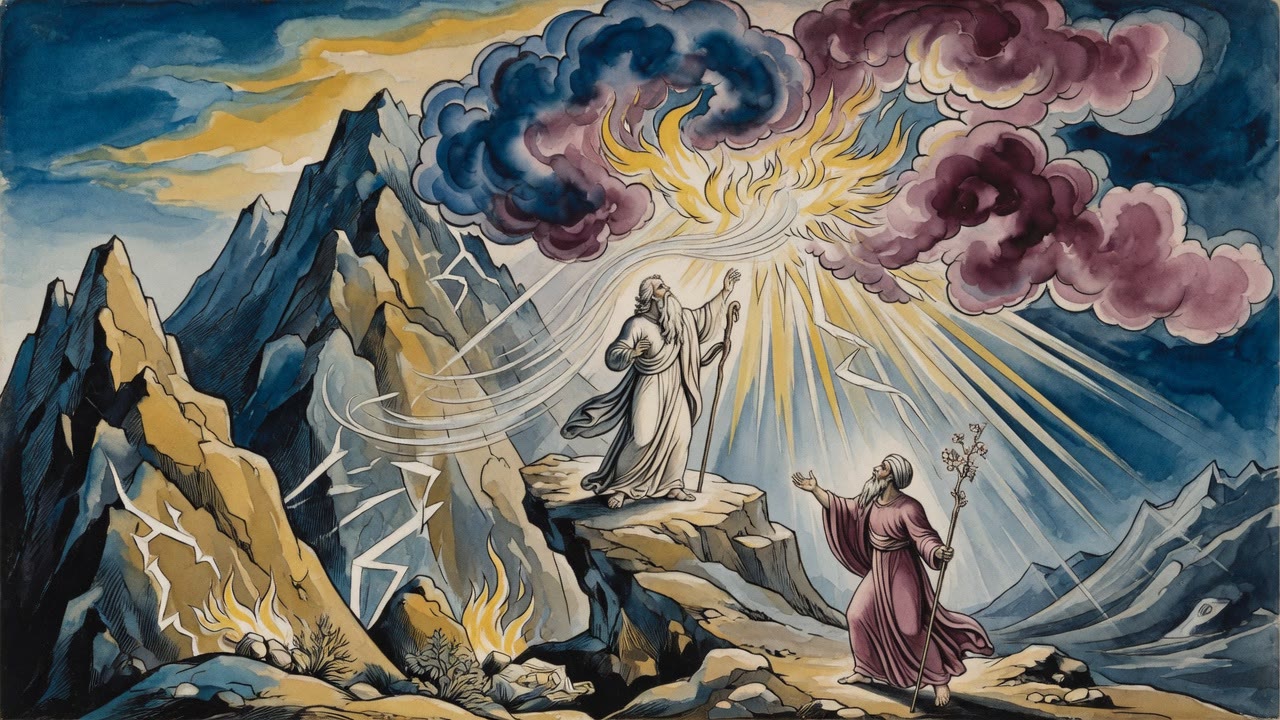
Moses did not break in front of the people. He broke in front of God, and the sentence he used named exactly what the camp was doing to him. "How can I bear alone your contentiousness, your heresy, and your caviling?"

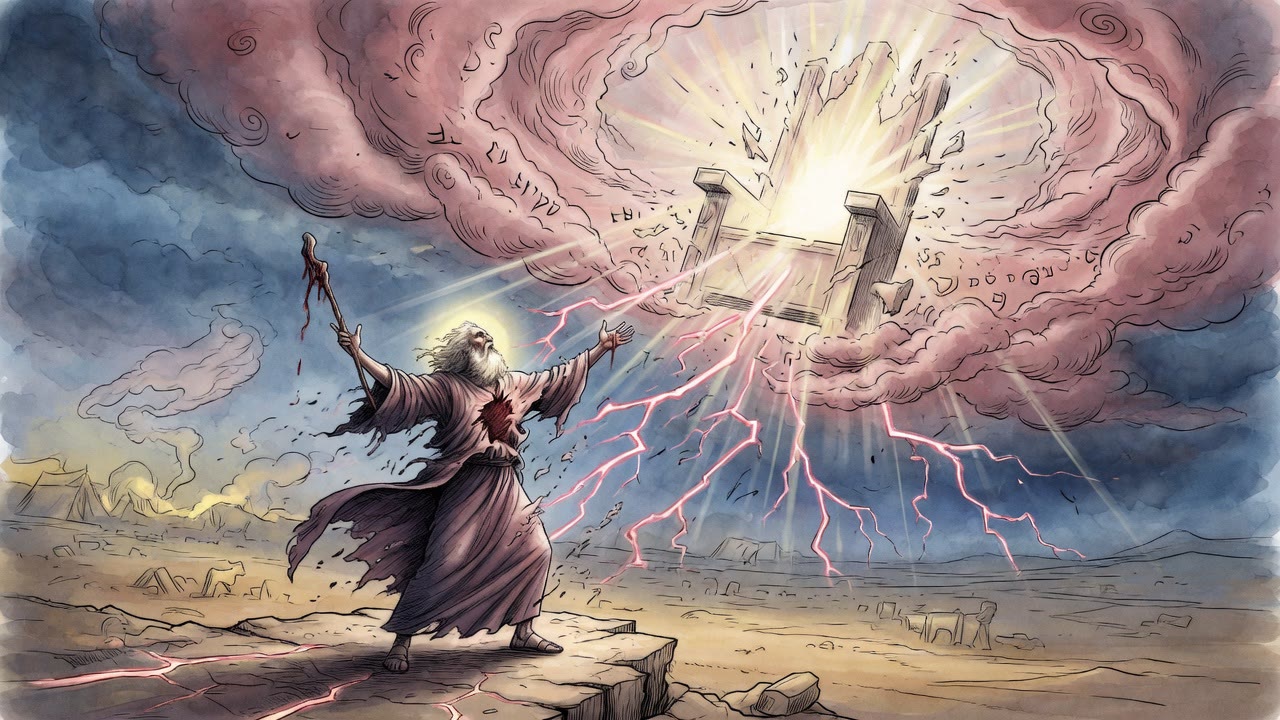
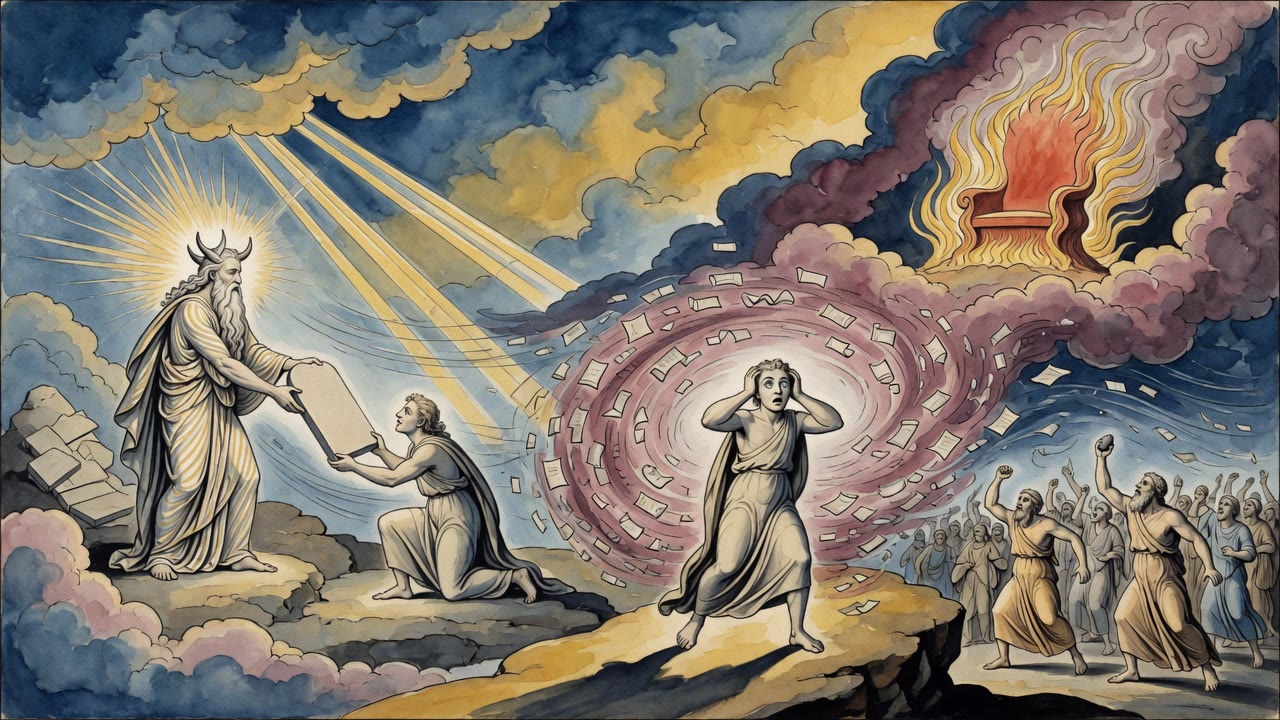
It was not a speech about leadership. The complaints came at him from waking until sleeping, about meat, about water, about the shape of the bread, about Egypt, which the same mouths now remembered as a country full of cucumbers. The man the Torah calls more humble than anyone on the face of the earth is called very great in the same Torah, and the sages read that greatness as money. So he had money. He had hands that had cut the second tablets out of sapphire after he smashed the first pair on the mountain. None of it took a single quarrel off his back.

God did not tell him to be stronger. "What you have asked for," He said, "I have granted. Gather seventy men."

The Men Who Took the Blows in Egypt

Not seventy volunteers. Seventy out of the elders of Israel, men the camp already knew by name, picked for wisdom and strength and years and for knowing the hidden arts, and seventy exactly, because that is the count a court has to keep when it sits in judgment for Israel, and it has kept that count ever since.

Some of them Moses had seen before, in Egypt, still wearing what it cost. When the straw was cut off and the brick quota stayed where it was, the Hebrew officers were the men who stood between the taskmasters and their own crews, and they took the beating rather than give up the names. They had shared the hardship, so they would share the welfare. That was the whole of the reasoning, and it was not sentimental.

He went to them one at a time. "How fortunate you are to have been selected," he told each man, which was true and was also the easy half of the errand. Then, standing in front of somebody who had already carried another man's punishment once, he had to say the rest of it: that the office came with opposition, that there would be hostility in it, that the camp would turn on him the way camps turn, and that he was being asked to stand out in the noise on purpose.

The Fear That He Would Be Less

"And I will go down," God said, which He does not say often, ten times in the whole Torah, and every one of them at a place where somebody had run out of strength. "And I will speak with you." Not with them, only with him, so the thing that made Moses himself was not being handed around the camp.

Then came the sentence that can be read two ways. "I shall increase from the spirit which is upon you, and I will place it upon them." From. Taken off him and set on seventy other men, seventy portions out of something he had barely enough of already.

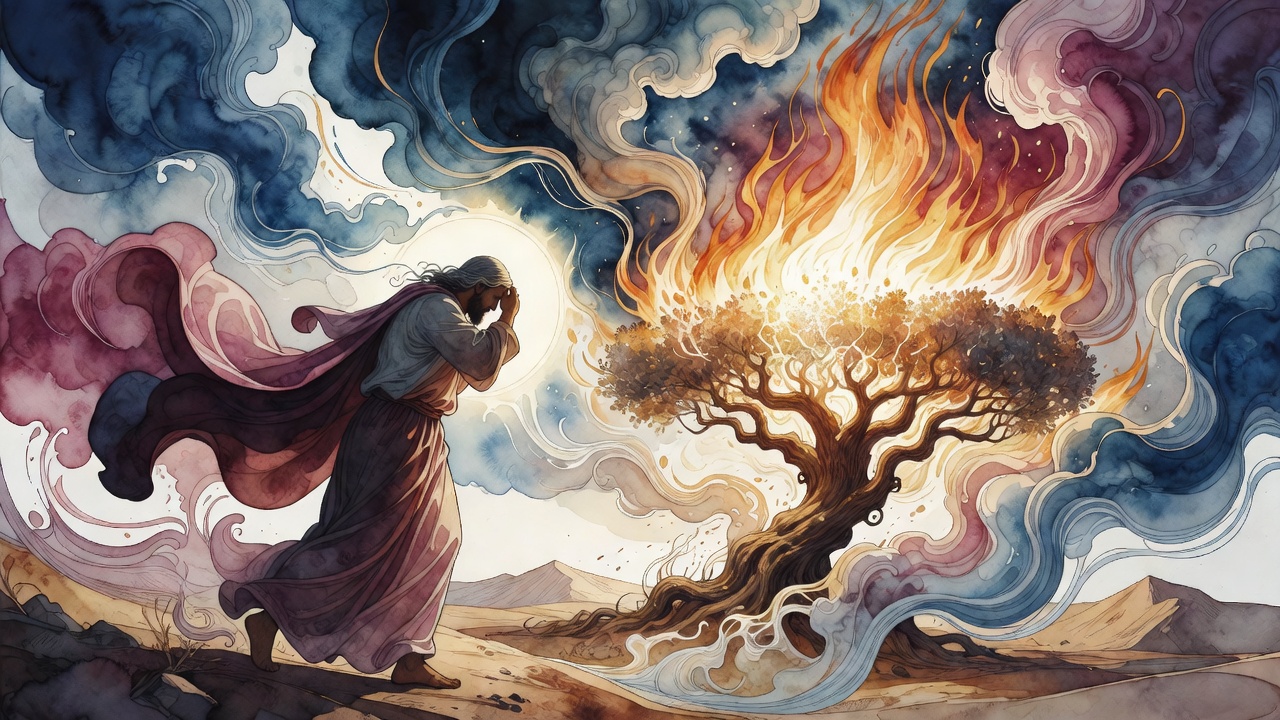
The answer to that fear is a lamp. Set one lamp on a menorah (the lampstand) and light seventy more from it, and all seventy of those lamps burn, and the flame they were lit from is unspent, exactly as bright as it was before anyone came near it with a wick. Spirit is not a jug with a level in it, so nothing at all came off Moses when the other lamps caught. "And they will bear with you," God said, which was the only clause Moses had asked for in the first place.

Into the Tent of Meeting

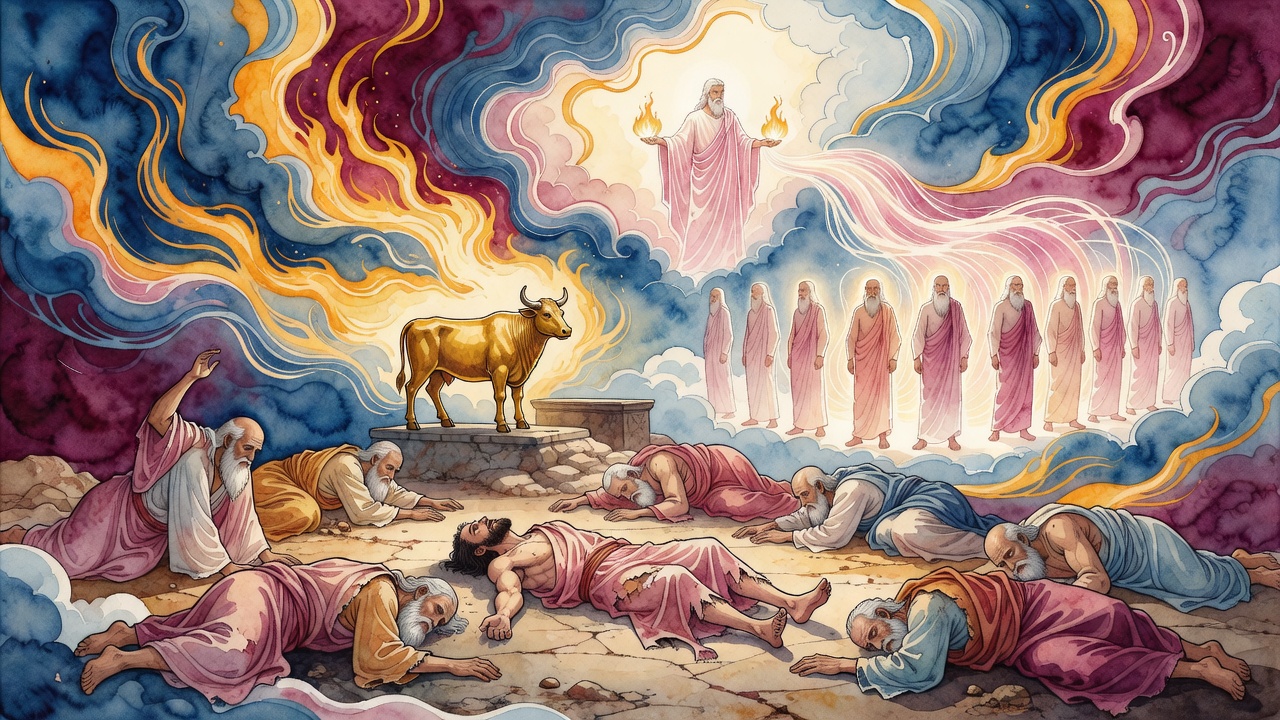
He brought them up through the front of the camp where everybody could watch, and he took them into the Tent of Meeting, because it was not enough that seventy men now had authority. The camp had to see them walk in. "How beloved are these," the people said, "who have gone in with Moses to hear the word of the Holy One."

Wherever the Torah puts elders in a room, God is doing them honor. Moses had gathered them in Egypt before there was a nation to gather. They had come partway up Sinai and stopped where they were told to stop. Rabbi Shimon ben Yochai carried the pattern all the way forward to the end of things: the moon will be shamed and the sun put out of countenance, and the Lord of hosts will reign on Zion, and He will accord His elders honor. Mistreat one of them and the injury goes onto the short list of things God does not overlook.

Seventy Backs

Nothing about the wilderness got easier. The water was still short, the meat still had not come, and the complaining started up again in the morning the way it always did.

What changed was where it landed. The noise reached seventy men before it reached the one man, and those seventy could answer it, since the whole camp had watched them walk into the tent. Moses stayed the lamp on the stand with exactly the light he had come in with. Outside, an elder who used to take a whip across the back for his brick crew in Egypt stood in the open and let the first quarrel of the day come at him, and he did not need to send it any further up.


← All myths
From the tradition

Sources

3 sources

The texts behind this telling. Some cards carry a translation of the source; others are our own retelling of it, and each card says which. Every card links out to the original.

Sifrei Bamidbar 93:1Sifrei Bamidbar

Retold in our words. Read the original at the link below.Sifrei by Rabbi Shraga Silverstein · CC-BY

Moses certainly did.

In the Book of Numbers – Bamidbar in Hebrew – we find him at a breaking point. The Israelites are complaining, constantly. He’s exhausted. He cries out to God, basically saying, "I can't do this alone!" In Deuteronomy (Devarim) 1:12, he puts it even more bluntly: "How can I bear alone your contentiousness, your heresy, and your caviling?" Can you imagine?

So, what does God do? God responds with a promise, a solution, and a bit of reassurance. Our text, from Sifrei Bamidbar 93, dives into the heart of this moment.

The verse in (Numbers 11:17) states, "And I will go down (veyaradeti)." Now, the Sifrei Bamidbar points out that this is one of ten instances of God "going down" – yeridoth – mentioned in the Torah. What does it mean that God "goes down?" It's not a literal descent, of course. It signifies God's presence becoming more accessible, more immediate, in the face of human need.

The verse continues, "and I will speak with you." The Sifrei emphasizes: "with you, but not with them." This highlights the special relationship between God and Moses, the leader chosen to intercede and guide. But the real kicker comes next: "And I shall increase from the spirit which is upon you, and I will place it upon them."

Here's where things get really interesting. What does it mean to "increase from the spirit?" Was Moses going to somehow lose something by sharing his wisdom and prophetic ability?

The Sifrei Bamidbar offers a beautiful analogy: Moses was "like a lamp placed upon a menorah, from which many lamps are lighted without the first losing any of its light." A single flame, used to ignite countless others, doesn't diminish in the process. Its essence remains whole, undiminished.

That's the key. Moses's wisdom, his connection to the Divine, wasn’t a finite resource. Sharing it didn't lessen him; it amplified the light in the world. Isn't that a powerful image?

This sharing of the spirit leads to the final piece of the puzzle: "and they will bear with you." God tells Moses that these newly endowed individuals will help him carry the burden. Because, as Moses himself lamented, he couldn't handle the constant complaints and challenges alone. God is essentially saying, "I’m giving you help. You're not meant to do this by yourself."

So, what’s the takeaway here? It's not just about Moses, is it? It's about leadership, about community, and about the boundless nature of wisdom and spirit. We often feel like we have to do everything ourselves. We hoard our knowledge, fearing that sharing it will somehow diminish us.

But this passage from Sifrei Bamidbar challenges that notion. It suggests that true leadership lies in empowering others, in igniting their own inner light. And that, by sharing our burdens and our gifts, we not only alleviate our own stress but also create a brighter, more resilient world.

Maybe, just maybe, that’s a lesson we can all take to heart. What burdens are you carrying that could be shared? What light within you is waiting to be kindled in others?

Full source
Sifrei Bamidbar 92:1Sifrei Bamidbar

Retold in our words. Read the original at the link below.Sifrei by Rabbi Shraga Silverstein · CC-BY

Moses was carrying the weight of an entire people on his shoulders, and somewhere along the way even the meekest man on earth hit his limit. No wonder he was feeling the pressure! In the book of Bamidbar (Numbers), specifically chapter 11, verse 16, we find a fascinating solution to Moses' burden, and it reveals something profound about leadership, authority, and the enduring nature of the sacred.

Moses basically says, "I can't do this alone!" And how does God respond? According to Sifrei Bamidbar, God says, "What you've asked for, I’ve granted." He instructs Moses to gather seventy elders of Israel. But why seventy? And what's so special about these elders?

Sifrei Bamidbar explains that the number seventy is crucial for the Sanhedrin, the Jewish high court. There must always be seventy members. It also emphasizes the qualities these men should possess: wisdom, strength, seniority, and even a knowledge of "magic arts," which we can understand as a deep understanding of esoteric knowledge and tradition.

It's not just about their qualifications. The text stresses that these elders must be "from the elders of Israel." This phrase highlights the immense respect and honor God shows to elders throughout the Torah. We see it in Exodus when Moses assembles the elders (Exodus 3:16), and again when they ascend Mount Sinai (Exodus 24:1). Even in Leviticus, Moses calls upon the elders (Leviticus 9:1). The text argues that wherever you find elders, you find God according them honor.

Rabbi Shimon ben Yochai takes this idea even further. He asks, how do we know this respect for elders will continue in the future? He answers with a quote from Isaiah (24:23): "And the moon will be shamed and the sun abashed. For the L-rd of hosts will reign on Mount Zion and in Jerusalem, and He will accord His elders honor." If God, who created the universe, will honor elders, then how much more should we, mere mortals, do the same?

The text also highlights the consequences of disrespecting elders. It points to (Isaiah 47:6), where God expresses anger over the mistreatment of an elder. God "pardons" many things, the text says, but mistreating an elder is particularly grievous. It’s a powerful reminder of the value placed on wisdom, experience, and the contributions of those who have come before us.

Sifrei Bamidbar goes on to explain the selection process for these elders. They must be men known and respected by the community, individuals praised for their uprightness, piety, and wisdom. The text even connects them to the "officers" described in (Exodus 5:19), who shared in the Israelites' suffering in Egypt. Because they shared in the hardship, they now get to share in the welfare.

And how should Moses approach these newly appointed elders? Not with demands, but with words of praise and encouragement: "How fortunate you are to have been selected!" Yet, even with praise, Moses needs to be upfront. He must warn them that this role comes with challenges, that they will face opposition and even hostility. They must understand the weight of their responsibility.

Finally, Moses is instructed to bring the elders into the Ohel Moed, the Tent of Meeting. This act is meant to inspire awe, fear, and honor among the people. The people should say, "How beloved are these, who have entered with Moses to hear the word of the Holy One Blessed be He!"

What does this all mean for us today? This passage from Sifrei Bamidbar isn't just a historical account; it's a timeless lesson about leadership, respect, and the enduring nature of the sacred. It emphasizes the importance of recognizing and valuing the contributions of those who have come before us and understanding that true authority comes not from power, but from service and dedication to something greater than ourselves.

And perhaps most importantly, it suggests that the sacred isn't confined to a specific place or time, but is present whenever we gather in the spirit of shared purpose and mutual respect, just like those seventy elders in the Tent of Meeting.

Full source
Sifrei Bamidbar 101:1Sifrei Bamidbar

Retold in our words. Read the original at the link below.Sifrei by Rabbi Shraga Silverstein · CC-BY

Sifrei Bamidbar turns to What Does It Mean That Moses Was Extremely Humble.

What does that really mean? The Sifrei Bamidbar, an ancient midrashic (rabbinic interpretive commentary) collection on the Book of Numbers, dives right into this seemingly simple statement. Was Moses humble in his own mind, truly believing it? Or was it perhaps a reflection of his material possessions?

The text immediately throws us a curveball. It challenges the initial assumption, suggesting perhaps Moses' humility was tied to his wealth. But the text swiftly counters this. How? By pointing to another verse! In Exodus (Shemot 11:3), it says, "The man Moses, also, was very great." And in that context, "great" refers to wealth. So, if Moses was wealthy, was his humility somehow connected to that? The Sifrei seems to be teasing out the complexities of judging inner character from external circumstances.

This brings us to a fascinating detour: the Tablets of the Law, those monumental symbols of God's covenant with Israel. The Sifrei Bamidbar makes a surprising claim: the second set of tablets, the ones Moses carved himself after the first were shattered, were made of sapphire!

Where does this idea come from? Deuteronomy (Devarim 10:1) instructs Moses to "Carve out for yourself two tablets of stone like the first." The Sifrei argues that "like the first" implies they were made of the same material: sapphire. But how do we know the first tablets were sapphire?

Here's where the midrash gets clever. It draws a parallel between two verses, using a technique called gezerah shavah – a method of rabbinic interpretation that connects two seemingly unrelated verses based on a shared word. (Exodus 32:16) states, "And the (first) tablets were the work of God," and (Exodus 24:10) describes a vision: "…and under His feet, as the work of a pavement of sapphire." The shared word is "work." Because "work" in the vision refers to sapphire, the Sifrei argues, so too does "work" in the context of the tablets. It's a beautiful, almost poetic connection!

Imagine Moses, the most humble of men, crafting these precious sapphire tablets, evidence of both divine law and human effort. The Zohar, that foundational text of Jewish mysticism, speaks of the immense spiritual power held within sapphire, linking it to divine wisdom. Could Moses' connection to these sapphire tablets have amplified his already remarkable humility?

But the Sifrei doesn't stop there. It continues to probe the depths of Moses' humility. The verse in Numbers states he was "more humble than any man on the face of the earth." Does that mean he was more humble than even the patriarchs, Abraham, Isaac, and Jacob?

Rabbi Yossi weighs in, asserting that yes, Moses was even more humble than the forefathers. A bold statement! And the Sifrei pushes further: "more humble than any man on the face of the earth" – does this exclude the angels? The implication being that perhaps angels possess a form of humility beyond human comprehension.

What does all this tell us? It's not just about Moses. It's about the ongoing quest to understand humility itself. It's a reminder that true humility isn't about self-deprecation, but about recognizing something larger than ourselves, whether that's God, the divine spark within each person, or the vastness of the universe. The Sifrei Bamidbar invites us to contemplate where we stand on the path to humility, and to remember that even the greatest among us, like Moses, were constantly striving to embody this essential virtue. What does it mean to you, to be humble?

Full source