Moses Offered His Life So Wrath Would Land on Him
Twice Moses wagered his own life so Heaven's fire would not mark Israel. Spirit shared like lamp from lamp, and a shepherd stepped into the burn.
Table of Contents
 Click for full size
Twice the Same Wager
Twice the same kind of word fell from Moses' mouth, and both times it was a wager of his own life.
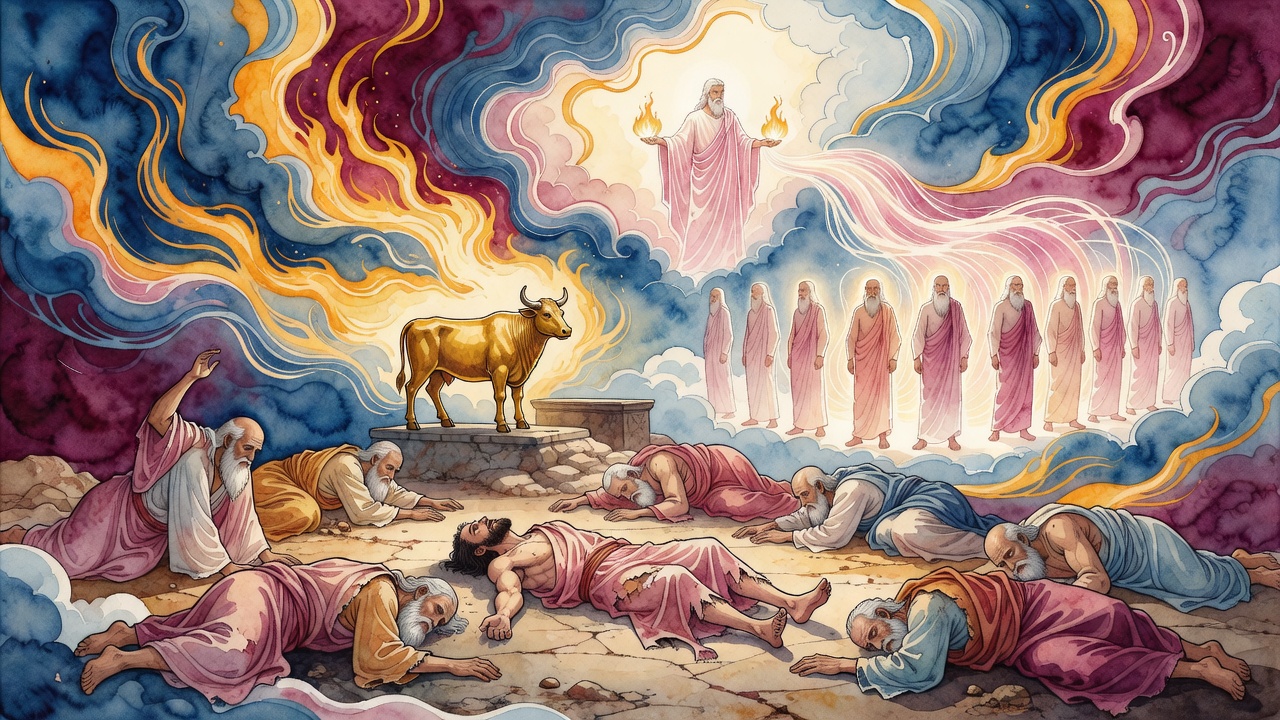
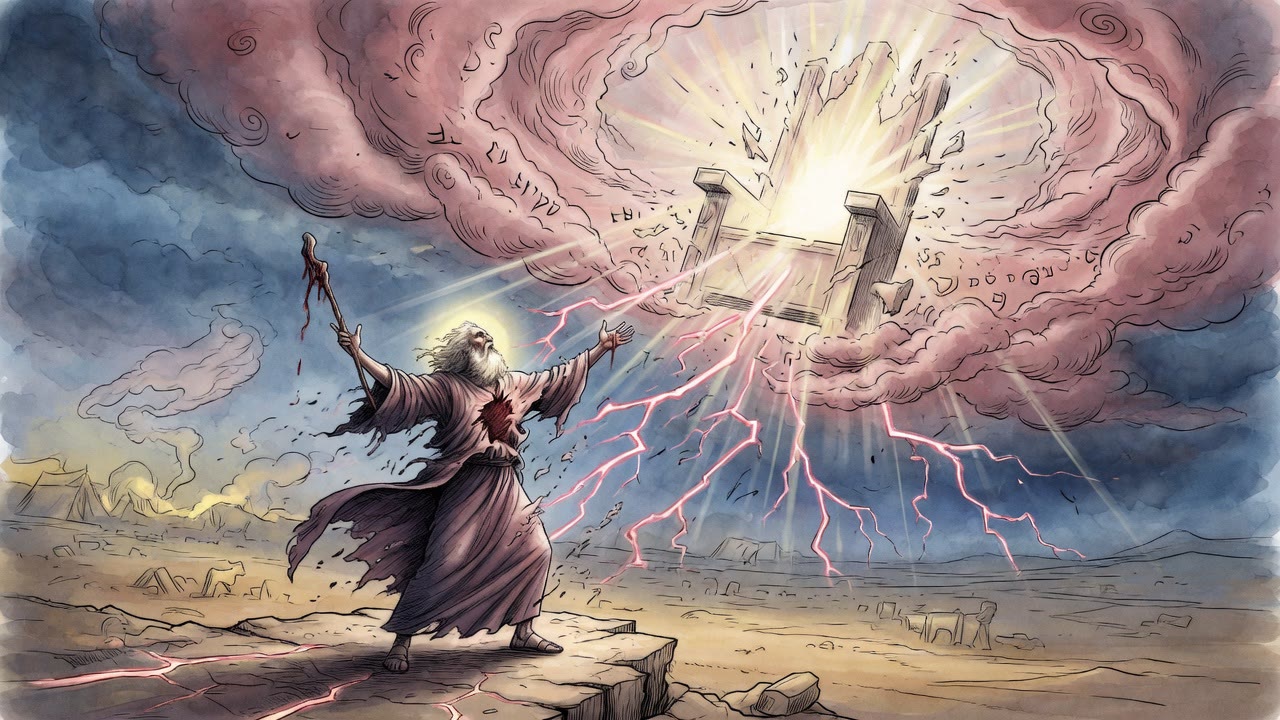
At the golden calf he had cried, "If not, blot me out, I pray, from the book that You have written." The tablets were broken. The camp still smelled of gold and dance. Moses put his name where the page of life was about to be erased for a people.
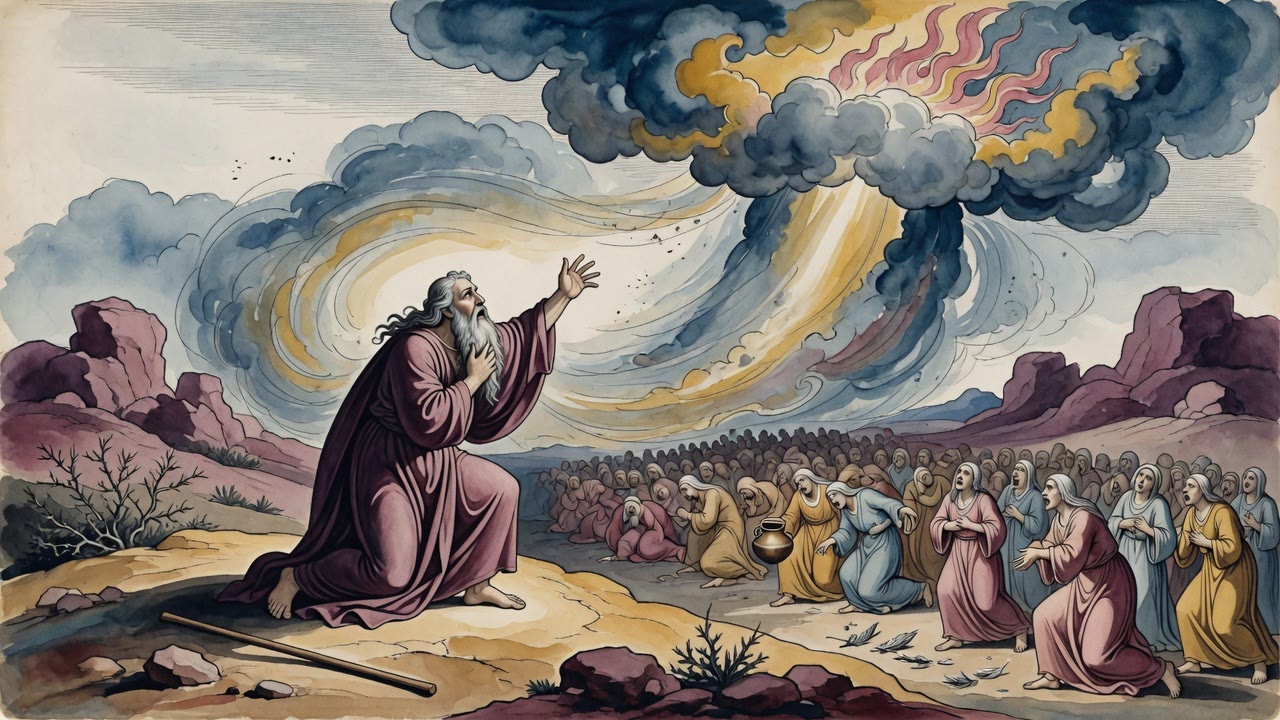
Now, crushed beneath the weight of a people who wept for meat, he cried again: "If You deal thus with me, kill me, I pray, kill!" The complaint for flesh had worn him thinner than the desert sun. He did not want to watch the next fire fall on tents he had led out of Egypt.
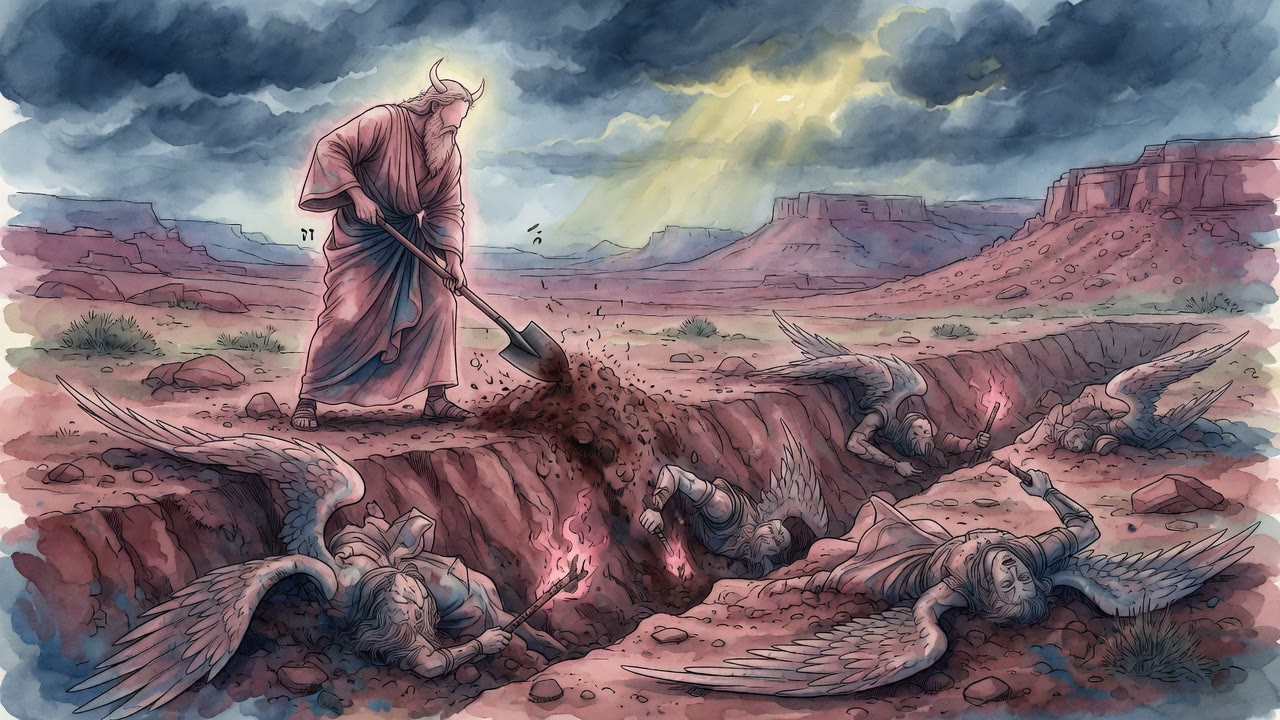
The sages heard no despair in this. They heard a shepherd who knew his God too well to gamble with the flock. When the wrath of the Holy One is kindled, it does not pass without leaving its mark. No anger of Heaven departs without an impression burned somewhere into the world. Rather than let that fire fall upon Israel, Moses stepped between, offering his own life as the place where the burning might land.
My Evil, Their Shield
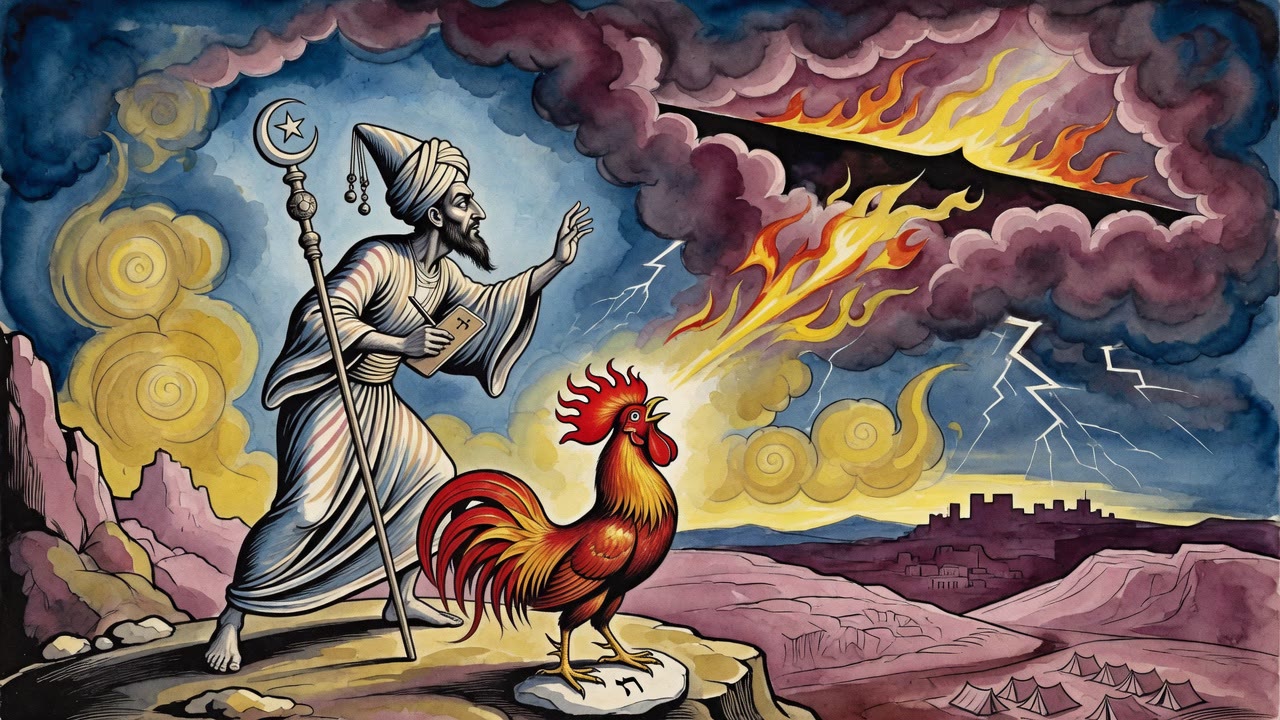
Listen to how he phrased it: "Let me not look upon my evil." His evil? The wretchedness was Israel's, not his. He should have said "their evil." But Scripture itself flinched from the words and softened them, veiling the people's guilt behind their leader's name. A mercy folded into the very grammar of the verse: even the letters of Torah will shield Israel when a faithful shepherd offers himself first.
The camp still smelled of quail and complaint. Moses stood in the middle of the smell and put his own name where the accusation belonged. That is how a shepherd moves when he understands that wrath always finds a surface. If the surface must burn, let it be the one who can bear the title without destroying the flock's future.
He did not romanticize the people. He intercepted the sentence. Love, here, looked like volunteering to be the scar.
The Cloud Came Down
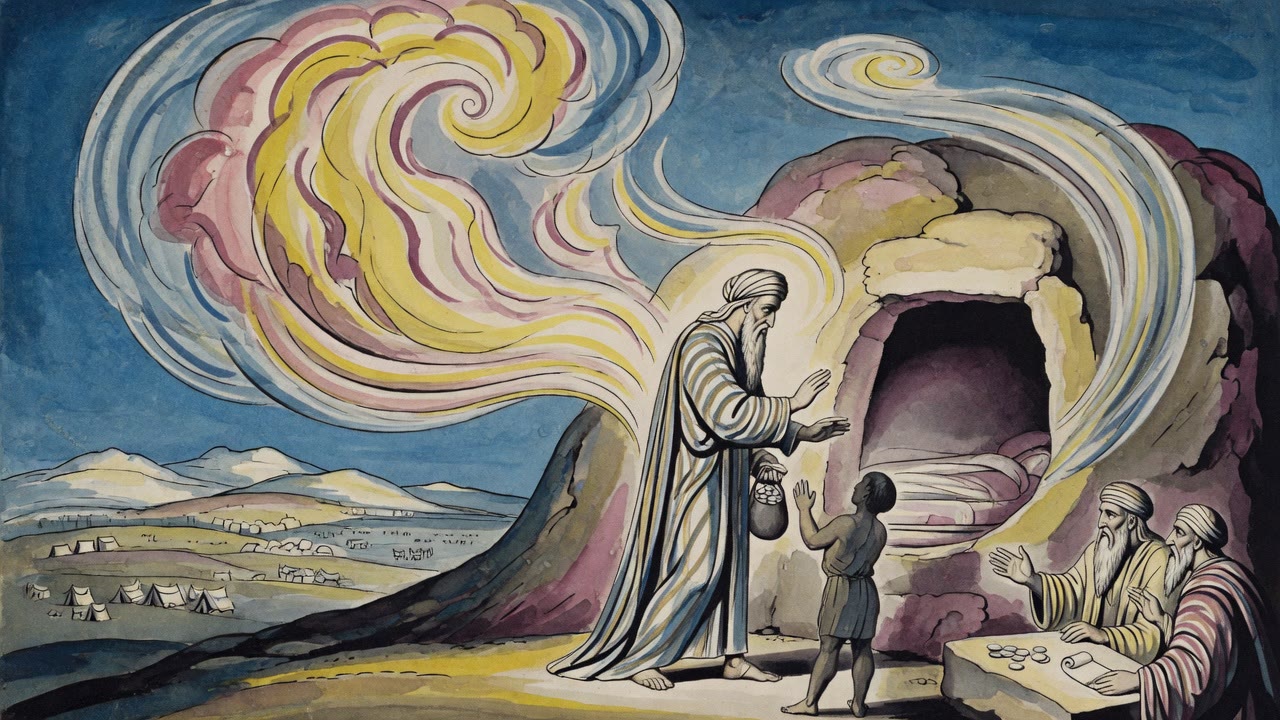
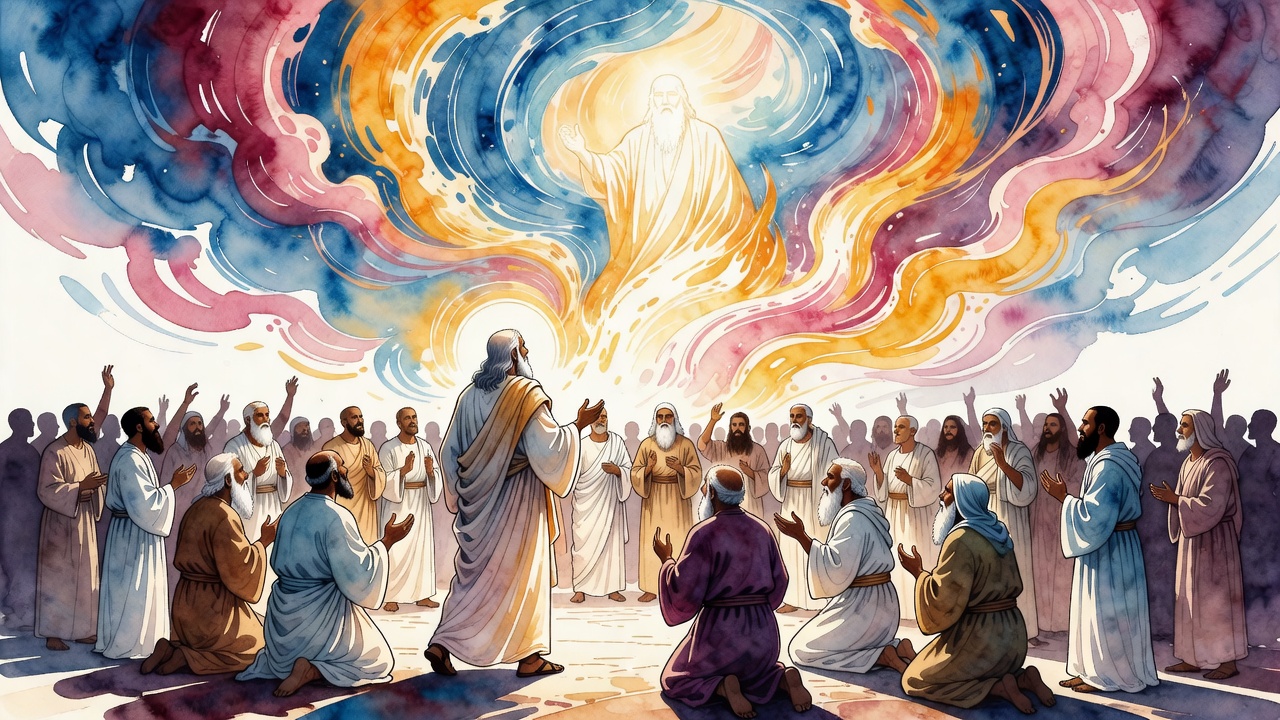
When the Torah says the LORD "came down in a cloud" upon the camp, the sages count it among the ten times the Holy One, blessed be He, descended into the world. He came to share the spirit that rested upon Moses with the seventy elders. The same man who offered to die now stood ready to pour out prophecy without going dark.
How could Moses give away his spirit and not be left the poorer for it? The midrash answers with a picture from any house at dusk. It is like a person who kindles one lamp from another: the second flame leaps to life, the room grows brighter, and yet the first lamp loses nothing of its light. So too the prophetic spirit. When seventy elders were lit from Moses, Moses was not dimmed. Holiness shared is holiness multiplied, never divided.
The cloud lowered. The elders gathered. What left Moses entered them without thinning him. The camp that had driven him toward "kill me" also received, through him, a widened circle of spirit.
They Prophesied and Did Not Continue
The verse adds that the elders "prophesied, and did not continue." The sages read ve-lo yasafu closely. It does not mean they prophesied forever. It means they did not go on. They prophesied at that hour alone and no more, just as Scripture says of Judah that he "knew her again no more," the same root, the same finality. A single radiant moment, full and complete, asking nothing further.
So the same man who offered to be blotted from the book also poured spirit without loss. He could empty himself toward judgment and still burn bright enough to light seventy. The people who drove him to "kill me" also received a night of shared prophecy that left his own flame undimmed.
Wrath needs a landing place. Light needs no fear of sharing. Moses offered his body to the first and his spirit to the second, and the camp lived under both gifts. Seventy men carried a spark that cost their teacher nothing. One people carried a debt of intercession that had already been paid twice in speech. Between the blot-me-out and the lamp-from-lamp stands the whole shape of Moses' leadership: step into the fire, then hand out light that does not leave you dark.
Between the calf and the meat there was no change in the math of his love. The people broke. The people demanded. Moses answered both crises by placing his own life on the scale. He did not trust Heaven's anger to miss. He trusted it to land, and he wanted the landing to be himself.
When the seventy received the spirit, some in the camp may have feared Moses would shrink into a lesser man. The lamp image answers that fear forever. You can light a room from one flame and still have the original fire. Leadership, in this telling, is not a hoarded spark. It is a wick willing to share and a body willing to burn if wrath needs a place to go.
The elders' brief prophecy did not embarrass the moment by lasting too long. One hour of shared light was enough to prove the multiplication. Then ordinary leadership resumed, with Moses still undimmed and still ready, if needed, to step again between the flock and the fire.
← All myths