Hur and the Elders Die Before the Golden Calf
Seventy elders refuse the calf and die for it. Hur is killed for hard words. Moses later kindles a new seventy from his spirit and loses not a spark.
Table of Contents
 Click for full size
Where the First Seventy Went
When the Holy One told Moses, "Gather Me seventy men of the elders of Israel," a corpse-shaped question hung in the air. Where had the first seventy gone? Scripture answers from Job. He breaks in pieces mighty men without inquiry, and sets others in their place. The command for a new council already smelled of blood.
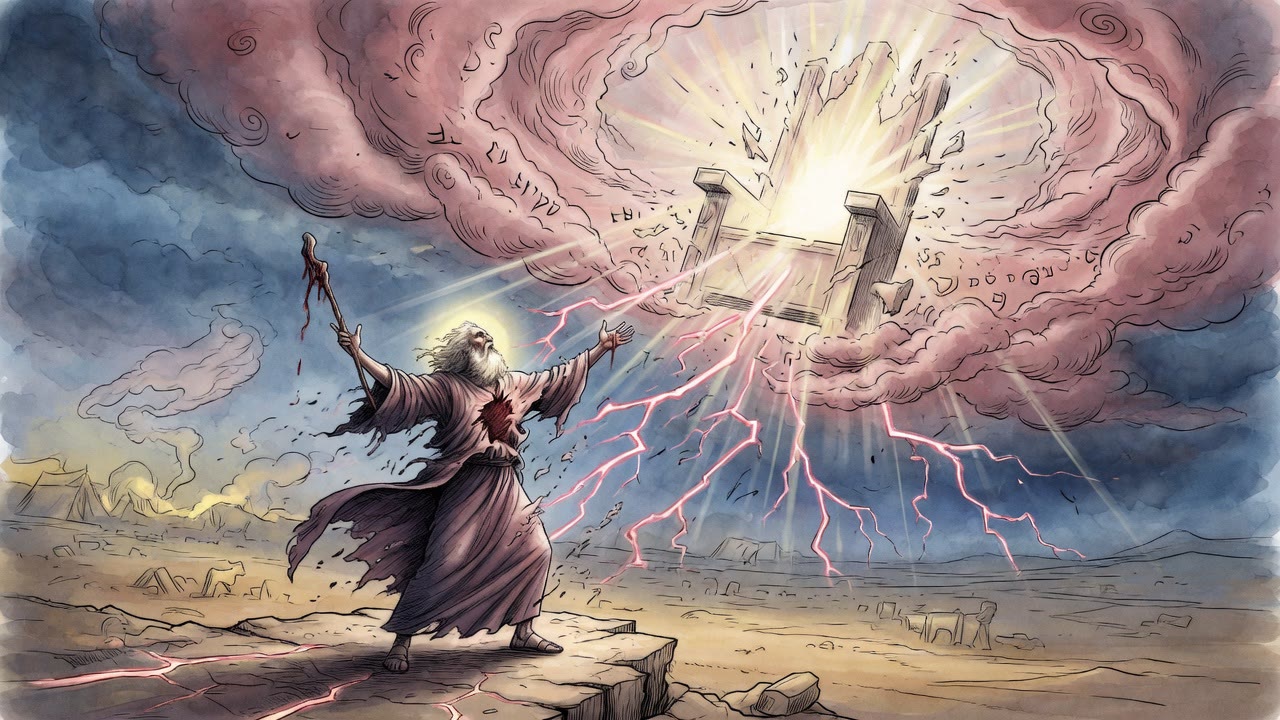
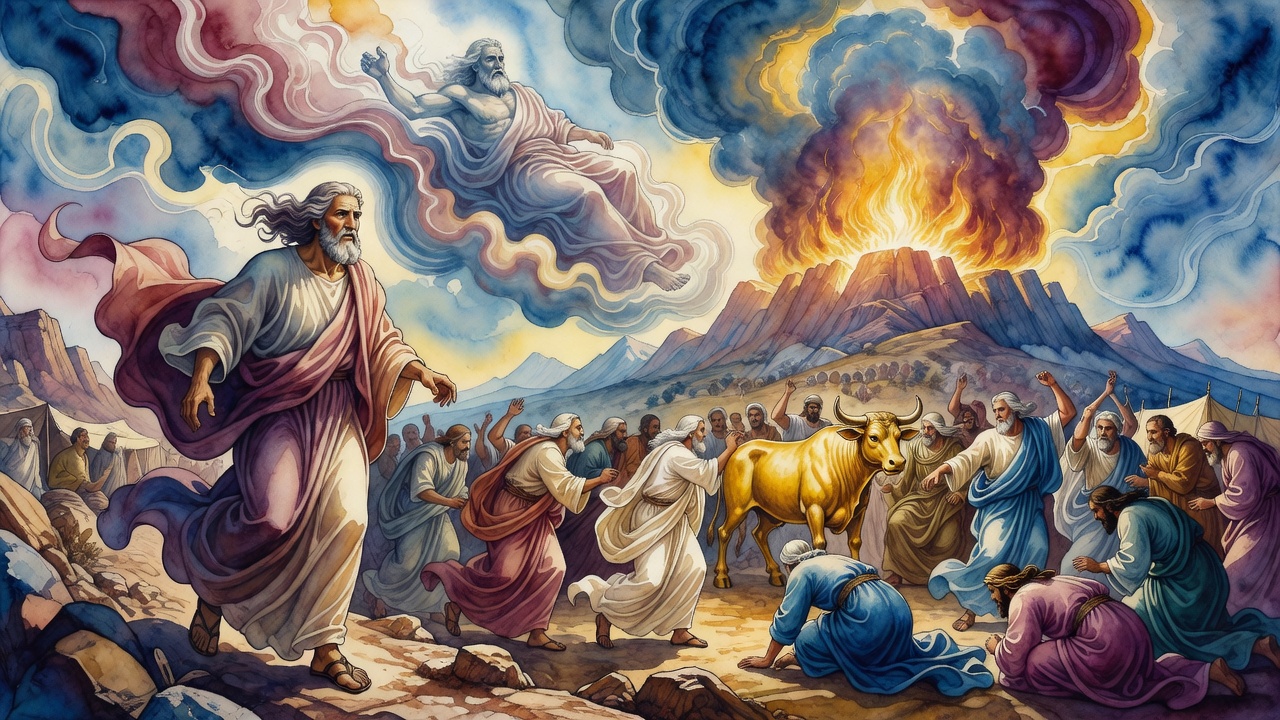
These were no new names inventing themselves. Seventy elders had stood in Egypt, gone forth at the Exodus, climbed Sinai with Moses, Aaron, Nadav, and Avihu, and been told to wait below. When Moses tarried forty days and six hours more, and the people cried, "Arise, make us a god," all Israel turned to these elders. The mountain still smoked in memory. The people wanted a shape they could dance around.
Blood on the Skirts
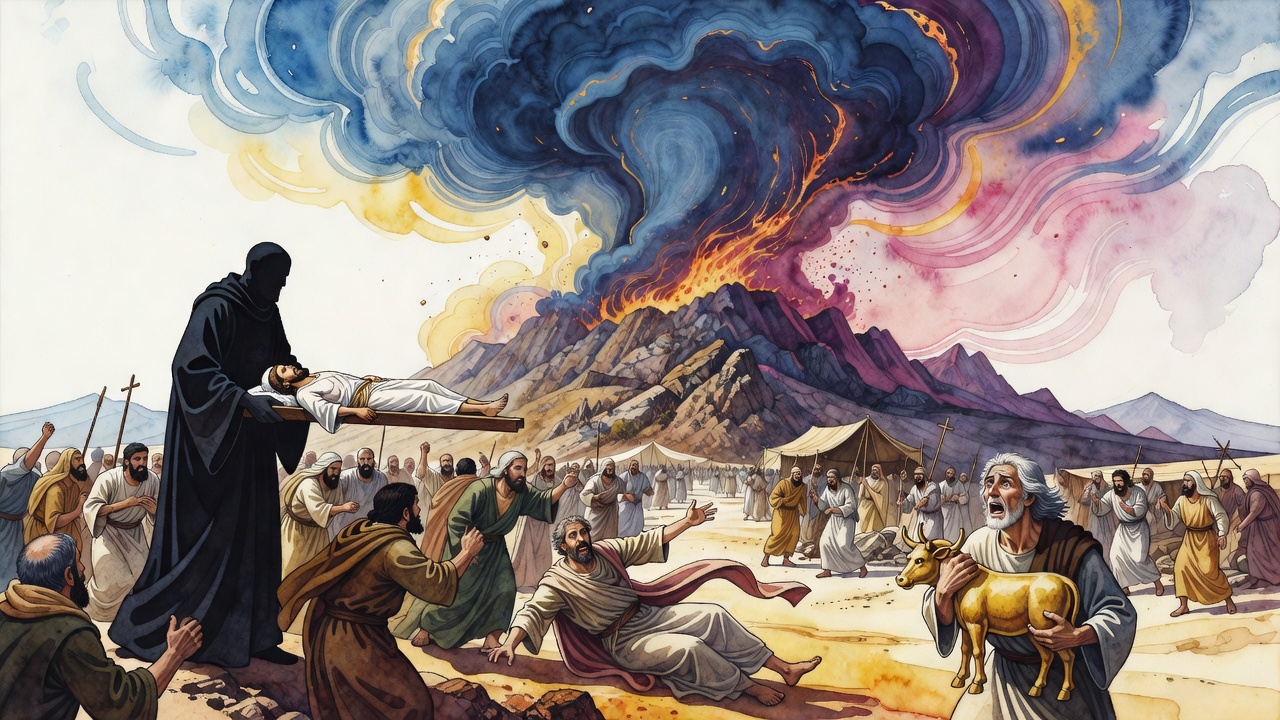
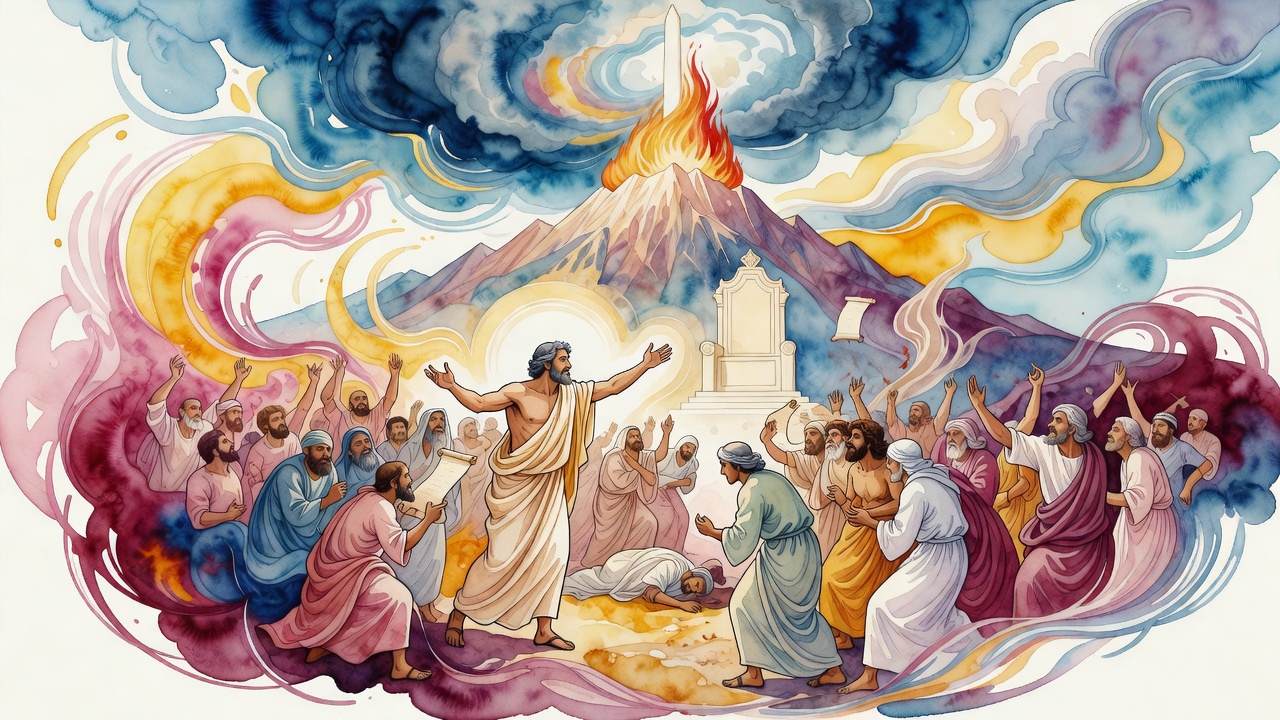
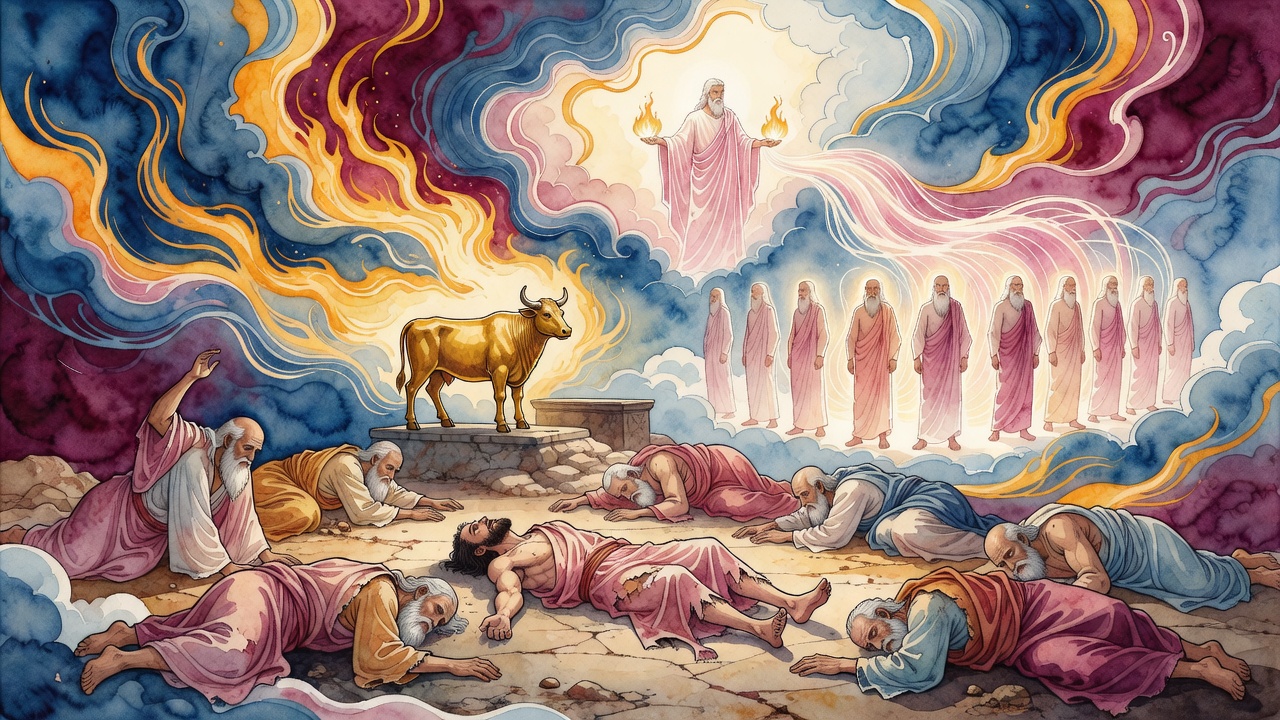
The elders refused. "Why do you provoke the One who worked every miracle for you?" Hands that had seen plagues would not bless a calf. For that the people rose against them and killed them. Hur, who answered with harsh words, they killed too. Stones. Fists. A silence afterward that gold could not fill. Jeremiah later testifies to blood on Israel's skirts for all these things, because of the cry, "These are your gods, O Israel."
The calf did not rise only from melted gold. It rose over the bodies of men who would not bless a lie. After the Holy One forgave Israel, He commanded a new seventy, set in place of those who died sanctifying His name. The mighty ones were broken. Others were raised to stand in their stead. Forgiveness did not erase the graves. It filled the empty seats.
A Lamp That Does Not Shrink
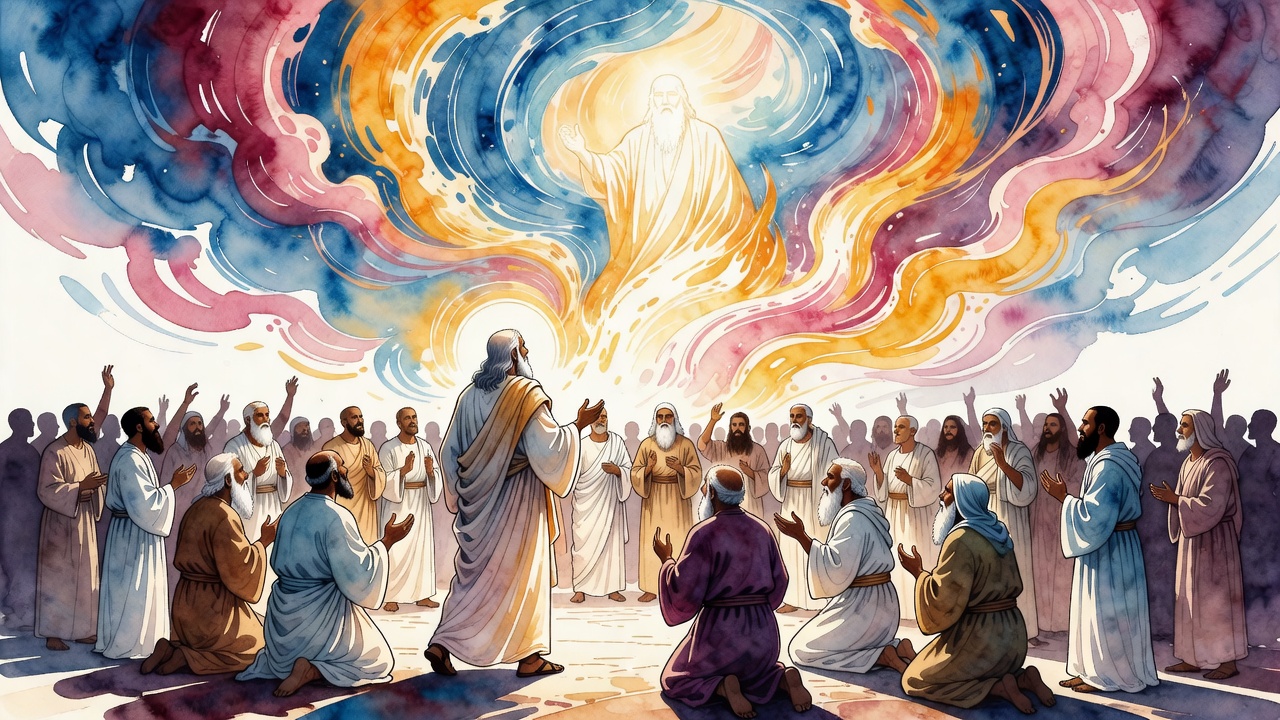
When the new seventy received prophecy, they drew it from the spirit of Moses himself. Did Moses lose anything? Was his prophecy made poorer because seventy men now shared it? No. Not a thing. The fear of loss is a human ledger. Heaven keeps a different book.
Compare Moses to a single lamp burning bright in the dark. Come, all of you, and kindle your own lamps from its flame. Light one, light a hundred, light a thousand, and look. The first flame has not shrunk by so much as a breath. Its glow is whole, undiminished, exactly as it was before you came near. The prophets took freely from his prophecy, and still his prophecy lacked nothing. Heaven does not run dry when it gives. The wellspring is not emptied by those who drink. That is why Scripture seals him forever. There never again arose in Israel a prophet like Moses.
Goads in the Furrow
"Gather Me seventy," and the sages heard another verse humming under the command. The words of the wise are like goads. A farmer's goad prods the cow into the furrow, and from that plowed field rises living grain to feed the world. So the words of Torah bring life, for He is your life and the length of your days. Without the prod, the field stays hard. Without the field, the people starve.
As the goad keeps the cow plowing straight, so Torah keeps the student straight: to call the forbidden forbidden and the permitted permitted, and to draw true rulings from the verses. The goad has three names in the masters' mouth. Malmad, because it teaches. Mardea, because it teaches knowledge. Darban, because understanding dwells within it. Will Torah slip away like a tool that can be carried off? Scripture answers with implanted nails, and reads nails as guards. Fix the words in yourself like a driven nail, and they keep you even as you keep them.
Light for the Light of the World
When the command came to kindle the menorah, Israel once answered back. "Master of the Universe, You are the Light of the world. How can we light a lamp before the One in whom all light is hidden?" The Holy One answered, "I do not need your light. I ask you to light for Me so that I may lift you up before the nations." The lamp is honor, not supply.
Picture two travelers, one sighted, one blind. "Lean on me," said the sighted man, and he guided the blind into the city and the house. Then he said, "Kindle this lamp for me." The blind man protested. "You led me the whole way. Now you ask me to light your way?" "I asked only so you would not feel yourself forever in my debt," the sighted man said. So the pillar of cloud and fire led Israel, and when the Tabernacle rose, the menorah (the lampstand) was kindled not for Heaven's need but for Israel's standing.
The slain elders had already paid in blood for refusing a false light. The new seventy would carry a true one, drawn from a lamp that did not diminish when it gave. When the new seventy took their places, some in the camp still remembered the old ones' faces. Between a golden calf and a golden menorah stands a graveyard of men who would not call a lie a god, and a living flame that can be shared without loss.
← All myths