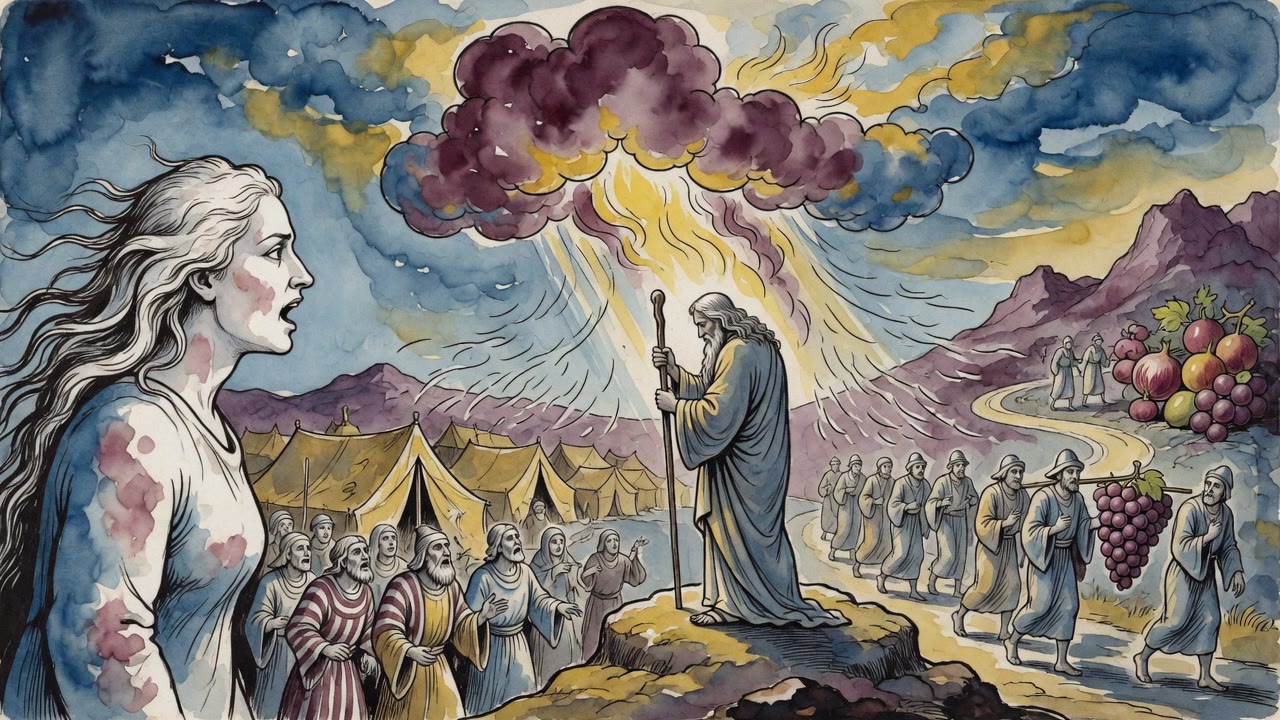
Ha-Satan Showed a Bier and the Camp Broke
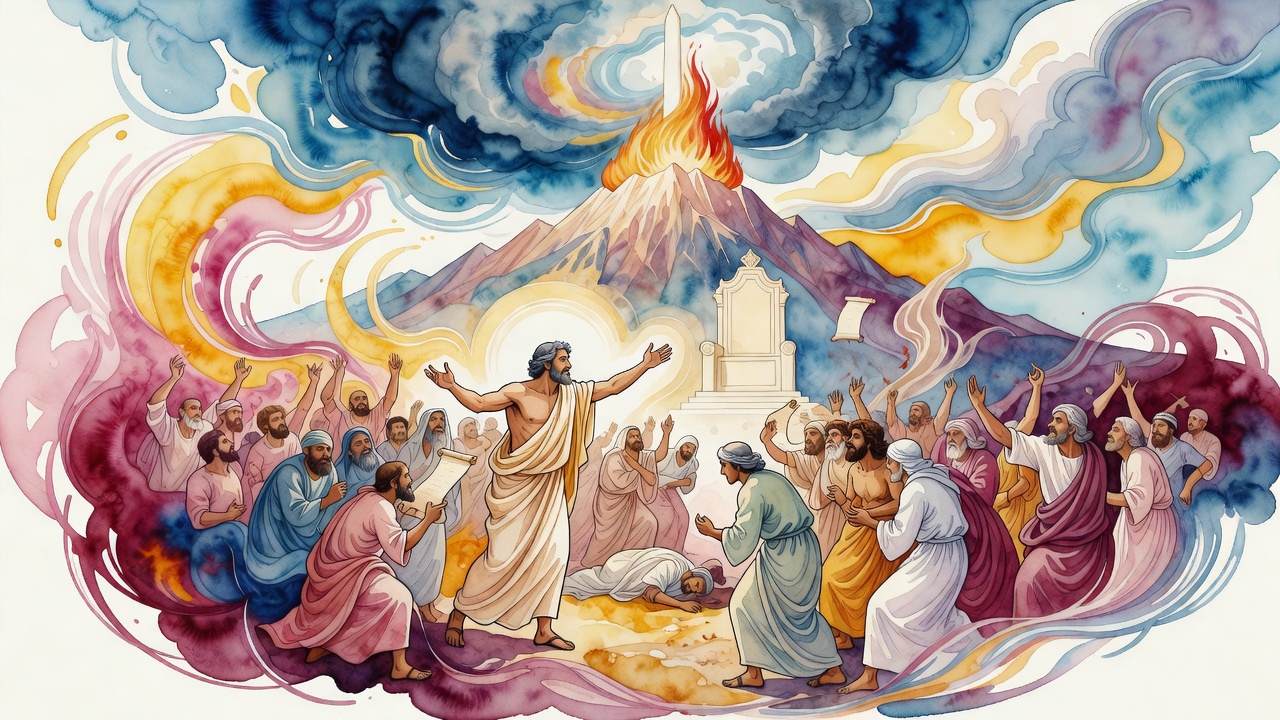
At the sixth hour of the fortieth day, Ha-Satan (the Accuser) painted Moses dead on the mountain. Hur rebuked the mob and fell, and Aaron faced gold with.
Table of Contents
Forty days on the mountain. At the sixth hour of the last day, the camp's patience snapped like dry cord. Aaron and Hur said Moses was descending. The crowd did not listen. Among the mixed multitude that had left Egypt were Jannes and Jambres, magicians who had once matched signs for Pharaoh. They gathered pressure around Aaron until pressure became riot.
 Click for full size
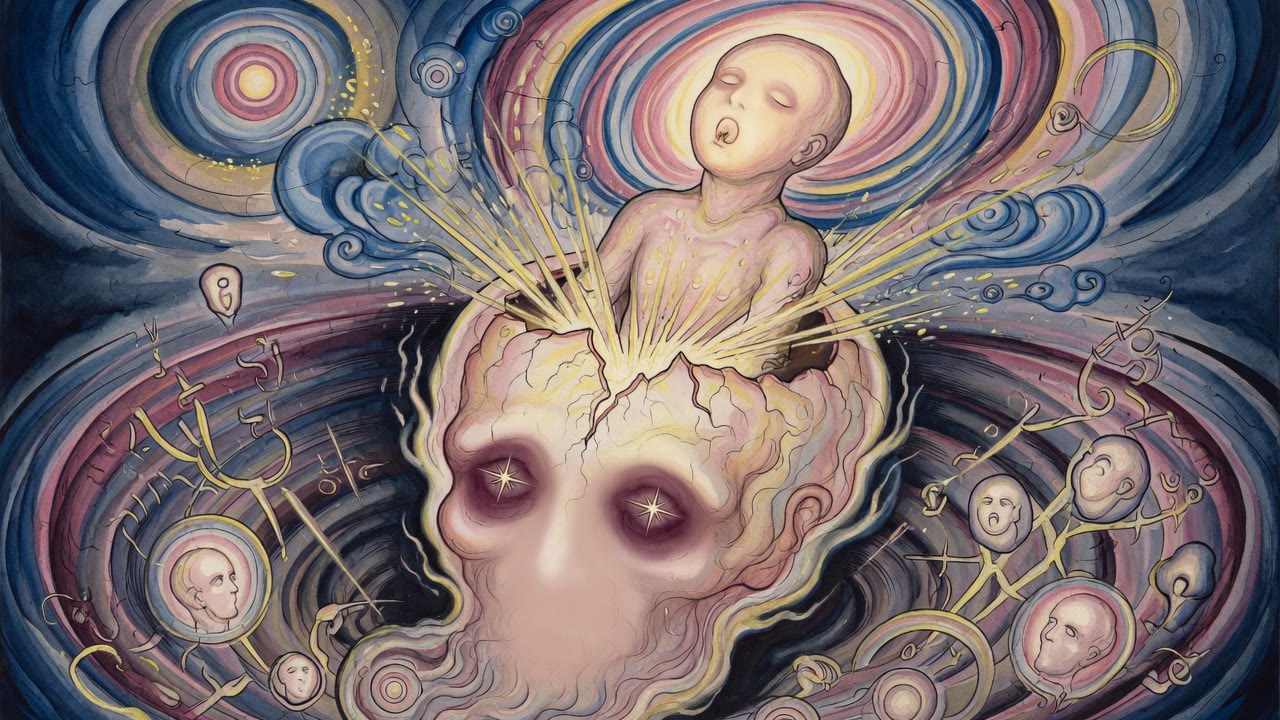
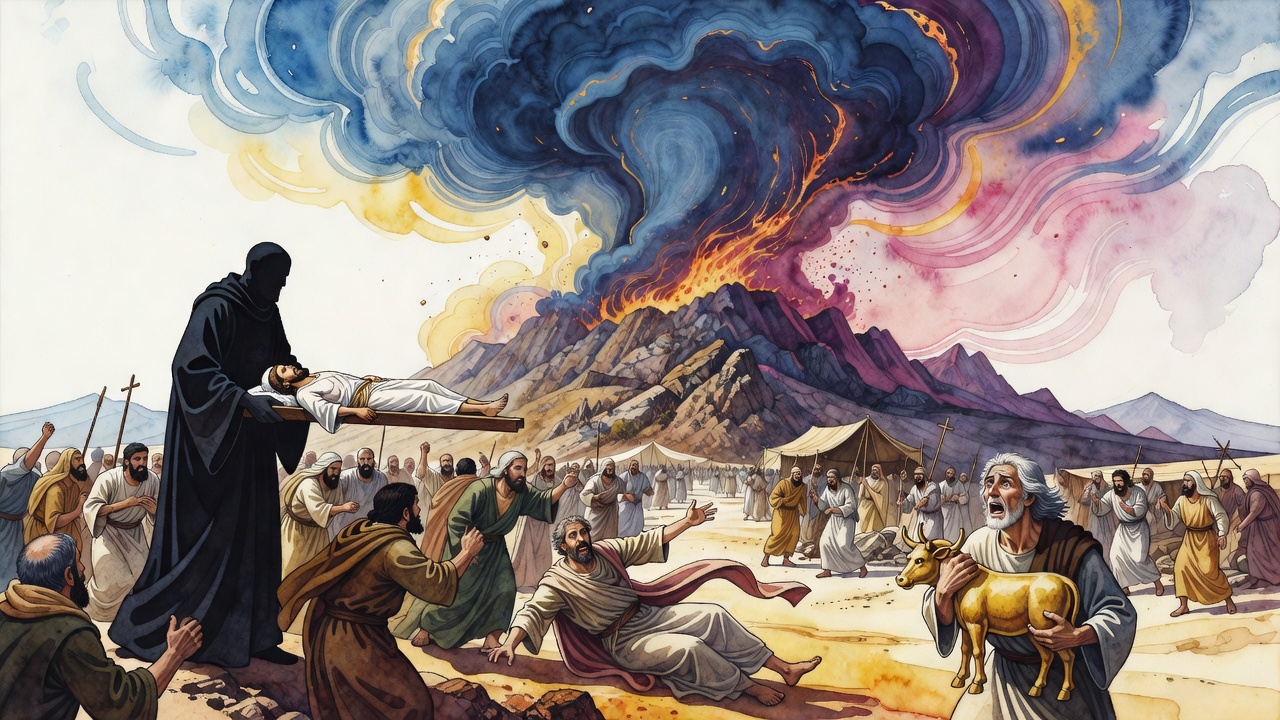
Some say Ha-Satan, the Accuser who works at the edge of human failure, rose and showed them the likeness of Moses's bier on the mountain. The image did what hunger and fear could not finish alone. "This man Moses," they said, speaking of him as of the dead. The leader became a corpse in their eyes before any grave was dug.
Hur Spoke and the Mob Answered With Blood
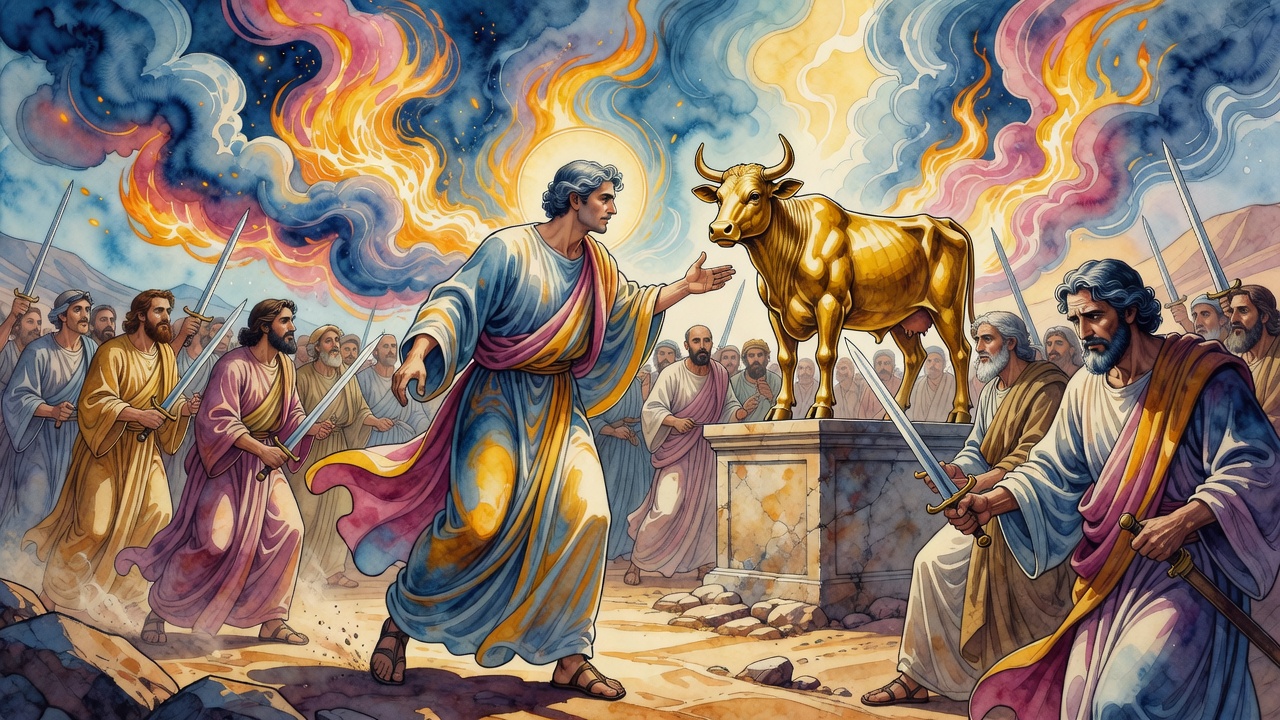
Hur stepped forward and rebuked them. They turned on him and slew him. Aaron saw the blood of a righteous man and terror entered his bones. He tried to occupy them with other matters. They cried for a god they could see. He told them to break off the gold rings from their wives' ears, hoping the women who had watched miracles in Egypt and at the sea would refuse. The women refused the idol. The men did not listen. Scripture says the people broke the rings from their own ears. The gold that should have stayed in married houses poured into a fire.
Aaron lifted his eyes and said he did this unwillingly before the One who knows thoughts. Magicians worked their arts. Some say Micah cast into the furnace things tied to older signs until a calf came forth leaping. The people cried that this was their god. Guardian angels mourned that Israel had forgotten the Savior who did great things in Egypt.
Aaron delayed the feast until tomorrow, buying hours with a proclamation. Heaven still saw the exchange of glory for an ox that eats grass.
Get Thee Down, and the Court Above
Heaven spoke to Moses with a verb of descent that the sages hear as excommunication. "Go, get thee down." As Judah once "went down" from his brothers under the weight of their ban, so Moses felt the cold of a heavenly court that had set him outside for the people's corruption. He asked wherein he was guilty. "Your people have dealt corruptly," came the answer. "My people?" Moses shot back. "They are Your people and Your inheritance." He would not accept a divorce of ownership while he still stood between them and wrath.
They had answered with one voice that they would do all the words, then rose to make merry in ways the midrash reads as blood and lust as well as idol metal. Promise without rain, the proverb says. The desert generation had boasted a gift it did not keep.
Tablets of Sapphire and the Moment Writing Fled
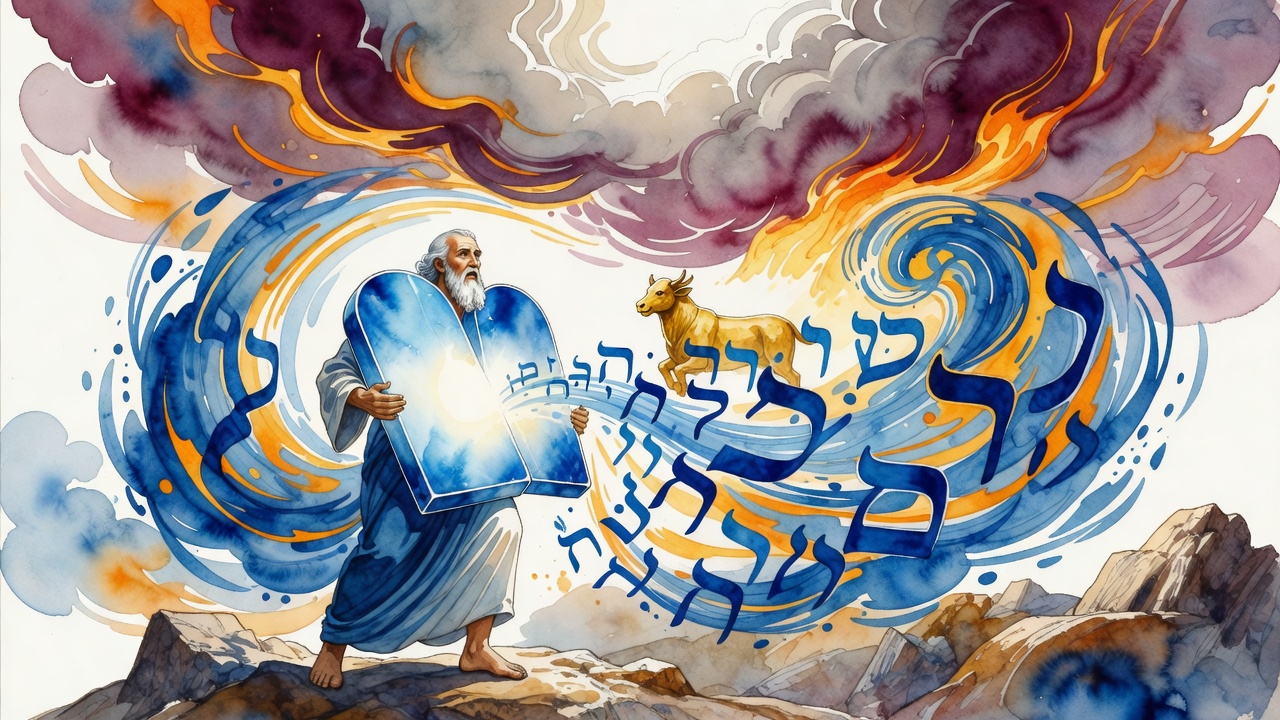
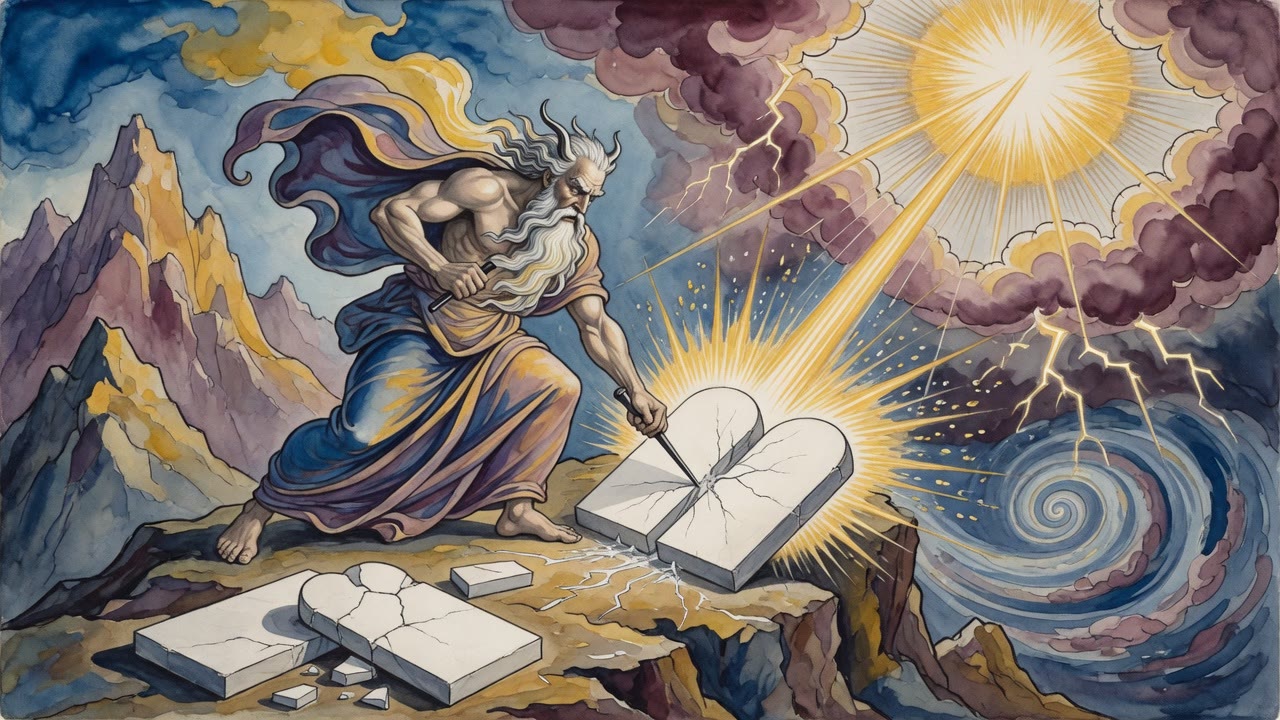
The first tablets were not quarry stone of ordinary hills. Rabbi Tachanah taught they were the handicraft of the Holy One, writing of old graven upon them, and cheruth, liberty, hiding inside the letters of charuth, graven. When Moses came down and saw the calf, he broke them. Some say the writing flew upward and the stone grew heavy in his hands until it fell. Some say he reasoned that if one pesach command bars an idolater, the whole Torah cannot be handed to a camp dancing around gold. Some say Heaven itself told him to break.
When reconciliation came, Moses had to hew the second set. A quarry of sapphires appeared in his tent. He cut tables like the first and climbed again, forty days without bread, learning Written Law by day and Oral Law by night, a disciple before the Teacher until his face and his burden were remade.
After the Bier Image, a Second Ascent
The Accuser's bier-image was a lie with just enough shape to kill Hur and bend Aaron. It did not kill the covenant. Moses shattered stone rather than deliver living words into a feast of rebellion, then spent himself in corners of prayer until Heaven yielded a second carving. The camp that had murdered a rebuker and melted earrings into a leaping idol was given law again, not because it deserved the sapphire light, but because Moses refused to let "your people" become a phrase that stranded them without an intercessor.
He prostrated in every corner he could find until reconciliation opened a path. The second ascent was heavier than the first. It always is, when the first gifts lie broken and the people who needed them have blood on their hands. Liberty was still in the letters. The second tablets still had to be carried down a mountain that had already seen a bier that was not real and a death that was.
No later summary could replace the heat of the first telling, when names still tasted like dust and fear.
← All myths