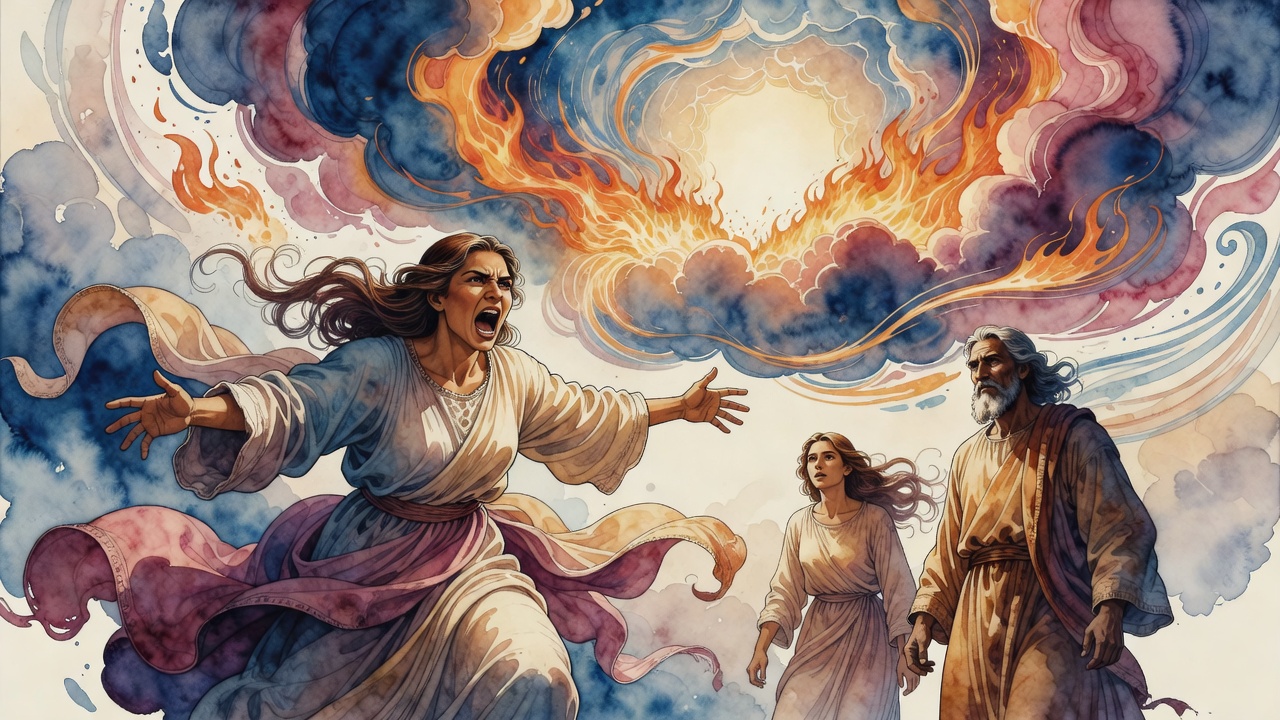
Hur Died Rebuking Israel Beneath the Mountain
While Moses received Torah above, Hur rebuked the restless camp and was slain. Aaron faced a people who had already killed the man who said no.
Table of Contents
 Click for full size
Silence Too Long on the Slope
Moses stayed on the mountain, and the camp below filled with the panic of a people who measure faith by how quickly a leader returns. They turned to Aaron and to Hur. Hur was no random elder. He was the son of Moses' sister, linked through Ephrath, a name the midrash ties to Miriam herself, called Ephrath because she was a daughter of the palace, a magnate of the generation. Nobility of Judah stood in the dust with the trembling crowd.
Prominent Israelites often carried the Ephrathite label as a mark of standing. David would be called that though his roots were Judah's fields. Hur wore the weight of that class of leaders who believe a harsh word can still steer a nation. He chose the harsh word.
The Rebuke That Drew Blood
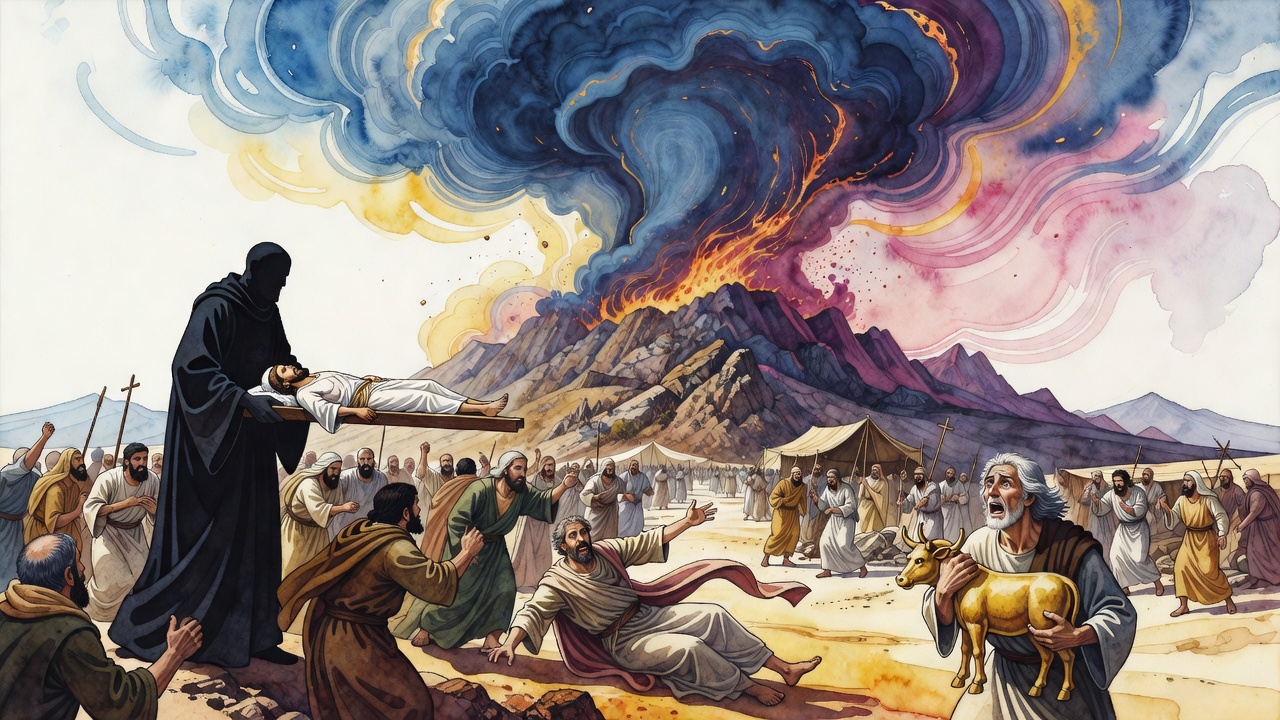
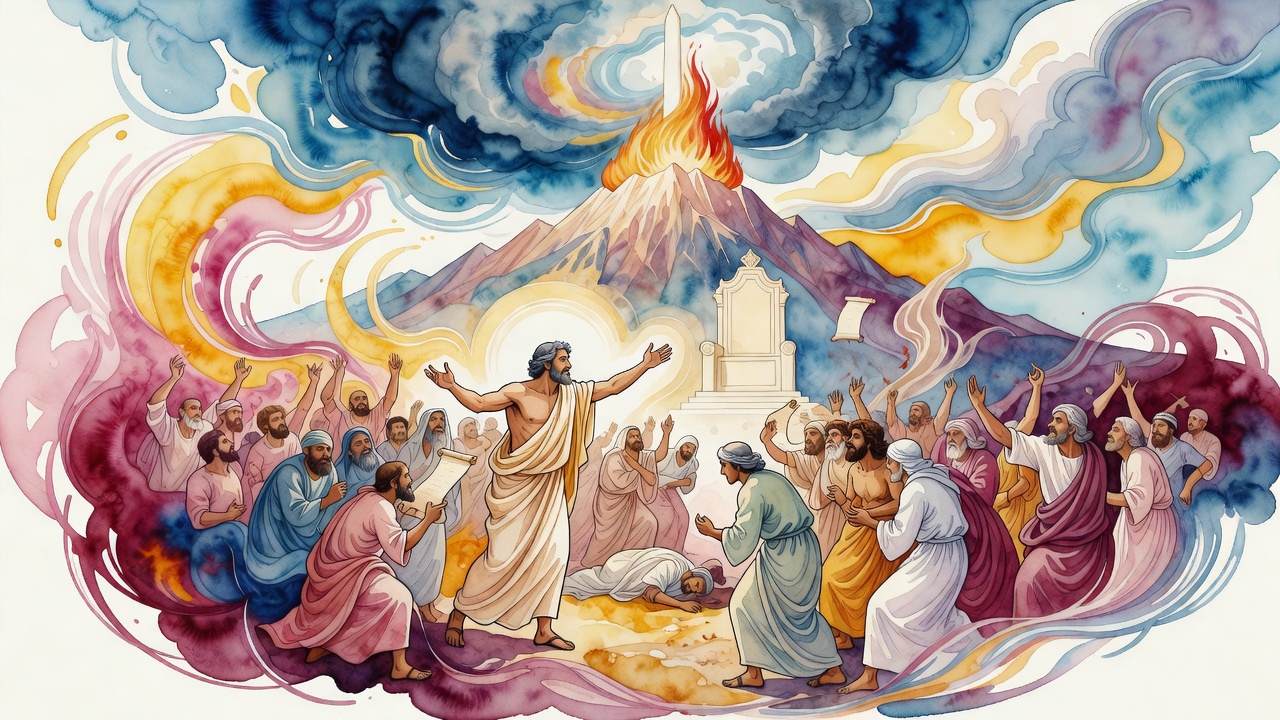
Hur reproved Israel without softness. Fear of abandonment had begun to curdle into appetite for a god that could be seen and managed. He named the danger. Plunderers in the camp rose against him and slew him. The midrash does not dress the murder as accident. A magnate of the generation dies under the mountain while Torah is still being cut into stone above.
Aaron watched the body of the man who said no. The crowd that could kill Hur could also kill a high priest. Later readers who wonder why Aaron delayed, negotiated, or stalled the calf must walk past Hur's corpse first. Leadership under Sinai was not a seminar. It was a riot with blood already on the ground.
Zeal That Stops a Plague
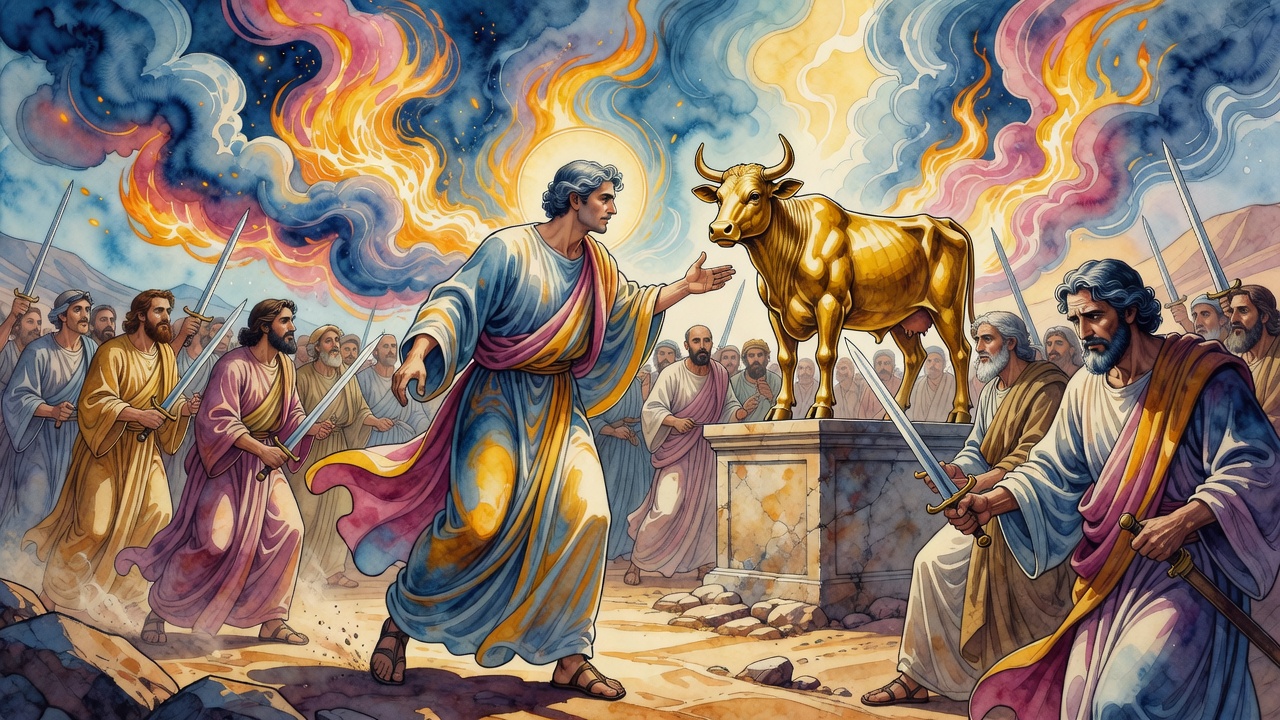
Another generation would need another man who rises when the camp breaks. Phinehas stood up like a great judge and executed judgment in public so that all Israel should see and fear. He smote the brazen pair so that reverence for Heaven might return. The Holy One saw what Phinehas had done and was filled with compassion. The plague stopped. "Then stood up Phinehas, and he executed judgment" (Psalm 106:30).
Hur's zeal ended in his own death. Phinehas's zeal ended in a stayed plague and a covenant of peace. Same family of courage. Different hours. Different outcomes. The tradition holds both without smoothing the violence into comfort. Sometimes the one who stands is murdered by the camp. Sometimes the one who stands saves the camp from heaven's wrath.
Under the Cloud, Two Lessons
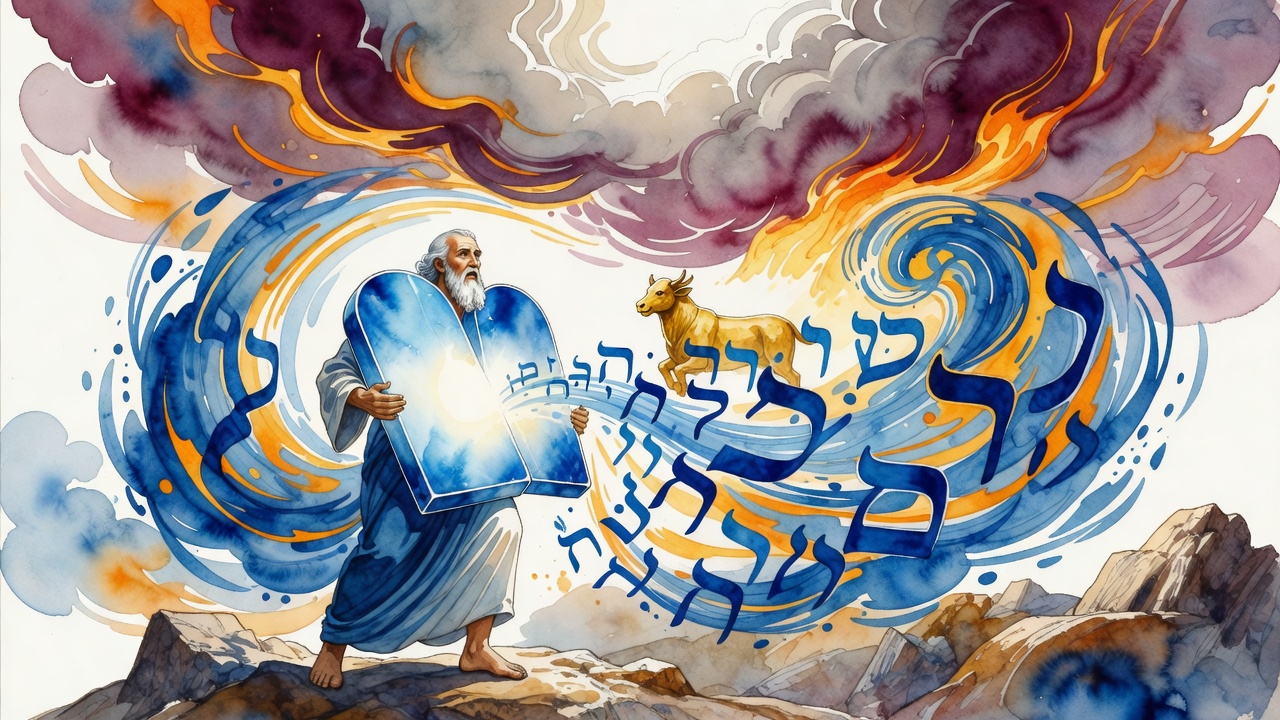
Moses would descend with tablets and find a festival around a calf. By then Hur was already silent, and Aaron was already compromised by survival math. The mountain that gave law also cast a long shadow over a murder that made the calf possible. Torah arrived to a people who had killed the first guardrail.
Phinehas later proved that public judgment can still heal. Hur proved that public rebuke can be answered with stones and blades. Between them Israel learns the cost of speech in a crisis. Silence can be complicity. Speech can be a death sentence. The God who speaks from fire still requires human mouths willing to risk both outcomes.
Aaron Between Corpse and Crowd
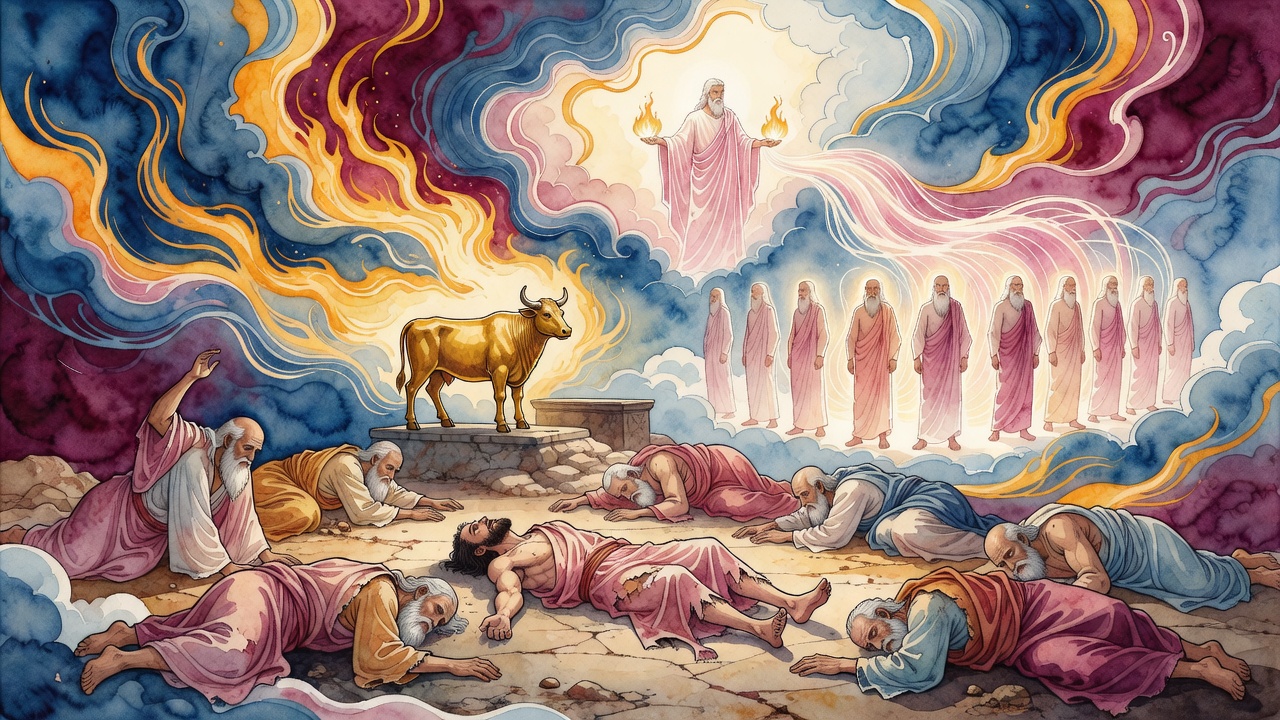
Gold earrings fell into a fire that should never have been lit for a god. A calf emerged because the people demanded a face for the fear Moses' delay had fed. Aaron's hands moved through a crisis whose first casualty was already cold. Hur's blood taught the price of "no." Every later apology for Aaron's stalling has to step over that body. The mountain smoked. The camp danced. Torah's letters were still being formed while a Judahite magnate lay unavenged in the dust of a holy month.
Phinehas, in another century of the same wandering people, would not wait for a committee when plague and public sin shared a tent. He rose, struck, and watched compassion follow judgment. Hur rose and fell. The difference is not zeal's purity alone. It is hour, office, and the will of a camp that sometimes kills its guards and sometimes is saved by them. Moses shattered tablets when he saw the calf. The midrash has already shattered the illusion that Sinai's foot was safe. Law came down to a people who had murdered the man who tried to hold them until the prophet returned. Memory of Hur is the dark preface to every golden mistake Israel still confesses.
Miriam's line had stood in palaces of Egypt and in the midwifery of rebellion. Hur inherited that stubbornness and spent it in one speech. The plunderers who killed him thought they were clearing a path to a calmer god of gold. They cleared a path to tablets broken and a camp forced to drink powdered idol. Moses' anger would match the mountain's fire. Aaron's survival would remain a wound in the story. Between them Hur's unnamed grave under Sinai keeps the cost of saying no when the prophet is late and the people are loud.
← All myths