Aaron Steps Forward Into Blame for the Calf
Aaron takes the gold before the people can. Better one tutor cut than a nation bleed. Moses sees guilt written, and Levites draw swords.
Table of Contents
 Click for full size
The Tutor Takes the Knife
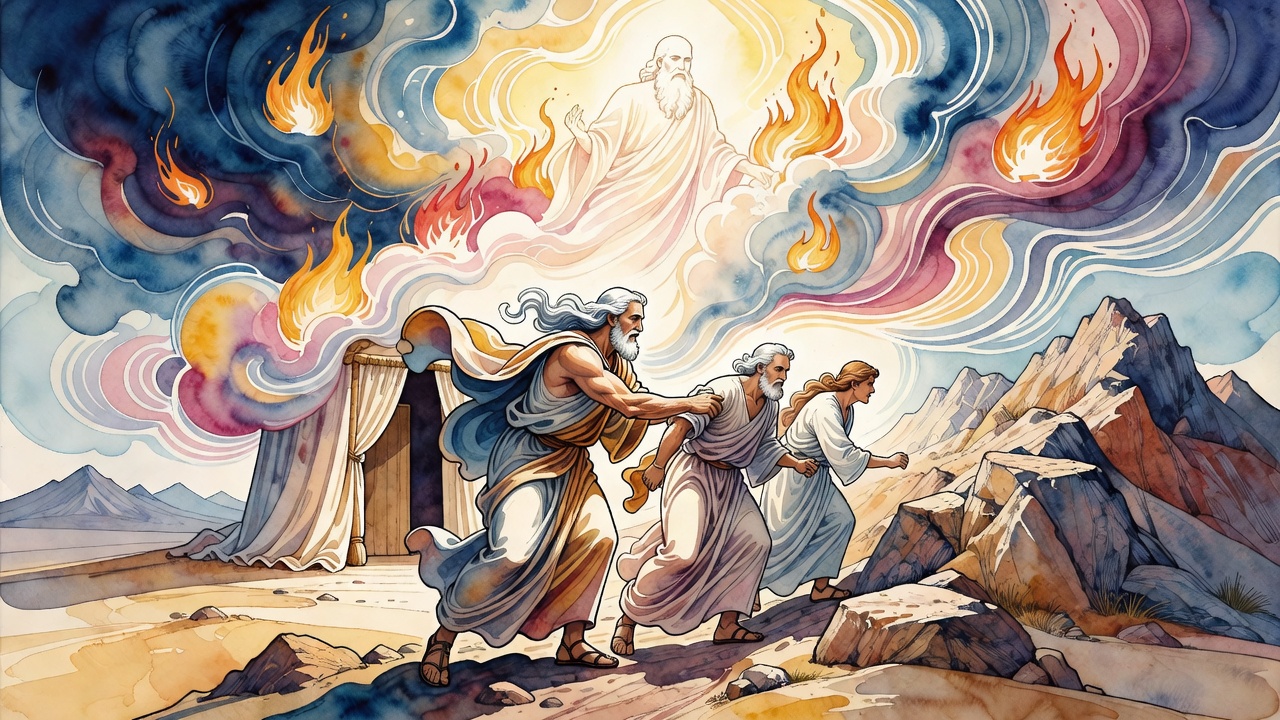
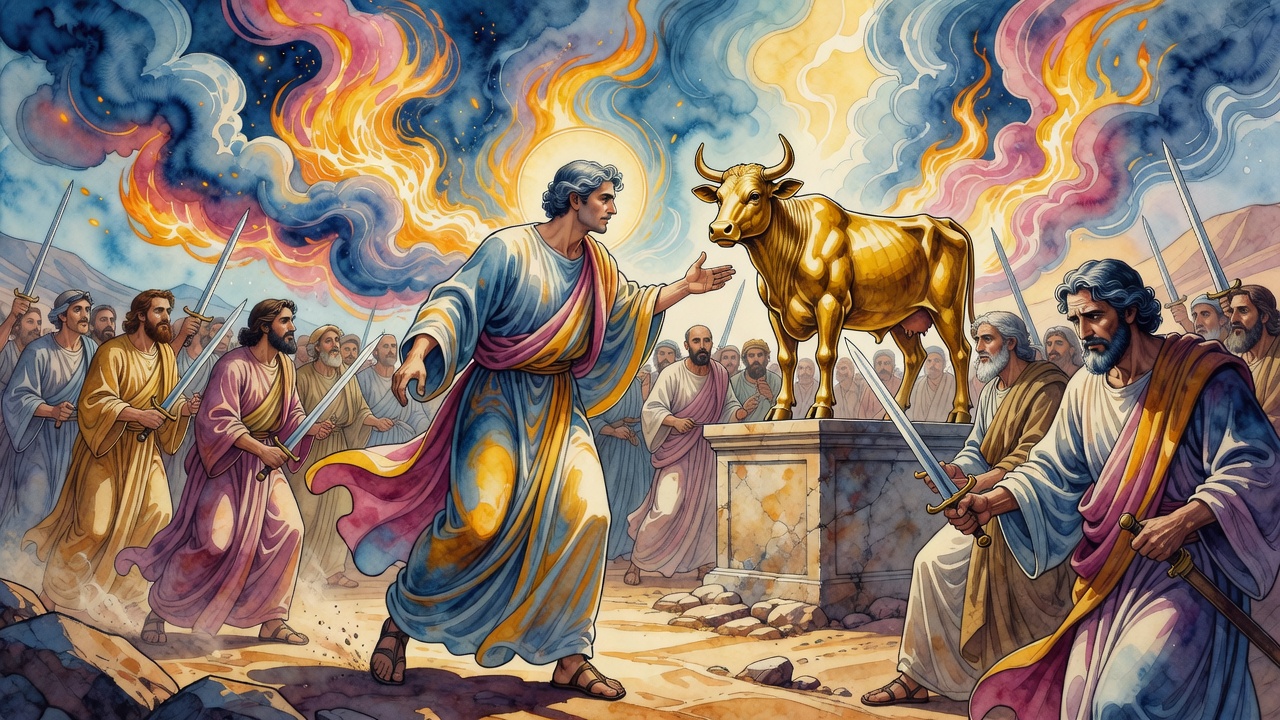
Aaron sees the crowd's hands already full of gold and makes a cold choice. If the people build the calf themselves, the guilt clings to every tent. Better the blame fall on him alone. He steps into the line of fire and shapes what they demand, not because his heart loves the image, but because he would rather be the one cut than watch a nation cut itself.
Earrings hit the cloth. Fingers tremble with zeal that has lost its aim. Aaron's mouth moves through the work of a priest who has decided to stand where the blow will land. The mountain still holds Moses. The camp will not wait. Someone has to become the target Heaven can see in place of six hundred thousand smaller ones.
The King and the Prince
The sages tell it as a parable. A prince, swollen with arrogance, raises a blade against his father the king. His tutor sees the danger and intervenes. "Do not tire yourself, my prince. Hand it to me. I will do the cutting." The king understands at once. The tutor has drawn the guilt onto himself to shield the king's son. So the king rewards him rather than punishes him. You will never leave my palace. You will eat from the surplus of my table. You will receive twenty-four allotments.
Each promise maps onto Aaron's priesthood. He never departs the sanctuary. He and his sons eat the remainder of the meal-offering. They receive the twenty-four priestly gifts. "You loved righteousness," God tells him. "You longed to acquit Israel and refused to condemn them." For that, of all the tribe of Levi, Aaron alone is anointed to the high priesthood with the oil of gladness above his fellows. The calf is still sin. The tutor's gesture is still heard in Heaven as love that would rather burn alone.
What Moses Sees on the Way Down
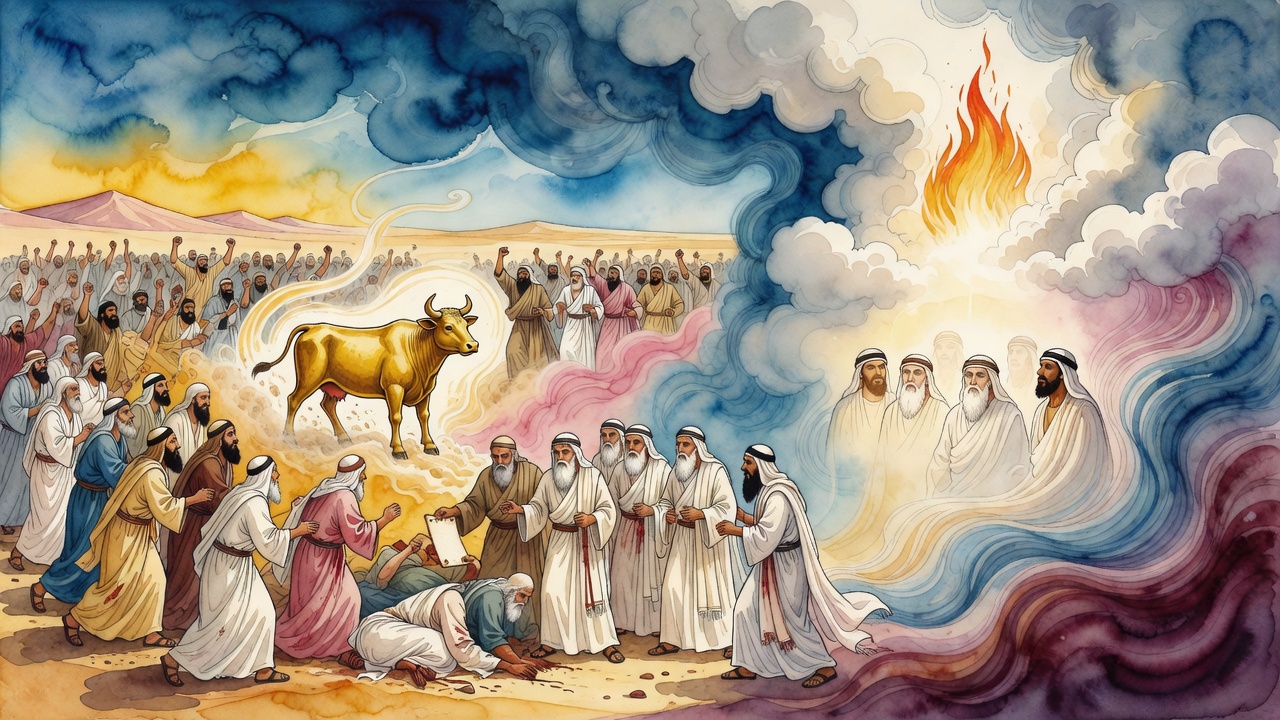
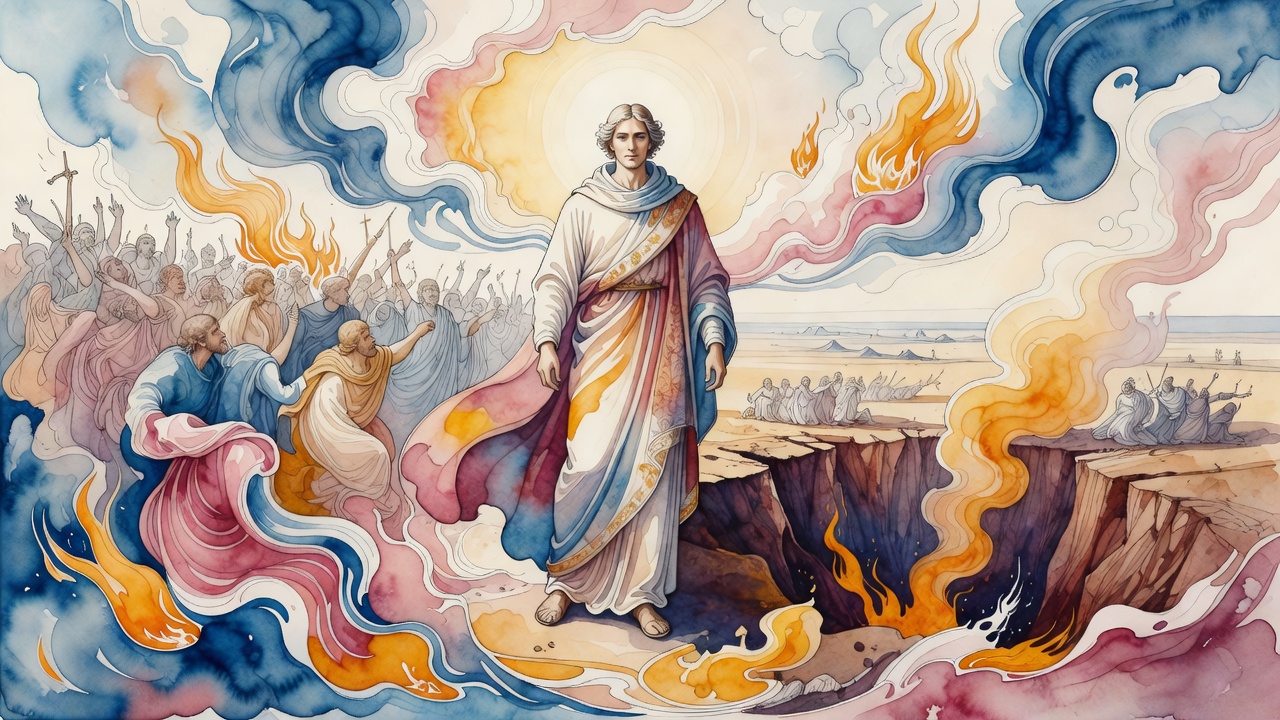
Moses comes down the mountain and looks upon the people. He sees more than a crowd run wild. He sees what their sin has done to them. The word the Torah uses, parua, exposed, unbridled, is the same word spoken of the leper, whose garments are torn and whose head is laid bare. The Shekhinah (the divine Presence that dwells among Israel) that rested on them at Sinai has withdrawn, and in its place leprosy of guilt shines out upon their foreheads. Their shame is written on their skin for any eye to read.
Song still hangs in the air. The calf still gleams. Moses' tablets are still whole for a few more heartbeats. Then the break comes, stone against stone, and the camp learns that revelation can be shattered by a dance. The shame will not end at that hour. "For a derision among those who rise against them": the golden calf will follow Israel through the generations, a taunt the nations fling in every age.
Swords on the Thigh
Moses does not wait. He cries out to the sons of Levi: "Thus says the LORD, the God of Israel, put every man his sword upon his thigh." The Levites answer. Steel leaves scabbards. The worshippers of the calf fall. From their readiness the sages draw a lasting proof: the tribe of Levi never bowed to the calf at all. The same tribe that will later carry the ark first carries judgment through the lanes of the camp.
Aaron has taken blame upward. The Levites take action sideways. Moses stands between mountain and people with dust on his beard and a question still unanswered: will this nation survive its own first freedom?
The Throne with One Leg
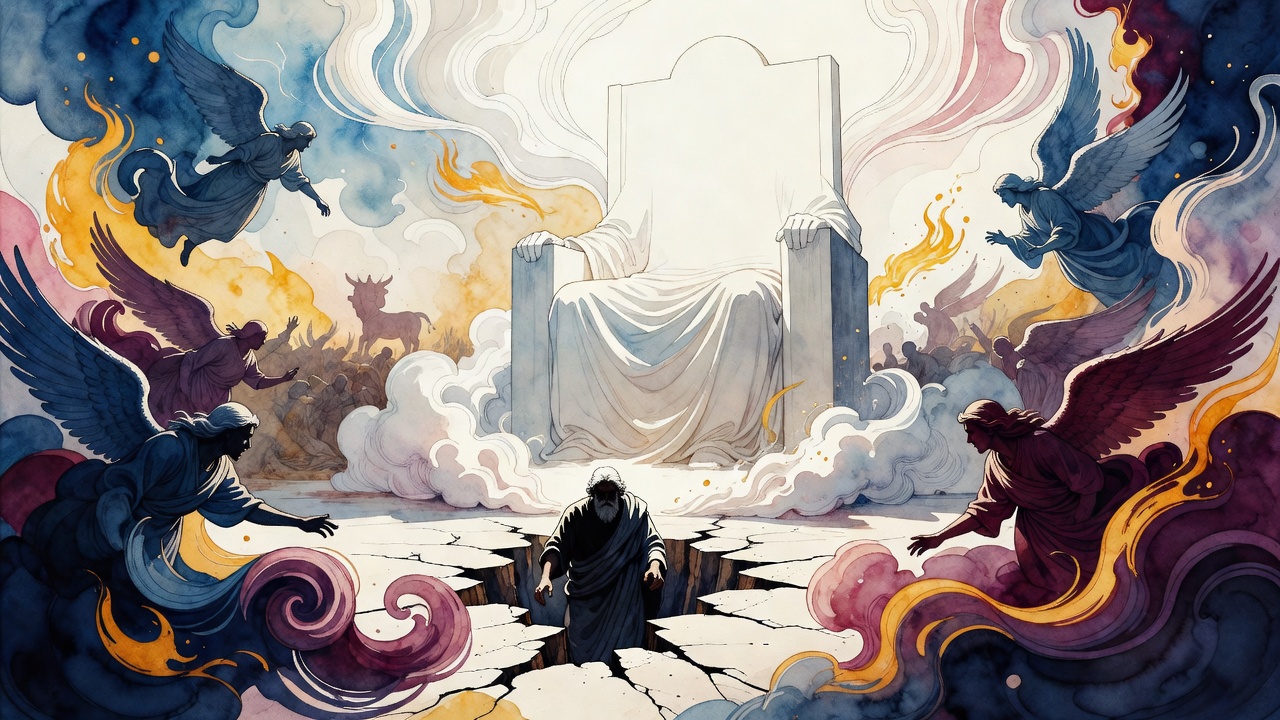
Later, when wrath still hangs over the camp, the LORD offers to destroy Israel and make of Moses alone a great nation. Moses will not seize the gift. He answers with the image of a throne. The merit of the three patriarchs is like a throne resting on three legs, and even that throne cannot stand before God in the hour of anger. How could a throne of a single leg stand? The single leg would be Moses himself. If three forefathers together could not steady Israel against divine wrath, what hope is there in one man raised in their place?
The Holy One does not take back the good word. Though Moses declines to become a nation in Israel's stead, the blessing is redirected. In time the seed of Moses multiplies beyond reckoning, more than sixty myriads, the number of Israel that came out of Egypt. The humility that refused a throne is answered with a multitude. Aaron took blame to spare the people. Moses refused glory to keep them. The Levites raised steel so the camp would not rot from within. Three kinds of love, one mountain still smoking, one calf still a scar on the story.
By night the gold is a story and a stain. Children ask why the mountain smoked twice. Aaron's new allotments will one day taste like both honor and memory of the hour he chose to be blamed. Moses' rejected nationhood will one day look like the only reason Israel still has a name. The Levites' swords will hang in tribal memory as the day they did not dance. Three answers to one sin, none of them cheap, all of them costly love in different tools: gold-shaping, steel, and a refused crown.
← All myths