Moses Hid Under the Throne From Jealous Angels
Night poured into his eyes on the mountain. Angels moved to kill him. He seized the Throne, and a cloud closed over his back.
Table of Contents
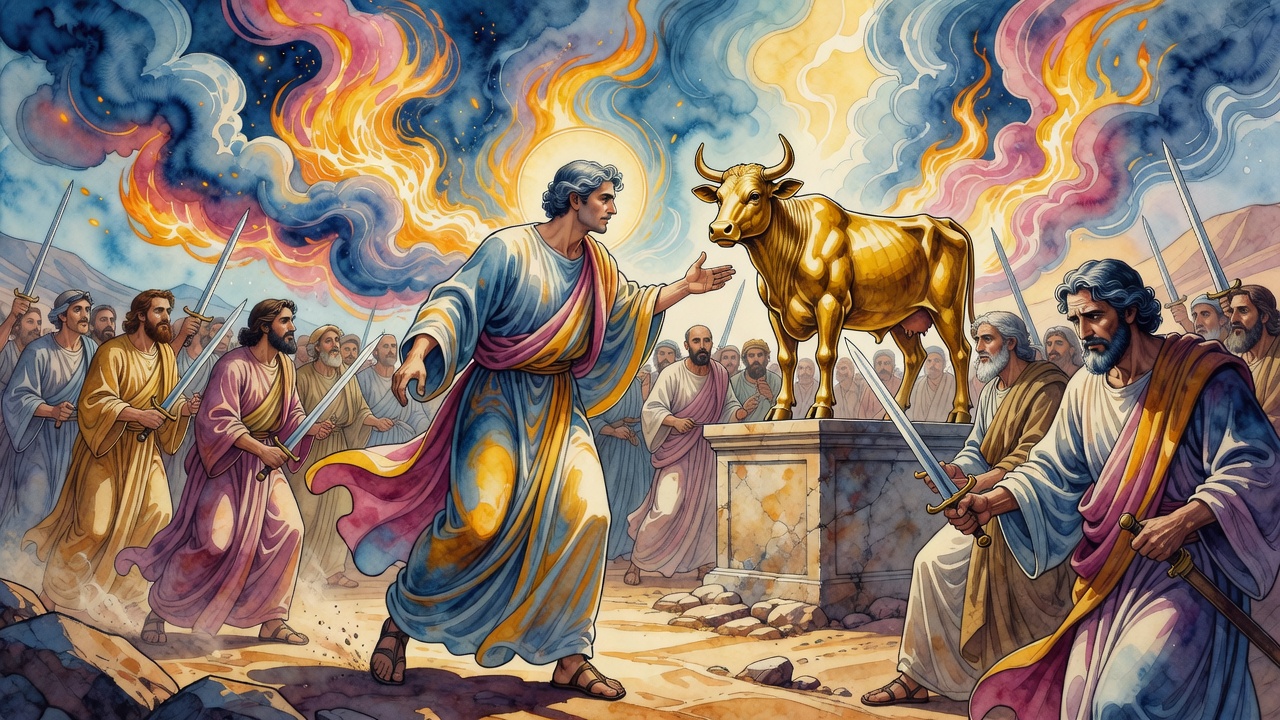
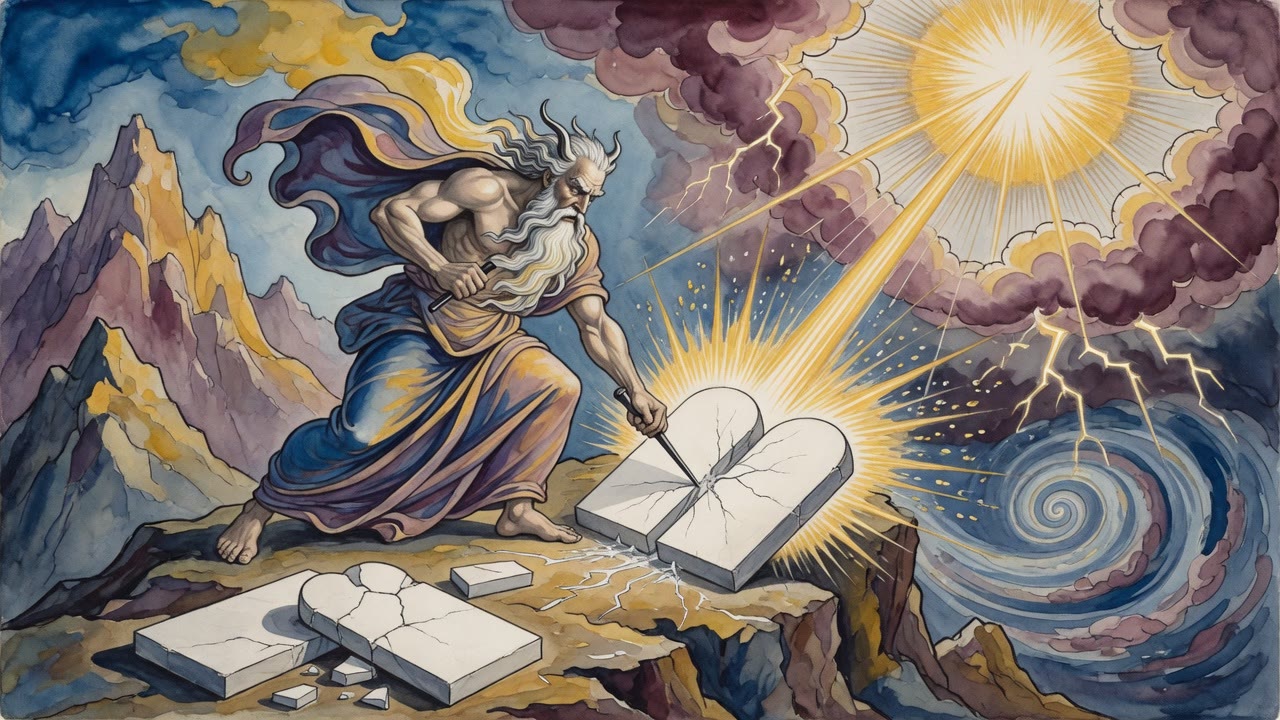
"Go, descend," the Holy One said, and Moses's face went dark. Sight narrowed as if someone had poured night into his eyes. Below him the camp had already shouted, "These are your gods, Israel," over a calf that still shone with stolen gold (Exodus 32:4).
 Click for full size
The tablets were still warm in his hands. He did not know which gate would open first, blood or pleading. Trouble sat on his shoulders. The people walked as if blind, and he walked that way too, not knowing from which place to go down.
The Angels Chose Their Hour
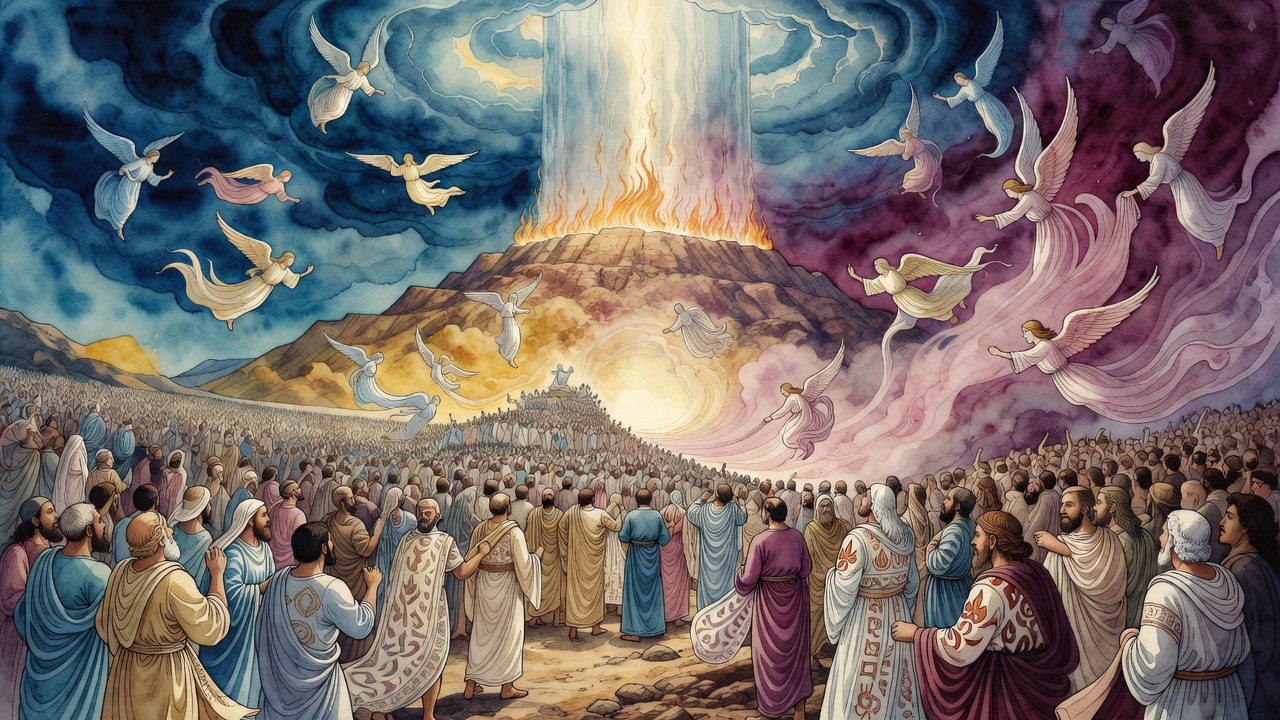
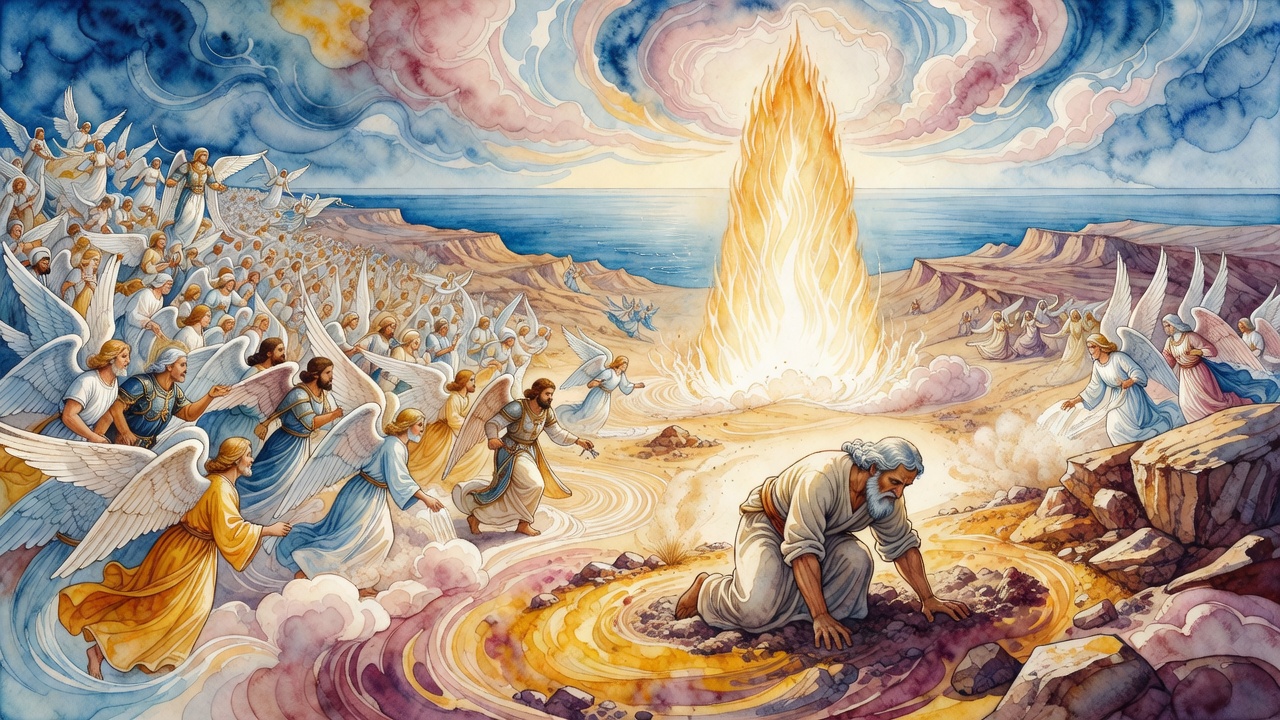
The jealous ministering angels had been waiting. Torah had gone to a man of flesh, not to them. "This is the time to kill him," they said, as if the calf had finally made their case airtight.
They gathered the way hunters gather when the wind is right. Moses felt the pressure before he saw a blade of light. He had faced Pharaoh. He had faced the sea. He had not faced a court of angels who believed the speech of God should never have left their custody.
His knees wanted the ground. His hands wanted the tablets. The mountain wanted to be rid of him.
A Crack Under the Throne
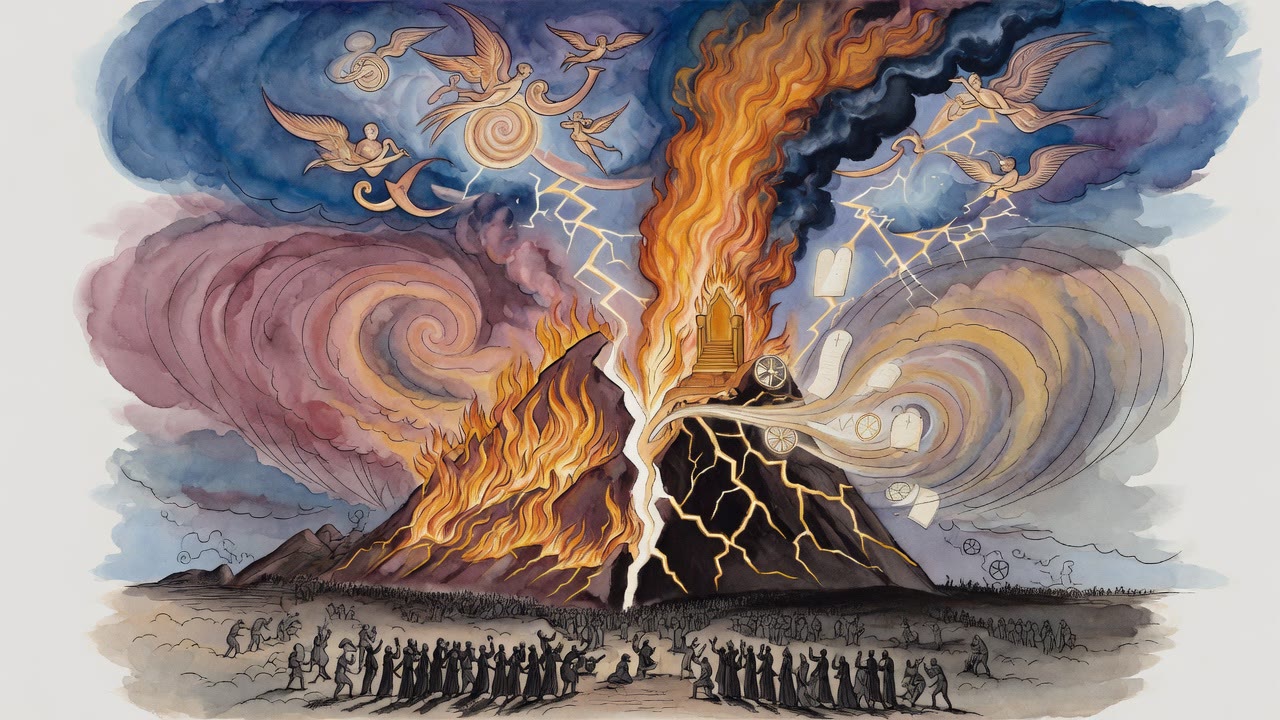
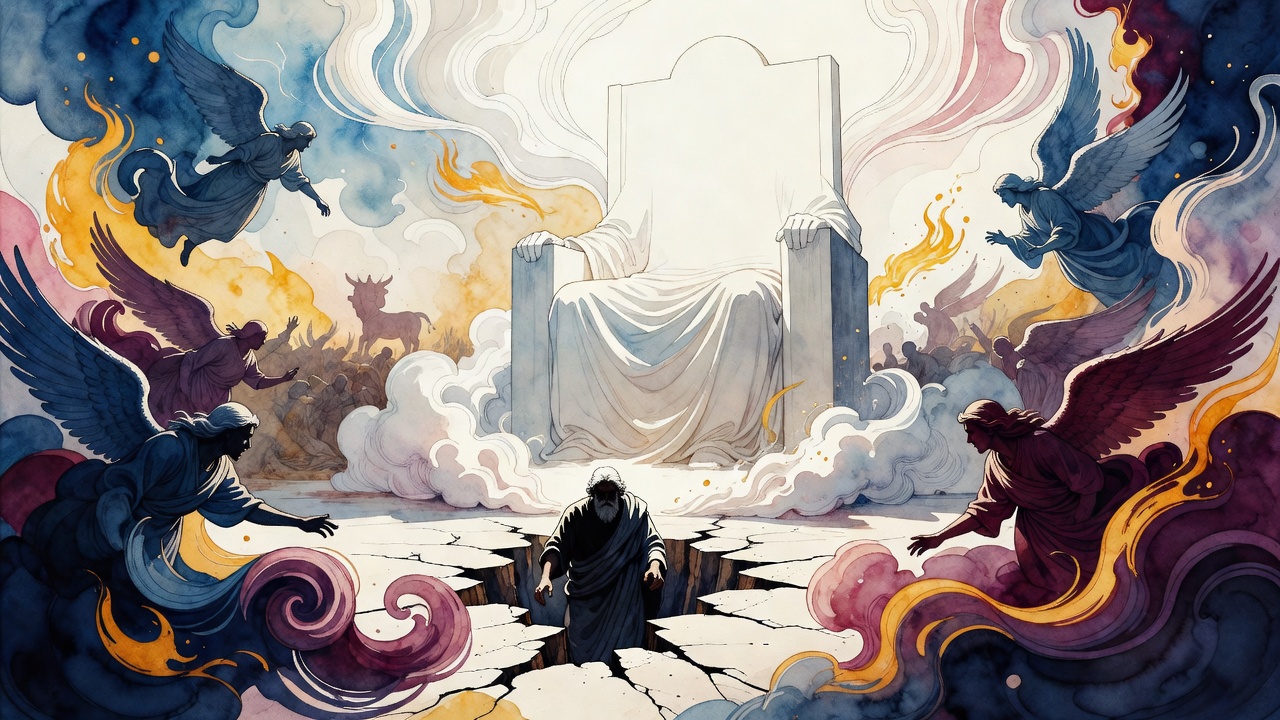
The Holy One knew the plot before the first angel took a step. Beneath the Throne of Honor a small opening appeared, no wider than a man's fear, and the voice said again, "Go descend." The words were not only an order to confront the people. They were a way out of murder.
Moses hid under the Throne. He went down that crack the way a man goes into a cellar when the storm starts. The angels rushed the ridge. He did what a drowning man does to a rope. He seized the surface of the Throne itself.
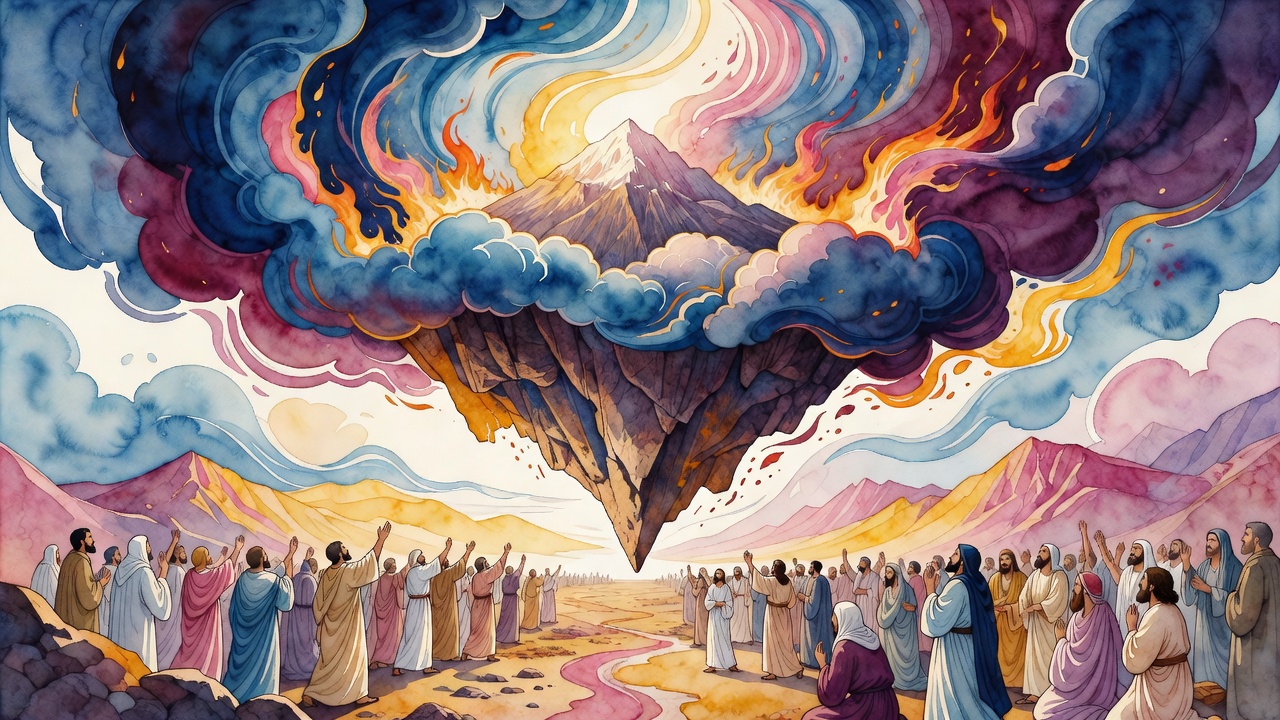
Then the Merciful One spread a cloud over him, a garment of vapor from the old line in Job: He grasps the surface of His throne and spreads His cloud over it (Job 26:9). Wings of fog closed around the prophet. Angelic hands met only mist.
He held on. The tablets pressed his ribs. The camp burned below with a golden lie. Above him the Throne did not shake.
Blood at the Gates
When he entered the camp, the cloud did not cancel the steel. He stood in the gate and called the Levites. They passed from gate to gate. Neighbor fell beside neighbor. Blood fell like dust, as the hard verses had promised. Flesh lay in the dust like refuse after a market.
Moses still carried the mountain on his face. The people still carried the calf in their mouths. Between them stood the same God who had hidden His servant under a cloud and then demanded a reckoning in the dust.
He would grind the gold, scatter it, and make them drink what they had worshipped. First he had to survive long enough to stand among them. The Throne's cloud had bought him that hour.
How Far Guilt Travels
Later, when the hard line about visiting the sins of fathers upon children was spoken again, Moses was still close enough to hear it as a man who had just been hunted.
Only an unbroken chain draws that long shadow: an evildoer, son of an evildoer, son of an evildoer. Consecutive wickedness. Not a free curse on every child of a bad house.
Moses bowed to the ground and prostrated himself. "God forbid," he said. "There is no such unbroken chain in Israel."
Then he pressed the other way. If punishment can travel four linked generations, how far must kindness travel? The answer came back with thousands, and elsewhere with a thousand generations without a ceiling.
On the day of the calf that was not a theory. Angels had wanted him dead. A cloud had covered him. People had died in the camp. Mercy and severity walked the same afternoon, and neither canceled the other.
He rose with dust on his mouth. The tablets were broken. The people were not. Guilt had a short fuse. Goodness had a longer storehouse. He walked back toward a camp that still smelled of gold and blood, carrying both.
← All myths