God Wraps Himself Like a Prayer Leader for Moses
After the calf, Moses climbed Sinai with blank stone and watched God wrap Himself like a prayer leader, teaching the thirteen names that reopen mercy.
Table of Contents
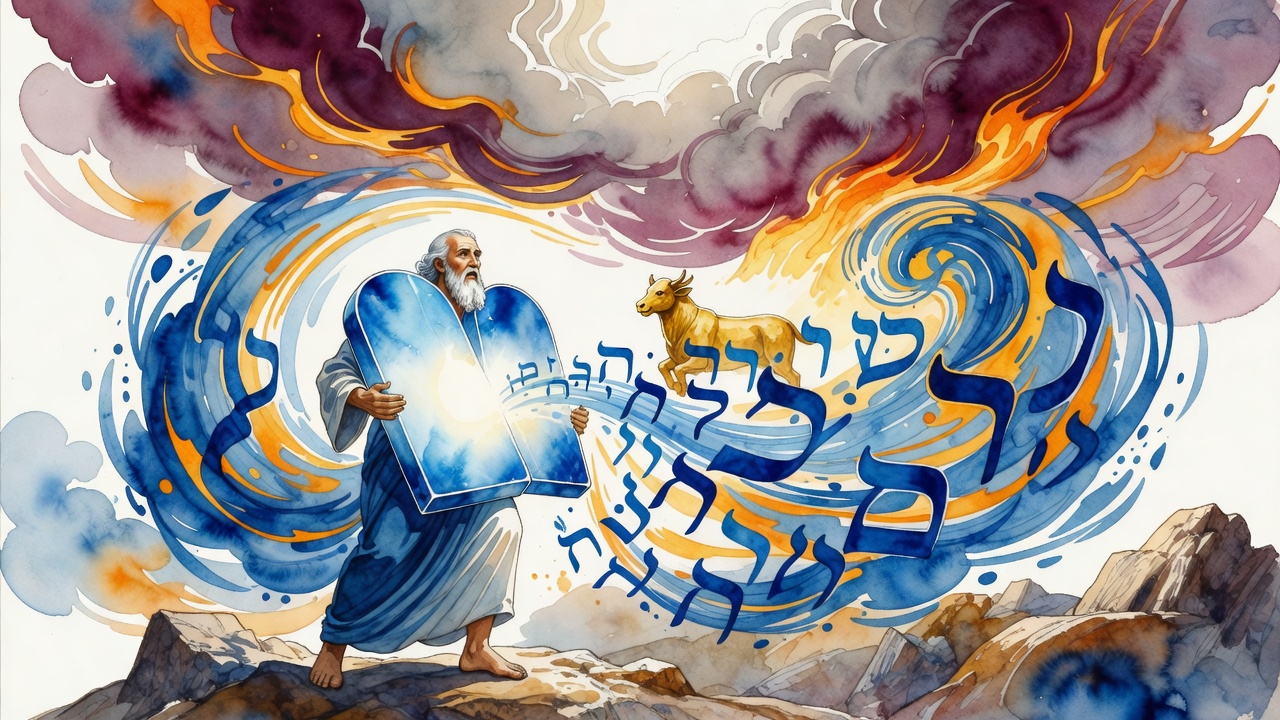
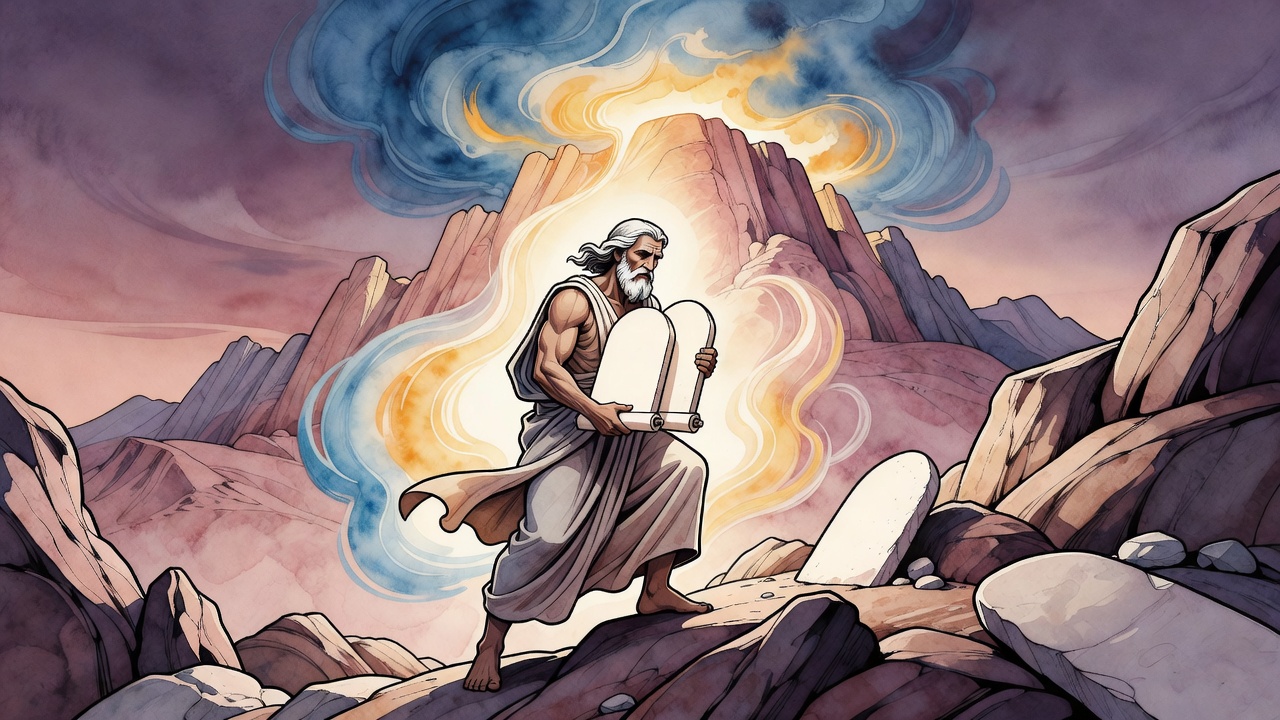
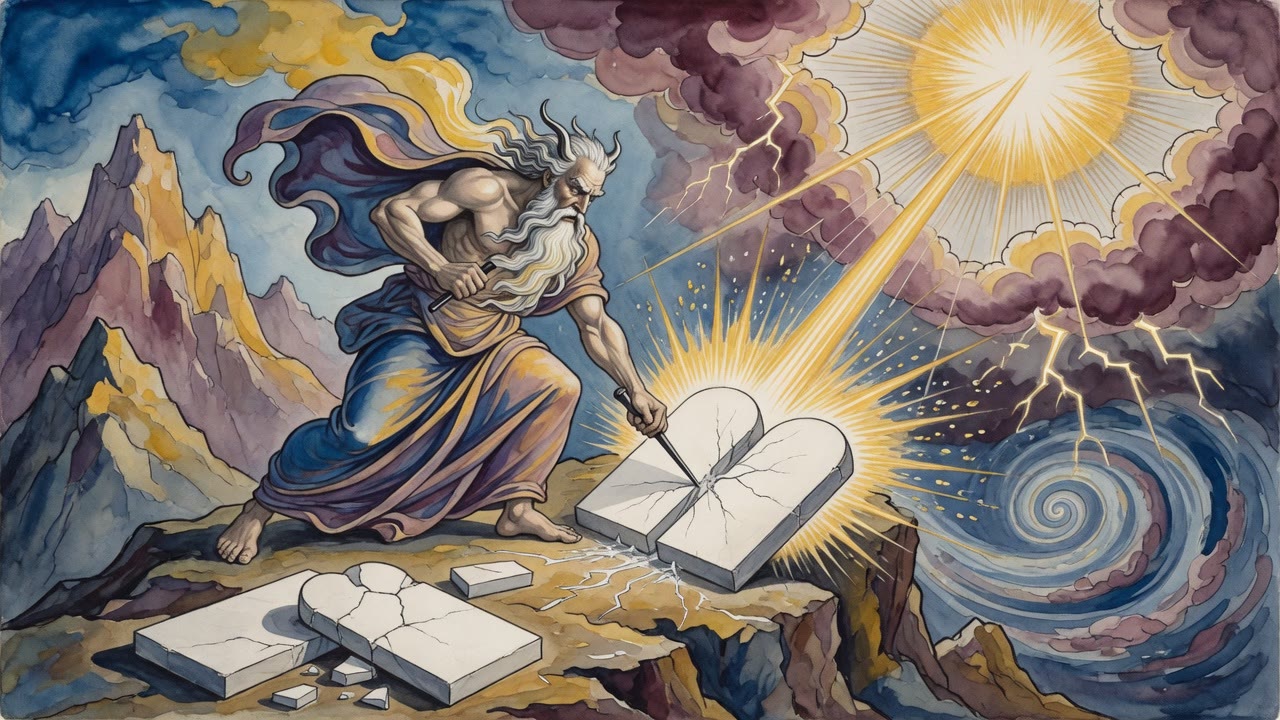
Moses cut the second tablets with his own hands. The first set had been Heaven's work and his anger had shattered them at the foot of the mountain when gold still glittered in the shape of a calf. Now the stone was blank and heavy and his. He rose early, alone, and climbed Sinai again with nothing in his arms but rock that had never yet heard a commandment.
 Click for full size
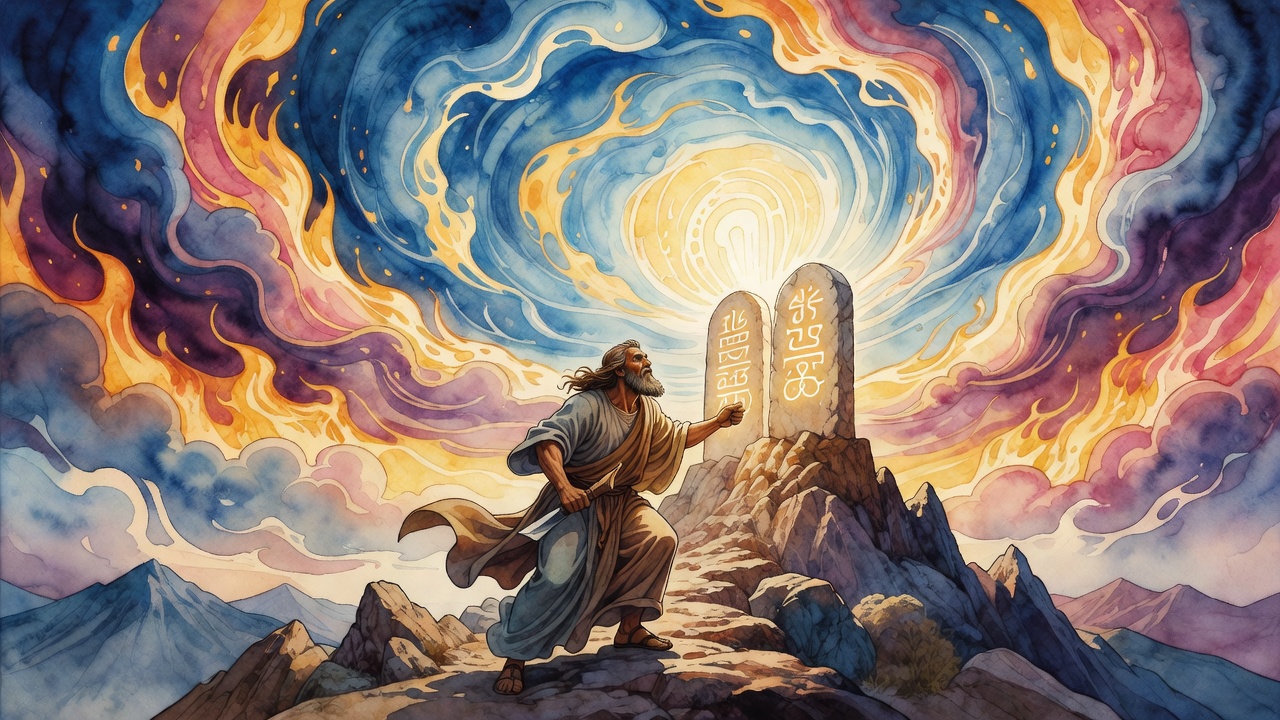
Cloud came down to meet him. Not a metaphor. A thickness that smelled of storm and old fire. God stood with him there and proclaimed the Name.
Carve What You Broke
"Carve two tablets of stone like the first," God had said, "and I will inscribe upon the tablets the words that were on the first tablets, which you shattered" (Exodus 34:1). The shattering was not erased from the sentence. It was named. Moses had to carry the memory of broken sapphire up the path in the form of new work.
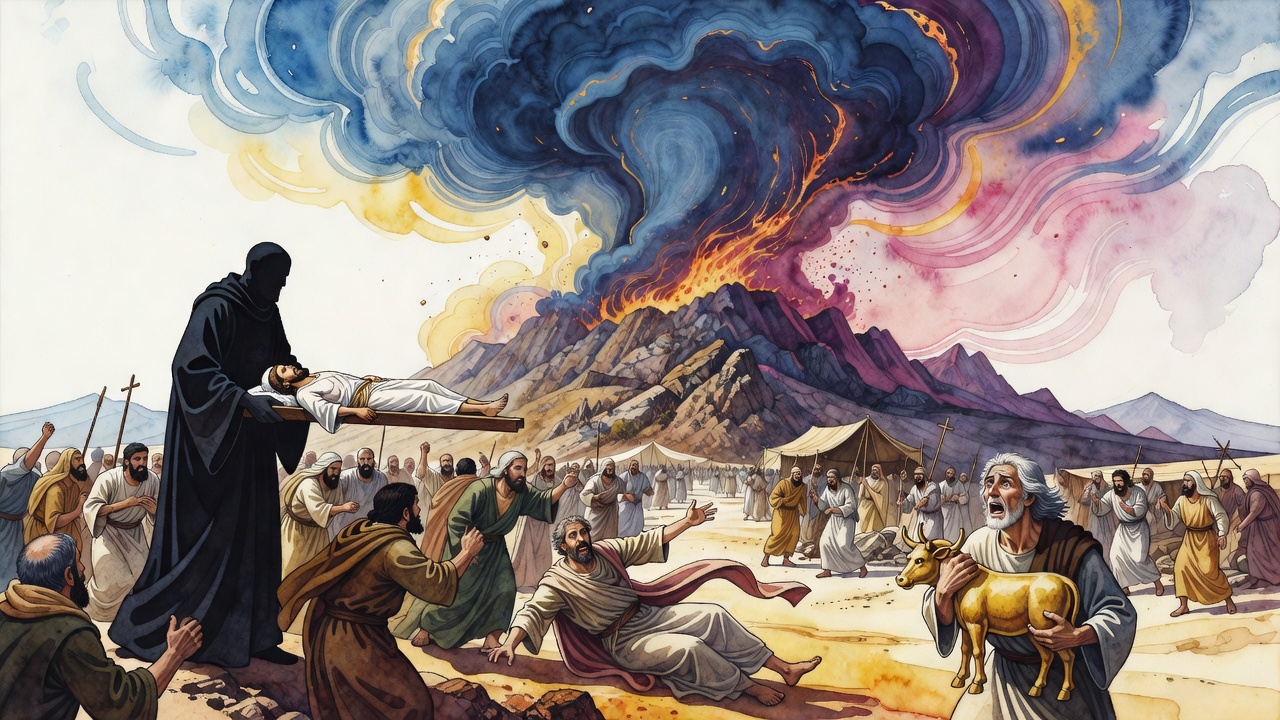
He did not bring the people. The camp that had danced was not invited to this second appointment. Only the man who had thrown the first covenant and then refused to let the nation die for it. The climb was a kind of penance measured in breath and calf muscle, blank stone bruising his ribs.
The Robe and the Order of Prayer
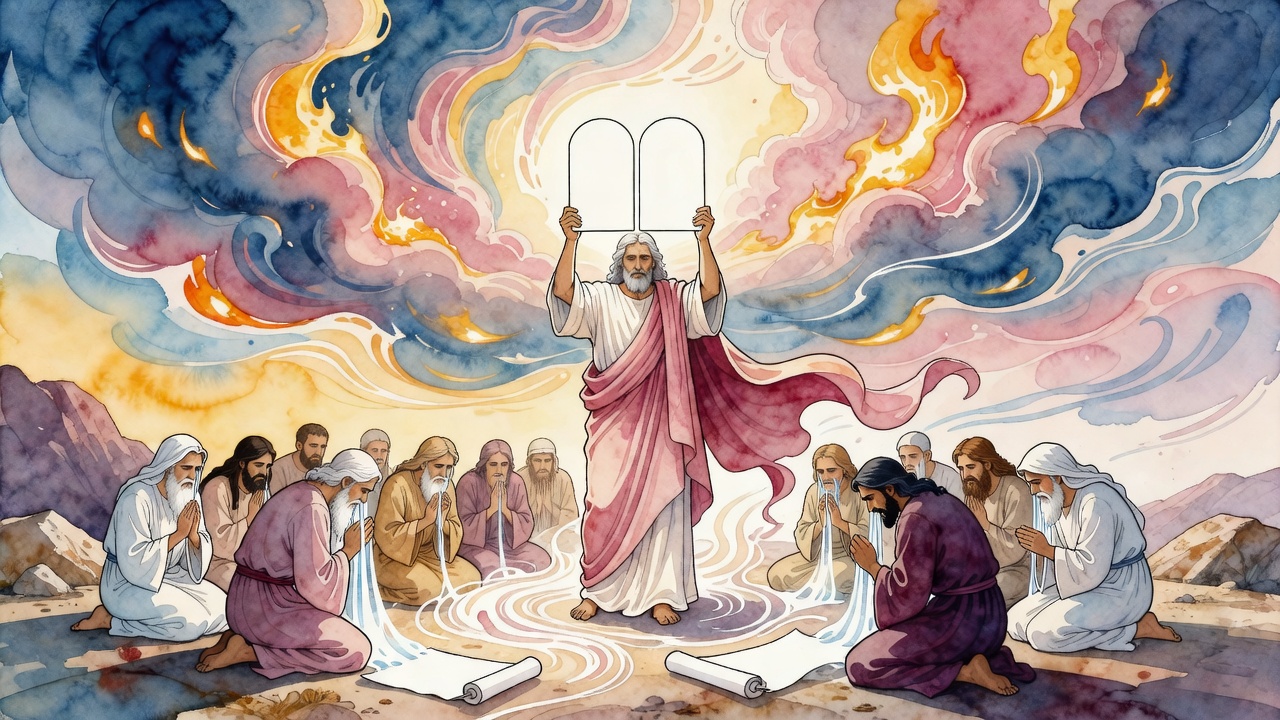
What happened next is almost too intimate to tell without flinching. The Talmud remembers it as something that could scarcely be said if Scripture had not forced the saying. The Holy One wrapped Himself like a shaliach tzibbur, a prayer leader before a congregation, and showed Moses the order of prayer.
God drew the robe close. God taught the sequence. God placed in Moses' mouth the thirteen attributes that would become Israel's map back from ruin: compassionate and gracious, slow to anger, abounding in kindness and faithfulness, forgiving iniquity and rebellion and sin. "Whenever Israel sins," the teaching runs, "let them do this order before Me, and I will forgive them."
A covenant was cut on that procedure. Not only on law written in stone, but on a way of standing and speaking when the law has already been broken. Moses watched the Teacher become the cantor of His own mercy.
The Day He Came Down with a Horn
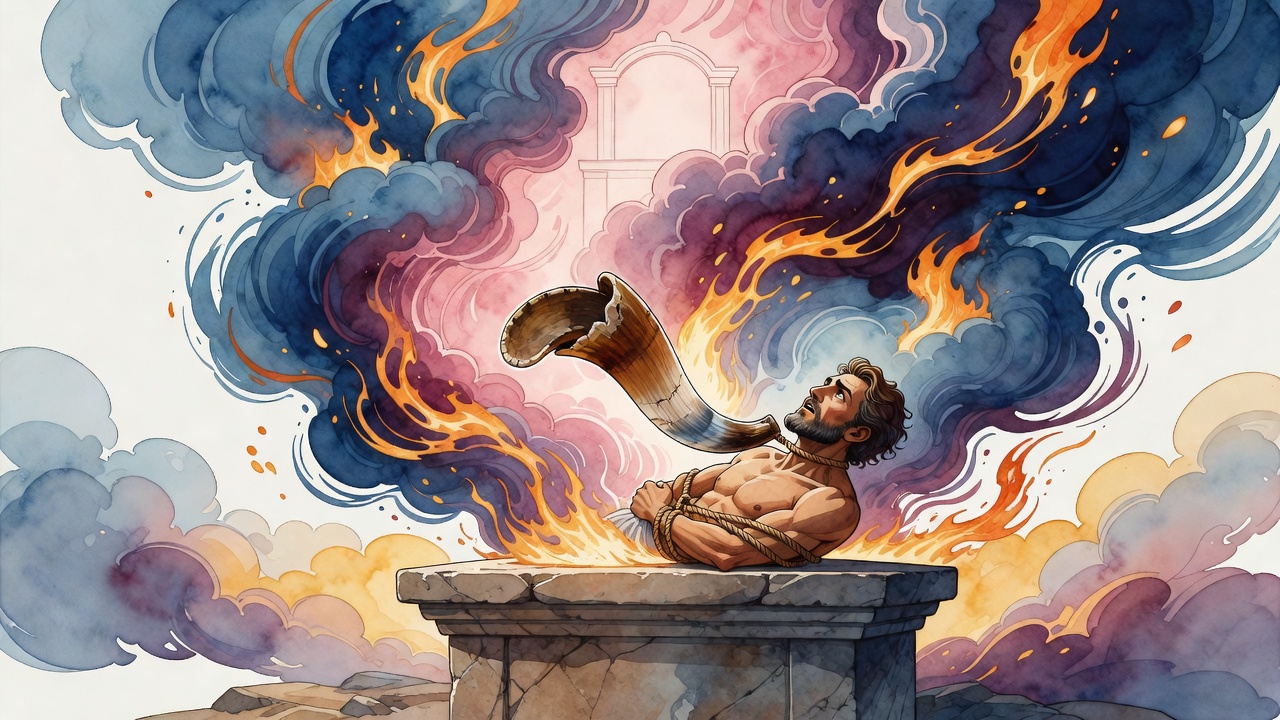
When Moses finally descended with the second tablets, tradition marks the day as the tenth of Tishrei, the day later generations would call Yom Kippur. Some remember a shofar sound (the blast of a ram's horn) walking with him down the slope, a sonic seal on atonement received. The people who had waited in fear heard stone that had been rewritten and a blast that said the story was not finished.
Later ages would blow a final note at the close of the fast to remember that return: Torah received again after betrayal, a whole heart possible after a stiff neck. The horn does not erase the calf. It announces that the second set of words still counts as covenant.
What the Cloud Said Aloud
God passed before Moses' face and called the Name twice, as if to say the same One stands before the sin and after the repentance. Slow to anger is not indifference. It is a deliberate refusal to let the calf be the last chapter. Moses, hearing it, pressed the plea for a stiff-necked people and did not pretend they were soft. He asked for walking company anyway.
The second tablets were not softer law. They were law carried by a man who had already failed once as courier and returned with empty hands willing to be filled again. The prayer order was not a loophole. It was a door cut in the same mountain that had shaken when the first covenant broke.
Stone, Robe, and Horn
Three things came down that sequence of days: stone cut by human hands and written by God, a robe-gesture that taught how to ask for life after death-deserving sin, and a sound that later generations would pin to the end of the most severe day of the year. Moses held the weight. Israel held the memory. Heaven held the promise that the order of mercy would still work when the next golden thing rose in some other valley.
Night on the mountain was not empty. Moses felt the cold of blank stone through his cloak and remembered the heat of the first tablets when they still burned with letters not yet broken. The people below slept or pretended to sleep. Somewhere a dog barked at a shadow that might have been a calf memory. Moses kept climbing because the alternative was to let the broken covenant be the last thing Heaven wrote about Israel.
When the attributes were finished and the cloud thinned, he understood that prayer would never again be only request. It would be reenactment of a robe drawn close, a sequence taught by the One who sits above judgment and still chooses to show a mortal how to stand in front of a guilty camp and ask for life.
He had climbed with blank rock. He came down with words, with a liturgy of return, and with the knowledge that God Himself had shown him how to stand in front of a people and plead without lying about who they were.
← All myths