Moses Carved Stone After the Calf Broke Heaven
After the Golden Calf, God will not gift new tablets free. Moses climbs with a chisel, pays the cost of reconciliation, and heaven writes again.
Table of Contents
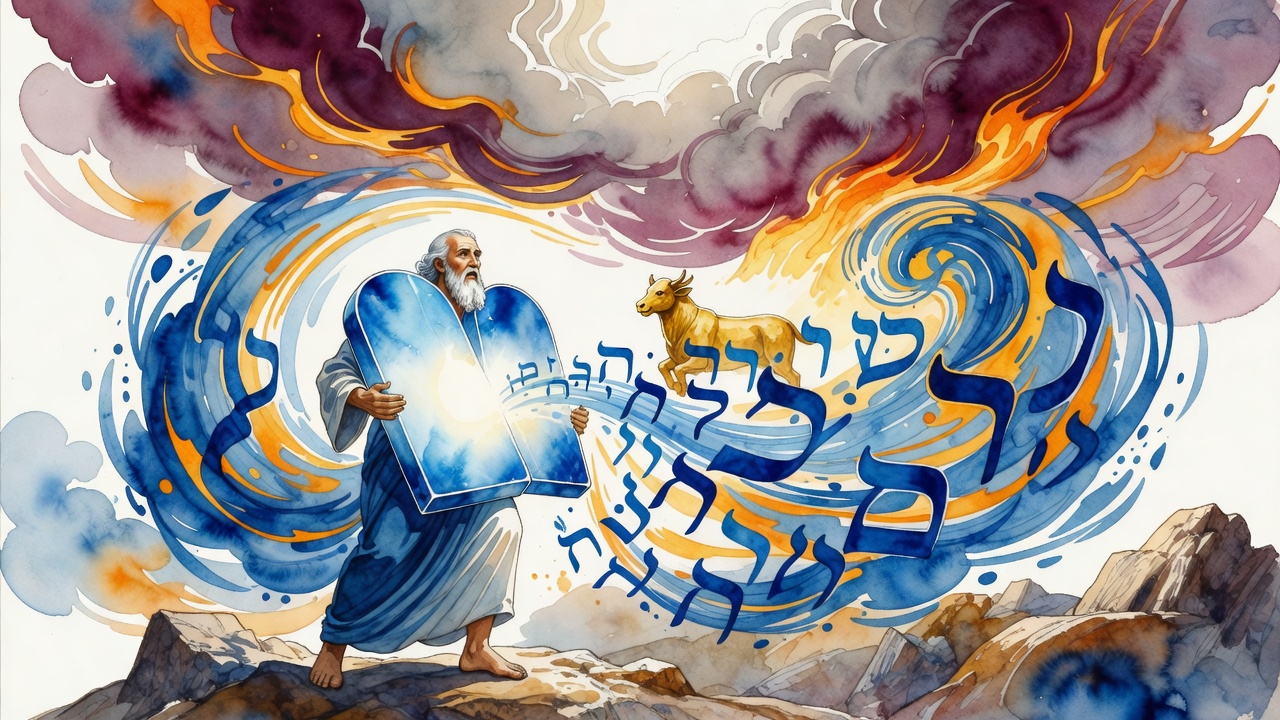
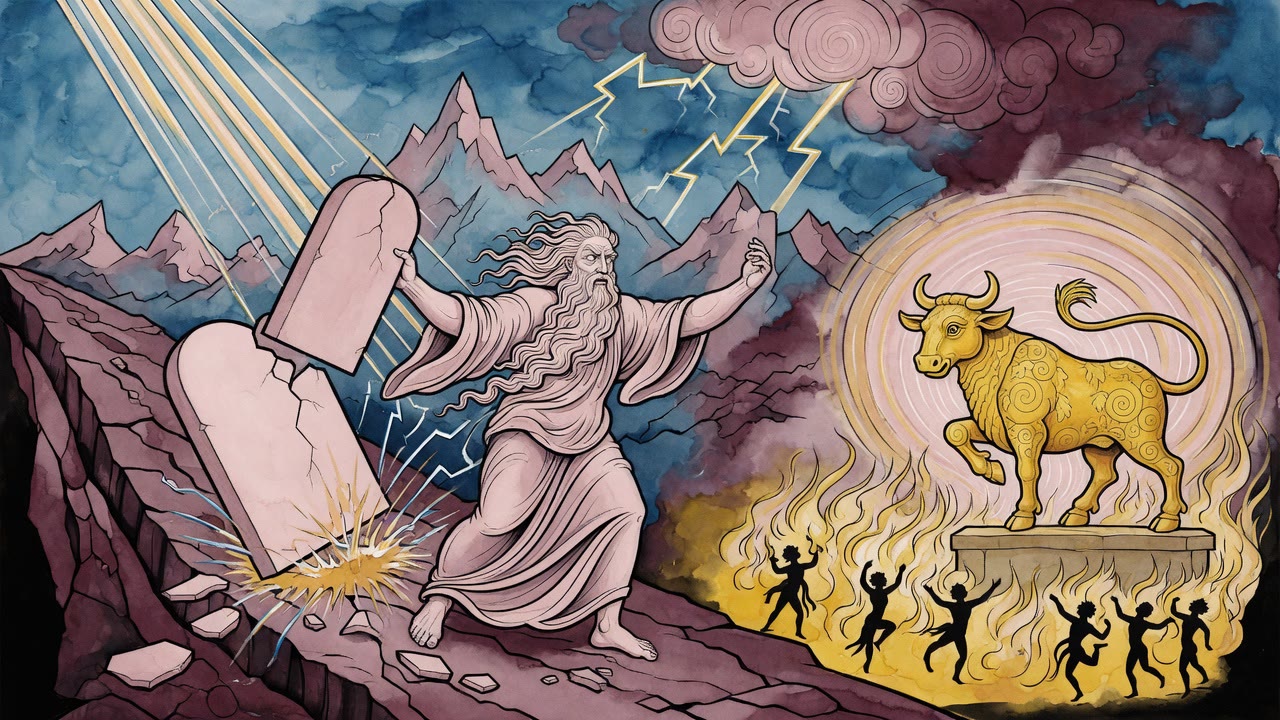
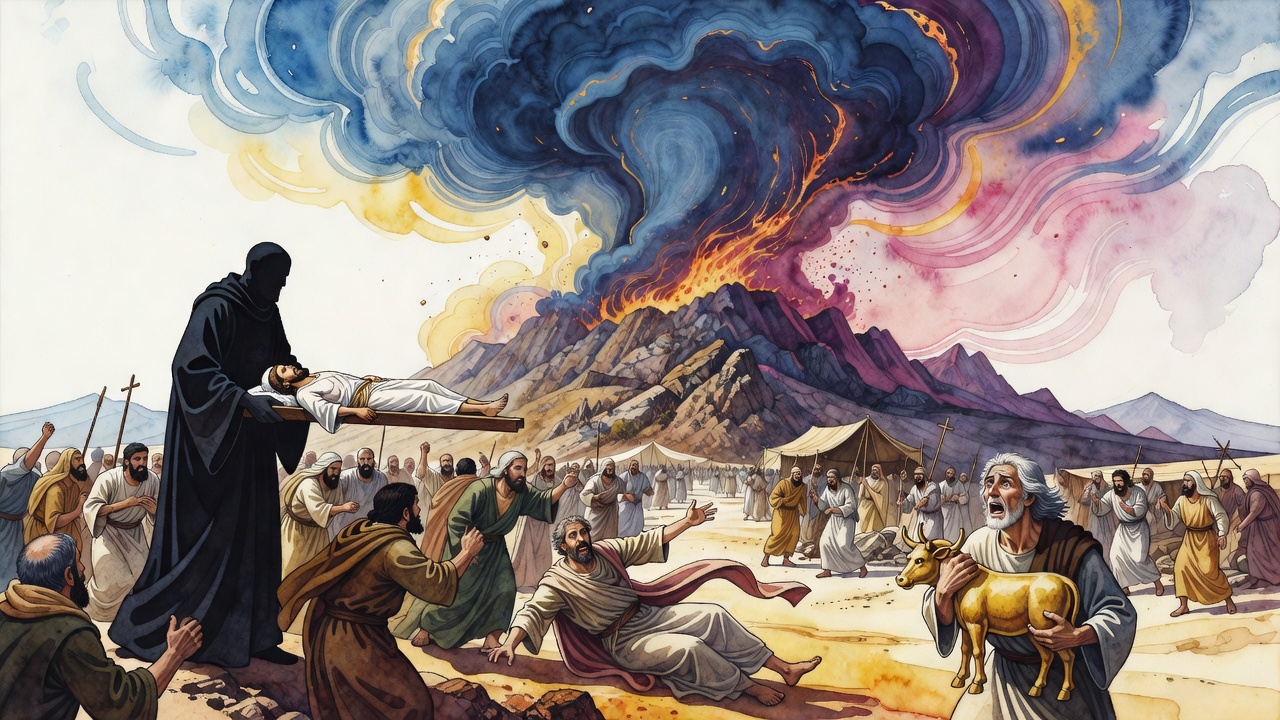
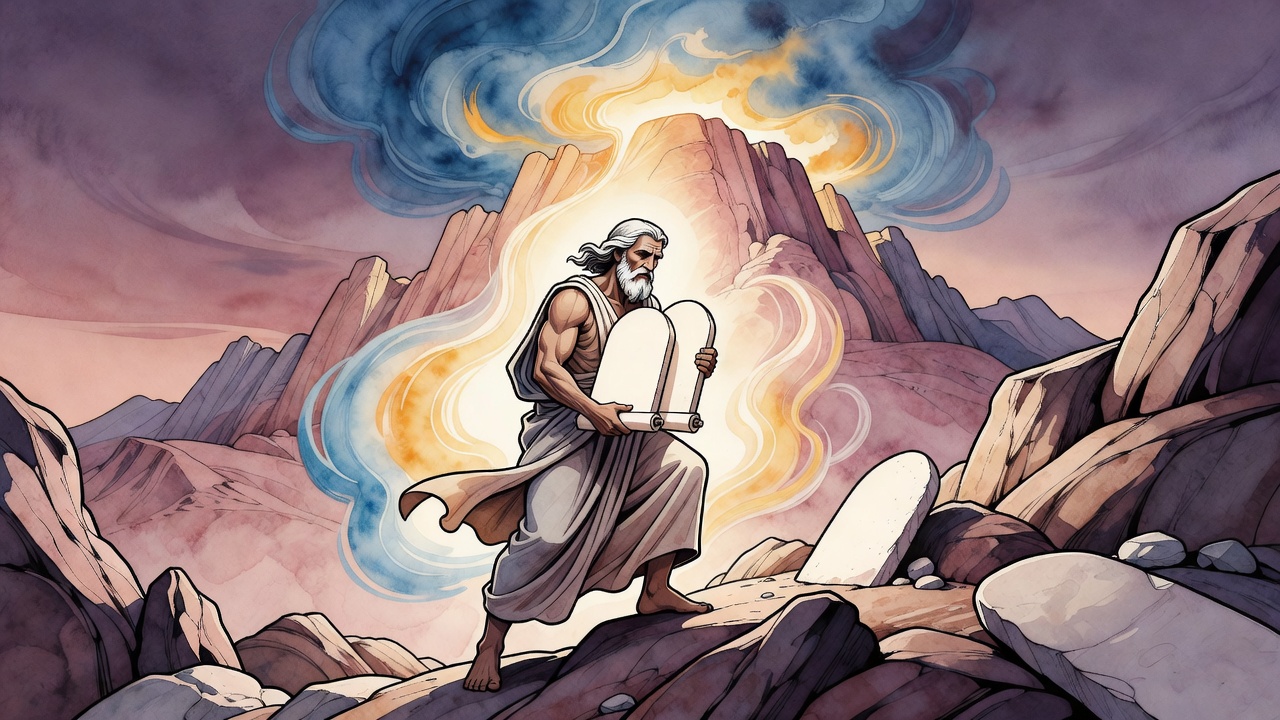
Moses climbed back up the mountain with nothing in his hands. The gold had already been ground to powder and stirred into the drinking water, so the whole camp was carrying the calf in its stomach while he went up to ask for them. The first tablets lay in pieces at the bottom of the slope. He left them there, because the pieces were the only honest thing in the camp that morning.
 Click for full size
He had one argument, and it was not that they were innocent.
The Argument From Egypt
"Do You not know from where You took them?" Moses said. "It was from Egypt, a place of idol worship."
That was the whole of it. He did not claim the singing had been misheard, since half the camp had stood there and watched the thing come out of the fire. He said instead that people raised in a country where every doorway holds a god will reach for a shape when they are frightened, because a shape is what their hands were taught. They had been out of Egypt a few months. Egypt had been inside them since before any of them could remember a morning without it.
God did not say the argument was false. He also did not let it settle anything.
The Paper and the Scribe at His Own Expense
"What are you asking, that I reconcile with them? Bring the tablets at your own expense, and I will add My handwriting."
Moses did not answer straight away. He had come down the first time with two stones against his ribs that he had not cut, lettered in a hand that was not his, and the whole weight of them had been a gift nobody had asked him to pay for. Now a price had been named, and it was not silver, and there was no one else on the mountain to carry it. His hand went to his belt where the tablets had rested on the way down, and found cloth.
Then he agreed, and he agreed quickly, because there was nobody in the camp below who could have been sent up in his place.
The Question Put to Rabbi Yohanan Ben Zakkai
Centuries later students came at the sore part of it from the front. Why were the first tablets the work of heaven, they asked Rabbi Yohanan ben Zakkai, and the second the work of a man? He answered them with a king.
The king had married a woman and paid for every part of it himself, the contract, the scribe, the jewelry he fastened on her before he brought her through his own door. Then he saw her in his own house being familiar with one of his slaves, so he put her out and the gate shut behind her. Her friend came and stood at that gate and would not go away. "My master, do you not know where you took her from? She grew up among slaves, and she is familiar with slaves." The king did not deny it. "What are you asking, that I reconcile with her? Bring the paper and the scribe at your own expense, and I will sign."
There was a second contract. It existed because the friend paid the scribe.
The Chisel Answered the Singing
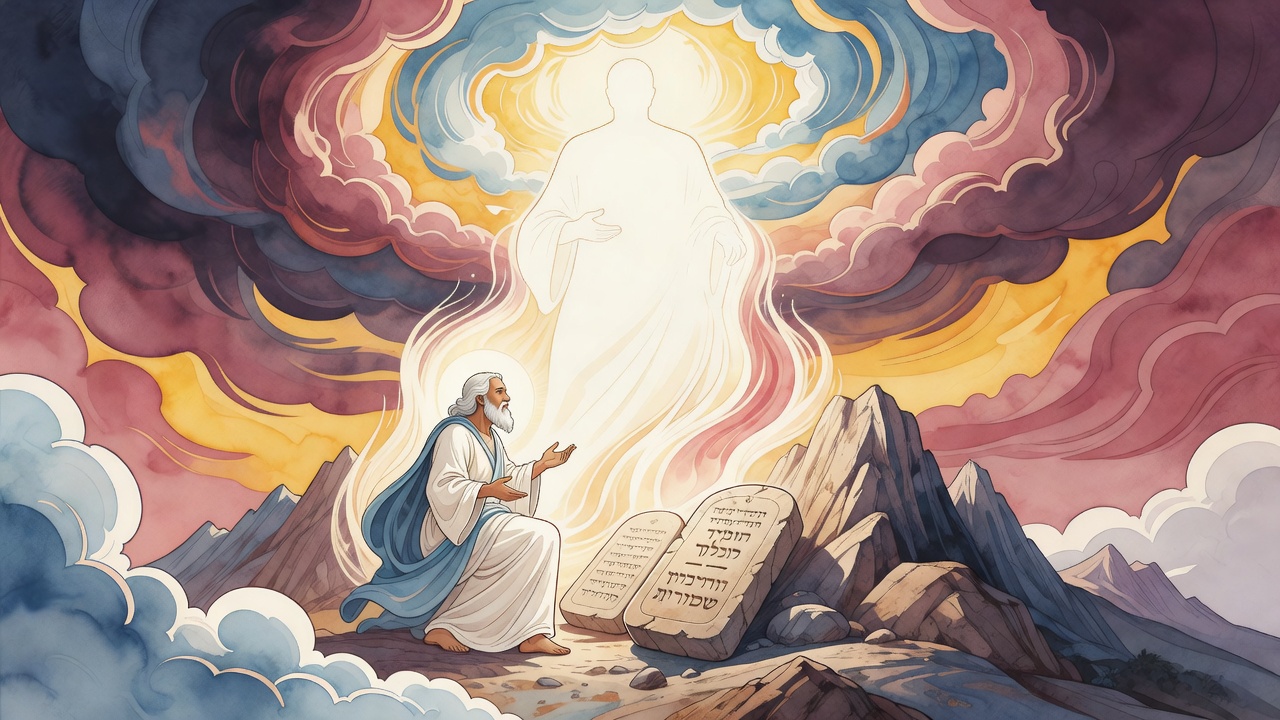
"Carve for yourself two tablets of stone like the first, and I will write on the tablets the words that were on the first tablets, which you broke" (Exodus 34:1).
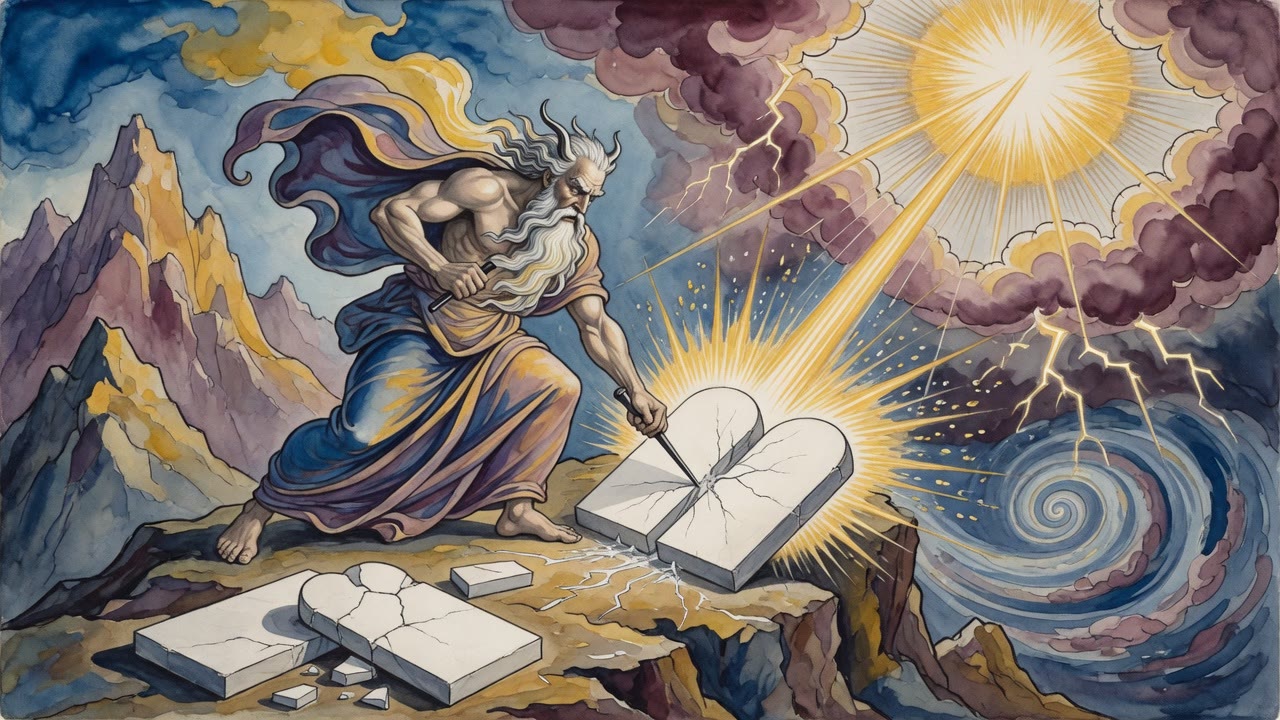
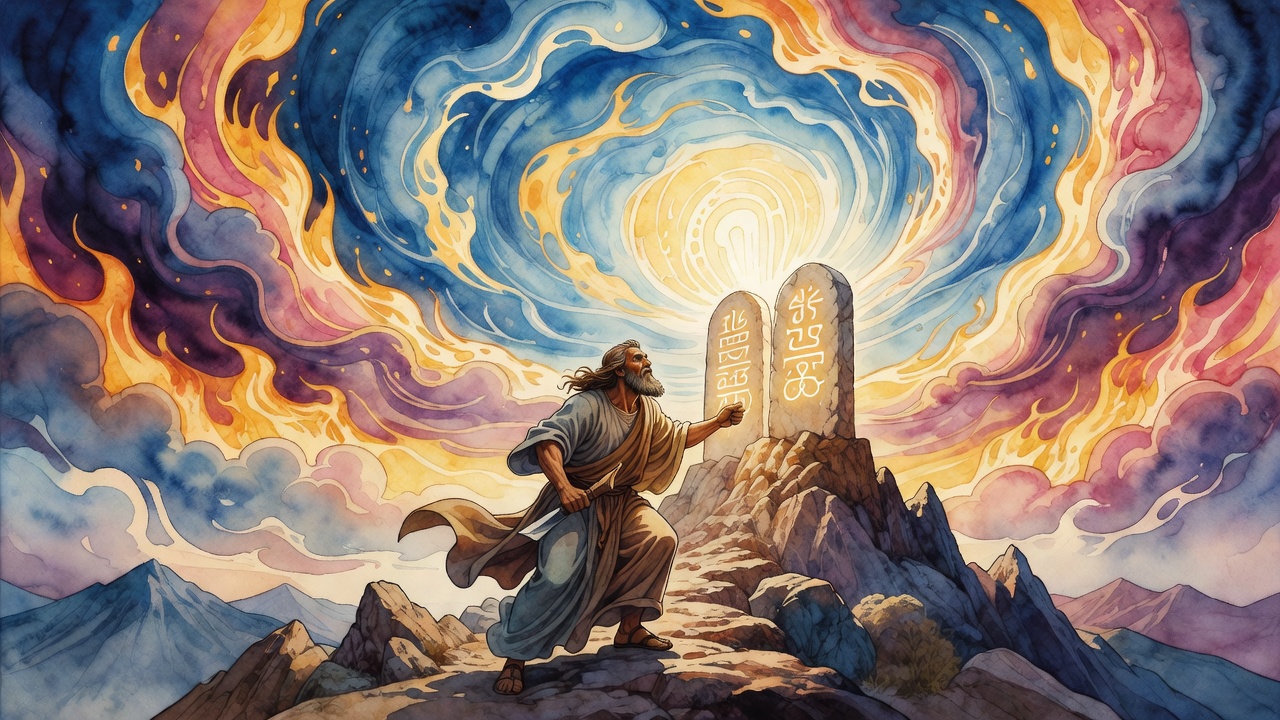
So he cut them. The dust came off the rock pale and got into his beard and under his eyelids, and by the middle of the first day his shoulders had stopped being able to tell effort from pain. Down below, the camp had sung loud enough around the calf to be heard on the slope. Up on the slope there was one sound, a man hitting stone in a steady rhythm until it took the shape of the thing he had thrown away.
When the blanks were ready God wrote on them, so the renewed covenant came off the mountain in two parts, the stone a man's work and the letters not. Two of them, God had said, standing as testimony the way a groom and a bride stand, this world and the world that is coming.
The Sin That Could Still Be Paid For
Six commands had been laid on Adam before there was an Israel to break anything, and the sages found all six folded into the single line God spoke over him in the garden (Genesis 2:16). Idol worship stood at the head of that list. Every one of the six could be forgiven except bloodshed.
Rabbi Levi pushed on that, because plenty of men have killed and then died quietly in their own beds. The account is not closed, he was told, only carried: when everyone comes back in the future, that is when the blood is required. And they told him about a woman with two sons, one of whom killed the other. She filled a cup with the dead son's blood and set it in a tower, and every day she climbed up and found it moving, bubbling, unsettled. One morning it lay still, so she knew her other son was dead too.
What the camp had done under the mountain was the oldest item on Adam's list, and it was the forgivable kind. So there was something to buy back, and the price could be met by one man with a chisel.
In a Storm and in the Reeds
Then God said something Moses had not asked for. "As you live: because you gave your life for them in this world, when I bring Elijah the prophet in the future, the two of you will come as one."
The proof sat inside a line of Nahum, that the Lord's way is in a storm and in a tempest (Nahum 1:3). The storm is Moses, because his mother laid him among the reeds on the bank of the Nile, and the word for those reeds stands one letter away from the word for that storm. The tempest is Elijah, who went up in one while Elisha stood underneath shouting and then tore his clothes into two pieces.
Moses went down carrying stone he had cut and letters he had not. Behind him on the slope, the chips he had knocked loose stayed where they fell.
← All myths