5 min read

Moses Saw the Golden Calf and Smashed the Tablets

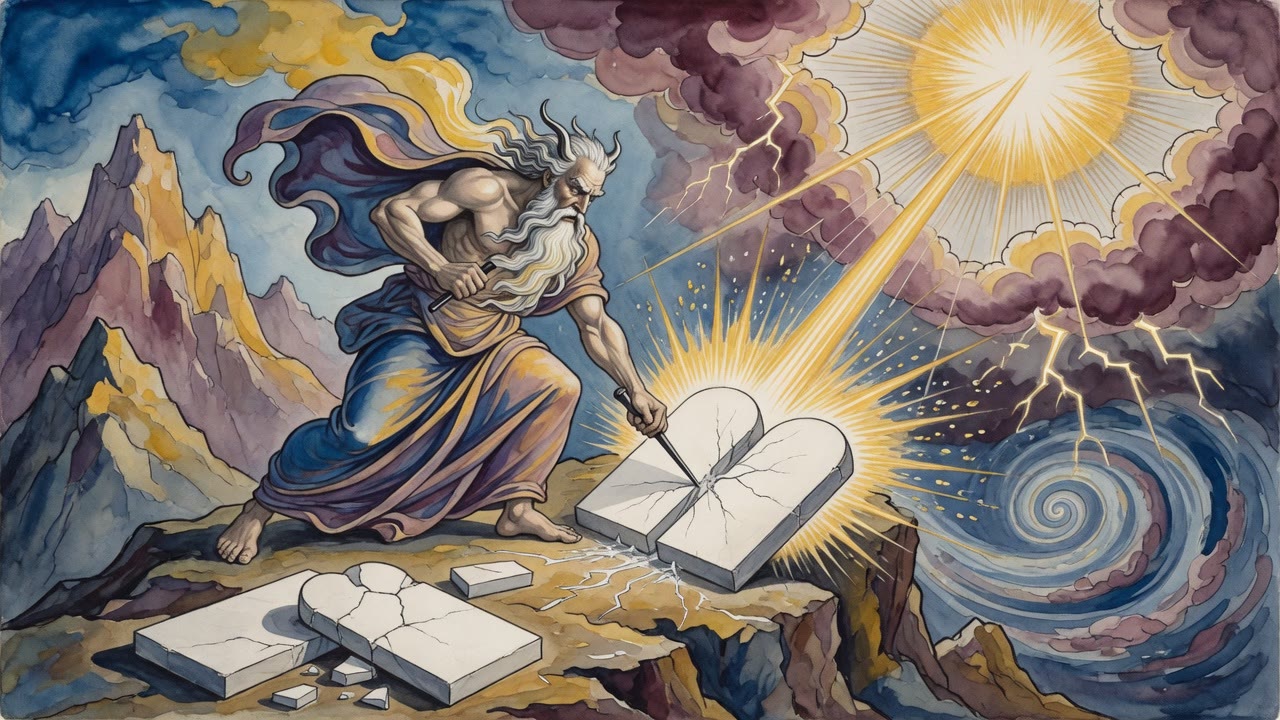
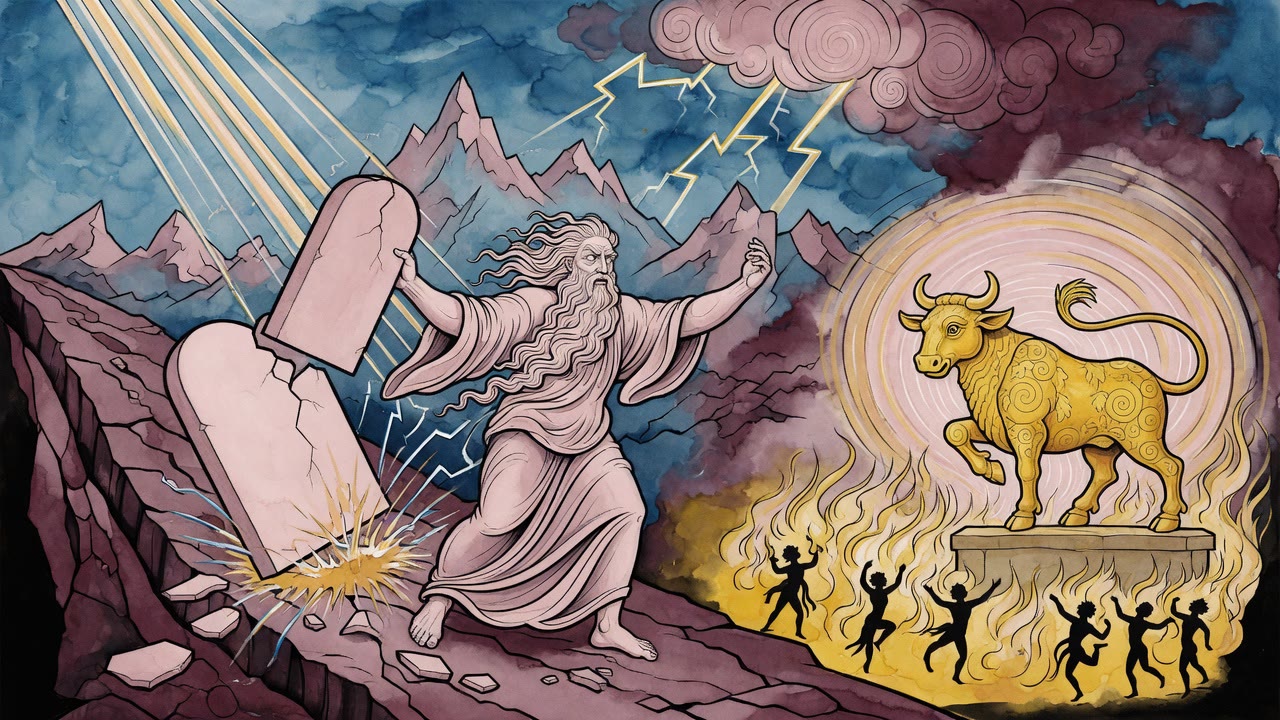
Coming down the mountain with heaven's marriage contract in his arms, Moses saw the calf, watched the letters flee the stone, and broke what he carried.

Curated by Arthur · Told by Maggid ·
Table of Contents
  1. The Agent Who Tore the Contract
  2. When the Letters Flew Away
  3. Less Attention Than a Bitter Bean
  4. The Clock Handed to the Children

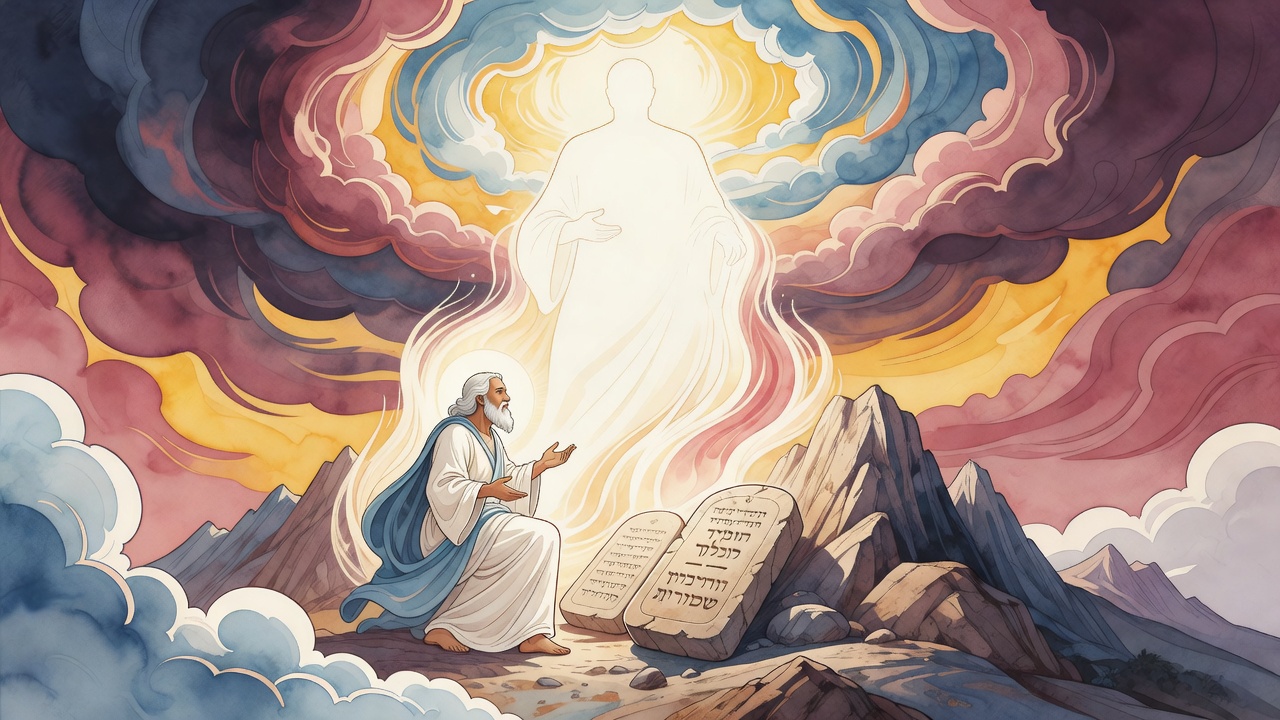
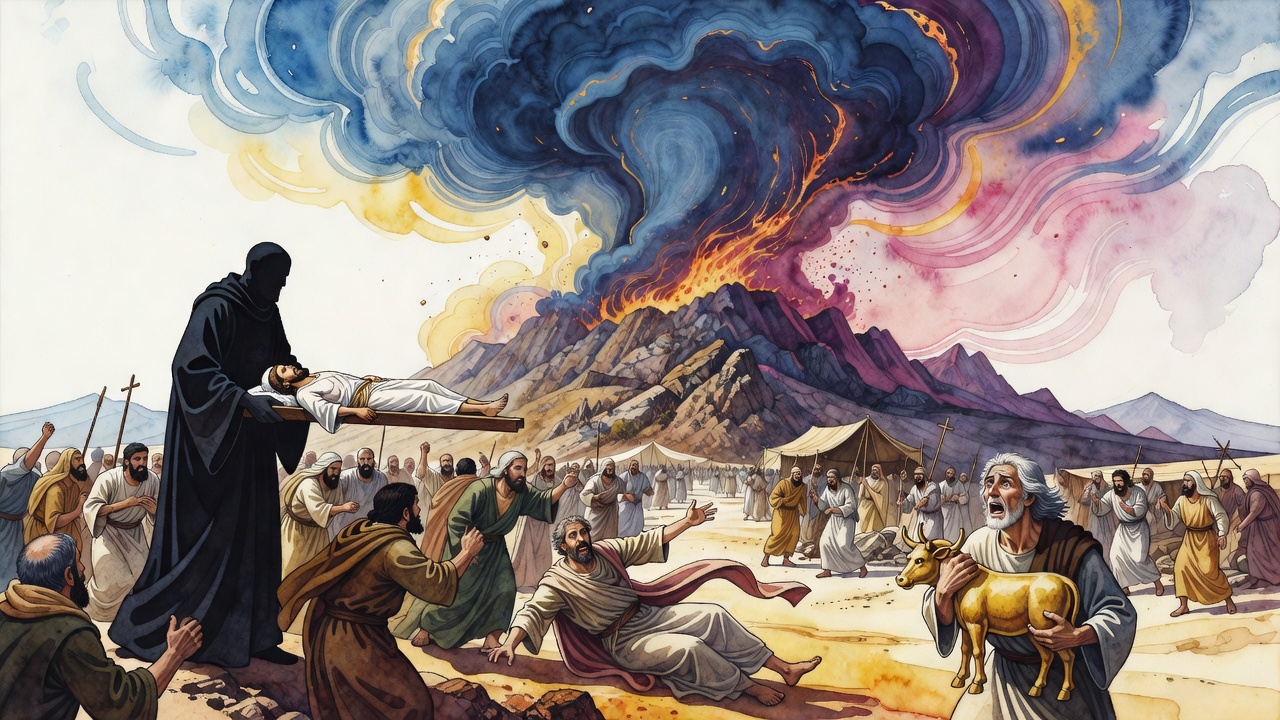
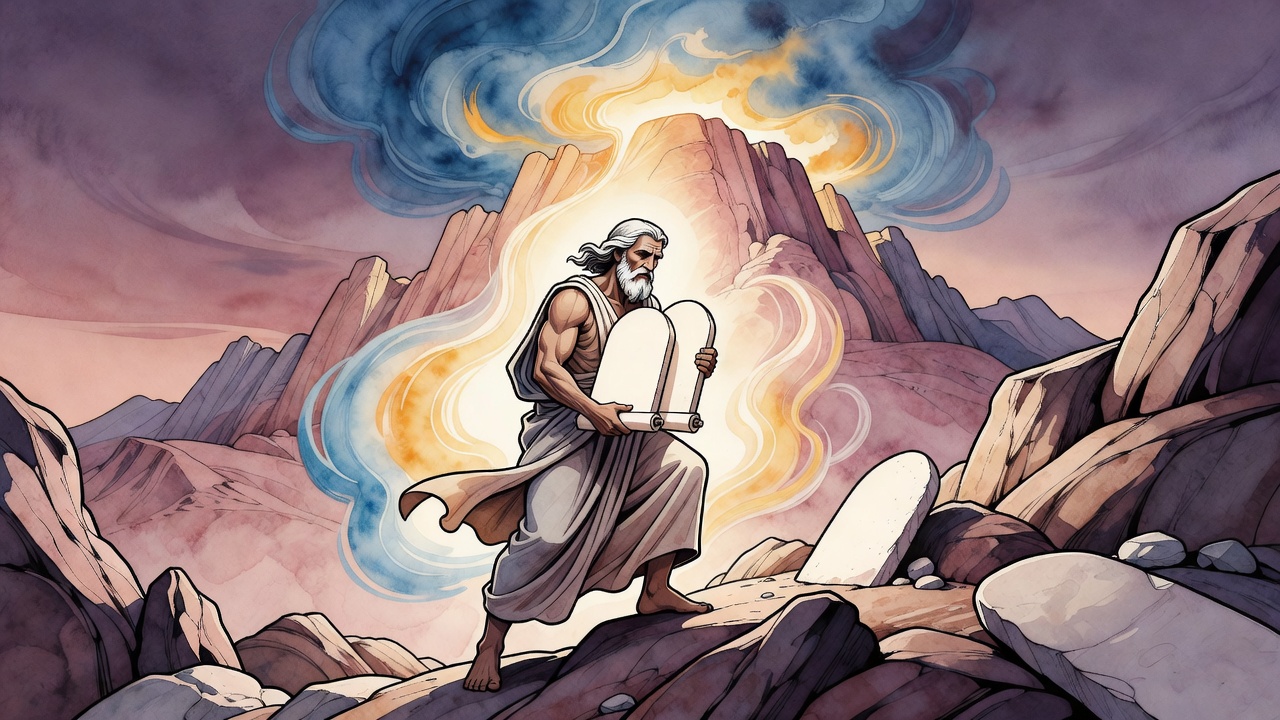
Moses came down the mountain with the weight of heaven in his arms. The tablets were six handbreadths long and three wide. He held two handbreadths. The Holy One held two. Two handbreadths of space hung between them in the middle. Then Moses saw the camp, the calf, the dancing, and his grip changed.
Moses Saw the Golden Calf and Smashed the Tablets Click for full size

The Agent Who Tore the Contract

A king betrothed a woman and sent the marriage contract through a nuptial agent. On the road the agent found her sullied with another man. He tore the contract. Better, he said, that the king judge her as a single woman than as a married one caught in betrayal. So the Holy One betrothed Israel at Sinai, "be sanctified today and tomorrow" (Exodus 19:10). Moses arrived to deliver the Torah and found the golden calf. He flung the tablets and smashed them before their eyes (Deuteronomy 9:16-17).

Some sages hear God saying, take this which you broke. Others hear approval: he did well. Both readings keep the body of Moses at the center, arms locked, stone shattering, a people watching the wedding papers of heaven turn to dust.

When the Letters Flew Away

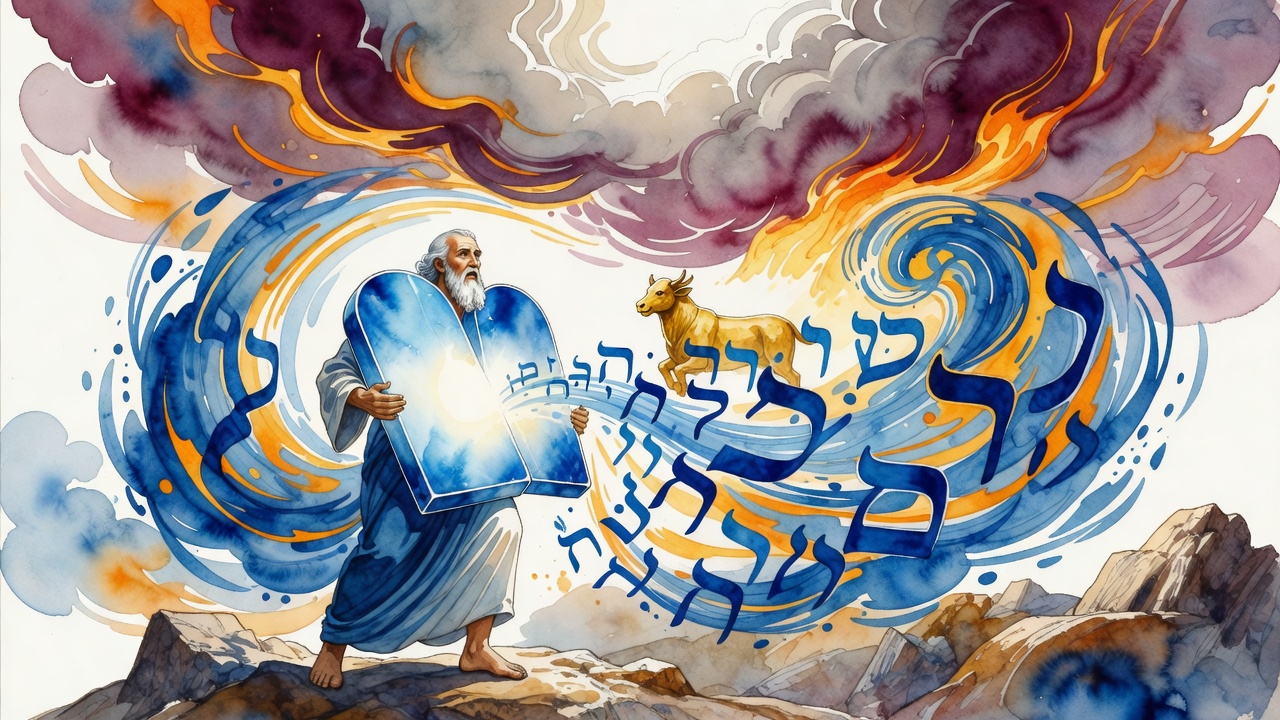
Why break them? Because the writing flew off. A courier carrying a royal edict crosses a river. The documents fall. The letters wash away. The courier tears what remains, for a blank stone with no word is a fraud. Moses saw the letters leave the tablets when the people broke faith. Empty stone is not Torah. He would not carry a hollow seal into a camp already drunk on a calf.

Later God said, restore the deposit entrusted to you. "Carve for yourself two tablets of stone like the first" (Deuteronomy 10:1). The intermediary who breaks the barrel pays. Moses the middle-man between God and Israel must cut new stone with his own hands. The second tablets cost sweat. The first had been pure gift.

Less Attention Than a Bitter Bean

Why does Scripture say both that Israel forsook the LORD and that they did not serve Him? Rabbi Eleazar hears God's own voice in the surplus words. Think of the lupine, a bitter little legume boiled seven times before it is fit to eat, and even then only a nibble at the meal's edge. Cheap. Troublesome. Easy to ignore. My children, says the Holy One, did not give Me even as much attention as that lupine. A bean at least gets boiled and shows up at the table's rim. Israel treated the living God as beneath a boiled bean. The doubled verse exists to make the measure unforgettable.

The calf was not only idolatry. It was contempt. Moses breaking stone is the answer of a friend who will not let a people enter a false marriage under heaven's seal.

The Clock Handed to the Children

After the rupture comes a strange trust. "This month shall be for you" (Exodus 12:2). Rabbi Yehoshua ben Levi says it is like a king with a horologue. While the child is small, the king watches the hours. When the child grows, he turns the clock over. So God calculated months and years by His own hand until He placed the calendar in Israel's hands. If the earthly court declares today Rosh Hashana, the Holy One tells the angels: erect the podium, call prosecutors and defenders, My children have fixed the day. If the court delays, heaven removes the podium. "If it is a law for Israel, it is a ruling of the God of Jacob" (Psalms 81:5).

The people who once could not be trusted with tablets are later trusted with time itself. The smash is not the end of the partnership. It is the wound that forces a second carving and a grown child's clock.

Imagine the sound. Stone on stone at the foot of a mountain that still smelled of cloud and fire. The people who had heard the commandments now watched the commandments break. Moses did not break them in private. He broke them "before your eyes," so no one could say the covenant failed quietly in a corner.

The shared grip on the tablets matters. God held two handbreadths. Moses held two. Space hung between them. When Moses seized and flung, he seized a partnership, not a solo cargo. Breaking was an act inside a relationship already strained to tearing. The calf had torn first. The smash answered the tear with a public end to a false wedding.

Then comes the demand to carve again. The second tablets are not a sentimental sequel. They are restitution. The middle-man pays for the broken barrel. Moses cuts stone with human hands for a people who could not keep what heaven wrote the first time. Forgetting under the evil impulse is named as the human condition of this world. A future heart of flesh is promised. Until then, carved stone and repeated teaching must do the work.

And still, after all that failure, the calendar is handed over. Children who danced around a calf are trusted to declare the new moon. Heaven rearranges the court of angels based on their word. That is not naivete. It is stubborn partnership. God stays in the argument for the sake of His name, and Israel stays in the work of time.


← All myths
From the tradition

Sources

3 sources

The texts behind this telling. Some cards carry a translation of the source; others are our own retelling of it, and each card says which. Every card links out to the original.

Midrash Tanchuma, Eikev 11Midrash Tanchuma

Retold in our words. Read the original at the link below.Townsend 1989 translation of Midrash Tanhuma, S. Buber Recension · CC-BY

That you smashed (Deuteronomy 10:2): Rabbi Akiva and Rabbi Yishmael [differed on the matter]. One said, "[God was saying,] 'Take this here from Me which you broke, Moshe.'" And one said, "He did well." There is a [relevant] parable: To what is the matter comparable? To a a king who betrothed a woman. He said to her, "After some time, I will send your marriage contract through a nuptial agent. After some time the king sent [it]. While [the agent] was going, he found that she was sullied with another [man]. What did the agent do? He tore that marriage contract. He said, "It is better that [the king] judge her as a single woman, and not as a married woman." So [too,] did the Holy One, blessed be He, betroth Israel, as it is stated (Exodus 19:10), "and you shall be sanctified (a word sometimes used to denote marriage) today and tomorrow." Moshe [then] came to give them the Torah, and found that they did that act [of the golden calf]. What did he do? He broke the talets, as it is stated (Deuteronomy 9:16-17), "I saw how you had sinned against the Lord, your God [...]. Thereupon I gripped the two tablets and flung them away with both my hands, smashing them before your eyes." Rabbi Beracheya said in the name of Rabbi Helbo in the name of Rabbi Yishmael bar Nechemiah, "The length of the tablets was six handbreadths and their width was three. Moshe held on to two and the Holy One, blessed be He, to two and there were two handbreadths of space in the middle. And Moshe's hands became strong and he grabbed the tablets and broke them, as it is stated (Exodus 32:19), 'and he flung from his hands.' Therefore the Holy One, blessed be He, said, "that you broke." Why did he break them? Because the writing upon them flew away. And therefore he broke them. There is a [relevant] parable. To what is the matter comparable? To a courier who was going to bring a royal edict in his hand to a province. And he passed through a river and the [documents] fell into the water and the letters were erased. What did that courier do? He tore them. As it is stated (Deuteronomy 9;16), "I saw how you had sinned against the Lord, your God." What did he see? He saw the letters flying away. And so he also broke [the tablets], as it is stated, "which you broke." The Holy One, blessed be He, said to him, "I dictated in My Torah and stated (Leviticus 5:23), 'he would restore that which he got through robbery [...], or the deposit that was entrusted to him.' And [so] restore that deposit that was with you. And this is what is stated (Deuteronomy 10:1), 'Carve out for yourself two tablets of stone like the first ones.' And not only that, but tomorrow they will be reviewing that which they will be learning from you, 'If a barrel is broken, and the intermediary breaks it, [the payment] is from him.' You were the intermediary between us, and you broke [them]. Therefore you have to pay." Therefore it is stated, "Carve out for yourself." The Holy One, blessed be He, said, "In this world, you learn and forget, because of the evil impulse. But in the future to come, I am uprooting the evil impulse from you and you will not forget, as it is stated (Isaiah 36:26), 'I will remove the heart of stone from your body and give you a heart of flesh.' And not only that, but you will not need [another] person to teach [you the Torah], as it is stated (Jeremiah 31:34), 'No longer will they need to teach one another and say to one another, "Know the Lord"; for all of them, from the least of them to the greatest, shall know Me.'" And so may it be His will; and let us say, "Amen!"

Full source
Yalkut Shimoni on Nach 41:7Yalkut Shimoni on Nach

Translation of the source text.Yalkut Shimoni on Nach (Sefaria) · CC-BY-NC

From the implication of what is said, "and they forsook" (Judges 2:13), do I not know that they did not serve Him? Then what does the text teach by saying "and they did not serve Him"? Rabbi Eleazar said: The Holy One, blessed be He, said: My children did not make Me even like this lupine, which one boils seven times and eats as a dessert at the end of the meal. "Let not the priestess be as the innkeeper's wife" [that is, one of high standing should not behave like one of low standing].

Full source
Yalkut Shimoni on Torah 190Yalkut Shimoni

Retold in our words. Read the original at the link below.Sefaria Community Translation · CC0

"This month shall be for you." It shall be turned over to you. R. Yehoshua b. Levi said, "It's like a king who had a horologue. When he looked at it, he would know what time of day it was. When his child grew up, he turned over his horologue to them. So too did the Holy One of Blessing, up until this point, calculate the months and years "by my hand". But from this point onwards, behold I am giving it over into your hands: "This month shall be for you."... If the earthly court declares: ‘Today is Rosh Hashana!’ The Holy One Blessed Be He proclaims to the angels: ‘Erect a podium! Call the prosecuting attorneys; call the defense attorneys! My children have declared: Today is Rosh Hashana!’ If the earthly court determines to delay the holiday, the Holy One Blessed Be He declares to the heavenly Angels: ‘Remove the podium! Remove the prosecuting attorneys; remove the defense attorneys! My children have decided to postpone the holiday for a day." What is the reason? (Teh 81:5) "[If] it is a law [according] to Yisrael, [then it is] a ruling of the God of Ya'akov."

Full source