Moses Carved New Tablets and Climbed at Dawn
The first tablets had been cut by heaven. Moses hewed the next pair himself, then climbed Sinai before dawn with the stones in his hands.
Table of Contents
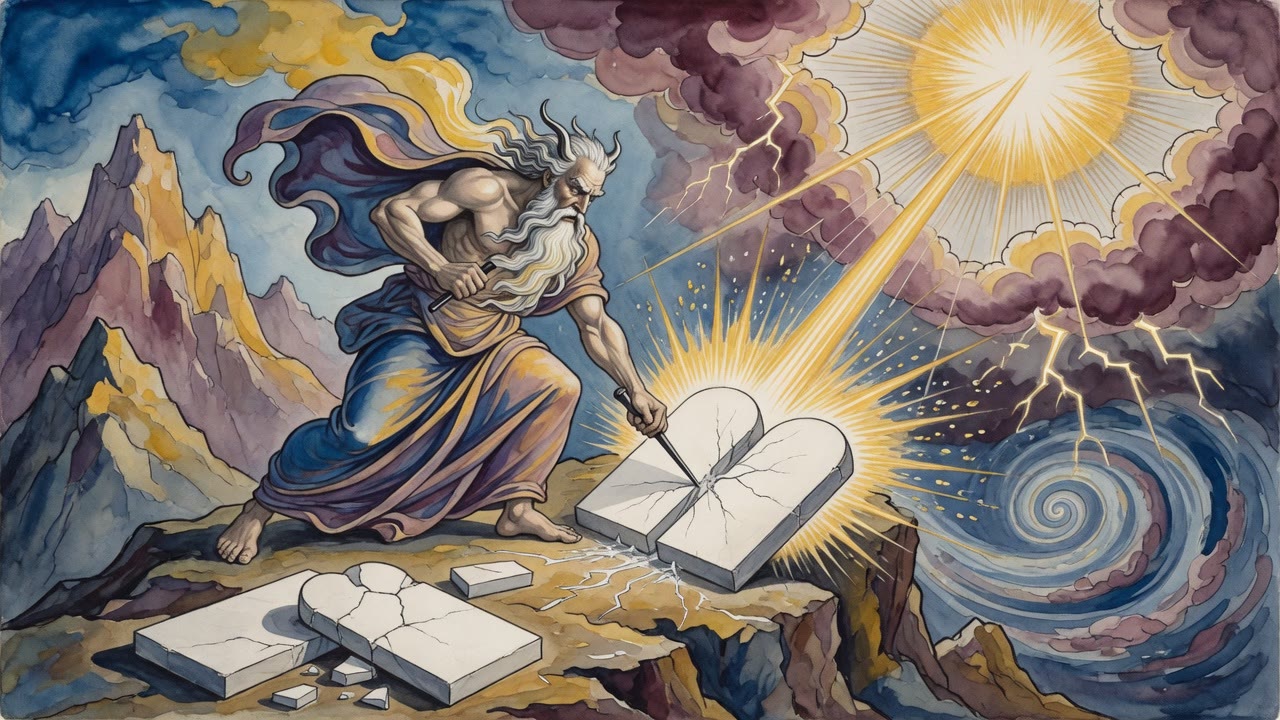
Moses set the chisel to stone in the dark, before the camp woke.
 Click for full size
The first tablets had been cut by heaven. These he would hew himself, two slabs like the former, to carry the words that had been on the tables he broke.
He Hewed the Stone Himself
The command did not soften the memory. "Hew thee two tables of stone, as the former, and write upon the tables the words that were upon the former tables which thou didst break." (Exodus 34:1)
Which you did break. The Voice named the break even as mercy reopened the mountain. Stone dust mixed with sweat on Moses' forearms. Each strike of the tool was a small admission that heaven would no longer do all the cutting. Human labor now invited human study. The shattered first set had been divine work alone. The rewritten set would go up on tired shoulders, along the same path.
He did not outsource the quarry. He cut. He shaped. He finished two tables like the first, heavy enough that his arms already knew the climb.
The Climb Before Morning
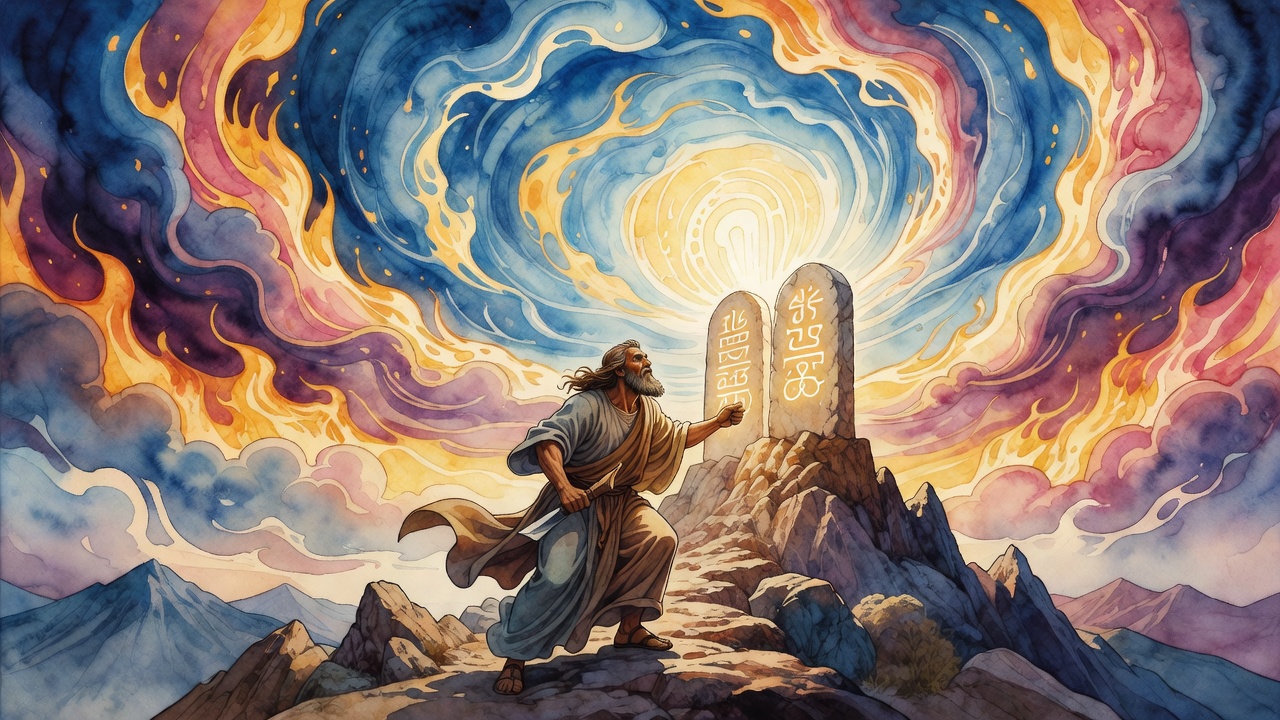
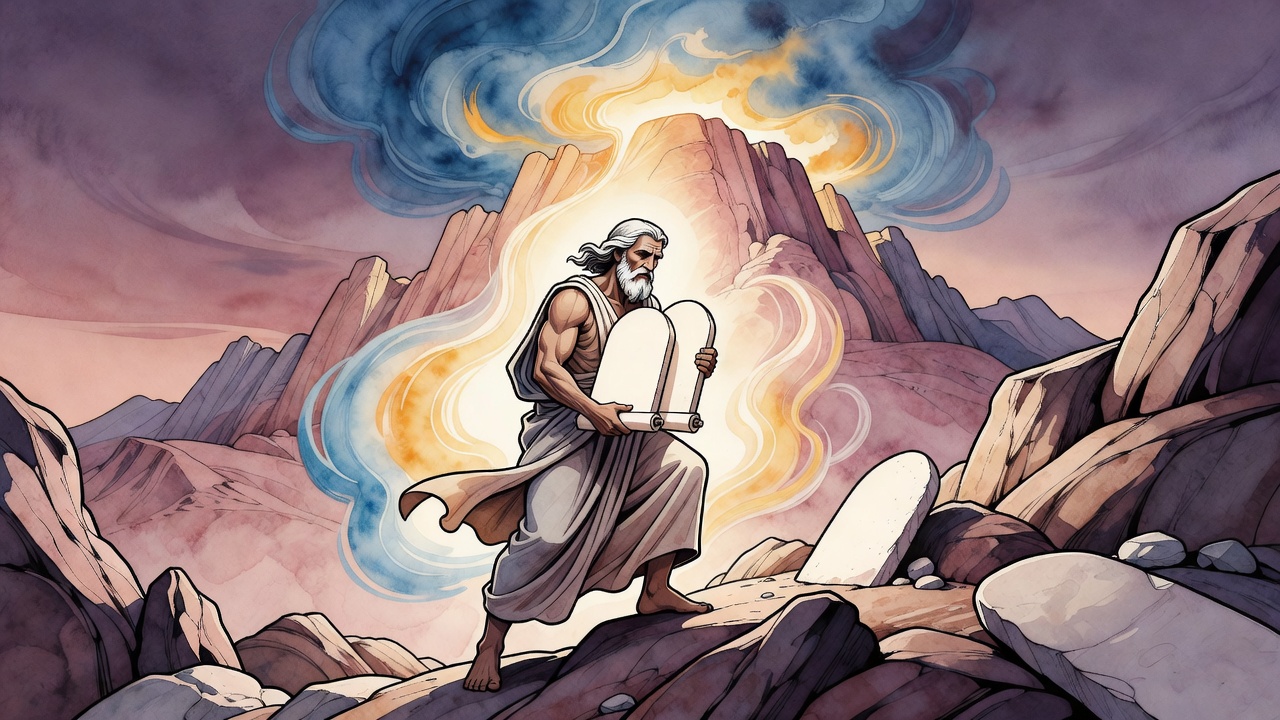
He rose in the morning, earlier still than the first light on the tents. He took the two tables in his hands and climbed Sinai alone. No angels carried the weight. Two heavy stones, two tired arms, the same path where the first covenant had shattered in the valley's hearing.
Halfway up, his shoulders burned under the stone. He did not set the tablets down to rest. Rest would have looked like delay, and delay had already nearly destroyed the camp once. Each step was a refusal to let the break be the last word about the words.
Repentance at the scale of a nation looked like one man quarrying, waking, and climbing with the rewrite on his back.
The Ornaments Hidden in the Tent
Earlier the people had stripped the adornments given as a gift from Mount Horeb, pieces marked with the great Name. Moses did not smash them. He gathered them into his tabernacle of instruction and hid them there.
What carries the Name cannot be trash. Holiness outgrown is not thrown to the wind. It waits in a hiding place of teaching until the wearers are fit again. The tent where Torah was learned became, for a while, a vault for the jewelry of a better self.
Moses had walked the rows of discarded glory and gathered what could not be thrown away. A people can be stripped of jewelry and still own a future in which the jewelry returns when the neck is ready. In the tent of instruction, the Name-marked ornaments from Horeb lay hidden like a secret the camp was not yet ready to wear.
Mercy Passed Before His Face
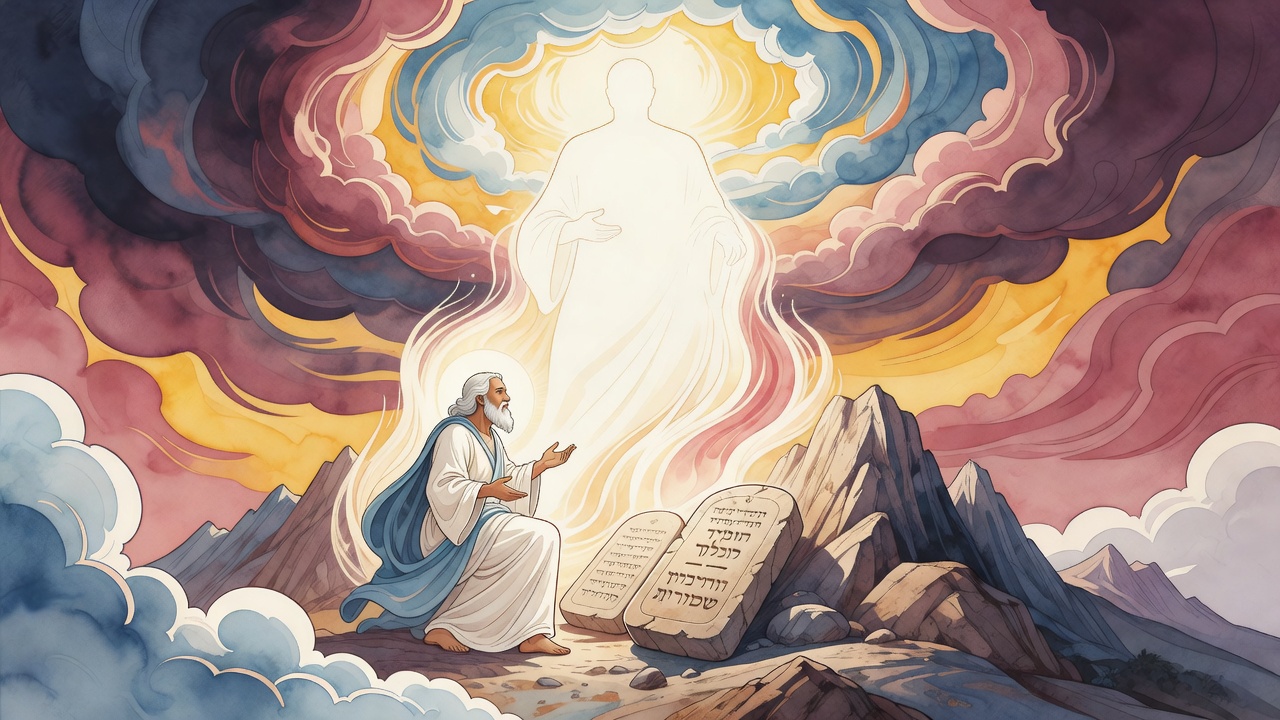
On the summit the Lord made His Shekhinah (שכינה), His indwelling Presence, pass before Moses and proclaimed the Name that Jews would chant in every generation of return. Merciful and gracious. Long-suffering. Near in mercies. Abounding in compassion and truth. (Exodus 34:6)
The camp below had danced around gold. The answer from above was not first thunder. It was a liturgy of patience. Wrath was named as far. Mercy was named as near. The deepest Name taught on the second ascent was compassion spoken in order, a sequence later generations would perform when they needed forgiveness to open.
The calf had not taught God to become angry first. It had drawn out a liturgy Israel would chant whenever return was the only road left.
Do Not Make Us an Alien People
Moses pressed one more petition after the Attributes.
"If I have found mercy, let the Shekhinah of Your Glory go among us, for it is a people of hard neck. Pardon our guilt and our sin, give us the land You covenanted to our fathers, and change us not to become an alien people." (Exodus 34:9)
He feared destruction. He feared something worse. Substitution. Keep this people Israel. Punish if You must. Do not transfer the chain to another nation and call the promise kept. Continuity was the prayer under every other prayer.
He came down later with a face the camp could barely look at, carrying words cut by a human hand under a merciful Name. The second tablets were not a reset that erased the break. They were a rewrite that included the breaker's labor. The ornaments waited in the tent of instruction. The people still had hard necks. The Shekhinah was asked to walk among them anyway.
Coming down, the new stone caught dawn. Faces below could barely look at him. Somewhere a woman still wore the earring she had refused the calf. Somewhere a child asked when the climbing would end. The answer rode in his arms. When the words are cut again, carried again, and heard again by a people heaven refused to trade away for smoother clay.
← All myths