5 min read

God Took the Soul of Moses With His Own Hands

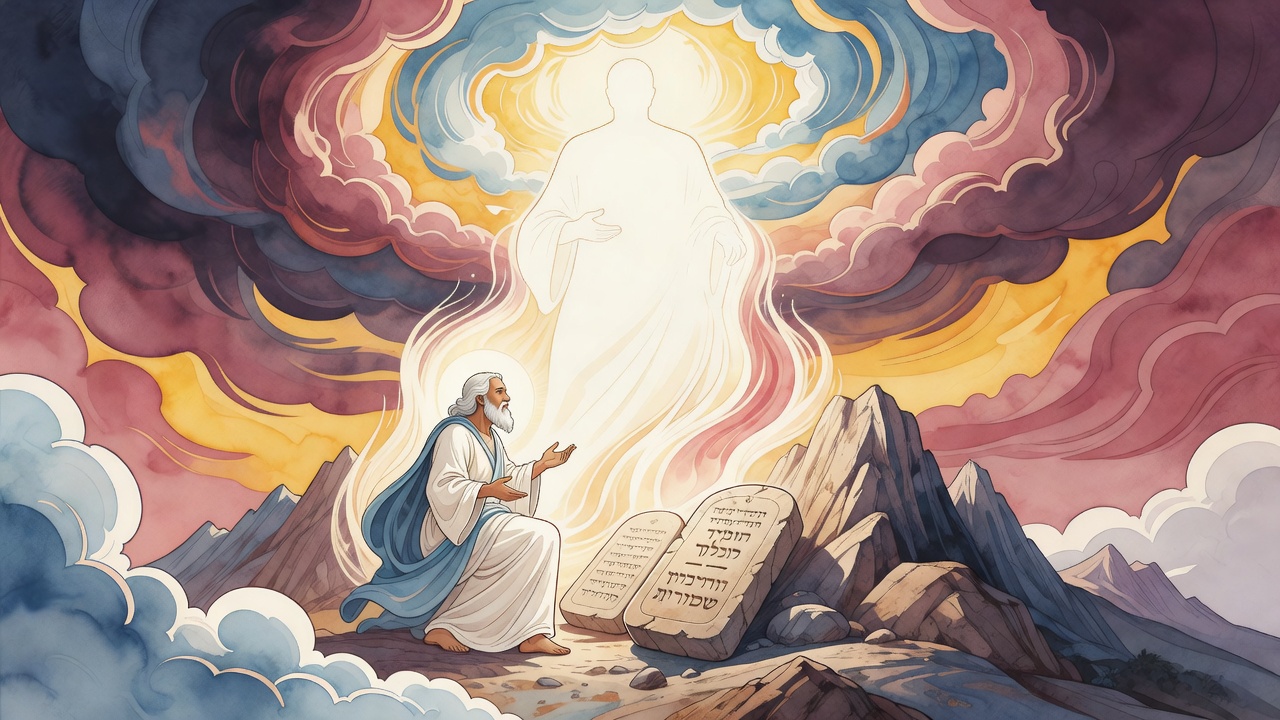
Moses died by the word of the Lord. God gathered His servant the way a trusted keeper returns a deposit, after Moses had carved the second tablets himself.

Curated by Arthur · Told by Maggid ·
Table of Contents
  1. Cruel Angels for Another Kind of Death
  2. The First Tablets and the Broken Contract
  3. Moses Carves, God Inscribes
  4. Servant to the End
  5. What the Second Covenant Cost

Moses died on the mountain with the title still warm on him: servant of the Lord, by the word of the Lord (Deuteronomy 34:5). The word "servant" is not a demotion. Amos says God does nothing without revealing His secret to His servants the prophets. To be called servant is to be trusted with what heaven will not leave in the street.

God Took the Soul of Moses With His Own Hands Click for full size

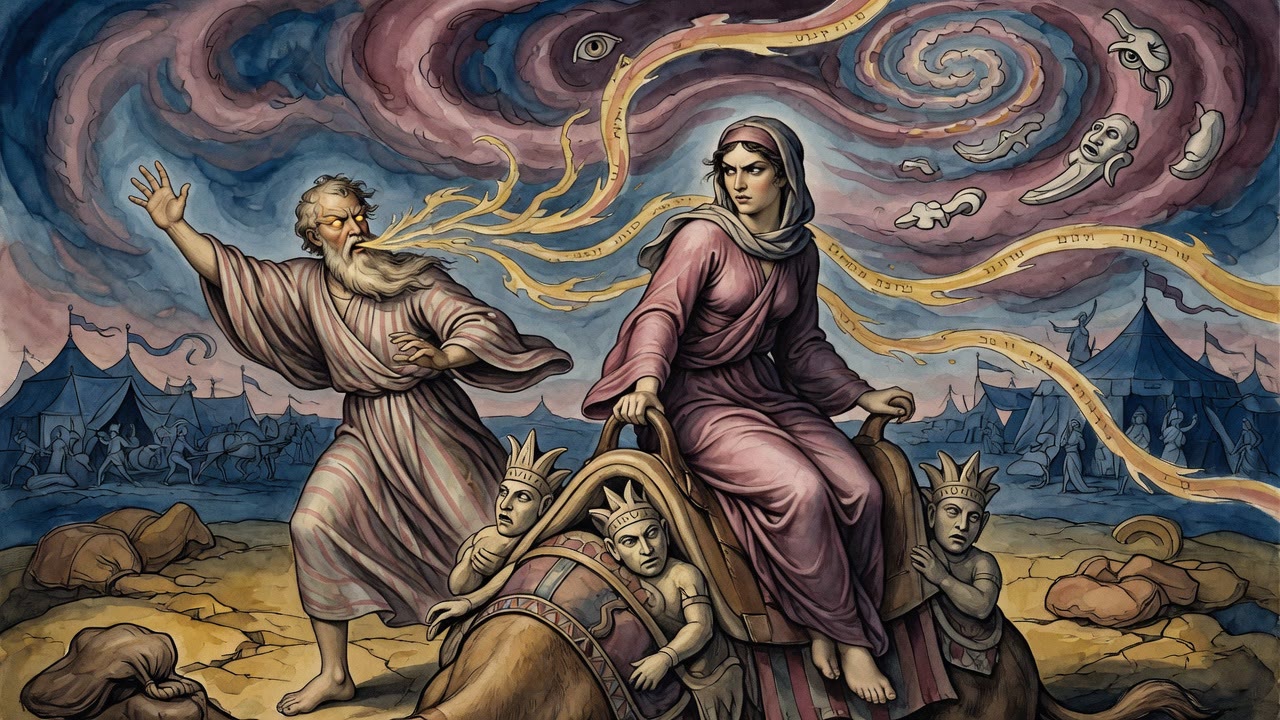
The phrase "by the word of the Lord" is the gentler shock. The Sifrei pictures how God takes the souls of the righteous: not with borrowed hands, not with angels who rummage and bruise, but the way a trustworthy keeper in a city returns a deposit the moment its owner asks. He knows exactly where it is. He hands it back with care.

Cruel Angels for Another Kind of Death

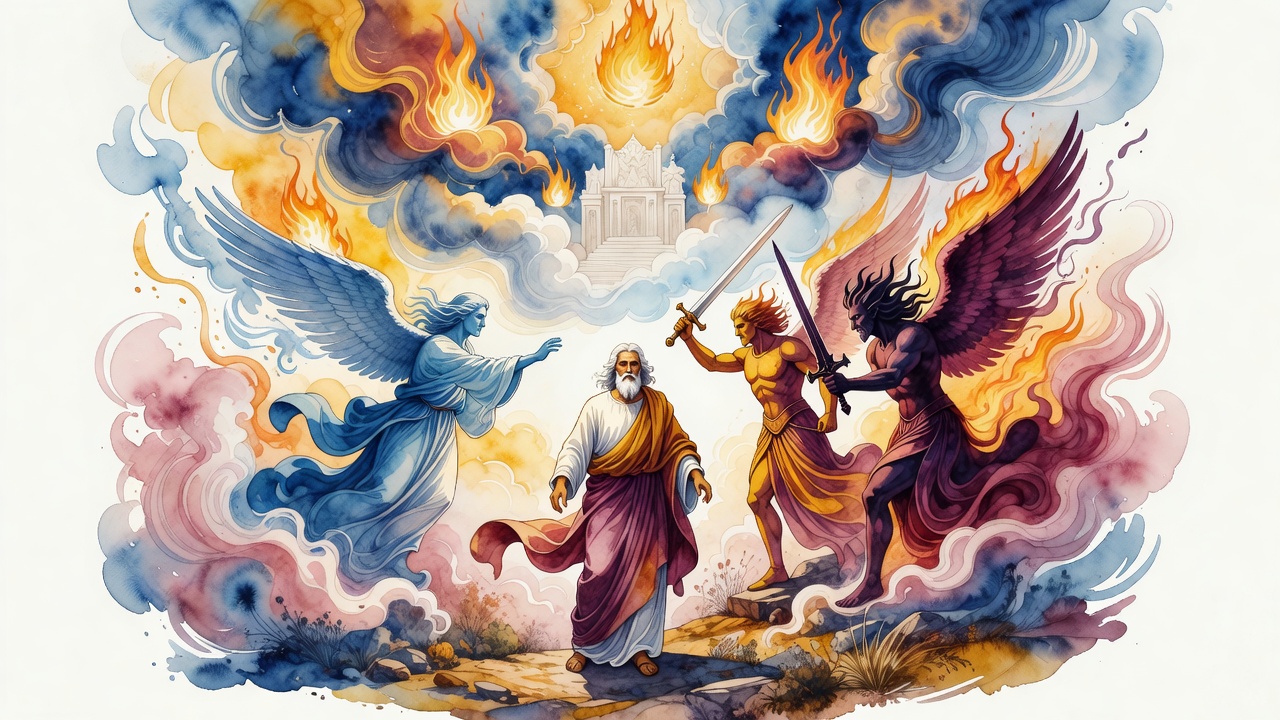
The wicked, the midrash says, meet a different retrieval. Cruel angels wrest the soul out. Proverbs warns of a cruel messenger. Job speaks of souls that die in turmoil. The contrast is not a threat waved for effect. It is a claim that the manner of leaving mirrors the life that was lived toward the Keeper.

Moses, who argued, stalled, struck, and still carried the people like a nurse, does not leave under a ransacking. The same mouth that spoke with God gathers him. Grief remains for those who stay. The tradition insists the gathering itself was personal.

The First Tablets and the Broken Contract

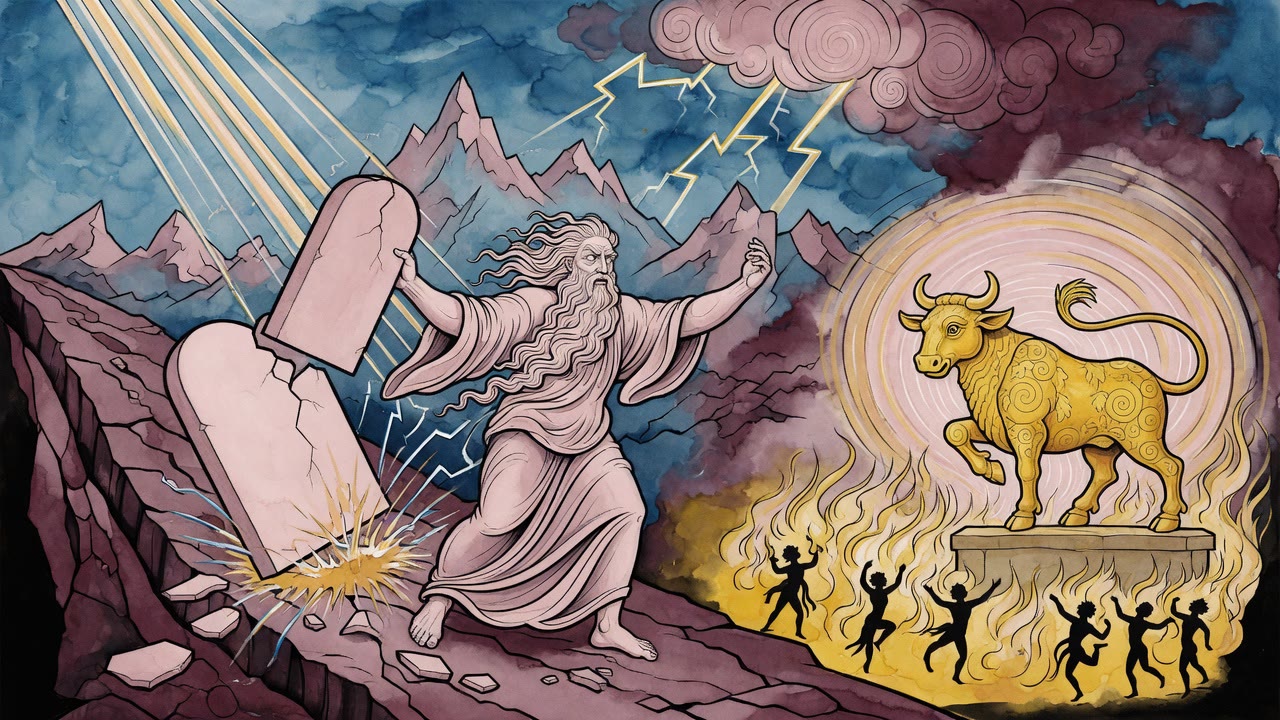
Before that quiet ending came a louder repair. God wrote the first tablets with His own finger. Moses shattered them at the sight of the calf. Shemot Rabbah refuses to call the second set a simple do-over. God said, in effect: I wrote the first; the second, you write, and I will lend a hand.

A king writes a ketubah for his wife in his own hand. She errs. He sends her away. An attendant works reconciliation. The king relents and tells the attendant to prepare a new marriage document, and he will give a hand. The first contract was pure gift. The second is partnership forged after failure.

Moses Carves, God Inscribes

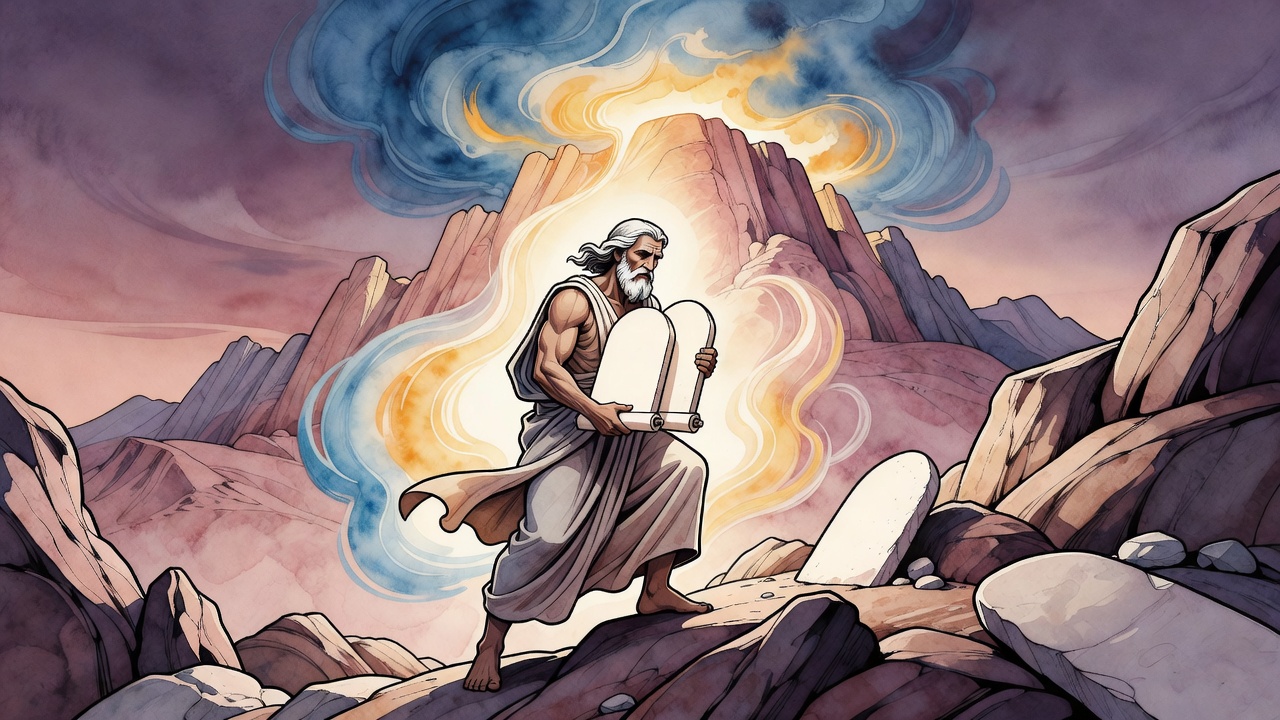
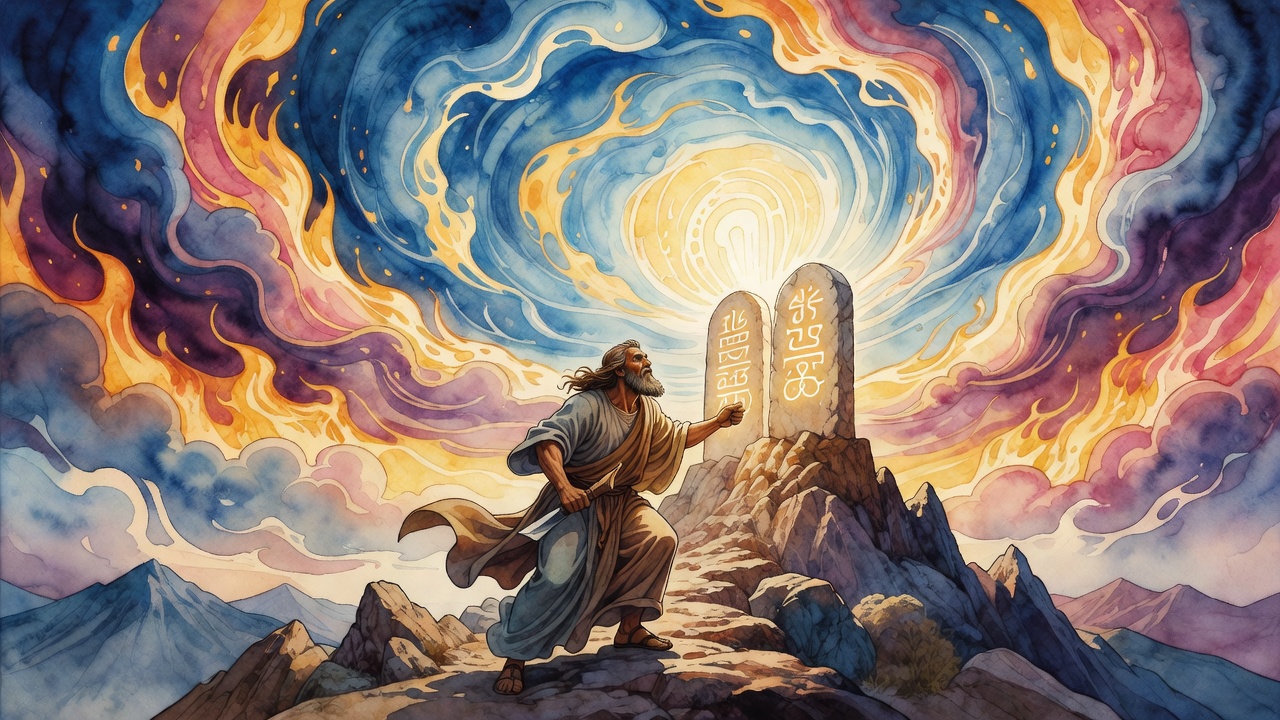
Deuteronomy says God will inscribe on the tablets the words that were on the first. Moses must carve the stone. Labor first, then divine writing. Ownership shifts. The people will live under a covenant that required their leader's sweat after their sin, not only heaven's untouched gift.

Moses climbs with tools and a history of anger in his arms. The second tablets are heavier with meaning because they are lighter with illusion. No one can pretend the relationship never cracked. The crack is the reason both sets of hands are on the work.

Servant to the End

The man who cut the second stones is the man whose soul God later gathers without intermediaries. Service bookends him. He serves by arguing for the people, by breaking the first gift, by carving the second, by dying under a title that means closeness rather than low rank.

The trustworthy keeper knows the deposit. God knows where Moses belongs. The midrash's city image is almost domestic: not a battlefield retrieval, not a bureaucratic transfer, but a precise return. The servant who held God's secrets is held in turn.

What the Second Covenant Cost

Israel lives by the words on the stones Moses shaped and God filled. The death on Nebo does not cancel that joint work. It completes a life that moved from pure gift through rupture into shared rebuilding, and then into a departure handled by the same Partner who lent a hand on the mountain.

The calf still happened. The shards of the first tablets still happened. The second set happened after them, not instead of remembering them. When the word of the Lord took Moses, it took a servant who had already learned that the holiest things after failure are made with two sets of hands.

On the day of the second ascent Moses did not carry blank perfection. He carried chisels and the memory of smashed sapphire, or stone, or whatever substance had held the first words. God waiting to inscribe after human carving is a picture of patience that costs both sides. Moses must labor. God must write again what human sin forced into fracture.

That partnership makes the final gathering legible. The Keeper who lent a hand on the tablets does not outsource the servant's last breath to a cruel messenger. The city image in the Sifrei is almost tender: a deposit returned without search or damage. Israel buries a leader and inherits a covenant carved in the season of repair. The death is gentle because the life had already learned how to rebuild with two sets of hands.


← All myths

From the tradition

Sources

2 sources

The texts behind this telling. Some cards carry a translation of the source; others are our own retelling of it, and each card says which. Every card links out to the original.

Sifrei Devarim 357:30Sifrei Devarim

Retold in our words. Read the original at the link below.Sifrei by Rabbi Shraga Silverstein · CC-BY

The verse says that Moses, "the servant of the L-rd," died "by the word of the L-rd" (Deuteronomy 34:5). But the ancient rabbis saw layers of meaning here. The Sifrei Devarim, a legal midrash on the Book of Deuteronomy, points out that calling Moses a "servant" isn't a put-down. Quite the opposite! It's a title of honor. The prophet Amos (3:7) says, "For the L-rd G-d will not do anything unless He reveals His secret to His servants, the prophets." Being a servant of G-d means being close to G-d, entrusted with divine secrets and acting as an intermediary between heaven and earth. So, calling Moses a servant is actually high praise.

What about the phrase "by the word of the L-rd?" What does that even mean? The Sifrei Devarim offers a beautiful and comforting interpretation. It suggests that when G-d takes the souls of the righteous, it's done with gentleness and care.

The Sifrei uses a powerful analogy: Imagine a trustworthy person in a city, someone everyone trusts with their valuables. When someone comes to reclaim their possession, this person knows exactly where it is and returns it immediately, with respect and ease. But if that same person sends a son, servant, or messenger to do the job, things get chaotic. They rummage around, unsure of where anything is, possibly causing damage in the process.

The analogy illustrates that G-d, Himself, handles the souls of the righteous with utmost care and precision. He knows exactly where they belong and gently guides them to their final rest. He doesn't delegate the task to intermediaries who might mishandle or cause pain.

The text contrasts this with the fate of the wicked. When it comes to taking the souls of the wicked, the task is relegated to "cruel, evil angels, who wrest out their souls." Ouch. (Proverbs 13:11) warns of a "cruel angel" being sent against them, and (Job 36:14) speaks of souls that "die amidst turmoil."

This isn't to say that death is easy for anyone. Grief is real. Pain is real. But the Sifrei Devarim offers a sense of reassurance, a belief that even in death, there is a difference in how the righteous and the wicked are treated. The righteous are gathered in gently, personally cared for by G-d; while the wicked face a more turbulent end.

What do we take away from this? Perhaps it's a reminder to strive for righteousness, to live a life that brings us closer to G-d. Or perhaps it's simply a comforting thought to hold onto when facing loss. Maybe it can bring some comfort to know that, according to tradition, at least in death, the Divine presence is especially close to those who have lived a life of devotion.

Full source
Shemot Rabbah 47:2Shemot Rabbah

Retold in our words. Read the original at the link below.The Sefaria Midrash Rabbah, 2022 · CC-BY

The familiar story centers on the first set, shattered in anger at the sight of the Golden Calf. But what about the second? Was it just a simple do-over?

Shemot Rabbah, the compilation of Midrash on the Book of Exodus, offers a fascinating perspective. It's not just a replacement; it's a partnership.

That God said to Moses, "‘I wrote the first tablets, as it is written: “Written with the finger of God” (Deuteronomy 9:10). But the second [tablets], you write and hopefully I will give a hand.’" God says, "Okay, Moses, this time, you're going to participate in the process."

It's a powerful image. God would assist Moses in inscribing the tablets. Not do it for him, but assist.

The Midrash (rabbinic interpretive commentary) then offers a compelling analogy. Imagine a king who writes a beautiful marriage contract – a ketubah (a marriage contract) – for his new wife, all in his own hand, on his own parchment. Later, she errs, and he sends her away. But then, an attendant steps in, working to reconcile the couple. Finally, the king relents. He says to the attendant: “I have reconciled with her. Prepare a marriage document for her and hopefully I will give a hand.”

It’s a powerful picture of forgiveness and renewed covenant.

The king wrote the first ketubah entirely on his own. This time, reconciliation requires a joint effort. The attendant prepares the document, and the king lends his hand.

This, the Midrash suggests, is what’s happening with the second set of tablets. As it says in (Deuteronomy 10:2), “I will inscribe on the tablets the words that were on the first tablets." God tells Moses that after Moses carves the tablets, God will inscribe them with the words.

So, why this change? Why the collaborative effort? Perhaps it's about ownership. The first set was entirely God's creation, a divine gift. The second, however, is forged in the crucible of human failing and divine forgiveness. It requires Moses' active participation, his labor, his willingness to rebuild what was broken.

Sometimes, the most sacred things are not those handed down to us perfectly formed, but those we create together, through effort, repentance, and a willingness to meet the Divine halfway. Maybe that's why the second set, born of both human and divine effort, holds a unique kind of holiness.

Full source