Moses Brought Down Forgiveness After the Golden Calf
The gold was powder and nobody in the camp would eat. God answered the fasting by calling them His children, then swore their tears would turn to rejoicing.
Table of Contents
 Click for full size
The Camp Would Not Eat
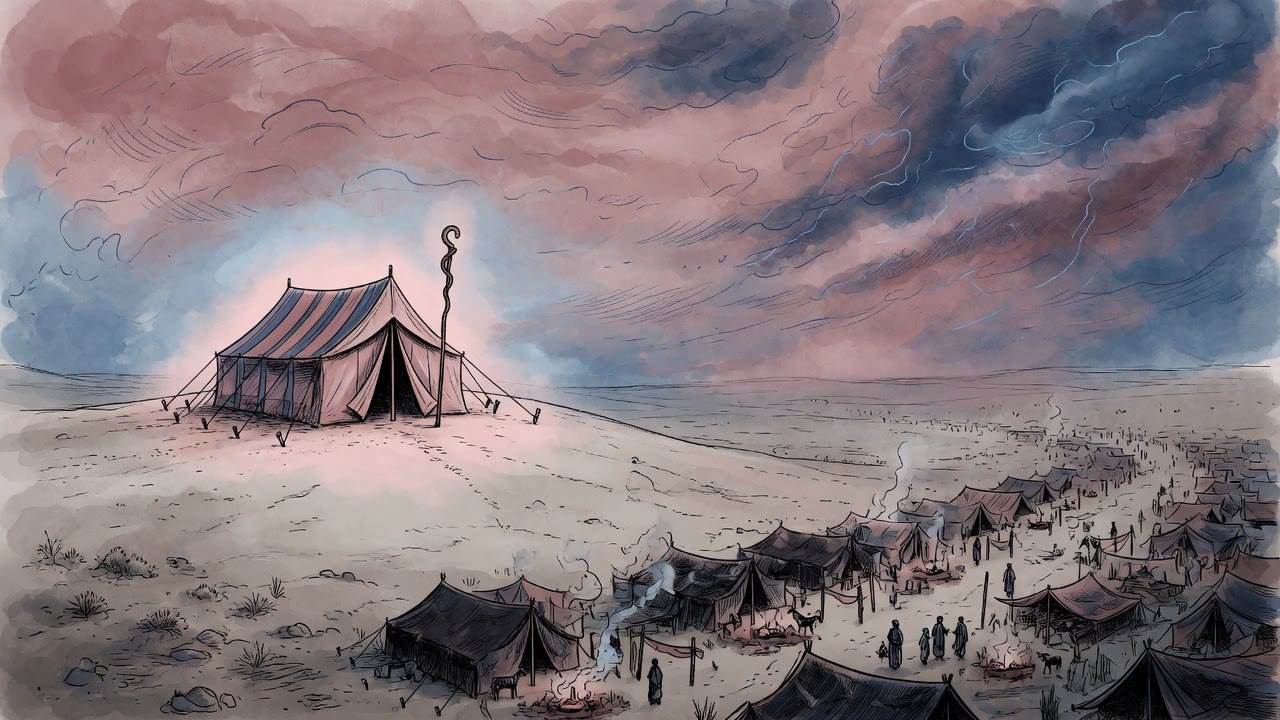
Nobody in the camp ate on the tenth of Tishri.
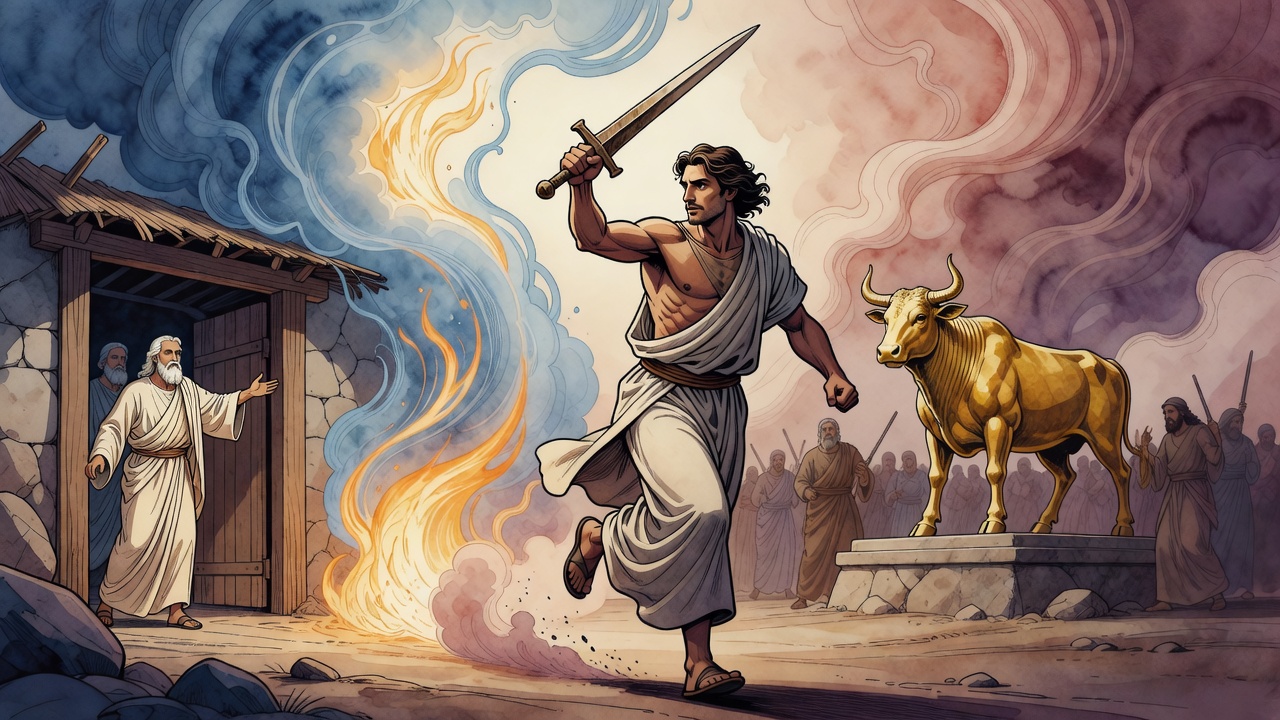
The gold was gone. Moses had burned the golden calf, ground what was left to powder, scattered it on water and made them drink it, and that was supposed to have closed the matter. It had not closed the matter. Powder does not leave a throat. Men who had danced sat on the ground with their heads down. Women who had pulled the rings out of their ears kept their hands flat in their laps. Children watched their parents whisper and did not ask what about.
They were not fasting because fasting had been commanded. They were fasting because they no longer trusted themselves. The yetzer hara (evil inclination) had shown them in a single afternoon how fast a whole nation can agree that gold is God. Nobody in that camp wanted to learn how fast it could happen twice.
The Crying Went Up With Moses
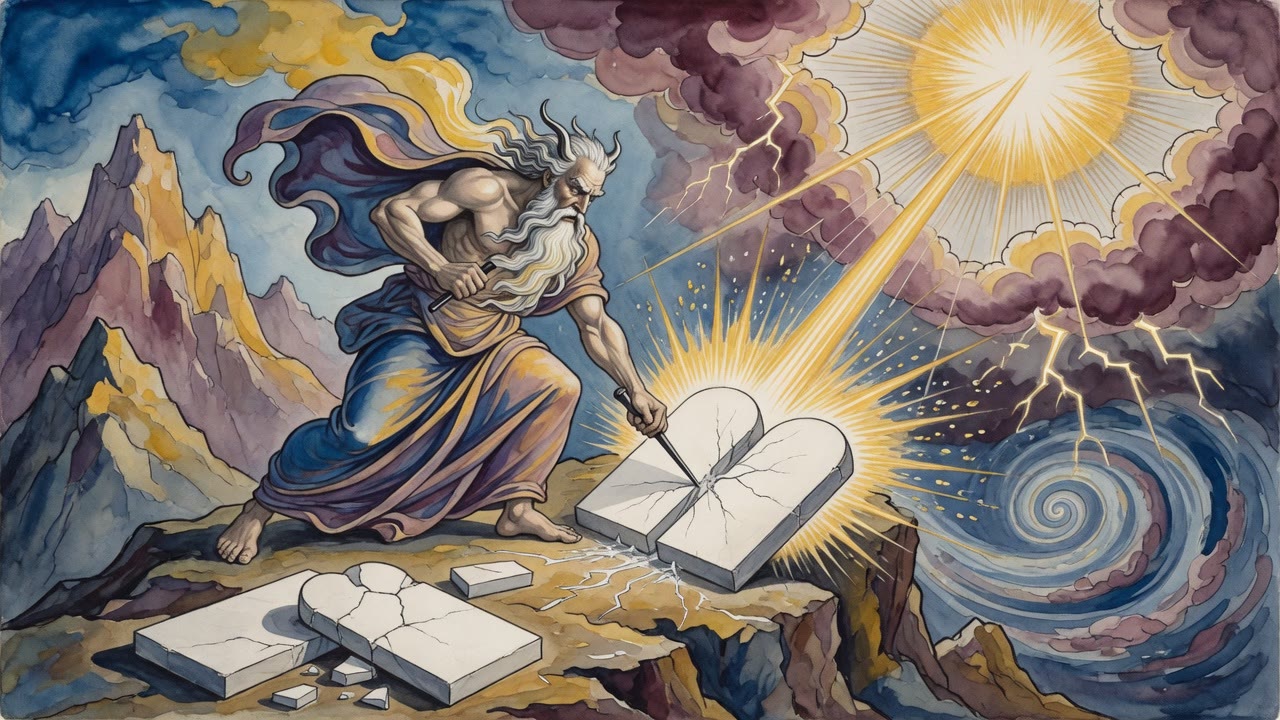
Moses was on the mountain that day. Second tablets. Stone he had cut himself this time, carried up to be written on again by the hand that had written the first pair before he threw them at the foot of the mountain and burst them on the rocks.
The people cried from below. Moses pleaded from above. The two sounds went up the same air and got there together.
There was no shape to the prayer. It was hungry, it repeated itself, and it had nothing in it but a nation asking not to be left alone with the worst thing it had ever done.
My Children
Then the answer came, and it did not begin with a verdict.
"My children," God said.
Not this people. Not this stiff-necked nation. The word a man uses for the ones who live in his house, spoken over men still sitting in the dust of their own idol.
Then the oath, sworn by the lofty Name. These tears of yours will be tears of rejoicing. This day will be a day of pardon, of forgiveness, and of the canceling of sins, for you, and for your children, and for your children's children, to the end of all the generations.
The tenth of Tishri was fixed inside that sentence, and it has come back every year since.
Wings Over the Camp
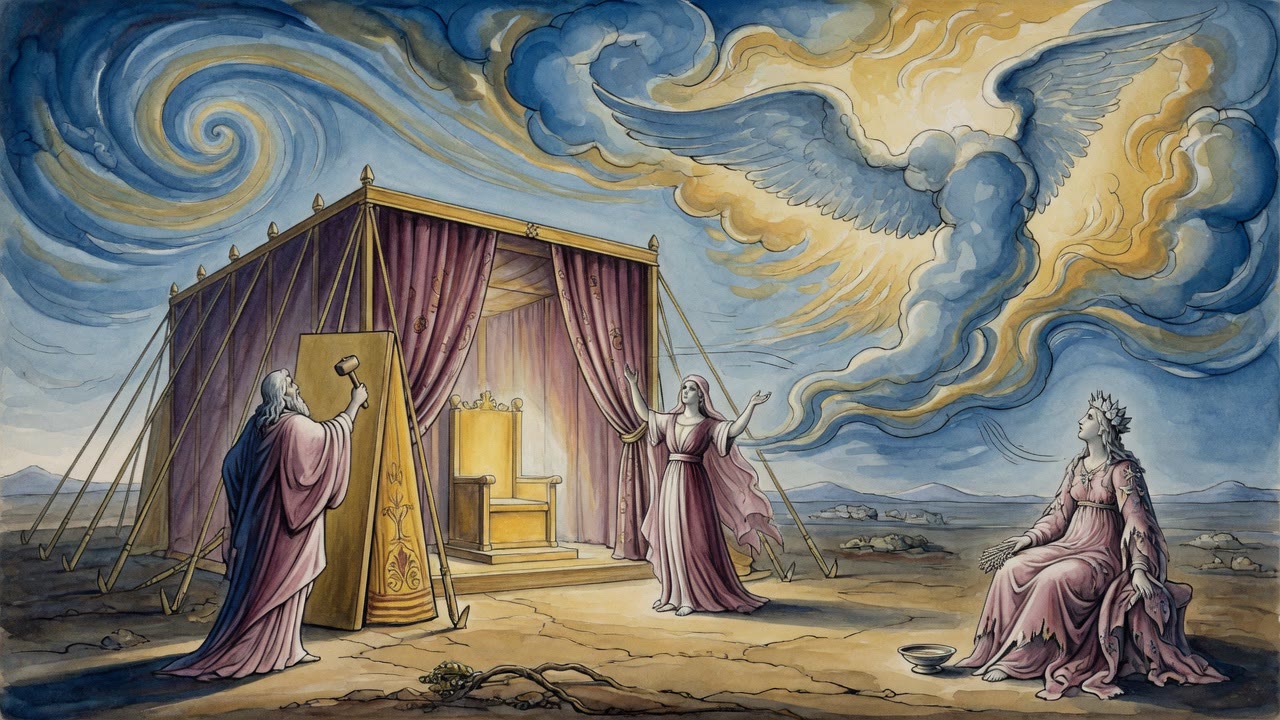
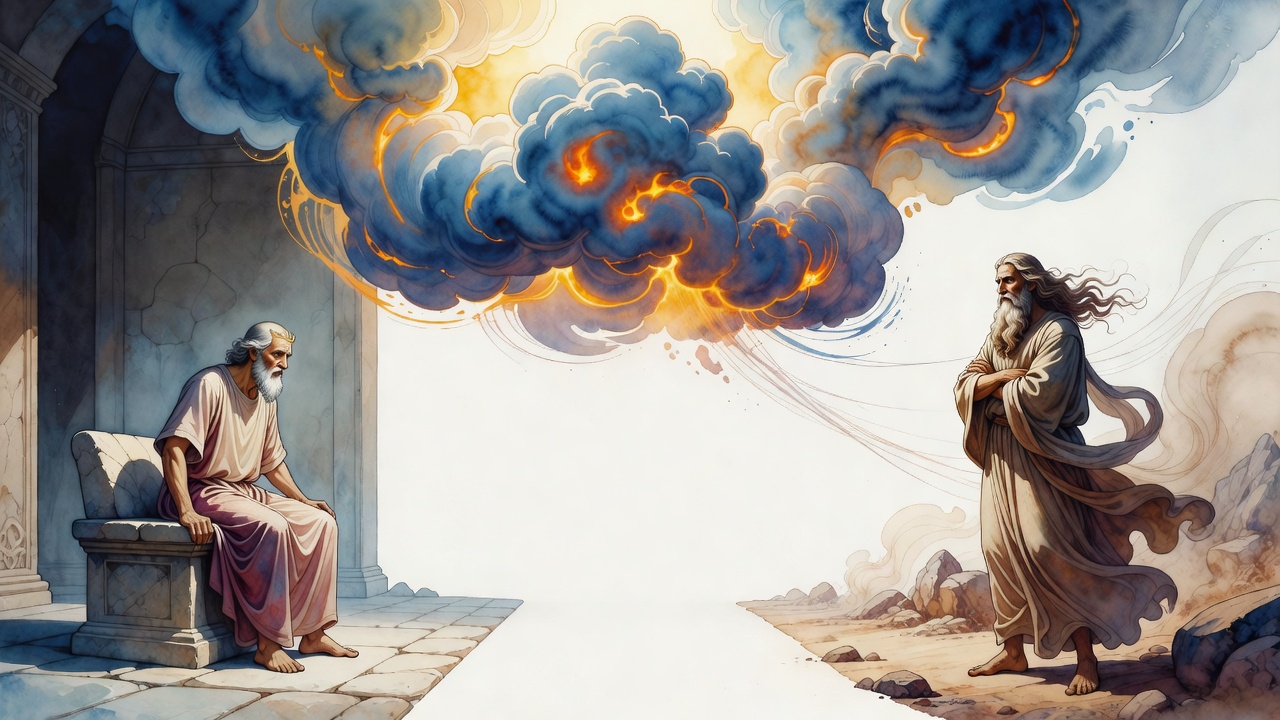
Above the tents the Shekhinah (שכינה), the divine presence, opened her wings.
The same lifting that had carried them out of Egypt on eagles' wings came down over a camp that had disgraced itself, and this time it carried them nowhere. It covered them while they wept. An eagle stirring its nest takes the young up on its pinion, and the young do nothing to deserve the ride except be there when it happens.
Under the wings, a voice with no patience left in it. Get up. Call to your God.
The danger had not gone anywhere. The evil maidservant was still walking in that camp, the foul drop out of which every sin comes, waiting on an unguarded limb, an appetite, an hour of sleep. Israel had just watched what she could do with a heap of jewelry and one afternoon of fear.
He Came Down Carrying Stone Instead of Shards
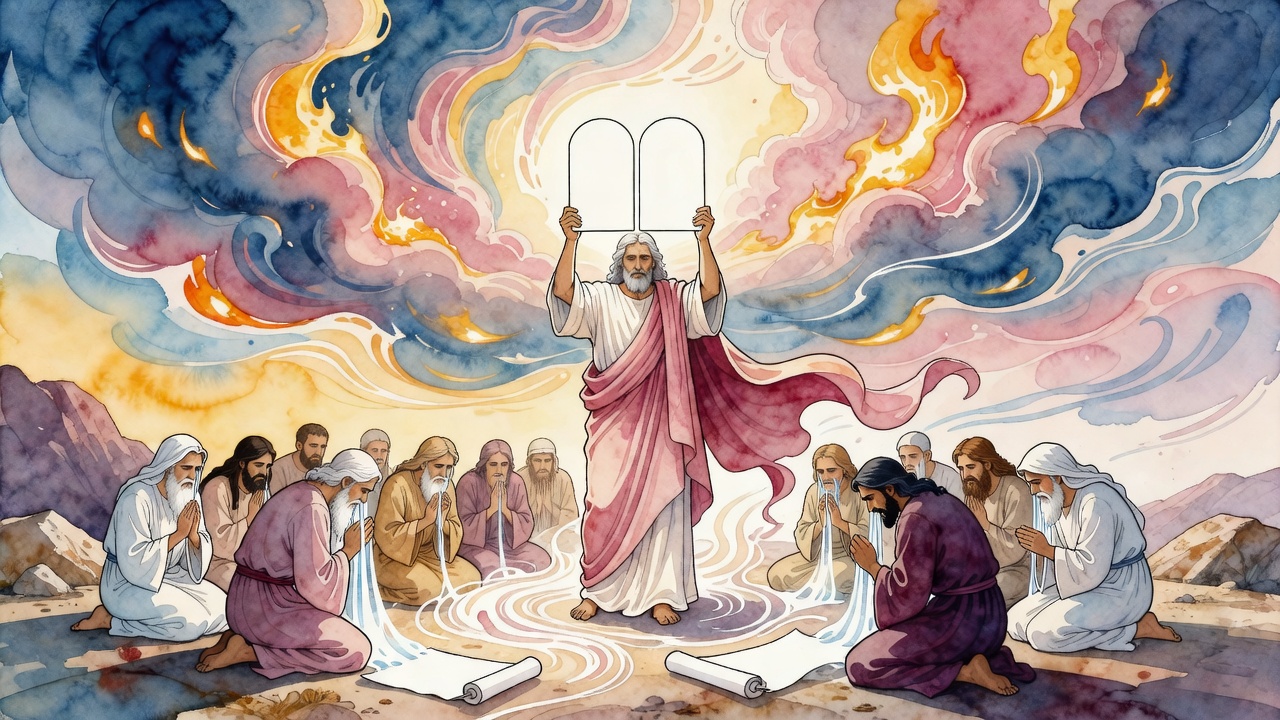
Moses came down.
The first time, he had brought the work of heaven down in his hands and thrown it, and the writing had gone into the dirt at the foot of Sinai. This time the stone in his arms stayed whole all the way to the bottom.
The camp saw him on the path. Men who had not eaten since the night before stood up in the dust to watch him come, and none of them were the same men who had watched him come down the first time.
The tears they had spent that morning were not wasted, and they were not gone. They had been put somewhere, and they were being kept.
← All myths