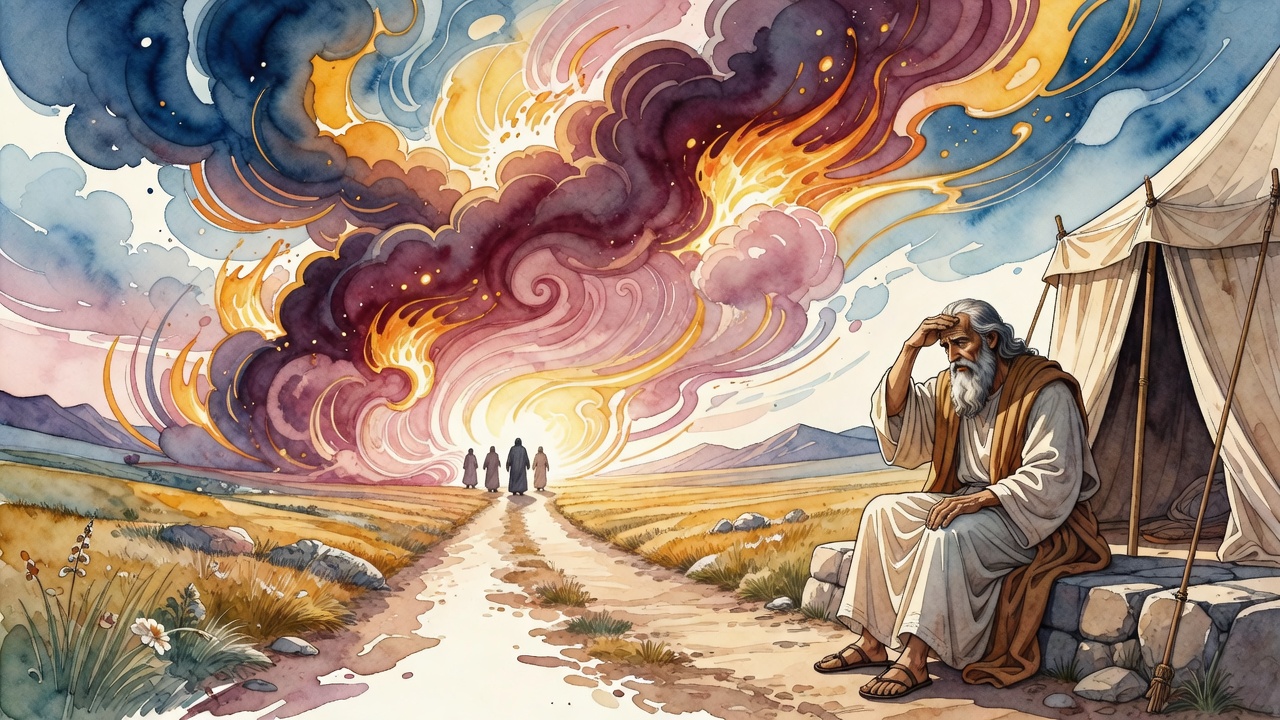
God Draws the Shofar Across Isaac's Bound Neck
Each year the ram's horn makes Heaven remember Isaac bound on the altar, confuses the Accuser, and moves God from the throne of judgment to mercy.
Table of Contents
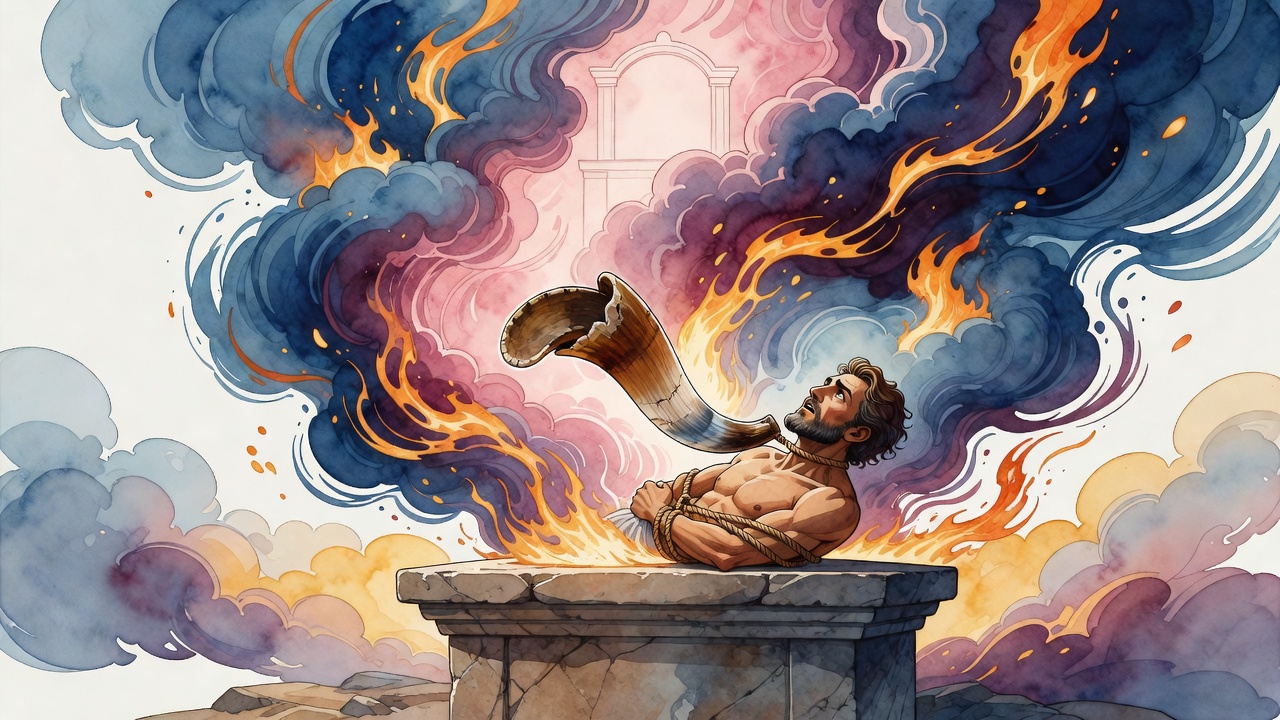
The ram's horn rose to a man's mouth and the year held its breath. Before any sermon, before any list of sins, the sound went up thin and cracked and living. God had asked for this noise with a reason that still startles. Sound a ram's horn before Me so that I remember on your behalf the binding of Isaac, son of Abraham, and count it as if you had bound yourselves on the altar.
 Click for full size
The knife that did not fall became a yearly weather in the air of the court.
As If You Lay There
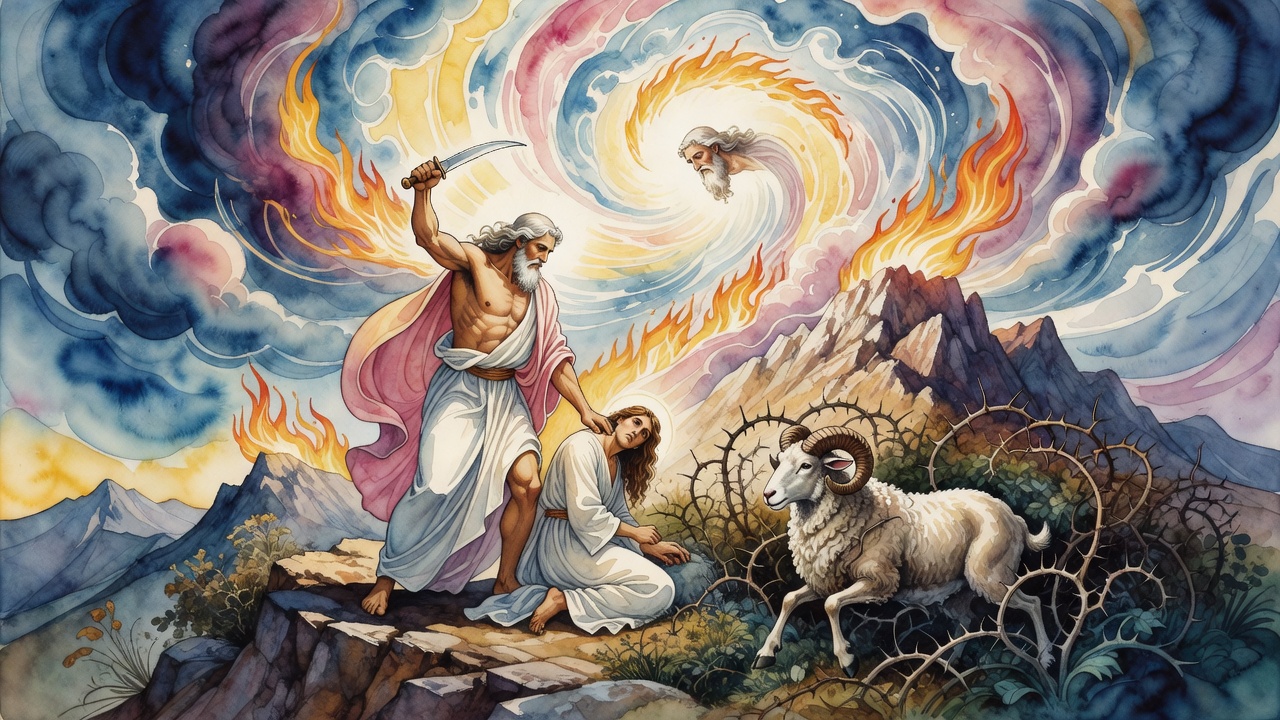
The binding is not reenacted with ropes. It is reenacted with breath through a dead animal's horn, the animal that took Isaac's place when the thicket offered a substitute. Every blast is a claim: treat us as the son who climbed, the father who did not refuse, the ram that entered the story at the last second. Heaven is asked to remember a mountain in Moriah while a congregation stands in whatever century still owns a shofar (a ram's horn).
The long notes stretch like the walk up. The short bursts break like the angel's cry that stopped the blade. Pattern is not decoration. Pattern is memory with a tempo.
The Accuser Loses the Language
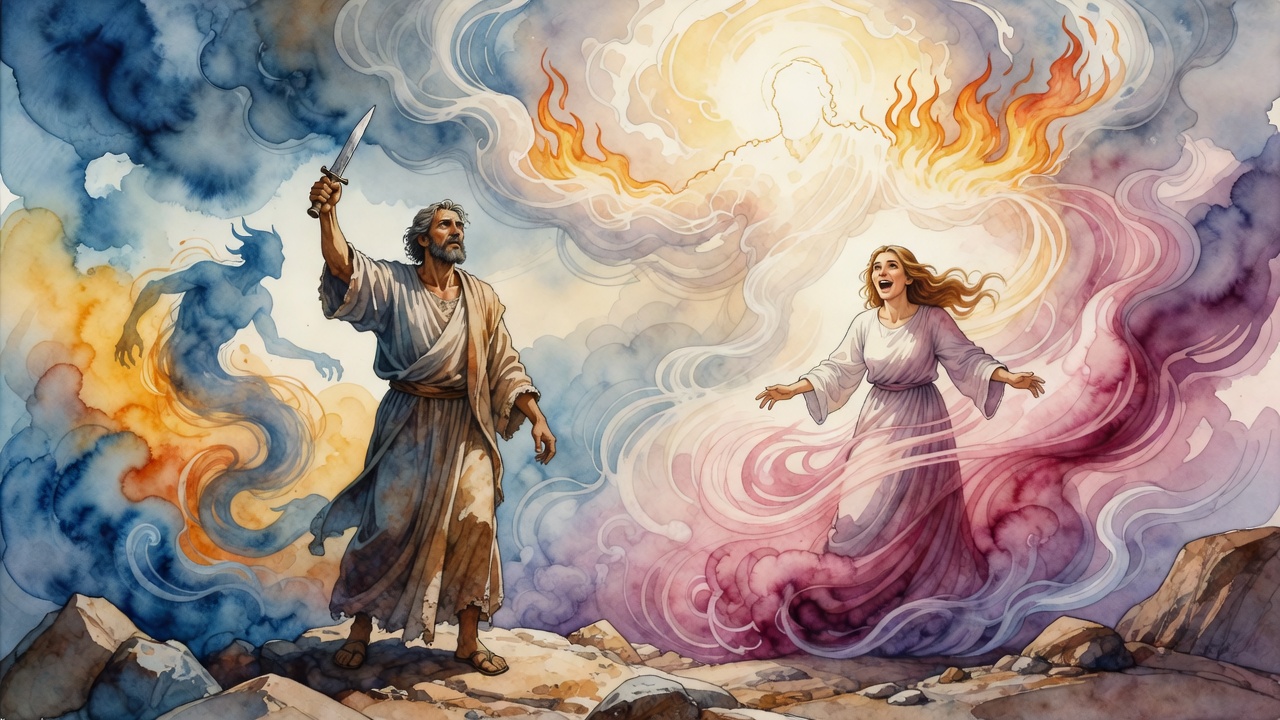
Ha-Satan, the Accuser who works the heavenly court, listens for plain speech he can indict. Some teach that the shofar's pattern is built to confuse him. Long, short, broken: a code that is not words. Others say God made a secret language in the horn that only He understands, so the Accuser cannot parse the plea to block it.
Without that confusion, the tradition warns, evil could land before the year ends. The stake is not mood. It is whether the prosecutor gets a clean transcript of the people's fear. The horn refuses him a transcript. It gives him weather he cannot cross-examine.
Thrones That Move
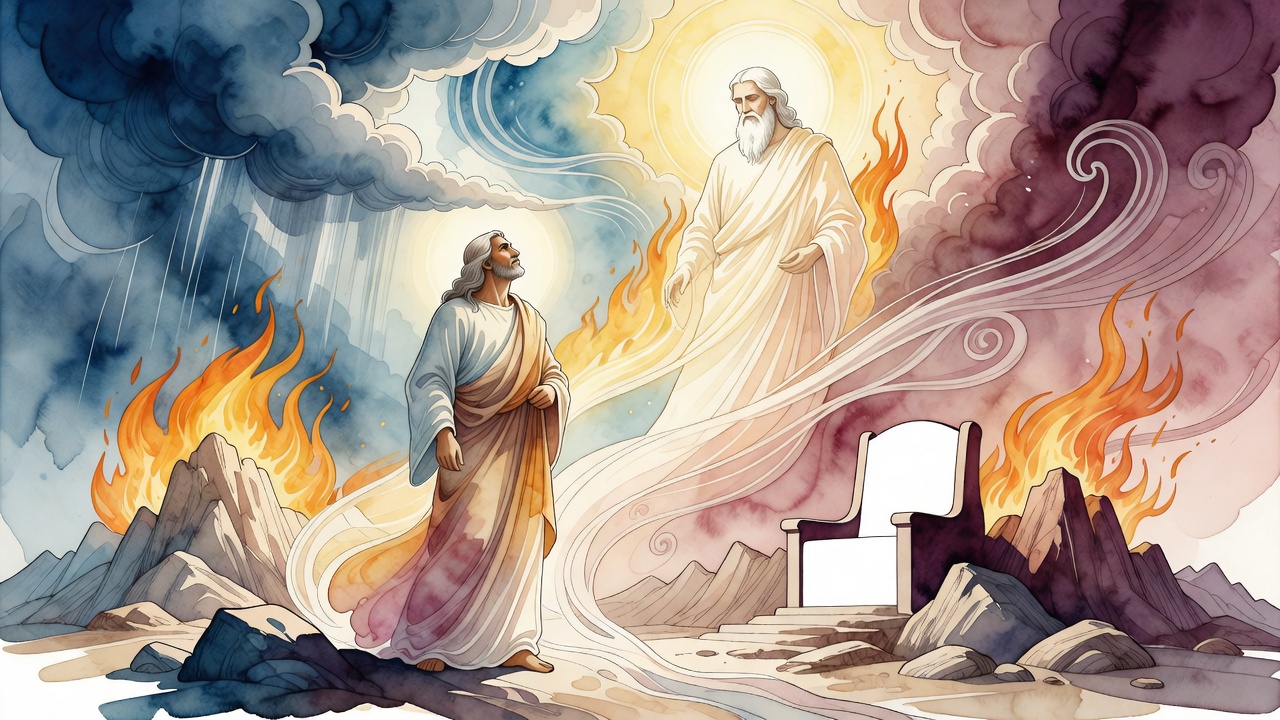
The aim of the blasts, in another image, is to move God from the Throne of Justice to the Throne of Mercy. Sound becomes leverage. Not magic that forces Heaven, but a commanded act that Heaven itself attached to a change of seat. Justice is not mocked. Mercy is invited to take the chair while the Accuser is still sorting the noise.
Those who understand the secret language, the Zohar strand says, walk in the light of God's countenance, the light of the first day when God said, "Let there be light" (Genesis 1:3). The horn reaches back past Isaac to the first brightness, as if creation and near-sacrifice share one frequency.
The Last Blast of the Fast
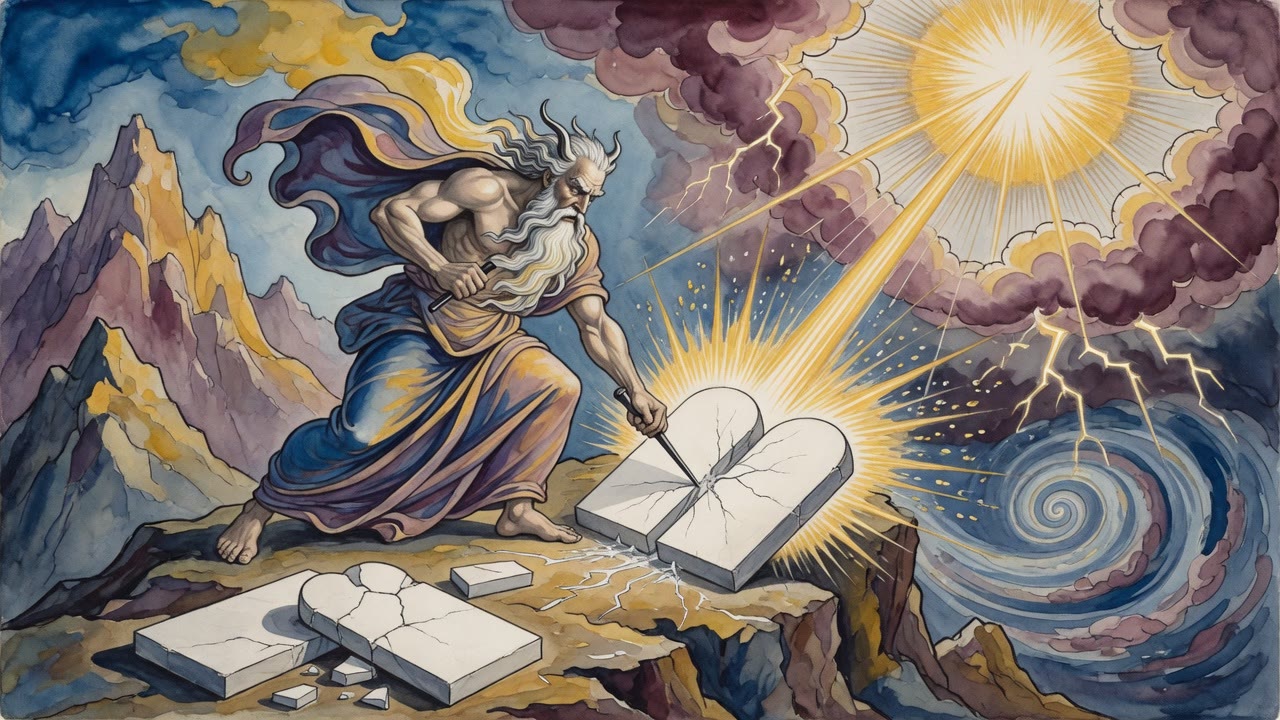
At the close of Yom Kippur, after the day has emptied stomachs and filled ledgers, one final blast remembers another descent. Moses coming down Sinai with second tablets on the tenth of Tishrei, covenant renewed after the calf, a sound of return after the worst failure. The year's last horn ties Isaac's altar to Moses' second climb. Binding and rewriting. Near-death and second chance.
People who have stood for hours hear that note and know the gates of the day are moving. The Accuser has had his season of clarity. Mercy has been given a soundtrack.
What the Horn Still Does
A ram that once replaced a boy still speaks every autumn. A people that cannot rebind Isaac on wood rebinds him in air. God asked for the reminder. The Accuser trips over the grammar. Thrones shift. The final blast seals a fast that began with fear and ends with a sound older than any single year's guilt.
Abraham's hand had once held the knife. Now a congregation holds only breath and a horn. The substitution still structures the day. Isaac's neck is remembered so that other necks may be covered by the same mercy that stopped the blade. The Accuser, who knows how to quote failures, finds fewer clean sentences when the air is full of tekiah and teruah.
Children cover their ears and then uncover them, drawn to the animal cry that is also a court document. Old men close their eyes and see Moriah. The year turns on that double vision: a mountain of almost-death, and a hall of people still asking to be counted as if they had lain down under the knife and been allowed to rise.
Outside the hall, early leaves move in a wind that does not care about courts. Inside, the horn has already done its work: memory raised, Accuser slowed, mercy invited to the chair.
Put the horn down and the silence afterward is not empty. It is full of a mountain, a thicket, a second set of stones, and a court that has been asked, again, to remember the binding as if every listener had lain under the knife and risen when the angel spoke.
← All myths