Abraham's Silent Bargain on the Seventh Month
The protest sat on Abraham's tongue beside the knife. He swallowed it. Isaac's children would need that silence in Tishrei.
Table of Contents
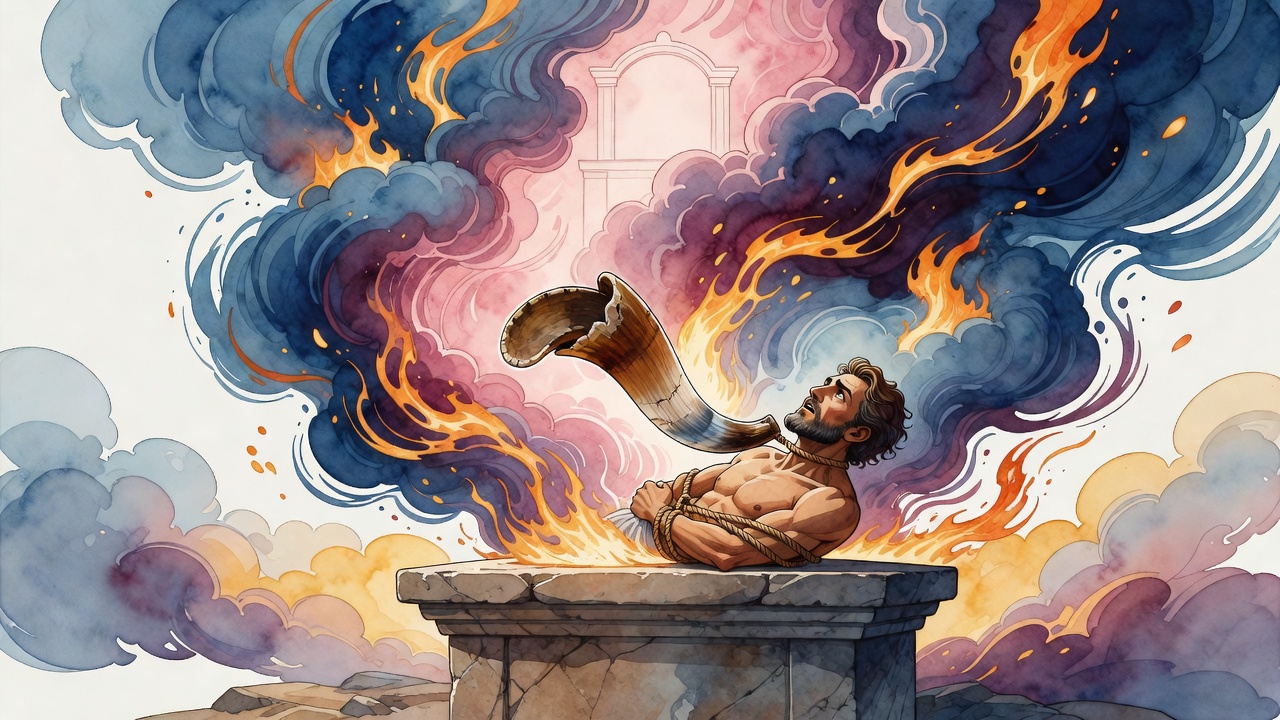
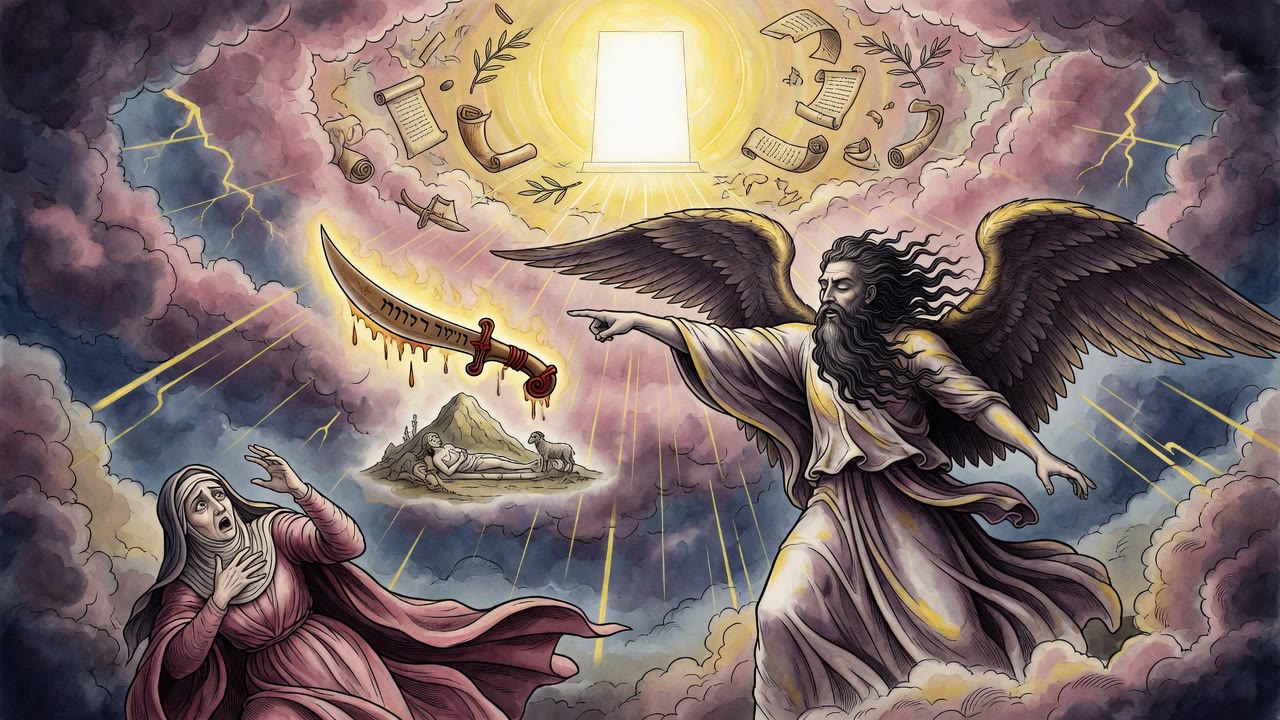
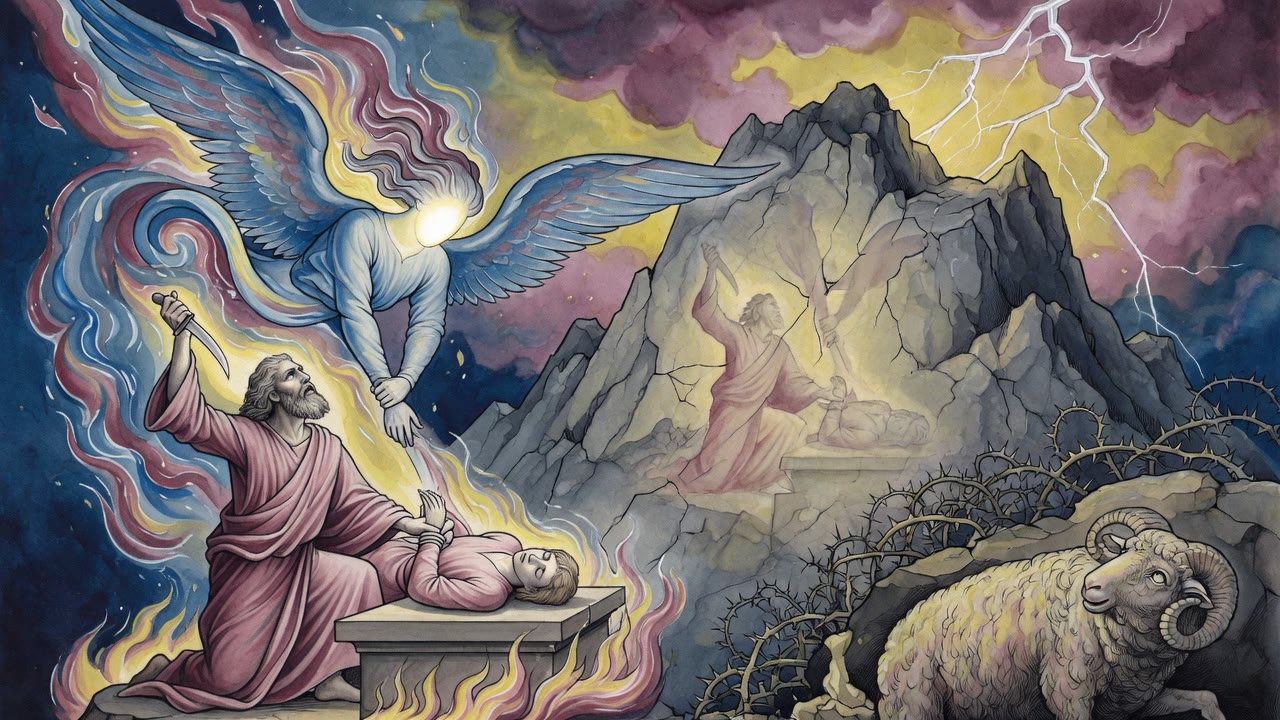
Abraham stood on the mountain with the rope still warm from binding and the contradiction still live on his tongue. Yesterday the promise had said the line would run through Isaac. Today the command had said lift the knife. The protest was ready, sharp as the blade. He swallowed it.
 Click for full size
Wind moved through the brush. The boy breathed under the cords. Abraham's jaw held the argument the way a dam holds a river. One sentence would have been enough to start a trial against Heaven. He gave Heaven silence instead. That silence was the bargain.
The Knife and the Closed Mouth
He could have spoken. Yesterday You said, "In Isaac shall seed be called to you" (Genesis 21:12). Today You say, take your son, your only one. The two sentences would not sit in the same mouth. He kept them there anyway, unsaid, and raised the knife.
The ram caught in the thicket took the place of the boy. Even a day-old ram already carries the name ram, the way a newborn ox already carries the name ox. The substitute did not need years to count as whole. The father needed only one quiet choice to count forever.
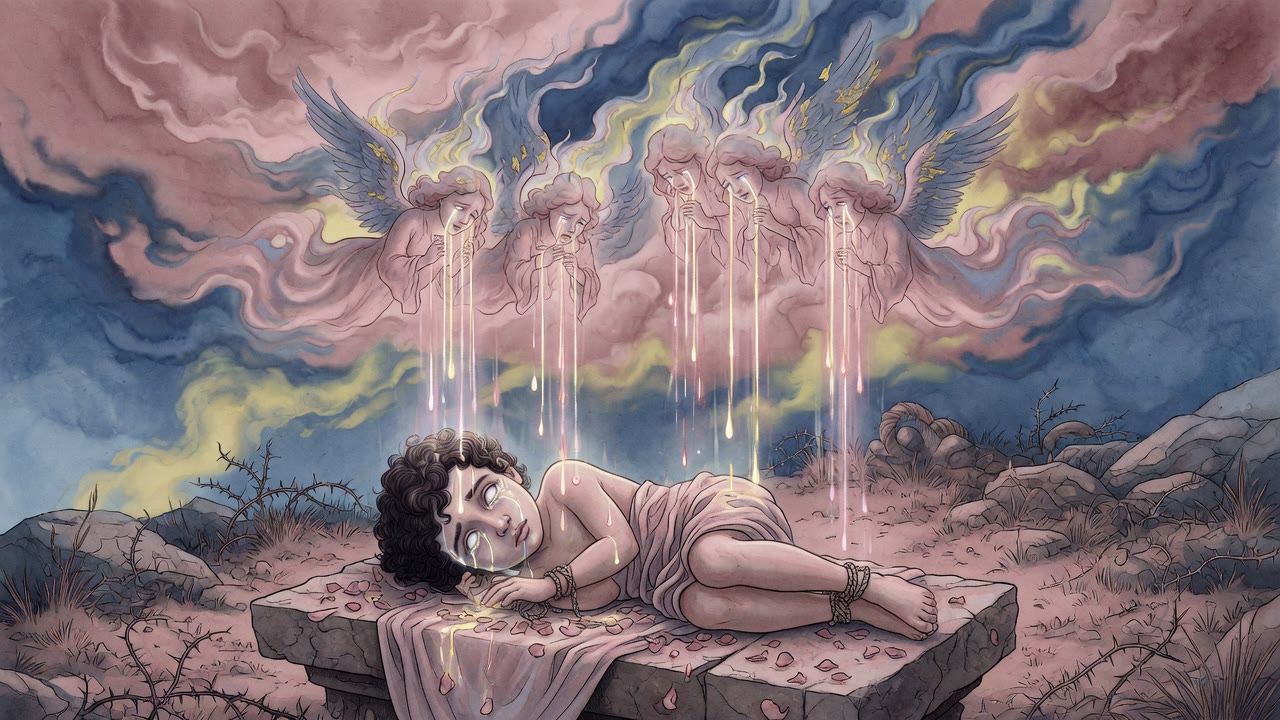
He unbound Isaac. The rope left marks. The boy stood. The thicket still held a story in its horns. Abraham did not ask for gold. He asked for memory.
He Asked Heaven to Remember
Master of the worlds, he said, You know what was in my heart. I could have spoken the clash between promise and command. I held my tongue. When Isaac's descendants fall into sin, remember how their father bound his son without argument. Turn strict judgment into mercy.
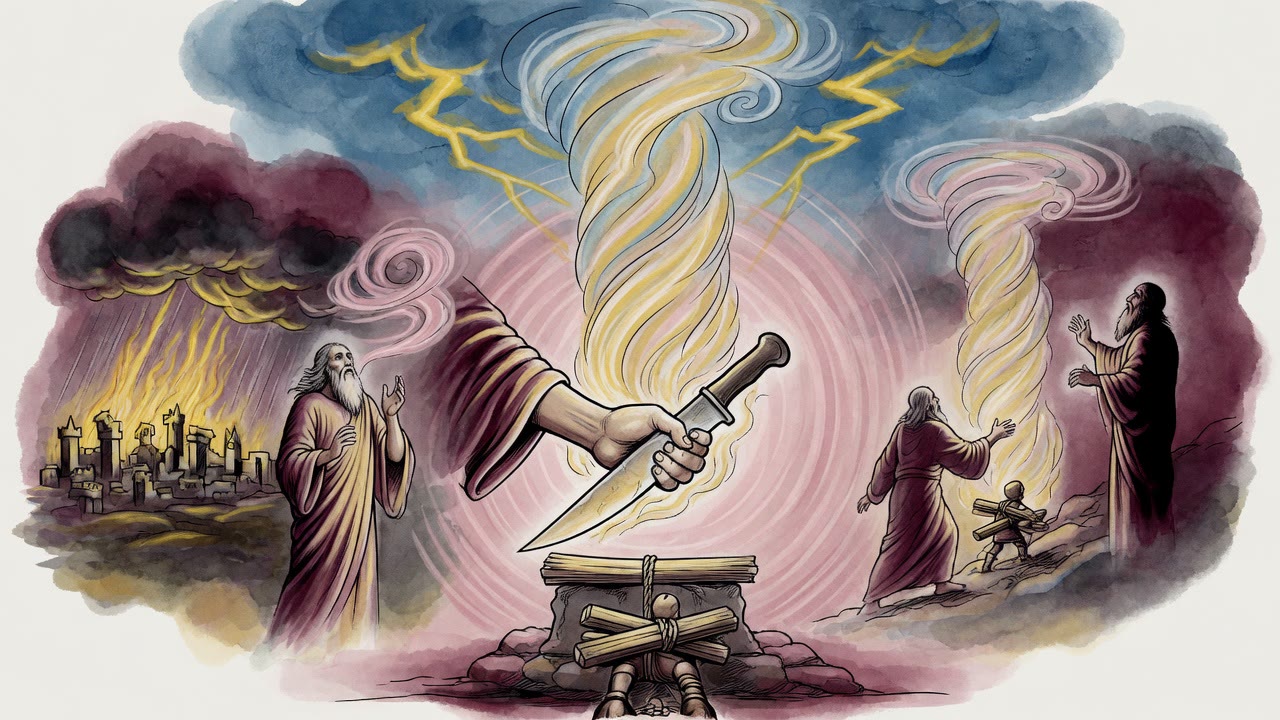
God swore by Himself after the binding (Genesis 22:16). The oath is not decoration. It is the legal seal on a bargain struck when a father refused to weaponize yesterday's promise against today's command. The silent bargain went into Heaven's files on that mountain, dated to a ram and a closed mouth.
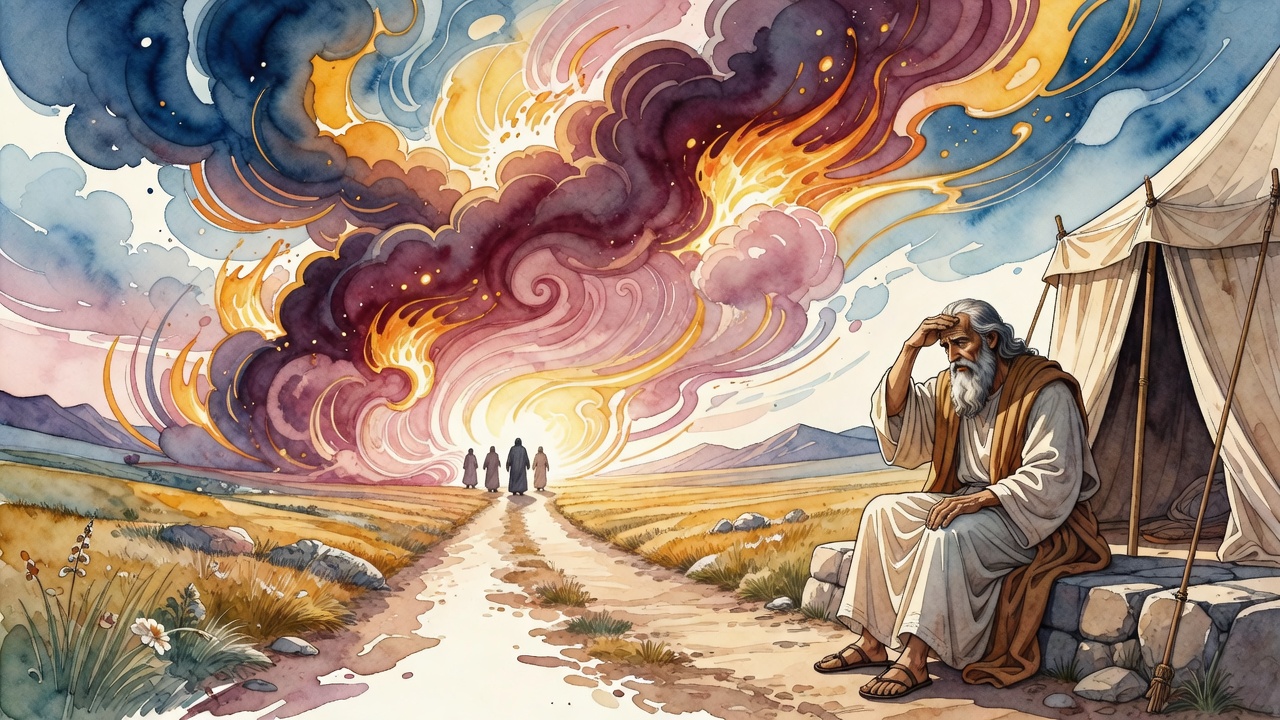
Abraham walked down with Isaac alive and a plea live above him. He did not look back at the thicket. The horns would be heard later, in a month that had not yet been named for fullness.
The Seventh Month Opens Court
Why does the Torah dwell on the seventh month? Because the month is sated, packed until the seams strain. Shofar (the ram's horn sounded at the new year) is in it. The Day of Atonement is in it. Lulav and willow are in it. Wine presses work. Threshing floors rise in piles. Fruit ripens as if the land itself is answering a court date with produce.
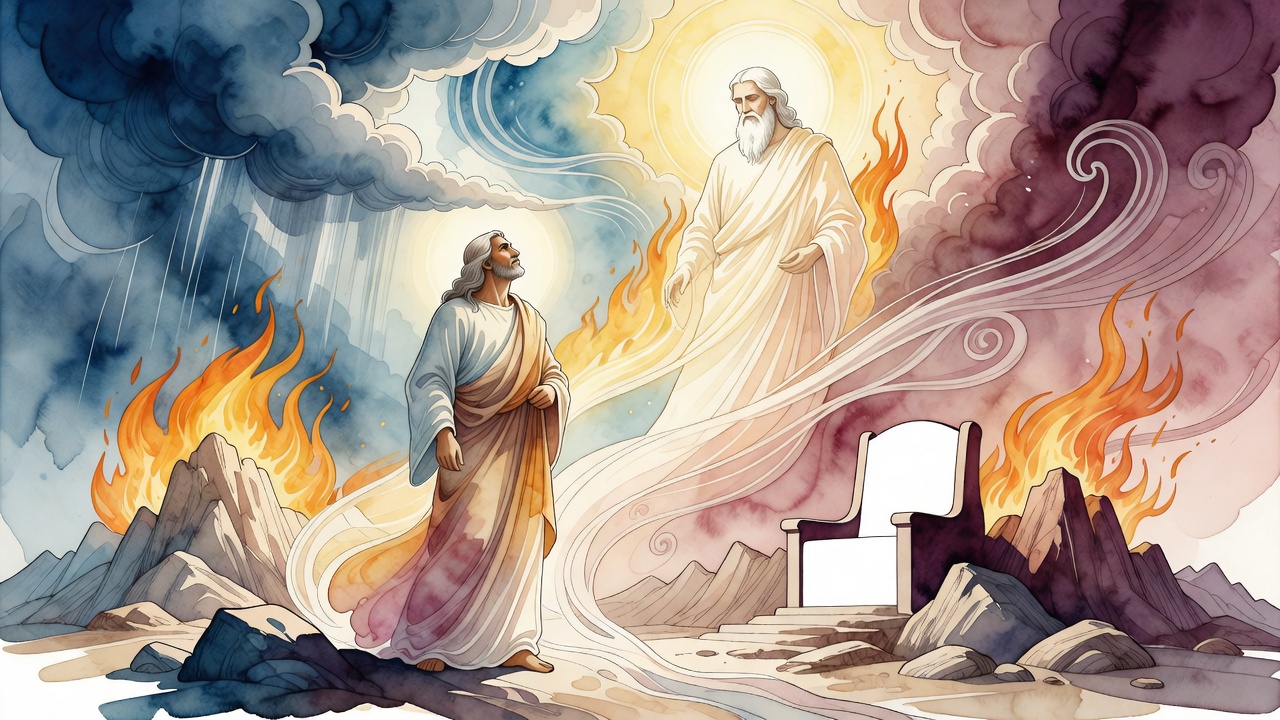
Rabbi Berekhiah called it the month of the oath, because in this season God swore to Abraham after the binding. When the shofar sounds, the courtroom opens with that mountain still in the air. The silence Abraham kept becomes a brief filed for children who will not always keep quiet or clean.
Tishrei smells of fruit and fear at once. Both belong. The seventh month is large enough for a harvest and a trial in the same week.
Name Your Fathers and Take the Goad
A farmer builds a goad for his cow and none for his own evil inclination. Heaven prods Israel back onto the path anyway. Teacher, ox-goad, prod: three names for one shove toward the furrow.
Then the scene shifts. A prince stands before his royal father. Name a good advocate and you will win, the father whispers. So God tells Israel: name your fathers.
"One day" recalls Abraham, called one. "A memorial of the blast" recalls Isaac and the ram caught by its horns. "A holy convocation" recalls Jacob, God's called one. Invoke their merit and the verdict softens. When? In the seventh month, when the land is full and the soul is thin.
The ram's horns are not a museum piece. They are the blast that will later stand for Isaac's near-death and Abraham's sealed mouth. The goad is not cruelty. It is instruction that refuses to let a people wander into a ditch without a shove toward the ridge.
The Oath Still Speaks
Abraham's bargain does not cancel judgment. It loans the court a memory of obedience that nearly cost everything. Children of Isaac arrive in Tishrei already carrying someone else's silence as credit. The credit is real. It is not infinite. The goad still waits for anyone who thinks the path needs no prod.
A day-old ram already named for sacrifice stands for completeness without delay. Abraham's closed mouth stands for completeness of trust under contradiction. The month stands for completeness of tools: sound, fast, branch, fruit, oath.
The knife is gone. The rope is gone. The thicket still has a story. Each year the court opens with three names on the table: the father who swallowed the protest, the son who lay under the cord, the ram who already bore a grown name on a young body. Mercy has advocates. Judgment has a goad.
Centuries later a people lifts a shofar and, without seeing the rope, still borrows the silence that saved them a place on the docket of compassion. The silent bargain of the seventh month is still the sound under the blast.
← All myths