Bitter Water First Taught Israel How to Judge
The first cup hit a tongue and neighbors shoved for the next jug. Moses waited in the dust until a tree was shown him.
Table of Contents
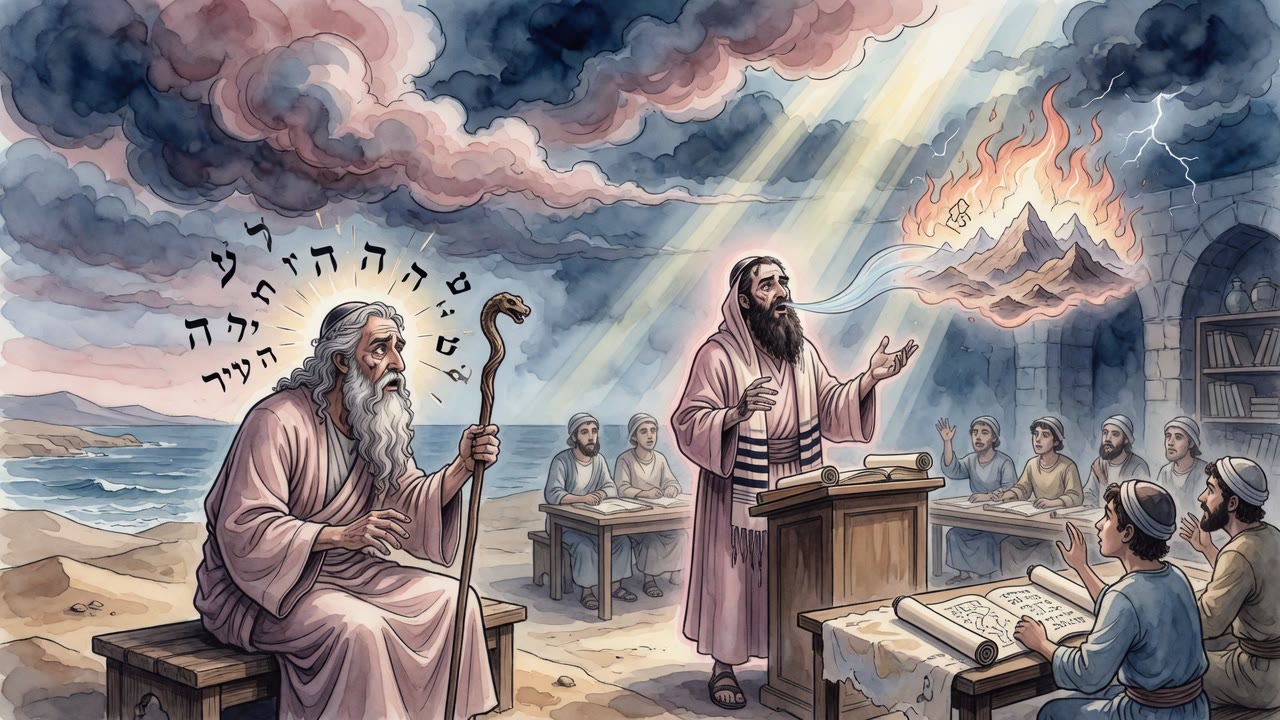
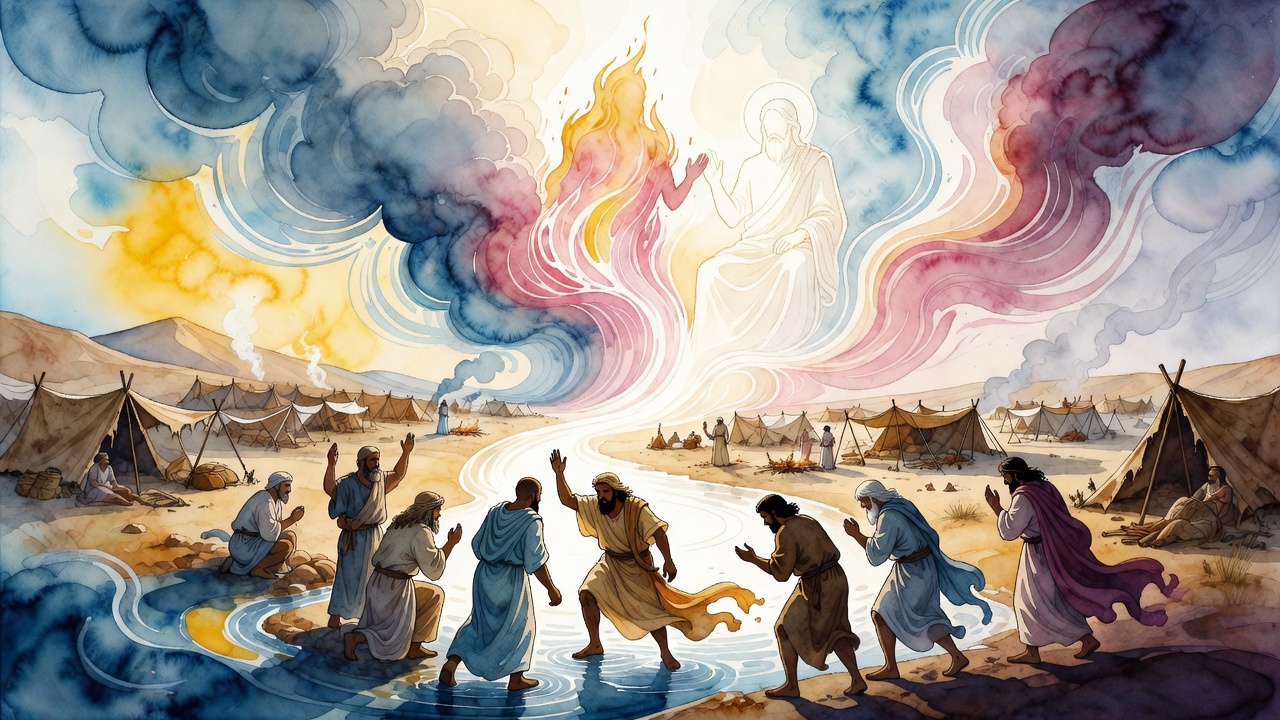
Israel spat the water back into the dust. The well at Marah looked clean enough until the first cup hit a tongue and turned the whole camp into one long grimace. Women pulled children away from the edge. Men argued over who had poisoned the pool. The air smelled of heat and old fear, and the road behind them still carried the dust of Egypt.
 Click for full size
Someone kicked a jug over. Someone else shoved. The bitter water had done what no Egyptian whip had managed in weeks: it made the freed people turn on each other before noon.
The Camp Broke Into Factions
They had left Succoth quarreling. They had camped at Etham quarreling. At every halt someone raised the old cry: appoint a leader, go back, trade this dry freedom for bricks that at least came with a ration. Brothers split over who should carry the heavier load. Sisters whispered that Moses had led them into a death with better scenery. A teaching of peace could not sit in a people cracked open by its own mouths.
Moses heard the murmur rise and fall like a fever. He put his staff into the ground and waited for an answer that would not be another speech. A speech would only add more words to a camp already drowning in them.
God showed him a tree. Moses threw the wood into the bitter water, and the water turned sweet. Throats opened. Children drank with both hands. The argument went quiet for one hour, which in a wilderness is almost a miracle. Even the men who had been ready to appoint a new leader stood still and watched the surface of the pool settle.
Justice Before Thunder
Then, before Sinai ever shook, before the mountain smoked, God set a statute and an ordinance at Marah (Exodus 15:25). Not wonders. Not a throne of fire. Mishpat, justice. The first classroom of the law was not a peak wrapped in cloud. It was a spring that had just stopped tasting like metal and spite.
Solomon would later say that by justice a king sustains the land (Proverbs 29:4). Here the King of kings began His teaching the same way a builder sets the first stone: with the law that holds neighbors accountable when water is scarce and tempers are short. Who drinks first. Who fills the second jug. Who settles a claim when two families reach for the same clay vessel.
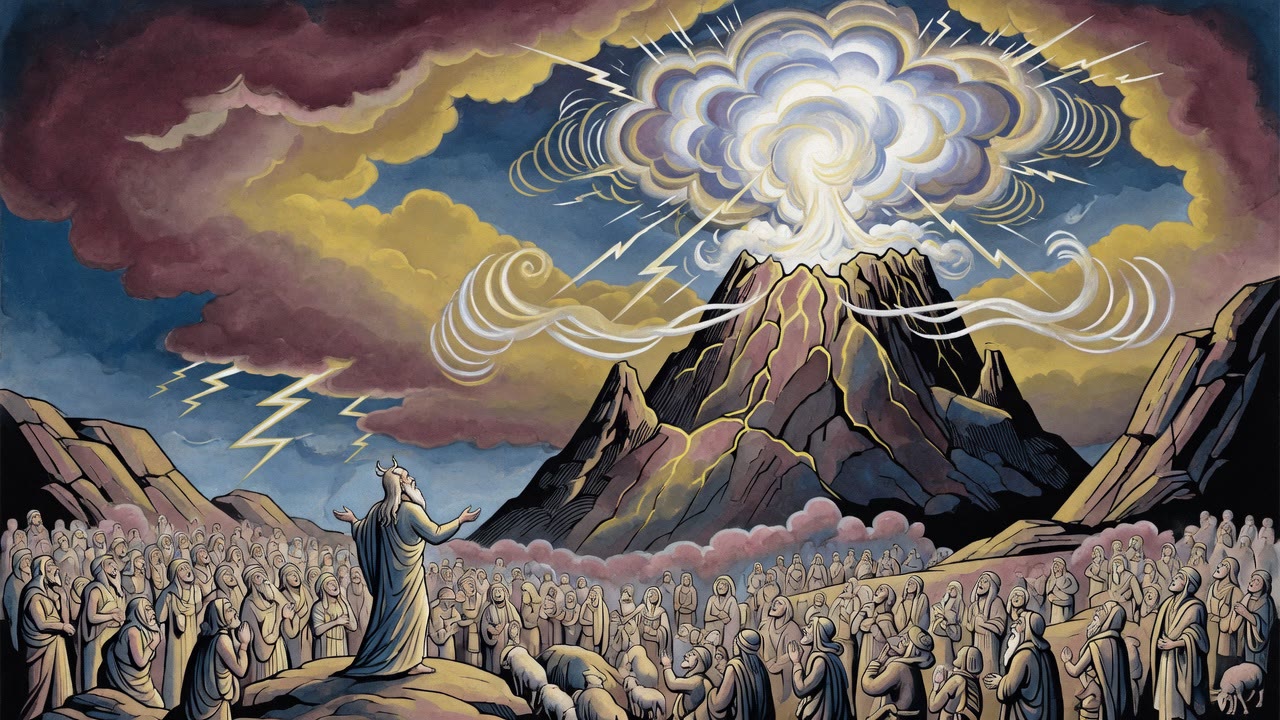
Moses learned the first ordinances in that hour. He would carry them later to a nation standing under cloud and voice. But the first lessons were practical and sharp. A kingdom does not stand on power alone. It stands on the willingness to judge fairly when thirst makes every man a potential thief of his neighbor's share.
One Heart Against the Mountain
The waiting did not end at Marah. God longed to give the Torah the hour Israel left Egypt, yet He found a camp still at war with itself. Journey and encampment both ran on strife. How could a teaching whose paths are peace be poured into vessels cracked with discord?
Only at Rephidim something shifted. They became equal, one to another, melted into a single band. The verse that records their arrival opposite Sinai uses the singular: Israel encamped, not they encamped. One people. One heart. One camp before the mountain. The Holy One said what Proverbs already sings of Torah: her ways are ways of pleasantness, and all her paths are peace. To whom shall a teaching of peace be given? Only to a nation that has stopped tearing itself apart long enough to receive it.
Moses watched the tents align. No faction banner. No separate circle of complainers at the edge. The people that had spat bitter water at Marah now stood as if the mountain itself were a single hearing ear.
The Face After the Calf
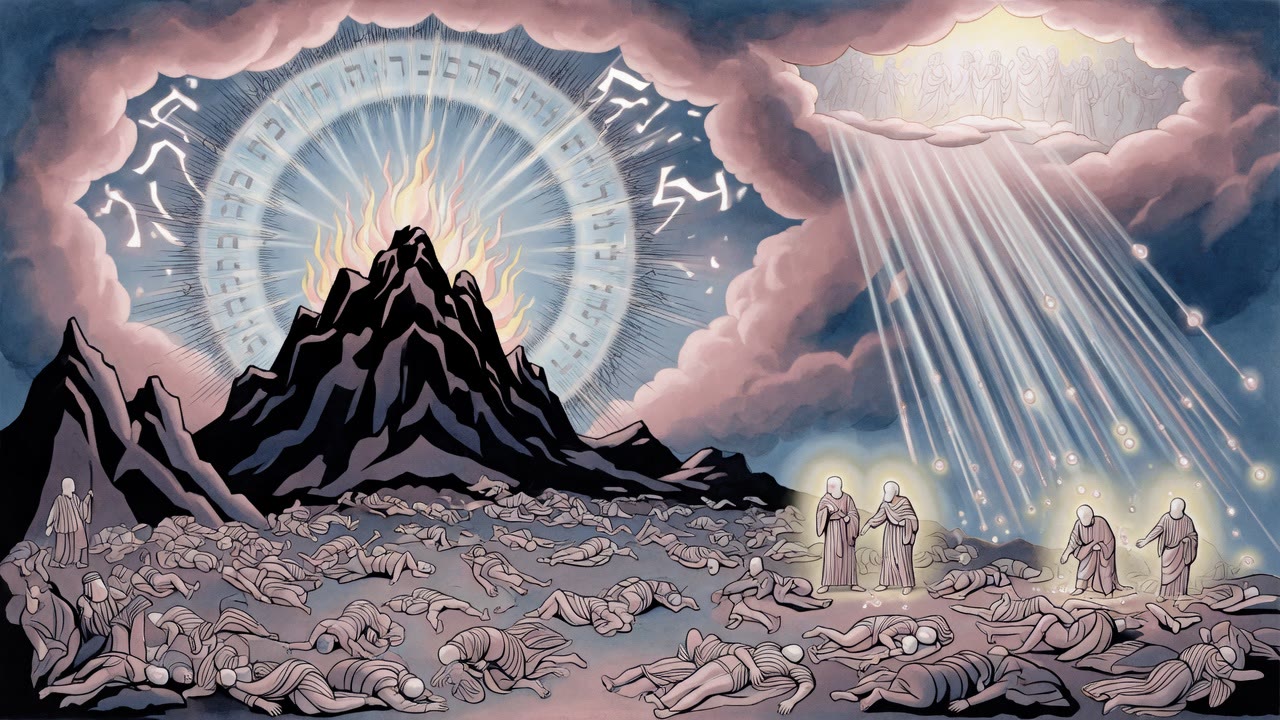
When they finally stood and said na'aseh v'nishma, we will do and we will hear (Exodus 24:7), the aura of the Shechinah (שכינה), God's divine presence, rested on them. Wisdom meant more than obedience. It meant holding forty-nine readings for purity and forty-nine for impurity, arguing a matter from every side until the law itself felt alive in the mouth. Israel became the people who could confront complexity without fleeing it.
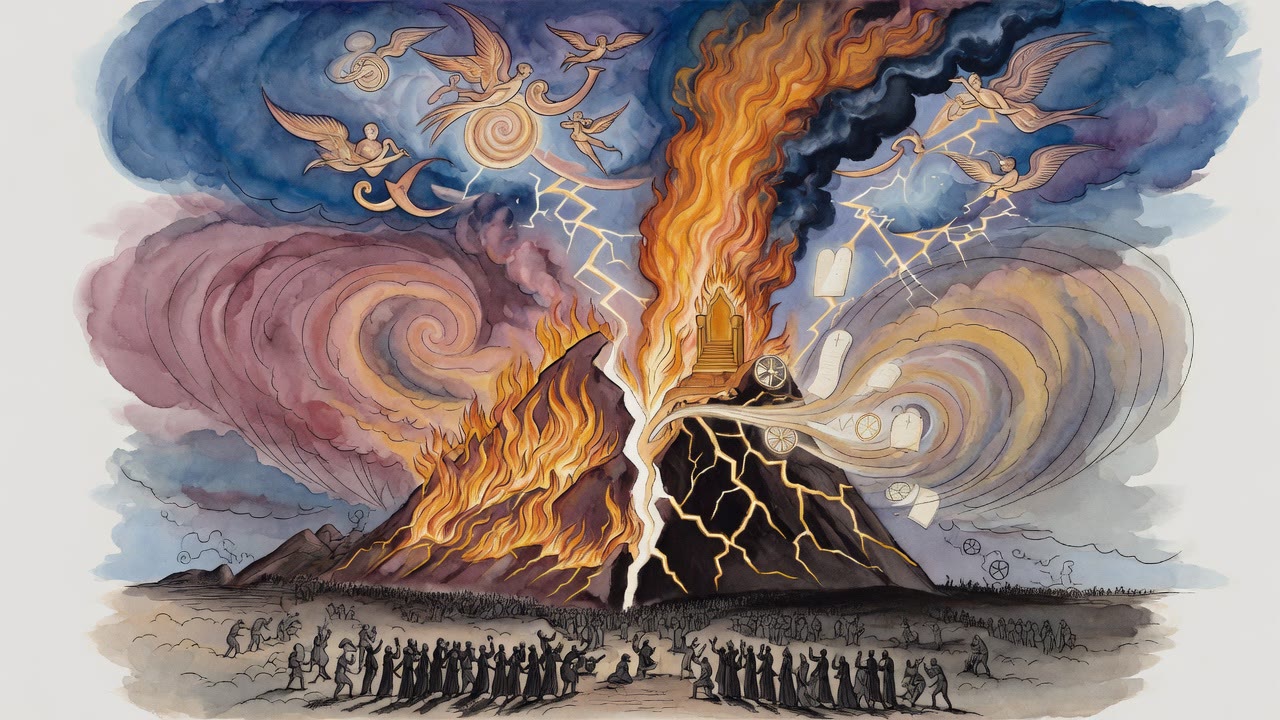
The state did not last. After the Golden Calf, the boldness of their faces changed. Once God had said of them, you are divine, like celestial beings (Psalm 82:6). After the break, mortality closed over them like a door: you will die like man (Psalms 82:7). Sinai stayed in heaven as a height they had touched and then lost. The mountain remained. The face they wore under the cloud did not.
Marah remained the quieter mountain. No fire on the peak. Only a statute planted where thirst made every man watch his neighbor's hands. Years later, when courts sat in gates and judges weighed testimony, Moses still remembered the first ordinance beside a jug. Before the tablets, before the smoke, God had begun with mishpat. The pool at Marah had gone sweet. The camp had learned, for one hour, how to share it.
← All myths