Parshat Yitro5 min read

Angels Held Israel Upright Under Sinai's Voice

The voice pressed the nation to the dirt. Angels caught each body, and open heavens showed seven layers and one God.

Curated by Arthur · Told by Maggid ·
Table of Contents
  1. Seven Heavens, One God
  2. Freedom Engraved on Stone
  3. The Will of the One in the Bush
  4. What the Held Body Learned

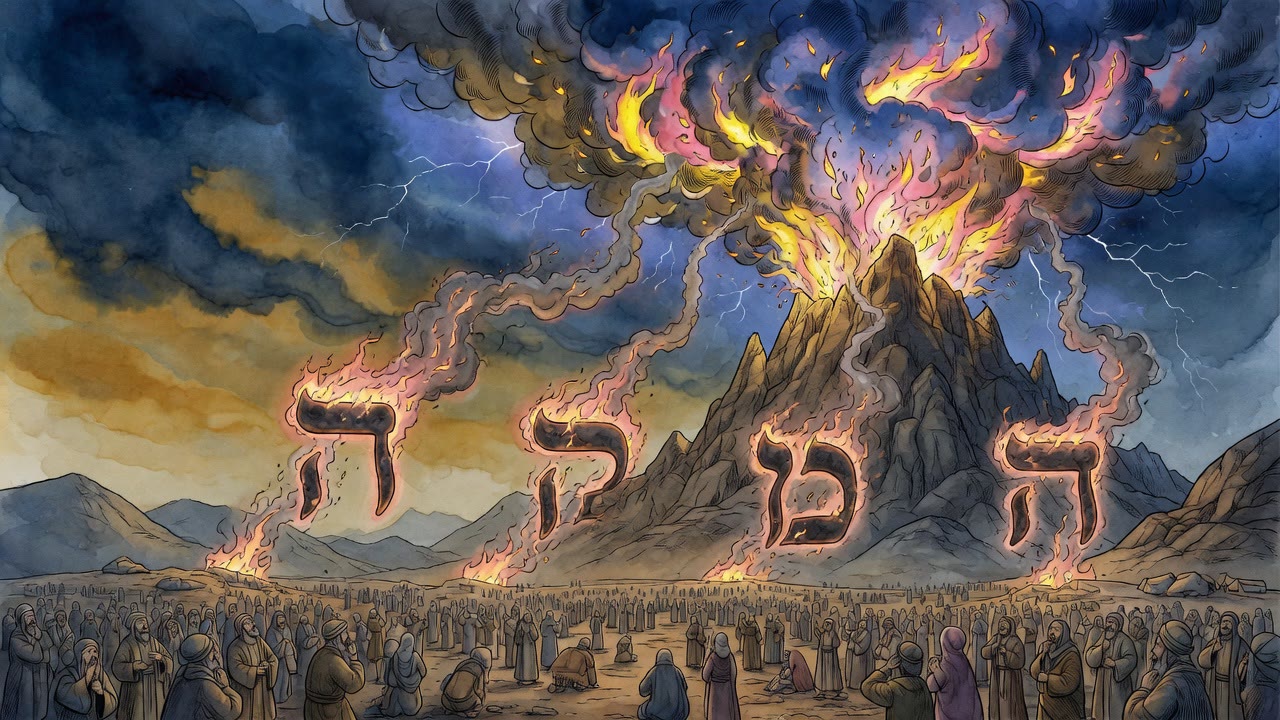
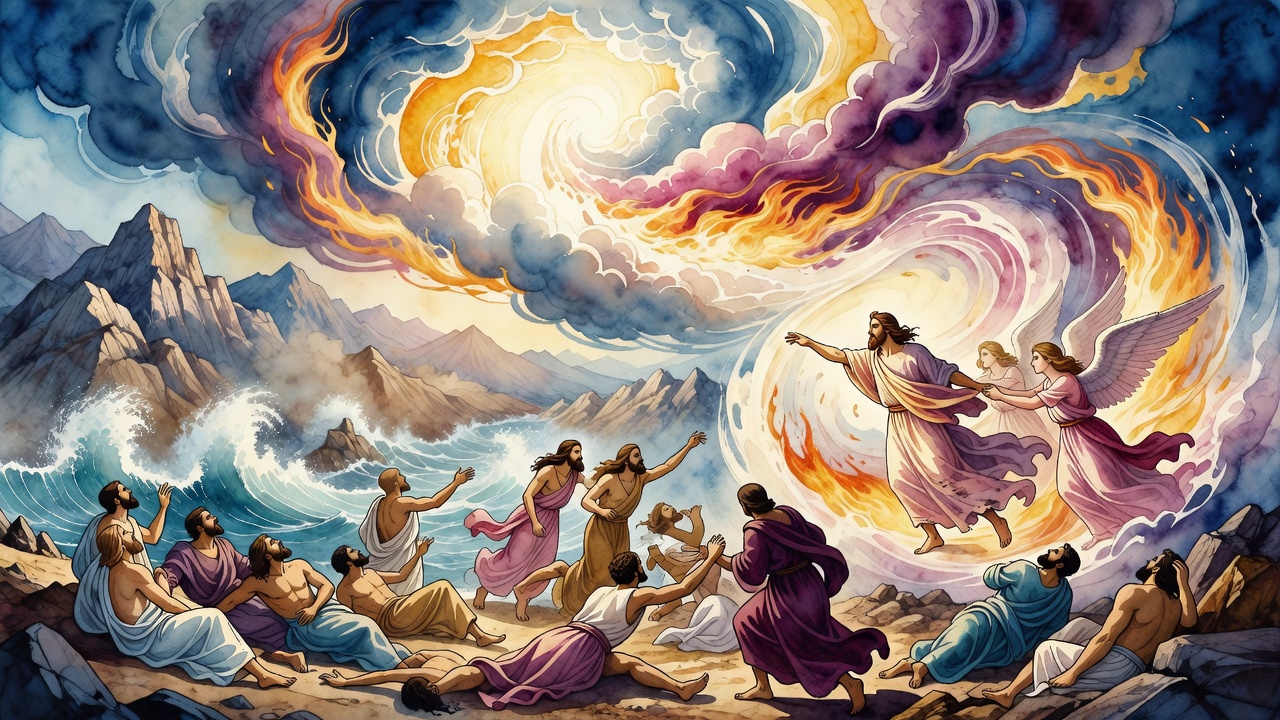
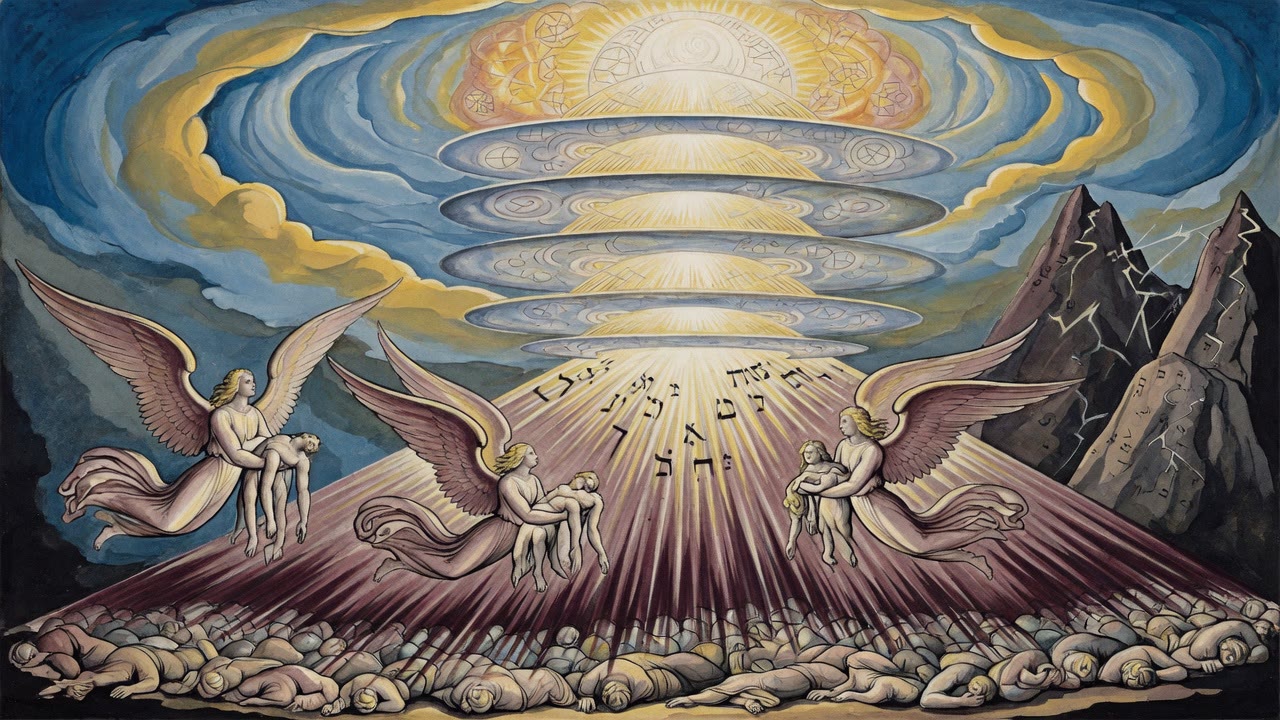
The voice came down the mountain like weight, not only sound. Israel fell as one body, faces in the dust, not from theater fear alone but because the presence pressed air out of lungs and strength out of knees. They would have been crushed under their own hearing if the ministering angels had not arrived.
Angels Held Israel Upright Under Sinai's Voice Click for full size

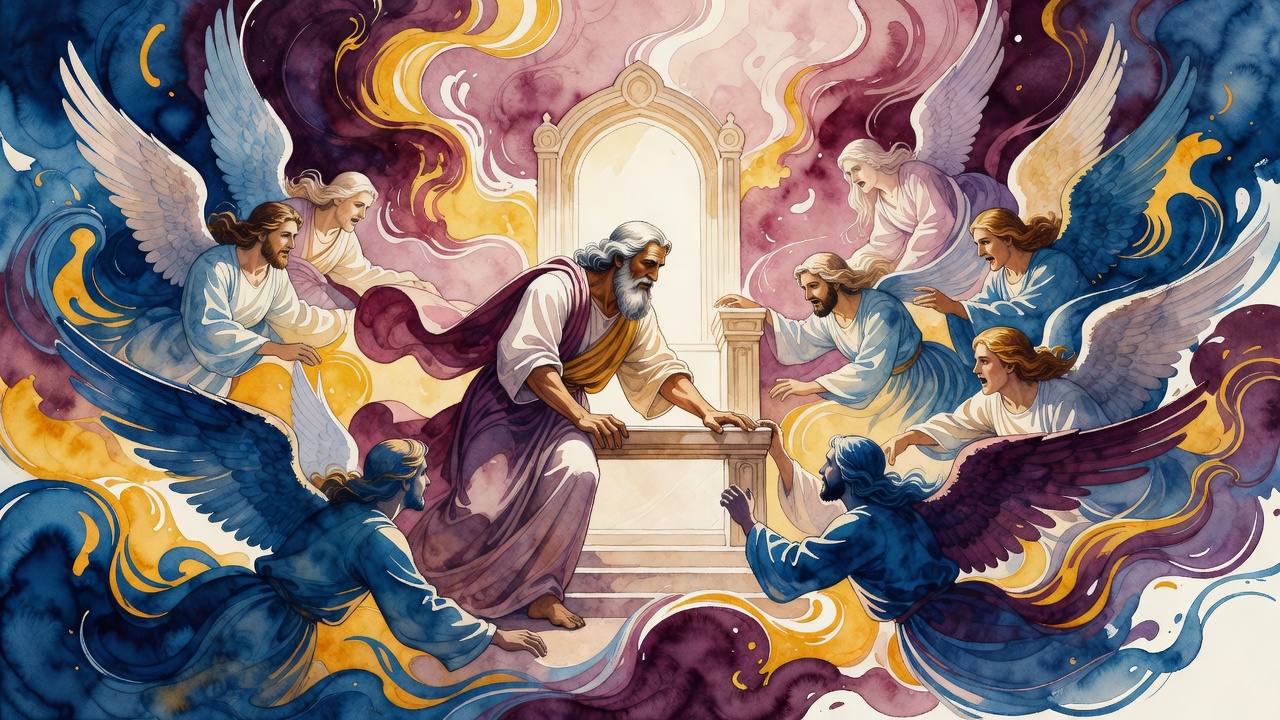
Hands that were not human hands lifted heads and spines. Each person was held upright by a force that refused to let revelation become a mass grave. The same moment that could kill was the moment that insisted on witnesses who could still stand. The nation rose because heaven refused to speak only to corpses.

Seven Heavens, One God

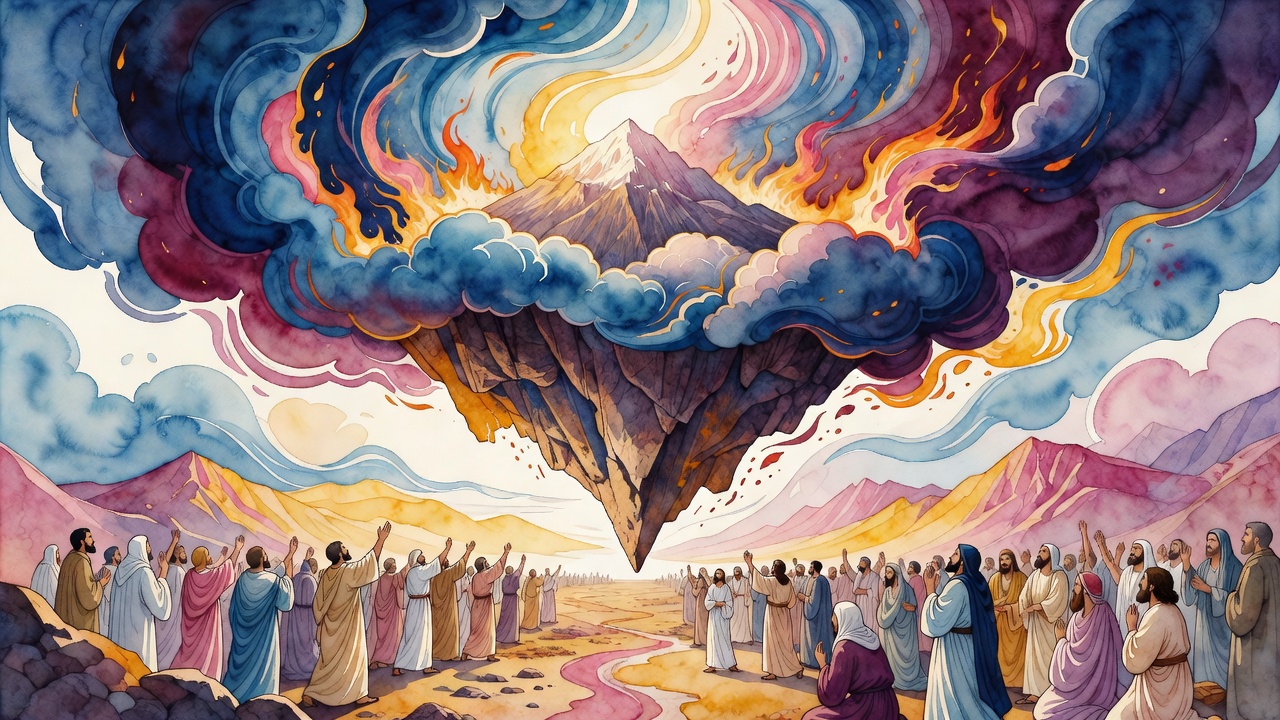
While the angels held them, the sky did not stay closed. Seven heavens opened in stacked clarity. Seven abysses answered from below. The corners of the earth showed themselves. In all that multiplied architecture the people saw only one God. The vision was not a catalog of rival powers. It was a map of rooms under a single Owner.

That sight rewrote what a mountain could mean. Sinai was not a local shrine with a loud storm. It was a hinge where the structure of the upper worlds briefly became visible to bodies that still smelled of Egypt's brick dust. They saw how high the house went, and how low the deep ran, and that neither height nor depth held a second throne.

Freedom Engraved on Stone

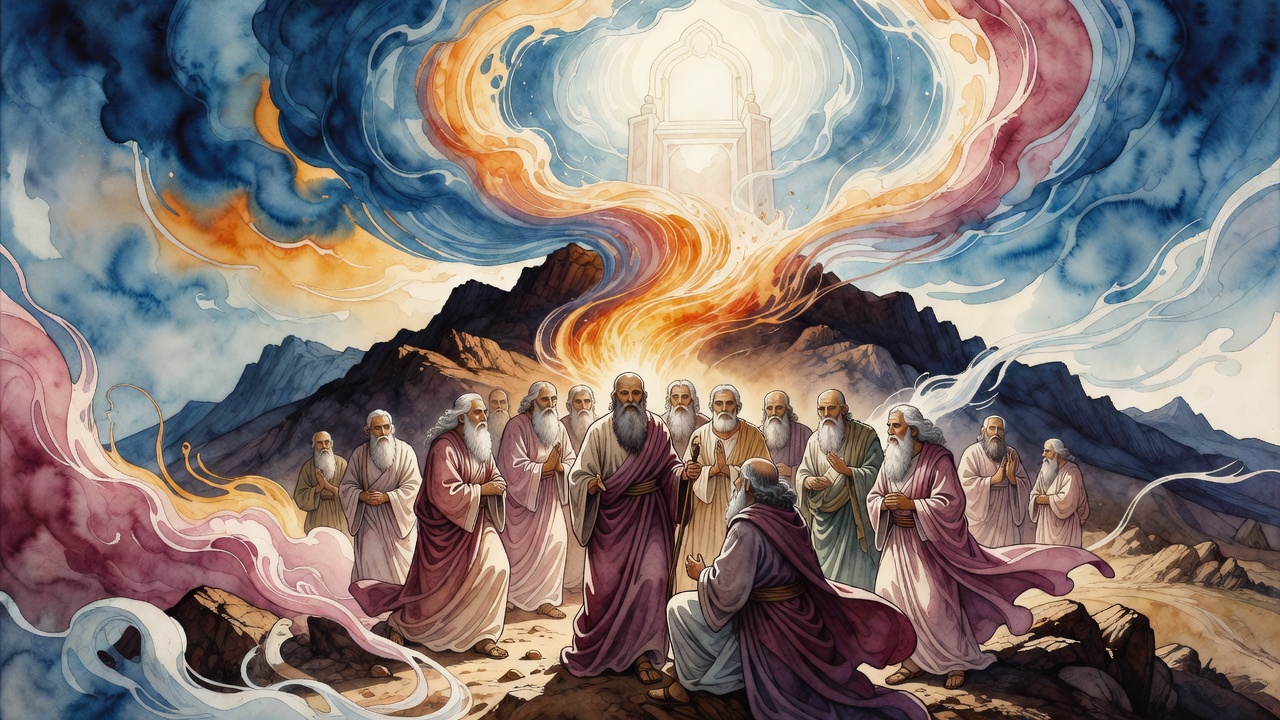
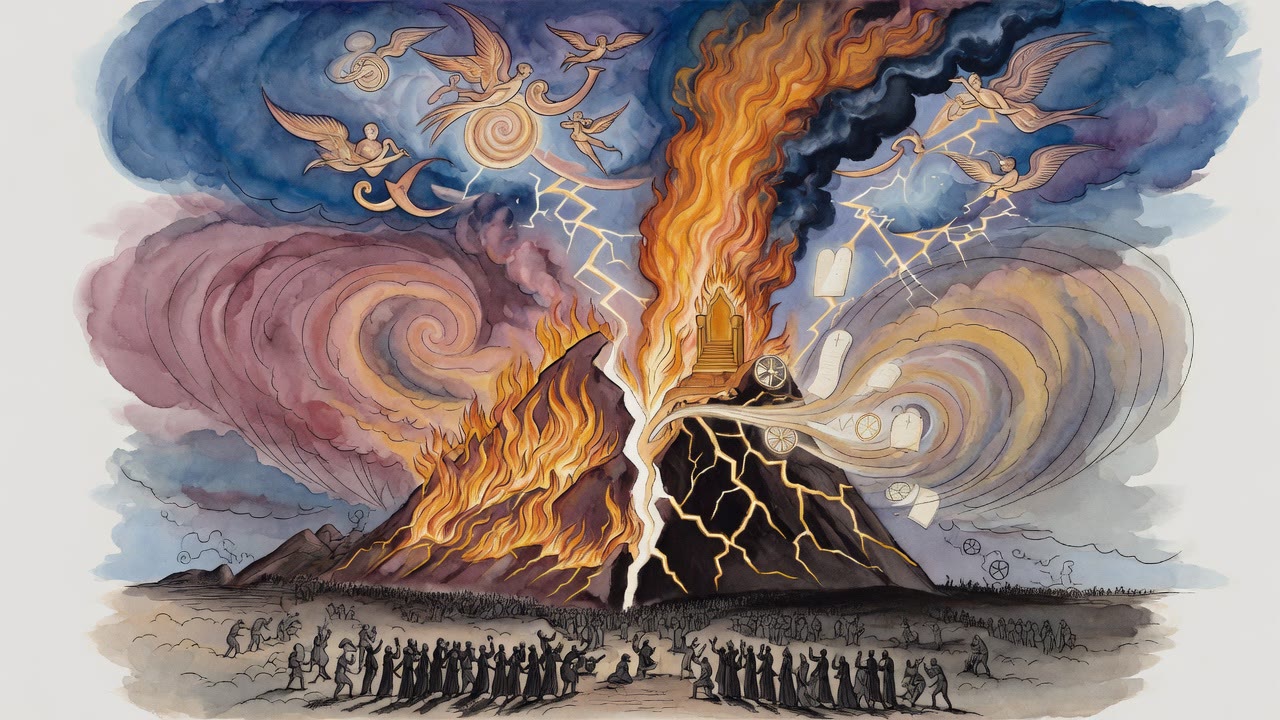
The generation that took the tablets stood in a rare weather of holiness. Evil still existed, but it was bound, subordinate, unable to act with its usual freedom. Moses stood as the complete one, the inner essence they could follow without the later fractures of settled politics. On the tablets the writing of God was engraved, charut, and the sages hear cherut, freedom, inside the same letters (Exodus 32:16).

Freedom from the Angel of Death. Freedom from servitude to the nations. For a span of wilderness years the people lived under a law that was also a release, a yoke that lifted other yokes. That is why later ages treat them as a near-miss of perfection, a generation that almost finished what most generations only begin.

The Will of the One in the Bush

Long before the mountain, a bush burned without being eaten, and a reluctant shepherd heard a Name. The Sifrei later blesses Israel as those who did the will of the Dweller in the bush. The whole national career is measured against that first obedience. Not the spectacle of fire alone. The answer to a call.

Joseph receives the head of the blessing because he went down to Egypt first and will come first in the future accounting. He was sundered by brothers and still became the channel of survival. Glory, hod, is set on Moses. Majesty, hadar, is set on Joshua, and the world can barely stand the force of that transfer. Leadership is not a costume. It is a pressure the earth itself notices.

What the Held Body Learned

A man who was lifted by an angel under the voice never again pretends that Torah is only ink. He remembers knees failing and being reset. A woman who saw seven heavens while dust filled her mouth never again confuses the One with the furniture of the sky. Children born later inherit the story as if their own spines were the ones straightened.

The bush demanded will. The mountain demanded witness. The wilderness generation almost tasted freedom written into stone. Between those stations the people learned that revelation is not a gentle glow. It is weight, support, opened architecture, and a command to become the kind of nation that can bear what it has seen without falling forever into the dirt.

When the cloud later moved and the camp folded its tents, some still felt phantom hands under their arms. The voice was gone. The angels were not visible. The seven heavens had closed their doors. What remained was law in the mouth and the stubborn memory that once, under pressure that should have killed them, they were held up long enough to say yes.

That yes is the will of the Dweller in the bush, stretched across decades until it covers a people. The tablets can be broken and cut again. The freedom inside charut can be lost and fought for. But the first posture under Sinai stays: fallen, lifted, staring into stacked heavens, knowing the rooms are many and the King is one.


← All myths
From the tradition

Sources

3 sources

The texts behind this telling. Some cards carry a translation of the source; others are our own retelling of it, and each card says which. Every card links out to the original.

Exempla of the Rabbis, No. 375Exempla of the Rabbis (Gaster, 1924)

Retold in our words. Read the original at the link below.The Exempla of the Rabbis, Moses Gaster (1924) · Public Domain

When God gave the Torah at Mount Sinai, the scene was unlike anything the universe had ever witnessed. The entire nation of Israel stood at the base of the mountain, and when the voice of God thundered from the peak, the people fell prostrate, not from fear alone, but because the sheer weight of the divine presence pressed them to the earth.

They would have been crushed if not for the angels. The Midrash (rabbinic interpretive commentary) teaches that at the moment the Israelites collapsed, ministering angels descended and supported each person, lifting them gently, holding them upright, ensuring that no one was harmed by the overwhelming force of God's voice.

What did the Israelites see in that moment? The heavens opened before them, and they beheld what no mortal eyes had seen before or since: seven heavens, stacked one above the other. Seven abysses, descending into depths beyond comprehension. Seven corners of the earth, stretching to the limits of creation. And in the midst of it all, one God. Not seven gods, not a council of deities, not a hierarchy of powers. One.

The revelation at Sinai was not merely the giving of commandments. It was the ultimate demonstration of monotheism. God showed His people the full architecture of creation, every heaven, every abyss, every corner of the world. So they could see for themselves that behind all of it stood a single Creator. The angels who held them upright were witnesses to this truth. The multiple heavens were evidence of it.

One God, revealed through infinite complexity. The Torah was merely the written record of what every Israelite saw with their own eyes on that day.

Full source
Kalach Pitchei Chokhmah 30:24Kalach Pitchei Chokhmah

Retold in our words. Read the original at the link below.138 Openings of Wisdom, trans. Rabbi Avraham Greenbaum, Azamra Institute (2005) · CC-BY

A time when holiness wasn't just a nice idea, but the dominant force. The Kalach Pitchei Chokhmah, a Kabbalistic text whose name roughly translates as "Thresholds of Wisdom," paints just such a picture. It describes a period where, even though evil existed, it was essentially powerless, bound and under control.

When was this golden age? According to the Kalach Pitchei Chokhmah, it was the generation that received the Torah in the wilderness. They were on the cusp of achieving true perfection, guided by Moses, whom the text describes as the embodiment of inner essence. An entire generation on the verge of perfection. What made them so special?

The Zohar, that foundational text of Jewish mysticism, sheds some light. It emphasizes the unique spiritual state of this generation. He was complete, and they listened to him.

Here’s where it gets really interesting. Remember the verse in Exodus (32:16) describing the tablets of the Ten Commandments? "…the writing of God was engraved upon the tablets.” The Hebrew word for "engraved" is charut (חָרוּת). But, with just a slight shift in vowelization, that same word can also be read as cherut (חֵרוּת), which means "freedom."

Mind. Blown.

The sages in the Talmud (Eruvin 54b) and the Zohar (II, 46a, 114a) seize on this. They say that this generation was not just given the Torah, but they were also granted a profound level of freedom. Specifically, freedom "from the Angel of Death and freedom from servitude to the nations." Imagine a life untouched by those two fundamental fears!

So, what does it all mean? This passage from Kalach Pitchei Chokhmah, supported by the Zohar and the Talmud, offers a glimpse into a time of unparalleled spiritual potential. It suggests that through the right leadership, and a receptiveness to divine wisdom, humanity can reach a state where holiness prevails, and even the forces of darkness are subdued.

It also raises a powerful question: If they could achieve such a state, what's stopping us? Perhaps the answer lies in re-examining our relationship with the Torah, with our leaders, and with the very idea of holiness itself.

Full source
Sifrei Devarim 353:9Sifrei Devarim

Retold in our words. Read the original at the link below.Sifrei by Rabbi Shraga Silverstein · CC-BY

It all starts with understanding the power of fulfilling God's will.

In Sifrei Devarim, a collection of legal and ethical teachings supplementing the Book of Deuteronomy, we find a fascinatingly concise, yet potent verse: "and the will of the dweller in the bush." But what does that even mean? The text immediately clarifies, "(Israel,) who did the will of the One who was revealed in the bush." It’s a direct connection between the divine encounter at the burning bush and the actions of the Israelites. the entire nation's identity, their very purpose, rooted in that moment of revelation. It wasn't just about seeing a miracle; it was about answering a call.

Speaking of legacies, the source turns to Joseph. The blessing, "It (the blessing) shall come upon the head of Joseph," hints at something truly special. Why Joseph? The text gives us a clue: "He came first to Egypt, and he shall come first (for blessing) in time to come." Joseph, who paved the way for his family's survival in Egypt, is destined to be at the forefront of blessings. It's evidence of his foresight, his leadership, and perhaps most poignantly, his resilience.

The story doesn't stop there. There's a heartbreaking undertone: "upon the head of him (Joseph) 'sundered' by his brothers." The text clarifies: "He was 'distanced' by his brothers." That initial betrayal, that profound act of sibling rivalry, casts a long shadow. Yet, despite this painful past, Joseph rises above it, ultimately forgiving his brothers and saving them from famine. His story is a powerful reminder that even from the deepest wounds, extraordinary blessings can emerge.

Then comes the intriguing passage about Joseph's "ox." "(Ibid. 17) "The grandeur of his (Joseph's) 'ox' (Joshua, the strong, who came from Joseph) is accorded ("hadar") him." Here, the metaphor of the "ox" refers to Joshua, Moses' successor, who was descended from Joseph. It's a fascinating way to link strength and leadership to a specific lineage. The text further explains: "We are hereby taught that 'hod' (glory) was accorded Moses, and 'hadar' was accorded Joshua; the entire world could not withstand him."

What's the difference between hod and hadar? While both relate to glory and splendor, they represent different aspects of leadership. Moses possessed hod, a kind of inherent, awe-inspiring presence. But Joshua had hadar, a more dynamic, almost overwhelming power. This passage suggests that different times call for different kinds of leaders, and that Joshua's strength was precisely what was needed to lead the Israelites into the Promised Land. The world, it says, could not withstand him.

Perhaps it’s this: that true blessing lies in fulfilling God's will, even amidst personal hardship. That leadership takes many forms, and that the legacies we leave behind are often shaped by both our triumphs and our struggles. And that, ultimately, the echoes of a burning bush can reverberate through history, inspiring generations to come.

Full source