Parshat Yitro5 min read

The First Word at Sinai Raised Israel's Dead

Heaven's first utterance shakes seas and mountains. Israel's dead stand up, the living fall twelve mil back, and angels drag Moses into the cloud.

Curated by Arthur · Told by Maggid ·
Table of Contents
  1. Women First at the Mountain
  2. Darkness That Sets a Man Apart
  3. The Word That Shook the World
  4. Oil That Refuses a Lie
The First Word at Sinai Raised Israel's Dead Click for full size

Women First at the Mountain

Moses climbed on the second day only because God commanded it, up in a cloud and down in a cloud, carrying the covenant of the patriarchs and the merit of the children. At the summit came the instruction that has shaped every later hearing. "Thus shall you say to the house of Jacob, and tell the children of Israel." Two phrases. Why two?

One reading hears the elite and the masses. The bolder reading splits the audience by sex. The house of Jacob means the women, and they are to be addressed first. When God created the world, He commanded Adam but not Eve, and she, uncommanded, was misled and drew her husband into transgression. At Sinai the order is corrected. This time the women hear first, the broad principles they can receive, and the men follow with the fine details, because in matters of devotion the men tend to follow the women's lead. "Thus" means the holy tongue, this exact order, neither adding nor subtracting a single word.

Moses came down and did not wander home. The mission burned in him. Every charge he carried up and down Sinai he delivered in the morning, fresh, never at the lazy end of a day. He sanctified the people before Torah could be given, clearing the vessel, because a holy thing needs a clean place to land.

Darkness That Sets a Man Apart

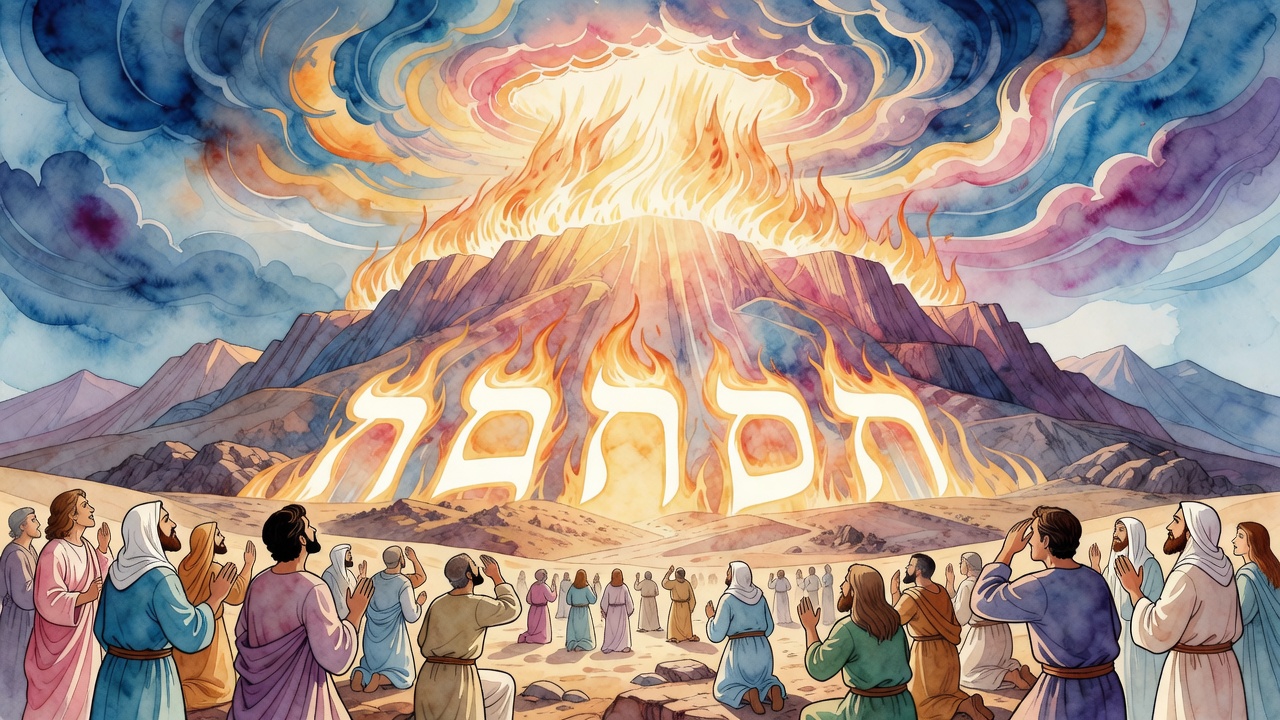
God announced He would come to Moses in the thickness of the cloud. No soft mist. Dense darkness, the same heavy dark that would settle when the Torah was given. Within it Moses was set apart. Rabbi Yose the Galilean and Rabbi Akiva debate the seven days the cloud wrapped him, days of sanctifying before the great forty began.

God speaks in the cloud so that the people may hear when I speak with you. Rabbi Yehudah pictures a stunning exchange: I will speak, you will answer back, and I will return and concede to your words. The teacher known simply as Rabbi softens this. God conceded not to flatter Moses but to confirm that the laws first given at Marah were the very ones now repeated at Sinai. And the verse looks down the centuries. The people will heed Moses' mouth as they heed the mouth of Heaven, and after him the elders and the prophets who carry the same chain. That is why God promises they will also trust in you forever. When the people answered with one voice, the greatest and the smallest counted exactly the same before God.

The Word That Shook the World

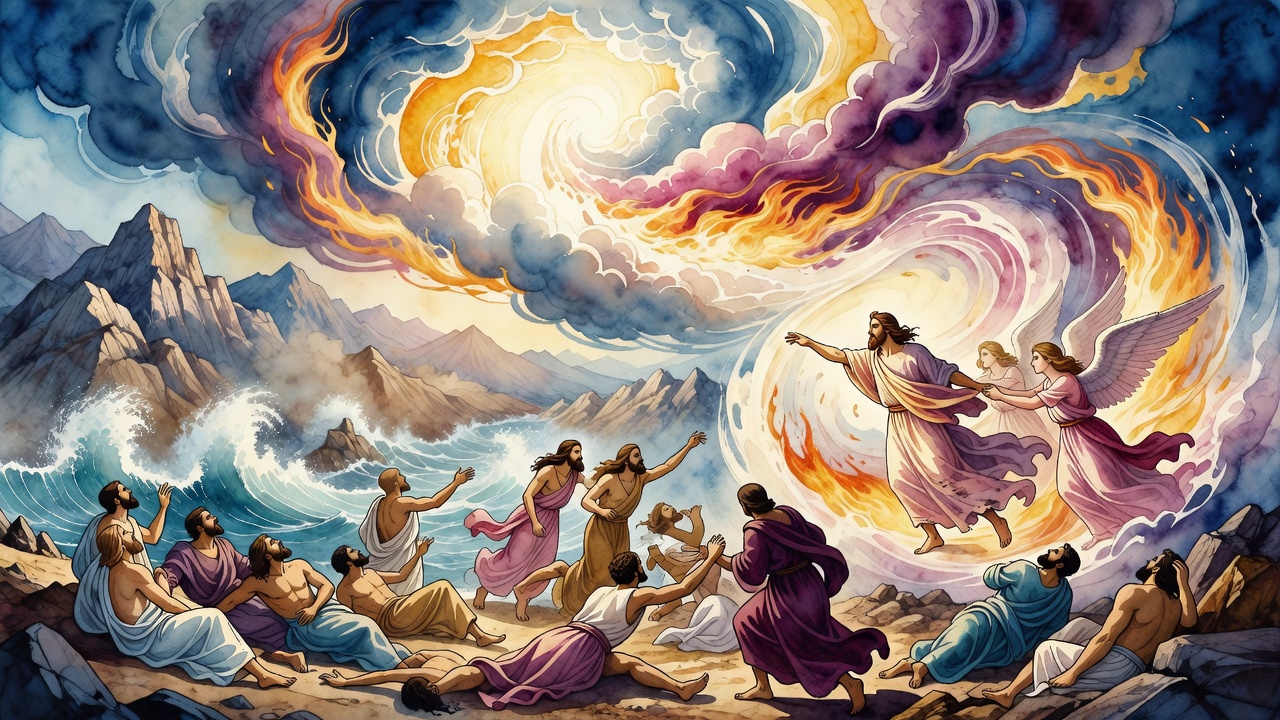
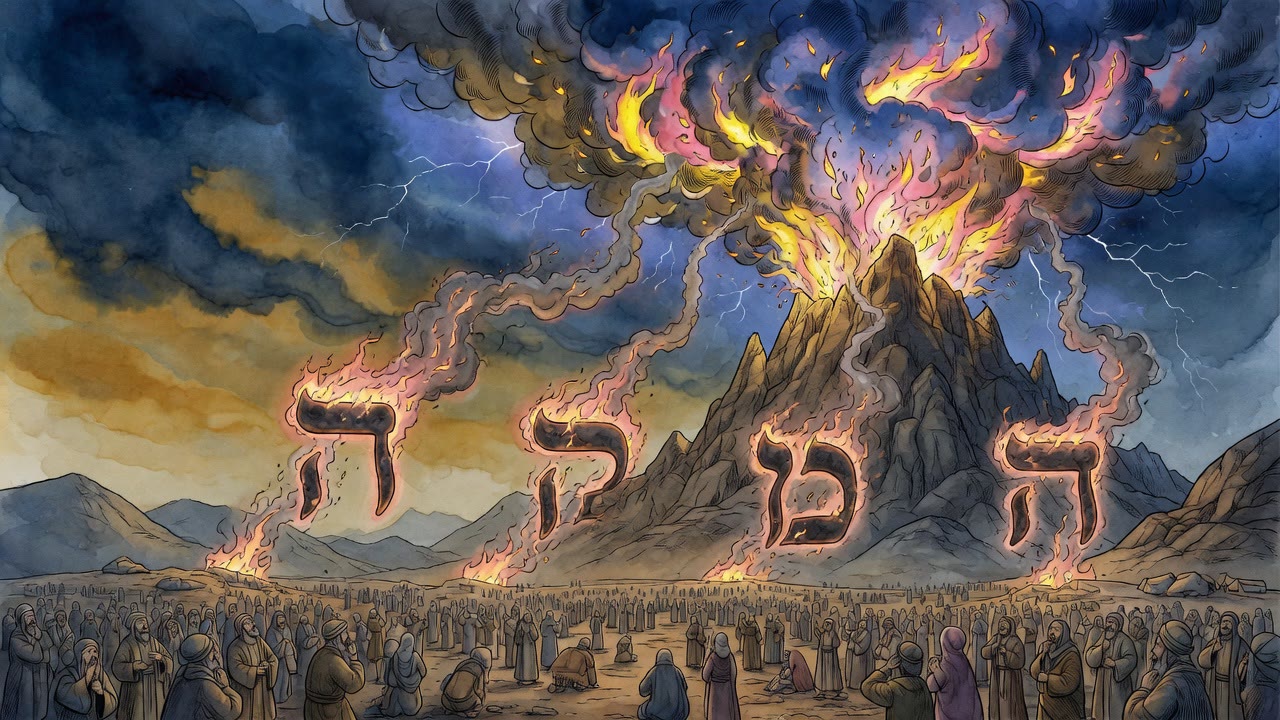
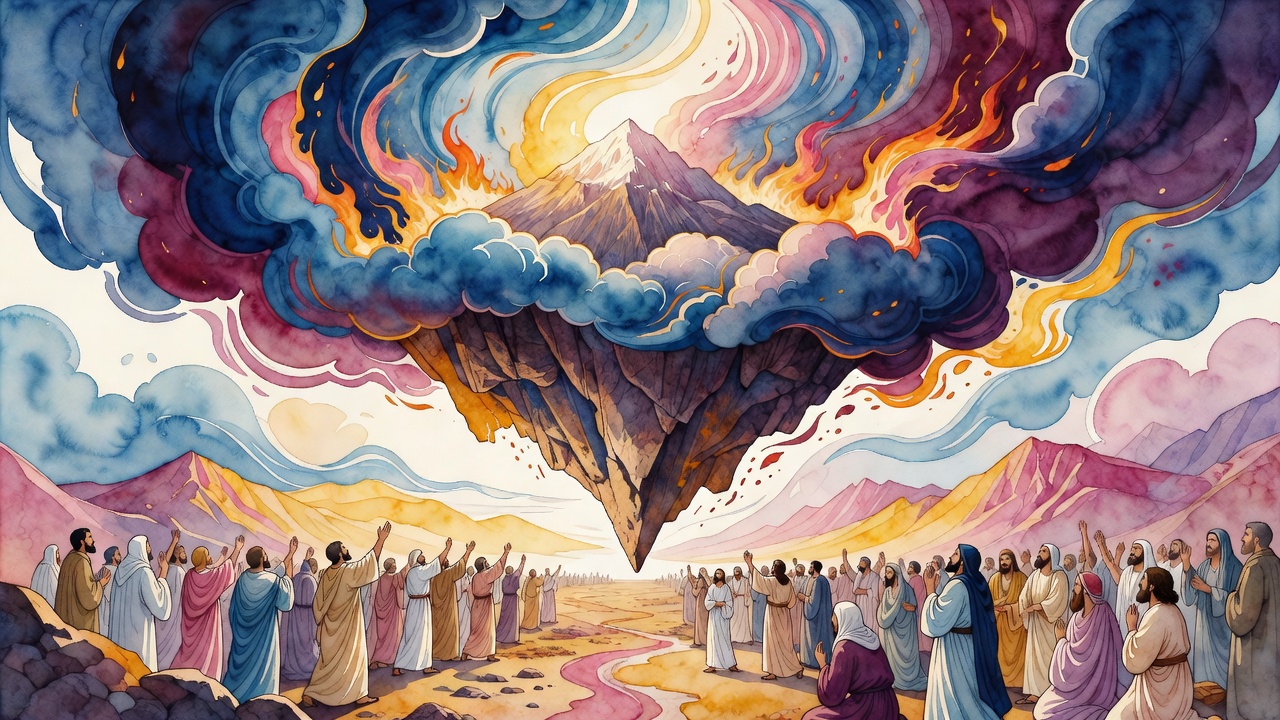
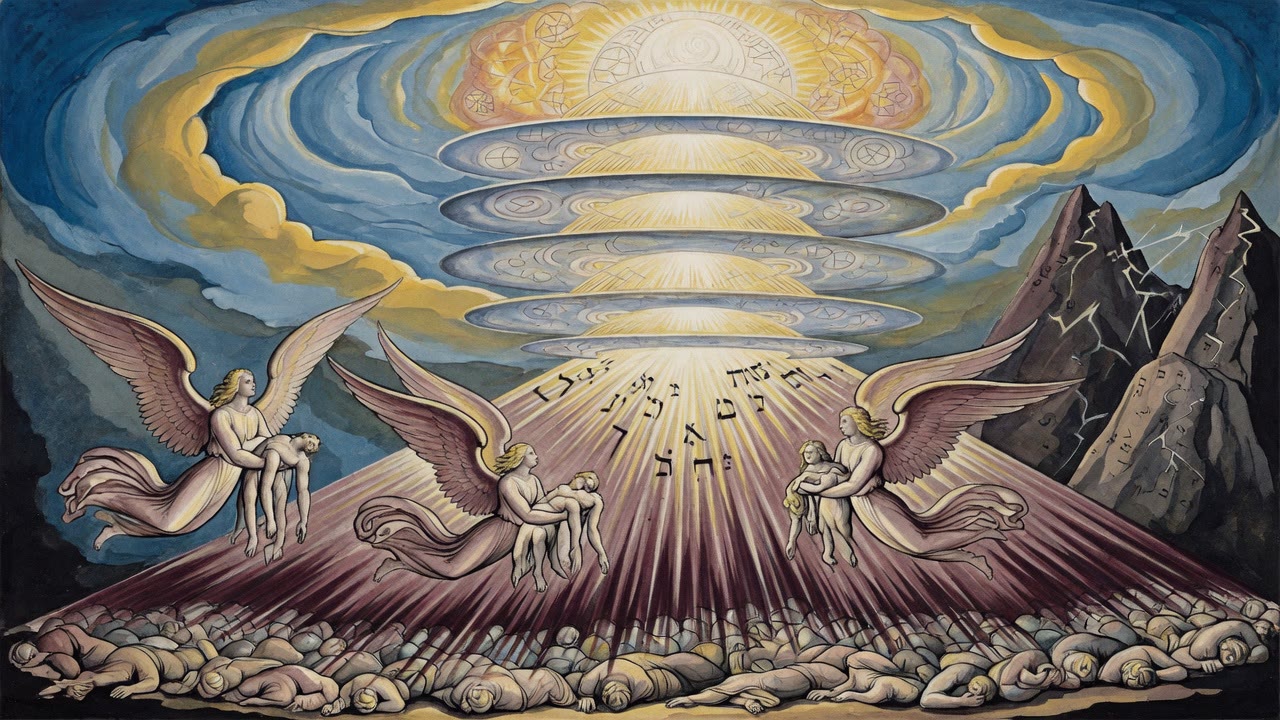
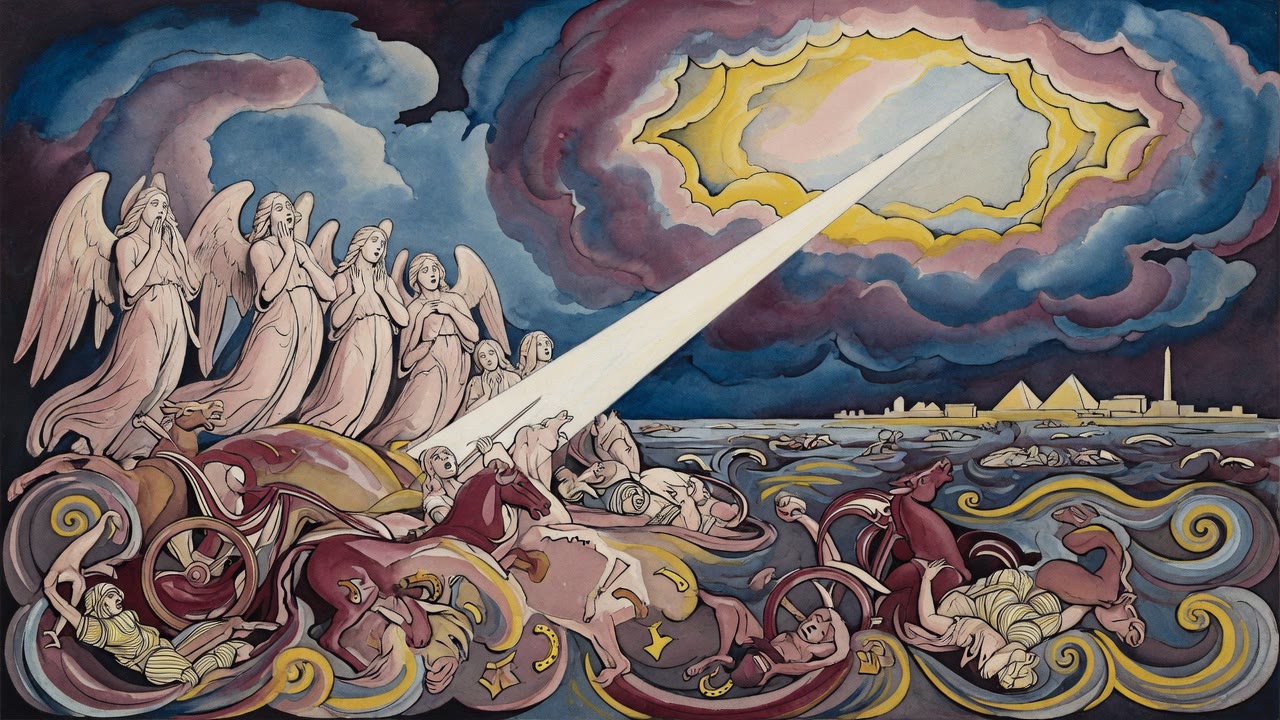
As Moses went to fetch Aaron, the Holy One sent forth His own voice so that no one could claim the words had merely echoed down from the sky. The first word shattered the order of the world. Heaven and earth shook. Mountains tottered. Seas and rivers fled their banks. Every tree bent low. Israel's own dead rose and stood on their feet. The living staggered backward twelve mil and their souls left their bodies.

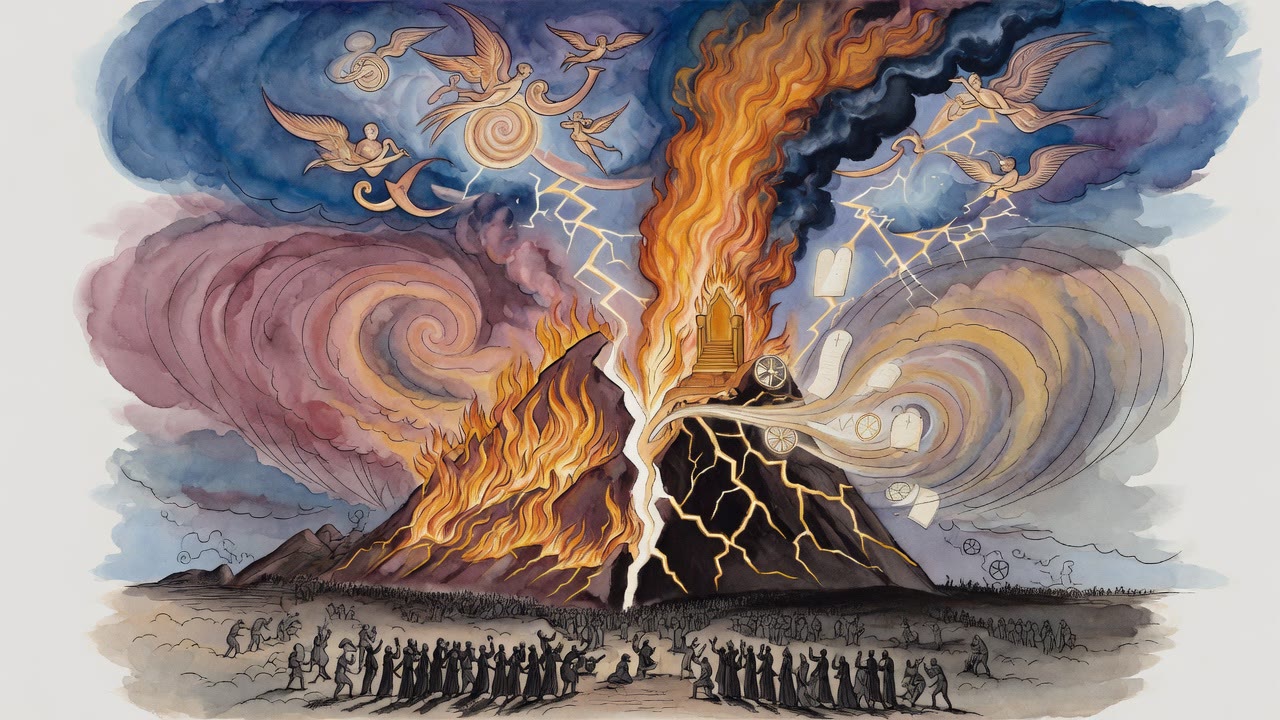
In that single thunderous utterance they somehow heard both opening commandments at once, as the psalm says: God spoke once, and they heard two. Overwhelmed, the people begged Moses to draw near and listen for them. God found their request pleasing and sent the angels Michael and Gabriel, who took Moses by both hands and brought him, against his will, into the thick darkness where the divine presence waited. Scripture does not say he approached on his own. He was led, drawn forward. So the rest of the words came through a reluctant, faithful messenger, the snow on a summer day who refreshes the ones who sent him.

Oil That Refuses a Lie

The sages compare Torah to oil. You can adulterate other liquids, slip something false into them, but oil floats clear and refuses the lie. Torah will not take deceit either. Treat learning as a crown worn for profit and you lose your share. If Moses fasted forty days from bread and water, the things the body cannot live without, just to be ready to receive, how much more should a person scrub away every defilement to hold it. Belshazzar drank from Temple cups and was torn from the world that very night. What then of the one who exploits the very instrument by which the world itself was made?

Rabbi Yose tells of meeting a stranger who offered him silver, gold, and an easy living to abandon his studies. He refused. Everything you see returns to dust. At the hour of death nothing stands beside a person but Torah. The stranger, instead of mocking him, blessed him. On the day the first word raised the dead, Israel learned that hearing costs the body, the will, and every lesser treasure. The women heard first. The dead stood. The living fell back. Moses was dragged into the cloud by angels because the people could not bear the sound alone, and still the voice kept speaking until a nation had a law it could carry when the mountain went quiet.


← All myths
From the tradition

Sources

4 sources

The texts behind this telling. Some cards carry a translation of the source; others are our own retelling of it, and each card says which. Every card links out to the original.

Mekhilta DeRabbi Shimon Ben Yochai 19:25Mekhilta DeRabbi Shimon Ben Yochai

Translation of the source text.Mechilta de-Rabbi Simon b. Jochai, ed. D. Hoffmann, Frankfurt 1905 · Public Domain

"And Moses went down to the people and said to them" (Exodus 19:25). This teaches that he did not go into his house and did not turn aside to any other matters. I have only the words spoken at Mount Sinai, that he did not go into his house and did not turn to other matters; from where do I learn the same of the words of the Tent of Meeting, that he did not go into his house and did not turn to other matters? Scripture teaches, "and he went out and spoke to the children of Israel what he was commanded" (Exodus 34:34).

When Moses went down to call Aaron, the Holy One, blessed be He, sounded forth His voice, so that Israel should not say that the voice came from the firmament. The first voice went out, and the heavens and the earth quaked, and the mountains and hills tottered, and the seas and rivers fled, and all the trees bowed down. The dead among Israel came to life and stood upon their feet, and Israel recoiled and drew back twelve mil, and their souls flew out. In that voice they heard "I am" and "You shall not have," and so it says, "God has spoken once; twice have I heard this" (Psalms 62:12).

At that moment they said to Moses, "Draw near, you, and hear all that the LORD our God will say, and you shall speak to us" (Deuteronomy 5:24). And the Holy One, blessed be He, heard their voice and it was pleasing before Him. He sent for Michael and for Gabriel, and they seized the two hands of Moses against his will and brought him near to the thick darkness, as it says, "and Moses drew near to the thick darkness" (Exodus 20:21). It is not written here "he approached" but "he was brought near," against his will. And He caused the rest of the commandments to be heard by Israel. Of him it is said, "Like the cold of snow in the time of harvest is a faithful messenger to those who send him, for he restores the soul of his masters" (Proverbs 25:13).

Full source
Mekhilta DeRabbi Shimon Ben Yochai 19:9Mekhilta DeRabbi Shimon Ben Yochai

Translation of the source text.Mechilta de-Rabbi Simon b. Jochai, ed. D. Hoffmann, Frankfurt 1905 · Public Domain

"And the LORD said to Moses, Behold, I come to you in the thickness of the cloud" (Exodus 19:9): "cloud" here means dense darkness, for the cloud in which the Torah was given resembled the cloud upon Mount Sinai, and the cloud upon Mount Sinai was a dense darkness, as it is said, "and a heavy cloud upon the mountain" (verse 16). Rabbi Yose the Galilean says: Moses was sanctified in the cloud for seven days, as it is said, "and the cloud covered him six days, and He called to Moses on the seventh day from the midst of the cloud" (Exodus 24:16); this was after the Ten Commandments and was the beginning of the forty days. Rabbi Akiva says: "and the cloud covered him six days", for Moses, to purify him; "and He called to Moses on the seventh day", this was after the Ten Commandments and was the beginning of the forty days.

"So that the people may hear when I speak with you." Rabbi Yehudah says: The Holy One, blessed be He, said to Moses, Behold, I will speak a matter to you, and you will answer Me back, and I will return and concede to your words. Rabbi says: It was not for the honor of Moses that the Omnipresent conceded to his words, but He said to him thus: The commandments that I gave you at Marah, behold, I will go back and repeat them to you here. It does not say "that the LORD commanded" but "that the LORD had commanded him" (verse 7).

This teaches that they listen to your mouth as they listen to the mouth of the Holy One, and not only your mouth but the mouths of the elders destined to come after you and the mouths of the prophets; therefore it is said, "and they will also trust in you forever." "And Moses told." And what did the Holy One, blessed be He, say to Moses that he should tell Israel, and what did Israel say to Moses that he should report before the Omnipresent? Behold it says, "And you shall set bounds for the people round about, saying" and so on (verse 12), the words of Rabbi Yose son of Rabbi Yehudah. Rabbi says: Because he told them the reward if they obeyed. And from where do we know that he told them all the punishments if they did not obey? Scripture says, "And Moses came and recounted to the people all the words of the LORD and all the ordinances; and all the people answered with one voice" (Exodus 24:3): this teaches that the voice of the great and the voice of the small are equal before the Omnipresent.

Full source
Mekhilta DeRabbi Shimon Ben Yochai 19:3Mekhilta DeRabbi Shimon Ben Yochai

Translation of the source text.Mechilta de-Rabbi Simon b. Jochai, ed. D. Hoffmann, Frankfurt 1905 · Public Domain

"And Moses went up to God" (Exodus 19:3) - this was the second day. One might think he went up not at the command of the Almighty; Scripture teaches, "And to Moses He said, Come up to the LORD" (Exodus 24:1), and it says, "And the LORD said to Moses, Come up to Me to the mountain" (Exodus 24:12); this teaches that he went up only at the command of the Almighty. Another interpretation: "And Moses went up to God" - he goes up in a cloud and comes down in a cloud; the covenant of the fathers and the merit of the children go up with him and come down with him. And from where do we know that even after the calling? Scripture teaches, "And the LORD called to him from the mountain, saying." And from where do we know it was with "Moses, Moses"? It says "calling" here and it says "calling" at the bush (Exodus 3:4); just as there it was "Moses, Moses," so here it was "Moses, Moses"; just as there Moses says "Here I am," so here Moses says "Here I am."

"Thus shall you say to the house of Jacob" - these are the Sanhedrin. And so it says, "O house of Jacob, come and let us walk in the light of the LORD" (Isaiah 2:5). "And tell the children of Israel" - these are the rest of the people. Another interpretation: "Thus shall you say to the house of Jacob" - these are the women; say to them the main points, such as they can hear. "And tell the children of Israel" - these are the men; say to them the fine details of the words, such as they can hear. And why did He put the charge of the women before the charge of the men? Rather, the Holy One, blessed be He, said: when I created My world, I commanded Adam the first man and did not command Eve his wife, and she came and misled him and he transgressed the command. It is fitting that the women be addressed first, since the men follow after them. Therefore it says, "Thus shall you say to the house of Jacob" - these are the women; "and tell the children of Israel" - these are the men.

"Thus" - in the holy tongue; "thus" - in this matter; "thus" - in this order; "thus" - in these phrasings; "thus" - in these sections; "thus" - neither less nor more. "Thus shall you say to the house of Jacob" - all in the merit of Jacob; "and tell Israel" - all in the merit of Israel. Another interpretation: "Thus shall you say to the house of Jacob" - Jacob was his name at first; now he merited to take the great name, Israel, "for you have striven with God" (Genesis 32:29).

Full source
Mekhilta DeRabbi Shimon Ben Yochai 19:14Mekhilta DeRabbi Shimon Ben Yochai

Translation of the source text.Mechilta de-Rabbi Simon b. Jochai, ed. D. Hoffmann, Frankfurt 1905 · Public Domain

"And Moses went down from the mountain to the people" (Exodus 19:14). This teaches that he did not go into his house and turn to other matters. And how do we know that whenever he was delivering a mission he would deliver it only in the morning? Scripture says, "And he carved two tablets of stone like the first ones, and Moses rose early in the morning and went up to Mount Sinai" (Exodus 34:4). This is the rule for everything he was commanded. Why then does Scripture say "as the LORD commanded him" (there)? Rather, this is a governing principle: whenever Moses was delivering a mission, he delivered it only in the morning.

"And he sanctified the people." He separated them from women, because the Torah is called holy, as it says, "and the knowledge of the Holy One is understanding" (Proverbs 9:10). Therefore a person must sanctify himself for it, so that it may cleave to him. And is this not an argument from the lesser to the greater? If for bread and water, without which the body cannot exist, Moses our teacher sanctified himself for forty days until the Torah was given to him, how much more must a person purify himself for it from all bodily defilement. And so it says, "the fear of the LORD is pure" (Psalms 19:10). When is it pure? When a person purifies himself from defilements. Therefore the Torah was likened to oil, to tell you: just as with oil a person can mix in deceit with every other liquid except oil, so too with words of Torah a person cannot mix in deceit. And how do we know the words of Torah were likened to oil? As it says, "therefore God, your God, has anointed you with the oil of gladness above your fellows" (Psalms 45:8).

Another interpretation: "his wife" is pure when a person purifies himself from making use of her. He should not say, "Since I am a sage, people are obligated to serve me, people are obligated to support me." Hillel used to say, "And one who makes use of the crown shall perish." Thus everyone who takes worldly benefit from words of Torah has removed his portion from the world. And if Belshazzar, who made use of the vessels of the Temple, was uprooted from the world, then one who makes use of the vessel by which the world was created, how much more so.

Another interpretation: When is it pure? When a person purifies himself from arrogance. Rabbi Yose son of Rabbi Yehudah says: Why do disciples of the wise die young? Not because they commit adultery and not because they rob, but because they are arrogant in themselves.

Another interpretation: "the fear of the LORD is pure." When is it pure? When a person purifies himself from the love of silver and gold. For so the prophet says, "If you give me half your house, I will not go in with you" (1 Kings 13:8). And so Elisha says, "As the LORD lives, before whom I have stood, I will take nothing" (2 Kings 5:16). And so Daniel says, "Let your gifts be to yourself, and give your rewards to another" (Daniel 5:17). Said Rabbi Yose son of Rabbi Halafta: Once I was walking on the road, and a man met me and greeted me. He said to me, "Where do you come from?" I said to him, "I come from a great city of sages and scribes." He said to me, "Is it your wish to settle with me, and I will give you a livelihood and silver and gold?" I said to him, "Even if you give me all the money in the world, I will not settle." He said to me, "And you will not accept it upon yourself?" I said to him, "Behold, all the spirits and souls you see in the world all return to dust, and nothing stands by a person at the hour of his death except words of Torah alone. And Jerusalem too was destroyed only because of transgression of the Torah, as it says, 'For the transgression of Jacob is all this' (Micah 1:5)." He said to me, "Blessed is the Omnipresent who set it in your hearts to occupy yourselves with words of Torah, and to trust, and to abandon all the vanities of the world." I said to him, "May it be His will that our envy not rise into the heart of others, and the envy of others not rise into our heart." And I parted from him.

Another interpretation: When is it pure? When a person purifies himself from transgressions. Thus, because words of Torah require purity and holiness, it says, "and he sanctified the people."

"And they washed their garments." From this I know only the washing of their clothing. How do we know they also required immersion? It is a logical inference: if at a time when they did not require the washing of garments they nonetheless required immersion, here, where they were required to wash their garments, all the more so that they should require immersion.

Full source