Jethro Gave Back the Idols and Lived Under a Ban
He stacked the priest's tools in the square and said he was too old. Nobody believed the age. The city closed every door on him.
Table of Contents
 Click for full size
The Tools in the Square
Jethro had stood before the idols of Midian for years. He knew the rites. He knew the vessels. The city came to him for blessing and for the maintenance of a divine order he no longer believed in. The work had gone sour in his hands, and he did not make a speech about heaven. He made a smaller speech about age.
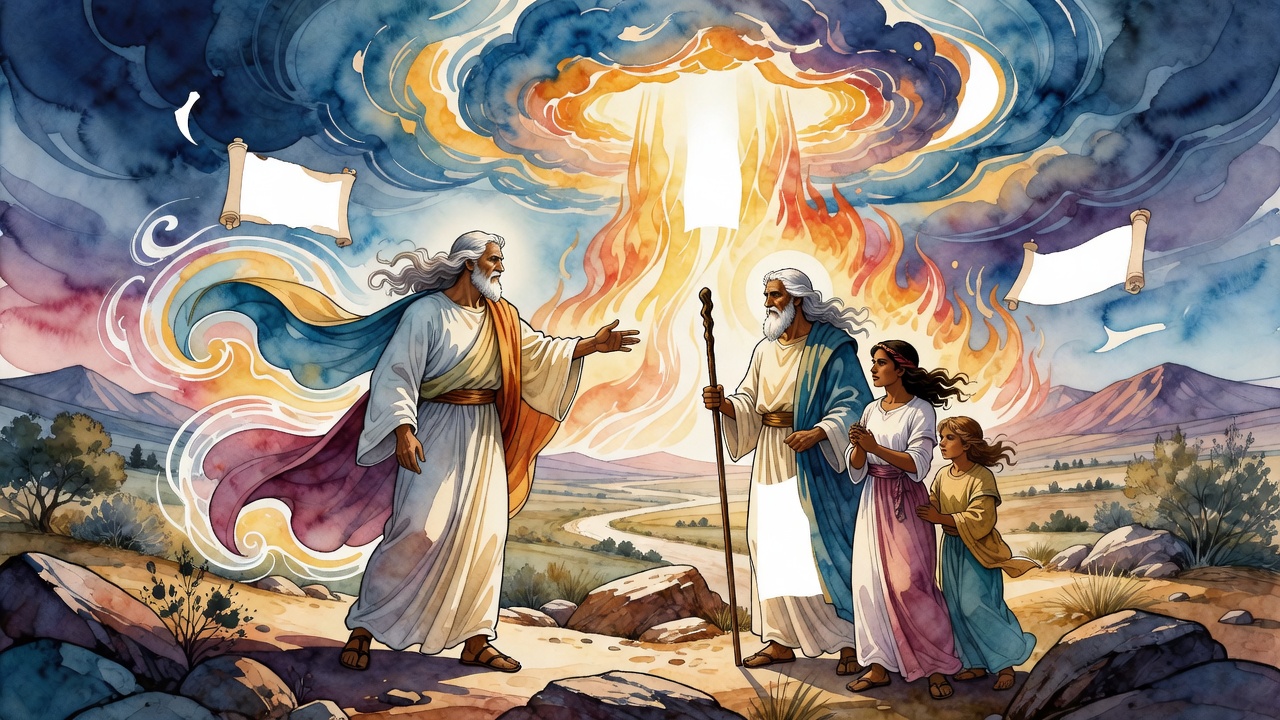
He stood before the townsmen and said he had grown too old for the duties of the priesthood. He gathered the paraphernalia of the worship, the implements and the sacred objects, and he threw the last vessel onto the pile in the square. Take them, he said. Choose whoever you want in my place. He offered no theology. The silence around his reasons made the people more certain he had reasons.
No Shepherd Would Take His Flock
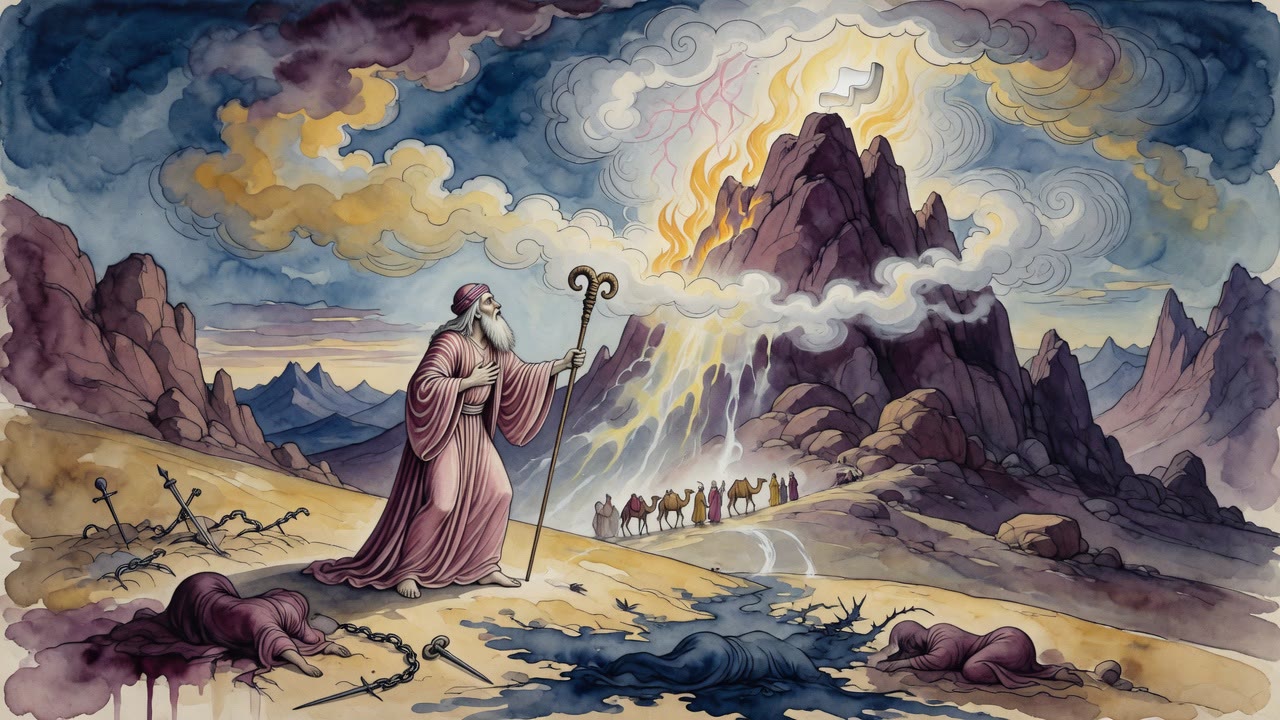
They placed him under the ban. No one was permitted to do Jethro the slightest service. Shepherds would not pasture his flocks. Neighbors would not speak to him on the road. His seven daughters had to manage the animals themselves, which meant going daily to the well, filling the troughs, and standing there while men who still served the idols decided whether the water would stay theirs.
The daughters learned to arrive early. The ruse failed. The shepherds drove them from the troughs they had filled and watered their own flocks with the water the women had drawn. This had gone on long enough to become a schedule. The household of the former priest lived on the margin of its own city, feeding itself by the labor of girls the well did not protect.
They did not expect an Egyptian on the day the schedule broke.
The Well That Tried to Drown Them
The day Moses arrived at the well in Midian, the shepherds went further than usual. They drove the women from the troughs and threw them into the water with intent to drown them. Moses pulled them out. He drove the shepherds off. He watered Jethro's flocks first, then the flocks of the men who had just tried to kill the daughters, because the well he had opened did not stop when the deserving had drunk.
The daughters came home early. Their father asked why they were back before the usual hour. They told him an Egyptian man had rescued them and drawn water for them. Jethro asked, "Where is he? Why did you leave him there? Go bring him and give him bread."
Moses came to the house and stayed. He stayed for years. He married Zipporah, Jethro's eldest, and tended the flocks no shepherd of Midian would touch. The ban had emptied the household. The empty household was the place a fugitive from Egypt could land.
The Counselor Pharaoh Threw Out
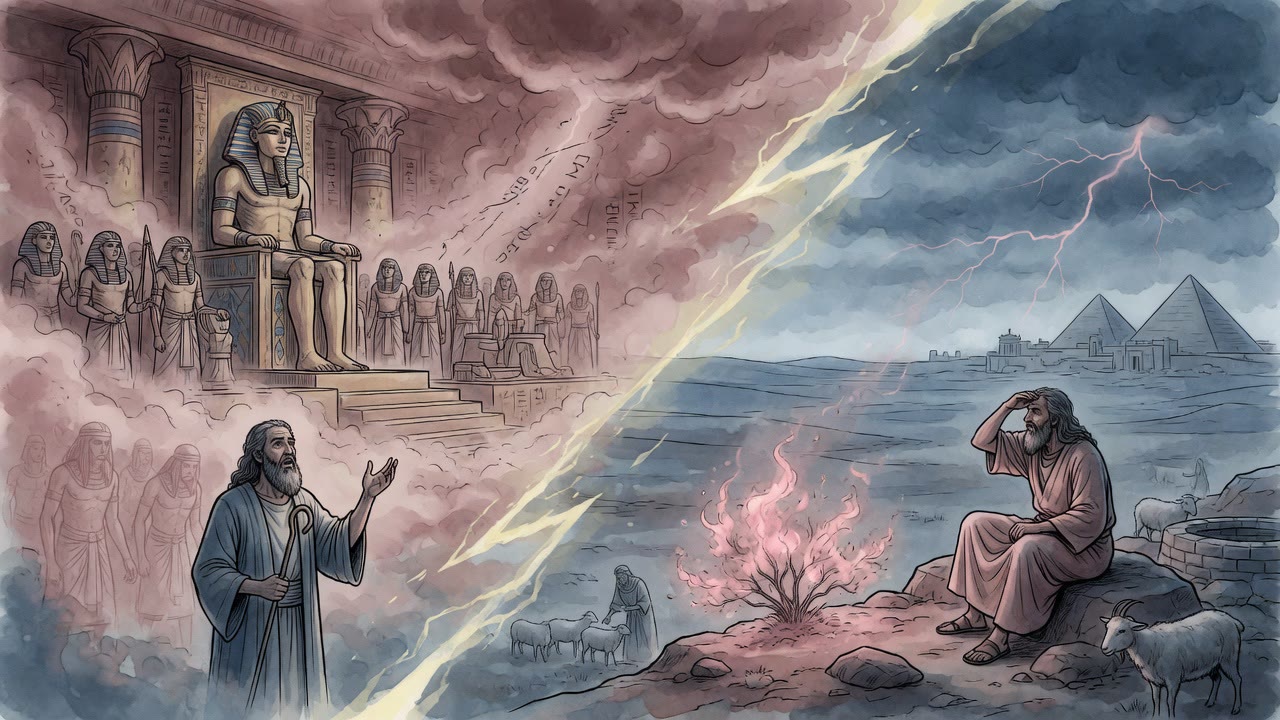
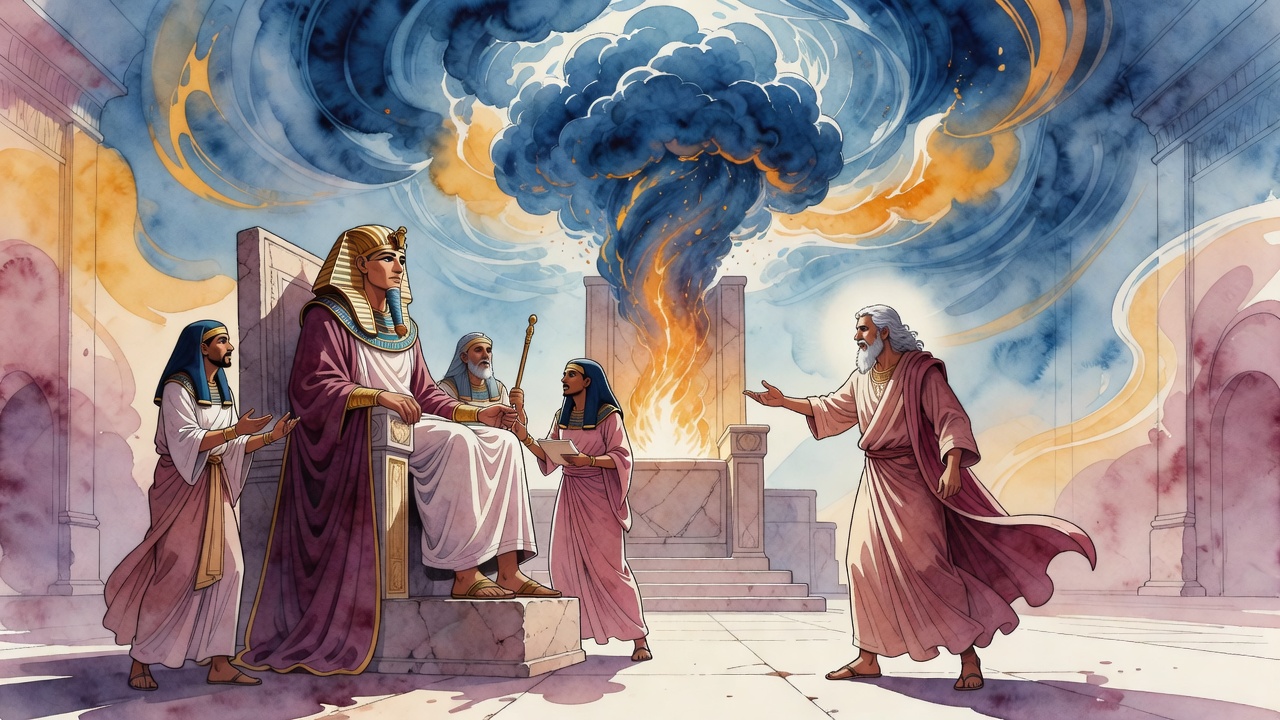
Jethro had been thrown out of a richer room before Midian ever banned him. He had sat as a counselor of Pharaoh with Balaam and Job when the king asked what to do with the multiplying Hebrews. Balaam spoke for oppression. Job kept silent and said the inhabitants of the land were in the king's power. Jethro spoke up for the Hebrews, argued against the decree, and was dismissed in disgrace. He went to Midian with that exile already on him.
Balaam later advised a method none of the fathers had survived: throw the newborn boys into the water. Job would suffer. Balaam would be killed. Jethro would be blessed through Moses, because he had opened his mouth in that court when opening a mouth cost a man his place.
He had earned the desert twice. Once for protecting an enslaved people. Once for stacking idols in a square and walking away without a sermon. Both refusals came before Moses ever sat at his table.
Bread for the Egyptian
When the daughters brought Moses in, Jethro did not ask first for news of Egypt. He asked for bread to be set down. The man who had thrown away the priest's tools still knew how to feed a stranger the city would not feed. Moses warded off the daughters' thanks and said their thanks were due to the Egyptian he had killed, on whose account he had fled. Had it not been for that dead man, he would not have been at the well at all.
Jethro heard him and kept him. The flocks went out under a shepherd who had been a prince and a killer and was now a son-in-law on the wrong side of a ban. Midian had meant to starve a priest who would not bow. It had prepared a house for the man who would later lead Israel out, past a different water, past a different set of drowned boys.
The idols stayed in other hands. The well kept its memory of seven women in the water and one man who pulled them out. Jethro's names would multiply later, friend of God, man who renounced idolatry, man who overflowed with good deeds. On the day that mattered he was a banned priest with bread on the table and a daughter at the door, calling an Egyptian in from the heat.
← All myths