Moses Pulls Jethro's Daughters From the Midian Well
Shepherds shove the Midianite women under the water. A stranger hauls them up, and Zipporah flies like a bird to fetch him home.
Table of Contents
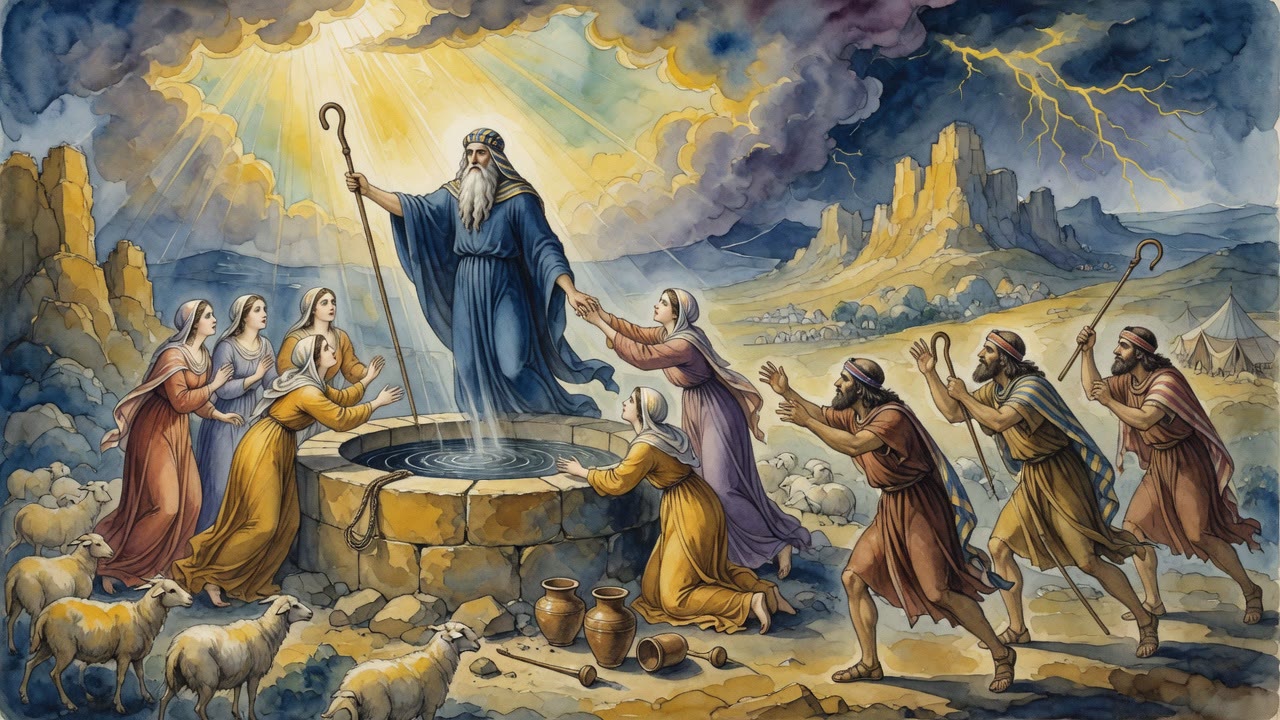
Zipporah hit the water hard enough to steal her breath. The shepherds had waited until the troughs were full, then driven the daughters of Midian off the bank and shoved them under. Sand clogged her mouth. Someone's heel pressed her shoulder toward the mud. The well that fed their father's flocks had become a trap. Her sisters thrashed beside her. The sky above the surface was a broken coin of light.
 Click for full size
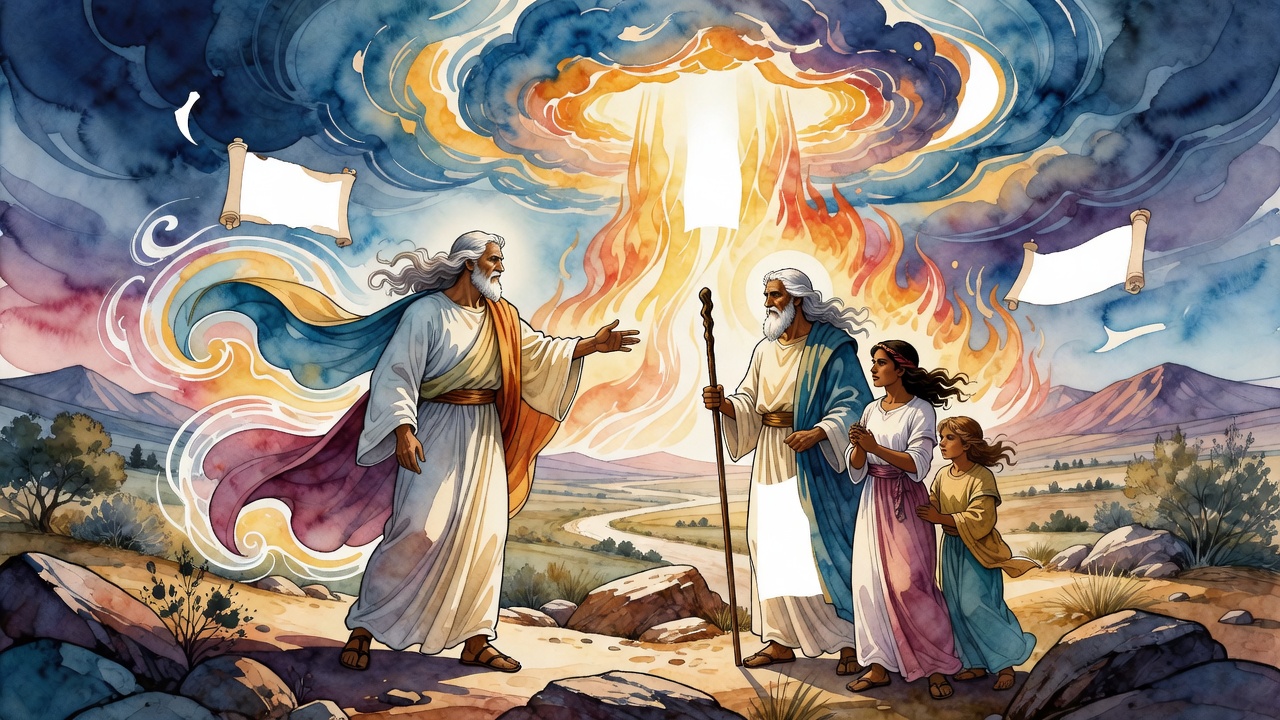
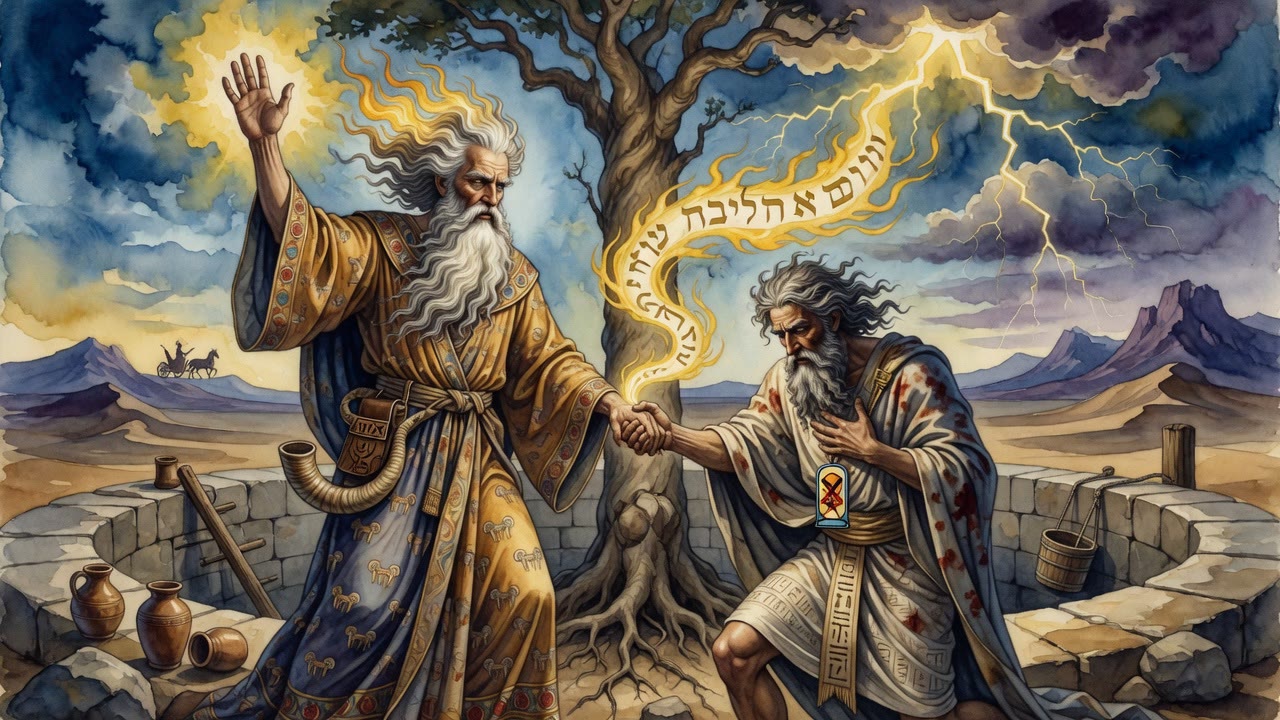
Hands closed on her arm. Not a shepherd's hands. A stranger yanked her up through the green surface and into air that burned. He hauled her sisters out one by one, shouting them free of the circle of men, then turned on the flock-masters with a staff that did not look like a Midianite weapon. The shepherds backed off. They knew a man who had already killed for justice when he saw it broken. One of them spat and left a jar behind in the scramble.
An Egyptian Draws Them From Death
Moses did not stop at driving the bullies away. The daughters would later tell their father, "An Egyptian delivered us," and add that he drew water for them as well. Drawing water meant more than filling jars. He drew the women themselves out of the well. The verb that names their rescue carries the same charge that cries from the psalm, "Save me, O God, for the waters are come in even unto the soul" (Psalms 69:2). Moses pulled drowning girls back into the world of breath. His sleeves hung heavy. His breath came hard. He did not ask their names until the coughing stopped.
He watered the flock after that. The work was ordinary once the violence ended: rope, bucket, trough, the long patience of sheep. The daughters watched him with wet hair plastered to their necks and tried to place his face. He dressed like a man out of Egypt. He moved like a man who had left Egypt behind and not yet found a name for the leaving. When the last ewe drank, he stepped back from the trough as if the well itself might accuse him of staying too long.
Where Is He
They ran home without him. Reuel, priest of Midian, heard the story and asked the question that still shames a household that forgets its debt. "And where is he?" Why leave such a man standing at the well with his hands still wet? The man who pulls your daughters from death does not wait alone among strangers. Reuel's voice rose. The house went still. The daughters looked at one another and understood the failure in the same instant.
Zipporah ran. The sages catch the music of her name. Zipporah means bird, and she flew out swift as a sparrow across the sand to fetch the stranger. Dust lifted behind her feet. In that small flight the future of Israel shifted its weight. The man she brought under her father's roof would one day stand before Pharaoh. Tonight he only needed a meal, dry clothes, and a place to set the staff he had carried out of the wilderness of Horeb. She found him still near the water, as if he did not trust the desert to keep a rescued life safe without a watchman.
Seven Names at One Table
The priest who took him in already carried more names than one man usually needs. The rabbis would later count seven. He was called Jether for an addition still waiting in the years ahead, a chapter of advice about judges that would enter the Torah itself. He was Jethro for the overflow of good deeds. He was Heber, the one who joins himself to the Holy One. He was Hobab, the beloved. He was Reuel, friend of Heaven. And he was Putiel, the one who had departed, for the day he would walk away from idolatry for good. Seven names for one conversion still unfinished.
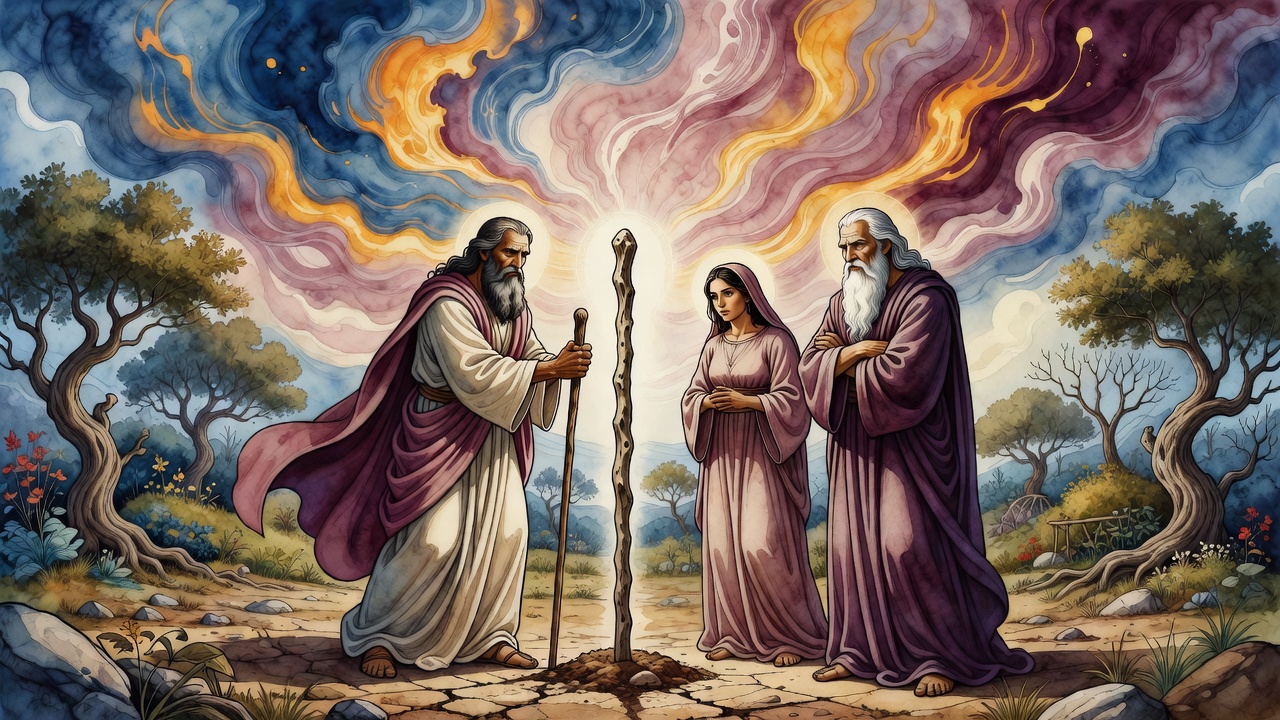
That conversion still lay ahead. On this night he was still the priest of Midian, a man whose household lived between idols and the well. Moses sat among his daughters and said little. He had fled a palace, killed a taskmaster, and buried a body in sand. He did not yet know that the God of his fathers was already mapping a road that ran through this table, this marriage, this father-in-law who would one day bless him with the right words for a parting. Bread passed. The staff leaned in a corner like a guest that refused to settle.
The Well Becomes a Gate
Marriage followed the rescue the way water follows a channel already cut. Moses consented to dwell with Jethro. The daughters who had almost drowned became the household that would hold him for decades of quiet work among flocks. The shepherds who threw women into wells kept their distance after that day. Word travels fast at a watering place. Men who bully the weak learned that Midian now housed a stranger who answered drowning with a raised staff.
Years later the same well would send Moses back toward Egypt with a different mission. First it had to send him into a life of patience, into a wife named for a bird, into a father-in-law whose many names were still gathering around one slow turn toward the God of Abraham. The water that nearly killed Zipporah became the water that welcomed a redeemer into Midian. He did not look like a redeemer yet. He looked like a man who could not walk past a drowning stranger. That was enough for the gate to open.
← All myths