Moses Born on the Day Israel Would Sing at Sea
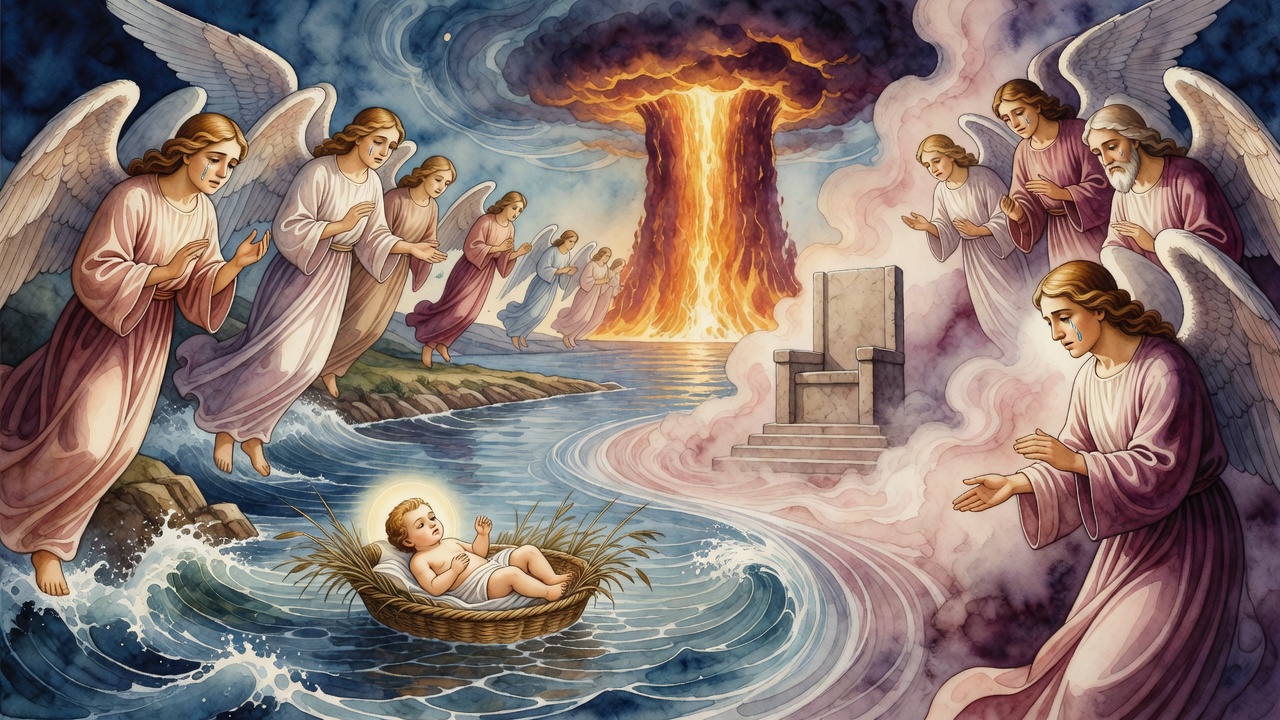
Angels leaned over the Nile and shouted that the baby scheduled to sing at the sea was about to drown in it. God refused to hurry. The basket did not tip.
Table of Contents
The basket rocked against the reeds. Water licked the pitch. On the bank of the Nile, the 21st of Nisan held its breath around a Hebrew infant the house of Pharaoh had already condemned.
 Click for full size
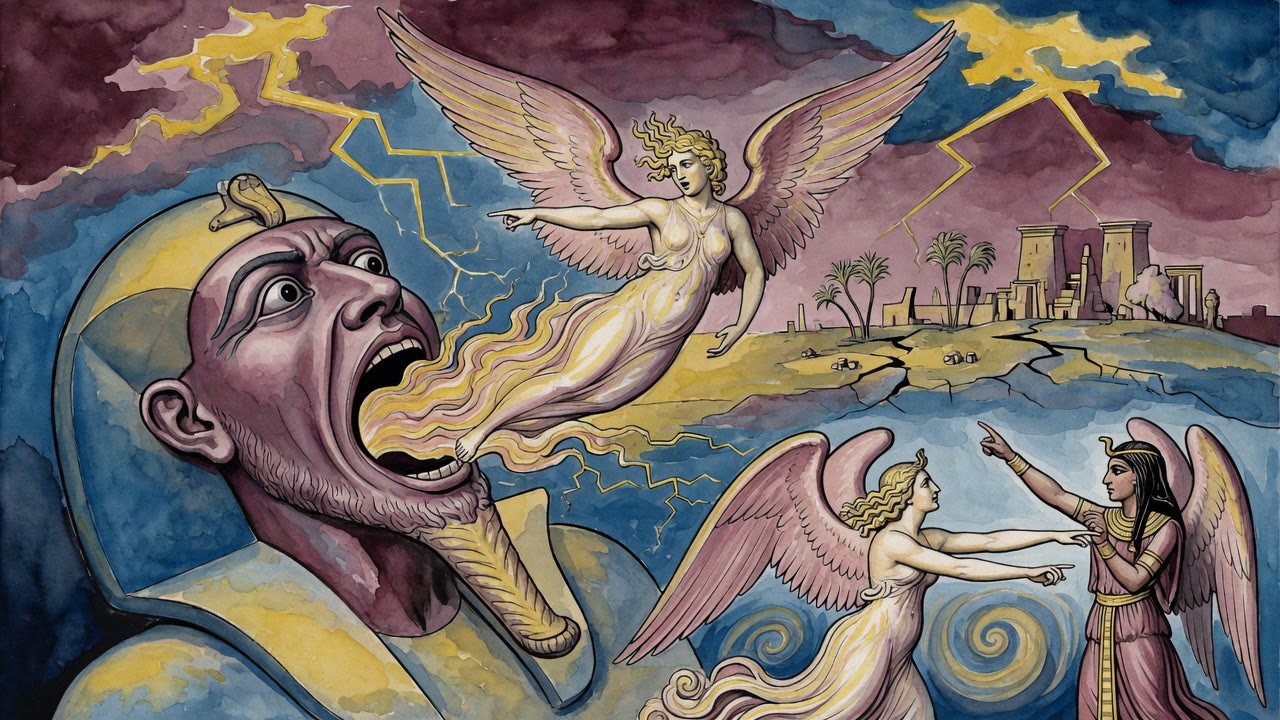
Above the river the angels of the heavenly court leaned over the scene and could not keep silence. They saw the child and the calendar at once. "Lord of the Universe," they cried, "will the one destined to sing praises to You on this very day, thanking You for saving him and his people from the sea, now drown in that same sea?"
The irony cut them open. The day of birth was already stamped as the day of song. Deliverance and drowning shared a date. The angels demanded a rescue they could measure with their eyes.
Counsel Against the Nile Decree
God did not rush a miracle for their comfort. "You know well that I see all things," He said. "The contriving of man can do naught to change what hath been resolved in My counsel." Pharaoh's counsel had set the drowning of sons in motion. Heaven's counsel had already fixed a different end.
Then the answer turned from calendar to character. "Those do not attain their end who use cunning and malice to secure their own safety, and endeavor to bring ruin upon their fellow-men. But he who trusts Me in his peril will be conveyed from profoundest distress to unlooked-for happiness."
Malice would fail. Trust would walk out of the deepest water. The infant Moses lay still while the decree of Egypt pressed down and the decree of heaven held. The basket did not tip. The reeds held. The song waited years away, already scheduled.
Pharaoh's daughter would lift him. The house that ordered death would feed the boy who would empty it. The angels fell back from the edge of the river with the argument unfinished in their mouths, because the child still breathed.
Hard Truths Before the Throne
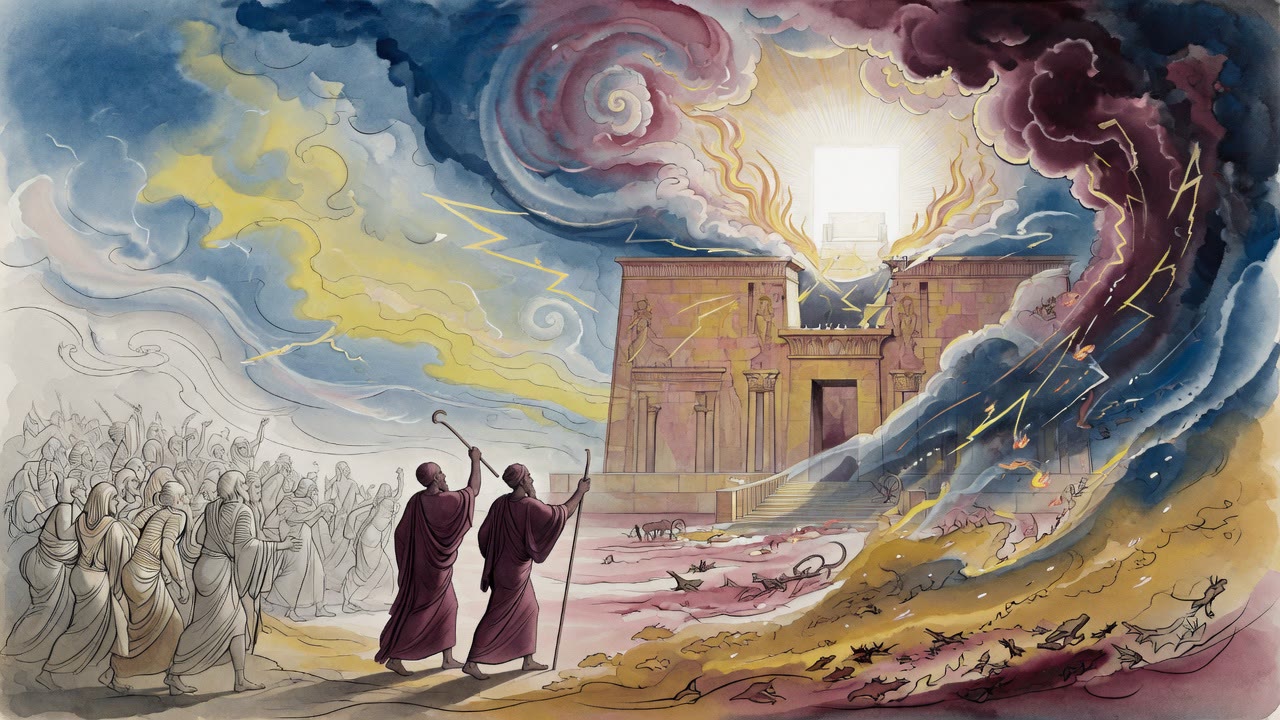
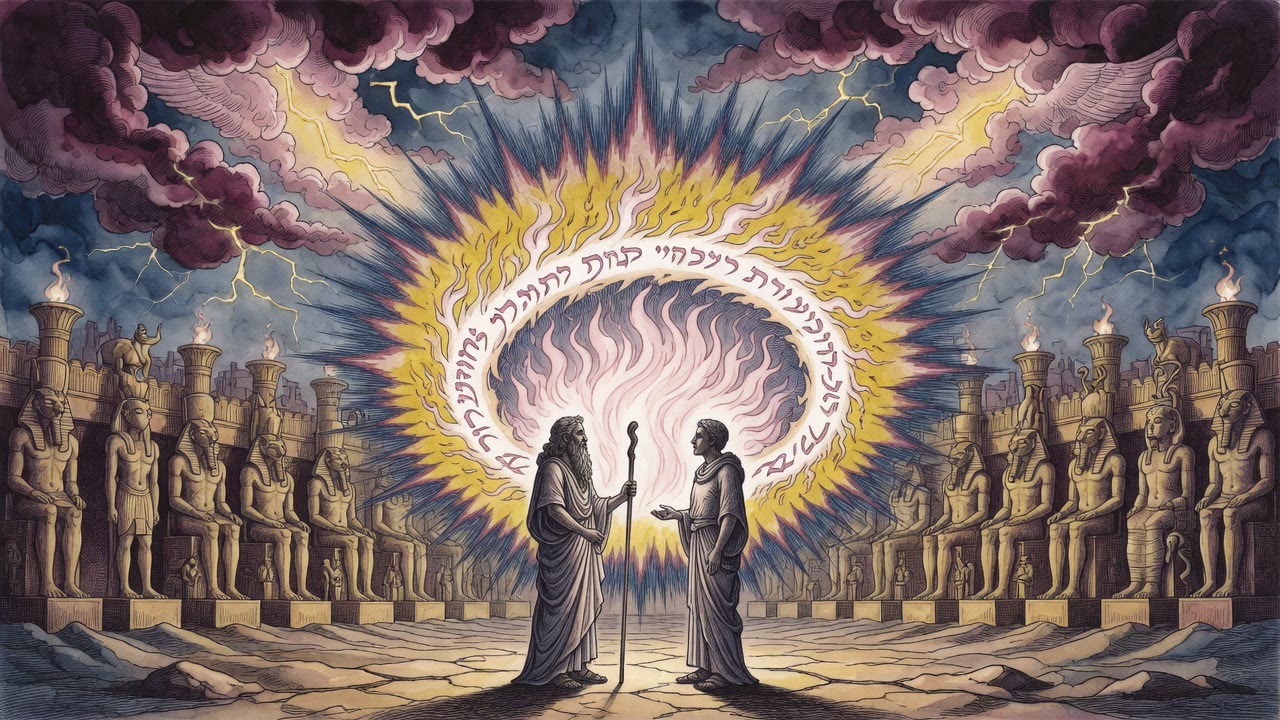
Years later Moses stood with his brother Aaron on the threshold of the same palace, no longer a foundling but a messenger. The familiar picture shows them striding in with signs and staffs. The tradition places a harder conversation first.
God did not open with triumph. "My children are perverse, passionate, and troublesome," He told the two men about to speak for Him. Slavery had not made the people soft clay. Generations under the lash had left them raw, quick to strike, slow to trust even rescue.
Moses felt the warning land in his chest. He had fled once. Now he was being sent back not only against Pharaoh but into the friction of his own nation. Aaron stood close, hearing the same forecast of abuse.
"You must be prepared to stand their abuse, to the length of being pelted with stones by them," God said. Liberation would not feel like gratitude. Stones could come from the hands they meant to free. Leadership would mean absorbing that blow without laying the mission down.
Respect Due Even to Pharaoh
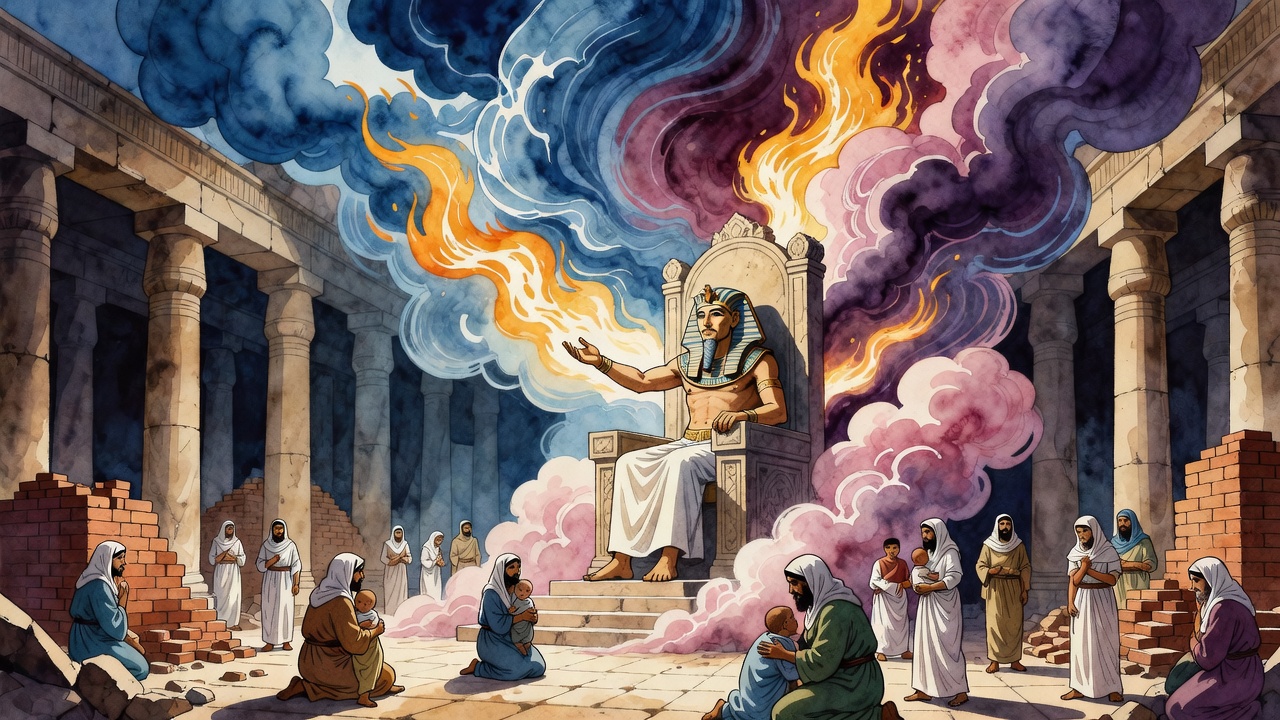
The briefing did not stop with Israel. "I send you to Pharaoh," God continued, "and although I will punish him according to his deserts, yet you must not fail in the respect due to him as a ruler."
Moses had to hold two truths at once. Pharaoh would be judged. Pharaoh was still a king whose office demanded address, posture, and the refusal of cheap insult. The men who would break Egypt's grip could not swagger into the throne room as if contempt itself were a commandment.
Aaron absorbed the line. The plagues would come. The firstborn would fall. None of that licensed scorn as strategy. Heaven would do the punishing. The messengers would keep the form of an embassy.
God pressed one more instruction into their hands. Take the elders into counsel. Let the first step toward redemption gather the people, not bypass them. The brothers would not walk alone into history as twin heroes. The nation's own heads had to stand in the room when freedom was named.
They Walked In Anyway
Moses and Aaron left the private speech and entered the public risk. Behind them lay the infant day on the Nile, the angels' protest, the promise that malice fails and trust is carried out of distress. Ahead of them waited a throne, a hard people, and stones that might fly from either side of the argument.
They went. The staff would become a serpent. The river would turn. The people would stumble, quarrel, and more than once wish for Egypt's pots. Moses would feel the weight God had named in advance. Aaron would share it.
On a later 21st of Nisan the same man who had floated in pitch would stand on the far side of a split sea and lift his voice. The angels who once feared he would drown on the day of song would hear that song rise from dry ground. The infant's date had held.
Between the basket and the singing lay the briefing no one paints on walls: a people called perverse, a king still owed respect, and two brothers told the stones might come from the camp they were saving. They walked into Pharaoh's court with that knowledge already sealed in their bones.
← All myths