God Told Moses That the Divine Name Changes With Every Act
The bush burned and made no ash. Moses wanted a name he could carry into Egypt. What he got was a future he had to keep behind his teeth.
Table of Contents
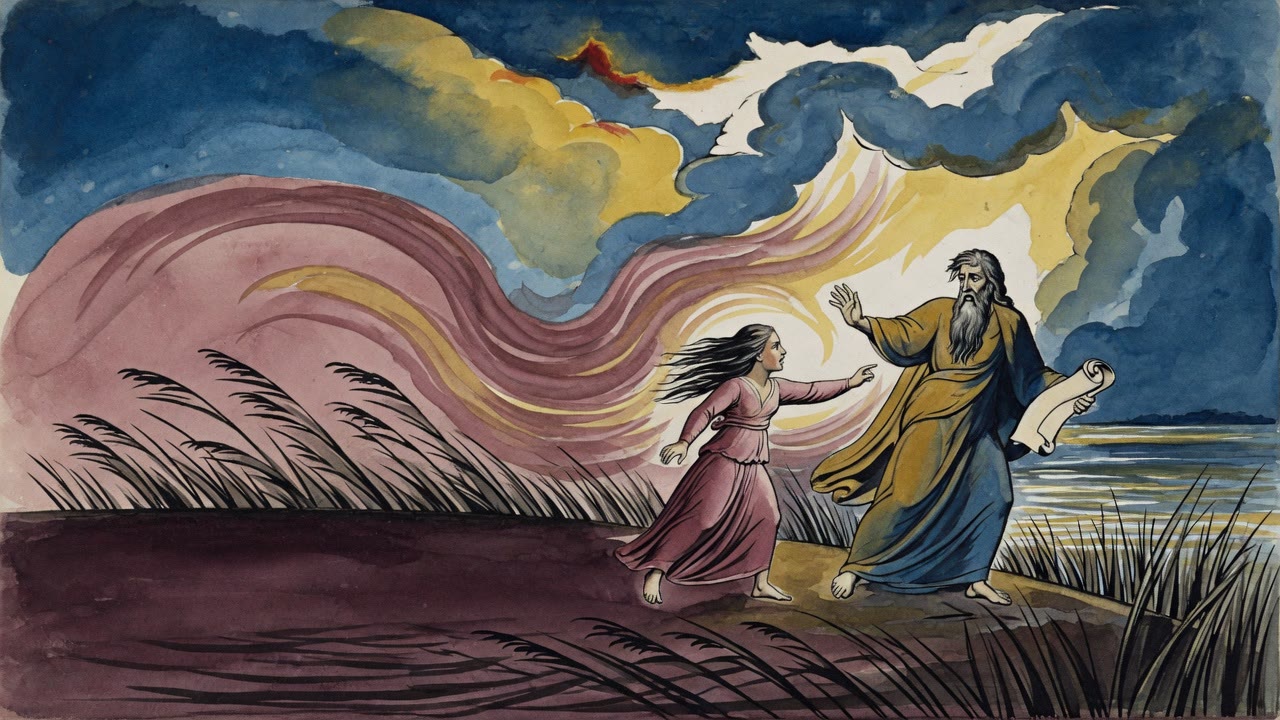
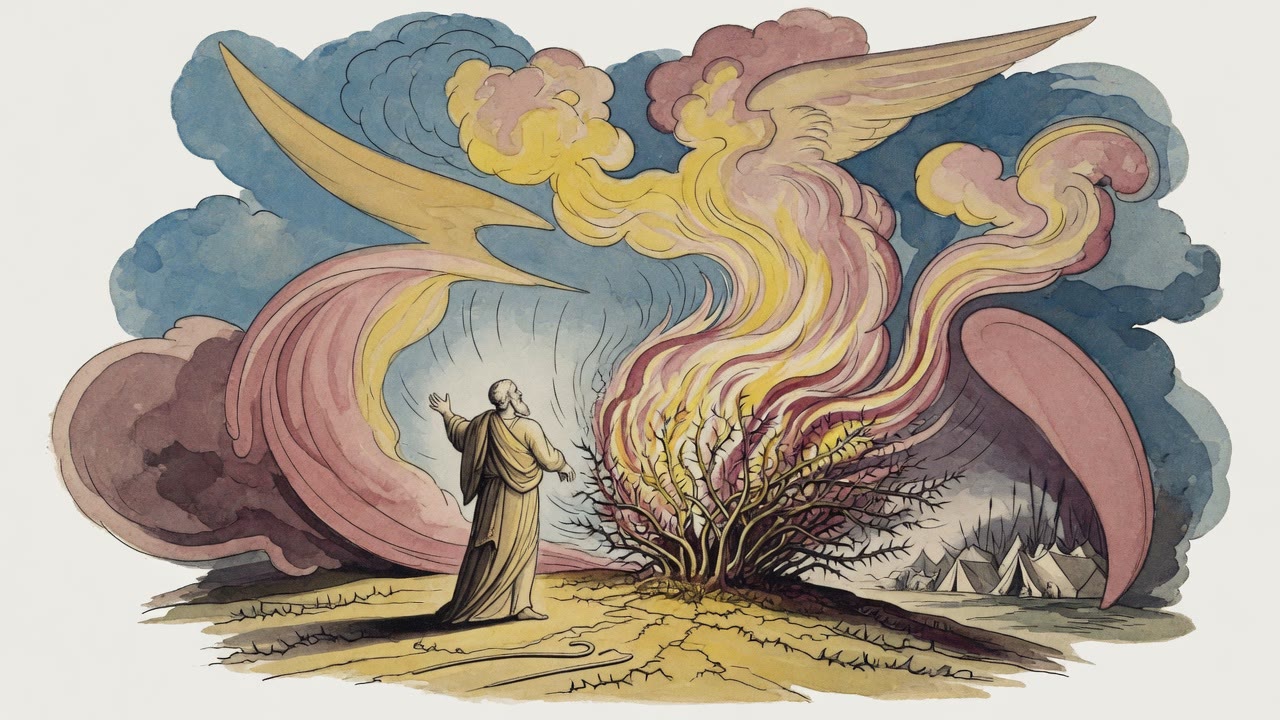
The bush burned and made no ash. Sand bit Moses's ankles. Heat came off the flame in waves, and the leaves did not blacken. He had not come looking for a mission. He had come with a flock, and the Voice found him anyway.
 Click for full size
"Who am I, that I should go to Pharaoh?" he said (Exodus 3:11). He meant shade in summer. Warmth in winter. Food for pregnant women and for children who would need toasted grain and nuts on a road of robbers. He also meant a promise. God had told Jacob, "I will go down with you to Egypt and I will bring you up" (Genesis 46:4). Why send a shepherd in place of that "I"?
The bush kept burning. Moses kept arguing. The mountain held both without hurry.
Moses Counted Mouths Before He Counted Miracles
He stood there doing logistics because logistics were the honest fear. How many birth mothers in the camp. How many pregnant women. How many children. Where would he put them when the sun stood over the sand, and where when the cold came down at night. How would he walk into a country of murderers with a staff and a stutter and bring a nation out the other side.
God did not scold the counting. "The bread that comes out with them from Egypt will suffice them for thirty days," He said. "You will know how I am destined to lead them." When they stood on this mountain again, they would serve. First Moses had to carry a Name the slaves could recognize when a former prince walked back into their misery claiming heaven had sent him.
He looked at the flame that would not eat the wood. He did not step closer. He also did not leave.
The Name Moved With the Deed
"I will be what I will be." Ehyeh (אהיה), I will be. Moses wanted a label he could hang on a door and point to. God gave him a verb. "You seek to know My name? I am named according to My actions."
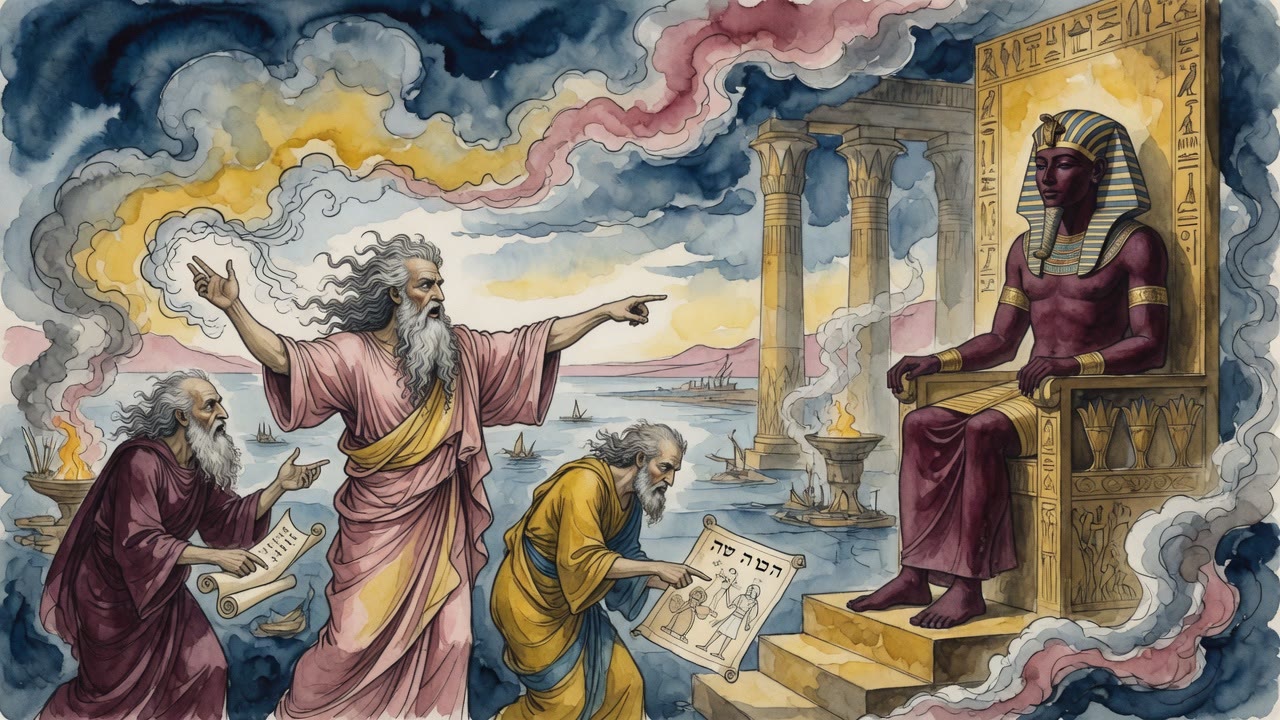
When I judge, call Me Elohim. When I war against the wicked, call Me Tzevaot. When I abide a person's sins, call Me El Shaddai. When I have mercy on My world, call Me by the four-letter Name that is compassion, the Name Israel will learn to say only by a substitute. The Name is not a static sign. It is what heaven is doing in the hour you meet it.
Three times the Voice said "I will be." The same Presence that was with the fathers is with the slaves and will be with their children in exiles Moses cannot yet map. He left that stretch of sand with a Name that moved, not a Name that sat still for inspection.
The Future He Was Forbidden to Speak
Then God told him the harder half in private. In this servitude I will be with them. Into servitude they are going, and I will be with them. Mortar and bricks now. Mortar and bricks later. Moses flinched as if struck.
"Is that what I should say to them? The present trouble is sufficient."
"No," God said. "So shall you say to the children of Israel: I will be has sent me to you. I am informing you. I am not informing them."
The messenger would carry more truth than the speech he was allowed to give at the first assembly. Moses swallowed the future pain and kept it behind his teeth. The people would get presence. He would get the full weight.
The Fathers Became the Public Door
The introduction shifted. "The Lord, God of your fathers, God of Abraham, God of Isaac, and God of Jacob, has sent me to you" (Exodus 3:15). Moses noticed his own father's name drop from an earlier listing. He asked if the grave held sinners.
"No," God said. "At first I drew you with inducements. From now I speak plain." The patriarchs' merit is the public door. Concealment sits inside the spelling of "forever," written so a person will not say the Name as it is written. A mercy of distance inside a mercy of nearness.
Moses took the trimmed message and the moving Name and turned his face toward Egypt. The bush behind him kept burning without ash. Ahead, Pharaoh waited with a heart not yet cooked hard. Between them moved a man who had asked who he was and received, instead, who God becomes when He moves.
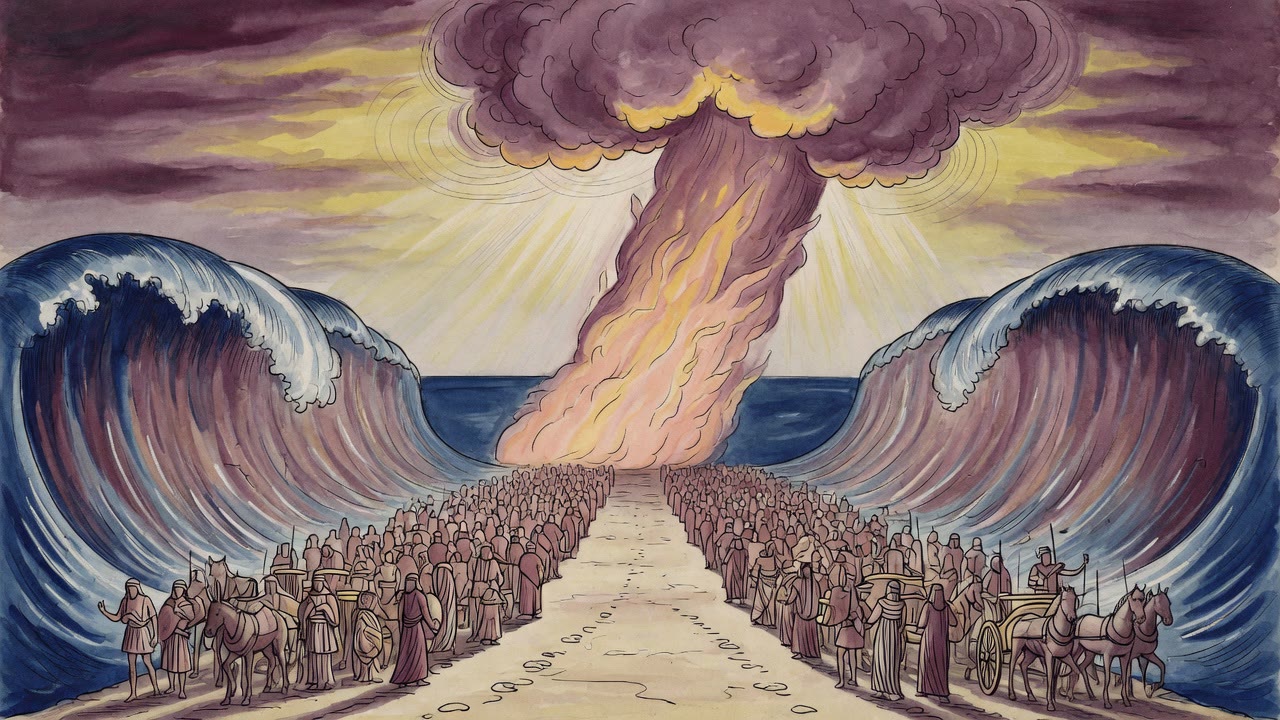
On the road he practiced the words under his breath, tasting which Name fit which hour. Judge for the taskmasters. Warrior for the sea still years ahead. Mercy for a people who would fail and still be claimed. The staff in his hand was ordinary wood until heaven said otherwise. The Name in his mouth was ordinary language until the hour required it to become event. Sand took his footprints. The Name took his mouth. He walked.
← All myths