Parshat Shemot6 min read

Throne After Throne Forgot Joseph While Israel Wore the Chains

A dying Pharaoh begs his heir to honor Joseph, but throne after throne forgets the debt until the law itself decrees Hebrew sons drowned.

Curated by Arthur · Told by Maggid ·
Table of Contents
  1. The King Who Sat While Joseph Ruled
  2. Throne After Throne Forgot the Debt
  3. The Plan That Made Them Stronger
  4. The Decree That Could Not Be Revoked

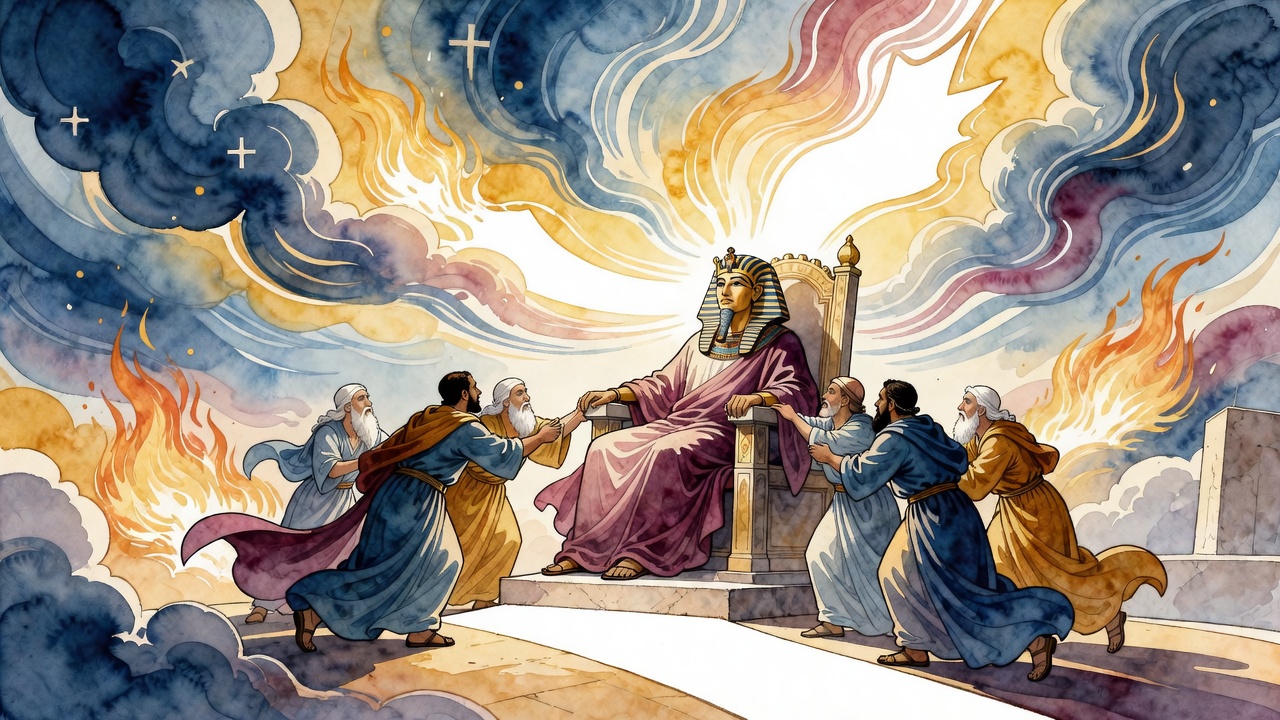
The old Pharaoh lay dying in the thirty-second year after Jacob's house came down to Egypt, and he sent for his son. Joseph was seventy-one. The king had ruled long enough to remember the seven lean years that should have buried Egypt, and the Hebrew who had emptied his own granaries to keep the kingdom breathing. So he gave his heir one command before the breath left him. Treat this man as a father. Lean on his counsel. Do nothing without him.
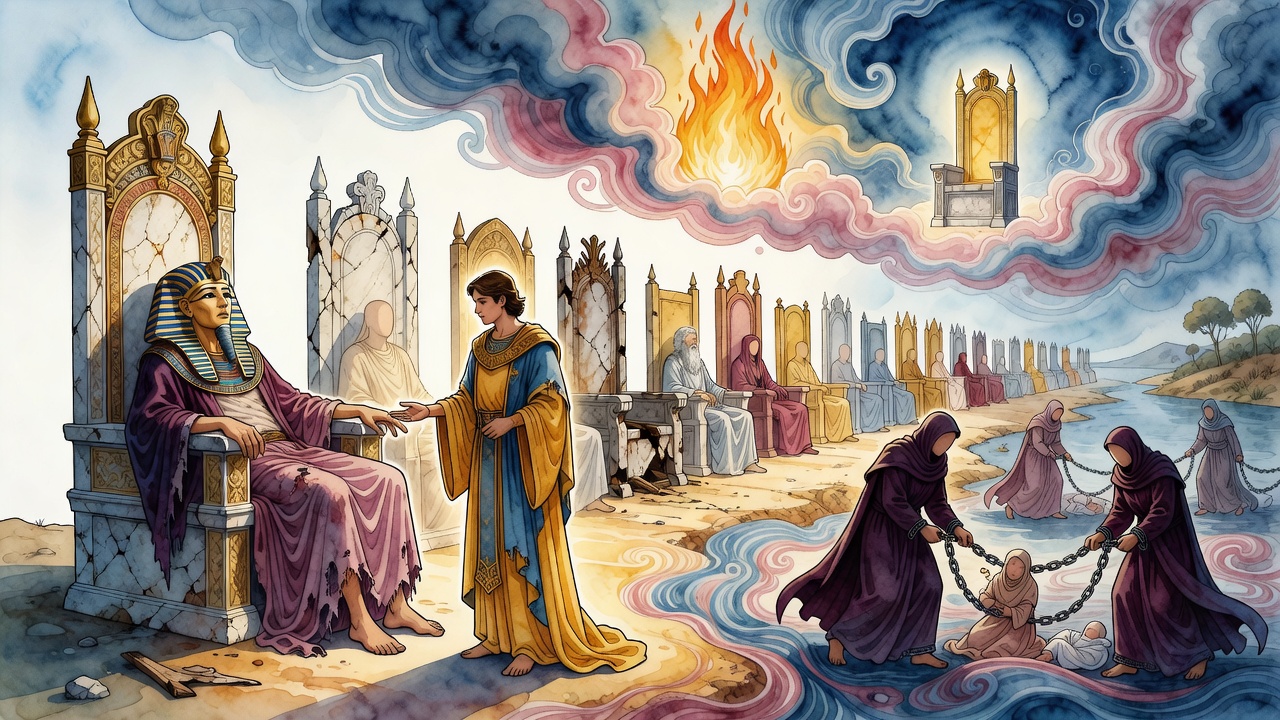
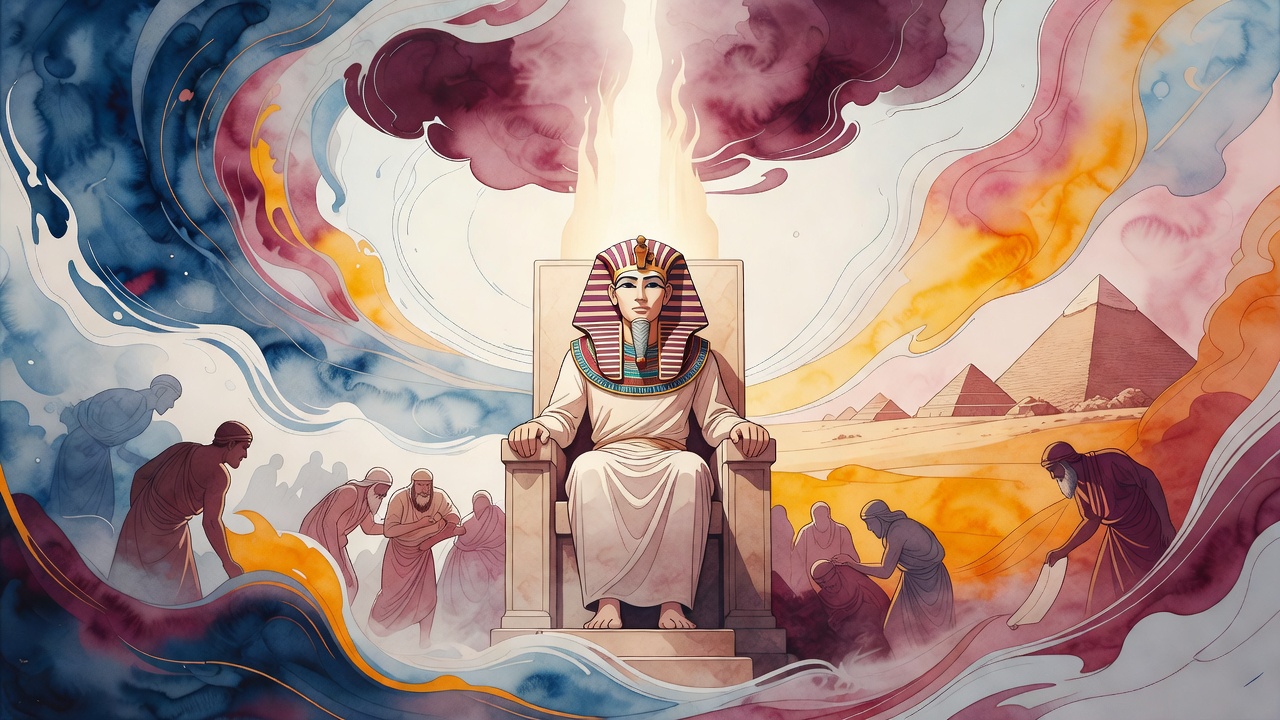
The son obeyed. He took the throne and the name Magron, and then he handed everything that mattered to Joseph. The laws of Egypt, the courts, the granaries, the armies, all of it passed into the hands of a man who had once worn an iron collar in Potiphar's cellar. Magron sat on the chair. Joseph held the kingdom.

The King Who Sat While Joseph Ruled

For forty years it held. Joseph rode out and broke Egypt's enemies down to the borders of Canaan and the cities of the Philistines, and they sent tribute back to him. From the Nile to the great river Perath the lands paid him gifts, Zidon and Canaan and the country beyond the Jordan. The harvests came in. The brothers of Joseph, the sons of Jacob, multiplied and served the God their father had named, and no man troubled them.

But not every mouth in the palace was grateful. Behind the colonnades the Egyptians muttered the same sentence over and over, passing it like a coin from hand to hand. "No stranger shall reign over us." They smiled at Joseph in the throne room and said it in the corridors. The collar he had worn as a slave was forgotten by no one but his own people.

Joseph heard none of it, or pretended he did not. He was the regulator of the whole land, doing as he pleased, and the king who outranked him did nothing without his word. A foreigner had made Egypt the richest kingdom on the earth, and Egypt was already deciding it would not forgive him for it.

Throne After Throne Forgot the Debt

Joseph died, and the muttering came up into the light. Kings rose and fell in Edom while Egypt changed its own face. Hadad died and Samlah of Mesrekah took his throne. The years stacked up, a hundred and twenty-five of them since Jacob's descent, and the name Joseph meant less in the palace with each new ruler who had never seen his face.

Word reached the Egyptian throne that Samlah of Edom had gathered an army. The new Pharaoh did the arithmetic of a frightened man. Edom and the Hebrews were kin through Esau and Jacob, brothers a few generations back. If Samlah marched, the Hebrews living fat in Goshen might rise and open the gates to him. The king looked at the swelling Hebrew towns and saw an enemy waiting inside his own borders.

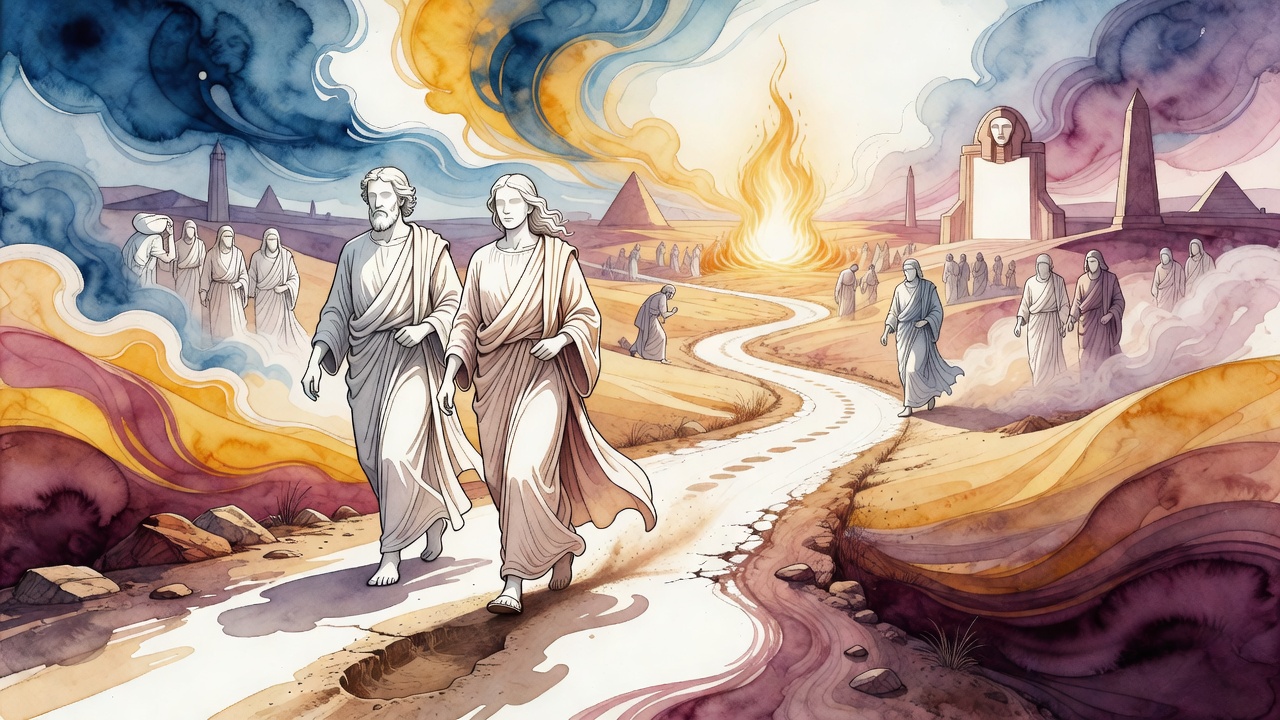
So he turned the screws. He sent overseers into Goshen and told the Hebrews to work, to haul stone, to fortify the eastern frontier. And he gave them the cruelest reason of all, spoken to their faces. Build these walls, because the children of Esau your brethren may come against you. The descendants of a man who had emptied his own storehouses to save Egypt were now set to building Egypt's defenses against their own cousins, and told it was for their protection.

The Plan That Made Them Stronger

The harder Egypt pressed, the more the Hebrews swelled. They were fruitful and increased and grew exceedingly mighty, and the land filled with them. Every brick laid seemed to add a child to the count. The overseers reported numbers that did not fall. They rose.

The elders and wise men of Egypt came before the king and admitted that the labor had failed. The people they meant to grind down were multiplying under the grinding. They begged for a new plan, something to thin the Hebrews or end them, before the threat outgrew the kingdom.

Pharaoh asked who among his counselors had wisdom. A man stepped forward, an officer from the land of Uz in Mesopotamia, a man named Job. He had a plan, and it was simple, and it was monstrous.

The Decree That Could Not Be Revoked

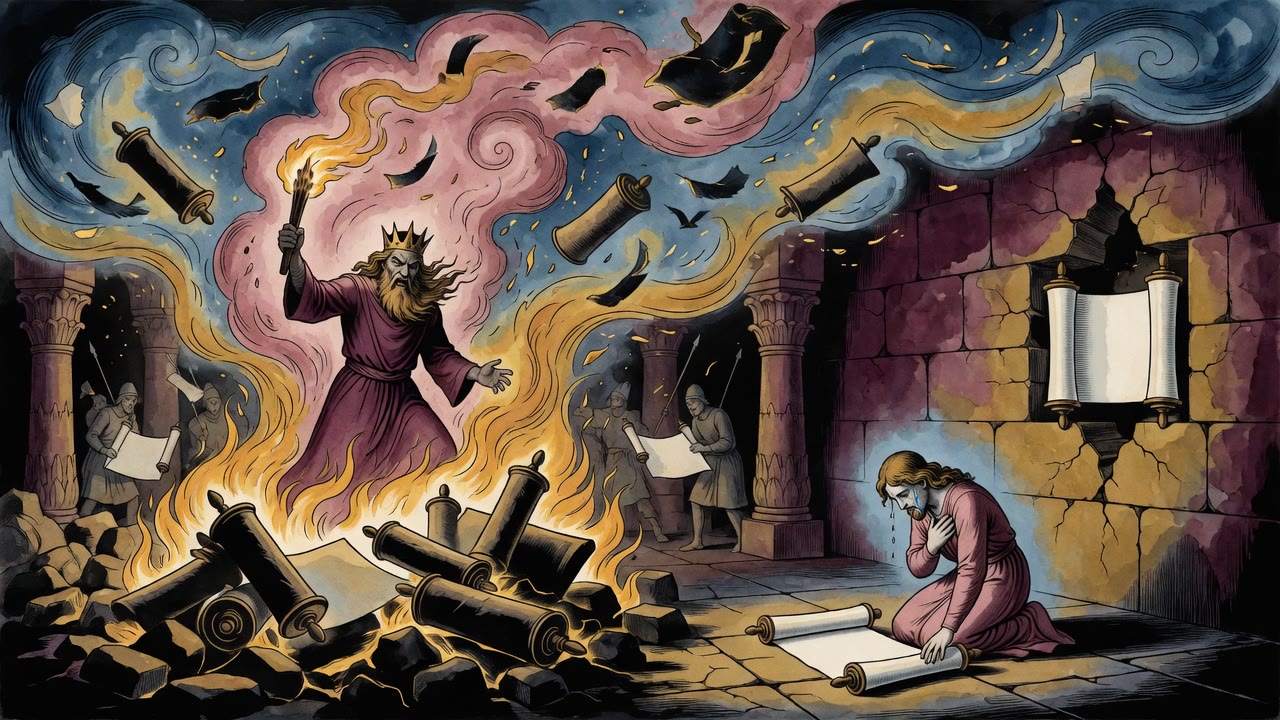
"Let a royal decree go forth," Job said, "and let it be written in the laws of Egypt which shall not be revoked, that every male child born to the Israelites, his blood shall be spilled upon the ground." Kill the sons at birth, he argued, and in a generation there are no Hebrew soldiers to fear. Let the daughters live. The men around the throne nodded. The thing was written into the law that could not be unwritten.

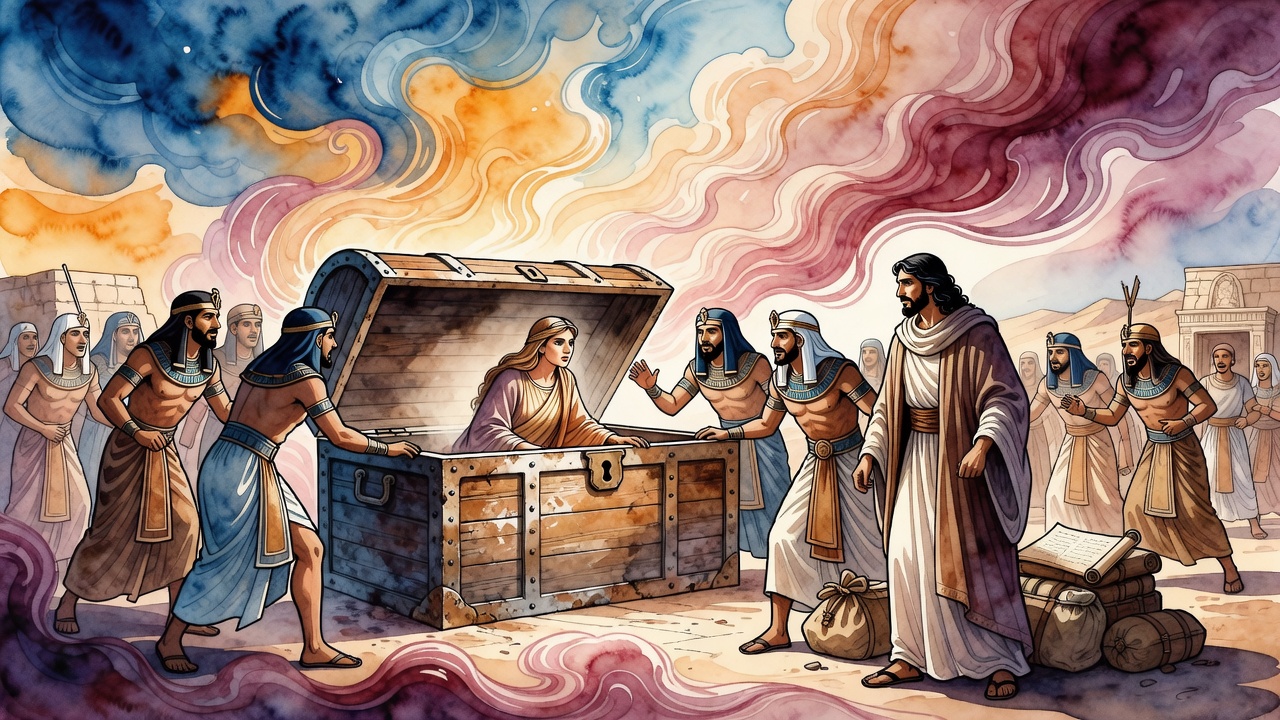
Then Pharaoh summoned the two Hebrew midwives, Shephrah and Puah, and gave them the order with his own mouth. When you crouch at the birthing stones, watch the child come. If it is a son, kill him before his first breath is finished. If it is a daughter, let her live.

The two women bowed and left and did not do it. They feared God more than they feared the king, and they let the boys live. When Pharaoh hauled them back to answer for the sons crawling through Goshen, they looked at the most powerful man on earth and lied to his face. The Hebrew women, they said, are not like the soft women of Egypt. They are strong as field animals. They give birth before we can even reach the door.

And the king believed them. The midwives walked free, and God dealt well with them, and the people kept multiplying. The decree stood in the law, unrevoked, waiting. Somewhere in Goshen a Hebrew woman was already carrying a son the river would not be able to keep.


← All myths
From the tradition

Sources

2 sources

The texts this telling draws on, in full. Open a card to read inline, or expand it for a wider, quieter read.

Jasher 58Book of Jasher

Book of Jasher turns to Death of Magron.

In Jasher, in the thirty-second year after the Israelites arrived in Egypt, and Joseph was seventy-one years old, the Pharaoh died. His son, Magron, took the throne. But here's the interesting part: before his death, Pharaoh commanded Magron to treat Joseph as a father and to rely on his counsel. And that's exactly what happened.

All of Egypt wanted Joseph to be their king. While Magron technically sat on the throne, he placed all the laws and affairs of government in Joseph's hands, just as his father had instructed. So, in effect, Joseph became king over Egypt! He oversaw everything. The people loved him and sought his advice.

Of course, there were dissenters. As Jasher notes, some Egyptians grumbled, "No stranger shall reign over us." Despite this undercurrent of resentment, Joseph’s power was absolute. He was the regulator, doing as he liked throughout the land without anyone interfering.

And Joseph wasn’t just managing internal affairs. He was also a military leader. According to Jasher, Joseph waged war against Egypt's enemies, subduing them all the way to the borders of Canaan, and even the land of the Philistines. They all paid taxes to Joseph. Magron, the Pharaoh, remained on his throne, but he was under Joseph’s control and counsel. Joseph reigned over the entire region, from Egypt to the great river Perath, likely referring to the Euphrates.

Jasher emphasizes that Joseph was successful in all his endeavors because the Lord was with him. God gave him wisdom, honor, glory, and inspired love for him in the hearts of the Egyptians. He reigned for forty years, and all the surrounding lands – Philistines, Canaan, Zidon, and the region beyond the Jordan – brought him gifts and paid tribute. The text repeats, almost for emphasis, that the whole country was in Joseph's hand, and he sat securely upon his throne in Egypt.

Meanwhile, Joseph’s brothers, the sons of Jacob, lived securely in the land, fruitful and multiplying, serving the Lord as their father Jacob had commanded them.

But the peace wouldn't last forever.

After many years, the children of Esau, also known as Edomites, who were dwelling quietly in their land, decided to challenge Joseph's power. They wanted to free their brother Zepho, the son of Eliphaz, and his men, who were still slaves to Joseph. So they formed an alliance with the children of the east, the people of Angeas, and even the Ishmaelites. A massive army, numbering around 800,000, marched on Egypt and encamped by Rameses.

Joseph, with his brethren and a force of Egyptian soldiers, numbering only 600, went to meet them in battle. This was the fiftieth year after the sons of Jacob had come down to Egypt, and the thirtieth year of Bela's reign over the children of Esau in Seir.

The Lord, according to Jasher, delivered the mighty men of Esau and the children of the east into Joseph's hand. The sons of Jacob inflicted a devastating defeat, slaying about 200,000 men, including their king, Bela. Seeing their king fall, the Esauites lost heart. Joseph and his brethren pursued them, killing another 300 men.

When Joseph returned to Egypt, he ordered Zepho and his men to be bound even more securely, increasing their suffering. The defeated armies of Esau and the east returned home in shame. They then chose a new king, Jobab, from the land of Botzrah. Jobab reigned for ten years, and the children of Esau, fearful of the sons of Jacob's valor, did not dare to wage war against them again. However, Jasher tells us that from that day forward, a deep hatred and enmity festered between the descendants of Esau and Jacob.

After Jobab’s death, a man named Chusham from the land of Teman became king, reigning for twenty years. Throughout this time, Joseph, his brethren, and all the children of Israel dwelled securely in Egypt, free from war and strife.

So, what do we make of this account? The Book of Jasher offers a compelling expansion of the biblical narrative, portraying Joseph as not just a wise administrator, but also a powerful military leader who secured the prosperity of Egypt and the safety of his family. It also highlights the enduring animosity between the descendants of Jacob and Esau, a theme that resonates throughout Jewish history.

It's a reminder that even in times of peace and prosperity, the seeds of future conflict can be sown, and that the choices we make today can have lasting consequences for generations to come.

Full source
Jasher 66Book of Jasher

The Book of Jasher, an ancient text referenced in the Bible itself (Joshua 10:13 and (2 Samuel 1:1)8), offers us a glimpse into just that – a world of expanded tales and alternative perspectives..

The chapter opens with a shift in power. Hadad, the king of Edom, passes away, and Samlah from Mesrekah takes the throne. Now, this Samlah, in the thirteenth year of Pharaoh's reign in Egypt (and a significant year for the Israelites, being the 125th since their descent into Egypt), finds himself facing a dilemma. He hears that Zepho, son of Eliphaz, and the children of Chittim (often associated with Cyprus or other Mediterranean regions) have attacked Angeas, the king of Africa. Samlah gathers his forces, intending to intervene.

– and They remind Samlah that Zepho is their brother. Blood is thicker than water, even when politics are involved. Samlah listens and turns back to Edom.

Pharaoh, however, gets wind of Samlah's initial plan. He fears that after dealing with the Chittim, Samlah might turn his attention to Egypt. And what does Pharaoh do? He increases the burden on the Israelites. He figures if they're exhausted, they won't be able to help Edom, who he believes might attack Egypt on behalf of the Israelites.

The Egyptians tell the Israelites to work harder, to fortify the land, because the "children of Esau your brethren" might come against them! Irony, isn't it? The Egyptians are using the Israelites' supposed kinship with Esau as a reason to oppress them further.

But here's the thing – oppression often backfires. The more the Egyptians make the Israelites work, the more they multiply. As we find in (Exodus 1:7), "the children of Israel were fruitful, and increased abundantly, and multiplied, and waxed exceeding mighty; and the land was filled with them." The Egyptians' plan isn't working.

In fact, it's making things worse! All the elders and wise men of Egypt gather before Pharaoh. They acknowledge that their initial strategy has failed miserably. The Israelites are thriving despite the increased labor. They plead with the king to come up with a new plan to diminish or destroy the Israelites.

Pharaoh, desperate, asks for advice. And who steps forward? An officer named Job, from Mesopotamia, in the land of Uz. Yes, that Job. The one from the famous Book of Job.

Job suggests a horrifying solution: a royal decree to kill every newborn Israelite male. "Let a royal decree go forth, and let it be written in the laws of Egypt which shall not be revoked, that every male child born to the Israelites, his blood shall be spilled upon the ground." By eliminating the male children, Job argues, the threat of war from the Israelites will eventually disappear.

Pharaoh and his princes agree. They summon the Hebrew midwives, Shephrah and Puah. Pharaoh commands them to kill every male Hebrew child at birth. But if it's a girl? Let her live.

But Shephrah and Puah, these brave women, fear God more than they fear Pharaoh. They disobey the king's orders. They let the male children live.

When Pharaoh confronts them, they offer a clever excuse. They claim that Hebrew women are so strong and healthy that they give birth before the midwives even arrive! Pharaoh, surprisingly, believes them. The midwives are spared, and "God dealt well with them," and the people continue to multiply.

What a story! What can we take away from this chapter of Jasher? It shows us the escalating oppression of the Israelites, the horrifying schemes concocted to control them, and the incredible courage of two midwives who defied a king to save lives. It's a reminder that even in the darkest of times, humanity and resistance can prevail. And it sets the stage for the even greater drama that is to come.

Full source