Parshat Beshalach5 min read

Pharaoh Swallowed Every Punishment He Tried to Dodge

A servant picks the lightest penalty for a rotten fish and still pays all three. Pharaoh bargained the same way through every plague in Egypt.

Curated by Arthur · Told by Maggid ·
Table of Contents
  1. The Market and the Rotten Catch
  2. Three Decrees, One Stubborn Mouth
  3. Property First, Then Breath
  4. The Open Ground Beyond the Enemy
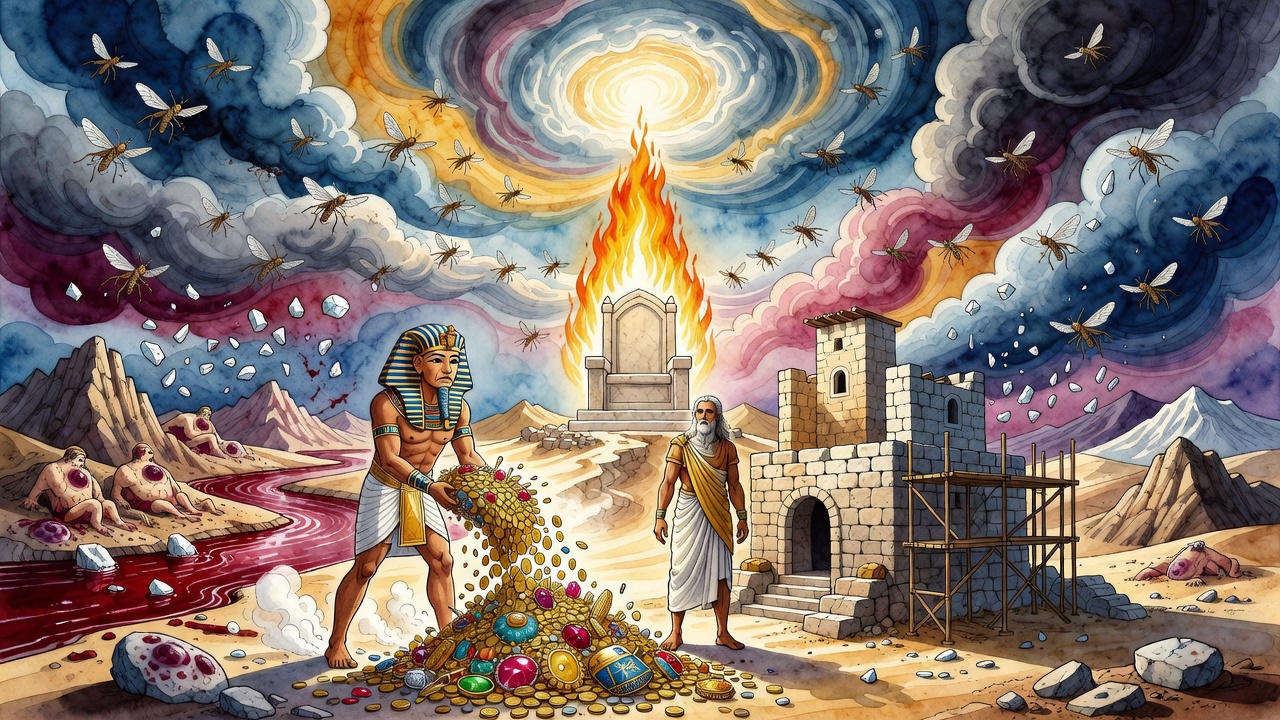
Pharaoh Swallowed Every Punishment He Tried to Dodge Click for full size

The Market and the Rotten Catch

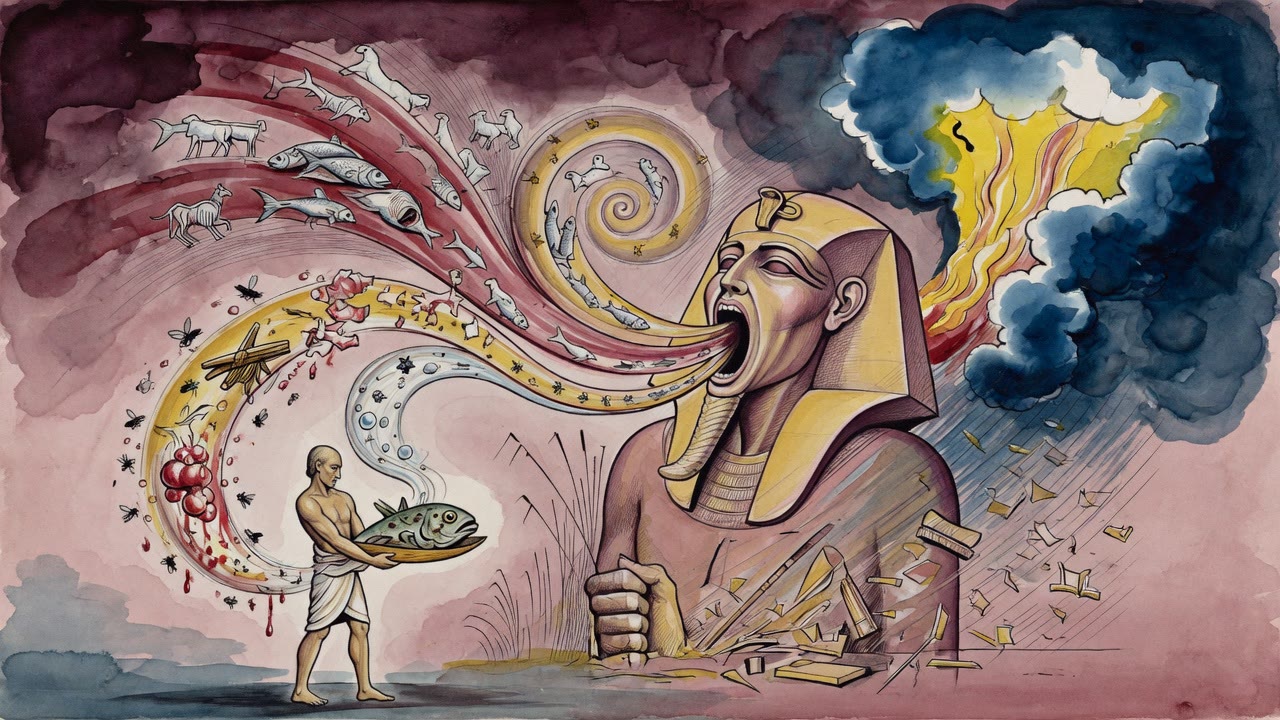
Pharaoh did not begin as a man who had lost everything. He began as a king who thought he could bargain. The sages tell it through a servant and a fish, because the courtroom of heaven likes plain pictures.

A king sent his servant to the market for a fish. The man came back with a rotten one, stinking already in the basket. The king did not shout. He offered three punishments and told him to pick one: eat the spoiled fish, take a hundred lashes, or pay a heavy fine. "Choose," the king said. "You will not walk free."

The servant chose the fish. He thought food was the lightest of the three. Halfway through, his stomach rose against him. He begged for the lashes instead. Halfway through the beating he could not breathe, and he offered the money. In the end he suffered all three. The attempt to dodge the worst cost him everything. That, the midrash says, is Pharaoh. Not a mythic monster first, but a man who keeps renegotiating after each half-finished pain, certain the next option will be cheaper.

Three Decrees, One Stubborn Mouth

The Holy One set three hard things against Egypt's king. Plagues would fall in order. Treasure would leave with the freed slaves. Israel would go free, the very outcome Pharaoh fought hardest to stop. A wiser man takes one rebuke to heart. A fool keeps renegotiating until the ledger is full.

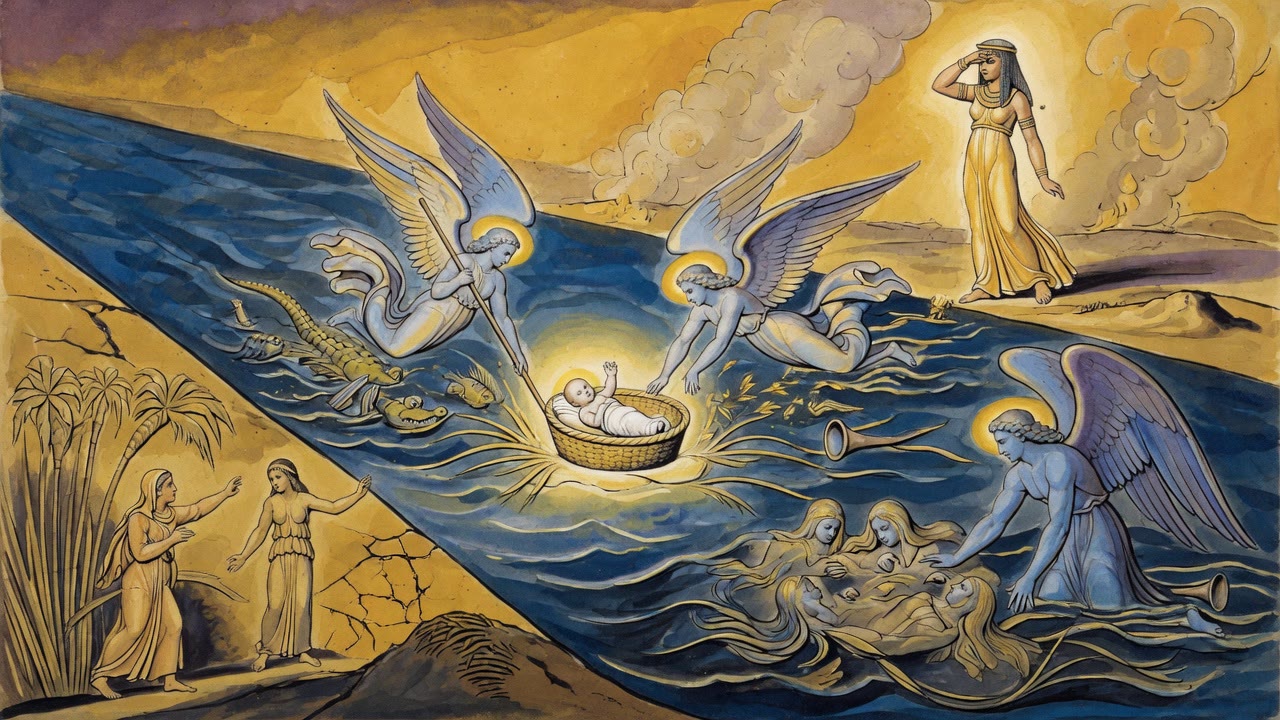
Blood filled the Nile and the servants of the court still found reasons to wait. Frogs climbed the beds and the king promised, then hardened again. Lice, beasts, pestilence, boils, hail, locusts, darkness. Each time the air cleared he counted what he still owned and decided he could afford another round. The servant with the fish had done the same math. Half of one pain looked cheaper than all of another. Half after half becomes the whole bill.

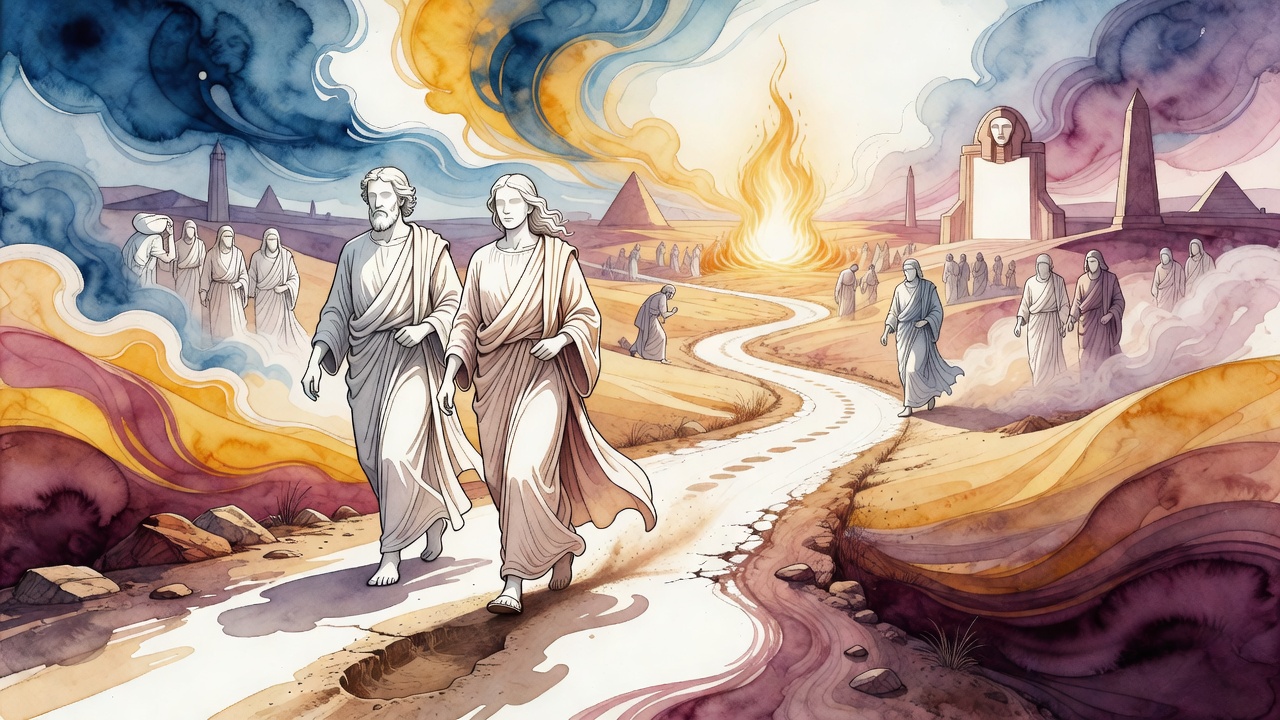
Magicians matched a sign and he smiled. Magicians failed and he still smiled, because pride can live on yesterday's match. Advisors whispered compromise. He heard only how much of Egypt remained. When the Israelites finally walked out, they carried Egypt's silver and gold. That was the fine. The sea closed on the chariots. That was the last lash he could not schedule. The people he refused to release went free anyway. He had eaten the fish, taken the strokes, and paid.

Property First, Then Breath

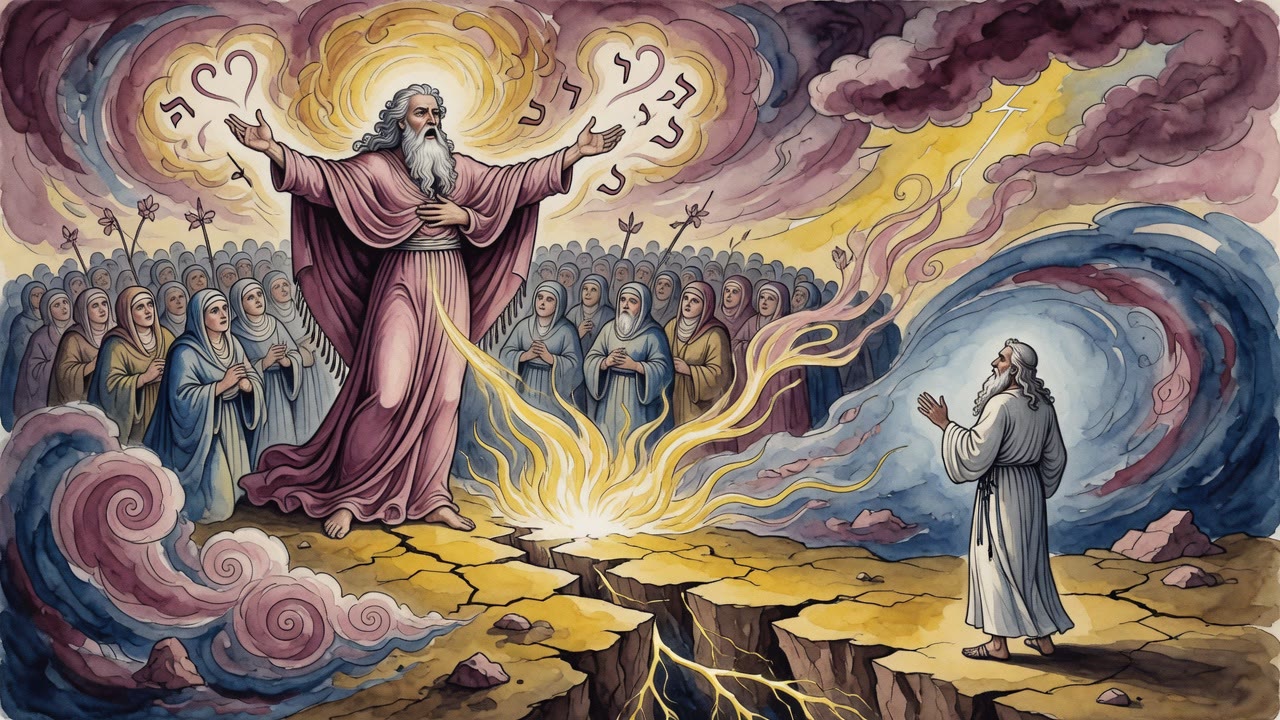
Rabbi Levi taught that the Master of Mercy does not touch lives first. Judgment knocks on the replaceable before it reaches the irreplaceable. Job heard of oxen and donkeys before he heard of the roof that crushed his children. Messengers fell only after they spoke, so the warning could land while he still had ears to hear it. When fire fell from heaven, Job understood the blow was not random, and he fell silent under a sky that had become the prosecutor.

The house of Elimelech lost livestock, then the man himself, then the two sons, the losses climbing the stairs of Naomi's grief one tread at a time. Affliction of houses begins on walls. If the owner turns, stones are removed. If not, the house comes down, then garments, then skin. At every stage a person can stop the climb. Egypt was offered the same ladder. Vines, fig trees, cattle. Warning after warning written on the landscape before any firstborn stopped breathing.

Pharaoh had been given the chance to choose one pain early. He chose delay, and delay stacked every sentence on top of the last. Mercy was not absent. Mercy was the order of the blows, and he refused to read it. The midrash wants that order remembered, so that no one mistakes a patient judgment for a weak one.

The Open Ground Beyond the Enemy

Rabbi Yochanan heard the Exodus inside a psalm of rescue. The strong foe is Pharaoh saying, "I will pursue." The crowd too mighty to face is the army at Israel's back. The day of calamity holds two voices at once: the king behind and Amalek waiting on the road. Above both stands a support that does not fail.

God brought Israel out into open ground, and the open ground was Torah. Rescue was not the end of the story. It was the doorway. Deliverance from the sea existed so a freed people could receive what waited in the third month at the mountain. "He delivered me, because He delighted in me." Delight, not mere obligation, drove the gift. The soul rises in song, and that song becomes part of why the Teaching is placed in her hands.

Pharaoh never learned that arithmetic. He measured power by how long he could refuse. Heaven measured him by how many warnings he wasted. The servant who tried to choose the lightest penalty learned too late that stubborn bargaining multiplies the cost. The king of Egypt learned it with a nation watching, and the plagues still have his name on them. Israel learned the other half: the enemy's full bill is not the last word. Beyond the enemy stands open ground, and the open ground has a date on the calendar a people can touch.


← All myths
From the tradition

Sources

3 sources

The texts behind this telling. Some cards carry a translation of the source; others are our own retelling of it, and each card says which. Every card links out to the original.

Pesikta DeRav Kahana 11:3Pesikta de-Rav Kahana

Translation of the source text.Pesikta de Rav Kahana according to an Oxford manuscript, Dov Mandelbaum ed., N.Y. 1987 · CC-BY

"A rebuke enters deeper into a man of understanding than a hundred blows into a fool" (Proverbs 17:10). Rabbi Ishmael taught a parable: To a king who said to his servant, Go out and bring me a fish from the market. He went and brought him a rotten fish. The king said to him: By your life, one of three you will not escape, either you eat the fish, or you receive a hundred lashes, or you pay a fine. He said: I will eat the fish. He had not finished eating it before his stomach turned against him, and he said: I will take the lashes. He had not finished taking fifty lashes before he said: I will pay the fine. So he was found eating the fish, taking the lashes, and paying the fine.

So too the Holy One, blessed be He, said to wicked Pharaoh: By your life, you will receive ten blows in succession, and you will pay your money, and you will send Israel away. "You will receive ten blows in succession", these are the ten plagues. "You will pay your money", "and they despoiled Egypt" (Exodus 12:36). "And you will send Israel away", "And it came to pass when Pharaoh let the people go" (Exodus 13:17).

Full source
Pesikta DeRav Kahana 7:10Pesikta de-Rav Kahana

Translation of the source text.Pesikta de Rav Kahana according to an Oxford manuscript, Dov Mandelbaum ed., N.Y. 1987 · CC-BY

Rabbi Huna and Rabbi Yehoshua bar Avin, the son-in-law of Rabbi Levi, in the name of Rabbi Levi: The Master of Mercy does not touch lives first. From whom do you learn this? From Job, "And a messenger came to Job and said, The oxen were plowing and the donkeys feeding beside them" (Job 1:14). What is "and the donkeys feeding beside them"? Rabbi Hama said: A sample of the World to Come was made for him, as it is said, "The plowman shall overtake the reaper, and the treader of grapes him who sows the seed" (Amos 9:13). Rabbi Abba bar Kahana said: They went out from the village of Krinos and passed through all the meadows, and when they reached the tower of the dyers they died there. Rabbi Hama said: "only" (Job 1:16) is a limiting term he too was broken and stricken. Rabbi Yudan said: From "alone" until "to tell you" (ibid.) he too, as soon as he told his news, immediately died, as it is written, "While this one was still speaking, another came" (Job 1:18). When Job heard this, he began mustering his troops against them for war, as it is written, "For I dreaded the great multitude, and the contempt of families terrified me, so that I kept silence and did not go out the door" (Job 31:34). Job said: A nation despised among all the nations, "Behold the land of the Chaldeans this is the people that was not" (Isaiah 23:13), and would that it were not so it intends to put its terror upon me. As soon as they said to him, "The fire of God fell from heaven" (Job 1:16), he said: If it is from heaven, what can I do? Immediately, "I did not go out the door" (Job 31:34). And afterward, "He took for himself a potsherd to scrape himself" (Job 2:8). So too with Mahlon and Khilyon: first their horses and camels and donkeys died, and afterward he himself died, as it is said, "And Elimelech, Naomi's husband, died" (Ruth 1:3), and afterward his two sons died, "And they also both died, Mahlon and Khilyon" (ibid. 1:5), and afterward she herself [was bereaved]. And so too with the plagues that come upon a person: first it begins with his house if he repents, the stones must be removed, "And they shall remove the stones" (Leviticus 14:40); if he does not repent, it must be torn down, "And he shall tear down the house" (ibid. 14:45). And afterward it begins with his garments if he repents, they must be torn, "And he shall tear it out of the garment or the leather or the warp or the woof" (Leviticus 13:56); if he does not repent, they must be burned, "And he shall burn the garment" (ibid. 13:52). And afterward it begins with his body if he repents, he goes out and recovers, and if he does not repent, "He shall dwell alone; his dwelling shall be outside the camp" (Leviticus 13:46). And in Egypt it was so: first the attribute of judgment touched their property, "He struck their vines and their fig trees" (Psalms 105:33), "He gave over their cattle to the hail and their livestock to the bolts of lightning" (Psalms 78:48), and afterward, "He struck every firstborn in Egypt" (Psalms 78:51).

Full source
Pesikta DeRav Kahana 12:2Pesikta de-Rav Kahana

Translation of the source text.Pesikta de Rav Kahana according to an Oxford manuscript, Dov Mandelbaum ed., N.Y. 1987 · CC-BY

Rabbi Yochanan opened: "He delivered me from my strong enemy, and from those who hated me, for they were too mighty for me" (Psalms 18:18). "He delivered me from my strong enemy" refers to Pharaoh, who said, "The enemy said, I will pursue" (Exodus 15:9). "From those who hated me, for they were too mighty for me" refers to the Egyptians. "They confronted me in the day of my calamity" (Psalms 18:19) refers to what Pharaoh said and what Amalek said. "But above them all, the LORD was a support to me" (Psalms 18:19). "And He brought me out into a broad place" (Psalms 18:20), in that He gave me the Torah. "He delivered me, because He delighted in me" (Psalms 18:20). Rabbi Yochanan said: It was her own song that she raised up to give me the Torah. When? "In the third month" (Exodus 19:1).

Full source