Egypt Sold Israel Cheap and Paid in Ten Plagues
The seller stood in the market and could not swallow. His cheap field had become a palace, and the retinue now belonged to someone else.
Table of Contents
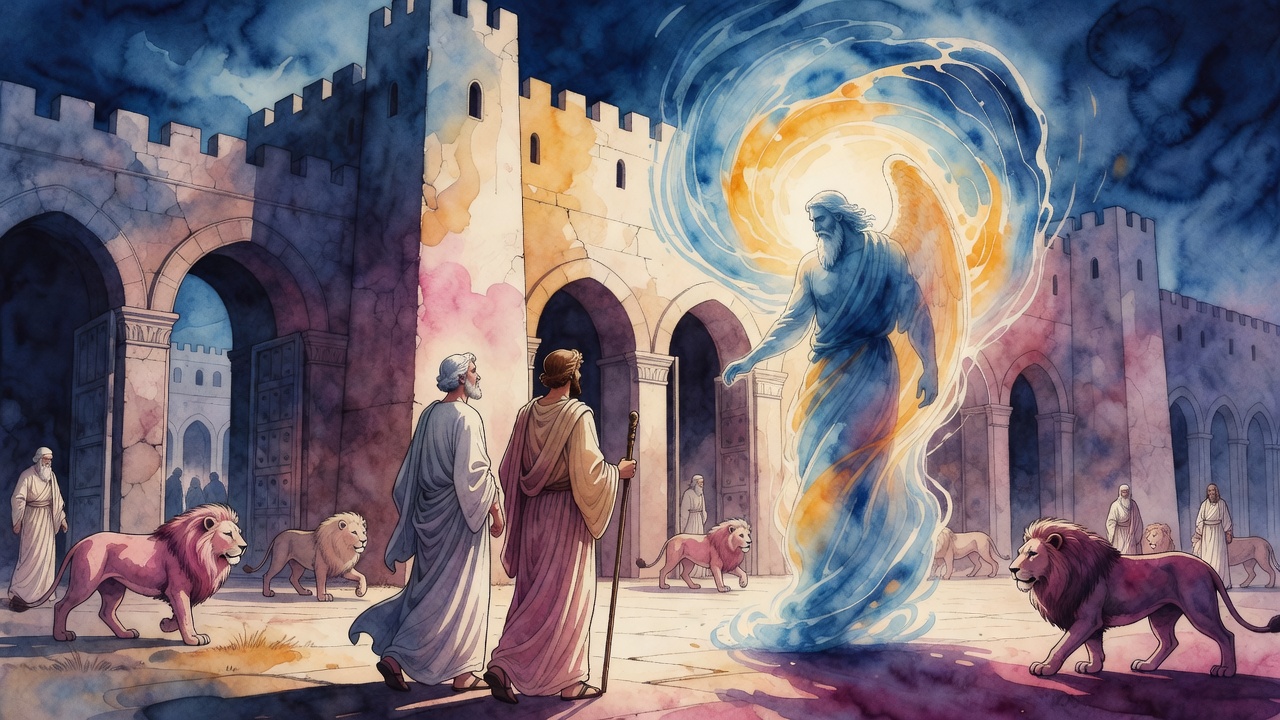
The seller stood in the market and could not breathe. Servants cleared a path in front of the buyer and another path behind him. A palace sat on the plot the heir had dumped for pennies, and its shadow cut across the stalls.
 Click for full size
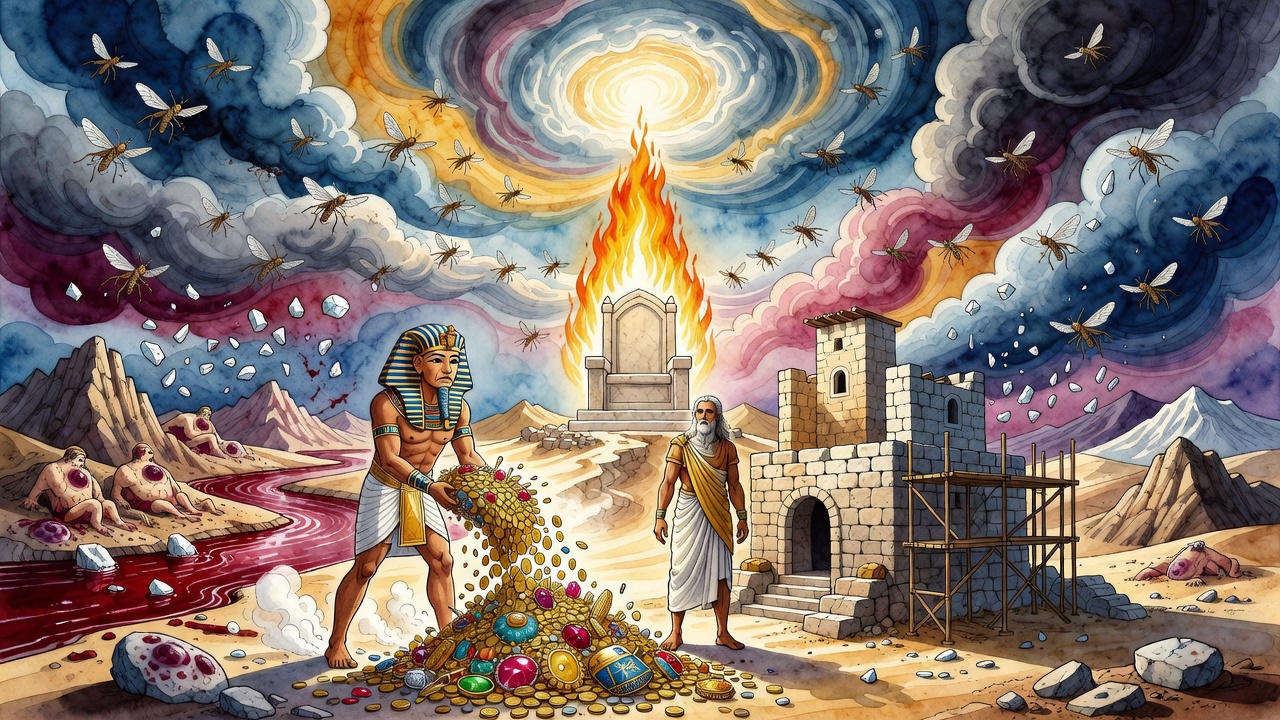
Pharaoh had thought he was unloading a restless labor force. Brick. Whip. A people who multiplied when they should have thinned. He sold them the way a lazy son sells land he never walked, cheap and fast, glad to be rid of the dust.
The buyer had dug. Treasure under the soil. Walls went up where the heir had seen only empty ground.
The Heir Sold a Field He Never Dug
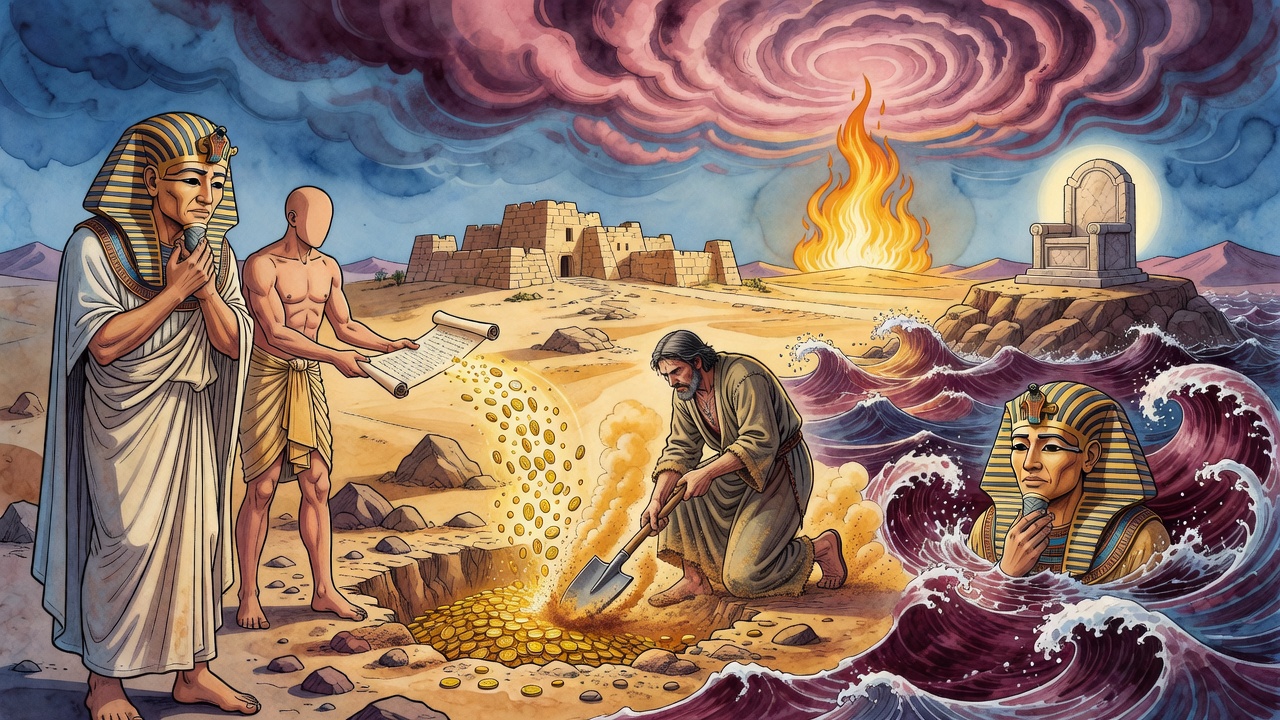
The overseas inheritance had looked like a burden. Distance. Trouble. Rabbi Shimon ben Yochai puts the heir in that posture: he sells for a trifle, wipes his hands, and walks away. The buyer sinks a spade, strikes a hidden store of gold, and raises a palace. Then he walks the market with a retinue, front and back, as if the street itself had changed owners.
The seller's throat closes. That choke is the first true price.
Rabbi Yose the Galilean tells it as a barren field, a kor of dirt with no spring in it. Sold cheap. The buyer opens water, plants gardens, sets trees, and lays out orchards. The seller watches fruit where he had seen only dust, and the same choke returns. The verse already named what Egypt threw away. Israel is an orchard of pomegranates. "Your shoots are an orchard of pomegranates" (Song of Songs 4:13). Egypt sent them out and did not know what it had sent.
He Tasted Every Cost in Turn
A king sent a servant for a fish. The man came back with one that stank. The king set three costs on the table and told him he would not walk free of all of them. Eat the rotten fish. Take a hundred lashes. Or pay a fine.
The servant chose the fish. He put it in his mouth. His soul turned. He shoved the plate away and asked for the whip. The blows started. He could not finish fifty. He paid the money.
So he ate, and he was beaten, and he paid.
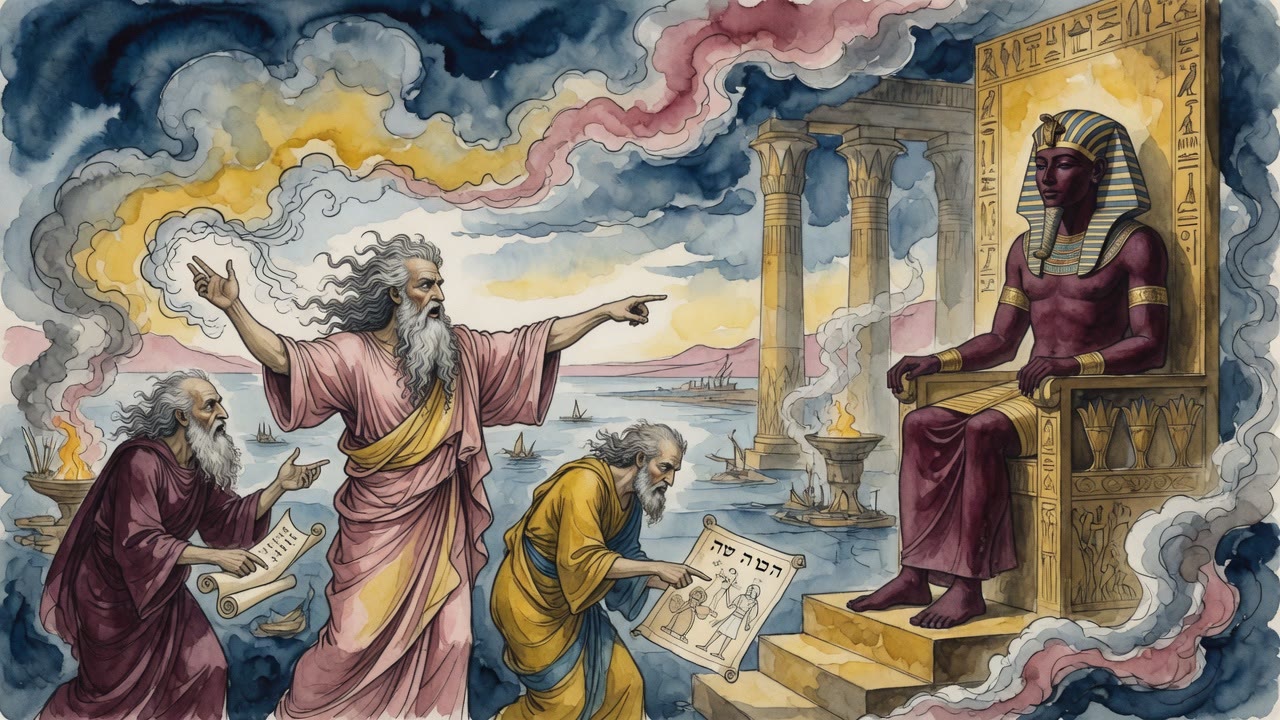
God spoke to Pharaoh in that same stack. Wicked one. Ten beatings, which are the ten plagues. A fine, the wealth of Egypt piled onto Israelite arms (Exodus 12:36). And still you will send My people free. Pharaoh tried stubbornness first, the way the servant tried the fish. He gagged on blood and frogs and darkness. He switched to the lashes of hail and locusts. He still paid the gold. He still opened the gates.
Defiance did not lower the bill. It stacked every cost on top of the last.
The Song Would Not Stay Finished
At the sea the rescued people sang. A singer on wet sand did not close the file. It is not written, "You have destroyed those who rose up against You," as if the matter were done. It says, "You will destroy those who rise up against You" (Exodus 15:7). Future tense. An open verb.
Psalm 58 still asks God to smash teeth in the mouth of the wicked. Those who refuse to consider the deeds of the Lord invite their own tearing down. He will tear them down and not rebuild them, not in this world and not in the World to Come.
Egypt's cheap sale met a ledger that does not close after one night of water. The same hand that priced the people kept the future open against every empire that forgets what it sold.
They Tore the House to Bedrock
Later nations raised hands against a house God Himself wrought. "You have wrought, O Lord," the Song says, and the cry that follows is not praise only. Woe to the peoples of the world. What are they hearing with their ears? They destroyed a building the Creator personally built.
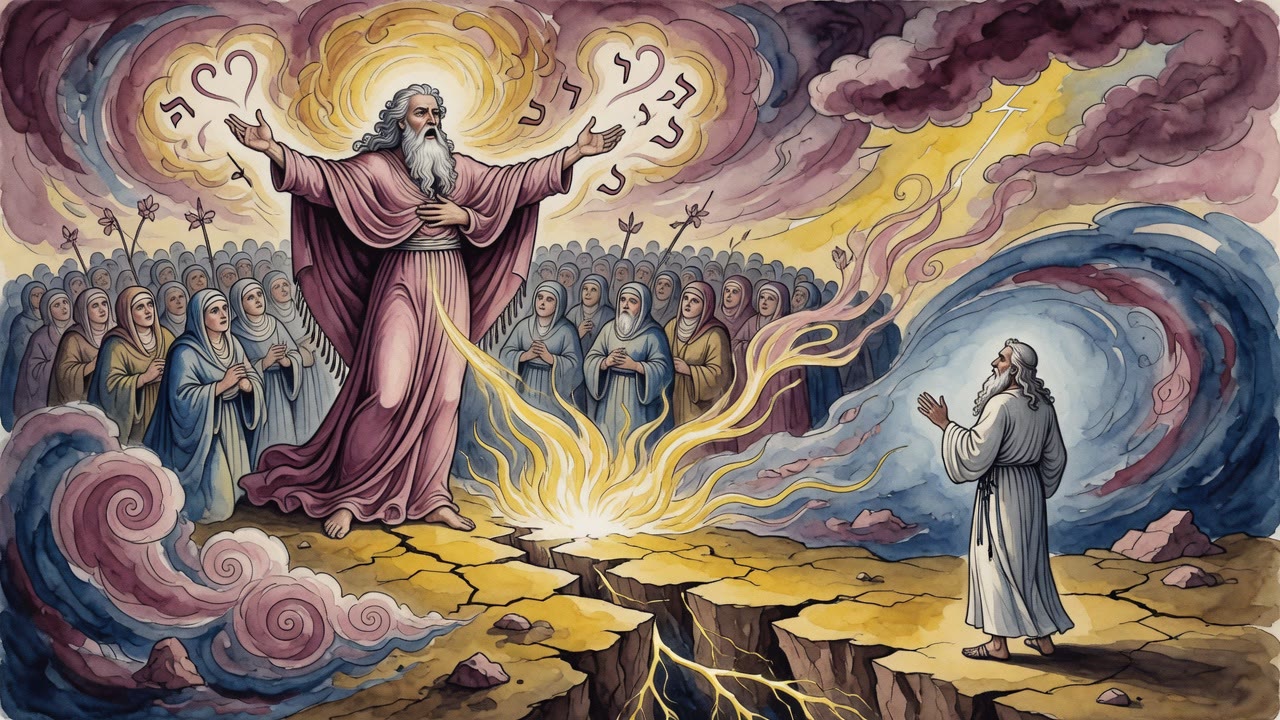
"Destroy, destroy, to its very foundation!" (Psalms 137:7). They tore it down to bedrock. Jeremiah answers with a roar from the heights (Jeremiah 25:30). Human armies congratulate themselves on stone and timber. Heaven measures the deed against Whose hands first set the foundation.
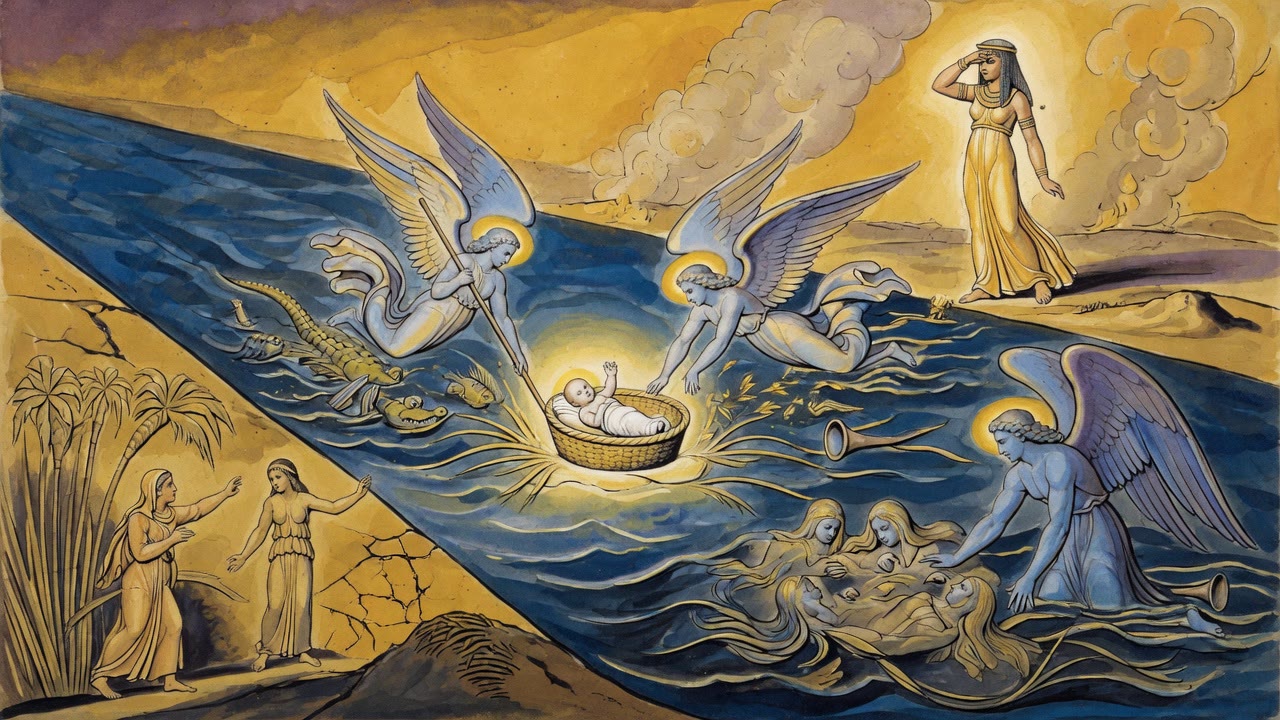
When Israel walked out, gold and silver walked with them. The lazy heir's market parade had flipped. The retinue belonged to the former slaves. Pharaoh's court still smelled of the last plague. The sea had already chosen a side.
Somewhere a singer kept the verb in the future, so no conqueror could claim the story was over. Cheap sales of holy people never stay cheap. The fine compounds. The lashes return as water, as darkness, as a roar from the heights. In the market the seller's throat tightens while the buyer's servants clear a path. That choke is Pharaoh tasting the plagues in advance, and still owing the release.
← All myths