Earth Spits Egypt Back Until God Swears an Oath
After the sea splits, the land and the water fight over Egyptian corpses, each refusing burial until God swears by His right hand.
Table of Contents
 Click for full size
Bodies Between Two Mouths
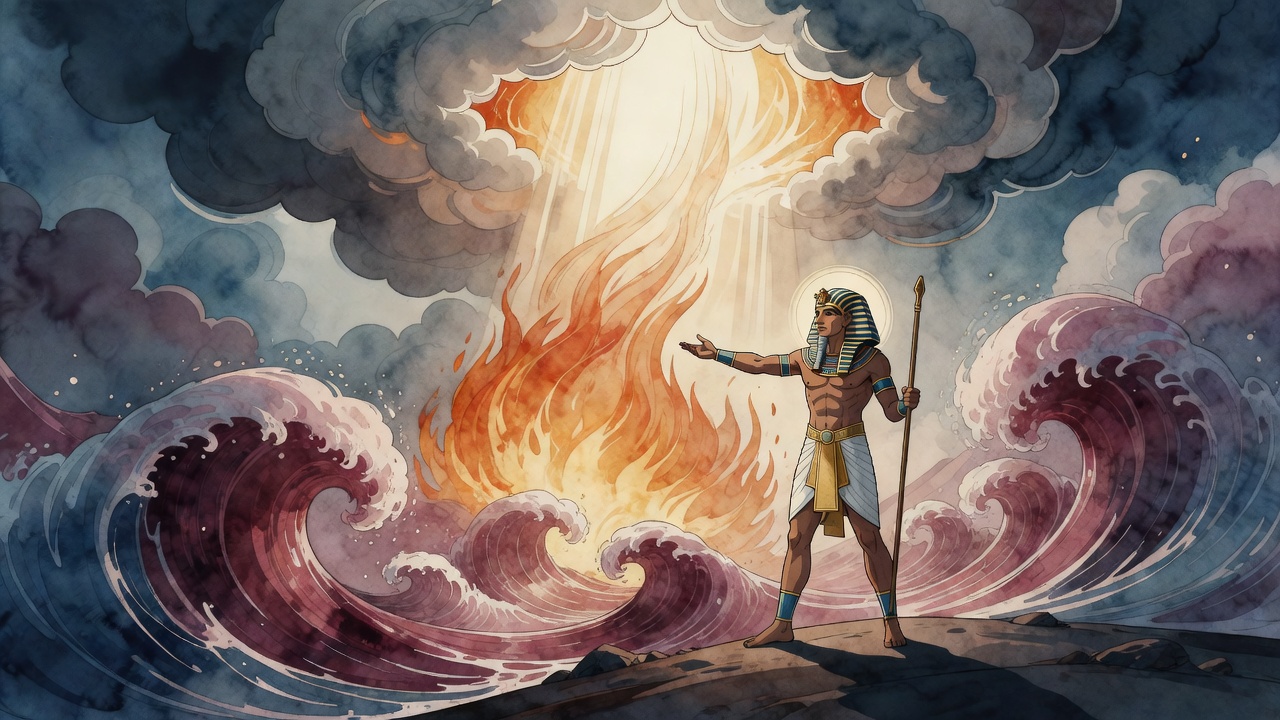
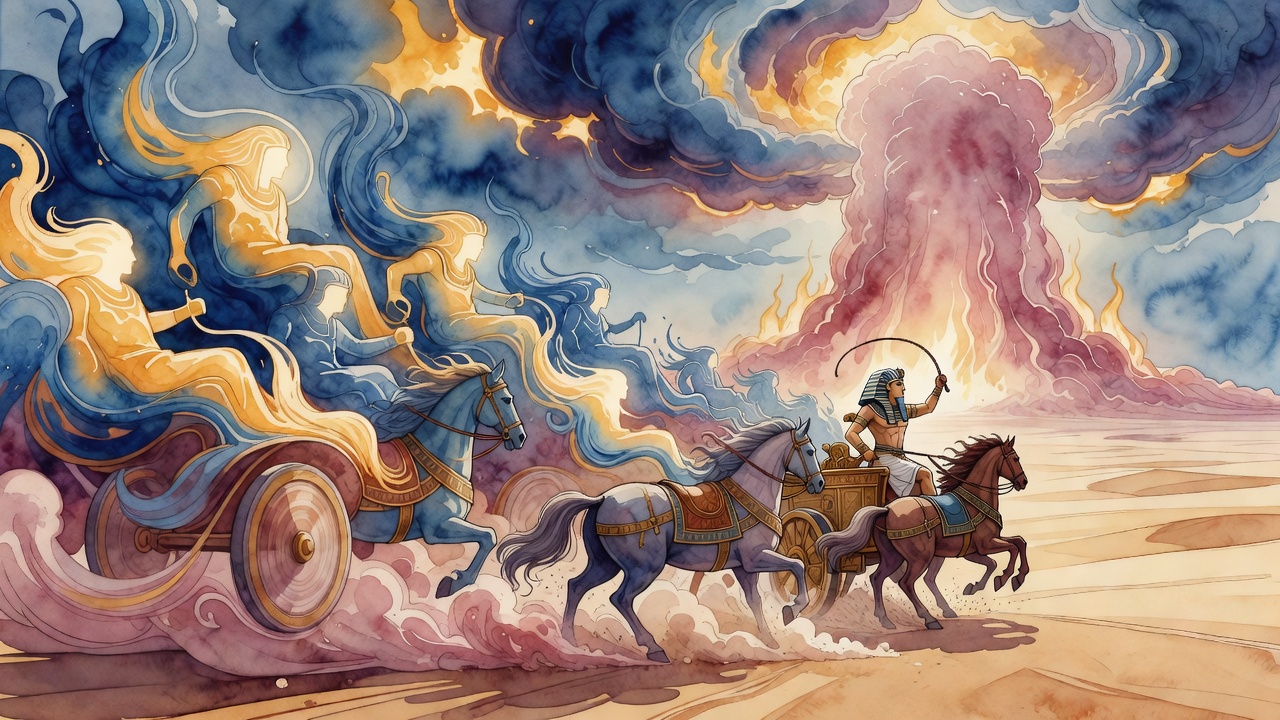
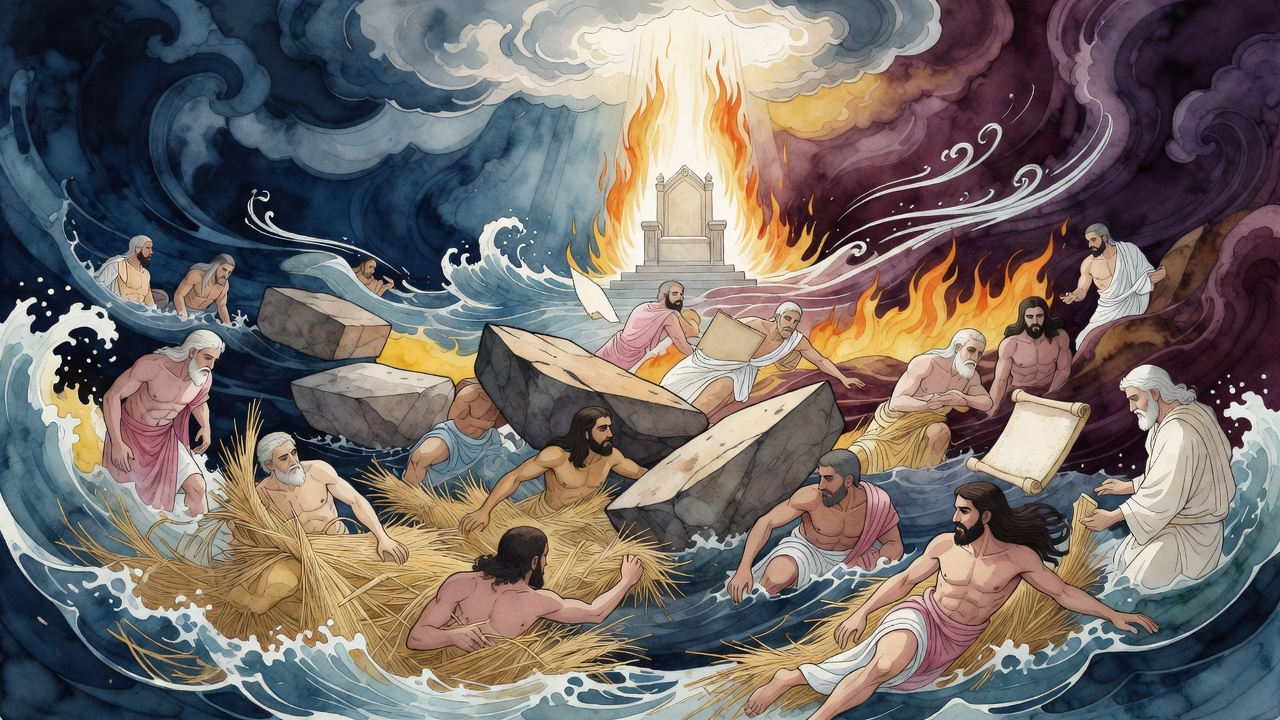
Moses sang while the water still held its shape like walls that had not yet remembered how to fall. Israel stood on ground that smelled of salt and crushed reed, ground that had been seabed an hour earlier. The song named what the eye had already seen: chariots gone, horsemen gone, the pursuers sealed under a flood that answered a raised staff. Then the corpses began to wash toward shore. They rose and rolled and slapped the sand, and the sand threw them back into the waves with a wet refusal that made children stop mid-cheer.
The sea would not keep them. The dry land would not take them. Between two mouths of creation the army of Egypt hung, unburied and unwanted, while Israel watched a quarrel older than any chariot wheel and harder to understand than the splitting itself.
Fish that had fled the open path returned to ordinary hunger. A helmet floated, empty, and a boy poked it with a stick until his mother pulled him back. The miracle was already becoming memory, and memory needs a shore that stays still.
The Land Remembers Abel
The earth spoke its fear without a human tongue. Long ago it had opened for one man's blood, the blood of Hevel, when Kayin struck his brother in a field and the ground drank what it should never have been asked to drink. For that single mouthful the dirt had carried a curse that still sat in the world's oldest stories. Now a whole host lay waiting at the lip of the shore, drowned after years of brick and whip, and the land measured the weight the way a beast measures a load before it kneels.
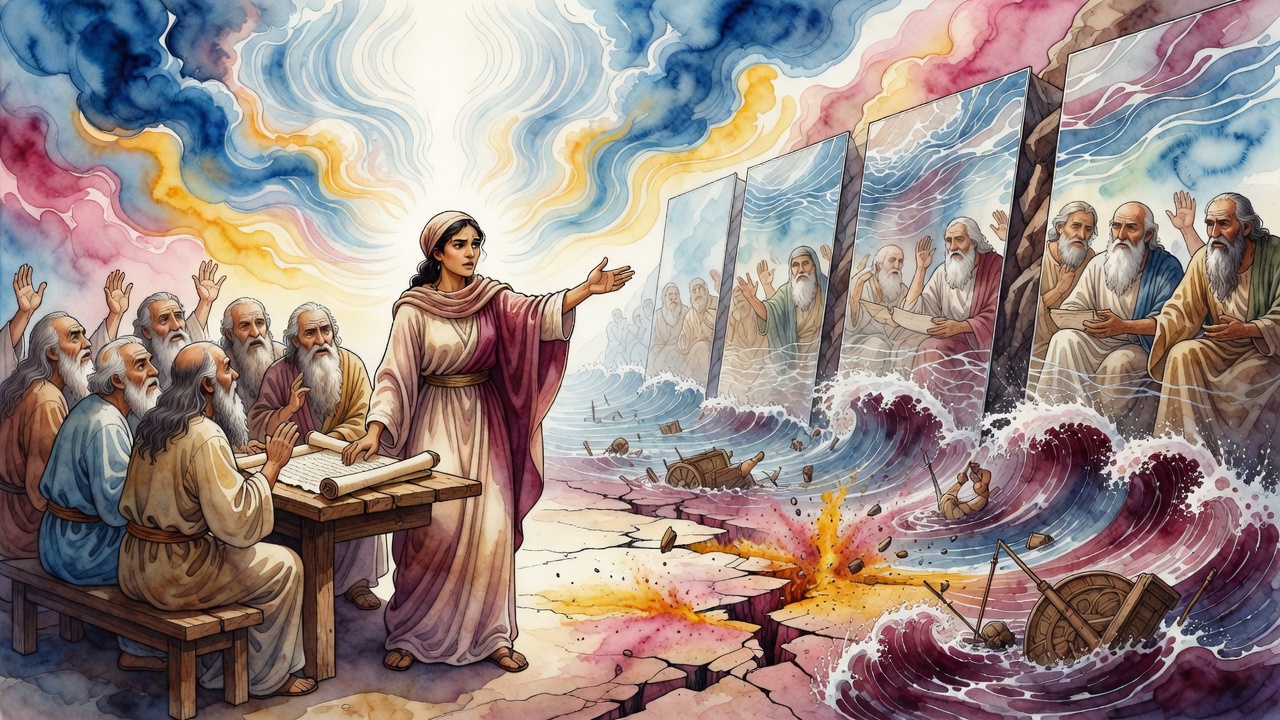
If one victim cost a curse, what would an army cost? The earth flinched. It cast the bodies seaward as a man shakes water from his hands after touching something unclean. The sea answered the same way, heaving the dead back onto the grit. Neither element wanted the guilt of swallowing. The corpses became a shuttlecock between powers that usually ignore each other.
Israel's song faltered on that sight. Victory is simple until the ground argues with the water over who must finish the job.
They Confessed at the Last Breath
Still a question pressed from the other side of justice. Why grant these riders any grave at all? In their final hour some of them had cried out that the Lord is righteous. They had justified the judgment against themselves while the water closed over bronze and horsehair. That admission, thin as a last breath, bought them a claim the land did not want to honor and the sea did not want to hold.
Burial is a mercy. Mercy can frighten the ground that must open to give it. The Egyptians had spent a generation drowning Hebrew boys in a river. Now their own dead asked for a plot of sand and a closing of the mouth of the world. The request was almost unbearable in its fairness.
Moses did not negotiate with the elements. He kept singing because the people needed a spine of praise while creation argued over trash that had once been officers of Pharaoh.
The Right Hand Becomes an Oath
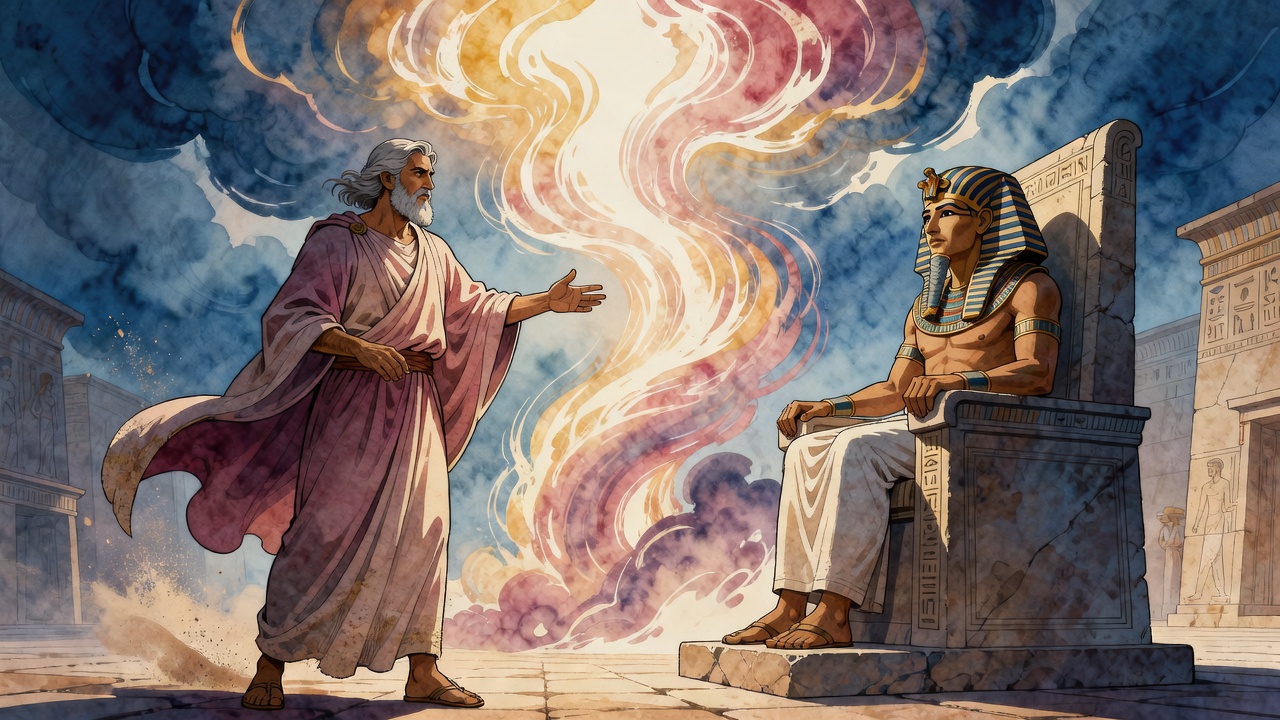
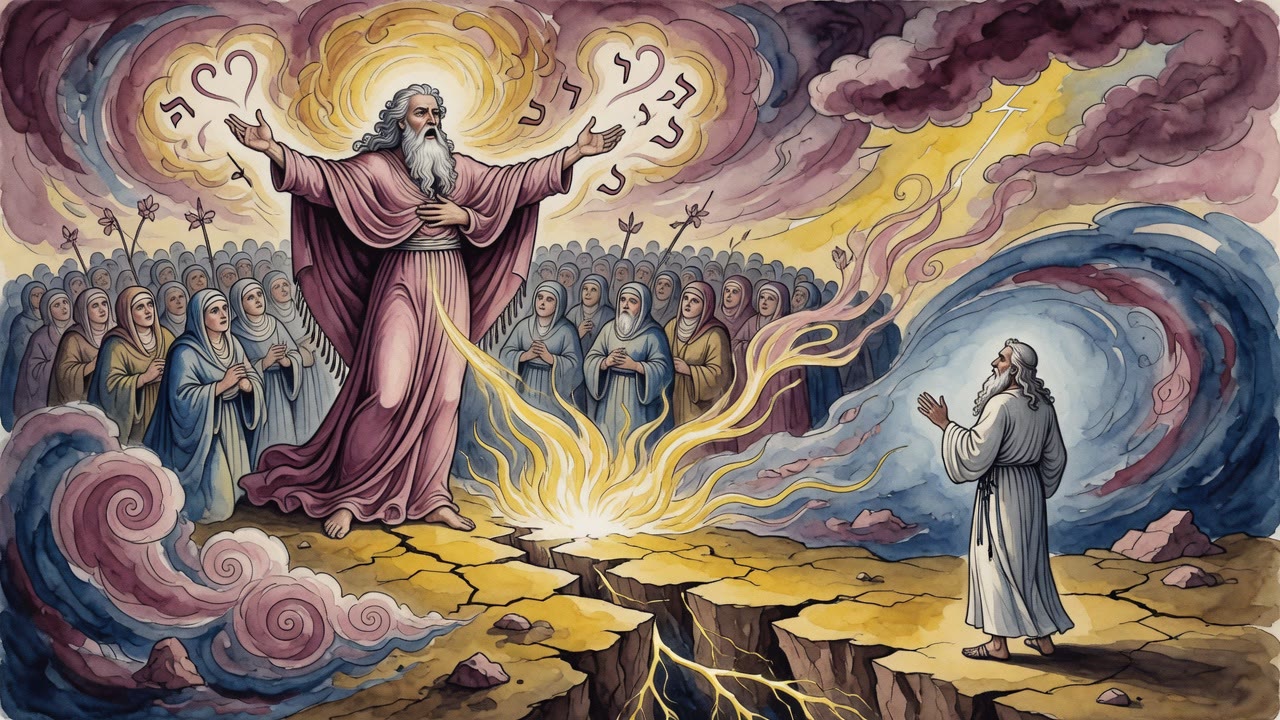
God did not lecture the shore. He inclined His right hand. In the Song the people would chant for centuries, that gesture sounds like victory alone: "You inclined Your right hand, the earth swallowed them up" (Exodus 15:12). Under the song the teachers later heard a vow. Elsewhere Scripture says the Lord has sworn by His right hand. The same limb that broke the sea now sealed a promise to the dirt.
The oath was simple enough for soil to trust. The earth would take the dead and would not be called to account for them. No curse would follow this swallowing the way a curse had followed Abel. The ground opened. The sea stopped throwing the bodies back. Creation closed its mouth around the army and was quiet, as if a courtroom had adjourned.
What takes empires years to assemble, the slightest tilt of that hand can unmake. Ashur and Philistia would learn the same lesson in later prophets. Here the lesson lay wet and immediate at Israel's feet.
Souls Still Rest in the Hand
The same right hand that swore also held every soul. Not only the souls of the drowned. Not only the souls of the singers on the far bank. Every living thing rests there, the way a coin rests in a closed fist that never loses count. When the Egyptians went under, they did not leave that grip. When Israel sang, they sang inside it. David would later pray, "Into Your hand do I commend my spirit," not as a last resort, but as a recognition of what had always been true.
The shore lay empty of quarrel. Israel walked on toward thirst and manna and other arguments. Behind them the land kept a new secret: it had swallowed a host under oath, and the oath still stands wherever dust remembers water and refuses to take blood without a promise from above.
← All myths