Serah Named the Red Sea Walls as Living Mirrors
In the study hall Serah bat Asher corrects the sages. The sea walls were mirrors of all Israel. Earth and sea then fight over Egypts drowned host.
Table of Contents
 Click for full size
What Did the Walls Look Like
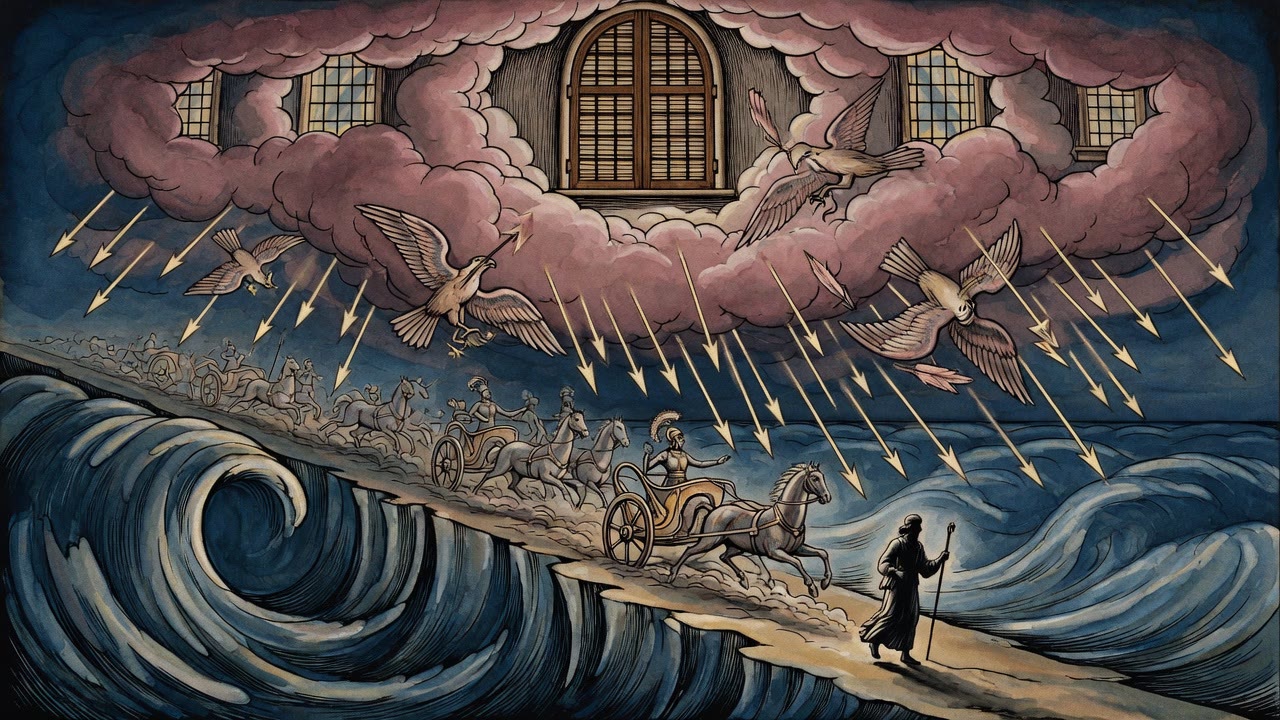
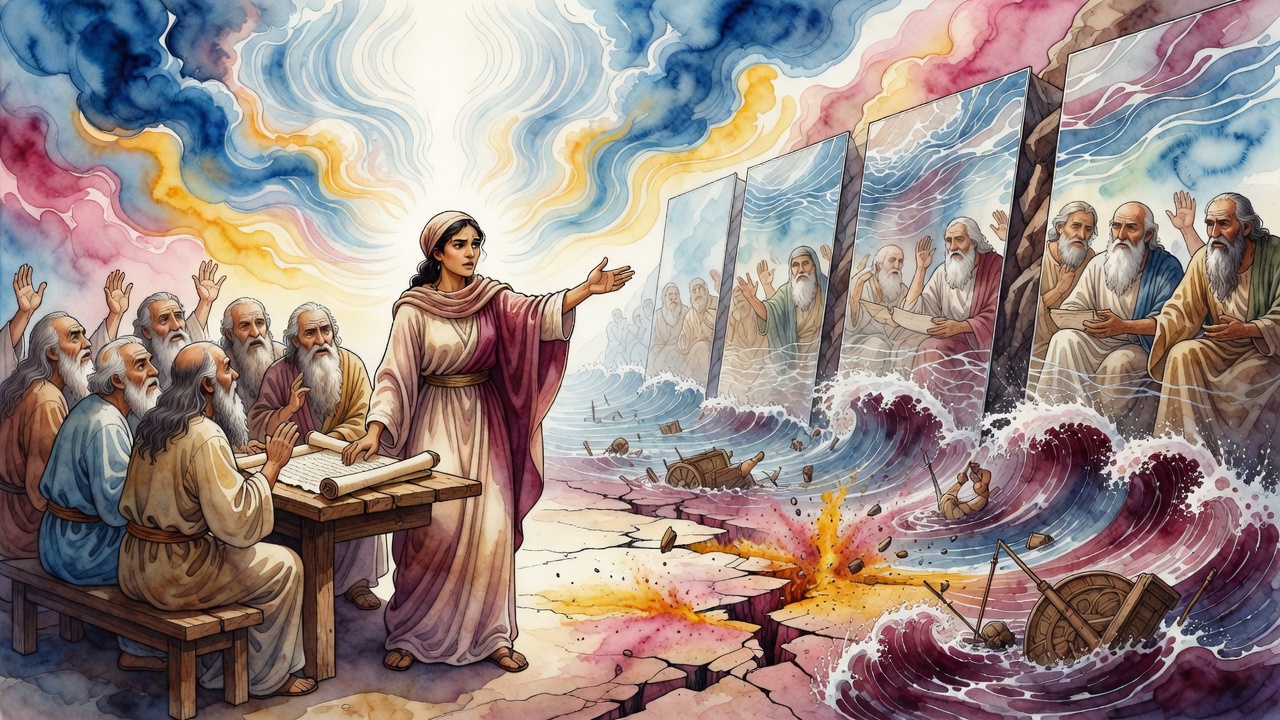
Rabbi Yohanan challenges his students. What did the walls of the Red Sea look like? No one can quite conjure the image. He offers his own vision: a window lattice, fine latticework holding back the water. The study hall nods as study halls do when a master paints a picture.
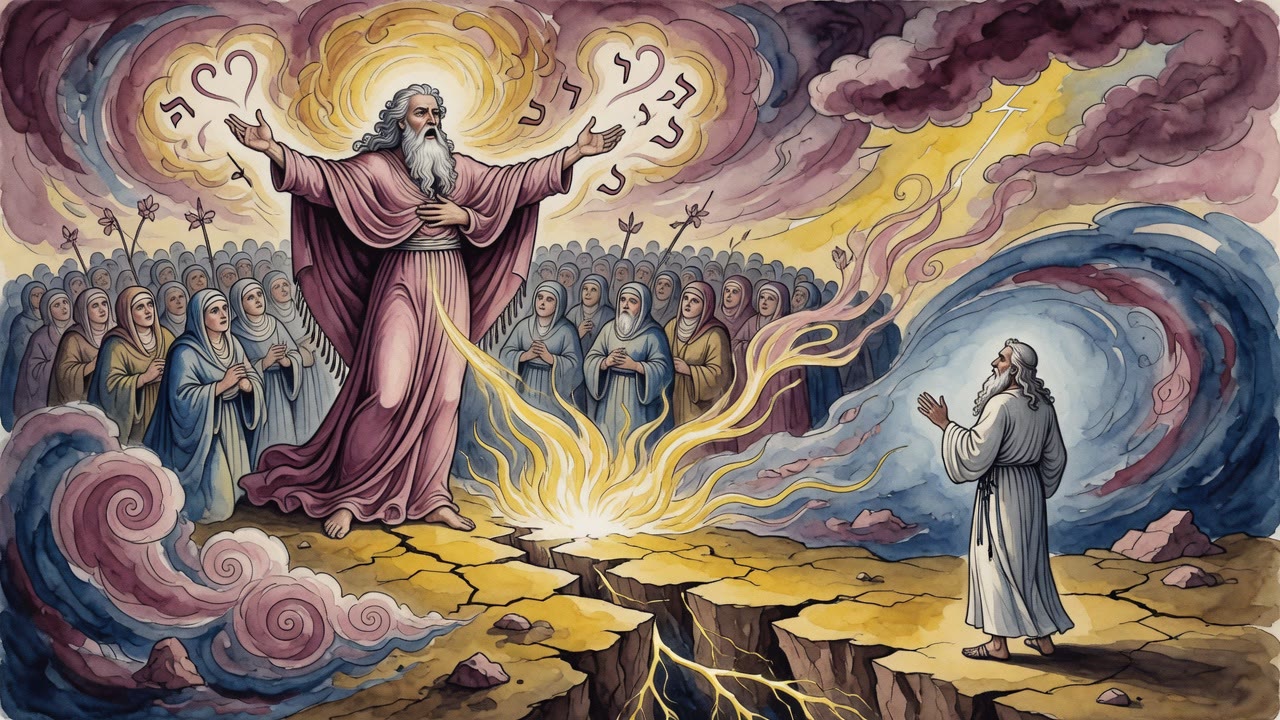
Then a voice pierces the quiet. No, it was not like that at all. Everyone looks up. Peering through the window is a very old woman. Who are you? Rabbi Yohanan asks. I am Serah bat Asher, she answers. I was there. I crossed the Red Sea.
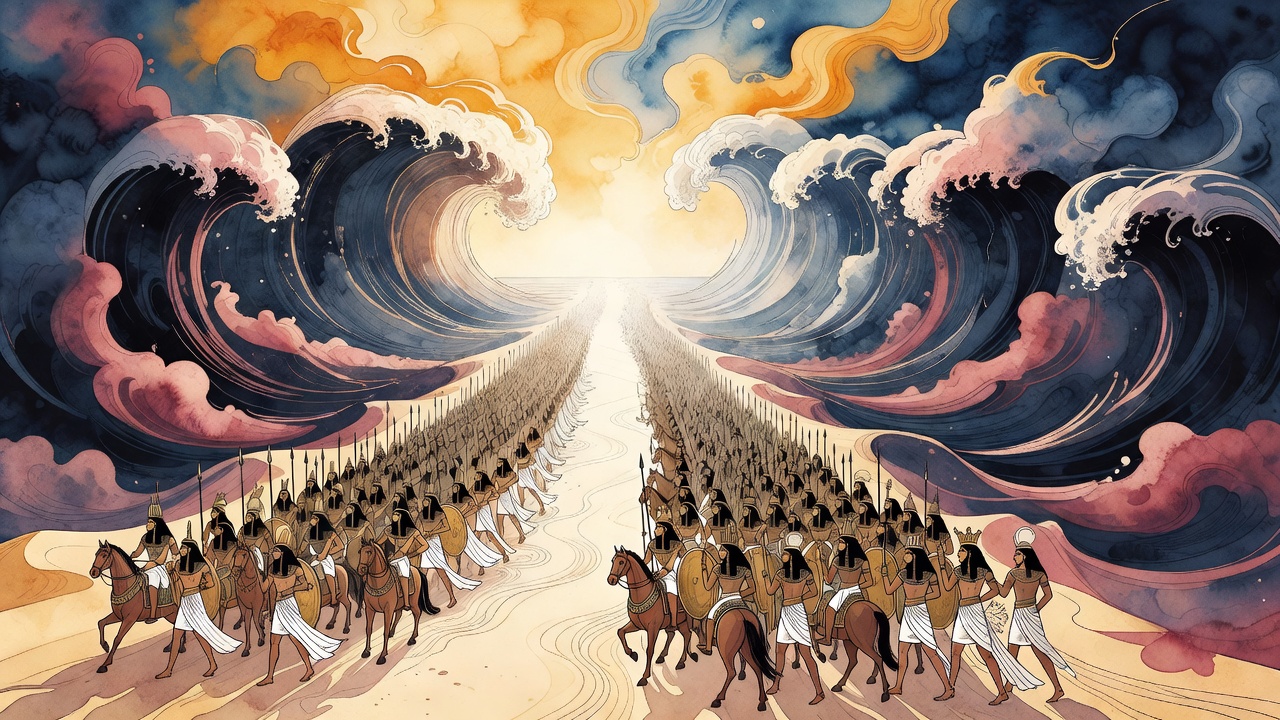
The room stills. Serah is the one who entered the Garden of Eden alive, the witness who outlived centuries and still shows up when memory needs a correction. I know exactly what the walls resembled, she says. They resembled shining mirrors, mirrors in which every man, woman, and child was reflected. It seemed like an even greater multitude crossed there, not only those of the present, but also those of the past and future as well.
Reflections in the Water
After Serah speaks, no one dares contradict her. Why would they? She was there. Her knowledge is firsthand. The walls reflected all of Israel, past, present, and future, walking through that sea. The water shone because of those who had drunk deep of Torah's waters, like Moses and Aaron. Their wisdom illuminated the very waters themselves.
A child in the column sees not only his own face in the standing wave but faces he has not yet met. A grandmother sees faces she buried in Egypt. The path between walls is a census of the people across time. No lattice. A living gallery of who Israel is and will be.
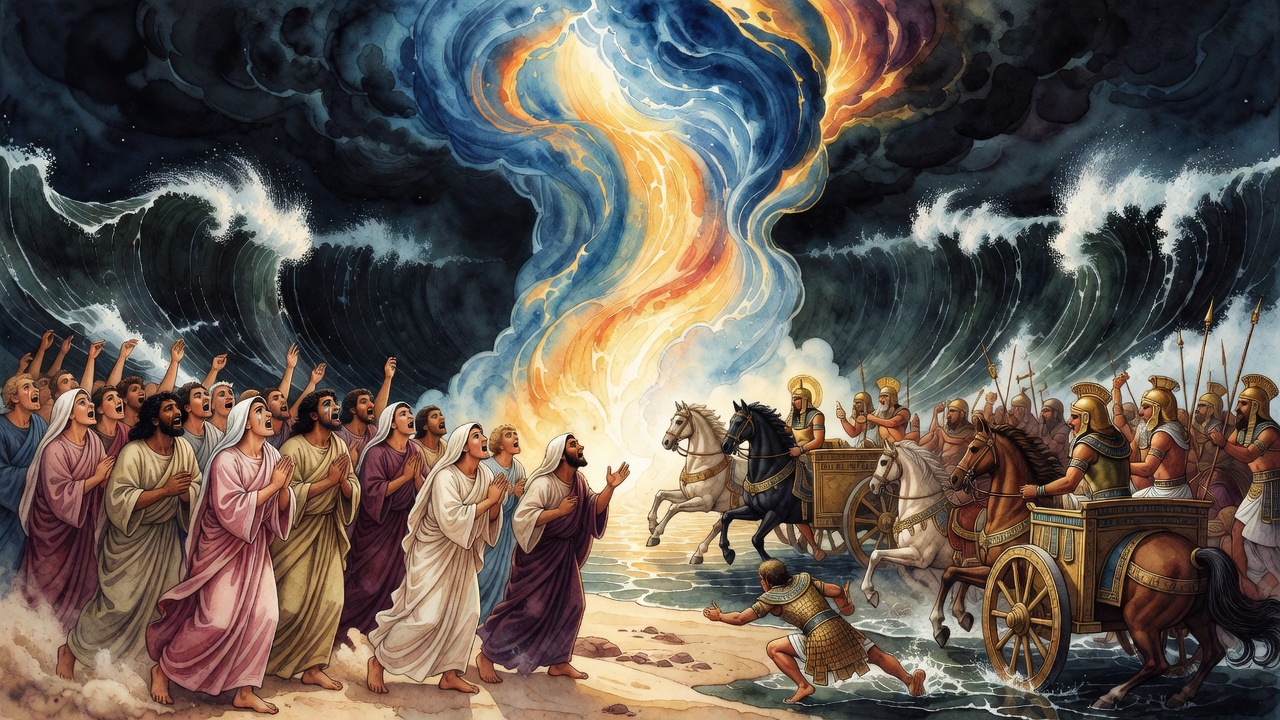
Pharaoh's army does not get a mirror. They get a road that closes.
Who Hardens and Breaks
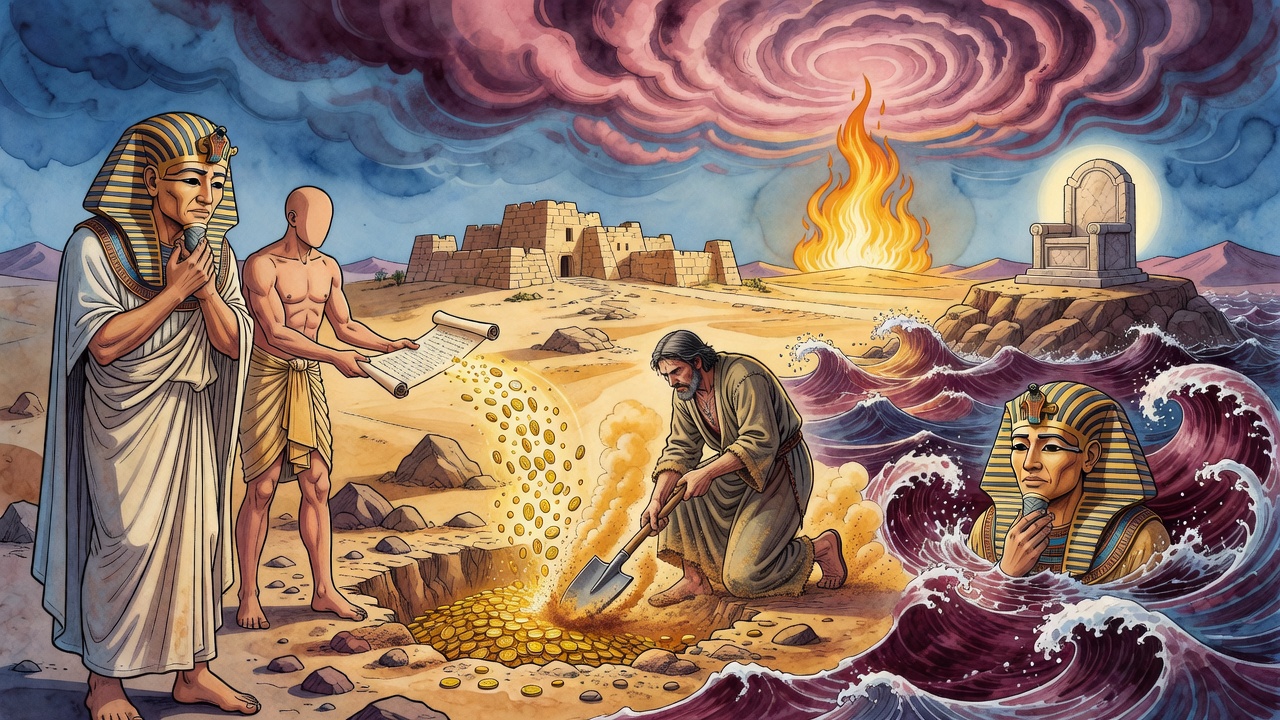
Job asks who has ever hardened his heart against God and come away whole. The answer walks the generations. The Flood's generation set itself against Heaven, and the waters swept it away. Babel hardened itself and was scattered. Sodom hardened itself and fire rained down. Then comes Pharaoh, proudest of them all. He sneered, I do not know the Lord, when the command came to send out the people. He refused and refused, his heart growing harder with each plague.
The pattern could not be broken for him either. When the plague of the firstborn struck in the night, his defiance shattered, and he sent Israel out with his own mouth. The verse that opens the next chapter, and it came to pass when Pharaoh sent out the people, is the closing line of his hardness. Strength of will is no shield against the One who made the world.
He chases them anyway into the corridor of mirrors. Hardness dies hard. The sea finishes what the plagues began.
Earth and Sea Argue
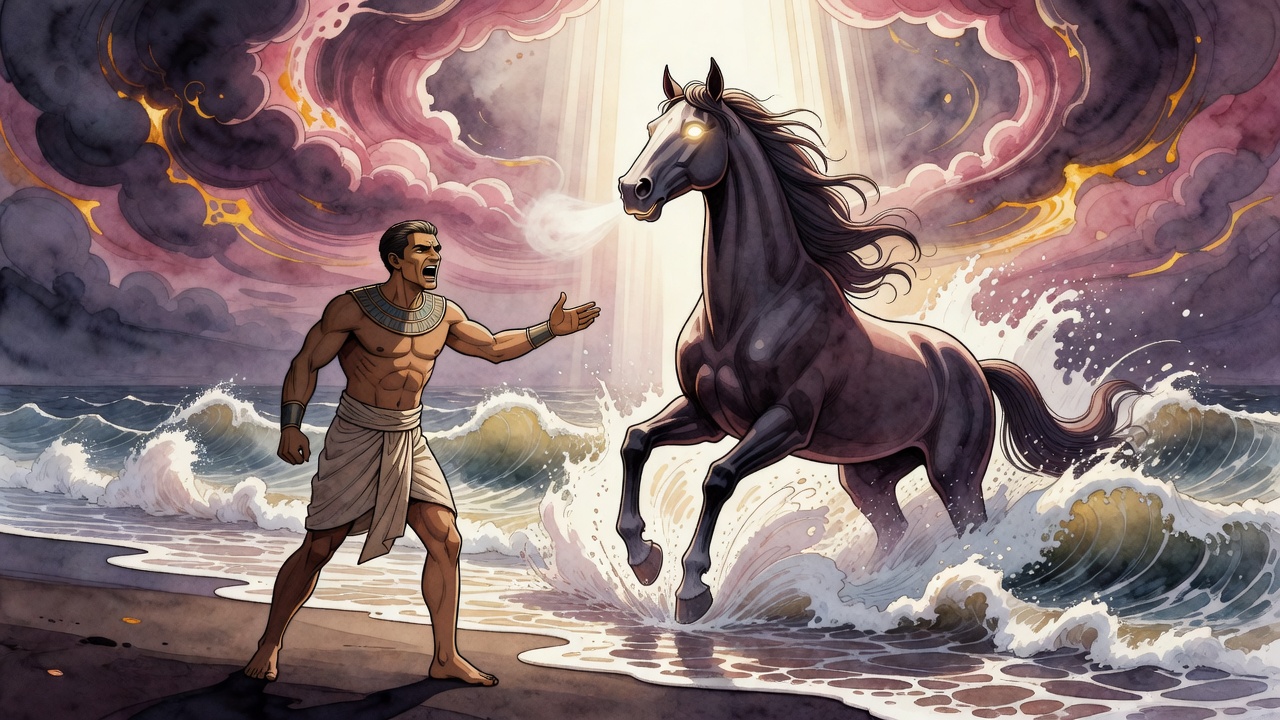
When the Egyptians drown, the dead have to go somewhere, and a quarrel breaks out beneath creation. The sea hurls the bodies up onto the dry land, and the dry land hurls them back into the sea. Neither wants them. The earth makes her case. When I once received the blood of a single man, Abel, I was cursed for it. If one murder stained me so deeply, how can I now take in the blood of these countless multitudes and not be condemned forever?
The land fears that accepting Pharaoh's host will drag her into judgment. So the Holy One, blessed be He, gives her an oath that she will not be brought to trial for receiving them. You stretched out Your right hand. The right hand, the teachers read, is always the language of a sworn oath. Only once the earth is sworn safe does she open to swallow them down.
Even creation's elements demand justice before they obey. The same sea that stood like mirrors for Israel becomes a reluctant grave for Egypt, and the ground accepts the bodies only under divine bond.
After the Oath
Israel walks out singing. Serah carries the image of mirrored walls for a thousand years and more until a study hall needs her. Pharaoh's hardness becomes a proverb. The earth keeps the oath and the dead. Children of the future will see themselves, by Serah's word, already walking between those waters in the reflection of a night their ancestors crossed.
No one who hardens against God stays whole. No one who crosses under the mirrors walks alone. The lattice theory dies politely in a room where an eyewitness still breathes. The sea remembers both the gallery of faces and the quarrel over corpses. Heaven remembers the right hand raised in oath so that dry land could finish the work without fear of Abel's old curse.
Somewhere a student erases lattice from his notes and writes mirrors. The correction feels small. It is not. It is the difference between a pretty image and a people seeing itself complete while an empire drowns behind them.
← All myths