Angels Shot Arrows When Egypt Entered the Sea
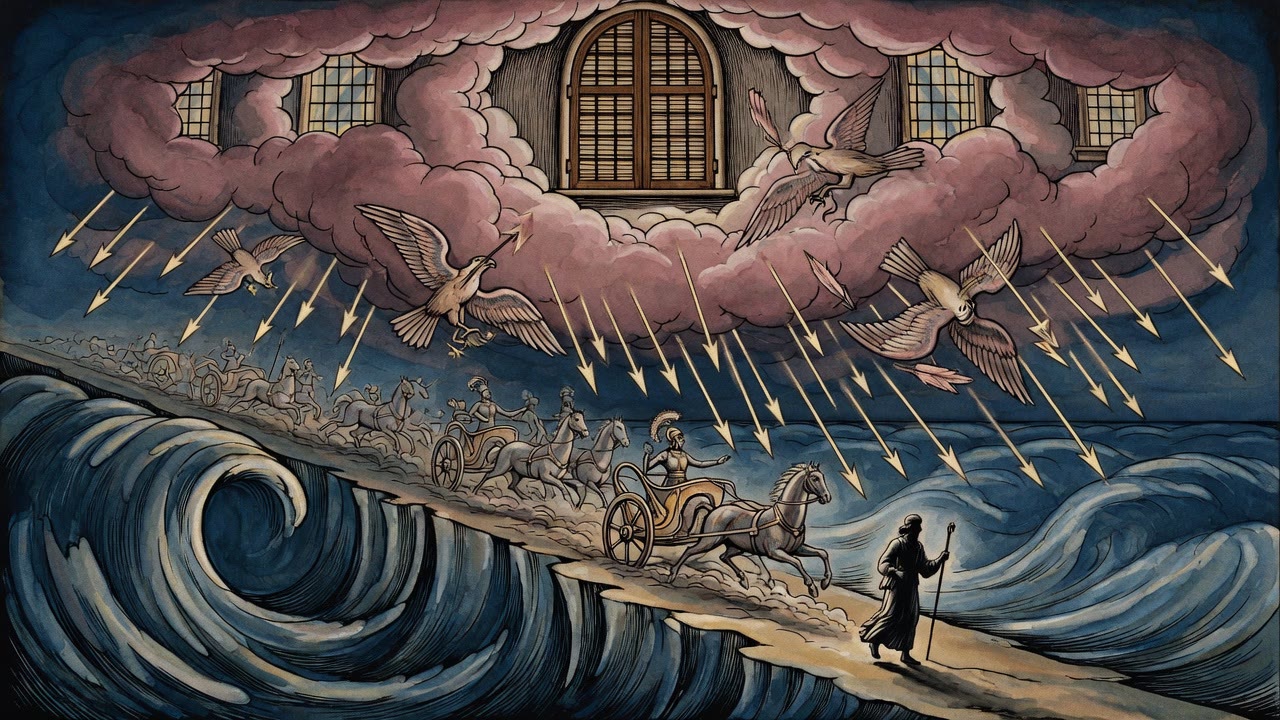
The last heel left the sea path. A chariot wheel hit the mud. Then heaven shut its windows, and the arrows started.
Table of Contents
The last of Israel climbed out of the sea path with mud still sucking at their heels. Behind them the walls of water held. Ahead of them the far shore was hard ground and breath. Between those two facts, the first of Egypt drove in.
 Click for full size
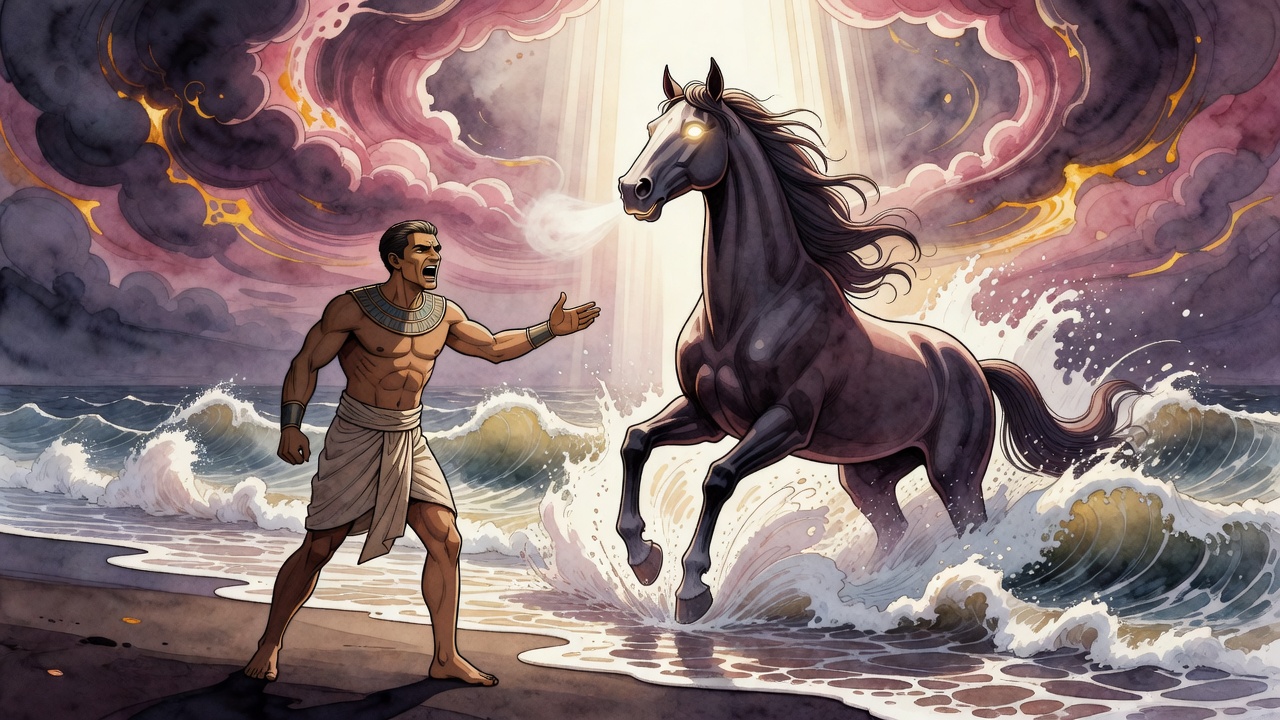
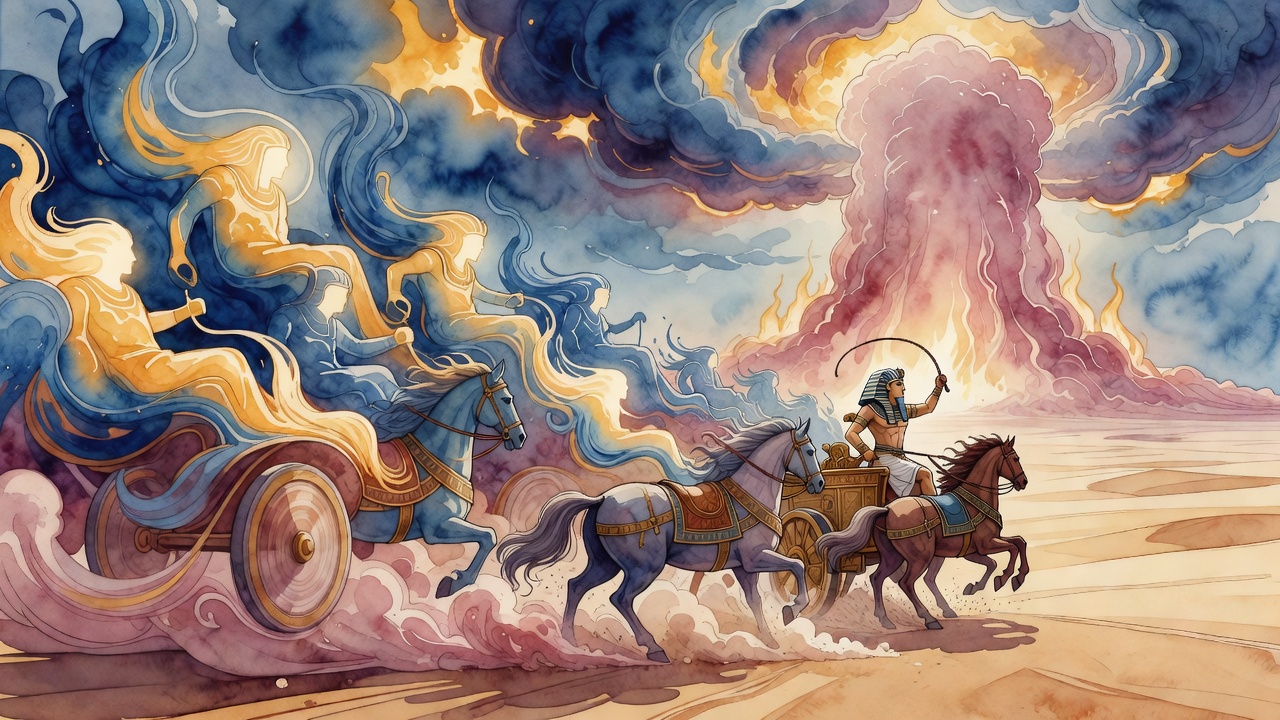
Chariot wheels hit the wet floor. Horses screamed at the strange road. Pharaoh's men did not look up. They looked forward, at the backs of the people they meant to drag home in chains.
The Last Heel Left the Path
When the last Israelite foot left the path and the first Egyptian foot entered it, the timing locked. Escape finished. Pursuit began. Children still dripping on the shore turned at the noise. Elders gripped staffs. No one had a weapon that could reach a chariot.
They had something else. A King who had already chosen which bird would live.
The King Shut Every Window
Above the water a dove fled a hawk and shot into a king's palace. The king opened the eastern window. The dove slipped through. When the hawk followed, he shut every opening and reached for arrows.
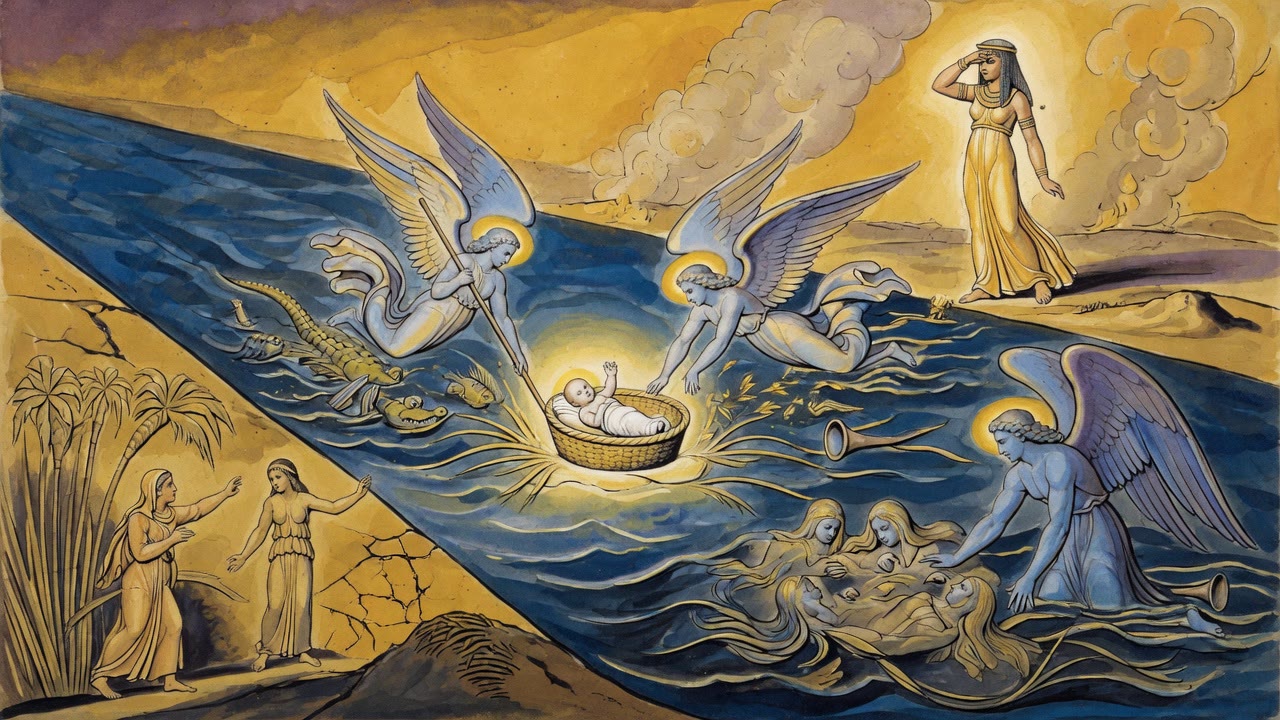
Israel was already on the bank. Egypt was already in the hall of the sea. The palace was the road God had cut through the deep. The eastern window was the far shore. The arrows were not only weather. Ministering angels took aim.
The king who had opened the road for the dove now sealed it against the hawk. Mercy had a door for the bird that fled. It had none for the bird that would not stop hunting once the window stood open.
Angels Shot Hail and Sulphur
The angels did not wait for a human battle line. They shot. Hailstones fell. Fire came with them. Sulphur rode the air until lungs burned. The sea path, which had been dry enough for oxen and infants, became a killing floor for the army that had trusted mud and bronze.
Egypt had come with six hundred choice chariots and a host behind them. Choice meant nothing under arrows that did not miss. Men who had cracked whips in Goshen learned what a cruel messenger feels like from the other side. Young, hard angels took the work.
A driver near the front of the column tried to turn. The walls of water gave him no shoulder. A second rank piled into the first. Bronze scraped bronze. Horses reared and went under spray that should not have been there on a dry road.
On the bank, an Israelite woman pulled her child against her ribs and watched the path that had saved her become a trap for the men who had owned her labor.
God Shook Egypt Like a Pot
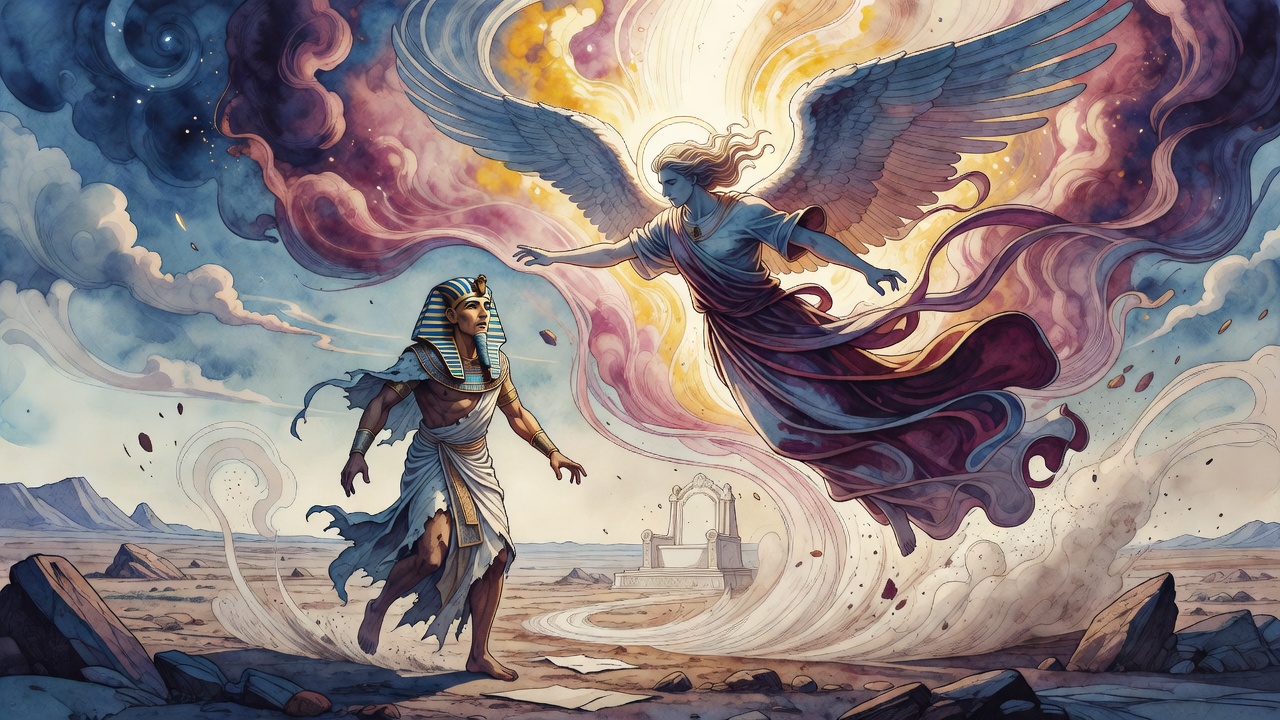
God took Egypt in both hands and shook. Bottom flew up. Top flew down. Whatever had lived inside the column was hurled into air and water without dignity.
Bodies that had sat high on chariots went under. Bodies that had driven from the rear found themselves flung forward into the collapse. The order of a parade broke across a sea.
Before the blow, God had made Egypt able to stand. A weak enemy falls too soon. A strengthened enemy can receive the full weight. The host that entered the path was made able to feel what waited there, and then the blow fell.
On the far shore, Israel did not cheer with clean throats. They watched a nation reverse into foam. What changed for good was not a clever tactic. It was a closed window and a shaken pot.
Whoever Rises Against the Children
All who help Israel help, as it were, the Holy One. All who rise against the children rise against the Father who claims them.
Abraham once rode out at night against kings who had taken his kin. He deployed. He struck. He returned with the captives. Heaven counted that night as service to God, not only as a family raid. Pharaoh had taken six hundred choice chariots against a people still tasting freedom. Those chariots went into the sea.
The dove does not win by beak and claw. The dove wins because the palace has a king. Egypt learned that with water in its mouth. Israel learned it with salt on its lips and angel fire still flashing behind them on a road that would never open the same way again.
An angel can still curse a place for standing idle when the children are under attack. Help withheld is not neutral. Help given lands on the King Himself. That is why the windows closed so fast when the hawk crossed the threshold of the path.
← All myths