What Happened to Pharaoh After the Red Sea
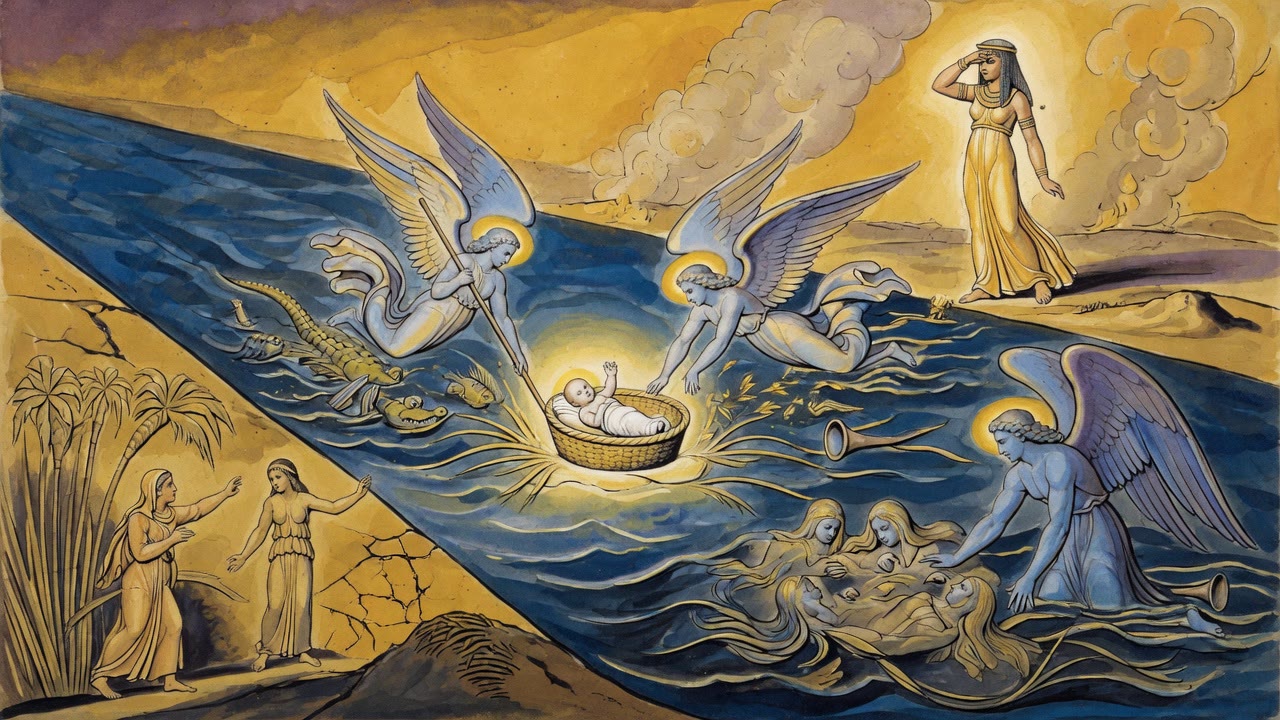
The last horse went under first. Pharaoh confessed into the wave, and Gabriel answered with an iron chain, not a rescue.
Table of Contents
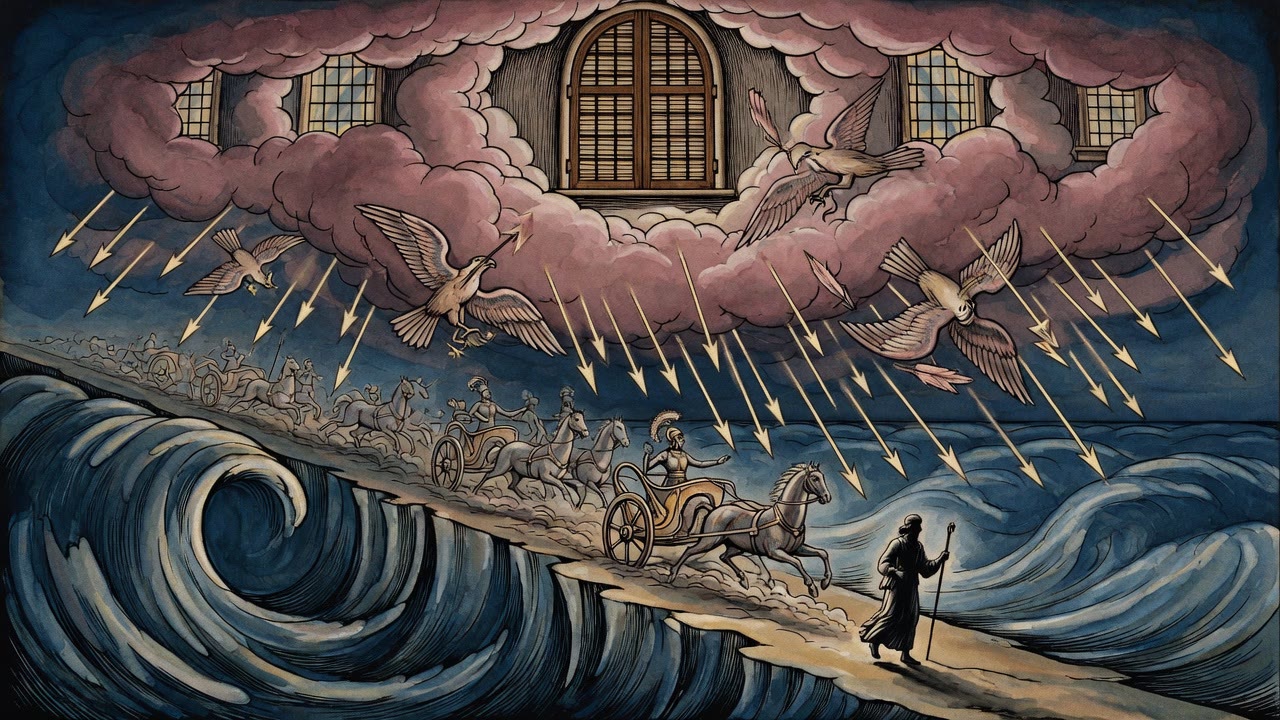
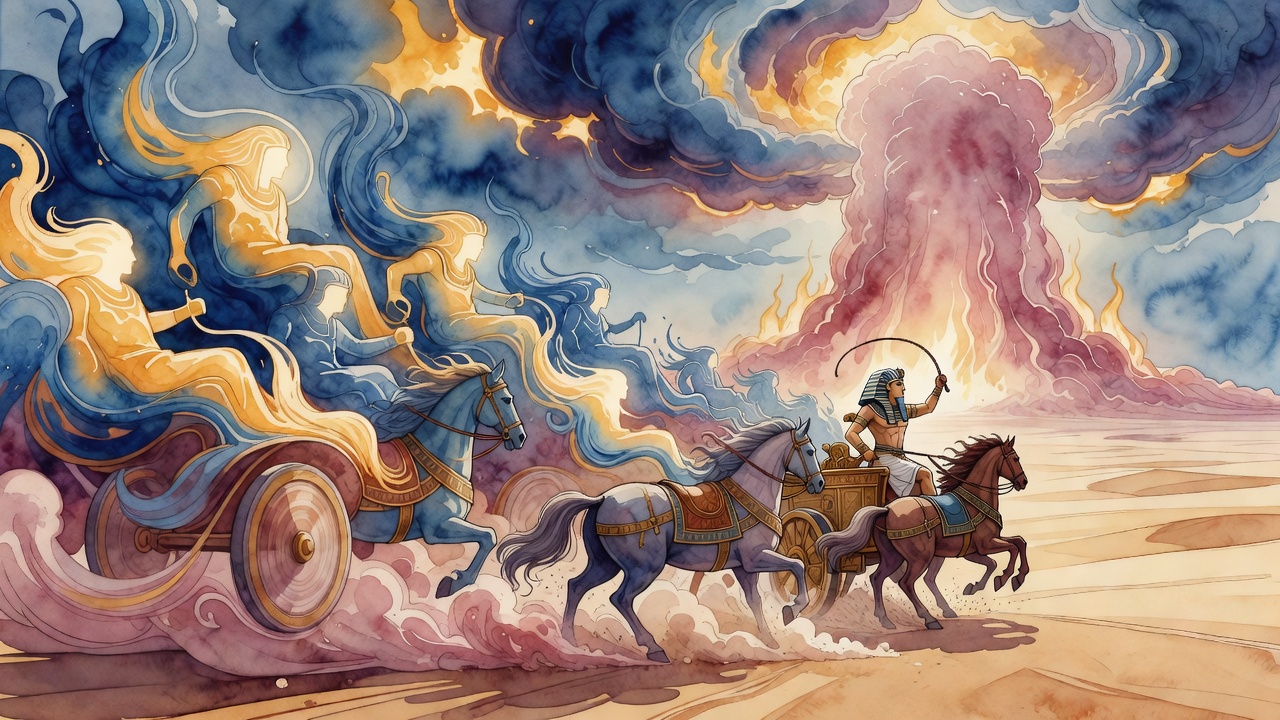
The last horse went under first. Then the chariot, the axle still spinning, caught by the surge and dragged sideways. Pharaoh felt the water of the Red Sea take the wheels from under him, and for a moment he was neither king nor god but a man tumbling inside a fist of sea. The pillar of cloud had already closed behind the Israelites. The channel they had walked through on dry ground was collapsing from both sides. He could hear his officers screaming their last orders, and then he could not hear them at all.
 Click for full size
The Cry at the Turning Water
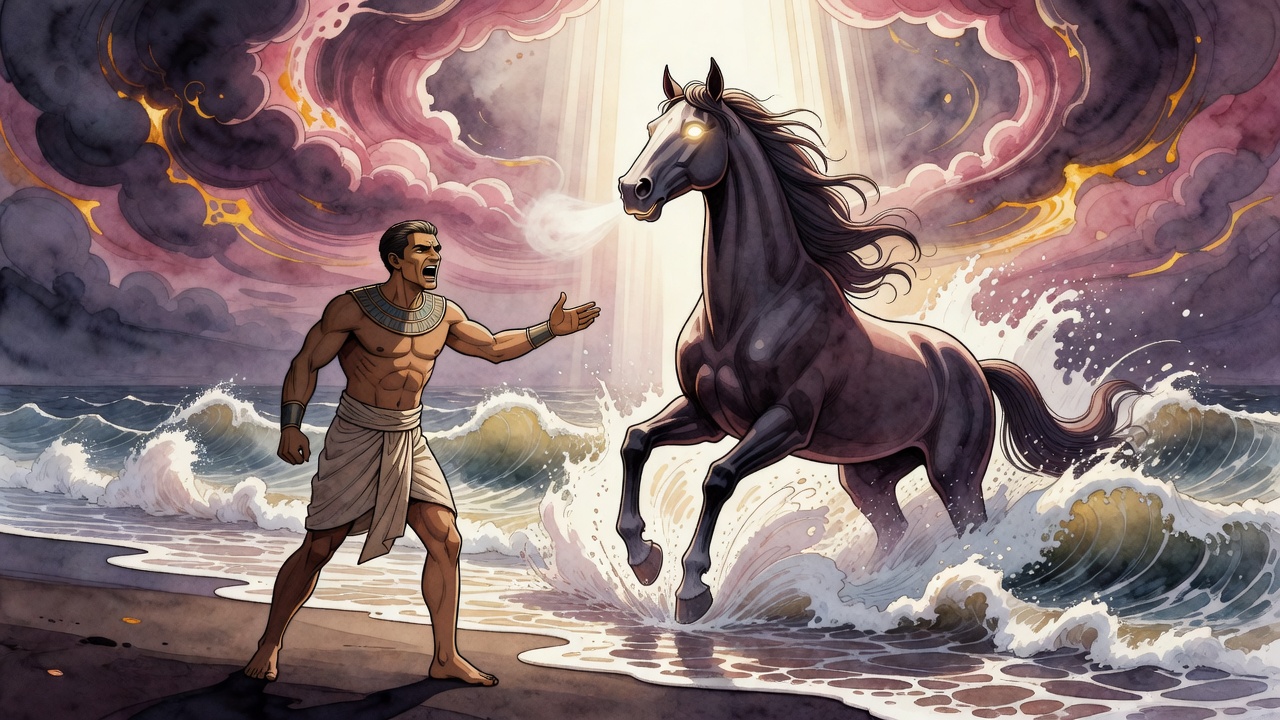
He cried out. Not to the granite faces that had cracked outside the temple doors. Not to the shrines the last fire had melted down to slag. Those gods were rubble. He cried to the one who had done this. He pointed a finger heavenward while the billows jostled him, and he shouted into the wave.
"I believe in You. You are righteous. I and my people are wicked. There is no god in the world beside You."
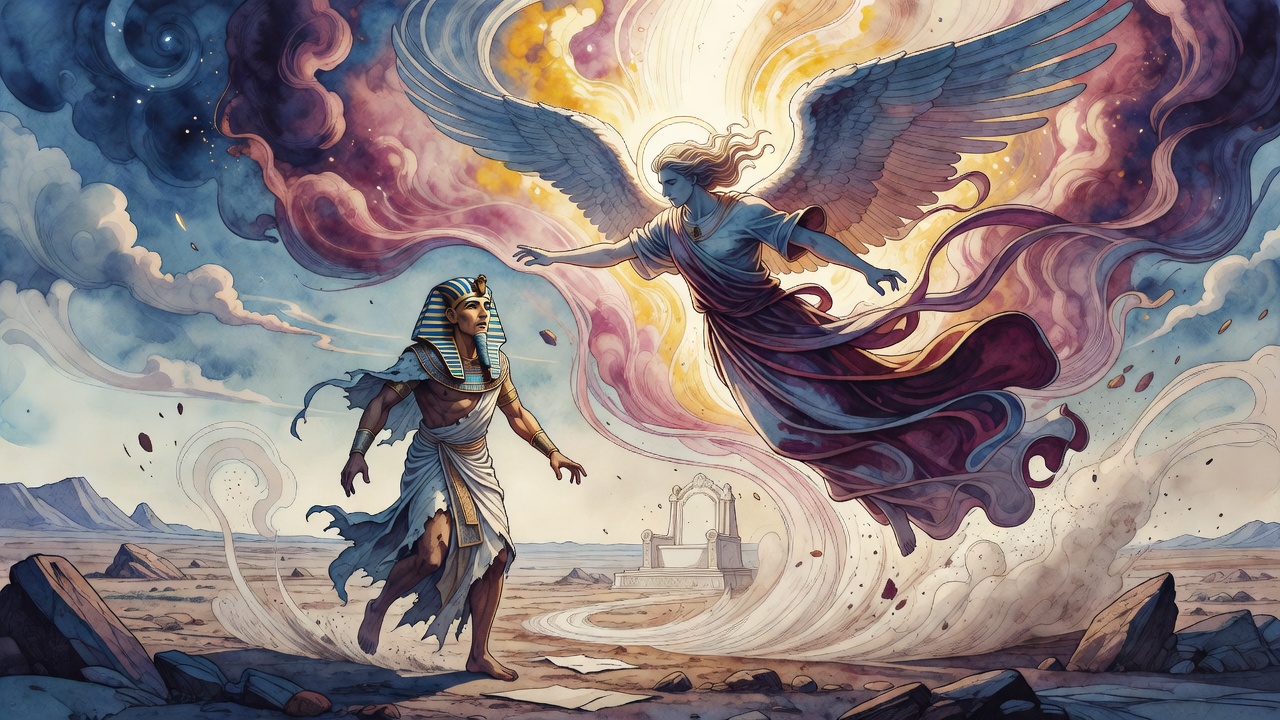
The angel Gabriel came down at once. He came not to save. He laid an iron chain about Pharaoh's neck, held him, and spoke into his face. "Villain. Yesterday you said, 'Who is the Lord that I should hearken to His voice?' And now you say the Lord is righteous." (Exodus 5:2)
The confession, arriving only because the water was at his throat, did not move Gabriel. It was the declaration of a man with nothing left to lose, which is not the same as repentance. Gabriel dropped him into the depths. Not to the silt where the chariots were settling. Into a holding that would last.
Fifty Days Under the Chain
Gabriel tortured him there for fifty days, to make the power of God known to him. Pharaoh, who had called himself a source, learned the length of a day from the inside of a sea he now owned nothing of. The army was already gone. The horses were already gone. He remained, chained, a king with no country and no gods, while Israel stood on the far shore and raised a song.
He heard that song through the water. The people he had hunted were singing. He had pointed his finger at the sky and spoken the Name too late to keep a single chariot. The chain did not come off for the length of a season of weeks.
What Israel Cried Before the Water Moved
Earlier, while the Egyptian army was still visible across the sand and drawing closer by the hour, Israel had called out at the edge of the sea. The prayer was not only a plea for rescue. It was an argument.
"Sovereign of all worlds," they cried, "these Egyptians who have arisen against us to destroy us from Your world are as though they have risen up against You. Let the majesty of Your might and Your fierce anger consume them like stubble." (Exodus 15:7)
They were pressing a claim. An attack on Israel was an assault on the Name that Israel carried. Then the prayer moved upward. "There is none like You among the ministering angels." Michael, Gabriel, the entire heavenly court bore the divine suffix El (אֵל) in their names, each one a reflector of the light. The light itself belonged to God alone. When Israel named this at the sea, they were placing every hierarchy, celestial and earthly, in its correct order. Pharaoh's whole life had been built on the claim that he was a source. Standing at the water's edge about to be answered, Israel simply said otherwise.
Even Pharaoh, tumbling, found a tongue for the same song. "Who is like You, glorious in holiness, fearful in praises, doing wonders?" He said it from inside the wave, after the chain, after the confession, a late verse from a mouth that had spent years asking who the Lord even was.
The Gods That Fell Before the Drowning
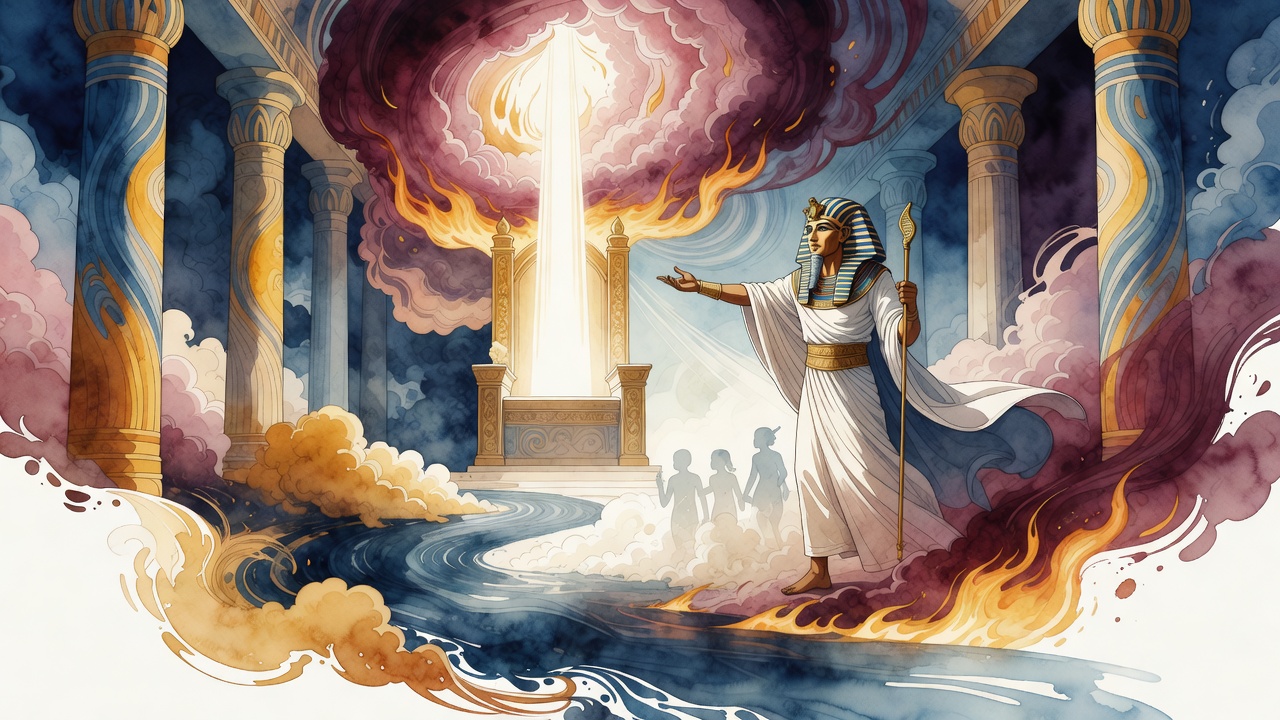
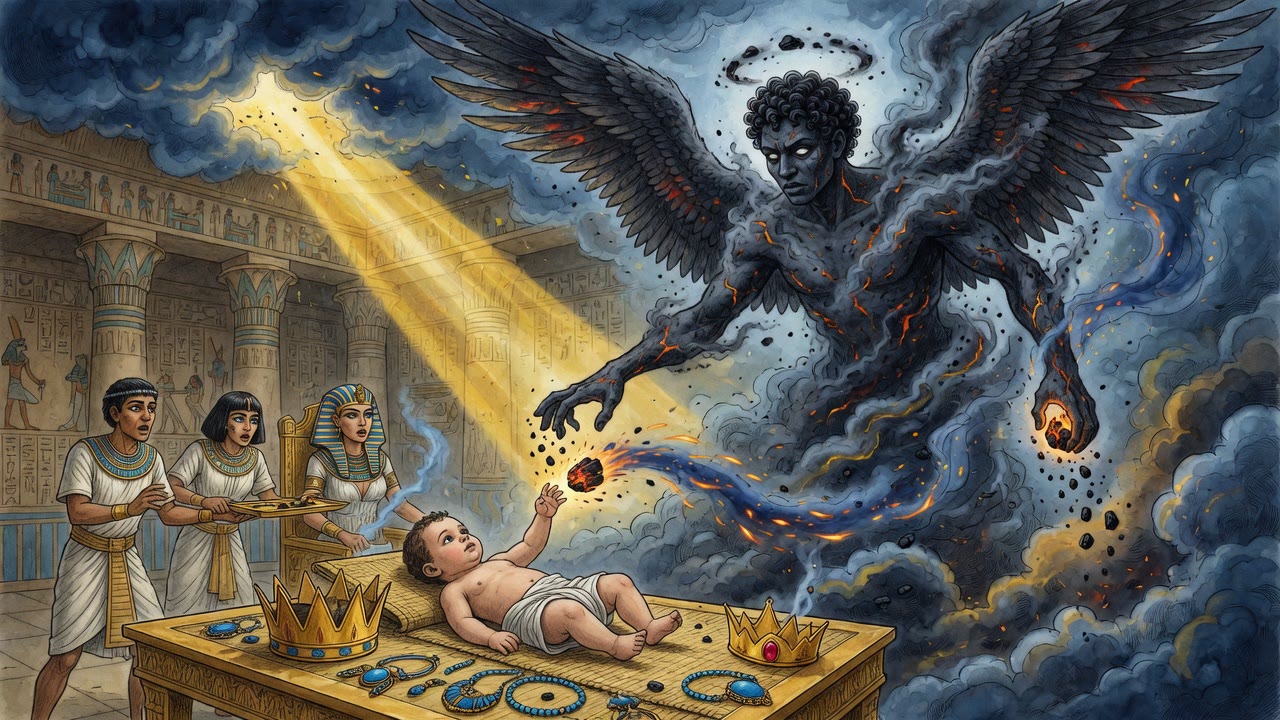
The destruction did not begin at the sea. When God brought the plague of the firstborn, He started first upon their gods, as it is said, "Against all the gods of Egypt I will execute judgments. I am the Lord." (Exodus 12:12) Stone images broke into small pieces. Wooden gods rotted on their pedestals and became heaps of dust. Silver, brass, iron, and lead ran in sheets across the temple floors. When the Egyptians went under, fire descended from heaven and consumed whatever broken pieces still cluttered the sand.
The sequence mattered. The gods went first. The army followed. Pharaoh survived both, because Gabriel had a use for him that death would have wasted.
The King Who Learned Nineveh's Fast
At the end of the fifty days Gabriel installed him as king of the great city of Nineveh. Not back to Egypt, where whatever remained of his court would have needed him to perform the role of pharaoh, and the role was now impossible. Nineveh: the city that would, centuries later, be told to repent or perish (Jonah 3:5).
When Jonah came and prophesied overthrow, it was Pharaoh who seized with fear, covered himself with sackcloth, and sat in ashes. With his own mouth he made proclamation through Nineveh: let neither man nor beast, herd nor flock, taste anything; let them not feed nor drink water. "For I know there is no god beside Him in all the world. All His words are truth, and all His judgments are true and faithful."
The man who had refused to release Israel through ten catastrophes, who had watched his gods dissolve and his army vanish, now ruled a city that was about to be told the same sentence he had already swum through. He knew what perishing looked like. He had worn the chain. When the call came to Nineveh, there was already a king in the city who could not say, even in private, that he doubted it.
← All myths