The Sea Drowned the Egyptians in Three Ways Matched to Their Guilt
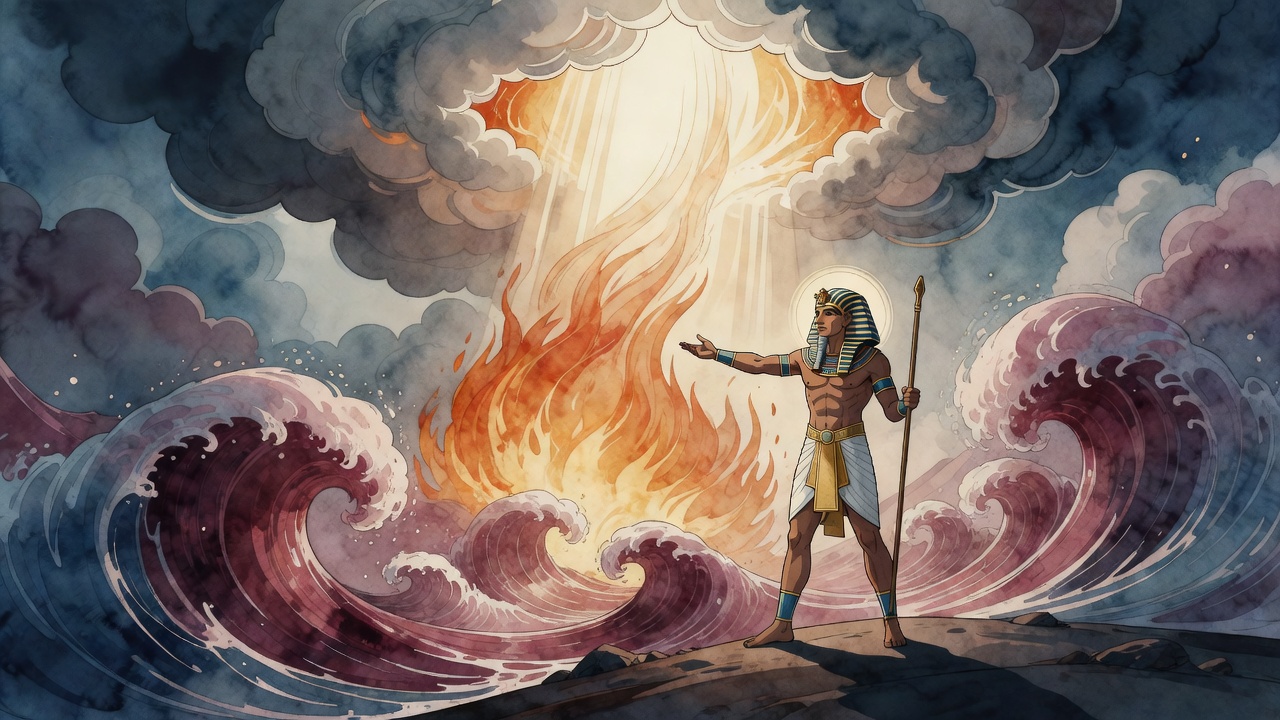
The Song of the Sea drowns Egypt three different ways. Straw, stone, and lead were not poetry but verdicts, each weight matched to its guilt.
Table of Contents
 Click for full size
Three Words, Three Sentences
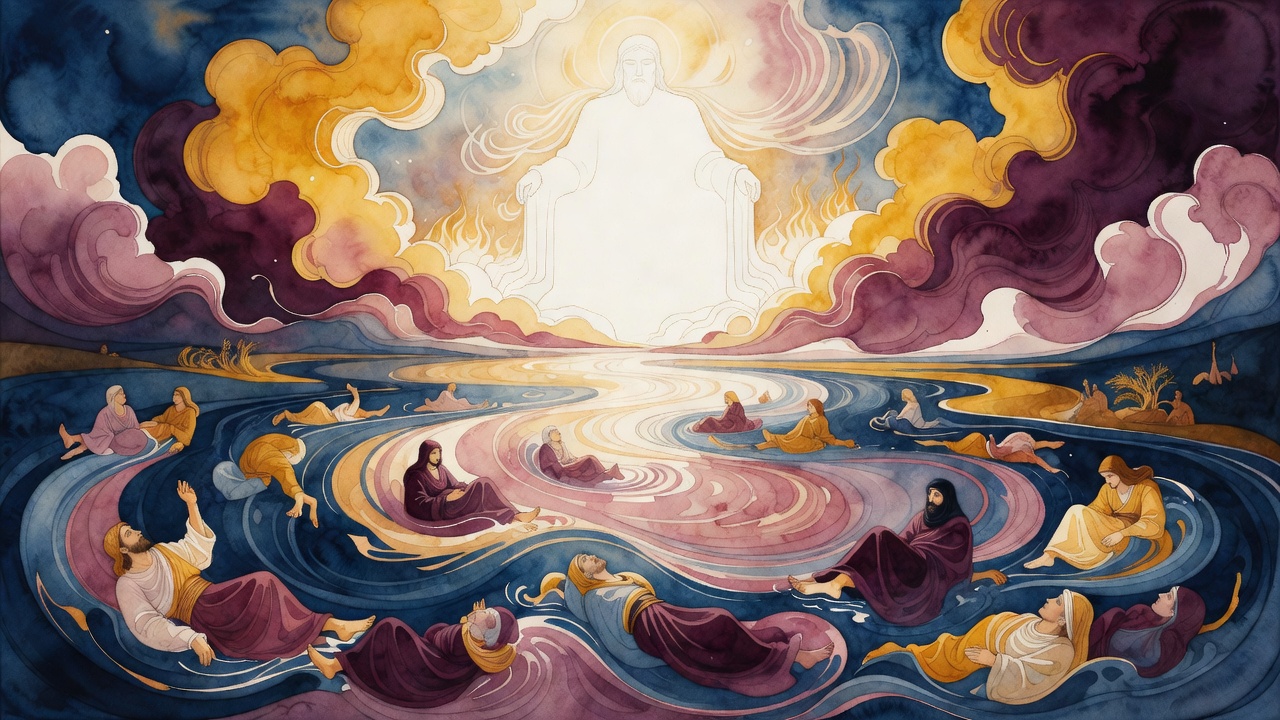
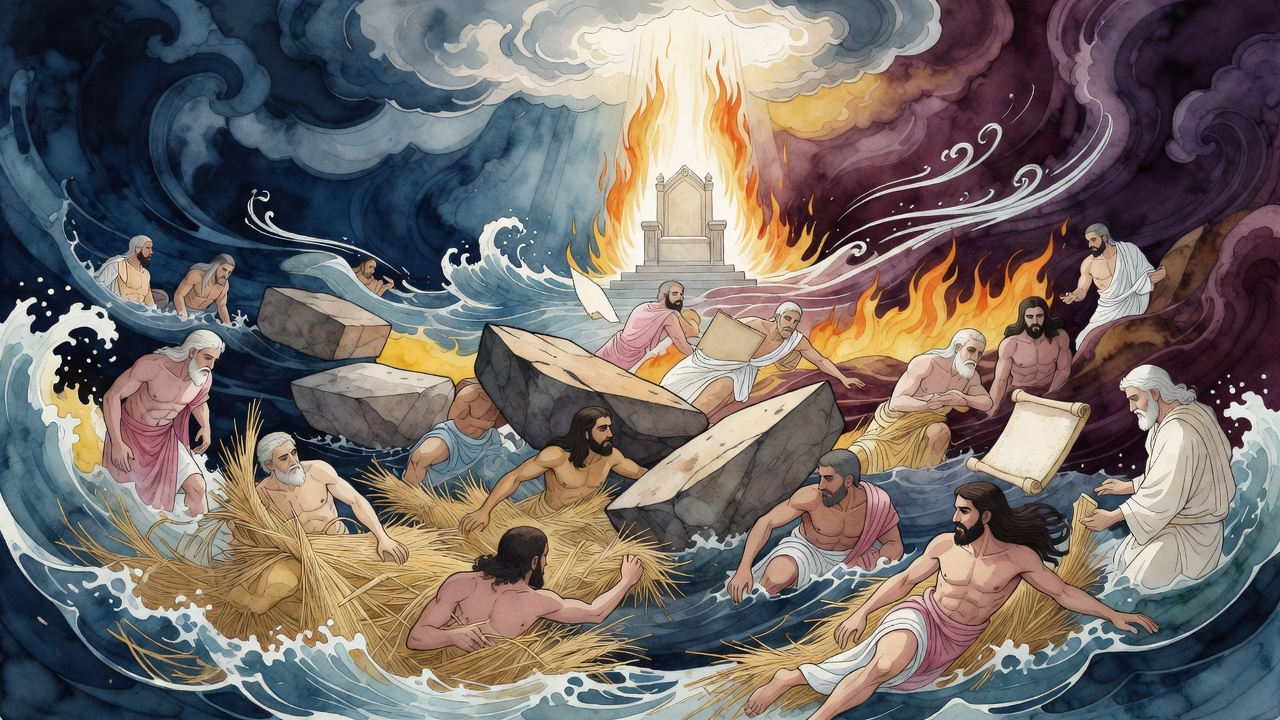
The Song of the Sea is short enough to fit on one scroll panel, and if you sing it fast you miss the courtroom buried inside it. Three verses, three fates. Some Egyptians are tossed like straw across the churning surface. Some go down like a stone. Some sink like lead into the mighty waters.
A poet would call that variation. The sages who collected the old midrashim and gathered them into the grand anthology called Yalkut Shimoni refused to call it anything so innocent. They heard a scale. Three weights of metal and chaff for three weights of guilt, and they were not satisfied until they had sorted the bodies by wickedness.
Straw on the Surface, Lead in the Deep
Here is where the judgment becomes unsettling. You would expect the cruelest to sink fastest, the heaviest punishment for the heaviest sin. The midrash flips it entirely. The most wicked are tossed like straw, flung and battered across the churning water in a death that will not finish quickly. They thrash. They are denied the mercy of going under. The surface is their torment precisely because it keeps them where drowning cannot end them.
The middling sinners, the ones who went along without particular malice, go down like a stone: a cleaner fall, a steadier descent. And the cleverest, the ringleaders whose intelligence made their cruelty deliberate, sink like lead into the mighty waters, plunging fastest and deepest of all.
The midrash has a reason for this order. A fool who does wrong and a wise man who does the same wrong are not the same. The one who knew better, who understood the weight of what he was doing and chose it anyway, falls with the most terrible speed. Knowledge intensifies guilt. What an Egyptian soldier did under orders from men he feared carries less weight than what an overseer chose to do with full awareness of his own power.
Pharaoh's Chariots and the Logic of Measure
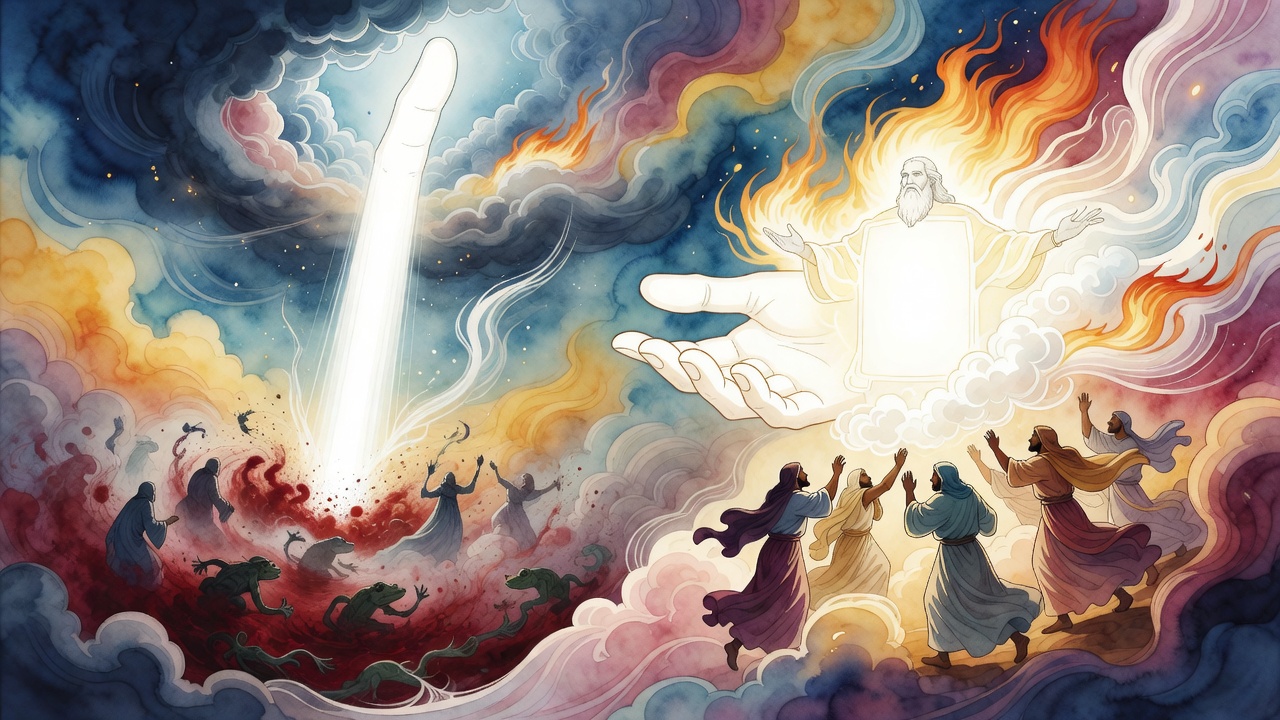
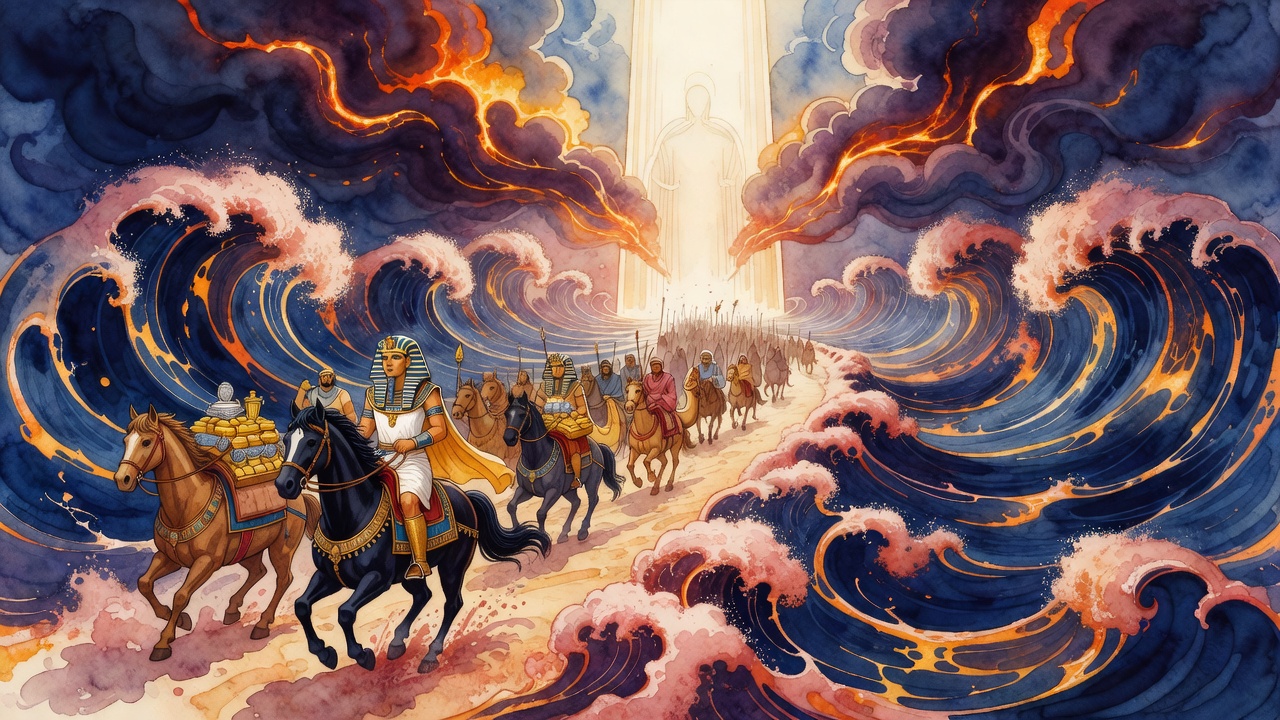
The Yalkut Shimoni does not stop at three kinds of death. It circles back to the beginning, to the verse that says God hurled the horse and its rider into the sea, and asks what Pharaoh's chariots were actually carrying. Not just soldiers. The plunder those soldiers rode out to reclaim from a fleeing slave nation was not scattered across the sea floor. The horses were laden with the gold Egypt owed Israel, and when they drowned they were already, in some sense, making the delivery.
The measure-for-measure logic runs through the whole episode like a river current. Egypt enslaved Israel in water, in the mud and brick and sweat of the Nile delta. Egypt dies in water. The people who cast infants into the river are cast into a river. The power that made Israel build storehouses for Pharaoh's wealth watches that wealth return to Israel as the army drowns around it.
The Angels on the Shore
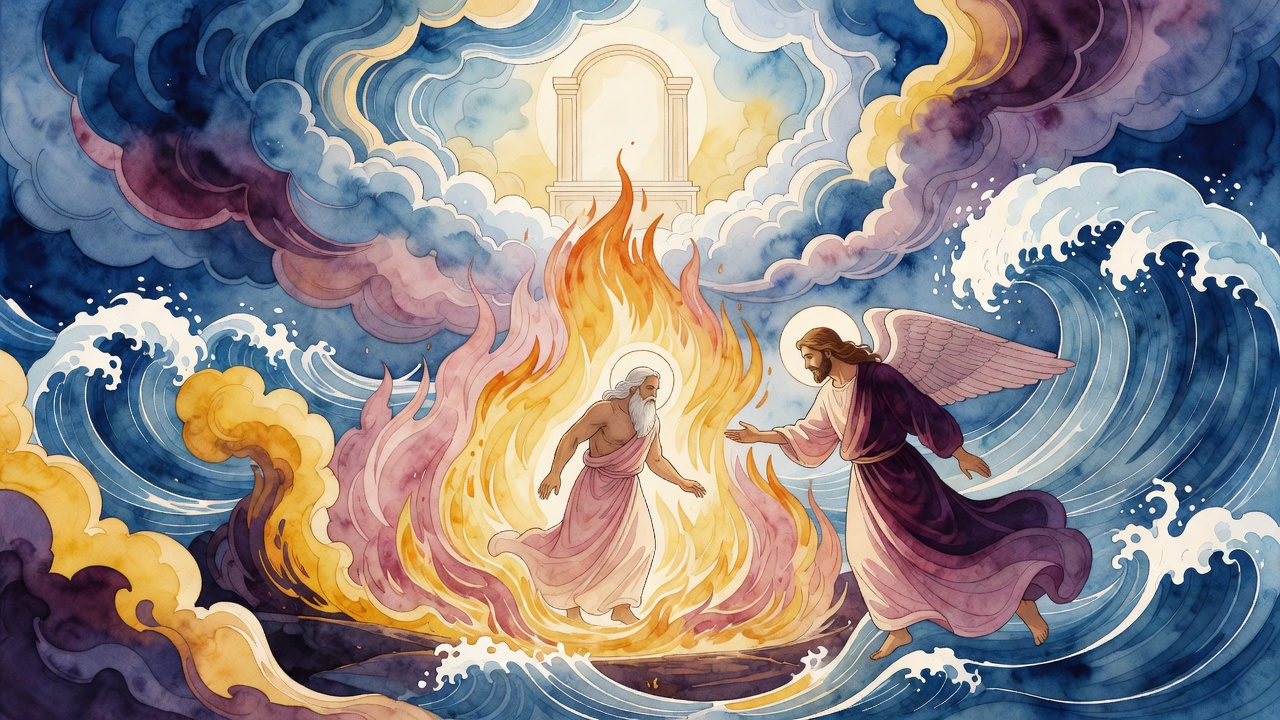
One tradition in the Yalkut preserves the detail that the angels wanted to sing over the drowning Egyptians, the way armies sing over defeated enemies. God stopped them. "These too are My creation," the Holy One said. "You do not sing while My creatures drown." The sea was a courtroom, not a celebration. Every weight assigned its proper death, every grain of wickedness weighed and answered, and not one instant of it was supposed to feel like a festival. The verdict was just. That is a different thing from being joyful about it.
← All myths