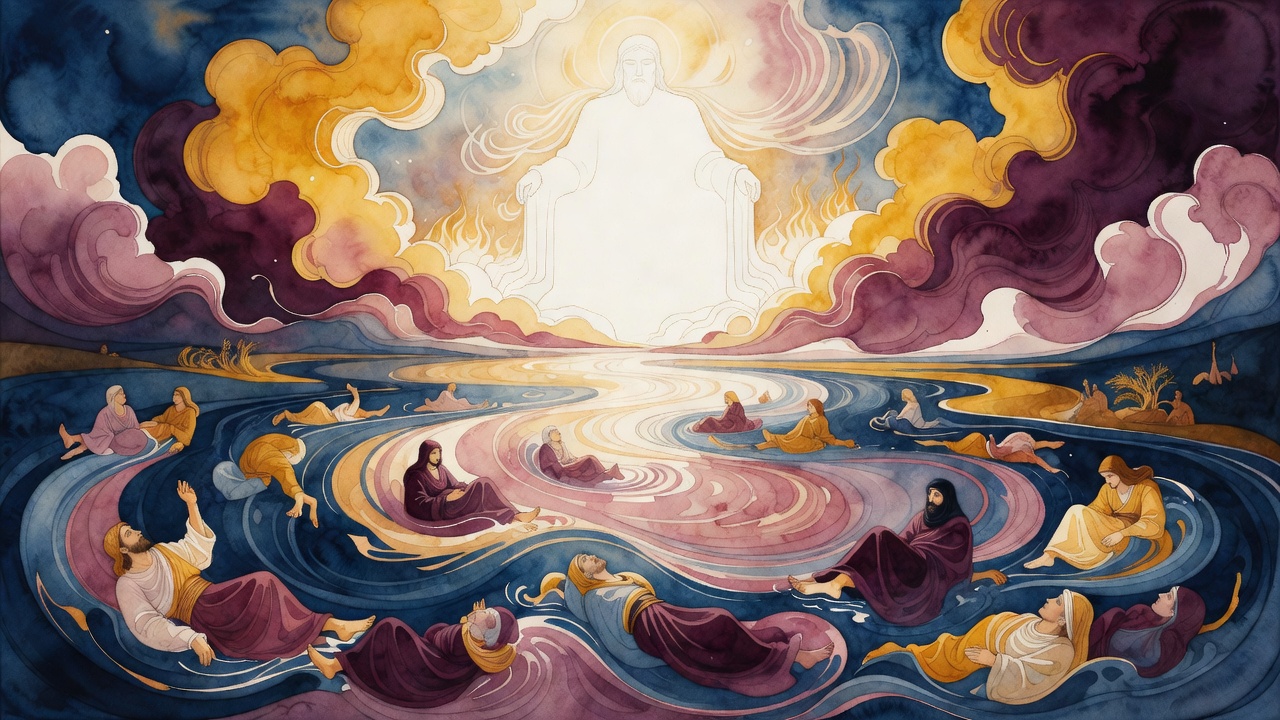
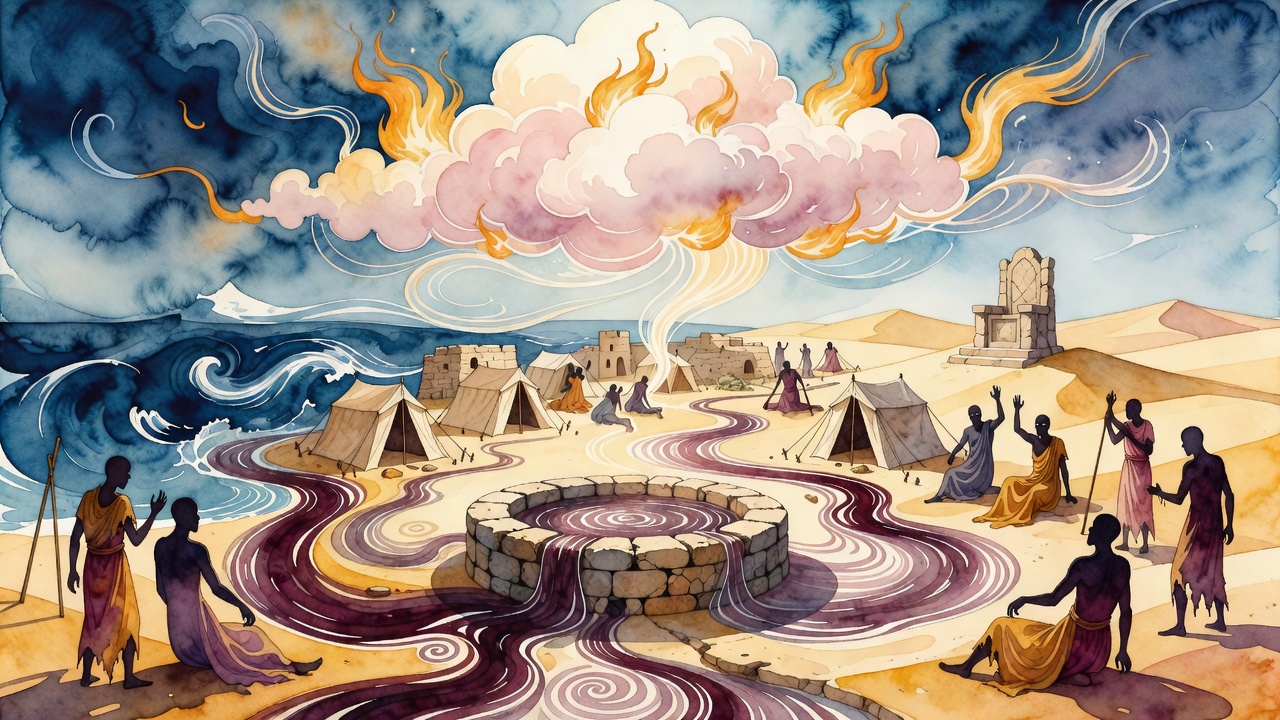
Israel Swarmed Egypt and the Angels Argued at the Sea
The court told Pharaoh to move against the Hebrews. He refused, said Egypt owed them everything, and lost his throne for three months.
Table of Contents
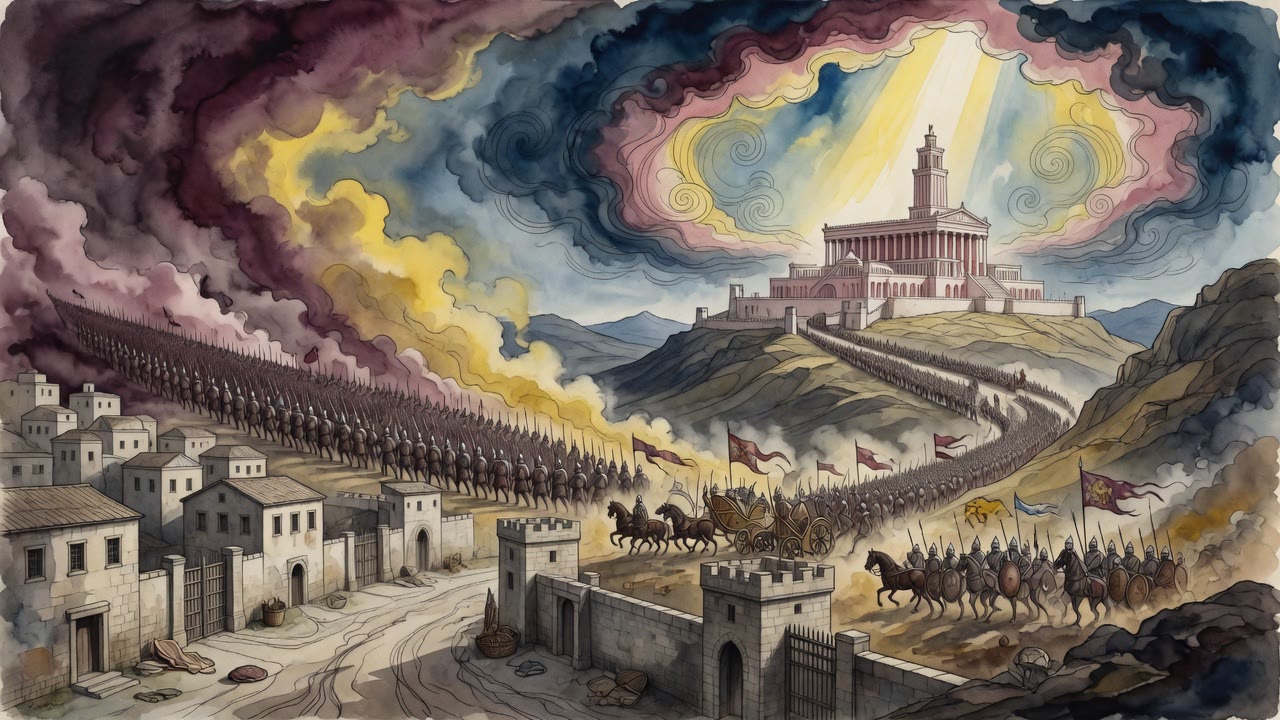 Click for full size
The Word for Vermin
Joseph died, and then his brothers died, and then everyone who remembered why the family had come down to Egypt in the first place was in Egyptian ground. That is the moment a small foreign population disappears into a large country and stops being anything.
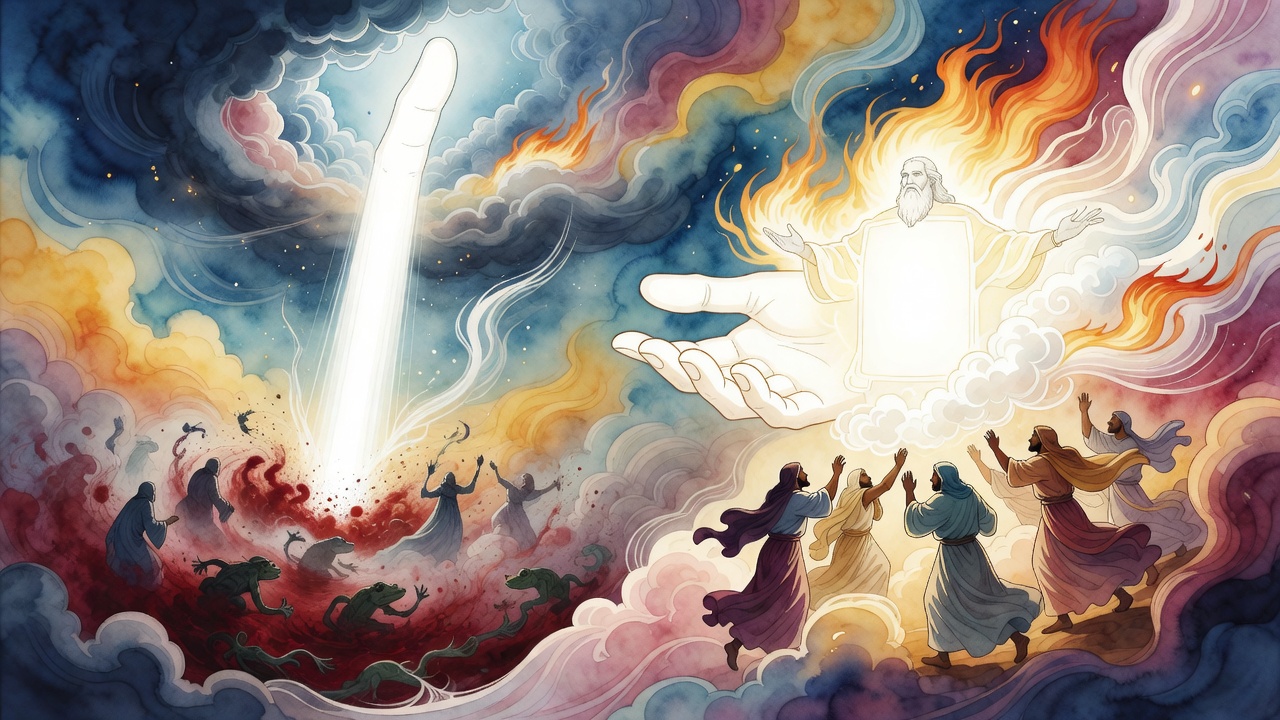
Instead the verse reaches for a word normally used for insects. They swarmed.
Two teachers argued over the measure of it, and neither of them argued it down. One said take the largest of the creeping things, the mouse, which drops six in a litter, and that is the rate. The other said no, take the scorpion, sixty at a time, and that is the rate. Rabbi Hiyya put it at six children in a single birth for every Israelite woman. Others counted the plural verbs stacked in that one verse and got twelve. Rabbi Jonathan looked at the last words, the land was filled with them, and said they came up like reeds, everywhere, in the whole country and not just the delta.
The fathers were dead. The God of the fathers was not, and the counting went on without them.
The King Who Said No
The Egyptians noticed before they could explain it, and they went to their king with a proposal. "Come, let us deal with this nation."
Pharaoh called them fools to their faces.
"We are alive because of them," he told his own court. "Were it not for Joseph we would all have starved in the years the grain ran out. How do you propose to attack the people who fed you?"
He would not do it. So they took his throne away from him.
Three months he sat somewhere else while the country ran without him, and at the end of three months he came back to them with the only sentence that would return him to the chair. "I am with you in whatever you do." Then they put him back.
The verse afterward calls him a new king, and the teachers say he was not new at all. He was the same man with new decrees. The other thing the verse says about him is that he did not know Joseph, which cannot mean he had forgotten a name that had saved the kingdom in living memory. Rabbi Abin told it as a case from a courtroom. A man throws a stone at the statue of a commander, and the king orders his head off, because a man who will strike the statue today will strike the king tomorrow. Pharaoh started with I do not know Joseph. He finished, years later and to Joseph's own great-nephew, with I do not know the Lord.
The Work Camps Became Nurseries
The plan was straightforward and it had worked on other peoples. Grind them with labor. Wear the bodies down, break the households up, keep the men in the mud pits until nobody has the strength for anything else.
It ran exactly backward. The harder Egypt pressed, the more Israel multiplied and the stronger they got, and the Aramaic rendering of that verse adds the part the taskmasters felt in their own houses. The Egyptians were troubled in their lives before the sons of Israel. Not troubled about them. In their own lives. A whole ruling class waking up sick every morning because of a slave population that would not shrink.
Israel was not innocent in the same years. After Joseph died they let the covenant of circumcision go, saying among themselves, let us be like the Egyptians. So the love above them was pressed down and held back, and the hearts of the neighbors turned, and the decrees came.
The Wall of Fire
Years later, at the water, the whole arrangement came due in one night.
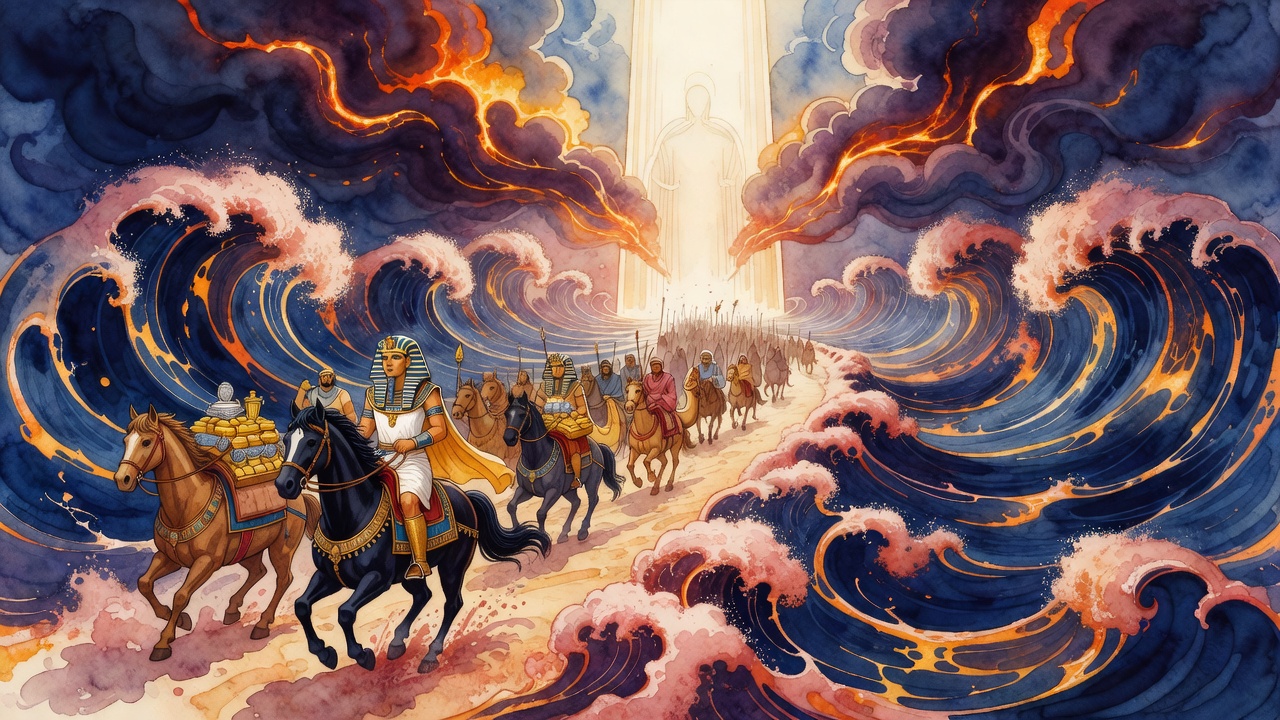
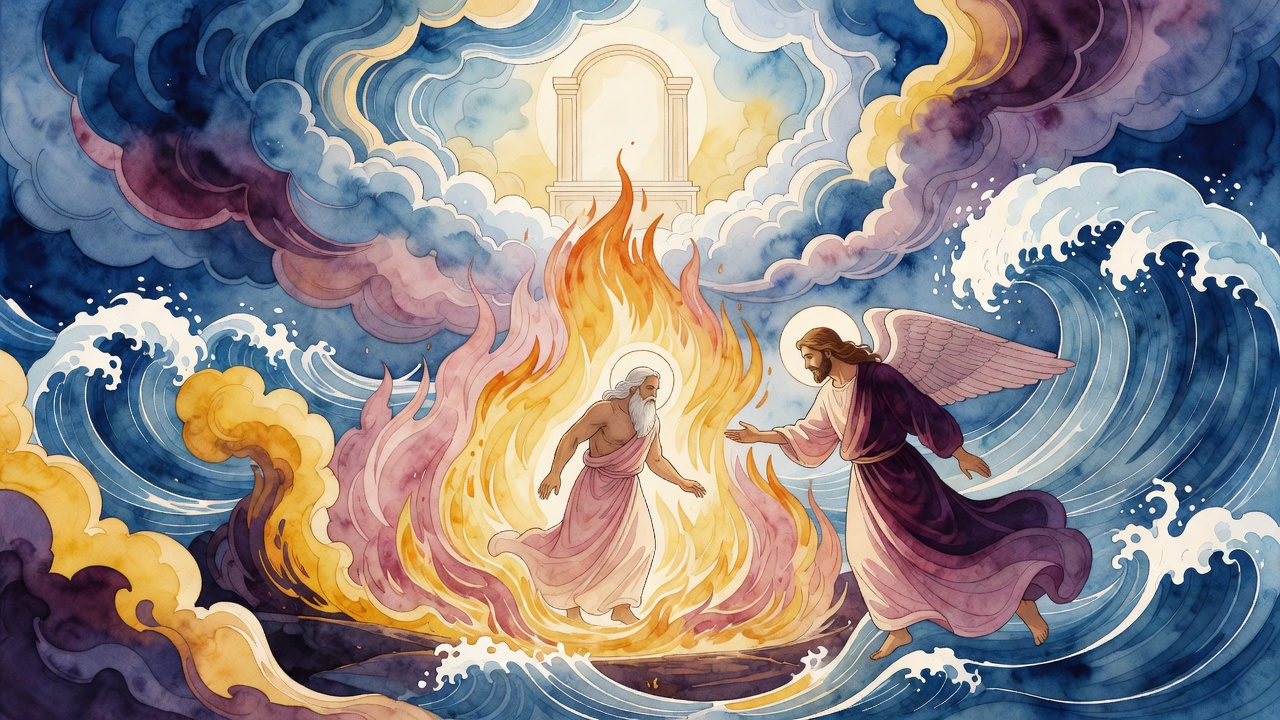
Pharaoh had changed his mind again and the chariots were behind them and the sea was in front of them, and there was nowhere in that geometry for six hundred thousand people to stand. Moses called out, and what came was Michael, who put himself between the two camps and burned.
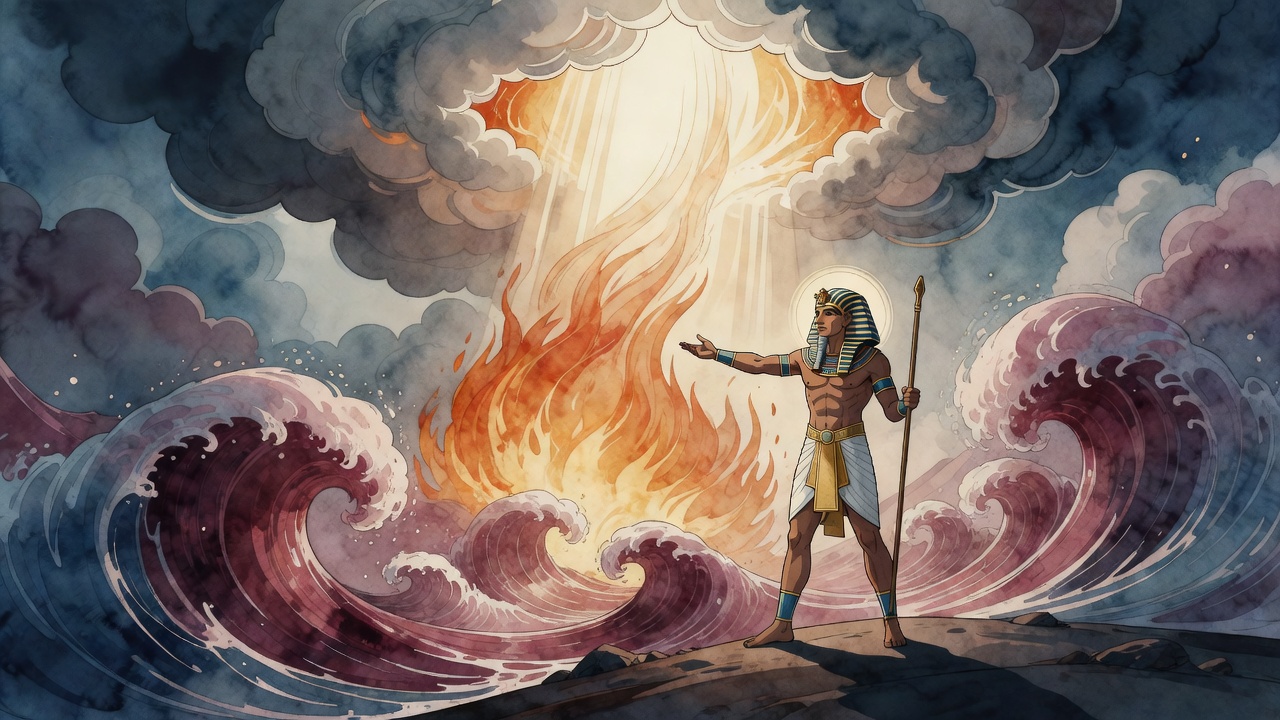
A wall of fire, the length of the whole column. The Egyptians came on hard, wanting the kill, and could not get near it.
The verse about that night says only that the one did not come near the other, and the teachers noticed the sentence does not say which one. It was even in both directions. Egypt did not close on Israel. Israel did not drift back toward Egypt. A clean line held all night between the people who had owned and the people who had been owned, each of them kept exactly where they belonged until morning.
The Angels Would Not Sing
Above the fire, the ministering angels were having a different argument.
They looked down at the ground opening and the people walking out onto the dry floor of the sea, and what came out of them was not praise. "These are idolaters. These are idolaters, and they are crossing on dry land."
The water itself was in a rage on both sides of them, and the same consonants that spell the walls of that sea also spell fury. What kept those two towers of angry water from folding in, the teachers said, was on the right the Torah that had not yet been given, and on the left the straps that would one day be bound on an arm.
And the angels who had made the accusation sang nothing that whole night. Not one line of praise, not one word of sanctification, from evening until the morning the sea came back down. They had seen how the people in the corridor looked, and it stopped their mouths.
← All myths