The Sea Drowned Egypt and Fed Israel in the Same Hour
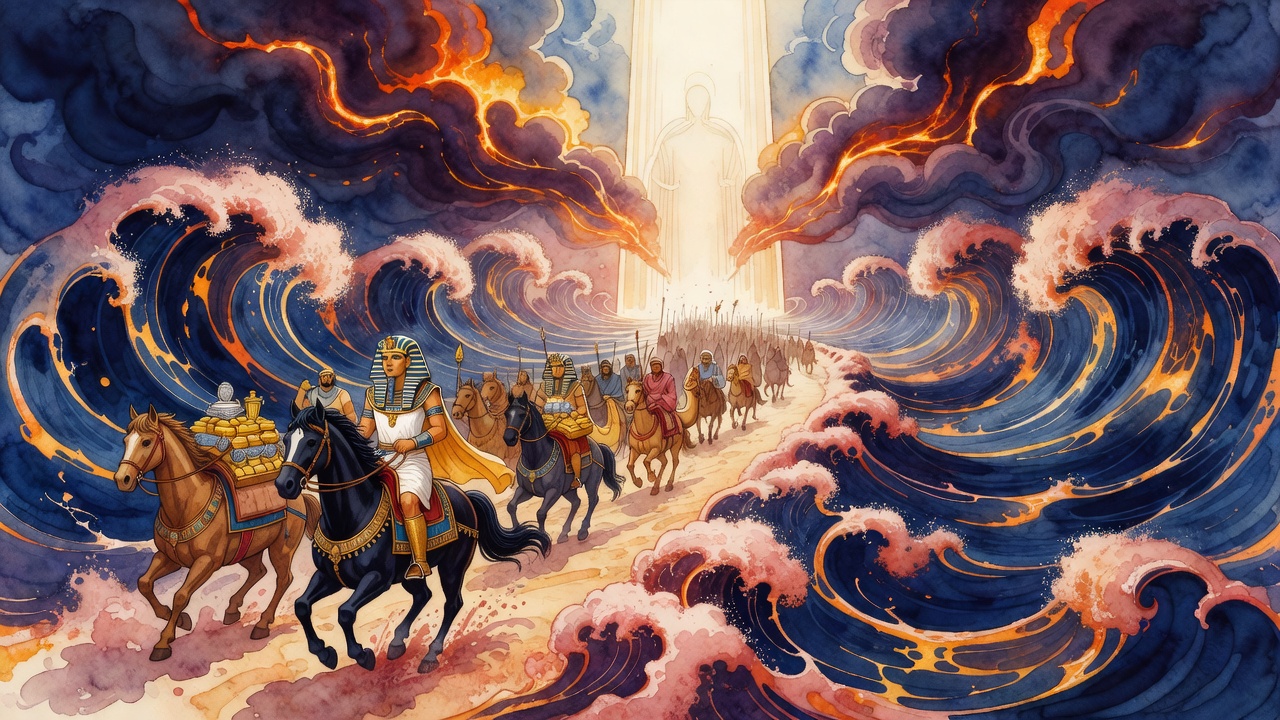
Pharaoh opened Joseph's storehouses and told his cavalry to hang the gold on their horses, so nothing would distract them from the chase.
Table of Contents
 Click for full size
Pharaoh Emptied Joseph's Storehouses
Pharaoh had a discipline problem before the chase even started. His slaves had walked out of Egypt carrying Egyptian silver and Egyptian gold, handed over at the door by people who wanted them gone, and every soldier in the pursuit knew it. Men thinking about plunder ride badly.
"I know they took your silver and your gold," he told them. "Do not put your mind on the plunder."
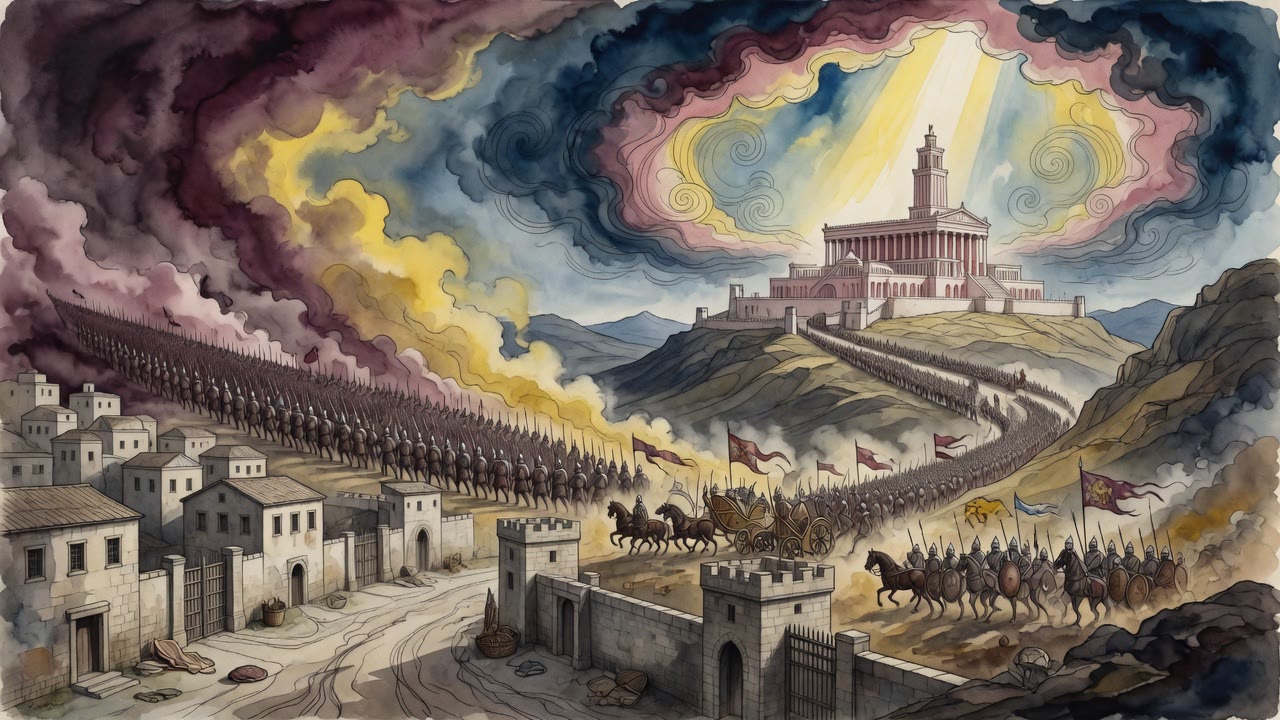
Then he threw open the storehouses of Joseph, the ones that had held the grain of the whole earth through seven years of famine, and told his army to help itself. Take silver. Take gold. Take enough that nothing on the road ahead is worth stopping for.
They loaded up. They hung gold off the harnesses and draped it over the animals until the cavalry went out at dawn glittering like a procession, and the whole point of the exercise was that no man in it would have any reason to look down.
The Angels Wanted to Know Why
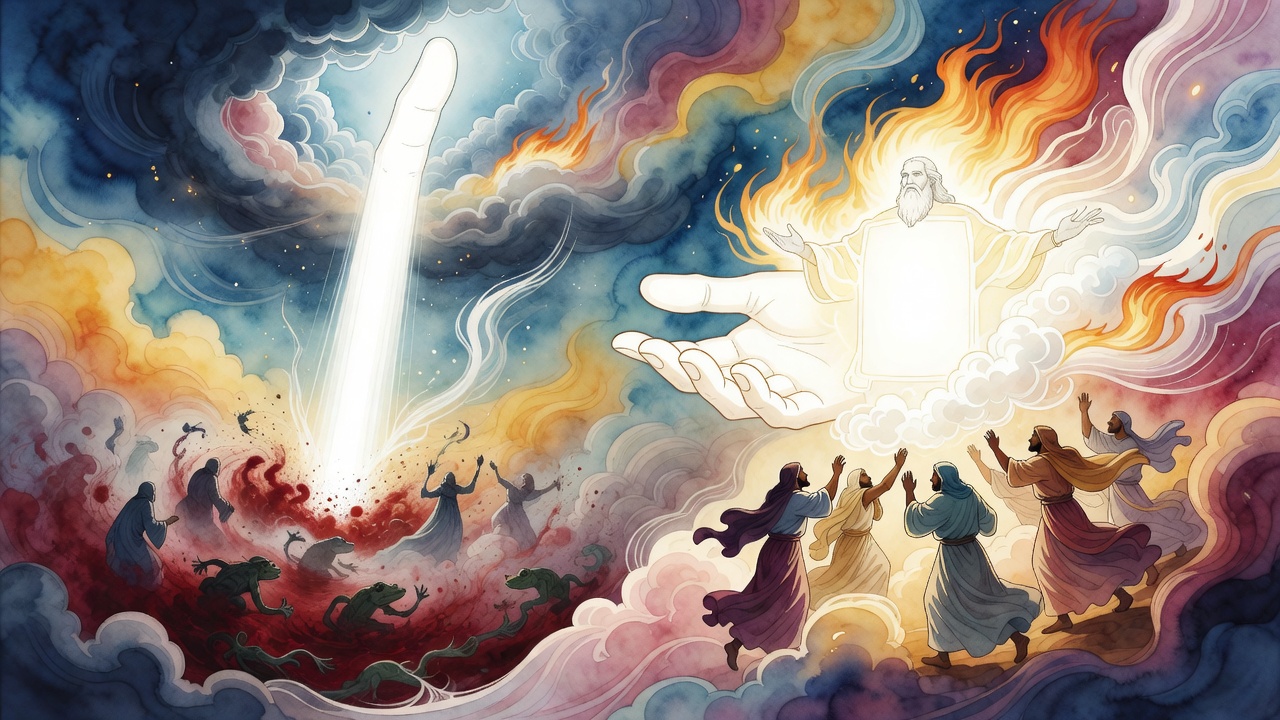
Israel walked down into the seabed on dry ground, and the ministering angels stopped what they were doing.
"These people worship idols, and they are crossing on dry land."
Nobody up there disputed the charge. The angels were not making it up and they were not asking for a punishment. They were asking a procedural question, and it was a fair one. On what basis was the ground under those particular feet dry.
Four hundred years in Egypt had not left the people who walked out of it clean, and every angel at that railing knew it.
The Water on Both Sides Was Furious
The water had already taken their side.
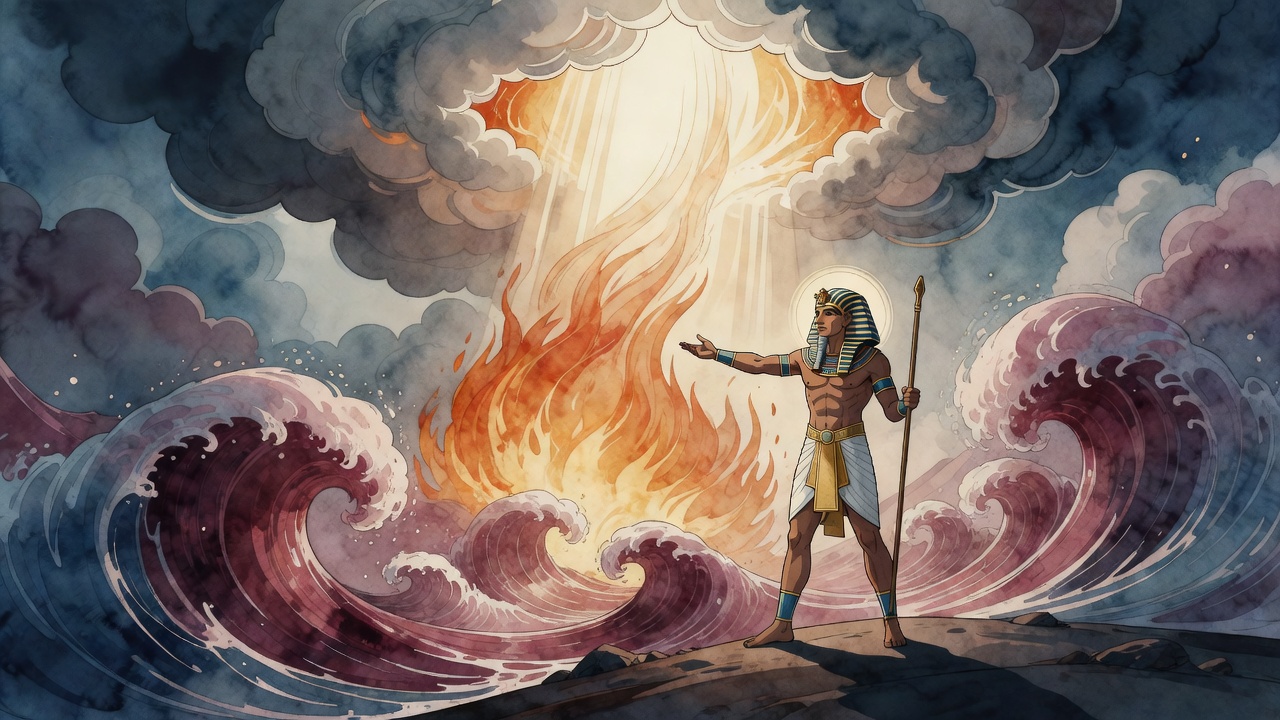
The word that describes it standing up on the right hand and on the left is written short, missing a letter, and read the way it actually sits on the page it is not a wall at all. It is rage. The thing on their right and the thing on their left was rage.
So the corridor was never a safe passage held open by a friendly sea. It was two standing walls of water that wanted the people between them dead, and the only reason the walls did not come down was what was travelling in that gap alongside them. On the right, the Torah they had not been given yet. On the left, tefillin.
A book that did not exist and a set of straps nobody was wearing were holding the water off on both sides.
They Ate and Drank While They Walked
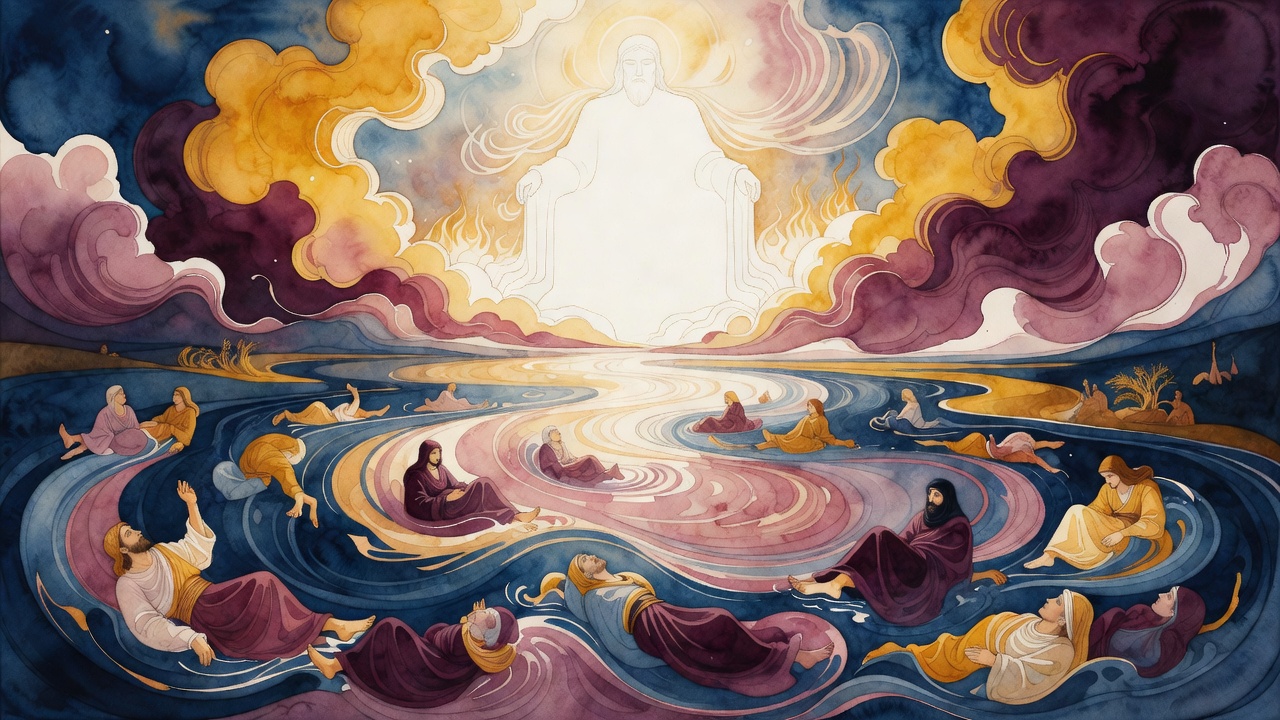
The standing water was stoppered the way a wineskin is stoppered, tied off so that nothing goes out and nothing comes in. Inside that sealed corridor the lives of the people walking stayed shut up safe inside them, and they ate as they went, and drank, and were happy.
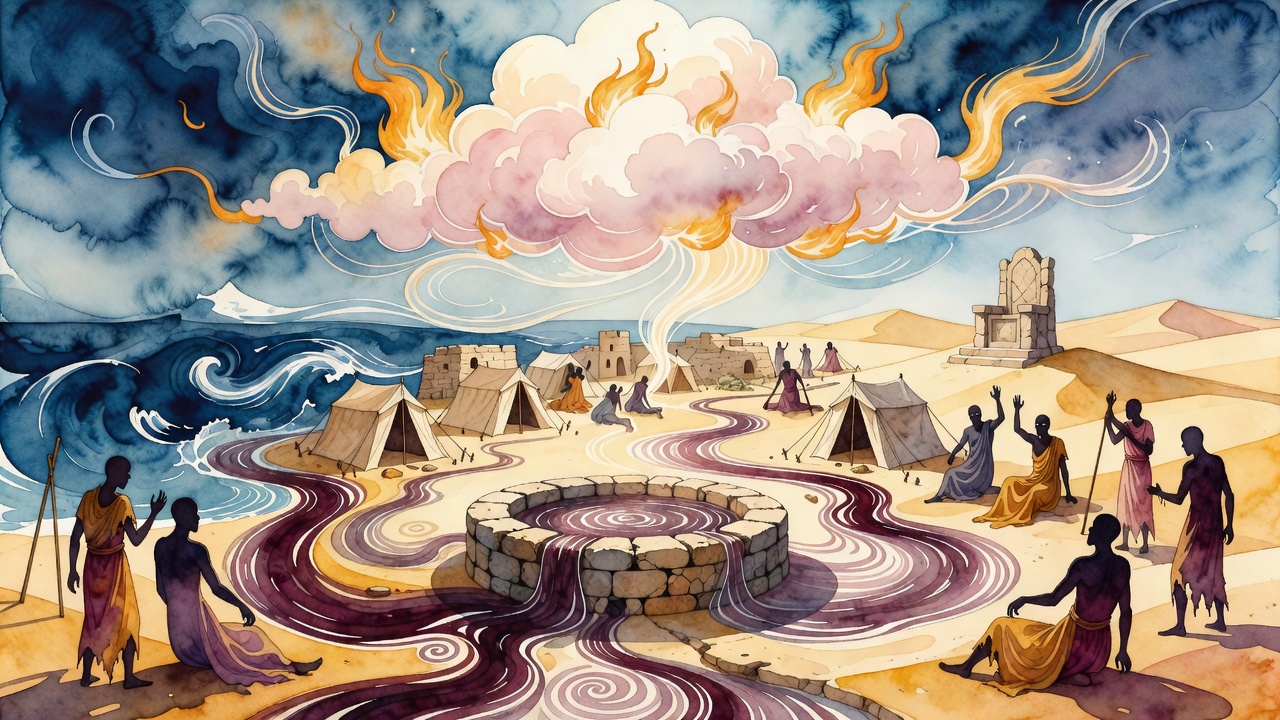
What they drank came out of the walls. The sea is salt and undrinkable, and it gave them sweet water, living water of the kind the Song calls a spring in a garden, running out of the middle of the brine while they walked between it.
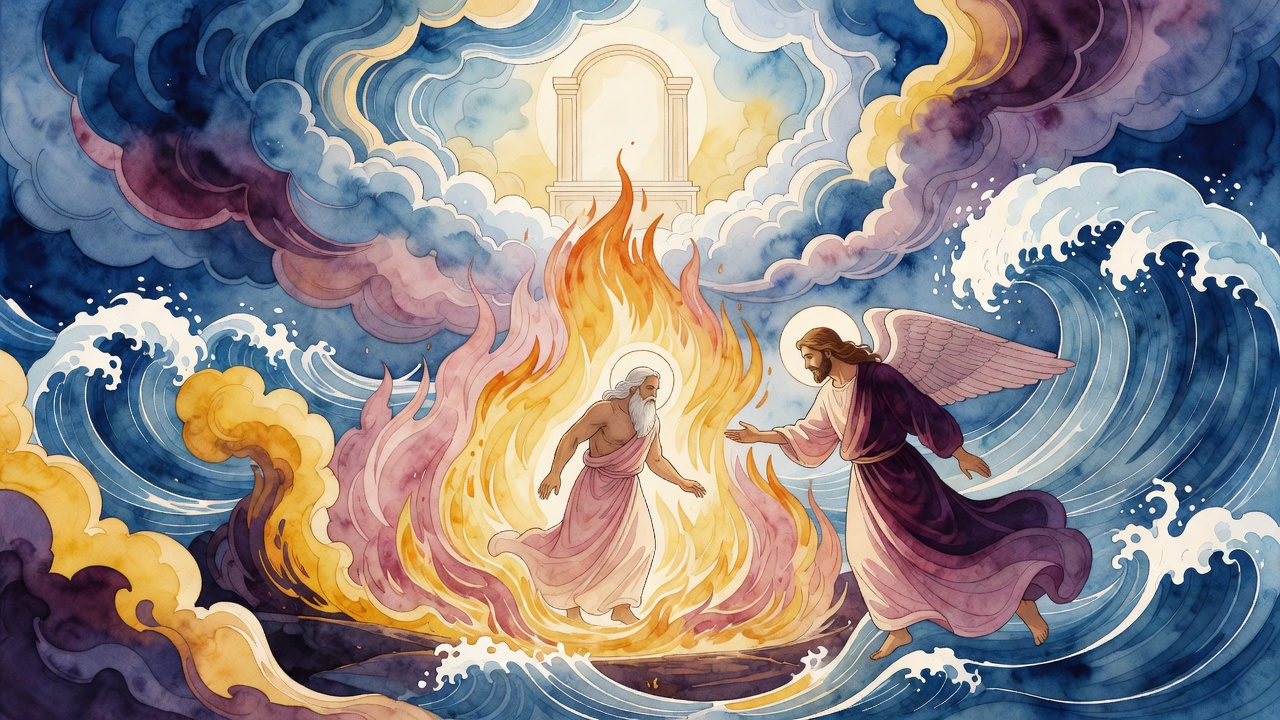
One body of water judged the army coming up behind them and fed the people walking in front of it, in the same hour, in the same place. Nobody explains the mechanism. It is set down the way a fact is set down.
The Gold Came Back on the Bodies
The song afterward says horse and rider, singular, as though one animal and one man had gone into the water. An entire imperial army drowned that morning.
One answer is that the whole cavalry weighed no more in front of God than a single horse and a single man. The other answer is more literal, and colder. Horse and rider were tied to one another going down, on purpose, so that everything Pharaoh had strapped to those animals to keep his men focused would come back up on the shore with them.
He had loaded the treasury of Egypt onto his own cavalry so that nothing would slow the chase, and the sea delivered it, still buckled to the horses, to the people he was chasing.
The sages who told it that way did not stop at the shore. What happened once at the water is a sample of the accounting still owed. Everything the nations pile up, they said, is being piled up for Israel, and the merchandise and the wages of it will come to her in the end.
Whether Pharaoh himself came up out of it is still argued. Rabbi Yehuda counted him among the chariots and the army the water covered. Rabbi Natan held that he was the exception, left standing for a purpose. And there are those who say he went down at the end with everybody else.
← All myths