Nachshon Gathered More Manna, but Every Jar Held Only One Omer
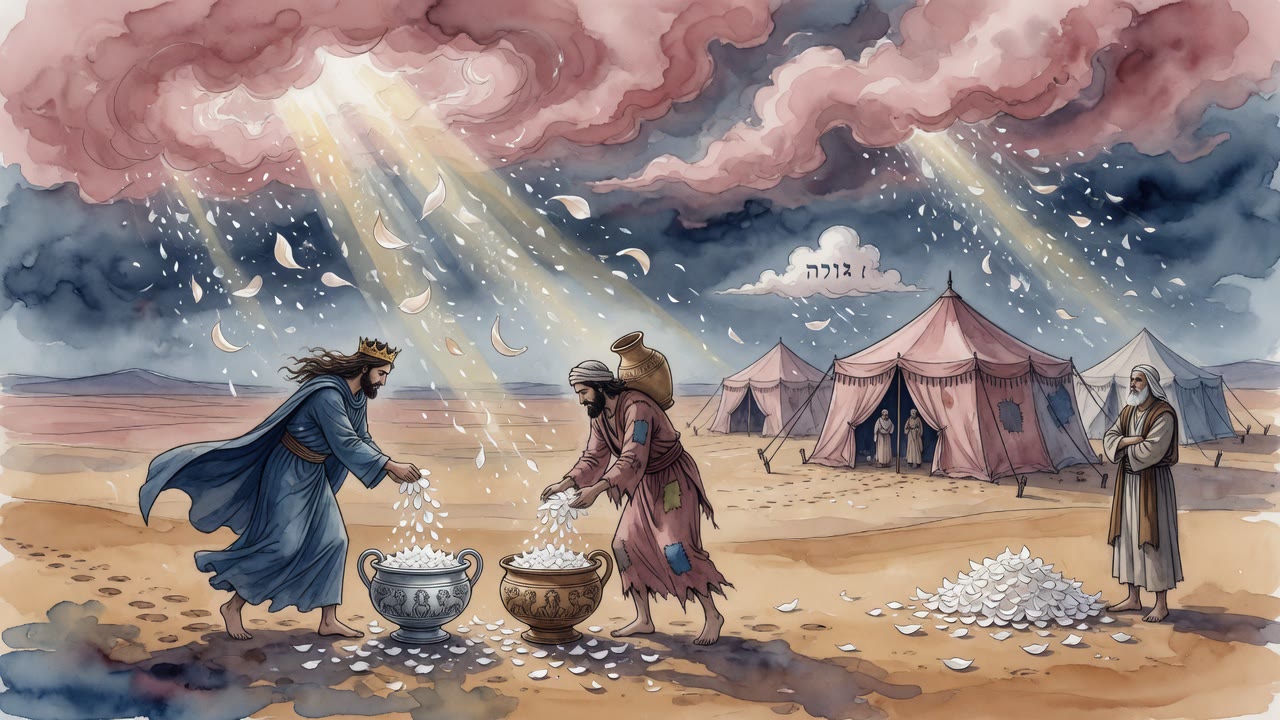
A poor man scooped a thin handful of manna while Nachshon heaped his jar full. When they measured, both had exactly the same amount.
Table of Contents
 Click for full size
Dawn on White Ground
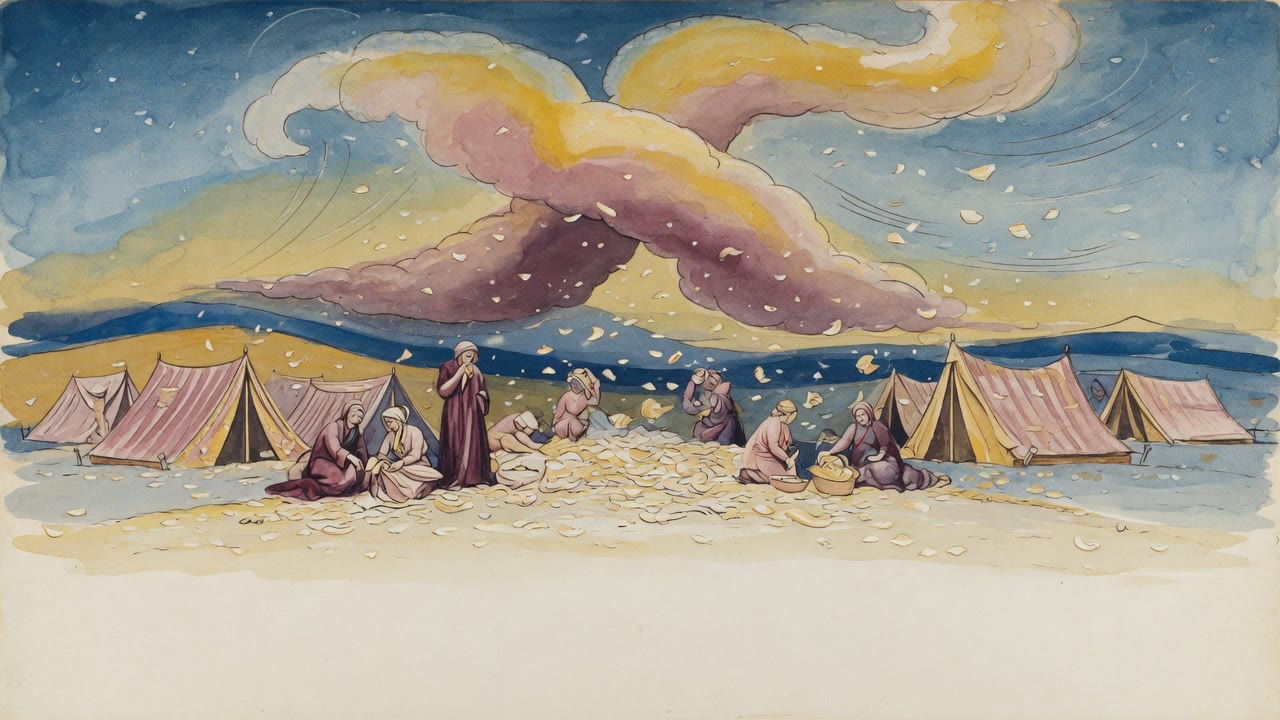
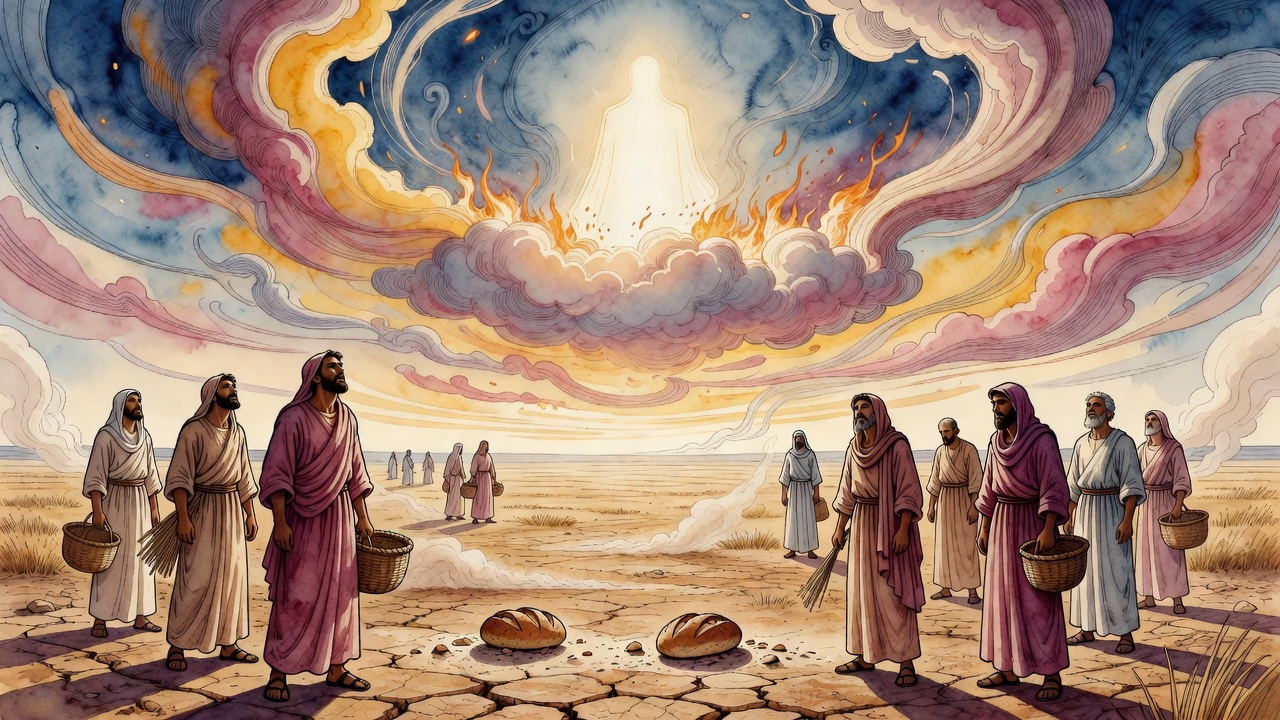
The desert floor looked dusted with frost that was not frost. Israel came out of the tents with jars and cloths, each person already arguing in his head about how much a strong arm deserved. Nachshon ben Aminadav, prince of Judah, stepped into the light with the stride of a man who had never gone hungry for long. Behind him a pauper from a smaller clan walked with careful feet, counting steps the way a man counts coins.
"This is the thing that the Lord has commanded. Gather of it, each man..." (Exodus 16:16). The command sounded simple until pride and fear began to interpret it.
Two Heaps, One Measure
The camp assumed ordinary bread rules. The strong take more. The weak take less. Nachshon's household would return with a mound. The pauper would return with a thin sheet of white on a cloth. Then they measured.
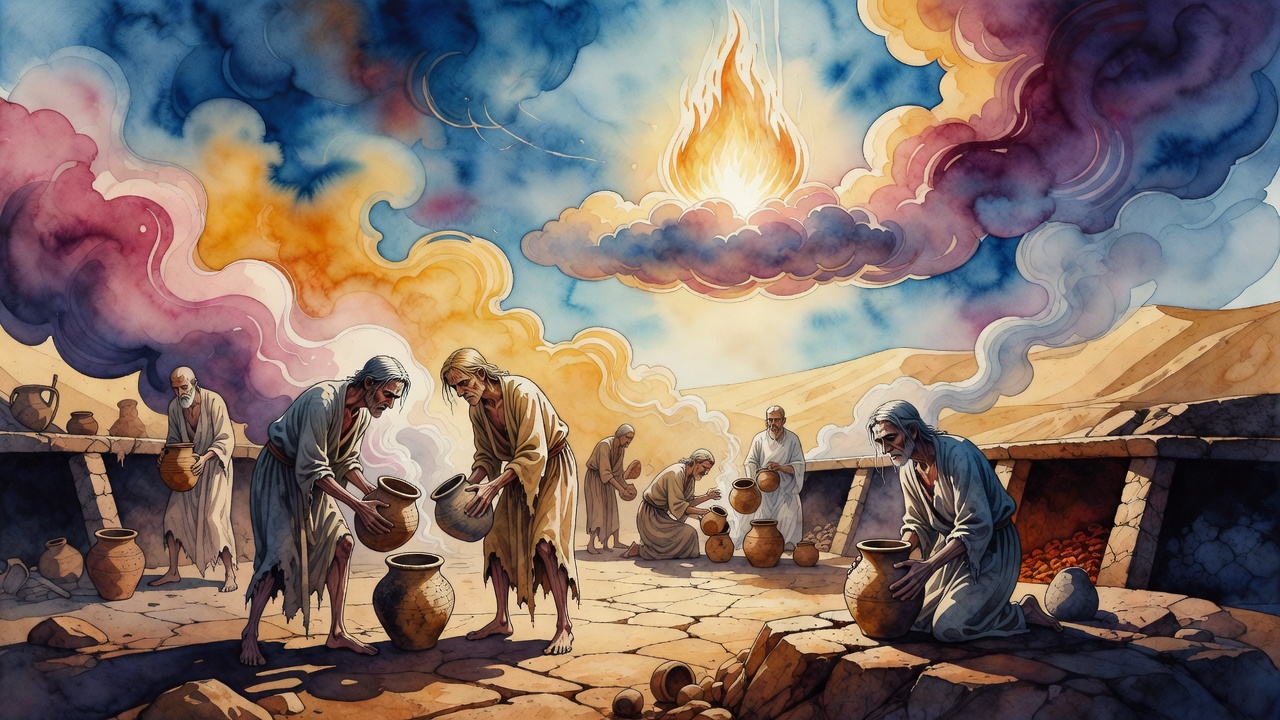
Some had taken more than an omer, some less (Exodus 16:17). When the omer vessel closed around what they brought, the excess sank and the shortfall rose. "He who had taken more did not exceed the omer measure, and he who had taken less did not diminish" (Exodus 16:18). Heaven's bread refused the economy of muscle. No hoard survived the measuring. No empty hand stayed empty if the hand had gone out at all.
Nachshon stared at a vessel that would not flatter his rank. The pauper laughed once, short and raw, as if a joke had been told at the expense of every prince in the wilderness.
The Poor Who Do Not Vanish
Years later, in another book of the same desert journey, the law speaks a sentence that sounds like a contradiction until it is lived. There will be no poor among you if you listen and the land is blessed, and the poor will never cease from the midst of the land (Deuteronomy 15). The midrash refuses to sand the tension smooth. Ideal and reality sit in the same camp. When Israel keeps the covenant, poverty thins. When hearts harden, poverty remains as a standing claim on open hands.
The manna morning was a rehearsal for that claim. Equal omer did not mean equal future. It meant that on the day God feeds the people directly, rank cannot invent a surplus. Later, when bread comes from fields and trade, the poor reappear as neighbors who must be loosened from debt and fed from the edge of the harvest.
What the Vessel Taught the Prince
Nachshon had been first into the sea in other tellings, water at his throat, faith faster than fear. Here his firstness earns him nothing extra on the plate. Leadership in Israel is not a larger omer. It is a larger responsibility when the omer is equal and someone still goes without because the people, not the sky, now hold the storehouses.
The pauper did not become a prince at noon. He became a witness. He had seen a miracle that snubbed the strong. He would remember it when a creditor's face leaned close in a later year and the law of release came due.
Evening When the White Is Gone
By late day the ground was ordinary sand again. Children licked fingers that still tasted faintly sweet. Mothers packed jars that would not keep overnight, because the next dawn would test trust again. The manna that equalized itself also forbade the anxiety-hoard that turns neighbors into rivals before sunrise.
Somewhere in the camp a man already planned how to gather twice tomorrow. Somewhere a woman planned how to share if her vessel came up short before measuring. The desert held both plans and waited for the next white morning. God had shown that bread can refuse greed. Israel still had to learn whether people can refuse it when the bread looks ordinary again.
Children ran ahead and left white footprints that vanished as the sun climbed. Women argued over whose cloth was cleaner for the holy bread. The camp was a city of opinions before it was a city of full stomachs. Pride and fear both claimed to understand the command better than the plain words.
Servants who had carried extra for the Judahite house set their loads down and felt, for a moment, unemployed by miracle. Nachshon stared at a vessel that would not flatter his rank. The pauper laughed once, short and raw, as if a joke had been told at the expense of every prince in the wilderness.
Night came with the smell of manna cakes and the low talk of tribes comparing measures. No one could brag with numbers that had been forced equal. They could only brag of speed at first light, and even that boast felt thin beside the blunt judgment of the omer vessel that made prince and pauper end the day with the same portion.
← All myths