They Found an Empty Field on the Seventh Morning
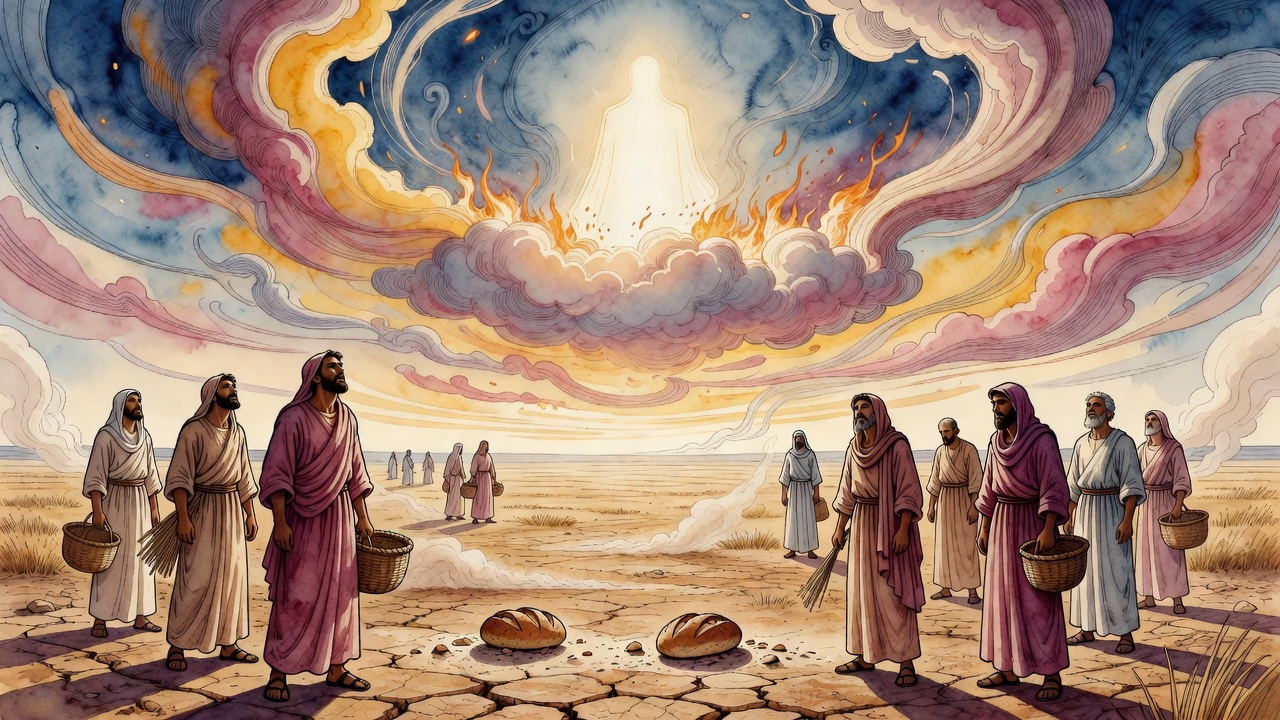
The sixth morning filled every jar twice. A few men still walked out on the seventh with baskets. The field had nothing left to give.
Table of Contents
 Click for full size
Two Omers Where One Had Fallen
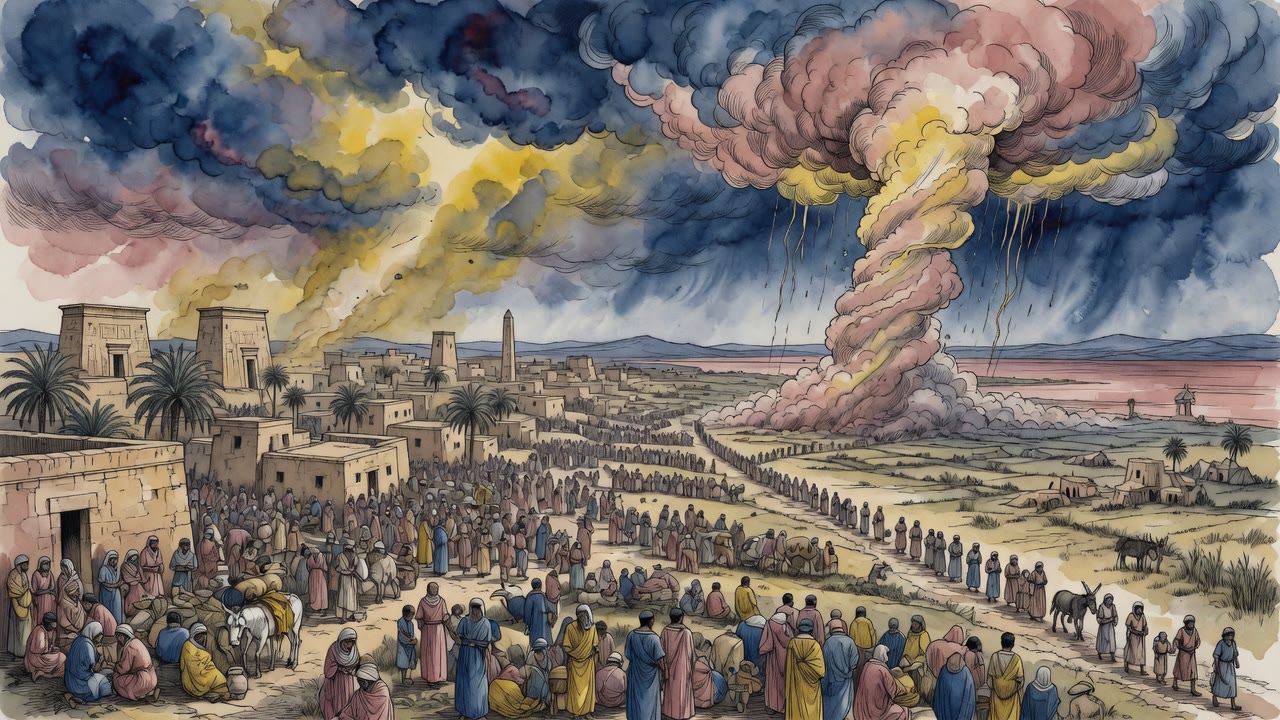
The jars would not stop filling. Israel walked into the dew on the sixth morning the way they walked into it every other morning. The white crust of bread came up under their hands, and then kept coming. Two omers where yesterday there had been one. Men stood in the wet sand holding vessels that had broken the count they had lived by since the first fall.
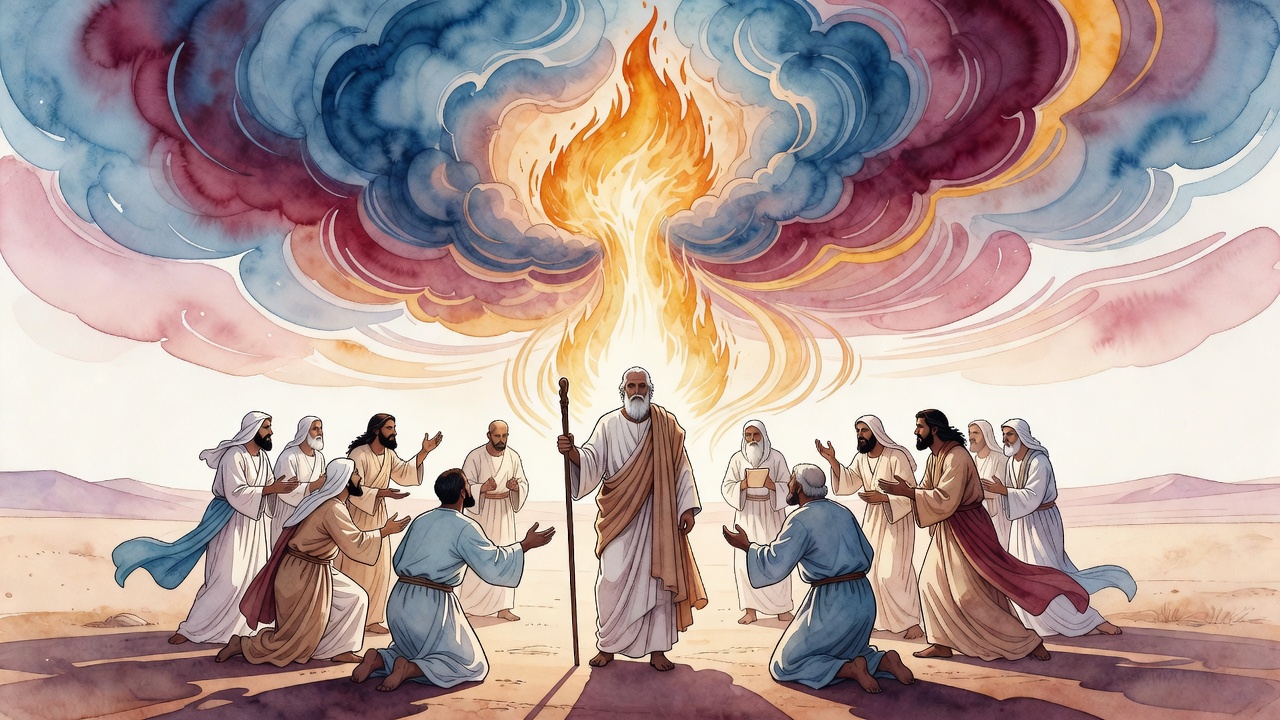
The chiefs of the congregation did not wait for the camp to invent a reason. They carried the jars to Moses and set them at his feet. "How is this day different from the other days?"
He did not hedge. "This is the thing the LORD spoke. Tomorrow is a solemn rest, a holy Sabbath to the LORD."
They wanted a time. When, they asked. When does it start.
"Tomorrow," Moses said.
No horn. No assembly. No smoke on a mountain. A day of rest arrived as extra bread, delivered before anyone had a word for what it was.
The Bread Came With a Bright Face
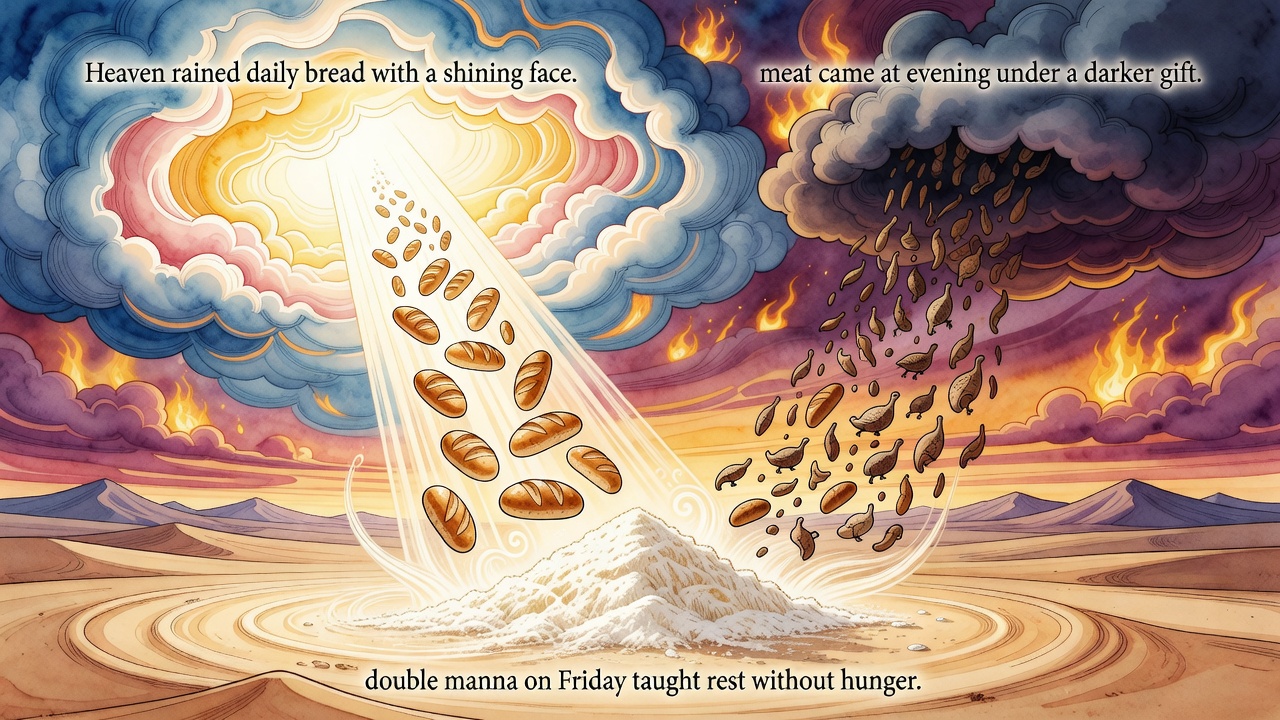
Nobody in the camp had asked for bread out of appetite. They had asked because a body without bread dies. The asking had been plain. What came down came down the way a gift comes from a giver glad to give it. In the morning they would see the glory of the LORD (Exodus 16:7), and the glory had a face on it, and the face was bright.
The meat was a different bargain. That they had demanded in order to gorge. It would be granted the way a man hands over something he has been badgered for. Darkened face. Given, and given with no joy in the giving.
The complaining kept finding the wrong address. Aaron stood beside his brother while the murmur ran the tent lines. The two of them finally answered the crowd. "What are we, that you stand and grumble against us?" They controlled nothing. They carried messages. The camp went on aiming its anger at the two men closest to hand.
Bake What Is Baked
In one tent a woman set a baked thing aside before the rest day, then a boiled thing, then a third dish. The instruction had doubled itself. Bake what is to be baked. Boil what is to be boiled. She would not let one act of foresight stand in for every pot. The doubled verbs had sounded like a warning to her, and she obeyed them with her hands.
In the next tent the flakes did as the mouth asked. Whoever wanted them baked found them baked. Whoever wanted them boiled found them boiled. A child bit one flake and named a food from Egypt, a dish the family had not tasted since the brick yards, and the flake obliged.
The bread held more than a ration. It held a kitchen. The extra jars on the sixth evening were not only quantity. They were a whole table sealed in a crust that would not fall tomorrow.
Baskets Into Empty Sand
A few of them went out anyway.
They rose in the dark of the seventh morning with baskets on their arms. They passed the tents where yesterday's dough was still warm, and walked into the field. Nothing lay on the sand. They walked farther, out past where the camp's noise thinned, checking the ground the way a man checks a pocket he has already emptied. One of them scraped at a crust of earth with his heel. Nothing was hiding under it.
They were the ones in the camp with no faith in them, and the bare ground said so out loud. Six days and one had been laid in front of them like a table set in advance. They had been told the hour. They had held the extra portion in their own hands and carried it home. Still they trusted their arms more than the word that had been feeding them. Doubt walked out at dawn dressed as diligence, carrying a basket.
The sky over them looked ordinary. That was the worst of it. No fire. No voice. No punishment coming down on their heads. The heavens that had opened every morning for weeks simply stayed shut. The men stood underneath and understood that a promise had been made and they had gone out to check on it.
They Ate What Yesterday Had Given
They came back with the baskets weighing only themselves.
Their households were already eating. Pots from the sixth day. Dough from the sixth day. The taste of a dish from Egypt rising out of a crust that had fallen before anyone stopped gathering. The men sat down and ate what other hands had brought in, on a morning when their own hands had earned nothing at all.
Somewhere out past the tents, the field they had walked lay clean and dry until sundown. In the morning it was white again.
← All myths