6 min read

Canaanites Chopped the Trees and God Waited Forty Years

When Canaan heard Israel was coming, axes rose against every orchard. God turned the people into the desert and let the land relearn how to grow.

Curated by Arthur · Told by Maggid ·
Table of Contents
  1. Axes in the Orchard
  2. Forty Years of Waiting Dirt
  3. Faith on the Peak
  4. For the Name, Not the Merit
  5. What the Children Learned in Sand
Canaanites Chopped the Trees and God Waited Forty Years Click for full size

Axes in the Orchard

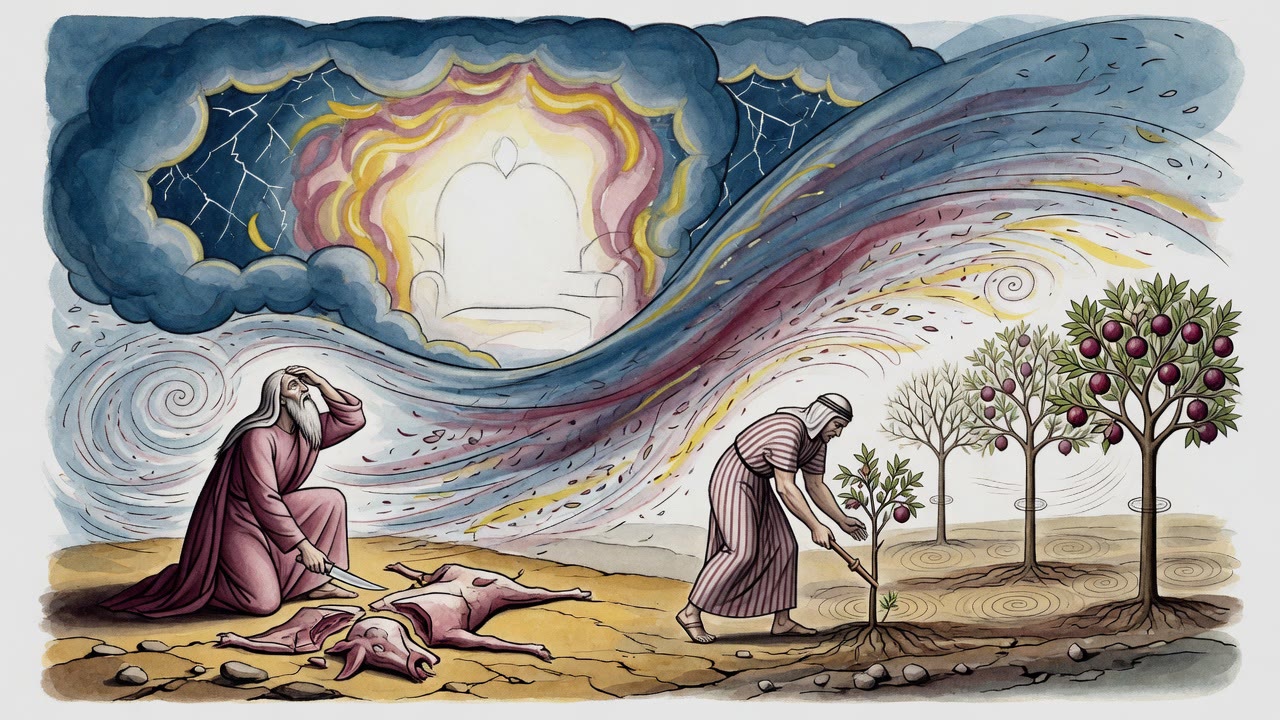
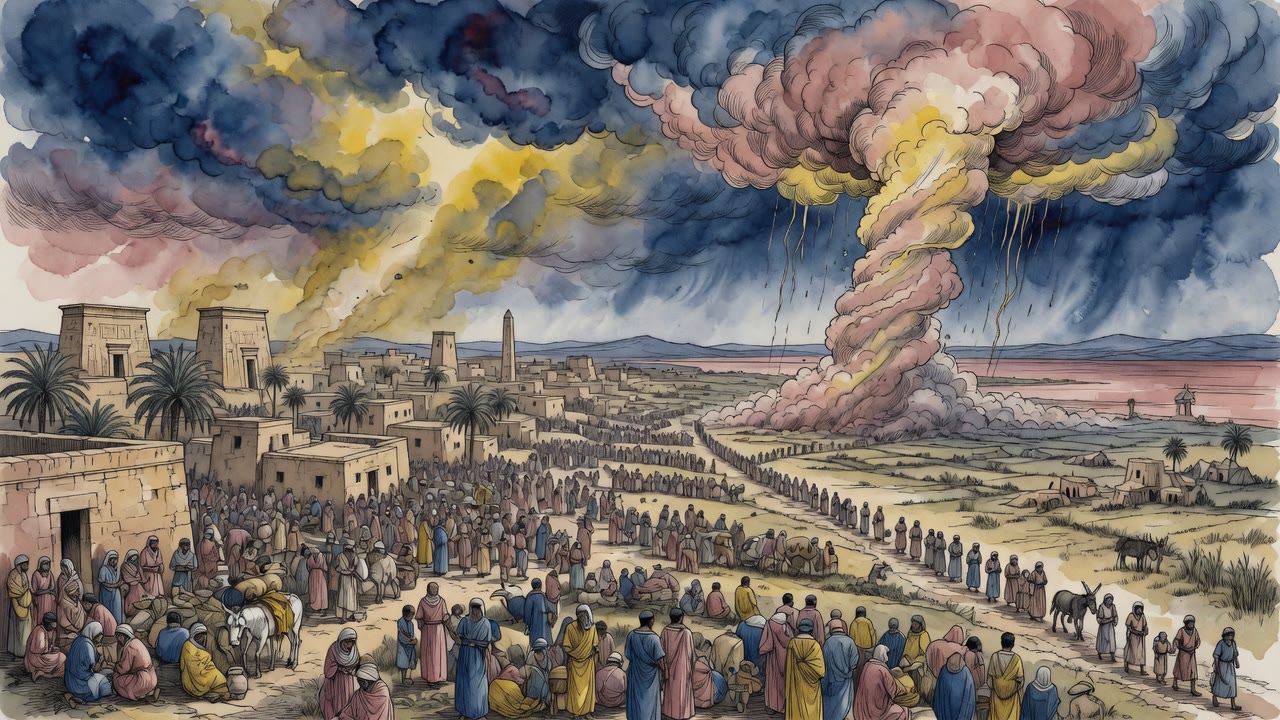
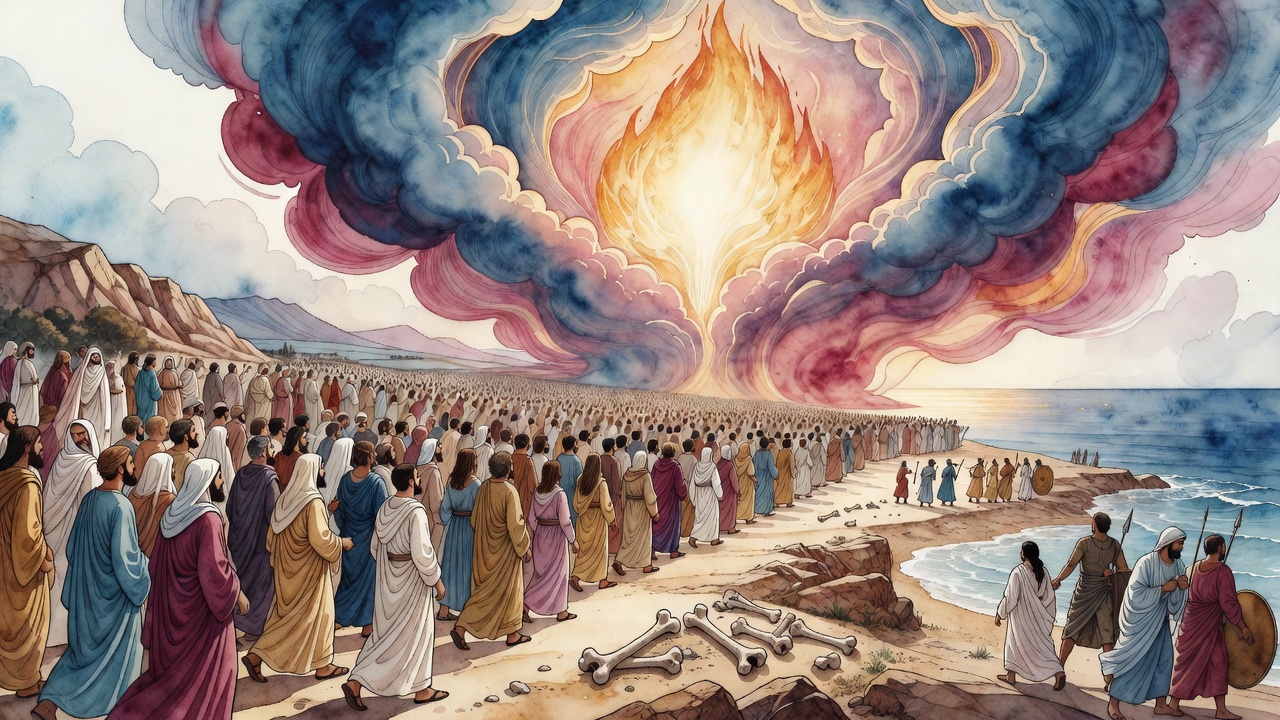
Canaan heard the rumor before the dust of the camp arrived. Israel had left Egypt. A pillar of fire walked with them by night. Captains of walled cities sent riders into the hills, and the riders came back white-faced, talking too fast about a sea that had stood like walls. So the people of the land took axes into their orchards. They cut fig and olive, pomegranate and vine, until the slopes looked shaved. Better a scorched field, they reasoned, than a gift for strangers whose God split water for a path.

Children cried when the first olive fell. Men kept swinging. Sap dark as blood stained the handles. By the third week the hills smelled of broken green and smoke from the burn piles. No one wanted to hand a garden to a nation that arrived with miracles.

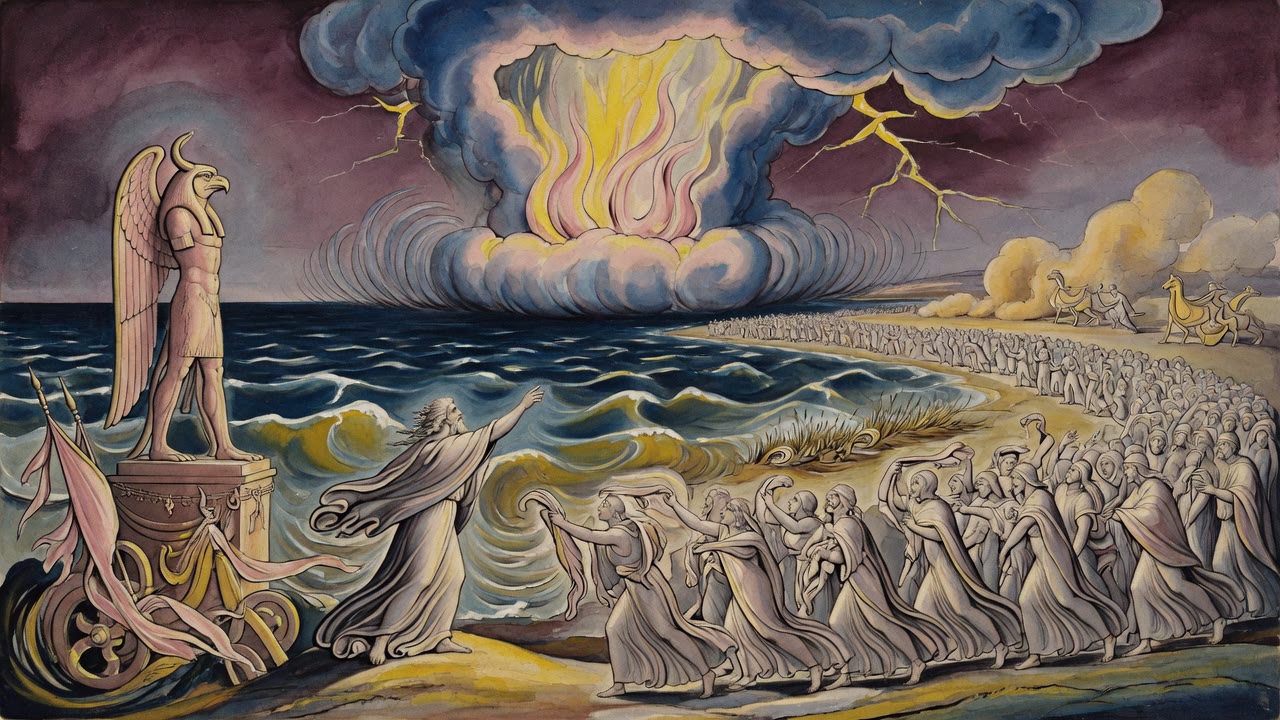
Moses stood at the edge of the wilderness and felt the short road tug at him, the coastal way that would have brought them into the land in days. God would not let that road open. The verse says He did not lead them that way (Exodus 13:17). In the camp the people grumbled about detours and sand. In heaven the delay had a different name. God would not plant His people in a land whose trees lay dead on the ground. Milk and honey need roots.

Forty Years of Waiting Dirt

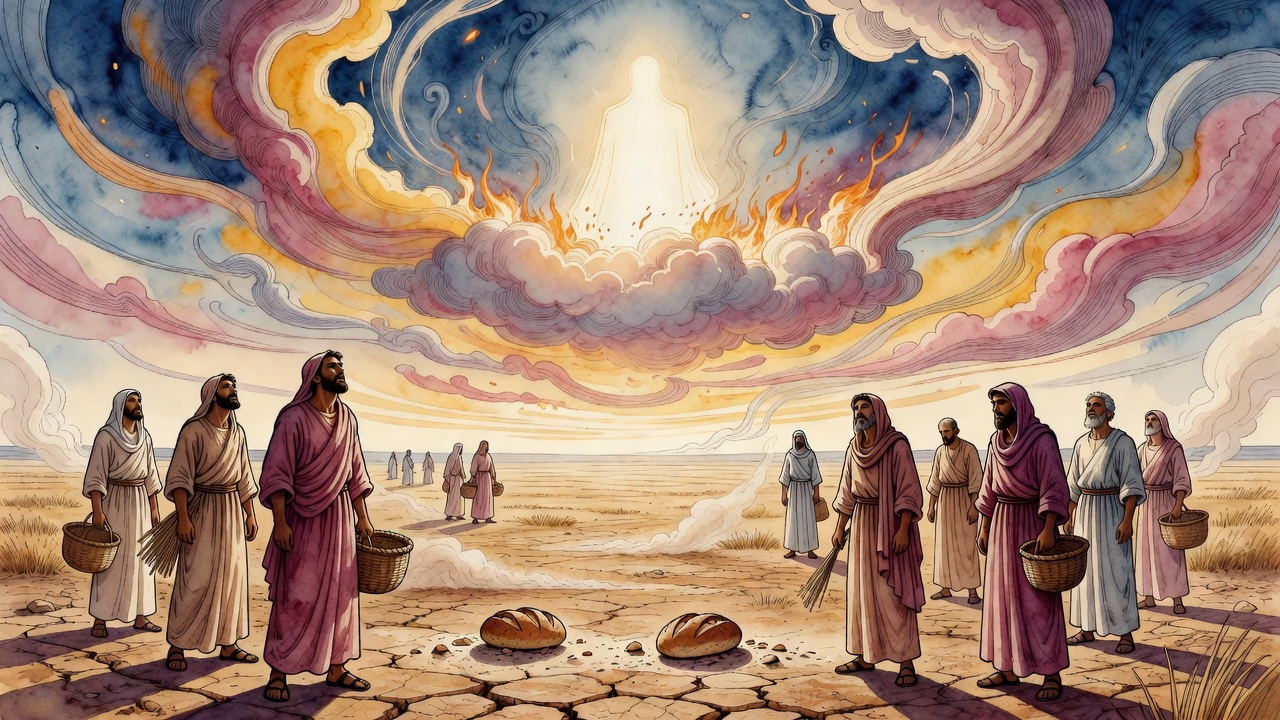
The desert held them. Children were born who had never seen the Nile. Bread fell like frost on the morning skin of the camp. Sand worked into every seam of clothing. The Canaanites watched from high ridges and decided the threat had passed. The desert, they told one another, would be Israel's forever house. Axes gave way to saplings. They replanted what they had murdered. Rain returned to the empty rows. Fruit began again, shy at first, then thick enough to stain a hand.

Only then did God turn the camp toward the border. The delay had not been punishment alone. It had been patience for soil. Rabbi Yehuda HaNasi heard another reason under the same story. Forty years of cloud by day and fire by night sent terror through the nations (Exodus 15:16). By the time Israel crossed, the land was green again, and the peoples who lived on it already knew whose hand moved the pillar. Fear had done its work. So had the slow return of leaves.

A man who had chopped the first grove as a young fighter stood old among new trees and felt the joke of history in his knees. He had tried to starve the future. The future waited until he grew tired of bare ground.

Faith on the Peak

The long road did more than grow trees. It trained a people to walk without maps. Later teachers would say the exiles are gathered not for Torah study alone and not for the count of commandments alone, but for emunah, raw trust when the promise looks impossible. The Song of Songs places the bride on the peak of Amanah (Song of Songs 4:8). The sages heard in that name the peak of faith. Return comes from that height, not from a clever calendar or a perfect report card of deeds.

Hosea seals the same betrothal with faith: "I will betroth you to Me with emunah" (Hosea 2:22). The wilderness generation learned that lesson with blistered feet. Every night the camp slept under a promise that still had not opened the border. Every morning they woke and packed the tent anyway. Mothers taught children the names of places they had never seen. Fathers repeated a land of milk and honey until the words tasted like memory instead of rumor.

Faith of that kind is not soft. It is the refusal to let absence write the last sentence. The pillar moved when it moved. The people followed when they could still believe the next ridge was not the end of the story.

For the Name, Not the Merit

When the land finally took them in, no one could claim it as a wage for perfect virtue. Moses had already said as much: not for your righteousness do you enter (Deuteronomy 9:4). Midrash on the psalms hears God speak twice, "For My sake, for My sake," so the Name will not be profaned (Isaiah 48:11). Egypt was opened for the Name. Future redemption will open for the Name. The people walk; the Name keeps its reputation for justice among the nations that watch.

So the chopped trees and the replanted trees stand in one story. Human fear can strip a land bare in a season. Divine delay can wait until fear grows soft and fruit returns. The pillar still moves only when the orchard is ready and the heart has learned to trust the long road. Merit helps. Faith holds. The Name finishes what neither can finish alone.

Stand on a hill that once held only stumps and now holds shade. That is the shape of the detour. Not a wasted loop. A pause until the gift can be given without shame.

What the Children Learned in Sand

In the fortieth year a boy who had never tasted Nile water asked his mother what a fig tasted like when it still hung on a living branch. She closed her eyes and tried to remember sweetness without the taste of ash. Around them the camp packed again. The pillar had shifted. Somewhere beyond the last dune, orchards that once lay as stumps were thick with leaf. The boy's question was not idle. It was the sound of a generation raised on promise alone, about to meet fruit.

Faith had been their main crop. Study and deeds mattered, the Mekhilta would later insist, but the gathering of exiles hinges on trust that outruns evidence. That trust was practiced every morning they folded tents toward a border that still refused them. When the border finally opened, the land smelled like recovery, not like a battlefield's leftovers.


← All myths
From the tradition

Sources

3 sources

The texts behind this telling. Some cards carry a translation of the source; others are our own retelling of it, and each card says which. Every card links out to the original.

Shemot Rabbah 20:16Shemot Rabbah

Retold in our words. Read the original at the link below.The Sefaria Midrash Rabbah, 2022 · CC-BY

The Torah tells us, "God did not lead them [naḥam]" that way. (Exodus 13:17). So, what gives?

There's more to this story than meets the eye.

The Rabbis of the Midrash (rabbinic interpretive commentary), specifically in Shemot Rabbah, confront this very question. Why the detour? Why the long, arduous journey through the wilderness?

Rabbi Shimon bar Abba, quoting Rabbi Yoḥanan, offers a fascinating explanation. He suggests that when the Canaanites caught wind of Israel's impending arrival, they panicked. Their response? They chopped down all the trees in the land! Total scorched-earth policy. And the Holy One, blessed be He, wouldn't bring His people into a barren wasteland. God wanted to give them a land flowing with milk and honey, a place of abundance and fruitfulness. Not a desolate, deforested landscape. So, He deliberately delayed their entry, keeping them in the wilderness.

But the story doesn't end there.

After forty years of wandering, the Canaanites, according to this Midrash, figured the Israelites were never coming. They assumed the desert would be their permanent home. So, what did they do? They replanted the trees! Talk about a twist. And then, only after the land had been restored to its former glory, did God finally lead the Israelites in.

A land patiently waiting, being nurtured back to life, ready to welcome its new inhabitants.

Our great teacher, Rabbi Yehuda HaNasi, offers another perspective. He suggests that God's delay in the wilderness wasn't just about the trees. It was about instilling the fear of Israel in the hearts of the idolaters. Forty years of wandering, guided by a pillar of cloud by day and a pillar of fire by night – imagine the stories that spread! As it says in Exodus (15:16), "Terror and dread falls upon them," followed by, "Bring them in and plant them" (Exodus 15:17). The nations trembled, knowing that this divinely guided people were destined to inherit the land.

So, the delay wasn't just a detour. It was a divine strategy, a way to prepare both the land and the people for their ultimate destiny.

Full source
Mekhilta Tractate Vayehi Beshalach 7:28Mekhilta DeRabbi Yishmael

Retold in our words. Read the original at the link below.Mechilta, translated by Rabbi Shraga Silverstein · CC-BY

The Mekhilta makes a declaration that connects the Exodus to the future redemption of Israel. The exiles will be gathered in only as a reward for faith. Not for Torah study alone, not for the performance of specific commandments, but for emunah, the raw, unwavering trust in God's promises even when they seem impossible.

The proof text comes from an unexpected source, the Song of Songs, the great love poem between God and Israel. "With me, from Lebanon, my bride; with me from Lebanon shall you come. You shall look from the peak of amanah" (Song of Songs 4:8). The Mekhilta reads "amanah" not as a geographical location but as a play on the word emunah, belief. The exiles will return from their dispersion "from the peak of faith." Their redemption will come because they maintained belief in God throughout the long darkness of exile.

A second verse reinforces the point: "And I will betroth you to Me forever.. and I will betroth you to Me with emunah" (Hosea 2:22). The ultimate reunion between God and Israel, the final ingathering of the exiles, is described as a betrothal sealed with faithfulness. The Mekhilta teaches that exile is not merely a political condition. It is a test of faith. The question is not whether Israel will suffer in dispersion, but whether they will continue believing in the promised return despite centuries of evidence to the contrary. Those who hold on to that belief, the Mekhilta insists, are the ones for whom the exile will finally end.

Full source
Midrash Tehillim 107:1Midrash Tehillim

Retold in our words. Read the original at the link below.Rabbi Mike Feuer, Jerusalem Anthology · CC-BY

The answer, according to ancient Jewish wisdom, might be more about God's reputation than our own merit. to Midrash Tehillim, a collection of interpretations on the Book of Psalms, specifically Psalm 107. It begins with a powerful call: "Thank the Lord for He is good, for His kindness endures forever. Let those redeemed by the Lord speak out, those whom He has redeemed from distress." But what does it really mean to be "redeemed by the Lord?"

The verse from Isaiah (48:11) is key: "For My sake, for My sake I will act, for how can My name be profaned?" Notice how it says "For My sake" twice? The Almighty, according to this midrash (rabbinic interpretive commentary), isn't just being repetitive. Instead, God is emphasizing something profound. God acts, first and foremost, for the sake of God's own name. God cannot allow God's name to be desecrated. this way: If God constantly allowed injustice to reign, what would that say about God's power, God's justice, God's very essence?

The Midrash continues, explaining the double "For My sake." "I redeemed you from Egypt for the sake of My name," God says, referencing (Psalms 106:8): "And He saved them for the sake of His name." The Exodus, the foundational story of Jewish people, wasn't just about freeing slaves; it was about demonstrating God's power and commitment to justice on a cosmic scale. And, God promises, "I will also redeem you in the future, just as I redeemed you in this world," echoing the cyclical nature of history described in (Ecclesiastes 1:9): "What has been will be again."

What about us? Are we just passive recipients of God's actions? Rabbi Huna the priest, citing Rabbi Avin, reminds us of Moses's stinging rebuke to the Israelites in (Deuteronomy 9:4): "You know full well that it was not because of your righteousness that the Lord your God gave you this good land to possess, for you are a stiff-necked people." Ouch! It's a harsh reminder that divine favor isn’t always earned. Sometimes, it's about maintaining God's reputation.

David understood this, proclaiming, "For His name's sake, He turns to me." It’s a humbling thought.

Rabbi Berachiah, quoting Rabbi Chelbo in the name of Rabbi Samuel, clarifies who these "redeemed by the Lord" are: the people of Israel. As (Isaiah 35:10) declares, "And the redeemed of the Lord shall return." The Midrash pointedly emphasizes that it's "the redeemed of the Lord," not "the redeemed of Elijah" or "the redeemed of the Messiah." The redemption comes from God alone.

So, what does all this mean for us today? It suggests that even when we feel undeserving, even when we stumble and fall, there's a force working in the universe to uphold justice and kindness. Not necessarily because we deserve it, but because God's very nature demands it. Maybe, just maybe, that's a reason to have a little hope, and a lot of gratitude.

Full source