5 min read

Elijah Wakes the Patriarchs One by One at Dawn

Elijah came late to Rabbi Judah's study house. He had been washing Abraham's hands, then Isaac's, then Jacob's, never all three at once.

Curated by Arthur · Told by Maggid ·
Table of Contents
  1. The Empty Seat
  2. Why Not Together
  3. Power That Must Wait
  4. For the Name That Must Not Be Shamed
  5. Three Basins, Three Silences
Elijah Wakes the Patriarchs One by One at Dawn Click for full size

The Empty Seat

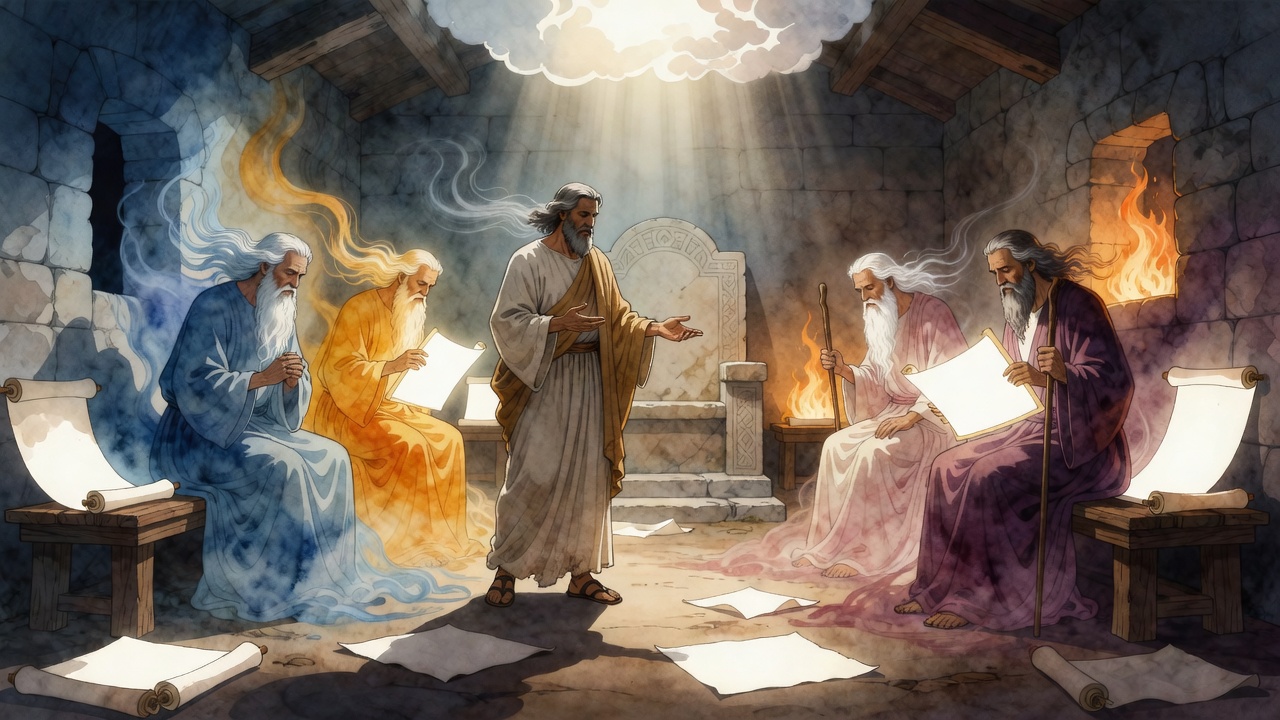
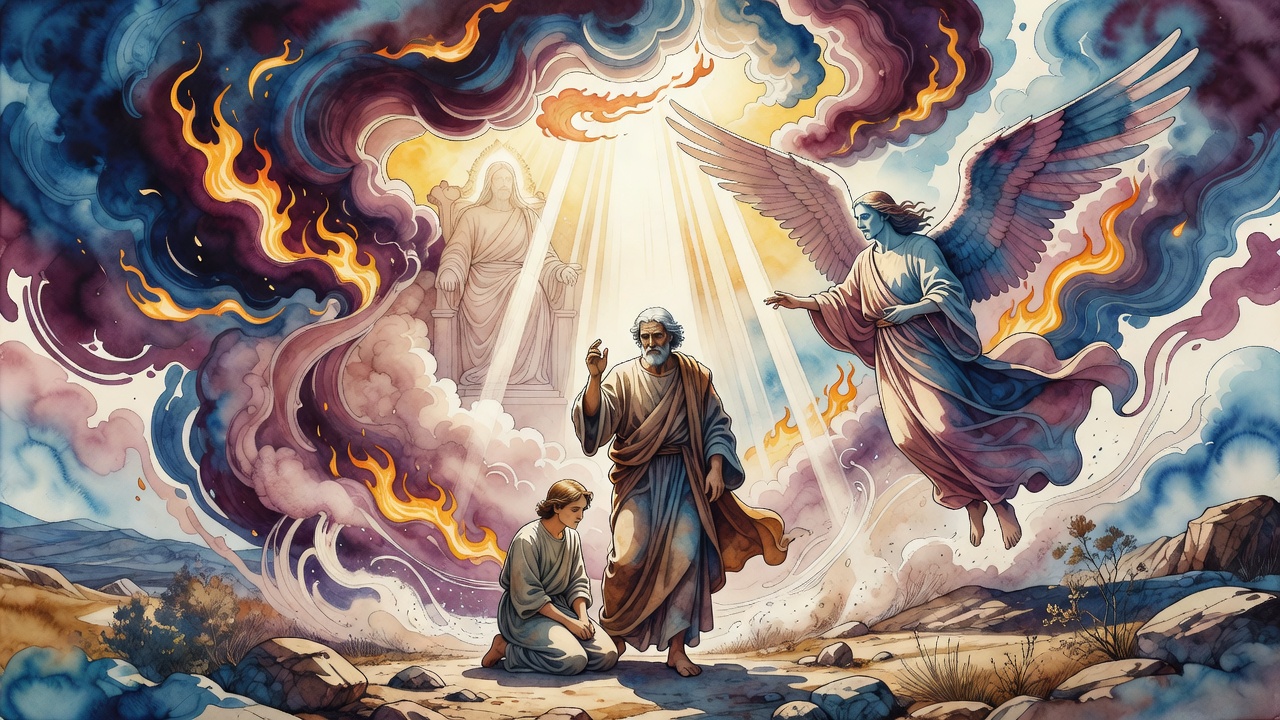
Elijah was late. In the study house of Rabbi Judah HaNasi that lateness was a scandal of its own. The prophet who slipped between worlds like a man between doorframes did not usually keep sages waiting. Lamps burned lower. A student bit his stylus. When Elijah finally appeared, dust still on his hem and water darkening one cuff, the room closed around him.

"Where were you?" they asked.

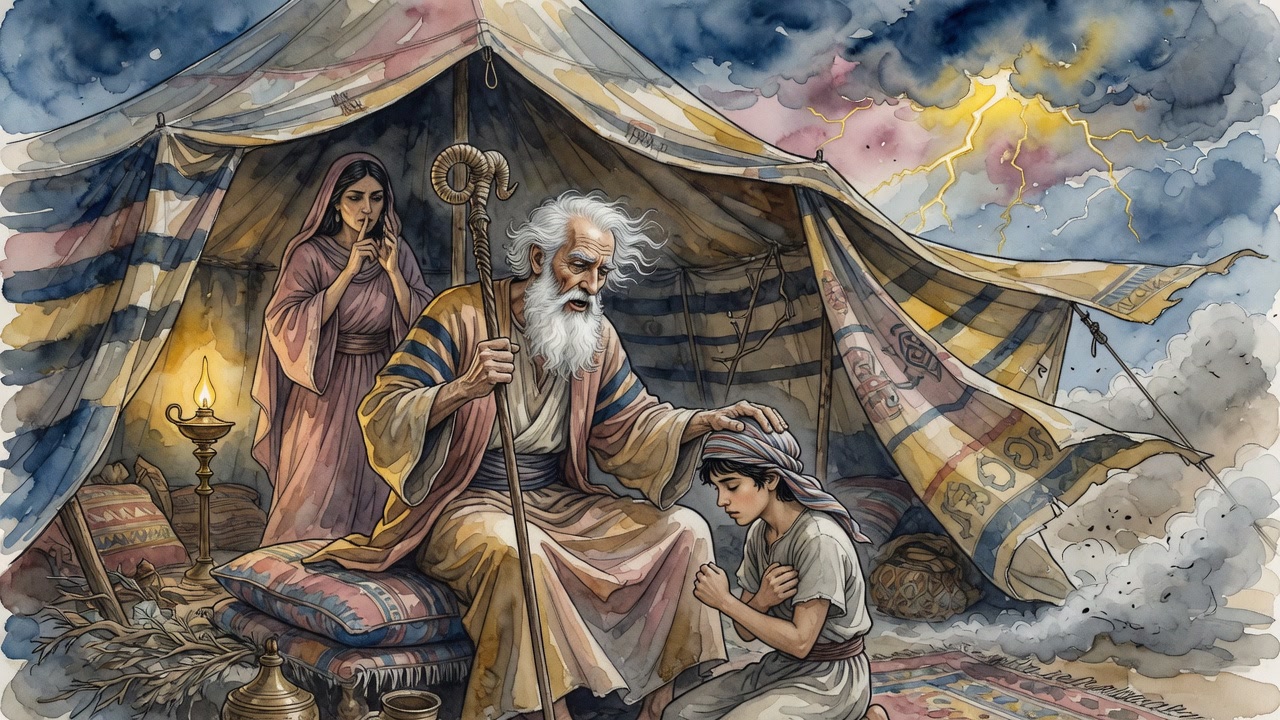
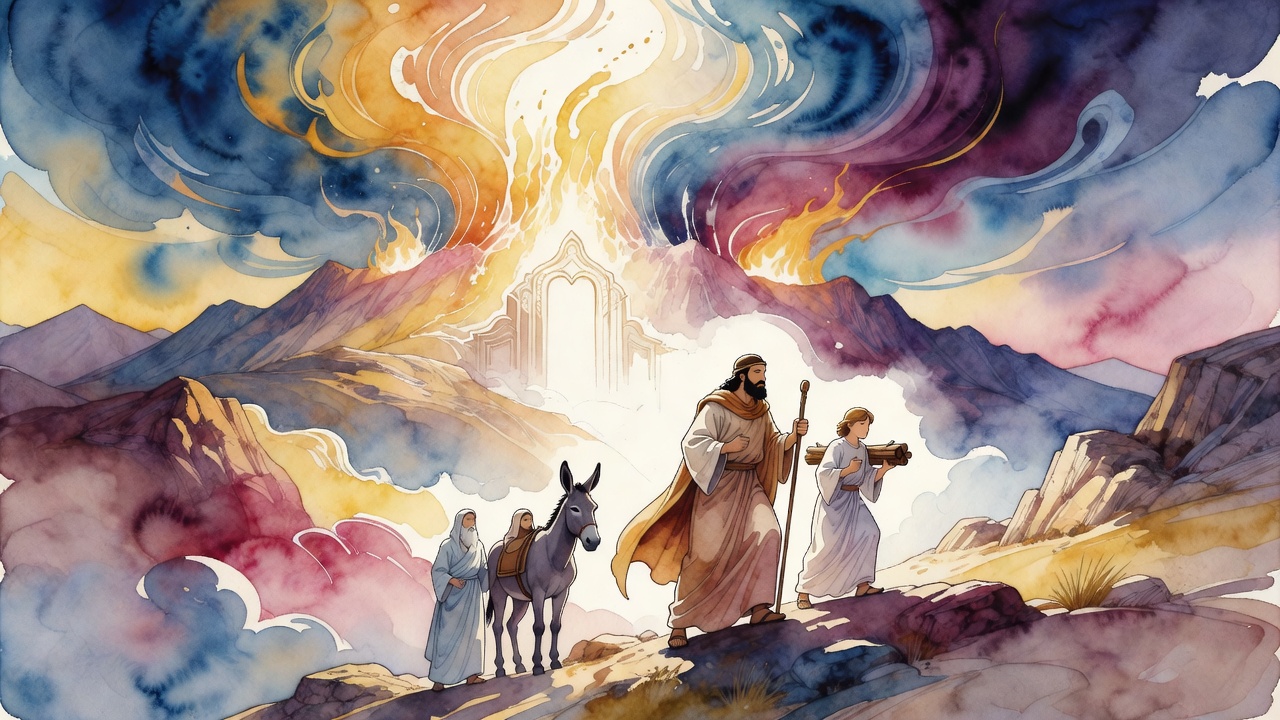
He did not offer a soft excuse. He had been in the caves of the fathers. He woke Abraham, washed the patriarch's hands for purity, stood while Abraham prayed, then laid him back into rest. He did the same for Isaac. He did the same for Jacob. Three risings. Three basins. Three returns to sleep. That is why the sun had climbed higher than the lesson's hour. The water on his cuff was not rain.

Why Not Together

A student with more nerve than sense asked the obvious question. Why not wake all three at once and finish in a third of the time? Why this slow circuit of caves when the study house waited?

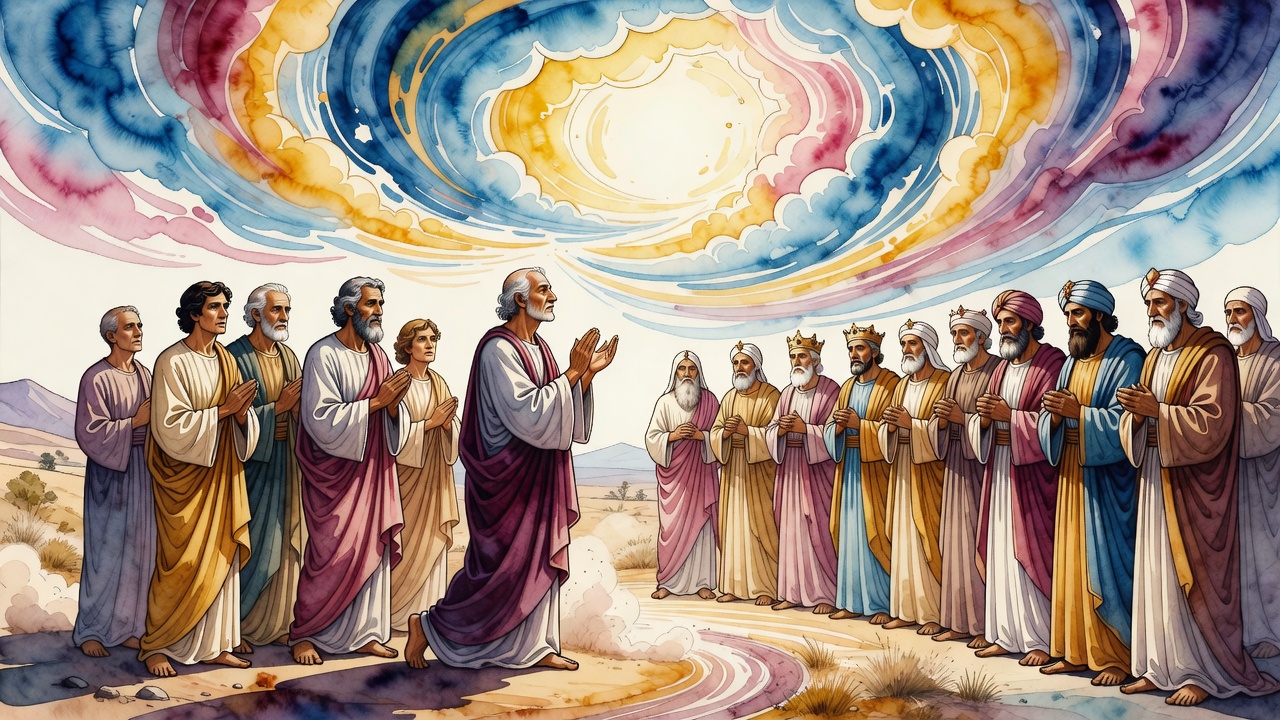
Elijah's answer cooled the room. If the three fathers stood and prayed together, their joined force could pull the Messiah into the world before the hour appointed for him. Heaven itself treats that triple prayer as a lever too strong for the calendar. So Elijah works in sequence. He serves love without letting love break the lock on the end of days. The fathers' merit is not a toy for the impatient.

The sages pressed further. Is there anyone alive now whose prayer carries that same weight?

"Only Rabbi Hiyya and his sons," Elijah said. Three living mouths that, if opened together in the right petition, could force what the fathers must not force. The air in the room changed. Power had a name and an address.

Power That Must Wait

The teaching does not celebrate haste. It frames restraint as holiness. The end can be hurried by human fire, and for that reason the highest fire is carefully divided. Abraham prays alone. Isaac prays alone. Jacob prays alone. Their merit fills the world like separate wells. Together they would become a flood that drowns the timetable of mercy.

Elsewhere the tradition says exile ends as a reward for faith, not for scholarship alone and not for the tally of deeds alone. The peak of Amanah in the Song of Songs becomes the peak of emunah, belief held when the road is still closed (Song of Songs 4:8). Forcing the end and waiting for the end sit in tension on the same table. One story refuses to let the fathers pray in chorus. Another story refuses to let return come without trust that outlasts proof.

A sage who hears both stories does not sleep easily. He knows prayer matters enough to wake the dead. He knows prayer can be so strong it must be rationed. He knows return is bought with faith, and still he may not spend it like a thief breaking a lock.

For the Name That Must Not Be Shamed

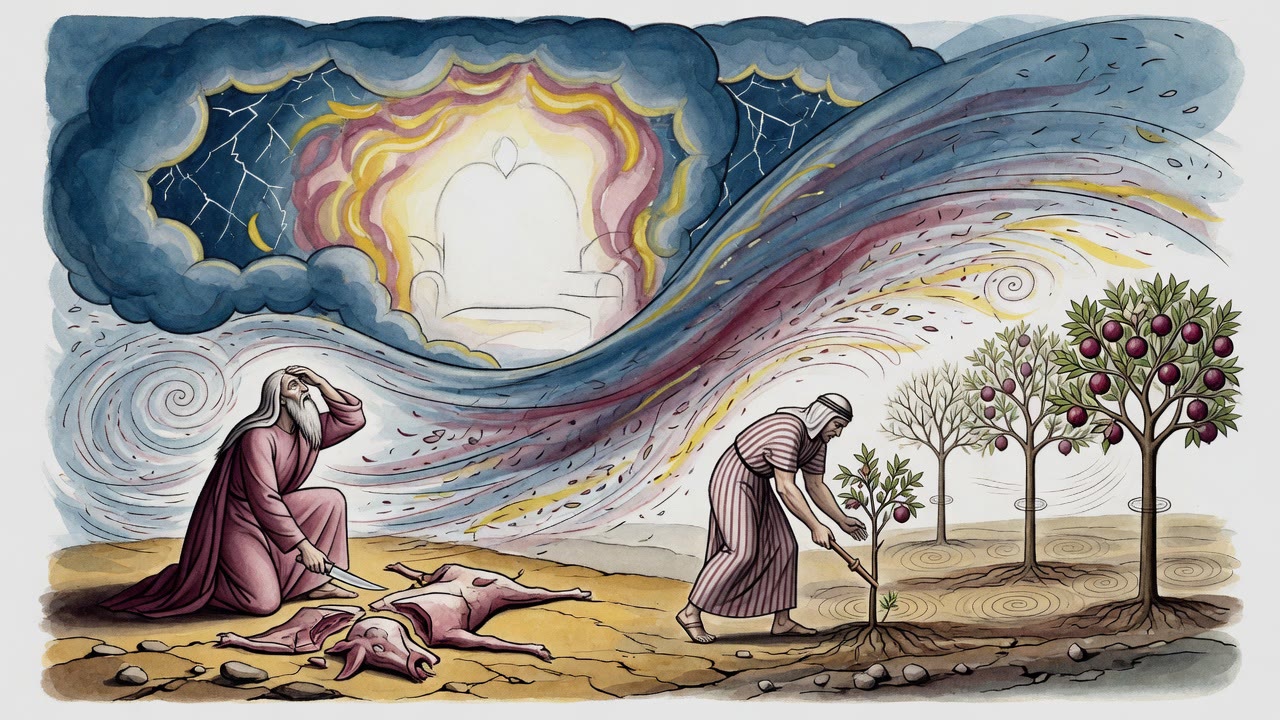
Redemption, the psalm midrash insists, is also for God's Name. "For My sake, for My sake I will act," so the Name is not profaned among the nations (Isaiah 48:11). Egypt was opened that way. The future gathering will open that way. Human prayer matters. Human faith matters. The schedule of mercy still belongs to the One whose reputation is justice.

So Elijah keeps washing hands one patriarch at a time. The water runs. The prayer rises. The body returns to rest. In the study house the sages sit with the knowledge that three living teachers could, if they chose, shake the hinge of history. Elijah does not tell them to do it. He only names the danger and the gift in the same breath.

When the lesson finally began that day, no one asked for shortcuts. The empty seat had been filled by a man who spent the morning protecting the world from too much holiness at once.

Three Basins, Three Silences

Picture the caves as Elijah leaves them. One basin cools beside Abraham's resting place. One beside Isaac. One beside Jacob. The water still holds the shape of washed hands. Outside, dawn is only a rumor on the stone. Elijah does not linger to hear whether the fathers dream of the end. He has work that must not be finished too well.

In Rabbi Judah's doorway he pauses before he enters, as if counting whether the room is ready for the news he carries. The sages will want stories of ascent and fire. He brings them a story of sequence and restraint. That is a harder miracle to love. It is also the one that keeps the world from breaking under too much answered prayer at once.

Somewhere in the same generation, Rabbi Hiyya and his sons sit over a page and do not know that Elijah has named them as a living hinge. Power that does not know itself is still power. The tradition leaves them unnamed in their own houses and named only in Elijah's mouth, a warning more than a crown.


← All myths
From the tradition

Sources

3 sources

The texts behind this telling. Some cards carry a translation of the source; others are our own retelling of it, and each card says which. Every card links out to the original.

Sanhedrin 98aTalmud Bavli, Sanhedrin

Translation of the source text.William Davidson Edition - Vocalized Aramaic · CC-BY-NC

"Kings shall see and arise, princes, and they shall prostrate themselves" (Isaiah 49:7)? Rabbi Eliezer said to him: But has it not already been said, "If you return, O Israel, says the LORD, return to Me" (Jeremiah 4:1)? Rabbi Yehoshua said to him: But has it not already been said, "And I heard the man clothed in linen, who was above the waters of the river, when he held up his right hand and his left hand to heaven and swore by Him who lives forever, that it shall be for a time, times, and a half; and when the shattering of the power of the holy people comes to an end, all these things shall be finished" (Daniel 12:7)? And Rabbi Eliezer was silent.

And Rabbi Abba said: There is no more revealed end than this, as it is said: "But you, O mountains of Israel, you shall shoot forth your branches and yield your fruit to My people Israel" (Ezekiel 36:8). Rabbi Eliezer says: Also from this, as it is said: "For before those days there was no wage for man, nor was there any wage for beast; and to him who went out or came in there was no peace because of the enemy" (Zechariah 8:10).

What is "to him who went out or came in there was no peace because of the enemy"? Rav said: Even Torah scholars, of whom peace is written, as it is written "Great peace have they who love Your Torah" (Psalms 119:165), have no peace because of the enemy. And Shmuel said: Until all the prices are equal. Rabbi Hanina said: The son of David will not come until even a small fish is sought for a sick person and is not found, as it is said: "Then I will make their waters settle and cause their rivers to run like oil" (Ezekiel 32:14), and it is written afterward: "On that day I will cause a horn to spring forth for the house of Israel" (Ezekiel 29:21).

Rabbi Hama bar Hanina said: The son of David will not come until the contemptible kingdom comes to an end from Israel, as it is said: "And He shall cut off the sprigs with pruning hooks" (Isaiah 18:5), and it is written afterward: "At that time a gift shall be brought to the LORD of hosts from a people tall and smooth" (Isaiah 18:7). Ze'eiri said that Rabbi Hanina said: The son of David will not come until the haughty of spirit cease from Israel, as it is said: "For then I will remove from your midst your proudly exultant ones" (Zephaniah 3:11), and it is written: "And I will leave in your midst a people humble and lowly, and they shall take refuge in the name of the LORD" (Zephaniah 3:12).

Rabbi Simlai said in the name of Rabbi Elazar son of Rabbi Shimon: The son of David will not come until all the judges and officers cease from Israel, as it is said: "And I will turn My hand against you and will smelt away your dross as with lye... and I will restore your judges" (Isaiah 1:25-26). Ulla said: Jerusalem will be redeemed only through righteousness, as it is said: "Zion shall be redeemed by justice, and those in her who repent by righteousness" (Isaiah 1:27).

Rav Pappa said: If the arrogant cease, the Magi cease; if the judges cease, the petty officers cease. If the arrogant cease, the Magi cease, as it is written: "And I will smelt away your dross as with lye and remove all your alloy" (Isaiah 1:25). And if the judges cease, the petty officers cease, as it is written: "The LORD has taken away the judgments against you, He has cleared away your enemies" (Zephaniah 3:15).

Rabbi Yohanan said: If you see a generation that is steadily dwindling, wait for him, as it is said: "And the afflicted people You will save" (2 Samuel 22:28). Rabbi Yohanan said: If you see a generation upon which many troubles come like a river, wait for him, as it is said: "When the enemy comes in like a flood, the spirit of the LORD shall lift up a standard against him" (Isaiah 59:19), and adjacent to it: "And a redeemer shall come to Zion" (Isaiah 59:20).

And Rabbi Yohanan said: The son of David will come only in a generation that is entirely righteous or entirely guilty. In a generation that is entirely righteous, as it is written: "And your people shall all be righteous, they shall inherit the land forever" (Isaiah 60:21). In a generation that is entirely guilty, as it is written: "And He saw that there was no man and was appalled that there was no one to intercede" (Isaiah 59:16), and it is written: "For My own sake I will act" (Isaiah 48:11).

Rabbi Alexandri said: Rabbi Yehoshua ben Levi pointed out a contradiction: it is written "in its time" and it is written "I will hasten it" (Isaiah 60:22). If they merit, I will hasten it; if they do not merit, it will be in its time. Rabbi Alexandri said: Rabbi Yehoshua ben Levi pointed out a contradiction: it is written "Behold, with the clouds of heaven there came one like a son of man" (Daniel 7:13), and it is written "humble and riding on a donkey" (Zechariah 9:9).

If they merit, "with the clouds of heaven"; if they do not merit, "humble and riding on a donkey." King Shapur said to Shmuel: You say the Messiah will come on a donkey? Let me send him the dappled horse that I have! He said to him: Do you have a horse of a thousand colors? Rabbi Yehoshua ben Levi found Elijah, who was standing at the entrance of the cave of Rabbi Shimon ben Yohai.

He said to him: Will I come to the world to come? He said to him: If this Master wishes. Rabbi Yehoshua ben Levi said: I saw two, and I heard the voice of three. He said to him: When will the Messiah come? He said to him: Go, ask him himself. And where does he sit? At the entrance of Rome. And what is his sign? He sits among the poor who suffer illnesses; and all of them untie and bind their bandages all at once, but he unties one and binds one.

He said: Perhaps I will be needed, that I not be delayed. He went to him. He said to him: Peace be upon you, my master and teacher! He said to him: Peace be upon you, son of Levi. He said to him: When will the Master come? He said to him: Today. He came to Elijah. He said to him: What did he say to you? He said to him: Peace be upon you, son of Levi.

He said to him: He assured you and your father of the world to come. He said to him: He spoke falsely to me, for he said to me, "Today I will come," and he did not come. He said to him: This is what he said to you: "Today, if you will hearken to His voice" (Psalms 95:7). His disciples asked Rabbi Yose ben Kisma: When will the son of David come? He said: I am afraid that you will ask me for a sign.

They said to him: We are not asking you for a sign. He said to them: When this gate falls and is rebuilt, and falls and is rebuilt, and falls, and they do not manage to rebuild it before the son of David comes. They said to him: Our master, give us a sign! He said to them: But did you not say to me that you are not asking me for a sign? They said to him: Even so.

He said to them: If so, let the waters of the cave of Pamyas turn into blood. And they turned into blood. At the time of his passing, he said to them: Make my coffin deep for me,

Full source
Mekhilta Tractate Vayehi Beshalach 7:28Mekhilta DeRabbi Yishmael

Retold in our words. Read the original at the link below.Mechilta, translated by Rabbi Shraga Silverstein · CC-BY

The Mekhilta makes a declaration that connects the Exodus to the future redemption of Israel. The exiles will be gathered in only as a reward for faith. Not for Torah study alone, not for the performance of specific commandments, but for emunah, the raw, unwavering trust in God's promises even when they seem impossible.

The proof text comes from an unexpected source, the Song of Songs, the great love poem between God and Israel. "With me, from Lebanon, my bride; with me from Lebanon shall you come. You shall look from the peak of amanah" (Song of Songs 4:8). The Mekhilta reads "amanah" not as a geographical location but as a play on the word emunah, belief. The exiles will return from their dispersion "from the peak of faith." Their redemption will come because they maintained belief in God throughout the long darkness of exile.

A second verse reinforces the point: "And I will betroth you to Me forever.. and I will betroth you to Me with emunah" (Hosea 2:22). The ultimate reunion between God and Israel, the final ingathering of the exiles, is described as a betrothal sealed with faithfulness. The Mekhilta teaches that exile is not merely a political condition. It is a test of faith. The question is not whether Israel will suffer in dispersion, but whether they will continue believing in the promised return despite centuries of evidence to the contrary. Those who hold on to that belief, the Mekhilta insists, are the ones for whom the exile will finally end.

Full source
Midrash Tehillim 107:1Midrash Tehillim

Retold in our words. Read the original at the link below.Rabbi Mike Feuer, Jerusalem Anthology · CC-BY

The answer, according to ancient Jewish wisdom, might be more about God's reputation than our own merit. to Midrash Tehillim, a collection of interpretations on the Book of Psalms, specifically Psalm 107. It begins with a powerful call: "Thank the Lord for He is good, for His kindness endures forever. Let those redeemed by the Lord speak out, those whom He has redeemed from distress." But what does it really mean to be "redeemed by the Lord?"

The verse from Isaiah (48:11) is key: "For My sake, for My sake I will act, for how can My name be profaned?" Notice how it says "For My sake" twice? The Almighty, according to this midrash (rabbinic interpretive commentary), isn't just being repetitive. Instead, God is emphasizing something profound. God acts, first and foremost, for the sake of God's own name. God cannot allow God's name to be desecrated. this way: If God constantly allowed injustice to reign, what would that say about God's power, God's justice, God's very essence?

The Midrash continues, explaining the double "For My sake." "I redeemed you from Egypt for the sake of My name," God says, referencing (Psalms 106:8): "And He saved them for the sake of His name." The Exodus, the foundational story of Jewish people, wasn't just about freeing slaves; it was about demonstrating God's power and commitment to justice on a cosmic scale. And, God promises, "I will also redeem you in the future, just as I redeemed you in this world," echoing the cyclical nature of history described in (Ecclesiastes 1:9): "What has been will be again."

What about us? Are we just passive recipients of God's actions? Rabbi Huna the priest, citing Rabbi Avin, reminds us of Moses's stinging rebuke to the Israelites in (Deuteronomy 9:4): "You know full well that it was not because of your righteousness that the Lord your God gave you this good land to possess, for you are a stiff-necked people." Ouch! It's a harsh reminder that divine favor isn’t always earned. Sometimes, it's about maintaining God's reputation.

David understood this, proclaiming, "For His name's sake, He turns to me." It’s a humbling thought.

Rabbi Berachiah, quoting Rabbi Chelbo in the name of Rabbi Samuel, clarifies who these "redeemed by the Lord" are: the people of Israel. As (Isaiah 35:10) declares, "And the redeemed of the Lord shall return." The Midrash pointedly emphasizes that it's "the redeemed of the Lord," not "the redeemed of Elijah" or "the redeemed of the Messiah." The redemption comes from God alone.

So, what does all this mean for us today? It suggests that even when we feel undeserving, even when we stumble and fall, there's a force working in the universe to uphold justice and kindness. Not necessarily because we deserve it, but because God's very nature demands it. Maybe, just maybe, that's a reason to have a little hope, and a lot of gratitude.

Full source