Parshat Beshalach5 min read

Israel Marched Back Into the Idol's Open Trap

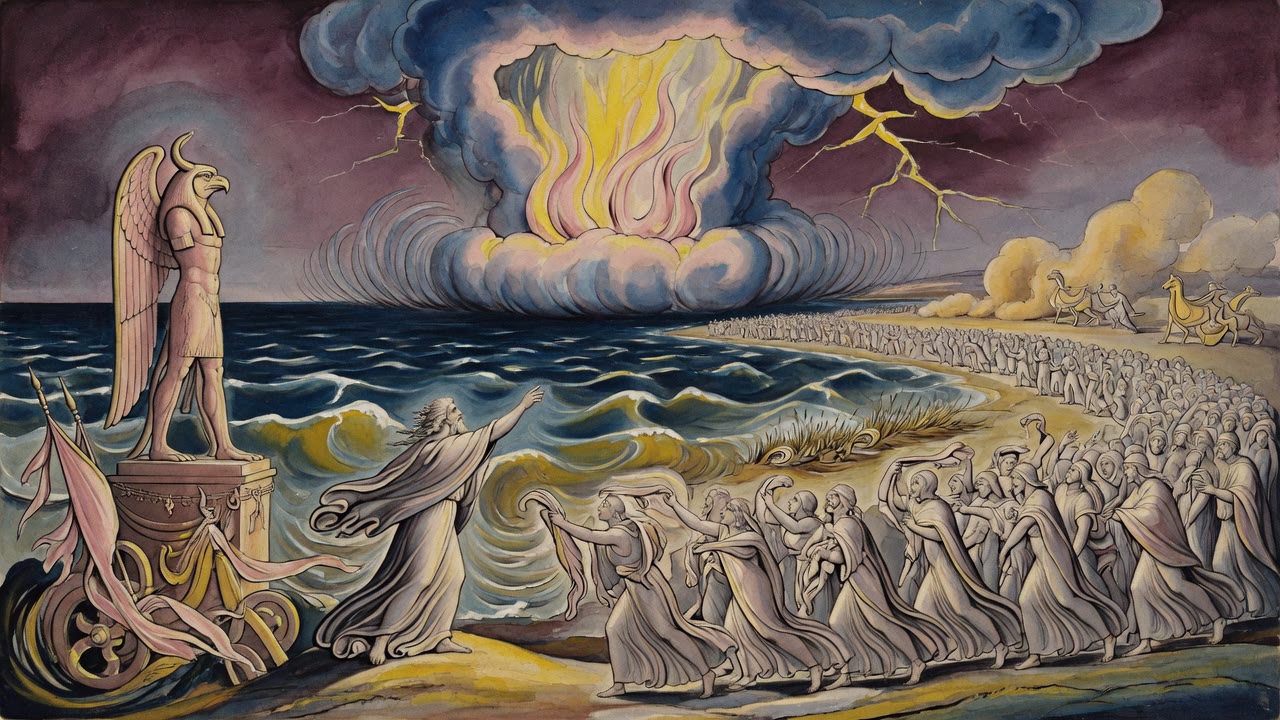
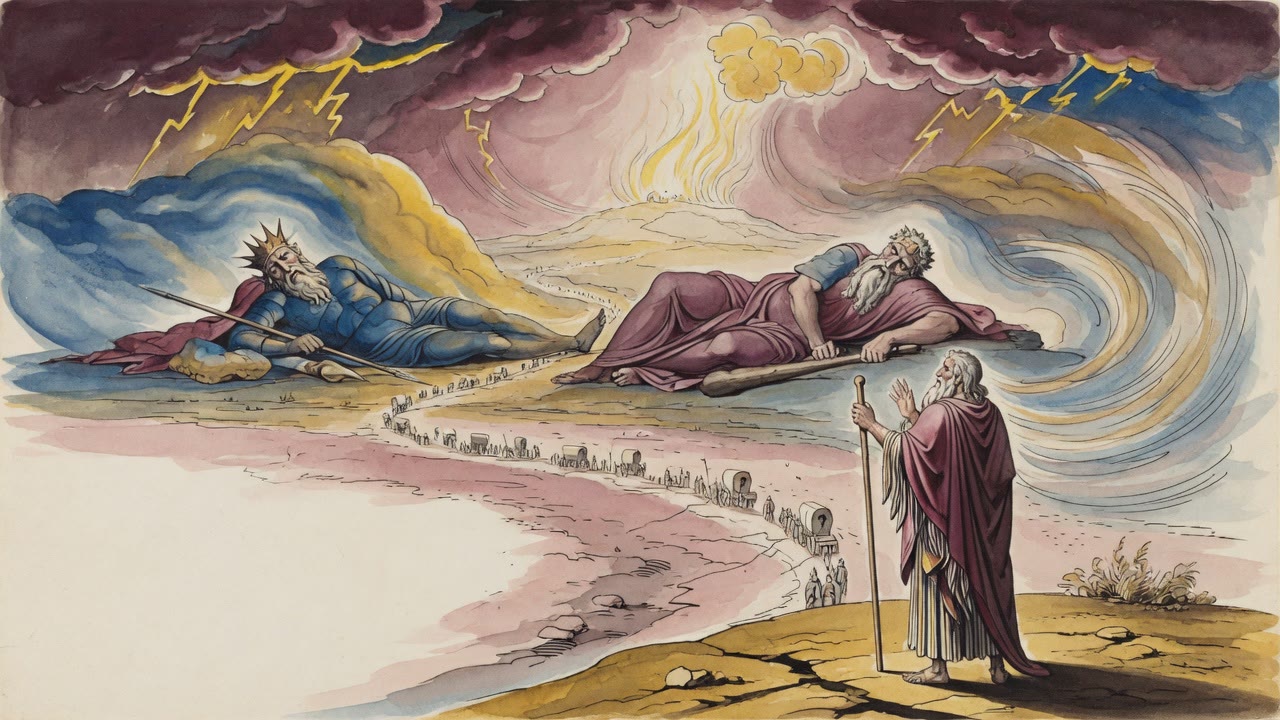
Moses turns the camp toward Pi-Hahiroth. The sea ahead, Egypt behind, Baal-Zephon left standing on purpose. Some tear their clothes.

Curated by Arthur · Told by Maggid ·
Table of Contents
  1. Turn Around
  2. The Idol Left Standing
  3. Seven Clouds Remake the Road
  4. Kindness, Not Wages
  5. Stone-Still Nations
Israel Marched Back Into the Idol's Open Trap Click for full size

Turn Around

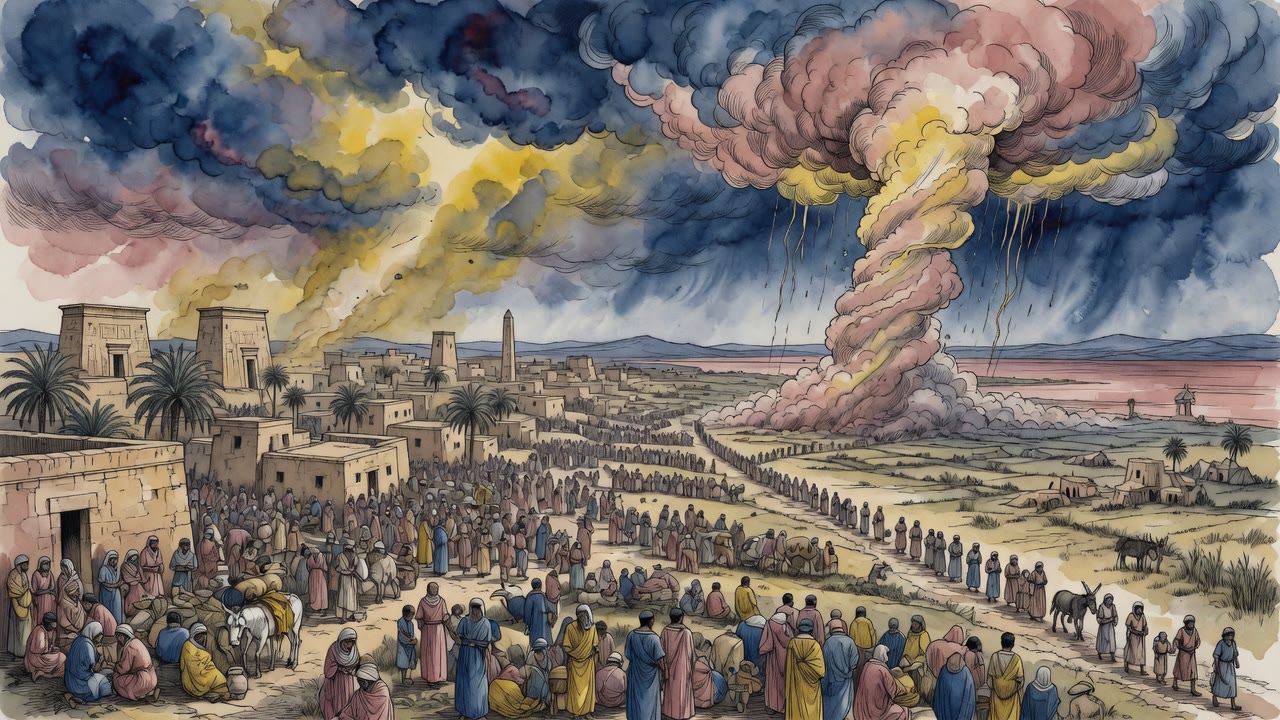
The horn sounds, and the column folds back on itself. Moses has ordered a reverse march to a place named Pi-Hahiroth, and the people who thought they were done with Egypt hear their own footsteps heading toward an idol's mouth.

Rabbi Joshua sketches the box with four walls. Idol-place on one side. A tower on the other. The sea ahead. Pharaoh's army closing the last edge behind. Rabbi Eliezer adds stranger architecture: idols not carved by human hands but set by Heaven, square and sheer-walled, eyes open, male and female shapes. The ground itself has been a sanctuary of false freedom, a place where devotees were released into service of something that could not save them.

Those who lack faith tear their hair and rip their clothes. They are certain the road ends in slaughter. Moses steadies them with one hard claim: the Holy One has already called them free people, and free they will remain.

A child asks why the sun is behind them again. No one answers well. The dust of the reverse march tastes like the dust of the first escape, only heavier, because hope has already been spent once.

The Idol Left Standing

Baal-Zephon is the twist. Heaven has not smashed every Egyptian god on the way out. One is left upright on purpose, a last display for Pharaoh to misread as proof that his power still holds the road. The trap is baited with theology. Egypt sees an intact shrine and thinks the old order still works. Israel sees the same shrine and tastes panic.

God told them to double back into that view. The name Pi-Hahiroth itself is read as a confession of the place's past, a center of Egyptian worship where freedom was theater. Former slaves are forced to camp where their masters once staged liberation into bondage, so that the real exit can be unmistakable.

Open eyes of stone watch the camp set pots on cold ground. The eyes do not blink. They also do not save. That is the whole sermon of the idol left standing: presence without power, spectacle without rescue.

Seven Clouds Remake the Road

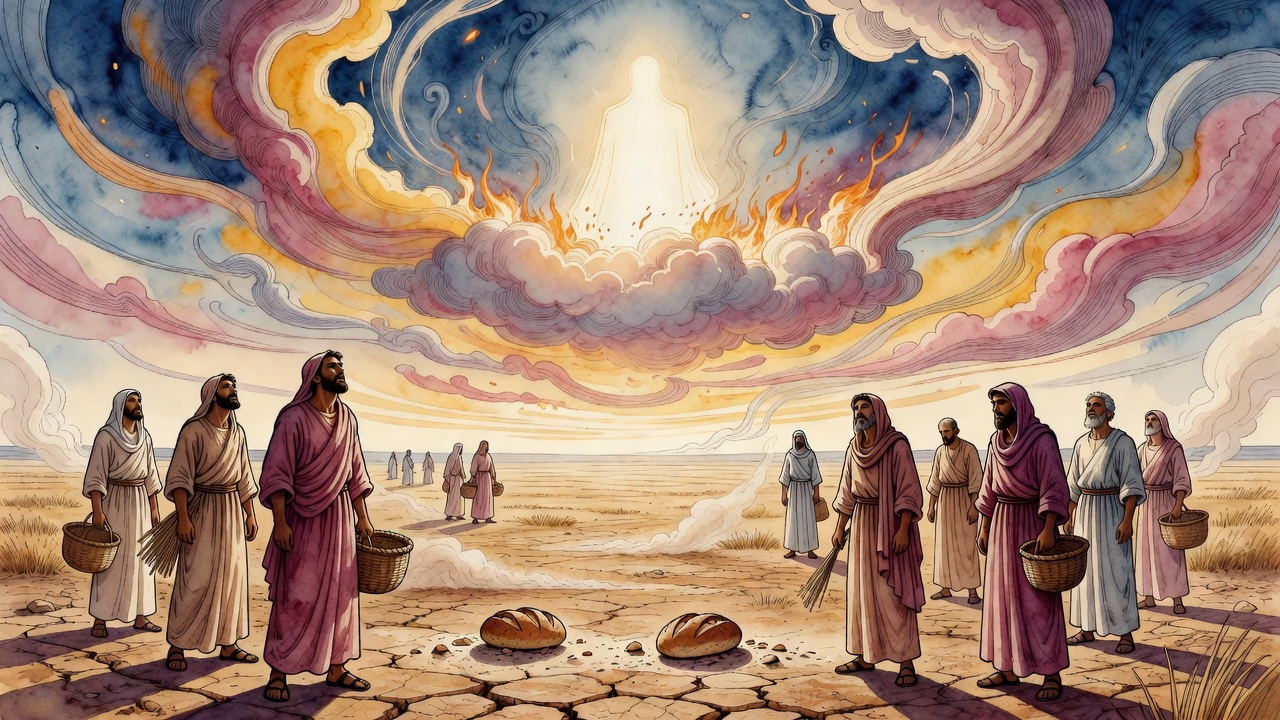
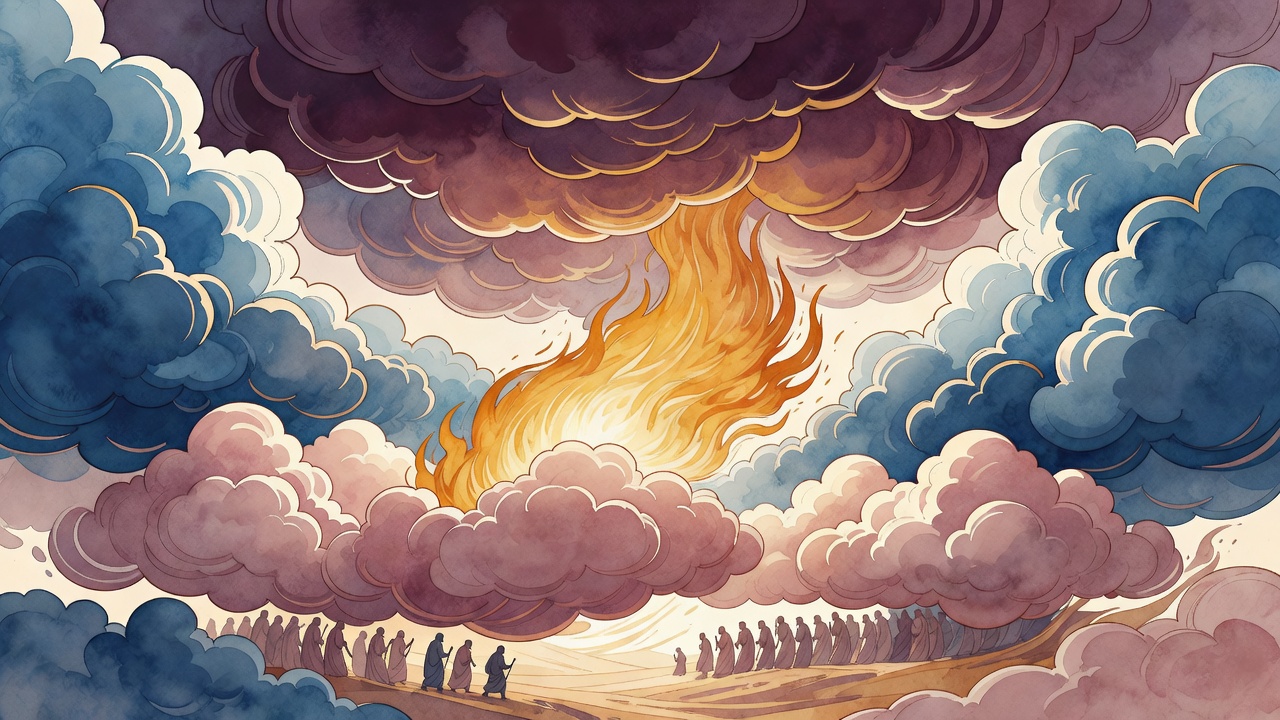
A single pillar of cloud is named in the plain verse, but the teachers count seven. Four on the sides. One above as roof. One below as floor. One running ahead as scout. That seventh cloud does the work no army can do. It lifts low ground and presses high ground until the road lies flat for a nation of walkers.

Rabbi Yose the Galilean almost cannot speak the image without the verse forcing him: the Master of the universe walking ahead of His people the way a father carries a lamp before a child. Why such tenderness? Measure answers measure. Long ago Abraham walked his angelic guests part of the way to honor them. Now clouds honor Abraham's children on a road that should have been impassable.

What the prophet promises for the end of days, valleys raised and mountains lowered, is already done in miniature for a band of former slaves boxed between sea and idol.

Under the floor-cloud, stones that should have torn sandals lie smooth. Above, heat that should have cracked lips is screened. The scout cloud is already far ahead, flattening a ridge the maps of Egypt never bothered to name.

Kindness, Not Wages

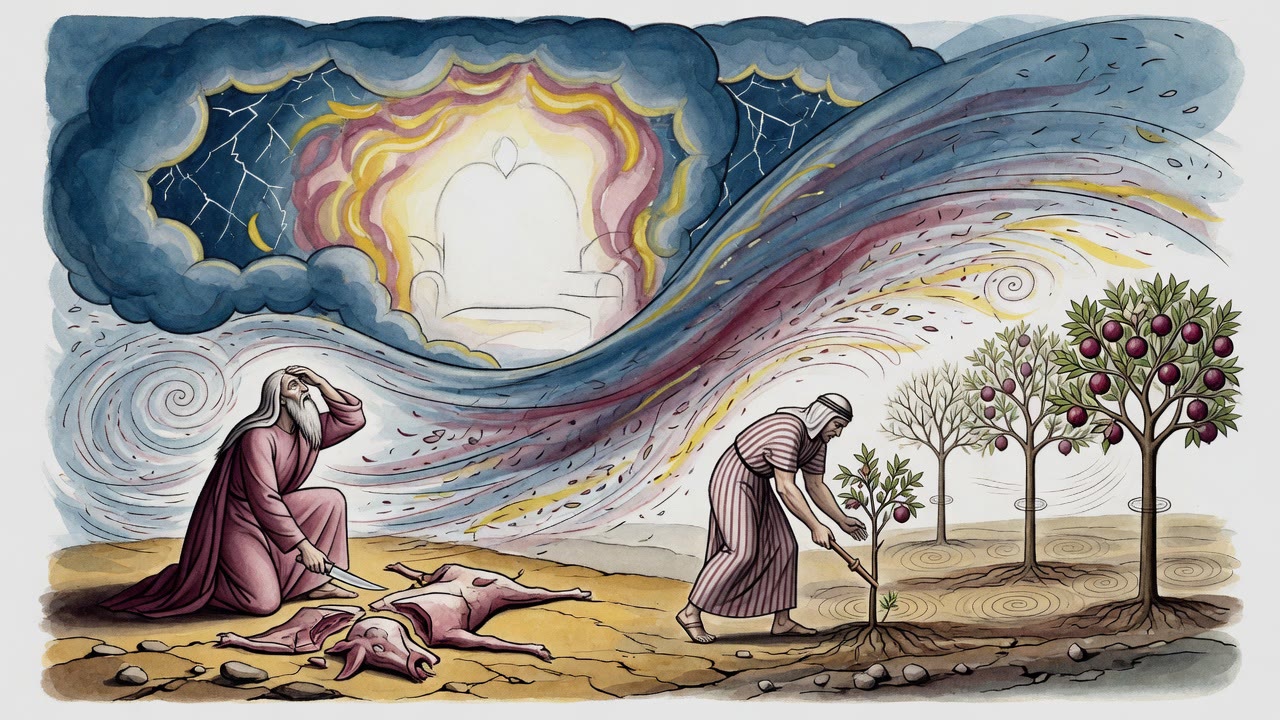
"You led in Your kindness the people You redeemed." The rabbis seize the word kindness and will not let Israel pretend they earned the exit by piled deeds. Redemption at this hour is gift. The whole earth is the LORD's, yet He claims one people as His own. There is no people for Him but Israel in this claim.

What strength guides them? Three answers braid in the midrash. God's own might. The merit of the Torah that will soon be given. The future kingdom of David's house. The song already points past the trap toward a holy habitation not yet entered.

Kindness does not feel soft when chariots raise dust on the horizon. It feels like a road that should not exist still holding the weight of a nation.

Stone-Still Nations

When terror and dread fall on the nations after the sea, the teachers hear a careful split: terror near, dread far. Later the kings of the Amorites will melt when they hear what Israel did. "Still as a stone" becomes two scenes. Amalek rallies every king against the people fresh from water, and Moses prays until the coalition freezes mute. Spies slip into Canaan, and anyone who might expose them is struck dumb on the spot.

One word, acquired, threads Torah, people, Land, and Temple. Let the acquired people enter the acquired land and build the acquired house for the acquired teaching. The trap at Pi-Hahiroth is not the end of the story. It is the box that forces the next miracle into the open.

Clothes still hang torn on some shoulders when the column finally moves again. Baal-Zephon watches with open eyes that cannot see. The scout cloud is already pressing a hill flat somewhere ahead. Israel walks as free people into a geography designed to prove the opposite, and the kindness that led them out of Egypt keeps leading them through the mouth of the idol's own door.

Someone gathers the torn strips of a garment and knots them into a belt. Panic becomes fabric again. The trap still looks like a trap. The clouds still refuse to agree with the trap's geometry. Between those two facts the people take the next step, which is all freedom ever is on a bad afternoon.


← All myths
From the tradition

Sources

4 sources

The texts behind this telling. Some cards carry a translation of the source; others are our own retelling of it, and each card says which. Every card links out to the original.

Mekhilta DeRabbi Shimon Ben Yochai 14:2Mekhilta DeRabbi Shimon Ben Yochai

Translation of the source text.Mechilta de-Rabbi Simon b. Jochai, ed. D. Hoffmann, Frankfurt 1905 · Public Domain

"And they turned back and encamped before Pi-Hahiroth" (Exodus 14:2). "Hiroth" means nothing other than the place of the freedom of the Egyptians, the place of their idle resort, the place of their idolatry. Formerly it was called Pithom, as it is said, "Pithom and Raamses" (Exodus 1:11); it came to be called Pi-Hahiroth because they would set their worshippers free there.

They said: these "hiroth" were not chipped away but enclosed; they were not sloped but sheer like fortress walls; they were not round but square. They had eyes, and they were open. They were not the work of flesh and blood but the work of Heaven. They were shaped like a male and a female, these are the words of Rabbi Eliezer. Rabbi Joshua says: "hiroth" was on one side and a tower on the other, the sea before them and the Egyptians behind them.

Another interpretation: "And they turned back and encamped before Pi-Hahiroth." Moses said to them, "Return backward." Once they sounded the horn to turn back, the ones lacking faith among them began tearing at their hair and rending their garments. Moses said to them, "From the mouth of the Holy One it was said to me that you are free men."

"Between Migdol and the sea." There was the greatness of Egypt and there was their glory, and there Joseph gathered all the money, as it is said, "And Joseph brought the money into Pharaoh's house" (Genesis 47:14).

"Before Baal-Zephon." Baal-Zephon was left to them out of the "hiroth" idols in order to lure the heart of the Egyptians, and of it is said, "He makes nations great and destroys them" (Job 12:23).

"Opposite it you shall encamp by the sea." Scripture tells that at Migdol there were crowds equal to all who came out of Egypt. Another interpretation: "Opposite it you shall encamp by the sea", in order to lure the heart of the Egyptians.

Full source
Mekhilta DeRabbi Shimon Ben Yochai 13:20Mekhilta DeRabbi Shimon Ben Yochai

Translation of the source text.Mechilta de-Rabbi Simon b. Jochai, ed. D. Hoffmann, Frankfurt 1905 · Public Domain

"And the LORD went before them by day in a pillar of cloud" (Exodus 13:21). This teaches that seven clouds of glory were with Israel. "By day in a pillar of cloud", here is one. "And Your cloud stands over them" (Numbers 14:14), here are two. "And in a pillar of cloud You go before them by day" (Numbers 14:14), here are three. "And when the cloud lingered" (Numbers 9:19), here are four. "And when the cloud was taken up" (Exodus 40:36), here are five. "And if the cloud was not taken up" (Exodus 40:37), here are six. "For the cloud of the LORD was upon the Tabernacle by day" (Exodus 40:38), here are seven.

Four from the four directions, one from above, one from below, and one that went ahead of them, preparing the roads for them: raising the low places and lowering the high ones, making for them a level path. As it is said, "Every valley shall be lifted up, and every mountain and hill made low, and the crooked shall become level, and the rough places a plain" (Isaiah 40:4). And it says, "And there shall be a highway for the remnant of His people who remain from Assyria, as there was for Israel on the day they came up from the land of Egypt" (Isaiah 11:16). This comes to teach, and turns out to be taught: just as in the time to come every valley shall be lifted up and every mountain and hill made low, so it was for them when they came up from the land of Egypt.

Another interpretation: "And the LORD went before them." Rabbi Yose the Galilean says: were it not written in Scripture, it would be impossible to say it, like a father who carries a lamp before his son, and like a master who carries a lamp before his servant.

Another interpretation: "And the LORD went before them." By the measure that a person acts, so it is measured back to him. Abraham escorted the ministering angels, as it is written, "And Abraham went with them to send them off" (Genesis 18:16); therefore the Holy One, blessed be He, escorted his children forty years in the wilderness.

"To go by day and night." The verse compares their traveling by day to their traveling by night: just as in their traveling by day they lacked no light, so in their traveling by night they lacked no light; and just as in their traveling by night they would not hunger nor thirst, nor would scorching heat or sun strike them, so in their traveling by day they would not hunger nor thirst, nor would scorching heat or sun strike them.

Full source
Mekhilta DeRabbi Shimon Ben Yochai 15:16Mekhilta DeRabbi Shimon Ben Yochai

Translation of the source text.Mechilta de-Rabbi Simon b. Jochai, ed. D. Hoffmann, Frankfurt 1905 · Public Domain

"Terror and dread fall upon them" (Exodus 15:16): terror upon those who are near, and dread upon those who are far. And so it says, "When all the kings of the Amorites who were beyond the Jordan to the west heard...their hearts melted, and there was no spirit left in them because of the children of Israel" (Joshua 5:1).

"By the greatness of Your arm they are still as a stone." Once Israel had crossed the sea, Amalek gathered against them all the kings of the nations of the world to come and wage war with them. At that hour Moses prayed, and they all fell silent as a stone, as it is said, "By the greatness of Your arm they are still as a stone." Another interpretation: once the spies entered the land, anyone who wished to say "These are the spies of Israel" became silent as a stone; therefore it is said, "By the greatness of Your arm they are still as a stone."

"Until Your people pass over, O LORD; until the people pass over whom You have acquired." "Until they pass over": until they cross the Jordan, until they cross the wadis of Arnon. "This people": although the entire world is Yours, You have no people but these, as it is said, "This people I formed for Myself" (Isaiah 43:21). "You have acquired": the Torah is called an acquisition, as it is said, "The LORD acquired me at the beginning of His way" (Proverbs 8:22). Israel is called an acquisition, as it is said, "this people whom You have acquired." The Land of Israel is called an acquisition, as it is said, "Possessor [acquirer] of heaven and earth" (Genesis 14:19). The Temple is called an acquisition, as it is said, "And He brought them to His holy border, this mountain which His right hand acquired" (Psalms 78:54). Let Israel, who are called an acquisition, come to the Land of Israel, which is called an acquisition, and build the Temple, which is called an acquisition, by the merit of the Torah, which is called an acquisition; therefore it is said, "this people whom You have acquired."

Full source
Mekhilta DeRabbi Shimon Ben Yochai 15:13Mekhilta DeRabbi Shimon Ben Yochai

Translation of the source text.Mechilta de-Rabbi Simon b. Jochai, ed. D. Hoffmann, Frankfurt 1905 · Public Domain

"You led in Your kindness" (Exodus 15:13), the kindness that You did with us; there were no deeds in our hand, as in the matter that is said (Isaiah 63:7), "I will recall the kindnesses of the LORD." And it says (Psalms 119:64), "Your kindness, O LORD, fills the earth." "This people", even though the whole world entire is Yours, you have no people but Israel, as it is said (Isaiah 43:21), "this people I formed for Myself." "You guided them in Your strength", in Your might, as it is said (Psalms 28:7), "The LORD is my strength and my shield." Another interpretation: by the merit of the Torah, as it is said (ibid. 29:11), "The LORD will give strength to His people." Another interpretation: by the merit of the kingship of the house of David, as it is said (ibid. 21:2), "O LORD, in Your strength the king rejoices." "To Your holy abode", by the merit of the Temple that they are destined to build. It is written "to Your holy abode," and it is written (ibid. 79:7), "and they laid waste His abode."

Full source