Amalek Waited Outside the Seven Clouds of Glory for Israel to Stumble
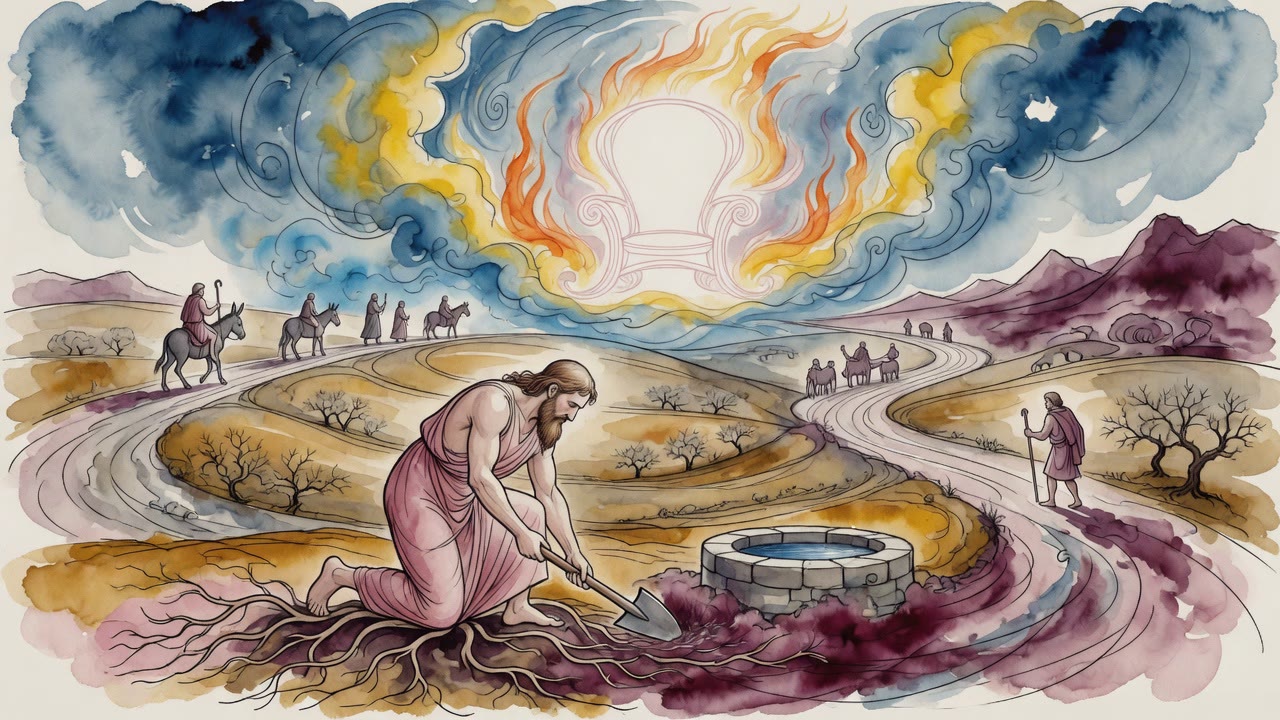
Esau told his grandson he had failed to kill Jacob and left him the job. Watch for the stumble, he said. That is the only opening you get.
Table of Contents
 Click for full size
The Bones on the Short Road
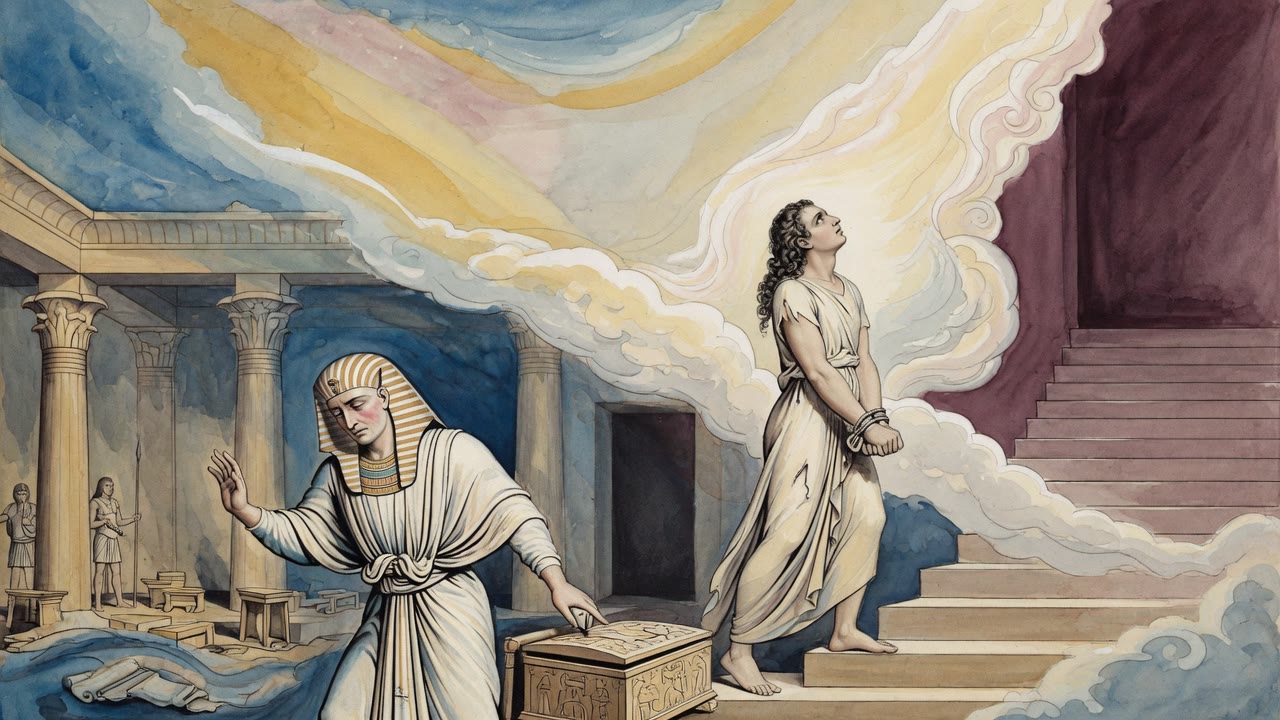
There was a fast way out of Egypt. Up the coast, past the Philistine towns, into Canaan in a matter of days. God would not let them take it.
Bones were lying on that road. Two hundred thousand fighting men of the tribe of Ephraim had counted the four hundred years of the servitude, decided the arithmetic was finished, and walked out of Egypt thirty years too early with shields and lances and everything a man needs for a raid. They went down to Gath to take the flocks. The Philistines killed all of them and nobody came back to bury anyone.
So the newly freed slaves were turned south instead, into open desert, the long way, because a column of people three days out of slavery who came around a bend and saw their own relatives bleached along the roadside would have turned around and gone back to Egypt on the spot.
Centuries later a prophet named Ezekiel stood in a valley full of dry bones and was asked whether they could live. Those were the bones.
Seven Walls Around a Nation
What they got instead of the short road was a house.
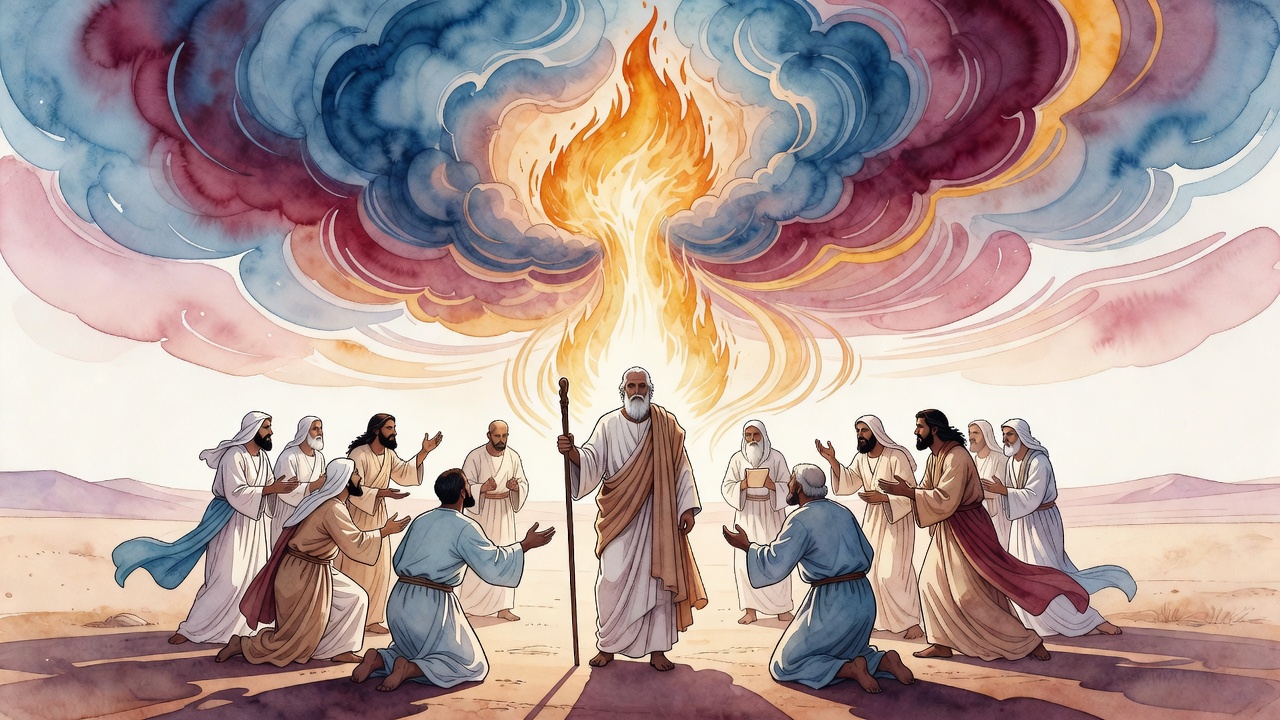
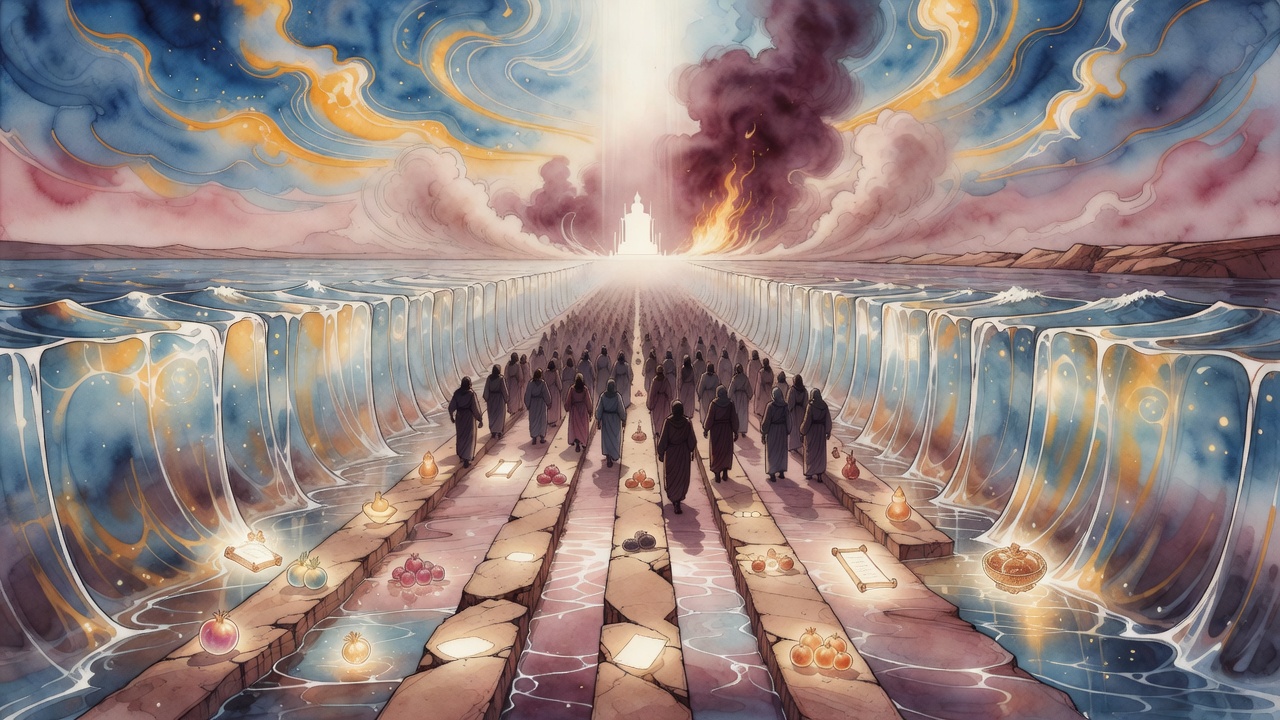
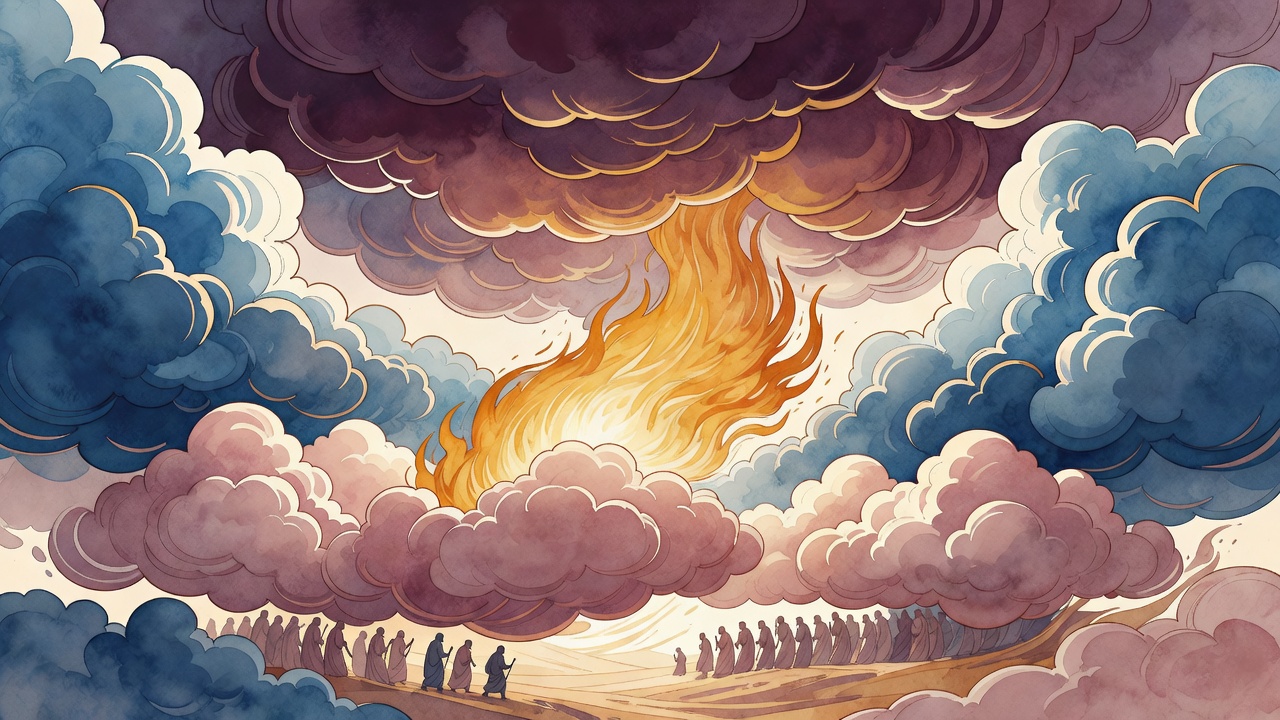
Four clouds stood at the four sides of the camp. One spread over the top, so no hail came down on them and no rain and the sun did not burn them. One lay underneath, so that in forty years of walking across a desert nobody put a foot on a thorn or a snake or a scorpion.
The seventh went out in front and did the work. It filled in the valleys and it took the hills down flat. It killed the snakes and the scorpions along the route before anyone arrived. It swept the road and sprinkled it so the dust would not rise in their faces.
Inside that enclosure nobody needed to light anything for forty years. If a man went into the darkest room he had, a beam of the cloud came in after him. If he had to walk out past the edge of the camp at night, a fold of it detached and went with him and covered him until he came back.
It went with Israel and no one else. The mixed crowd that had come up out of Egypt with them walked outside the walls.
The Letters on the Cloud's Arms
The seventh cloud had arms.
Four banners stood at the four points of the camp. Judah in the east under a lion. Reuben in the south under the figure of a man. Ephraim in the west under a fish. Dan in the north under a serpent. On the top of each pole were hooks of gold that came to a point like a spearhead, and on each of those points an arm of the cloud rested, and each arm had three letters cut into it, one for Abraham, one for Isaac, one for Jacob, and the letters burned with the light of the Shechinah (the settled presence of God).
One letter was left over. It was the He that God had taken out of His own name and added to Abram's. That letter was set with a Yod on the cloud that stood above the ark, and the two of them together spell the Name that the world was made with. That cloud went around the camps all week and lit them like the sun by day and like the moon at night, so people could still tell which was which.
When it was time to move, the cloud with those two letters lifted off the ark, and the four lettered clouds pulled off the banner tops and followed it. The priests saw them go and blew the trumpets, and the four winds of the earth blew myrrh and frankincense down the line of march.
Esau's Advice to His Grandson
Outside all of this, somebody was watching for a gap.
Esau had gone to his grave with one piece of business unfinished, and he handed it to his grandson before he died. I took every pain I could and I did not manage to kill Jacob, he said. You will avenge me on his children.
Amalek asked the obvious question. How am I supposed to beat them?
"Watch," Esau said. "The moment you see them stumble, jump."
Amalek made that his whole method. When Israel started asking out loud whether the Lord was among them or not, he appeared. When the spies came back and the camp shouted that they should choose a captain and march back to Egypt, he was there before the shouting stopped.
The Day the Walls Came Down
Then Aaron died on the mountain, and the clouds went with him.
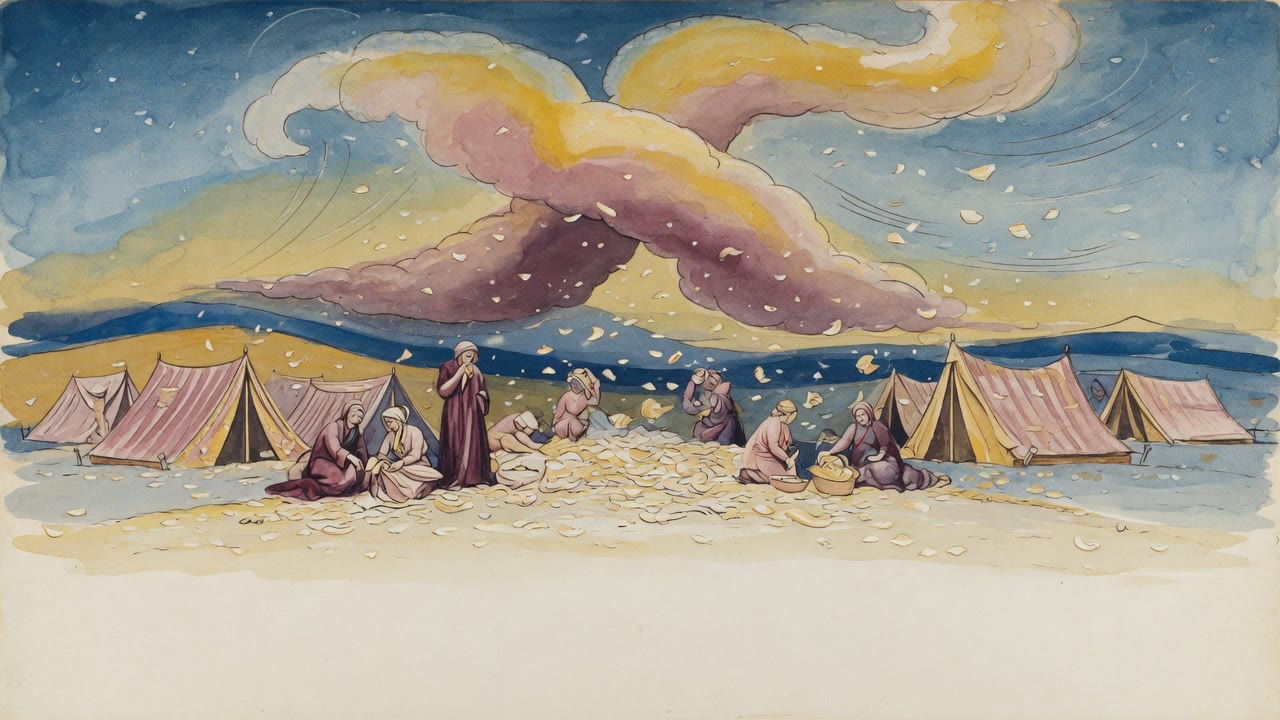
The camp came apart in fear. Nothing had been able to get in at them while the walls stood. Now there was sand on every side and the horizon was visible for the first time in forty years, and every one of them understood at once what that meant.
It meant Amalek. He heard that Aaron was dead and the clouds were gone and he was moving the same day. He came from behind, at the tail of the column, where the exhausted and the slow and the ones who could not keep up were walking without a wall behind them anymore.
He kept the policy for centuries. When Nebuchadnezzar's army came up to destroy Jerusalem, Amalek took a position one mile from the city and sat there. If Israel wins, he said, I will say I came to help them. If Babylon wins, I will stand on the road and cut down whoever runs.
Babylon won. He stood at the crossroad and killed the ones who came past him, and shouted things at them about their God while he did it.
← All myths