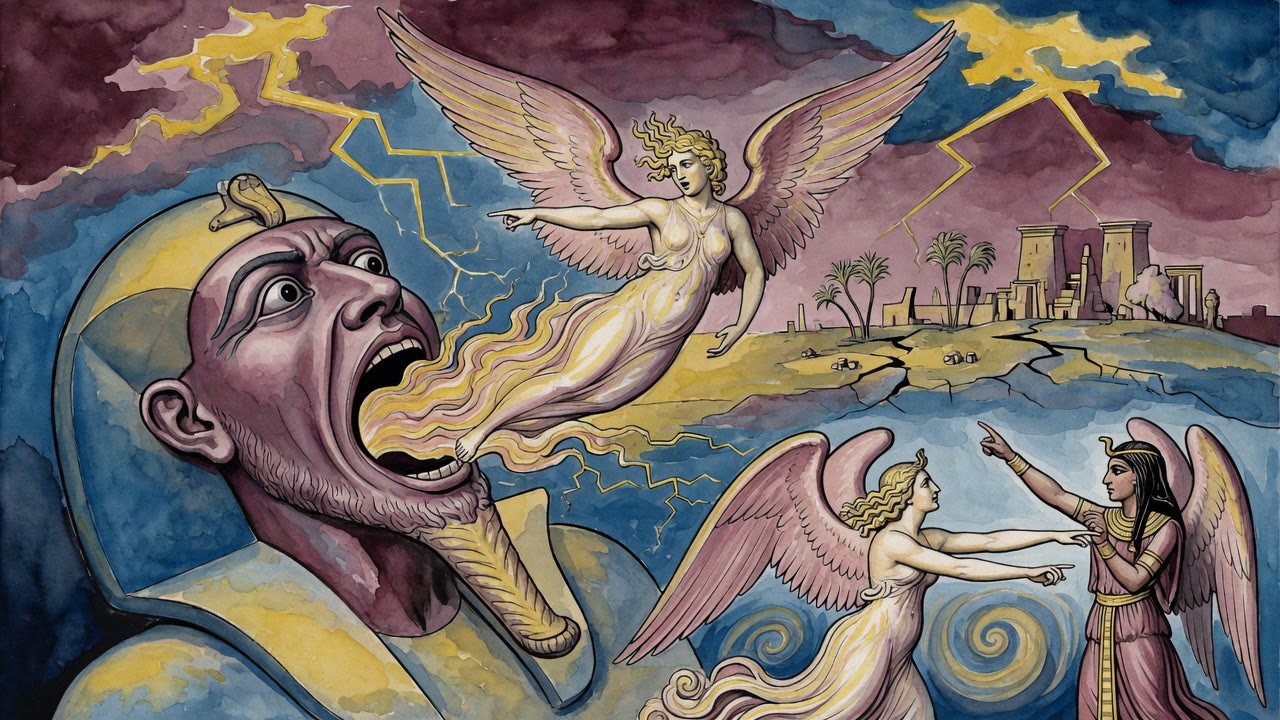
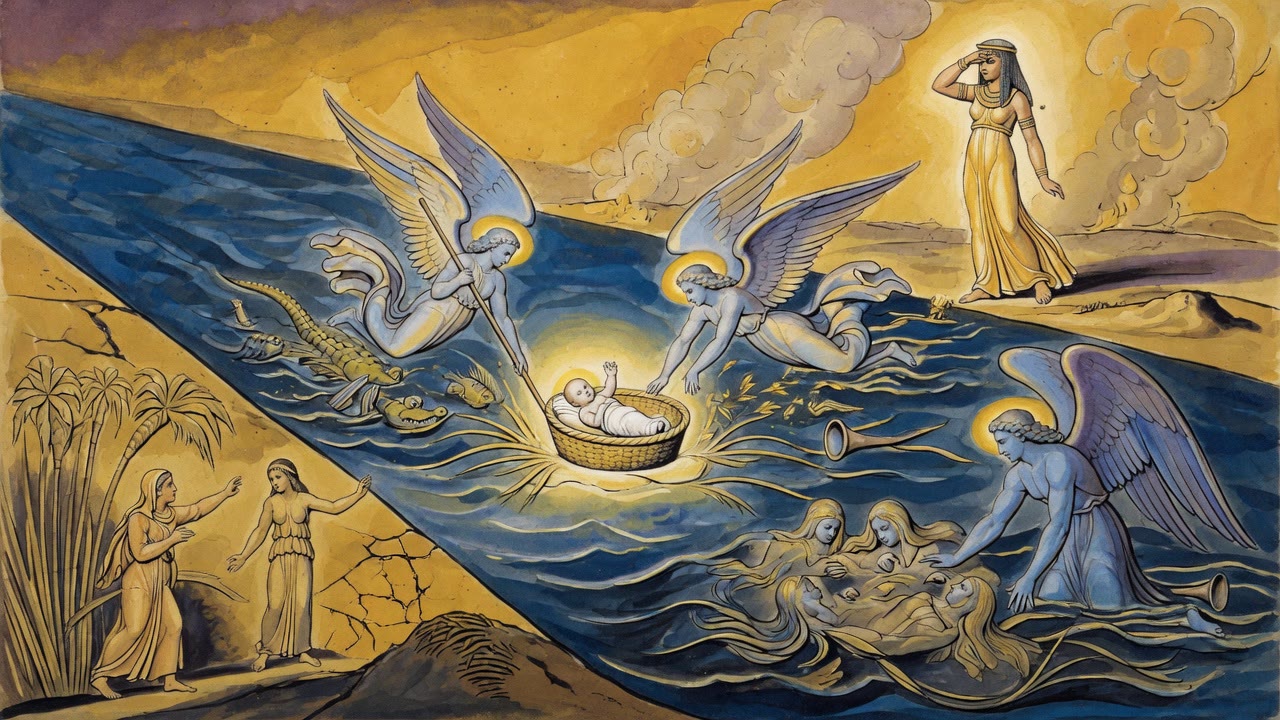
Moses Turned Israel Back Into Pharaoh's Trap
Officers rode in on Sunday to collect a three-day leave. Israel would not fold the tents. Moses pointed them back toward the sea.
Table of Contents
Pharaoh sent officers with the Hebrews to keep a three-day leave honest. They marched out on Thursday with a feast packed and brick quotas waiting at the far end of the week. He had not freed a nation. He had signed a pass.
 Click for full size
Sunday the Tents Were Still Rising
Sunday the canvas was still going up. Pegs bit into sand as if the wilderness had become a home. Pharaoh's watchers scratched at the sight. The officers rode in with the king's clock on their tongues.
"Three days," they said. "The feast is over. Turn around."
Israel did not fold the tents. The leave was not leave. The dismissal had been final, and the people said so. Words sharpened. Then hands. An officer reached for a man who would not turn, and the man hit him. Others closed in. Some officers went down hard. Bones broke with pride in the same blow. The rest fled toward the palaces with blood on their reports and a stiff word for what they had met. Contumacy. A people who would not be rented for a long weekend.
Moses Gave the Reverse Signal
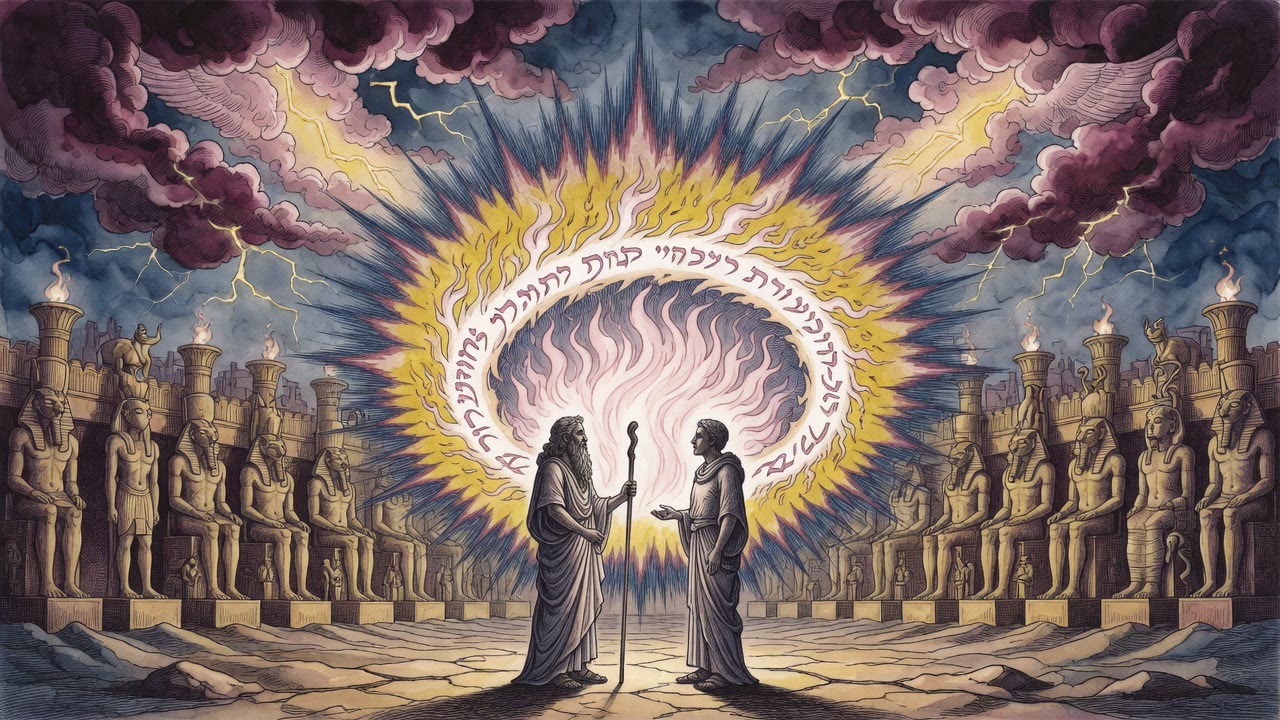
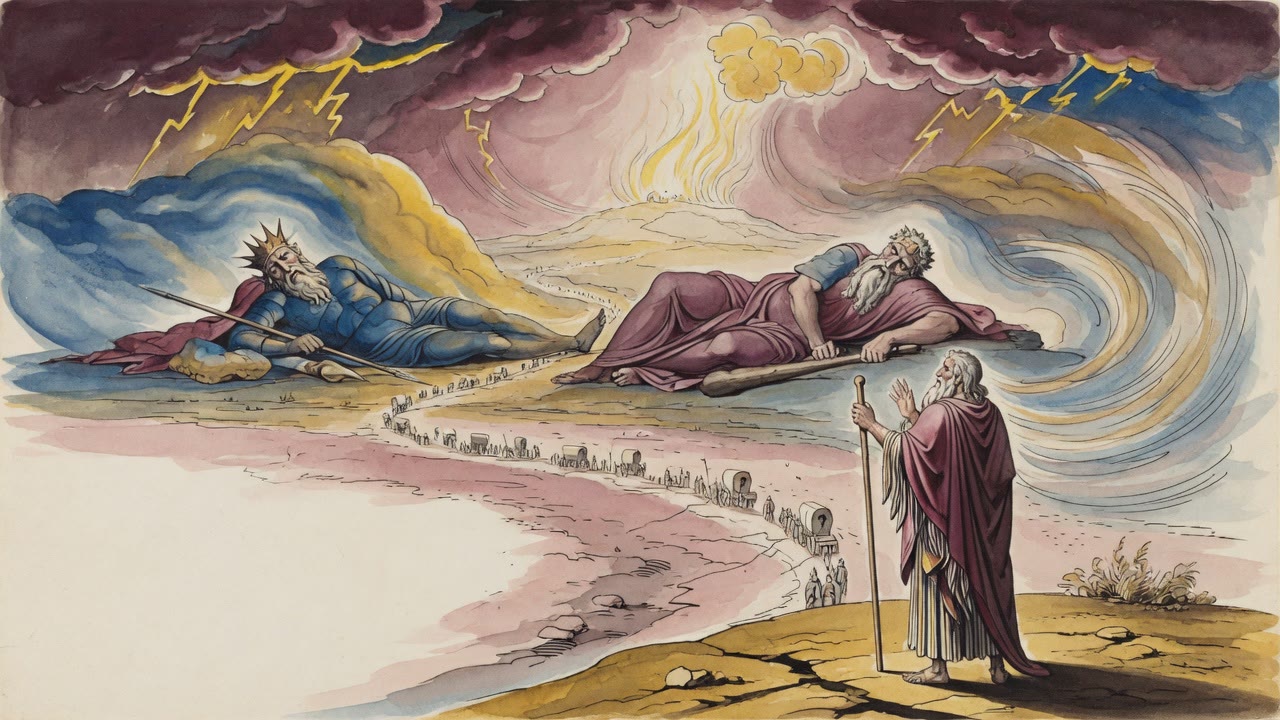
Moses would not let the departure look like a rout. If they ran now, they would run forever. He lifted the signal and sent them the wrong way on purpose.
"Turn back to Pi-hahiroth."
Hair tore. Cloth tore. The less faithful treated the reverse march like a drowning already begun. Mothers pulled children off the eastward track. Dust that had been going one way turned and went the other. Moses held them with a claim heavier than the map. By the word of God they were free. No longer slaves. They turned because he told them to, not because the sea had opened. The water still sat with its mouth shut.
Between Rocks Shaped Like Bodies
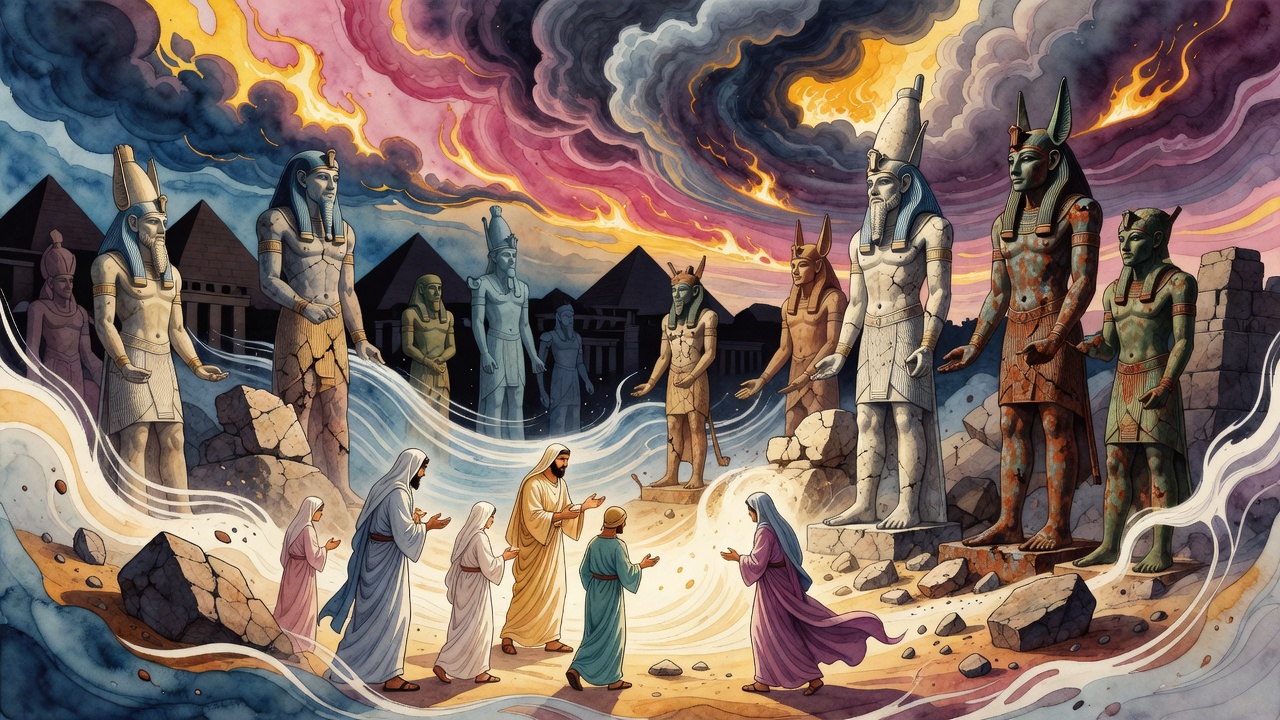
Pi-hahiroth opened between two rectangular rocks, an opening shaped like a man and a woman, not carved by chisels but set there. Inside that opening stood the sanctuary of Baal-zephon, the Egyptian idol that had kept its feet while other gods of Egypt fell. The place had once been called Pithom. Names changed. The hunger under the stones did not.
Israel camped where a slave's eye would read only doom. Sea ahead. Desert walls. An idol at their shoulder still standing, intact enough to comfort a pursuing king. Moses planted them there anyway. He walked the line of tents until the last peg was in, then stood at the water and did not explain himself.
The Host That Still Limped
They had left Goshen as a battered host. Generations of lashes do not fall off with the first night of unleavened bread. Limbs remembered quotas. Eyes remembered dark storehouses. The camp that turned back to Pi-hahiroth still carried Egypt in its joints even while it refused Egypt's officers.
These were the bodies that would later stand at Sinai. God would refuse to set the glory of Torah on a race of cripples, and angels would pass through the same people and make them sound before thunder. That healing still lay ahead, and it would reverse when a calf rose in gold. At Pi-hahiroth they were not yet whole. They were only free enough to obey a turn that made no sense to fear.
Pharaoh heard the bloody officers and reached for chariots. The idol at Baal-zephon would look, to him, like a sign that one god of Egypt still stood and still approved the chase. He would ride toward weather that had already chosen sides, the way Pharaohs ride when an idol still stands. Moses had put Israel where that choice would be public, between rocks like bodies and a sea that had not yet stood up.
The camp slept poorly. Children asked why the road had folded. Old men fingered staffs and said nothing. Moses walked the edge of the opening and watched the water that would become a wall. Behind him the last idol of Egypt cast a short shadow. Ahead of him a nation still limping, and a king already harnessing horses for a trap that would close on the pursuer instead.
← All myths