5 min read

Stone Gods Crumbled While Egypt Buried Its Firstborn

One idol was left standing at Pi-hahiroth. Baal-zephon kept its shape while the other gods rotted and rusted, bait for a pursuit that ended in the sea.

Curated by Arthur · Told by Maggid ·
Table of Contents
  1. Two Judgments, One Night
  2. Therefore the Firstborn Are Still Redeemed
  3. Leashes Pharaoh Offered
  4. Baal-zephon Left Standing
  5. Morning of Burials
Stone Gods Crumbled While Egypt Buried Its Firstborn Click for full size

Two Judgments, One Night

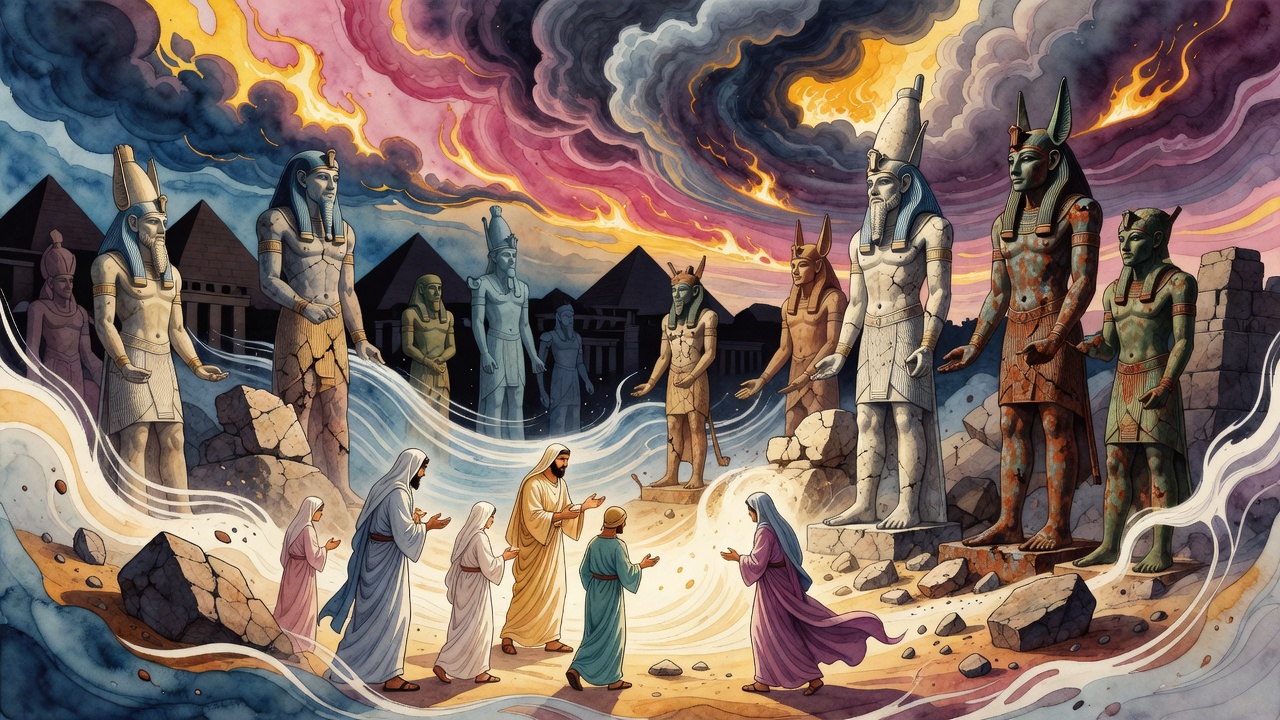
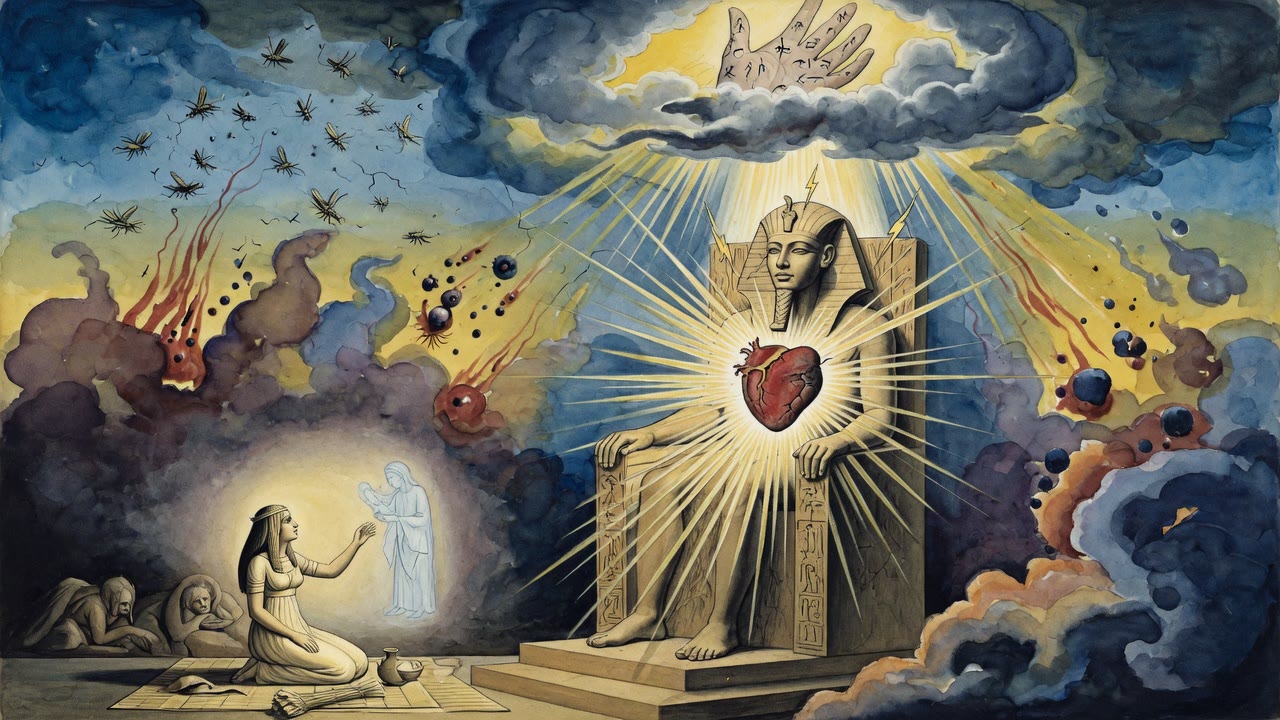
On the night of the Exodus, God did not strike only the firstborn of Egypt. He also executed judgments on the gods of Egypt. The Mekhilta refuses to leave those gods as a vague aside. Each idol was destroyed according to its material, humiliated in a way that fit its boast. Images of stone crumbled. Images of wood rotted. Images of metal rusted. Durability itself was put on trial and failed before morning.

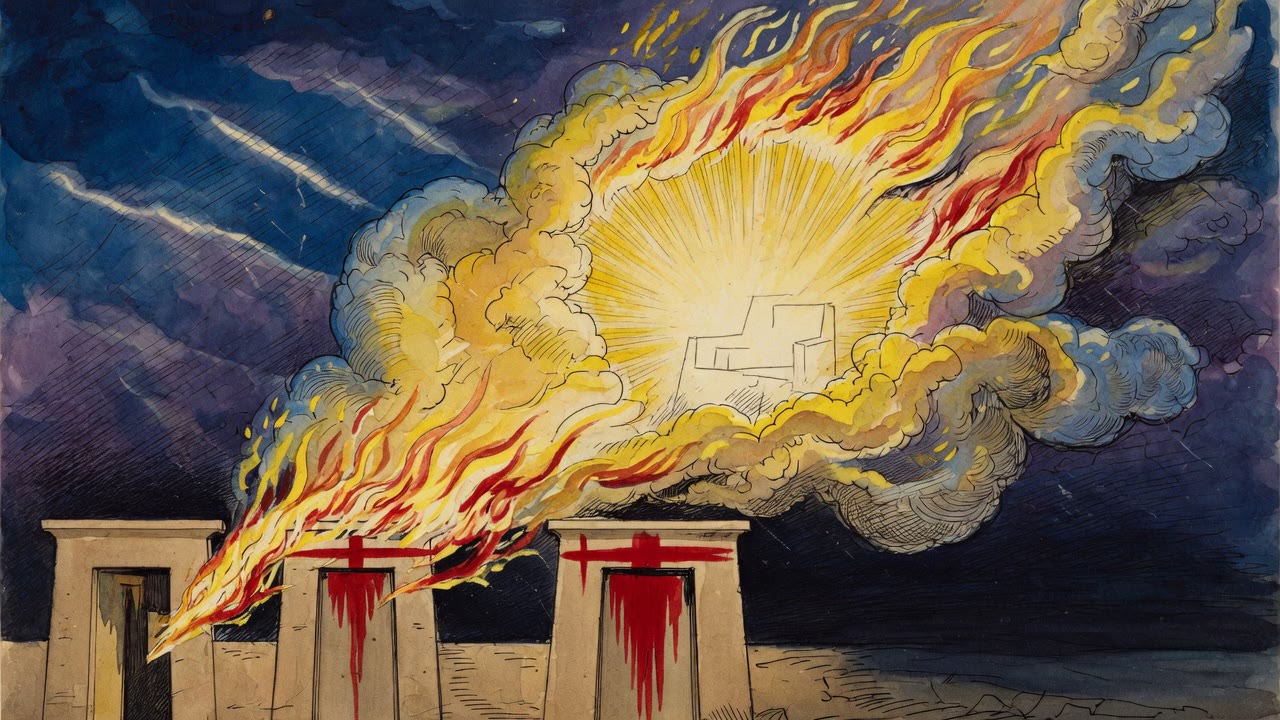
Stone, hardest of the three, fell apart. Wood that can last for centuries in Egypt's dry air decomposed overnight. Metal, proud against corrosion, corroded in sight of the people who had trusted it. (Numbers 33:4) pairs the burials of the firstborn with the judgments against the gods: one night, one reckoning, two kinds of death. Bodies in the ground. Idols in ruin. Egypt learned that neither flesh nor statue could outrank the God who passed through.

An alternative tradition reverses the patterns: stone rotted like organic matter, metal melted like wax. Natural decay accelerated, or nature itself bent. Either way, no substance was strong enough to house a false god when the true God acted.

Therefore the Firstborn Are Still Redeemed

The Torah draws a straight line from that night to a permanent command: "And the Lord killed every first-born… therefore, I sacrifice to the Lord every male first-born" (Exodus 13:15). The Mekhilta hears the full weight of memory in "therefore." Firstborn beasts of Israel are sacrificed in consideration of the firstborn beasts of Egypt that died. Firstborn sons of Israel are redeemed with silver in consideration of the Israelite firstborns who were spared.

The plague was not random destruction. It was targeted justice. The commandments that followed were designed so that no generation would forget what freedom cost. Every pidyon haben, every firstling brought near the altar in its time, renews the night when mercy chose some doorposts and judgment chose others. Gratitude became law because terror without memory becomes only a story children stop believing.

Egypt buried. Israel remembered. The difference is a silver coin and a story that will not close.

Leashes Pharaoh Offered

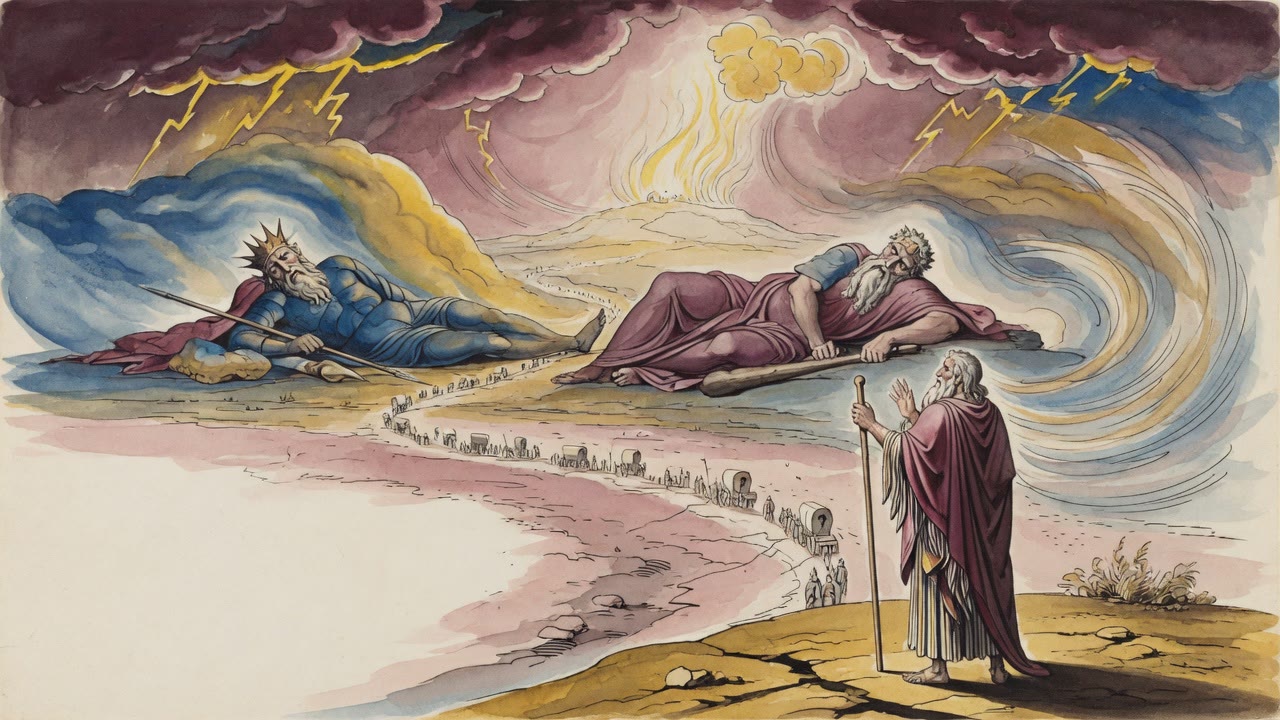
Before that night, Pharaoh had bargained like a man who still thought he owned the calendar of worship. Sacrifice in Egypt, he said. Then leave, but not very far. Moses refused to slaughter beasts sacred to Egypt under Egyptian eyes. He asked for a three-day journey into the wilderness. Plagues of beasts came and went. Hearts hardened again. Half permissions were the empire's habit. Full release was never the offer until the night that broke the gods and the firstborn together.

The God who would later crumble stone idols would not accept a shrine leased from Pharaoh's pride. Service under a leash is not the Exodus. It is a longer Egypt with better lighting.

Baal-zephon Left Standing

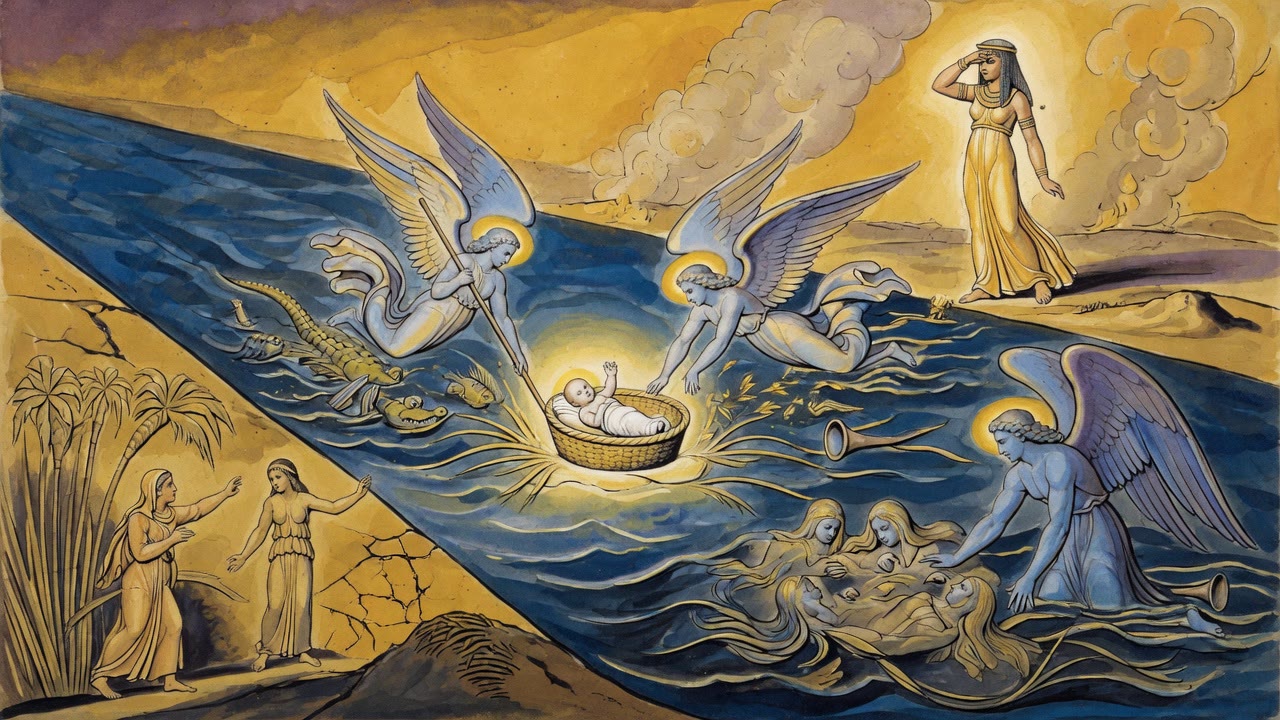
When Israel finally marched, the legends say Pharaoh sent officers to enforce a three-day limit. The people did not return. Some officers were beaten; the rest fled with news of contumacy. Moses ordered a turn back toward Pi-hahiroth, where rectangular rocks framed the sanctuary of Baal-zephon, an idol left standing when other gods fell, so that Egypt might trust one last false shelter. The less faithful tore hair and clothes at the retreat. Moses told them they were free by God's word, no longer slaves, even when the road looked like a trap.

One idol left upright was not mercy on Egypt's theology. It was bait for a pursuit that would end in the sea. The night of crumbling stone and the day of a standing Baal-zephon are two moves in one game: strip the pantheon, then use the last statue as a landmark for judgment's final act.

Morning of Burials

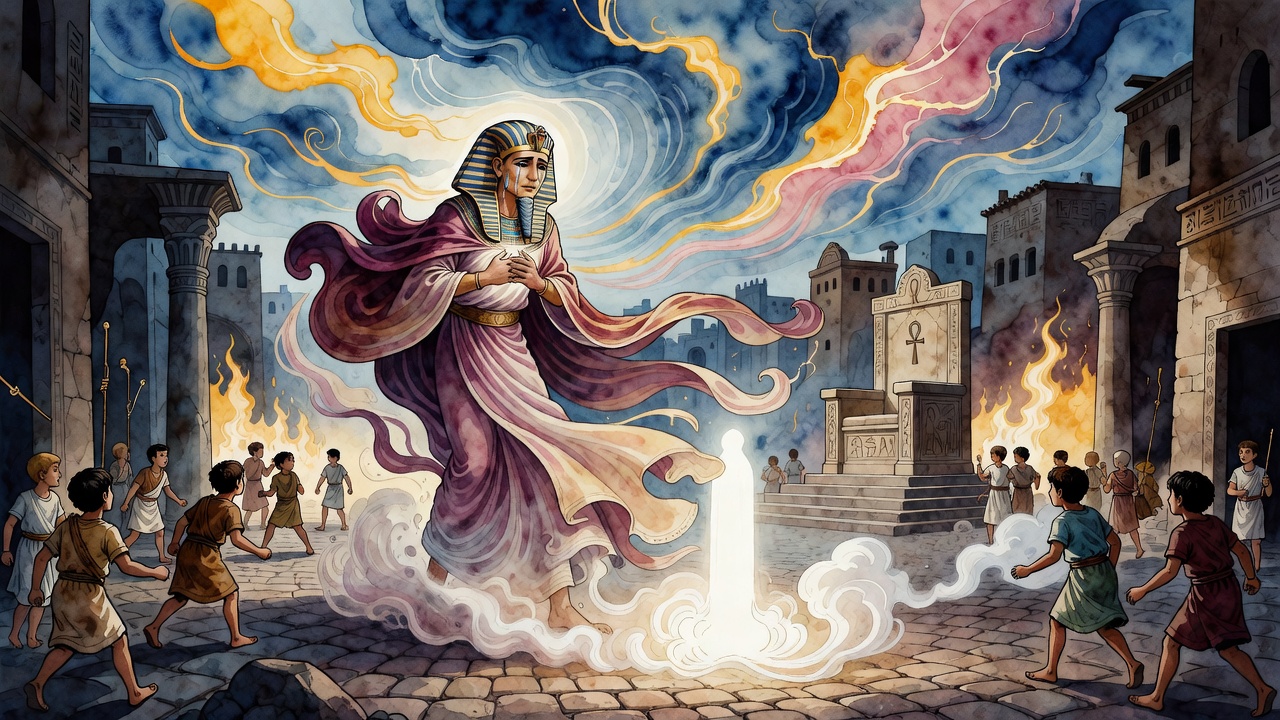
Imagine the morning. Houses loud with grief. Priests staring at metal that should not rust and stone that should not powder. Firstborn sons cold. Sacred animals of the first birth dead beside them. Israel's camps moving under a sky that had heard screaming and still opened a road. The "therefore" of redemption law was already true before any father of later ages paid a coin. Freedom was not abstract. It smelled of death next door and of dough that had not had time to rise.

Stone gods crumbled while Egypt buried its firstborn. Wood rotted. Metal failed. The people who walked out carried a debt of memory that still shapes how a first son is brought into covenant. Pharaoh's leashes lay cut on the ground. Baal-zephon would have its hour as a signpost for chariots. The true judgment had already been rendered in houses and temples alike: there is one God who passes through, and every other claim is material waiting for its proper humiliation.


← All myths

From the tradition

Sources

4 sources

The texts behind this telling. Some cards carry a translation of the source; others are our own retelling of it, and each card says which. Every card links out to the original.

Mekhilta Tractate Pischa 7:17Mekhilta DeRabbi Yishmael

Retold in our words. Read the original at the link below.Mechilta, translated by Rabbi Shraga Silverstein · CC-BY

On the night of the Exodus, God did not just strike the firstborn of Egypt. He also executed judgment on the gods of Egypt. And according to the Mekhilta, those judgments were not uniform, each idol was destroyed according to its material, in a way uniquely suited to humiliate it.

Images made of stone crumbled. Images made of wood rotted. Images made of metal rusted. Each material suffered its own form of decay, as if God were demonstrating mastery over every substance the Egyptians had fashioned into objects of worship. Stone, the most durable of materials, fell apart. Wood, which can last for centuries in Egypt's dry climate, decomposed overnight. Metal, resistant to corrosion, corroded before their eyes.

The proof text comes from Numbers: "And the Egyptians were burying those whom the Lord had smitten, every firstborn, and against their gods the Lord had executed judgments" (Numbers 33:4). The verse pairs the death of the firstborn with the destruction of the idols, placing them in the same night, the same act of divine reckoning.

An alternative tradition preserved in the Mekhilta reverses the deterioration patterns: stone idols rotted (experiencing the decay proper to organic material), while metal idols melted. The disagreement is significant. In the first version, each material suffers its natural form of destruction, accelerated beyond any natural timeline. In the second version, each material suffers an unnatural destruction, stone behaving like wood, metal behaving like wax, as if the laws of physics themselves bent to God's will. Either way, the message is the same: no material in the universe is strong enough to house a false god when the true God decides to act.

Full source
Mekhilta Tractate Pischa 18:27Mekhilta DeRabbi Yishmael

Retold in our words. Read the original at the link below.Mechilta, translated by Rabbi Shraga Silverstein · CC-BY

The Torah draws a direct line between the tenth plague and a permanent commandment: "And the Lord killed every first-born.. therefore, I sacrifice to the Lord every male first-born" (Exodus 13:15). The Mekhilta explains that this "therefore" carries the full weight of historical memory.

The sages established a precise correspondence. The firstborn of beasts are sacrificed in consideration of the firstborn beasts of Egypt that were killed during the tenth plague. And the firstborn of men, Israelite firstborn sons, are redeemed with silver in consideration of the Israelite firstborns who were saved that same night.

This is not mere symbolism. The rabbis understood the commandment as a perpetual debt of gratitude. On the night of the Exodus, God passed through Egypt and struck down every firstborn, both human and animal, while sparing the children of Israel. That act of selective mercy created an obligation that could never fully be repaid, only acknowledged.

Every time a firstborn animal is brought to the Temple and every time a father redeems his firstborn son through pidyon (redemption) haben, the memory of that terrible night is renewed. The plague was not random destruction. It was targeted justice. And the commandments that followed were designed to ensure that no generation of Israel would ever forget what it cost to be set free.

Full source
Legends of the Jews 1:11Legends of the Jews

Retold in our words. Read the original at the link below.The Legends of the Jews by Louis Ginzberg (1909) · Public Domain

Here's the catch: he thinks they’re just popping out for a quick three-day religious retreat in the wilderness to offer sacrifices. A short vacation, essentially. He even sends some officers along to make sure they come back when they're supposed to! According to the Legends of the Jews, this grand departure happened on a Thursday.

Fast forward to Sunday. Pharaoh's watchers are scratching their heads. Instead of packing up their prayer shawls and heading back, the Israelites are setting up camp like they're planning a long-term stay. The officers are like, "Hey, what gives? Pharaoh said three days!"

A bit of a confrontation ensues. The Israelites, emboldened by their newfound freedom, insist that Pharaoh dismissed them for good. But the officers aren’t buying it. "Like it or not," they declare, "you have to obey the powers that be!" To this, the Israelites respond... well, not very nicely. Let's just say some officers ended up severely injured, and the rest hightailed it back to Egypt to report the Israelite "contumacy" – their stubborn resistance to authority – to a very unhappy Pharaoh.

Moses, ever the strategist, didn't want their departure to look like a panicked escape. So, he gives the signal: "Turn back to Pi-hahiroth!"

Panic! According to Ginzberg's retelling in Legends of the Jews, the less faithful among them are tearing their hair and clothes in despair. But Moses reassures them, telling them that, by the word of God, they are free and no longer slaves. Think of it: a leader, trying to reassure his people that even retreat can be part of a larger plan.

So, they head back to Pi-hahiroth, a place with two very distinctive rectangular rocks that form an opening. And within this opening? The great sanctuary of Baal-zephon, an Egyptian idol. The Legends of the Jews describes these rocks as shaped like human figures, a man and a woman, and not carved by human hands, but by the Creator Himself.

Now, this place had a history. It was once called Pithom, but later renamed Hahiroth because of the idols erected there. Here's where it gets really interesting: God, in His infinite wisdom, had left Baal-zephon untouched when he smote the other Egyptian idols. Why? According to the Legends of the Jews, God wanted the Egyptians to think that Baal-zephon was super powerful and was preventing the Israelites from leaving.

To further solidify this illusion, God sends wild beasts to block the road to the wilderness. The Egyptians, naturally, assume that their idol, Baal-zephon, is responsible for the sudden appearance of these ferocious creatures.

Think about the layers here. A misinterpreted permission, a defiant people, a strategic retreat, and a divine deception all swirling together. What does it tell us about perception, about faith, and about the stories we tell ourselves to make sense of the world around us?

Full source
Legends of the Jews 4:303Legends of the Jews

Retold in our words. Read the original at the link below.The Legends of the Jews by Louis Ginzberg (1909) · Public Domain

You offer a compromise, they seem to agree, and then, bam! Back to square one. That's Pharaoh in a nutshell.

Pharaoh, still reeling from the plagues, is starting to crack. He's willing to let the Israelites offer sacrifices to their God, but with conditions, of course.

His first offer? Stay in Egypt.

That! "Sure, worship your God," he says, "just do it right here, where I can keep an eye on you." Moses, ever the diplomat, points out the obvious flaw: how exactly are they supposed to sacrifice animals sacred to the Egyptians right in front of their noses? As Moses wisely knew, that was just not going to fly.

So Pharaoh, begrudgingly, offers another concession. Okay, he says, they can leave the borders of Egypt. But – and it’s a big but – they can’t go "very far away."

Now, Moses, asks for a three-day journey into the wilderness. Was this a little…misleading? Was Moses playing a game of cat and mouse with the Egyptian ruler? The text suggests it might be.

And here's where the story takes a familiar turn. Moses, in an act of compassion, pleads with God to remove the latest plague – this time, a horde of wild beasts. God listens, the beasts vanish, and what does Pharaoh do? You guessed it. He hardens his heart again.

The cycle continues. A promise made, a promise broken. A chance for redemption squandered. What would it have taken for Pharaoh to truly let go? To genuinely allow the Israelites to worship their God freely? Perhaps the answer lies not just in the plagues themselves, but in the deep-seated pride and stubbornness that resided within Pharaoh’s heart. A potent reminder, perhaps, of the battles we all face within ourselves.

Full source