Four of Every Five Stayed Behind When Israel Left Egypt
Israel marched out of Egypt armed and in ranks, but one small word counted the missing. Four of every five stayed behind.
Table of Contents
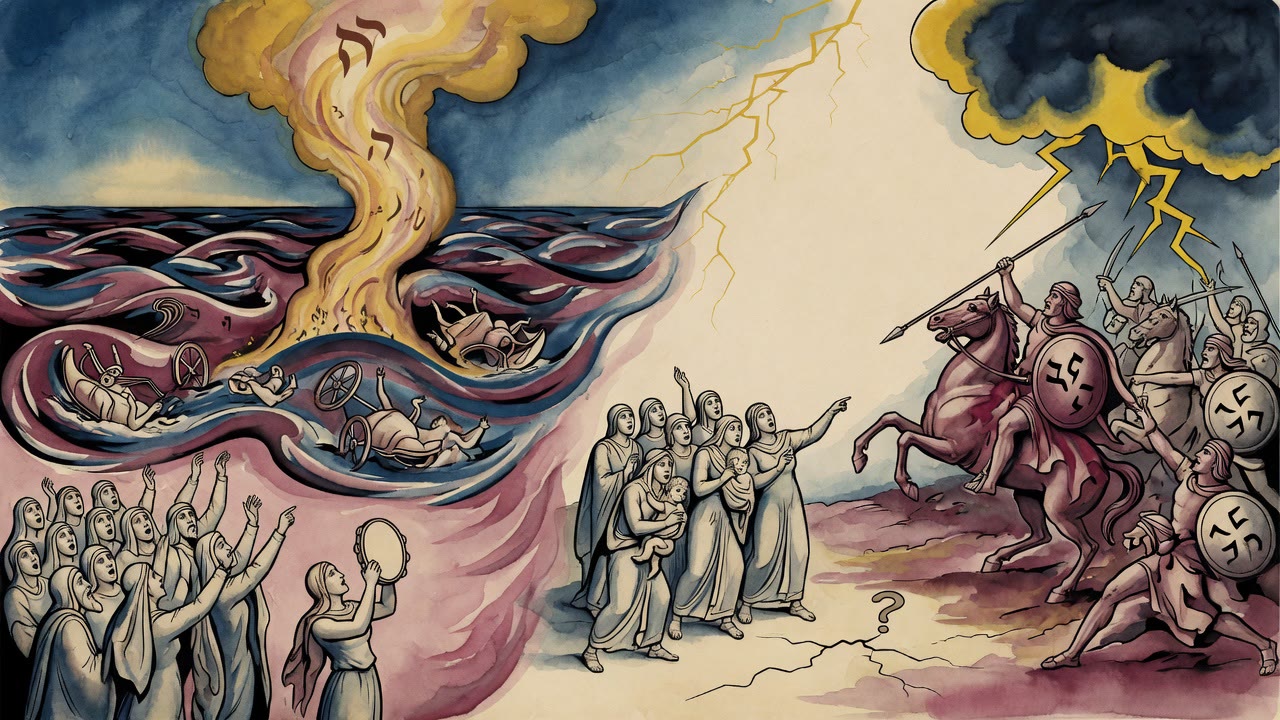
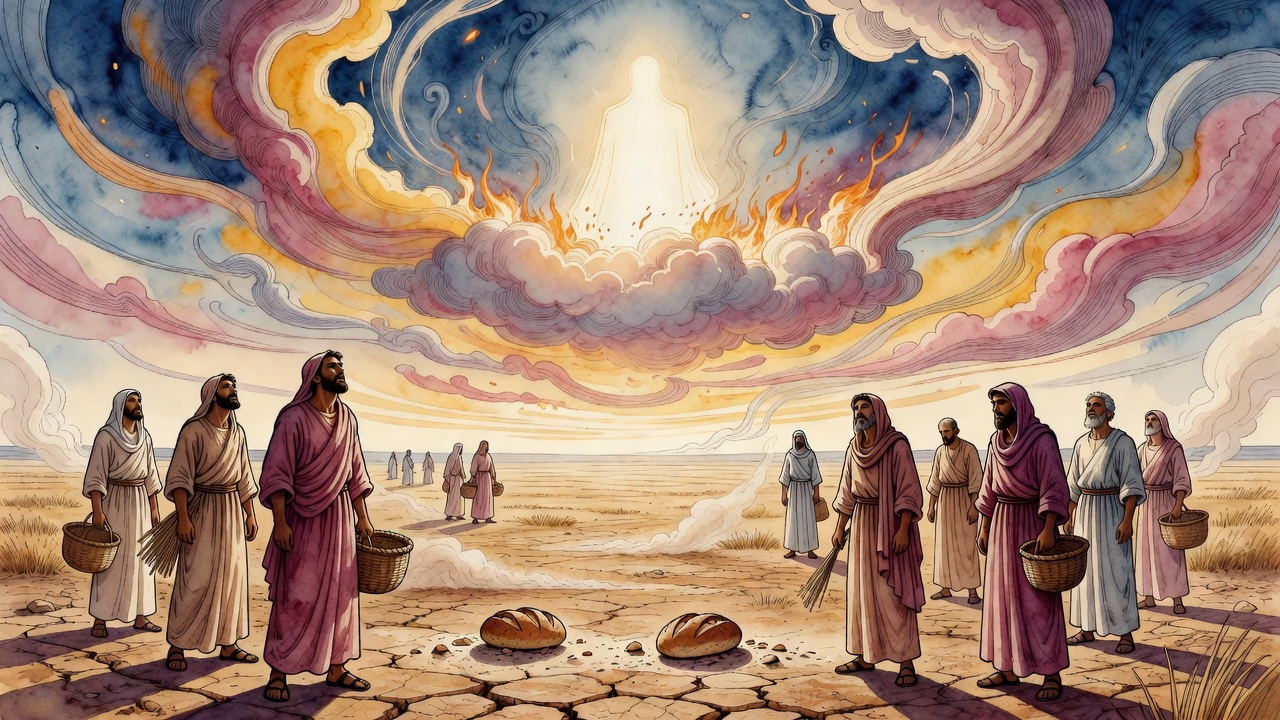
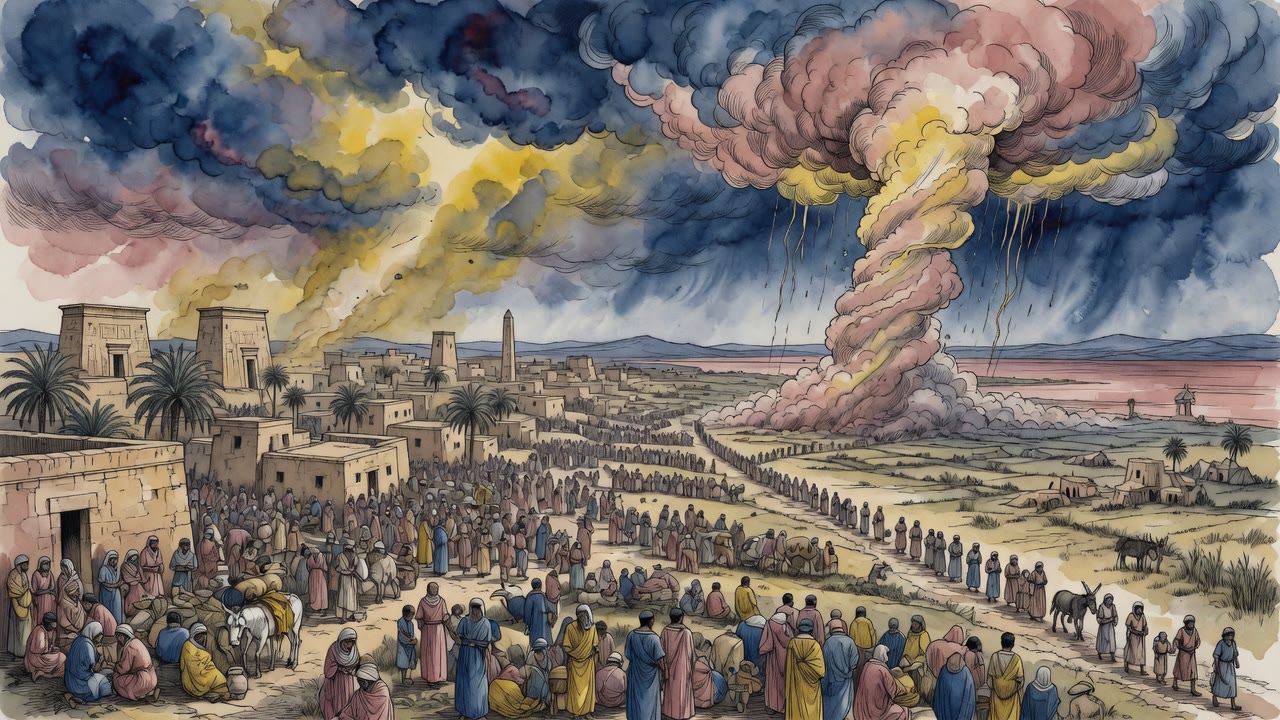
The morning the doors of Egypt finally opened, the people who walked through them did not stumble out like prisoners blinking in the light. They came out in ranks. Spears over shoulders, bundles of unrisen dough bound in cloaks, children counted off by families, families counted off by tribes. Behind them the great houses of the Nile stood silent, every one of them mourning a firstborn, and ahead of them lay open road. The old account gives this departure a single strange word. The children of Israel went up from the land of Egypt chamushim (Exodus 13:18). One word, and the whole memory of that morning hangs on it.
 Click for full size
Out of Egypt in Ranks
Take the word one way and it means armed. On that reading the picture sharpens into something almost military. Not a mob of runaway slaves scattering into the desert, but an ordered force, columns moving in step, weapons at hand. The proof was waiting in another book, in another generation. When Joshua stood at the edge of the Jordan and charged the tribes of the east bank, he told them, you shall cross over chamushim before your brothers (Joshua 1:14), and no one at that river wondered what he meant. He meant equipped for battle. And when the crossing came, the men of Reuben, of Gad, and of half of Manasseh went over exactly so, forty thousand of them, arrayed for war (Joshua 4:12). The same word, the same shape on the page, and at the Jordan it could only mean one thing. So at the sea it should mean the same. Israel left Egypt armed.
That reading settles the picture. It does not settle the word.
A Word That Cuts Two Ways
Listen to chamushim long enough and another sound rises out of it. Buried in its letters sits chamesh, the Hebrew five. A word about weapons turns out to carry a number inside it, the way a sealed jar carries water, and once the number is heard it cannot be unheard. The marching ranks, the spears, the ordered columns, all of it stays in place. But now the word is also counting. And what it counts is not who left.
It counts who did not.
One in Five Went Up
One of every five went up from Egypt. That is what the number in the word came to mean. For every man shouldering a spear on that road to the sea, four were not on the road at all. Four of every five stayed behind. Centuries of bondage had done their slow work. Egypt was the only ground those generations had ever stood on, its bread the only bread, its gods crowding every doorway, and when the moment of going finally came, most of the people it came for did not rise to meet it. Whether they would not go, or could not, or no longer believed there was anywhere to go, the word does not say. It only gives the arithmetic of the missing.
Walk the column again with that count in mind and the morning changes. Every rank of marchers casts a shadow four ranks deep. Every family on the road stands in for families that are not there. The triumph is real, the spears are real, the open road is real, and threaded through all of it runs an absence as wide as the nation itself.
The Count Falls Further
And the word, once opened, did not close gently. There were those who heard a harsher count in the same letters. Not one in five but one in fifty. And others pressed harder still and heard one in five hundred. By that last reckoning the people singing on the far shore of the sea were a remnant of a remnant, a sliver of the multitude that bondage had swallowed. The estimates fall like a stone down a well, five, fifty, five hundred, each opinion darker than the last, and every one of them drawn from the same small word that also means armed. The hands that carried weapons out of Egypt and the vast silent number that never left are folded into the same syllables.
The Long Way to the Sea
The ones who did go up were not taken by the short road. God led the people around, by way of the desert, toward the sea (Exodus 13:18), and that turning was no accident of geography. The long way was chosen on purpose, a road built for wonders, for the manna that would fall on it, for the quail, for the well of water that would follow the camp. Some heard in it a harder design. The way to drain their strength and wear Egypt out of their legs (Psalms 102:24). The desert to scour and refine them (Deuteronomy 8:15). The sea to test what they were made of, for at that sea their fathers rebelled even as the water stood over them (Psalms 106:7). Others heard a gentler one. The way so that Torah could be given on it, the desert so that manna could feed them in it (Deuteronomy 8:16).
Either way, the fifth who marched were marched the long way around, armed men on a road of trials and bread from the sky. They had come out in ranks, and the road would now find out what the ranks were worth. Behind them, in the land of their slavery, remained the four out of five, the fifty out of fifty, the five hundred out of five hundred, all the ones the word still counts every time it is read. A nation went out of Egypt that morning. A larger nation stayed.
← All myths