Dawn Bread Shone While Evening Meat Arrived Dark
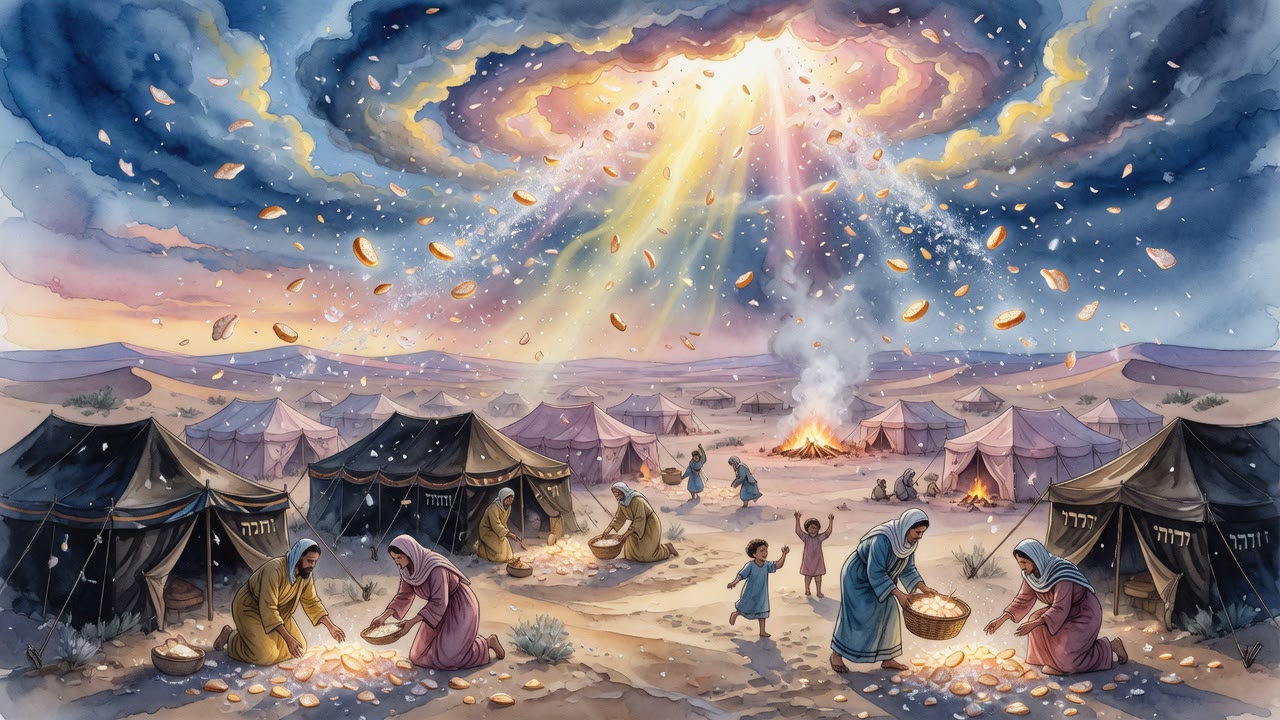
Dew covered the camp at dawn. When it lifted, a fine white flake lay underneath that nobody had a name for. Some kept it overnight, and worms got in.
Table of Contents
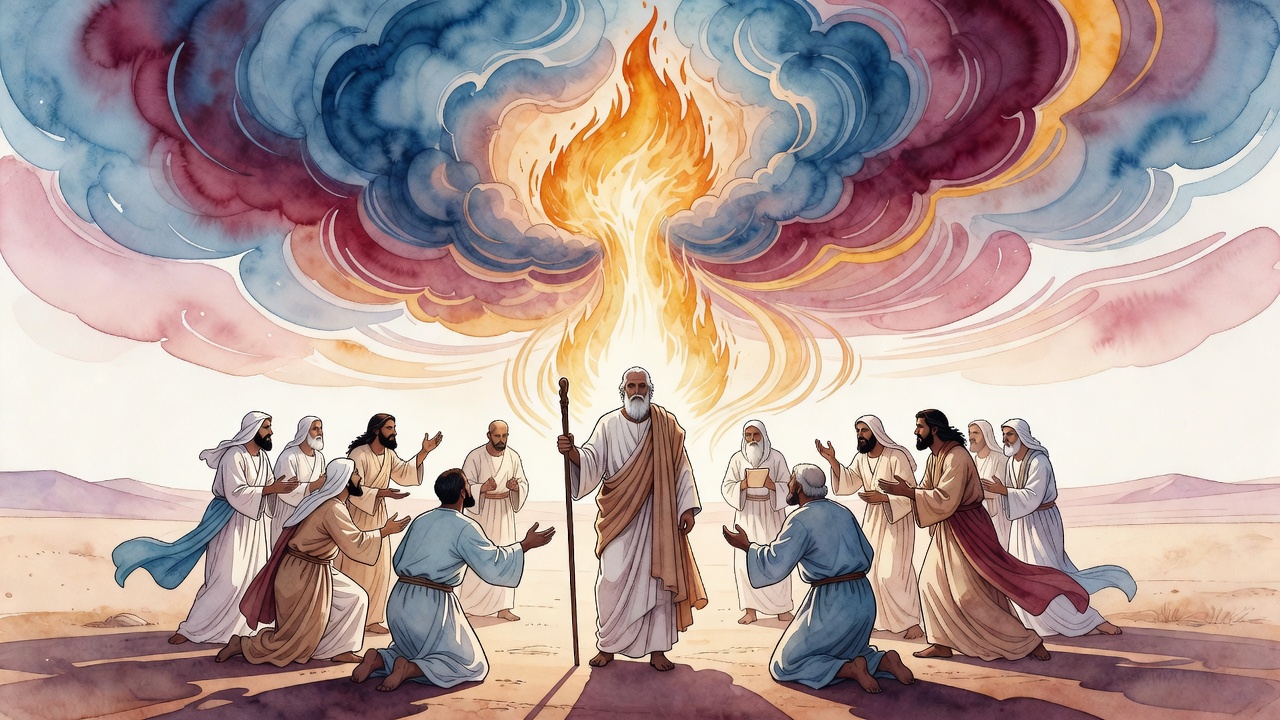
Morning found the camp silvered. Dew lifted, and under it lay a fine, flake-like thing the people had no name for. Children poked it. Women scooped it. Men tasted and shrugged and tasted again. Moses walked the lanes and watched faces change from panic to calculation to something like wonder.
 Click for full size
"Behold, I will rain bread for you," God had said. Bread from above. Dew from below. Creation traded jobs for a people God loved. Once bread rose from earth and dew fell from sky. Now the order flipped, and the flip was the kindness. Heaven became a bakery. Earth became the wet nurse of dew. The wilderness, which had promised only death by hunger, became a table without walls.
A Day's Portion in Its Day
The ration came as "a day's portion in its day." Why not a year in a single drop? Rabbi Eliezer made it a creed. Whoever has food for today and frets what he will eat tomorrow lacks faith, because the One who made the day made its bread. Rabbi Shimon told of a king who paid his son once a year and starved him of a father's face. When they reconciled, the king said, come every day for your portion. The sight of the father became the real gift. So Israel was fed crumb by crumb, that they might turn toward the Divine each morning and not hide behind a full barn.
Some still tried to hoard. Worms answered them. The lesson had teeth. A people trained in Egyptian store-cities had to unlearn the only security they knew: piles. The new security was a relationship renewed at dawn.
Meat at Evening, Bread at Dawn
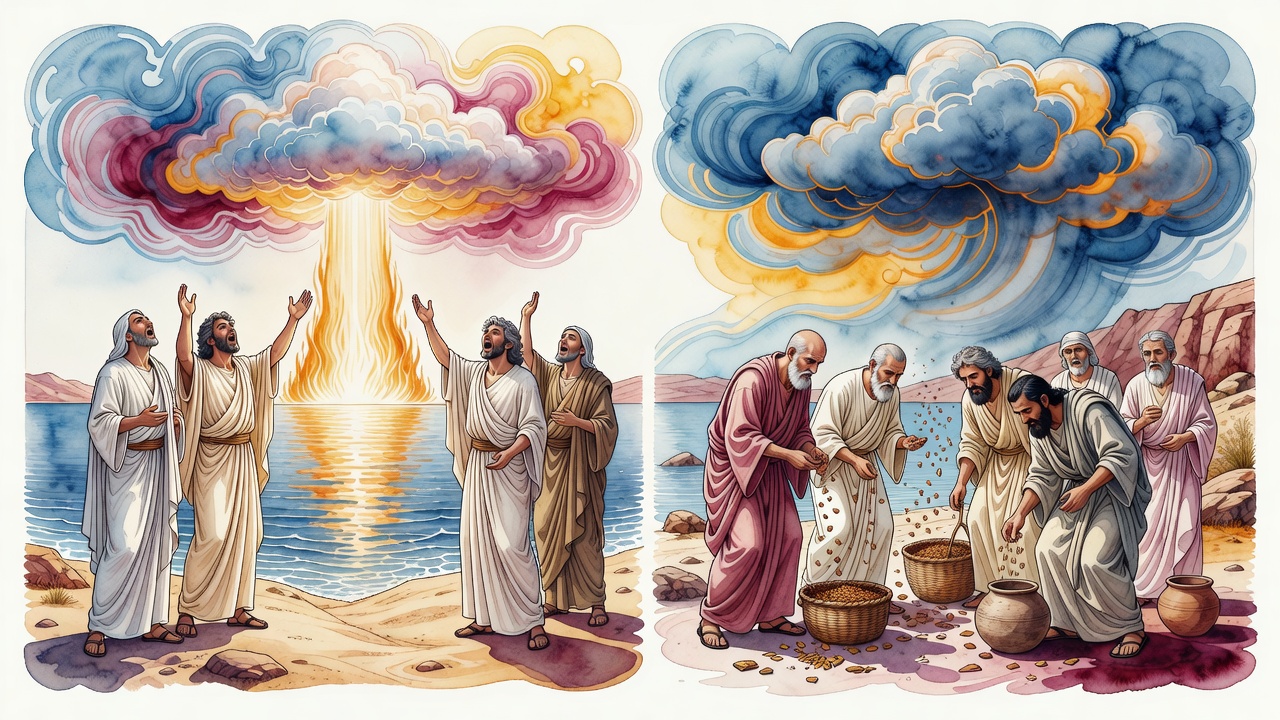
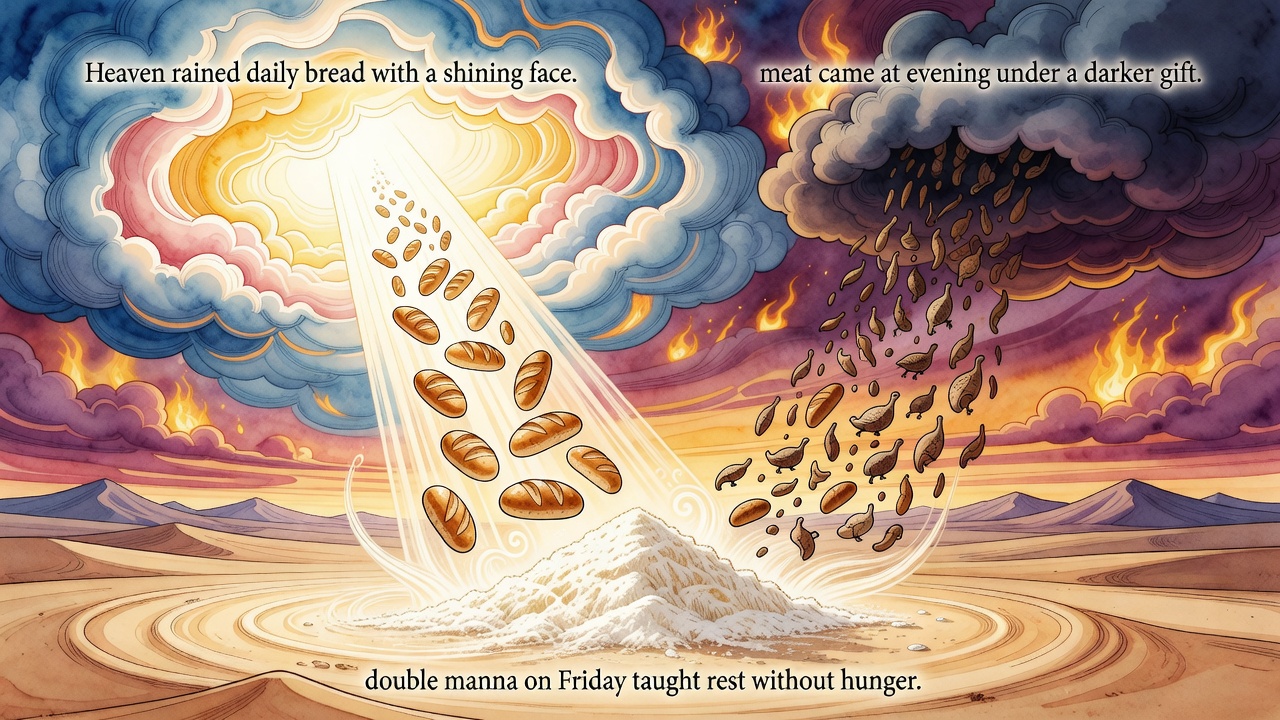
Meat arrived at evening. The sages heard a darkened countenance in that hour, a gift given without gladness, matched to the worthiness of the demand that produced it. Bread at dawn came with a shining face. The food kept the moral weather of the request. Not every answered prayer arrives with the same light in its eyes.
Moses drew the line the people preferred to blur. Their murmurings were not against him and Aaron. They were against the Lord. If the insults had been only personal, the two brothers could have borne them. What grieved them was watching a camp stand in the presence of the Eternal and complain as if Heaven were a bad steward. The offense was not to a man's pride. It was to the Name that filled the tent of meeting and the open sky alike. Leaders can absorb mockery. They cannot casually watch mockery aimed upward and call it politics.
Double Bread and a Small World
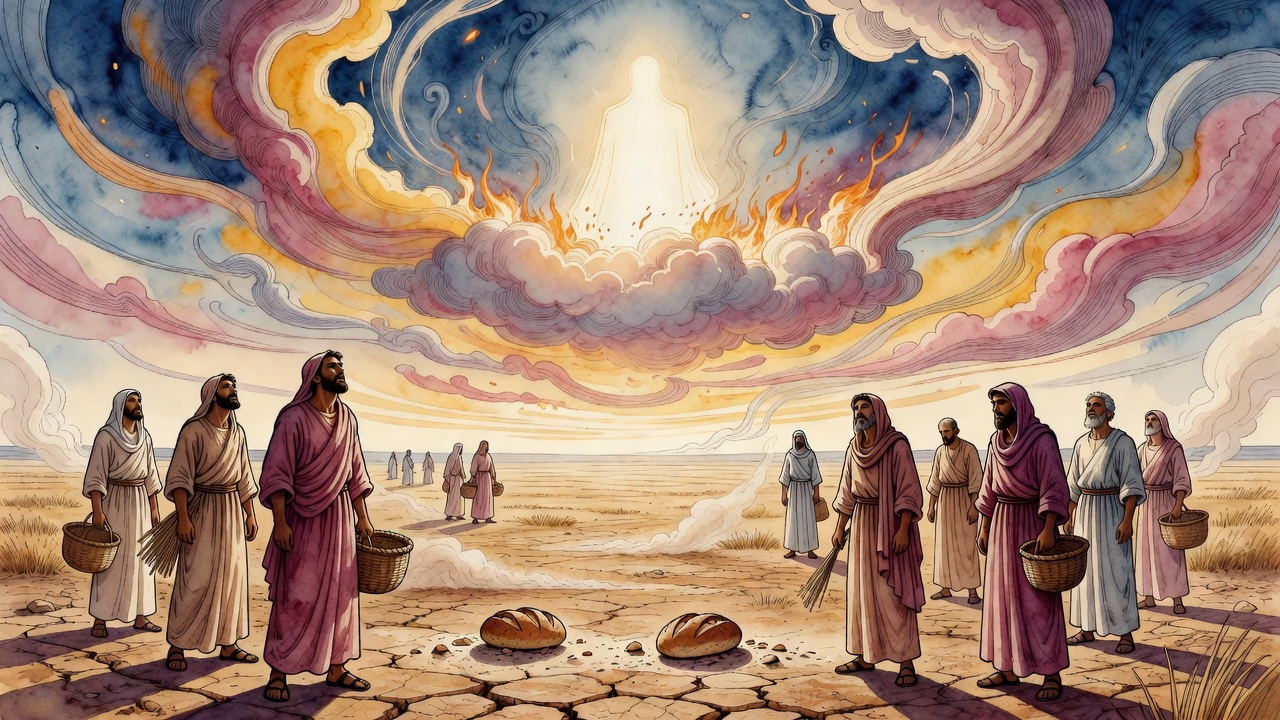
"See that the Lord has given you the Sabbath." Moses sharpened the gift into a warning: take care. Rest is not a burden to resent. Because gathering is forbidden on the seventh day, the sixth day brought a double measure. Rabbi Yoshiyah read the verse as abundance arriving a day early so no one woke hungry into holiness.
The same words mapped space. "Remain in his place" marked the four cubits a body and its tools occupy. "Let no man go out from his place" set the two thousand cubits beyond the town as the edge of permitted walking. The day of rest fed you in advance and asked you to let the world shrink to a walkable circle. Smallness was not punishment. It was the point. A double omer (the day's ration measure of manna) on Friday was a vote of confidence that rest would not starve them. The boundary of cubits was a vote of confidence that holiness does not require endless roaming.
Faith Measured in Ounces
Hunger makes philosophers of cowards and cowards of philosophers. The manna years trained a different muscle: trust measured in ounces, not speeches. Each dawn was a thin exam. Each Friday a thicker one. Each Sabbath a refusal to chase the horizon for one more handful.
When the meat came dark and the bread came bright, the camp learned that gifts can answer the same sky and still carry different faces. Some yeses arrive with joy. Some arrive with a shadow, because the asking was already shadowed. Both still fell from the same heaven that had never before rained bread, and both left Israel with a choice still open every morning: gather enough for the day, or try to out-store the God who invented the day.
Old men who had stacked grain in Egyptian storehouses felt the new system like a loss of craft. Skill at hoarding had once meant survival. Now skill meant waking early, gathering only what the day required, and leaving the rest for worms if greed overreached. Mothers taught children to look at Friday's double pile as a bridge into silence, not as a chance to trade. The wilderness became a school where the syllabus was weight in the hand and trust in the gut, renewed every time the dew lifted and left breakfast on the ground.
← All myths