6 min read

Joshua Leaves the Cloud of Glory for Amalek

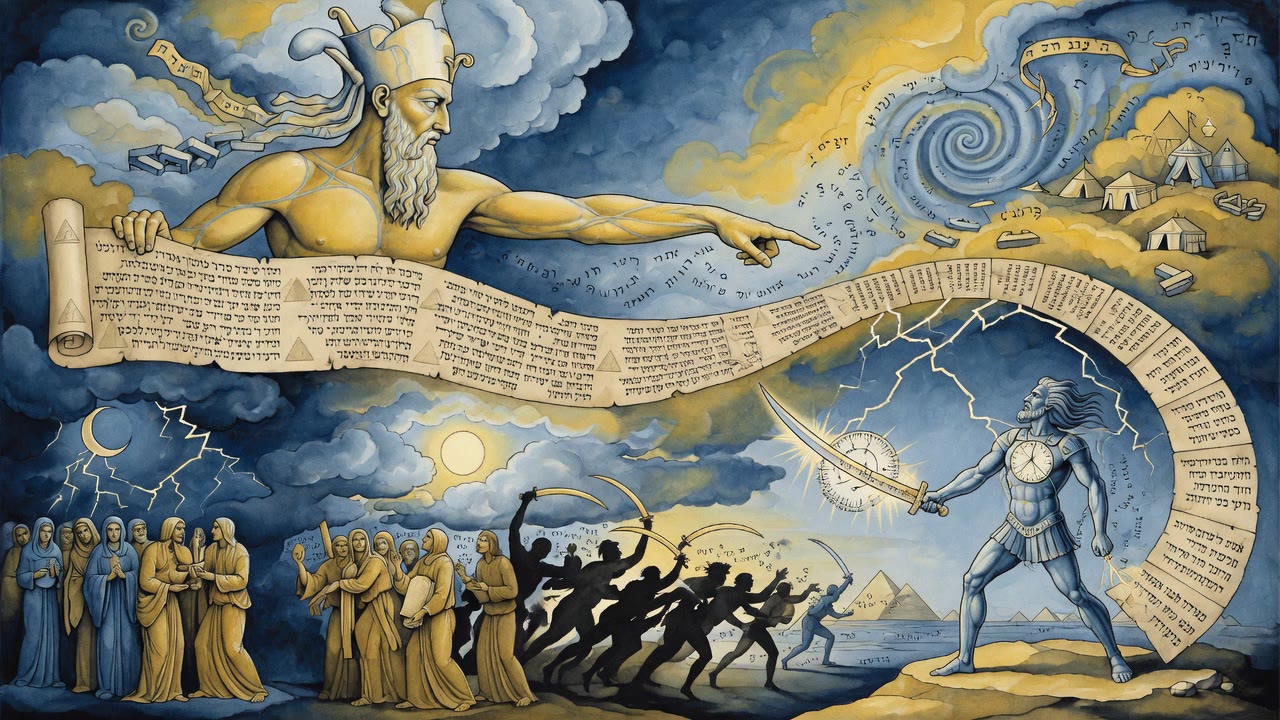
Pharaoh's officers would not chase runaway brickmakers for nothing. He threw open the treasure houses and promised every man an equal share.

Curated by Arthur · Told by Maggid ·
Table of Contents
  1. The Bribe That Started the Chase
  2. The Bodies on the Beach
  3. Moses Drove Them With the Rod
  4. A Jar Set Before the Lord
  5. Out From Under the Cloud
Joshua Leaves the Cloud of Glory for Amalek Click for full size

The Bribe That Started the Chase

Pharaoh's officers would not harness the horses. Riding out after a crowd of runaway brickmakers was beneath the dignity of Egypt, and they said so in the hall. Then somebody did the arithmetic on the silver and the gold that had walked out of the country on those people's backs, and the horses were harnessed after all.

Even then the appetite ran thin. When the men worked out how small a share of Egypt's wealth had actually left with Israel, they began asking what was in it for them. So Pharaoh raised the offer. Equal shares of the plunder for every man who rode. And more than that: he threw open the royal treasure houses, the silver, the gold, the cut stones, and promised to hand it out himself.

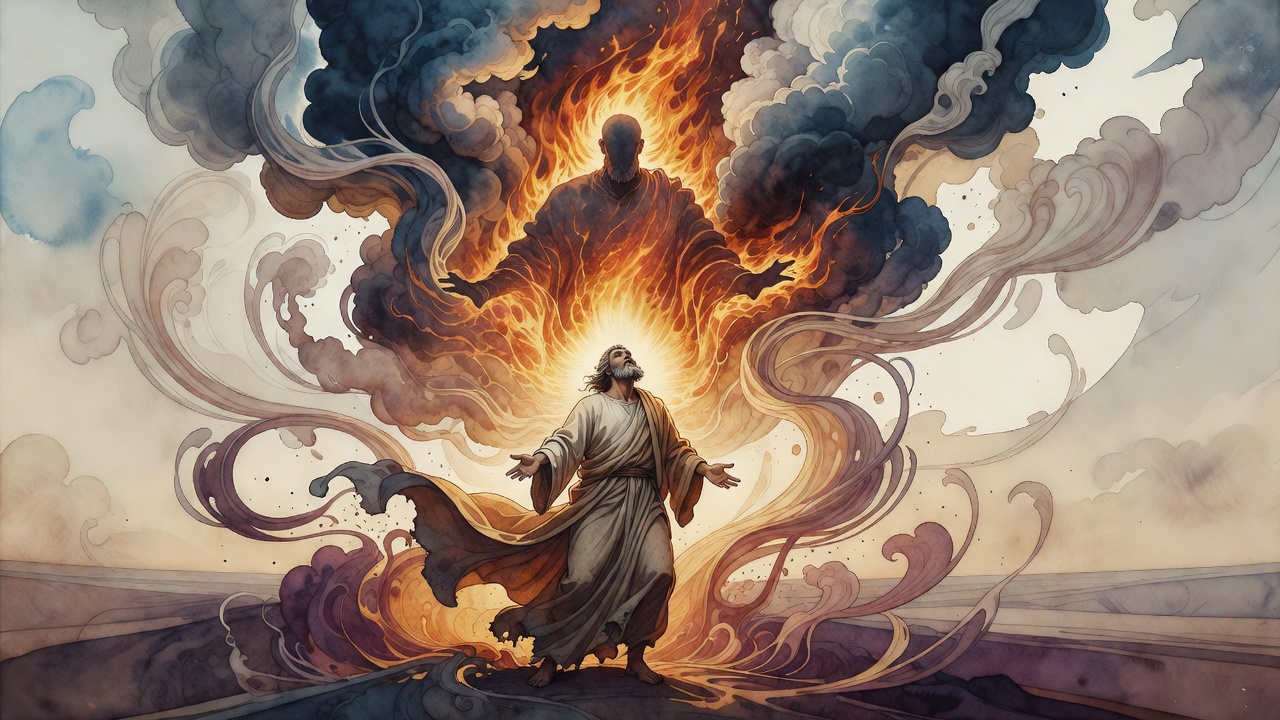
Out at the water, Israel sang the enemy's boast back at him. The foe said, I will pursue, I will overtake, I will divide the spoil. Nobody had carried them the minutes of that meeting. The Holy Spirit came down on them and they simply knew what had been argued in a palace two days behind them, and they stood on the far shore singing it while the chariots settled into the mud.

The Bodies on the Beach

Then they looked down at the shoreline.

The sea had laid their masters out on the sand. The men who had counted bricks and set the quotas and swung the sticks were lying at the edge of the water with the foam moving over them, and Israel walked along the line and looked into the faces.

And they drew the wrong conclusion. Not, we are free. What they said was, there is nobody left in Egypt. The country is standing open. "Let us appoint a captain and go back."

It did not stay talk. Generations later Nehemiah was still reciting it in a prayer: they stiffened their necks and appointed a captain to return to their slavery. They picked a man.

Moses Drove Them With the Rod

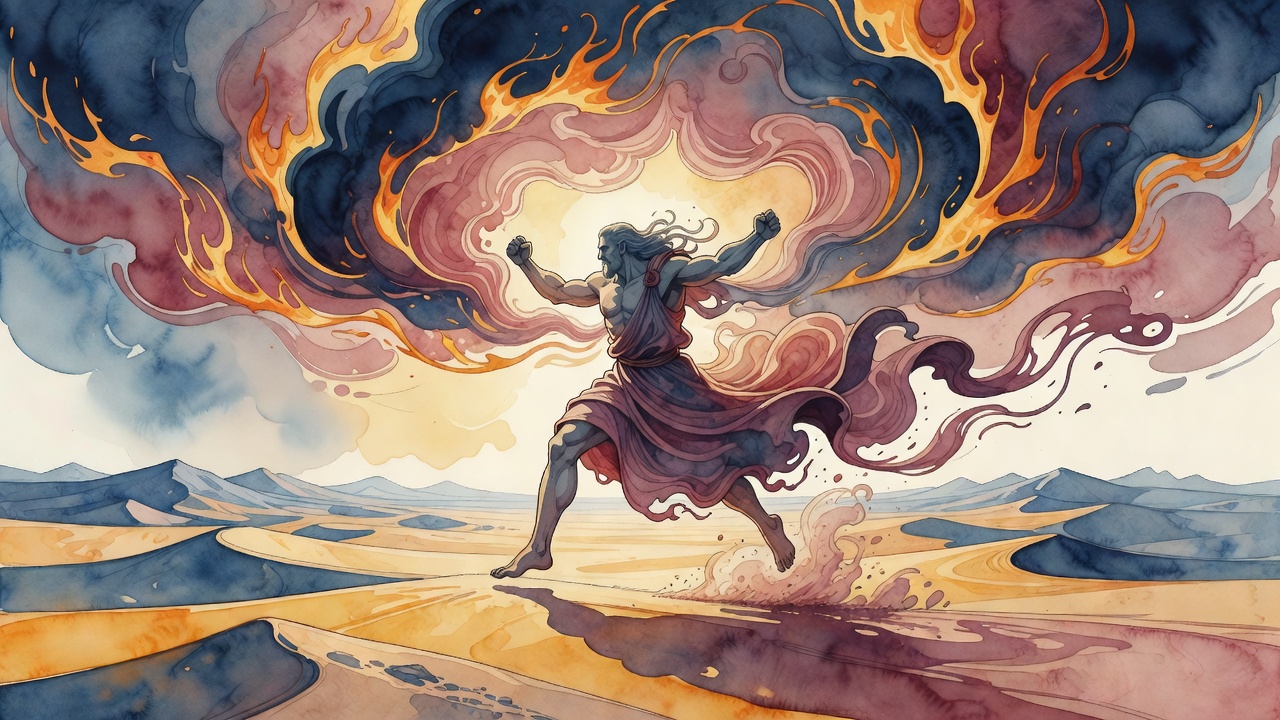
Rabbi Eliezer said that in most places Israel moved at the word, the cloud lifted and the camp lifted with it. But here it says that Moses made them journey, and that is a different sentence. He moved them against their will, with the rod.

So the picture is not a nation marching into freedom singing. It is an eighty-year-old man walking the line of tents at dawn with a stick in his hand, getting them up off the sand, turning them away from the water and the corpses and the open road south, while they argued with him about a country that had spent a century breaking their backs.

Nehemiah kept the rest of the accounting too. They refused to listen and forgot the wonders, and God did not abandon them anyway, not then and not later when they built the calf. The rod and the mercy went down that road together.

A Jar Set Before the Lord

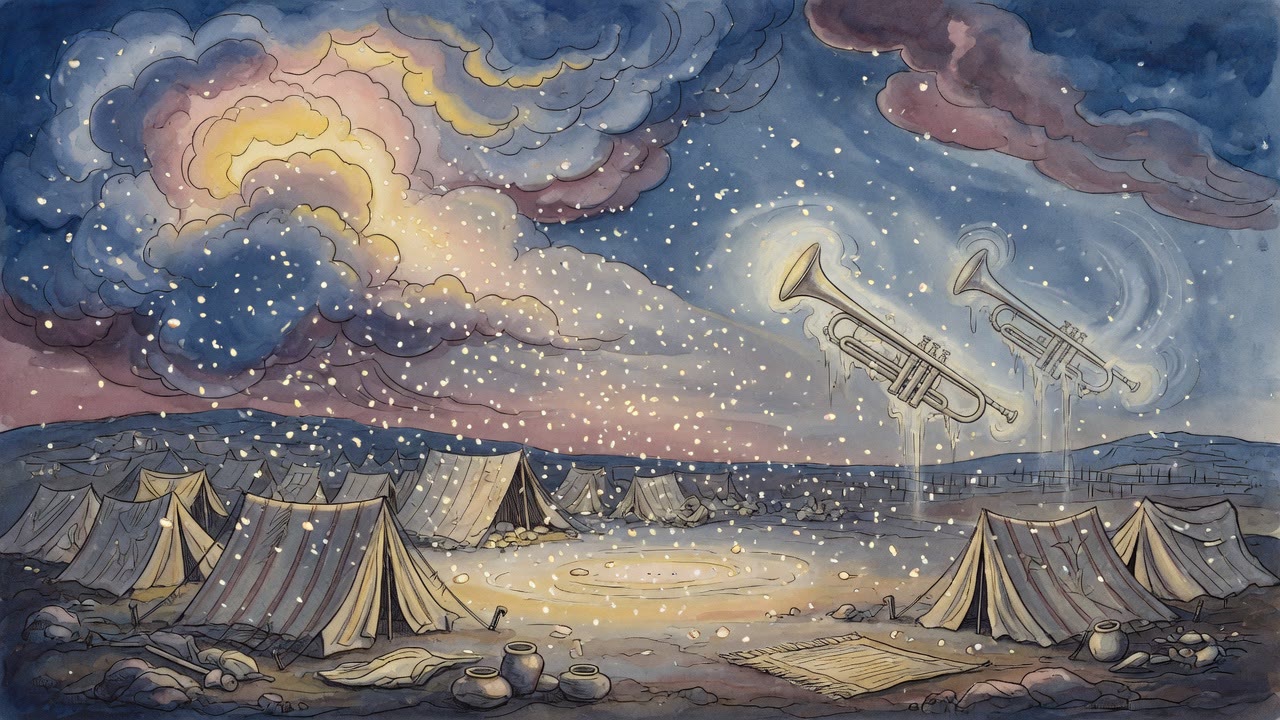
In the wilderness of Sin the bread came down with the dew, and every man gathered an omer of it, and they ate a miracle every morning until they stopped noticing.

Moses told Aaron to take a jar, fill it with one omer of the manna, and set it down before the Lord, to be kept for your generations.

Kept for whom, exactly? Rabbi Yehoshua said for the fathers, meaning the very men standing there with the stuff sticky in their hands. They were living inside the wonder and they would still forget it. Rabbi Eliezer said the jar was waiting for the days of Jeremiah, who would carry it out centuries later in front of a generation that told him they had no time for Torah because they had a living to earn, and hold it up in the daylight: this is what fed your fathers, and He has more than one way of feeding you.

Either way, the jar went into the dark of the sanctuary and sat there as evidence.

Out From Under the Cloud

At Rephidim, Amalek came. They did not hit the head of the column where the armed men walked. They came in at the back, where the stragglers were, the ones who were faint and worn out and could not keep up, and they cut them off there.

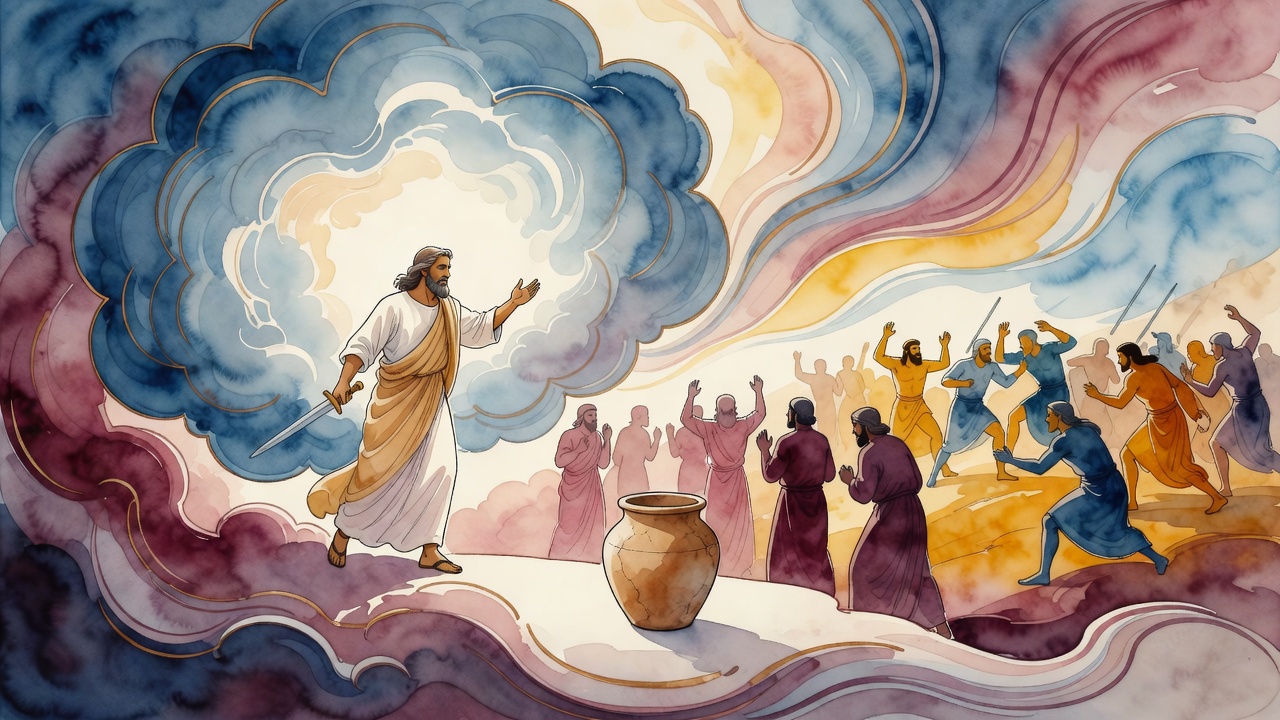
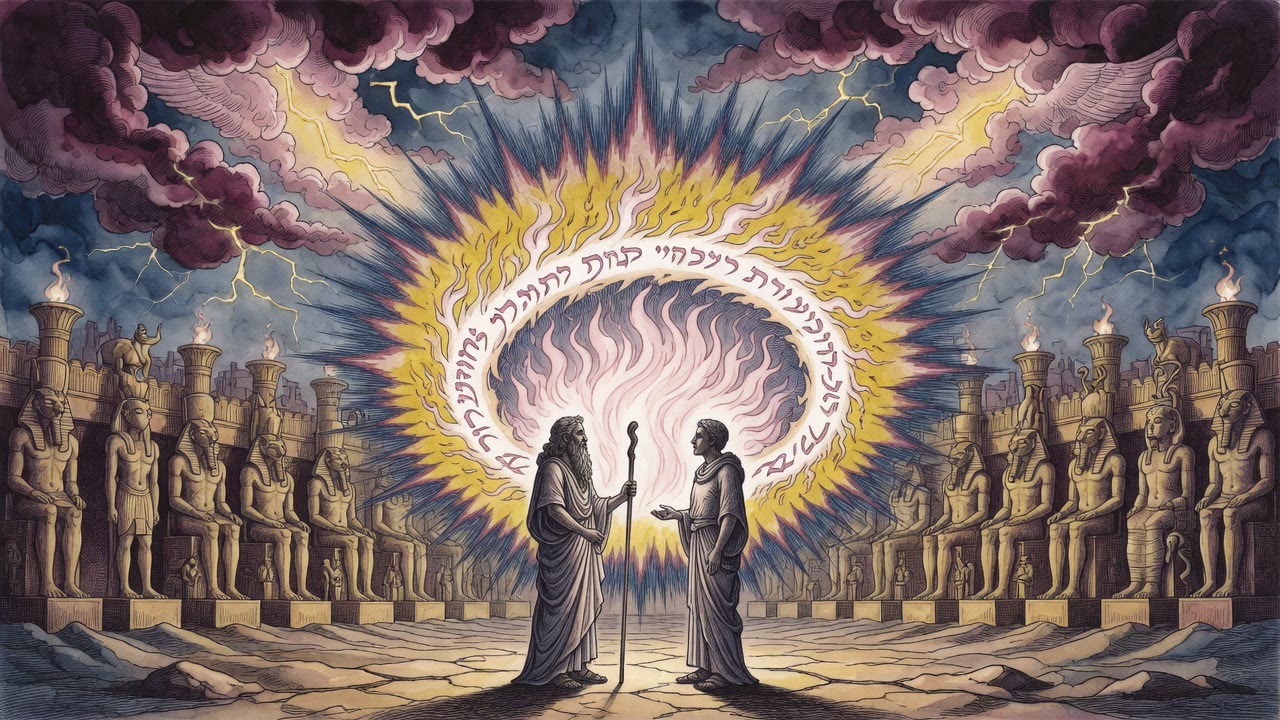
Moses turned to Joshua son of Nun. Joshua was walking where everybody wanted to walk, under the clouds of glory, inside the canopy, with the heat and the flies and the raiders all on the outside of it.

"Why are you guarding your head?" Moses said to him. "Is it not for the crown? Go out from under the cloud and fight Amalek. You have nothing to fear."

The crown was the whole of the argument. The command of Israel was coming to this man, the river crossing and the war for the land and every camp after that, and nobody has ever been handed an army from inside a shelter. So Joshua picked his men and stepped out of the cloud into the glare, and Moses climbed the hill above the fighting with the staff of God in his fist, and when his hands sank Amalek pushed forward, and when Aaron and Hur held his arms up Israel pushed back, and it went on like that until the sun went down.

Afterward God told Moses to write it in a book as a memorial, and to say it out loud into Joshua's ears. The younger man stood in the dust with the sword still in his hand and listened to the sentence he was going to inherit.


← All myths
From the tradition

Sources

4 sources

The texts behind this telling. Some cards carry a translation of the source; others are our own retelling of it, and each card says which. Every card links out to the original.

Mekhilta Tractate Amalek 1:19Mekhilta DeRabbi Yishmael

Retold in our words. Read the original at the link below.Mechilta, translated by Rabbi Shraga Silverstein · CC-BY

Rabbi Eliezer Hamodai offered a different interpretation of why Moses told Joshua to "go out" and fight Amalek. And his version cuts deeper. According to Rabbi Eliezer, Moses challenged Joshua with a pointed question: "Why are you guarding your head? Is it not for the crown?"

The meaning, as the Mekhilta explains, was this: Joshua had been sheltering under the protective clouds of glory, staying safe within the divine canopy. Moses confronted him directly. You are destined for leadership. You are destined to wear the crown, to succeed me as the leader of Israel, to conquer the Promised Land, to command armies. A future king cannot hide under a cloud when his people are under attack.

"You have nothing to fear," Moses assured him. Then the command: "Go out from under the cloud and do battle with Amalek." The reassurance was not empty. Moses himself would stand on the hilltop with the staff of God raised high (Exodus 17:9), channeling divine power into the battlefield. Joshua would not fight alone. But he had to fight.

Rabbi Eliezer Hamodai's reading transforms this moment from a simple military order into a test of character. Moses was not just deploying a general. He was forging a successor. The crown that awaited Joshua, leadership over all Israel, could not be earned from inside a shelter. It had to be earned in the open, facing the enemy, with nothing between Joshua and Amalek but his sword and his faith. This was Joshua's initiation. The man who would one day lead Israel across the Jordan and into Canaan had to first prove he was willing to step out of safety and into danger for the sake of his people.

Full source
Mekhilta Tractate Shirah 7:2Mekhilta DeRabbi Yishmael

Retold in our words. Read the original at the link below.Mechilta, translated by Rabbi Shraga Silverstein · CC-BY

The Song at the Sea quotes the enemy's own boast, "The foe said, I will pursue, I will overtake, I will divide the spoil" (Exodus 15:9). The Mekhilta asks a sharp question: how could Israel, fleeing toward the sea, possibly have known what Pharaoh was thinking back in Egypt? The answer given is that the Holy Spirit rested upon them, and through it they perceived the calculations being made in the Egyptian court. The midrash then reconstructs the internal debate that drove the pursuit.

Pharaoh first reasoned aloud that it was beneath Egyptian dignity to chase after a band of departing slaves. Yet the silver and gold the Israelites had carried out, the wealth that the people of Egypt had handed them on the night of the Exodus, made the pursuit worthwhile in his eyes. But when many of the Egyptians realized that only a small portion of the kingdom's treasure had actually left with Israel, they grew reluctant, asking what they stood to gain by the chase. Seeing their hesitation, Pharaoh changed his offer. He promised that all would share equally in the plunder, which is the meaning of the verse's words, "I shall divide the spoil." More than that, he vowed to throw open the royal treasure houses, the stores of silver, gold, precious stones, and jewels, and to distribute them among his men. The midrash thus exposes the greed and bribery underneath the boast, painting Pharaoh as a ruler who must buy the loyalty of his own people to lead them to their destruction at the sea.

Full source
Mekhilta Tractate Vayassa 6:15Mekhilta DeRabbi Yishmael

Retold in our words. Read the original at the link below.Mechilta, translated by Rabbi Shraga Silverstein · CC-BY

When God commanded that a jar of manna be preserved, the instruction was specific (Exodus 16:33): "Put therein a full omer of manna and place it before the Lord as a keeping for your generations." But what did "for your generations" actually mean? Rabbi Yehoshua had a surprising answer: it meant "for the fathers", that is, for the people of that specific generation who witnessed the miracle firsthand.

This interpretation cuts against the obvious reading. One would expect "for your generations" to mean for future generations, a memorial preserved so that children and grandchildren could see what their ancestors ate in the desert. And, other rabbis read it exactly that way. Rabbi Eliezer taught that the preserved jar of manna was kept for the days of the prophet Jeremiah, who centuries later took it out to show the people of his generation as proof that God provides for those who study Torah.

Rabbi Yehoshua's reading carries its own logic. The generation that left Egypt needed the memorial too. They needed a physical reminder of the miracle they were living through, because even people who experience wonders firsthand can forget them. The jar of manna placed before the Lord in the Tabernacle was not just a time capsule for the future. It was a daily testimony for the present, a visible, tangible proof sitting in the most sacred space in the Israelite camp.

The debate between Rabbi Yehoshua and Rabbi Eliezer reflects a deeper question about the nature of memory. Is sacred memory primarily for those who come after, or for those who lived it? The Mekhilta preserves both answers, suggesting that the jar of manna served both purposes, anchoring the past for those who experienced it and transmitting it forward to those who never would.

Full source
Mekhilta Tractate Vayassa 1:4Mekhilta DeRabbi Yishmael

Retold in our words. Read the original at the link below.Mechilta, translated by Rabbi Shraga Silverstein · CC-BY

R. Eliezer says: They journeyed by the word, for thus do we find in two or three places. What, then, is the intent of "And Moses made Israel journey?" He did so against their will, with the rod. For when they saw the bodies of the men who had enslaved them with (back-) breaking labor, all lifeless corpses at the edge of the sea, they said: Apparently, not a man remains in Egypt (Numbers 14:4) "Let us make a leader and return to Egypt" and make an idolatry for ourselves to rule over us. And let us return to Egypt. One might think that they merely spoke thus, but did not do. It is, therefore, written (Nechemiah 9:17) "And they refused to hearken, and they did not remember Your wonders that You wrought for them. And they stiffened their necks, and they appointed a leader to return to their work. But You are the G–d of forgiveness, gracious and merciful, withholding wrath and abundant in lovingkindness, and You did not forsake them." And it is written (Ibid. 18) "And even when they made a golden calf, etc."

Full source