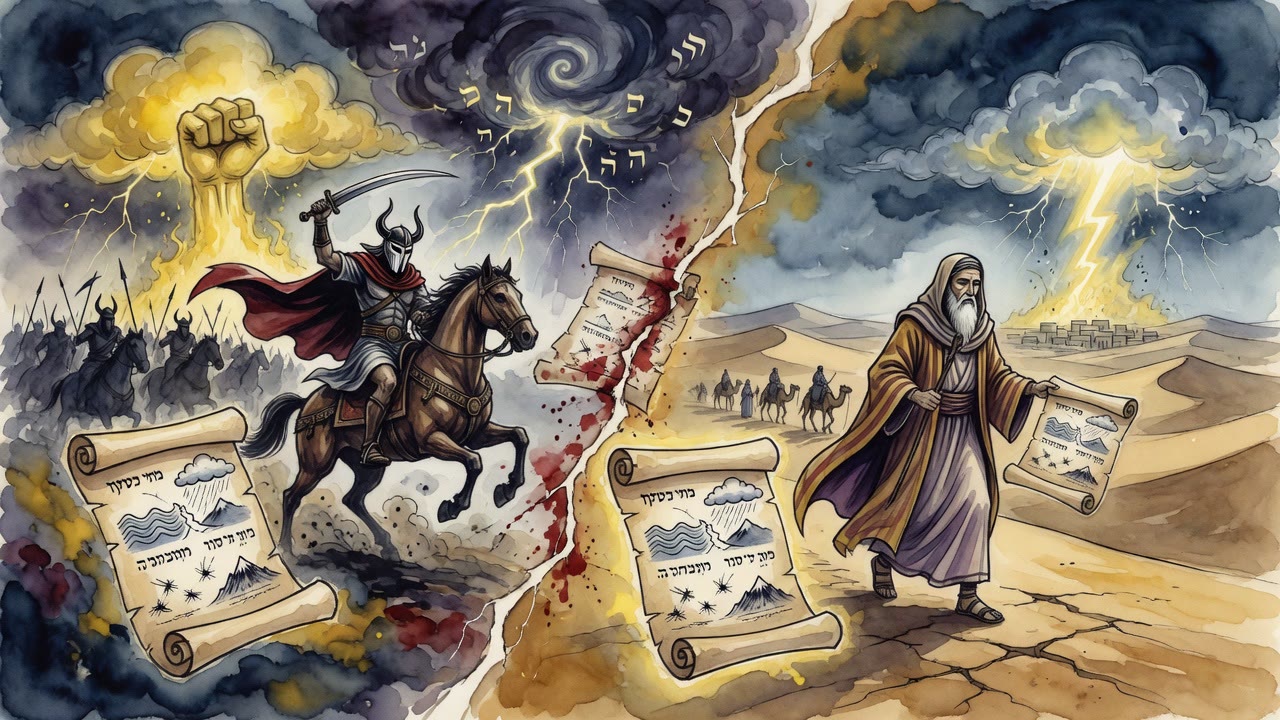
Amalek Called the Tribes Out by Name to Kill
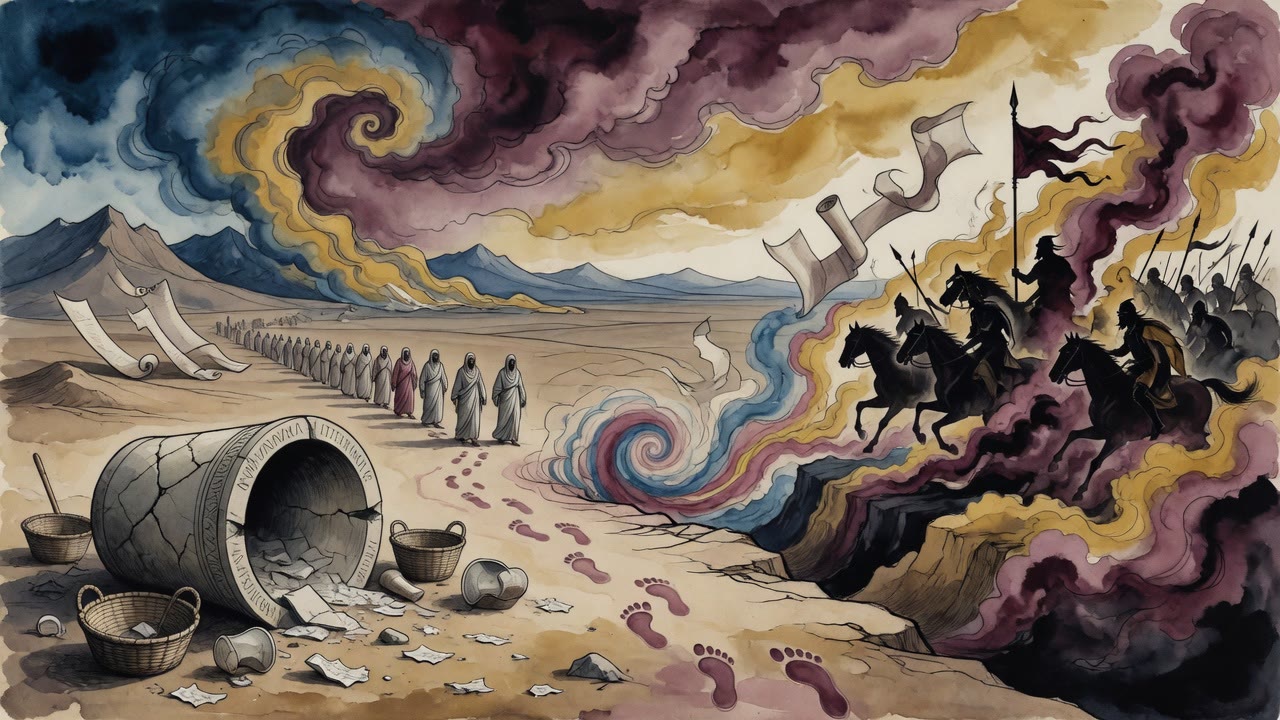
Every Hebrew had marked his name on the bricks of forced labor. Amalek got hold of those lists. Outside the camp he called out: Reuben. Simeon. Levi.
Table of Contents
 Click for full size
Hatred That Waited for the Debt
Amalek, son of Eliphaz and grandson of Esau, did not strike Israel in Egypt's weak years. He knew the prophecy to Abraham that the seed would serve in a strange land. In his twisted ledger, if he destroyed Jacob's line before that bondage was paid, the same yoke might fall on Esau's house. So he waited. Locust-swift when he finally moved, he came to suck blood, not to settle a border quarrel. Esau's old command to make war sat cold in the family until the Exodus finished the debt Amalek refused to share.
The name itself spoke speed and swarm. This was not random raiding. It was a multi-generation plan that treated divine timing as a weapon. Gratitude never entered the calculation. Jacob's sons had once spared Amalek when he lay in their power after the clash with Esau's line. He answered mercy with an expedition aimed at the rear of a tired people. A life saved became a life that hunted saviors.
God also read Israel's thin gratitude after freedom and sent an enemy as ungrateful as the people had become. Measure for measure cut both ways. Amalek owed his life to Jacob's house and forgot. Israel owed praise for manna and water and grew dull. The attack taught memory the hard way, with blades and with shame.
Names Stolen from Brick
In Egypt every Hebrew had marked a name on the bricks of forced labor. Those lists slept in archives. Amalek got them. Outside the camp he called like a kinsman. Reuben. Simeon. Levi. Come out, brother, and do business. The voice wore family. The business was death. Men who answered a familiar name walked into a trap set by a bloodline that remembered only the grudge and none of the mercy.
Kinship language became bait. The yetzer hara (the evil inclination inside every person) thrives on false belonging. Amalek did not need to break the camp's walls first. He needed only to peel individuals away with a roster stolen from the years of mud and quotas. A people counted by Pharaoh for bricks was now counted by Amalek for slaughter. The ink of oppression became the ink of ambush.
That trick sits beside every later warning about enemies who know your name and smile. A name on a brick was once proof of slavery. In Amalek's mouth it became proof he had done his research.
Magic Hours and Joshua's Sword
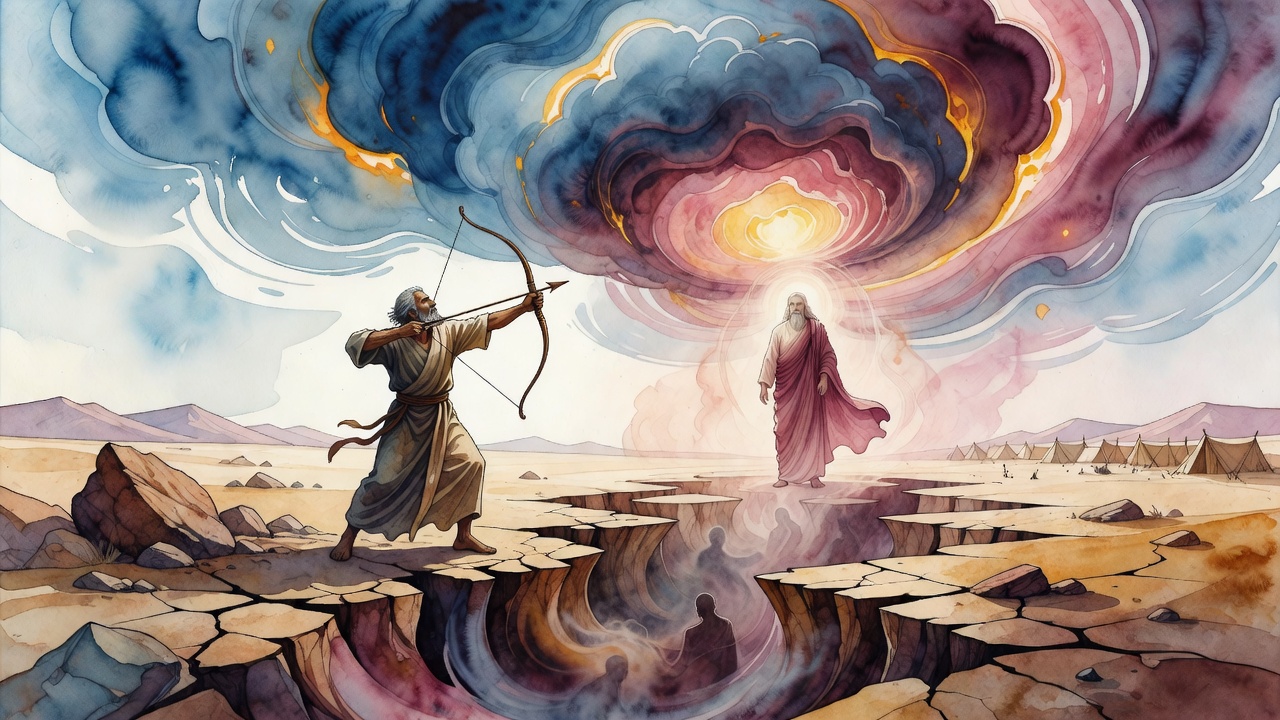
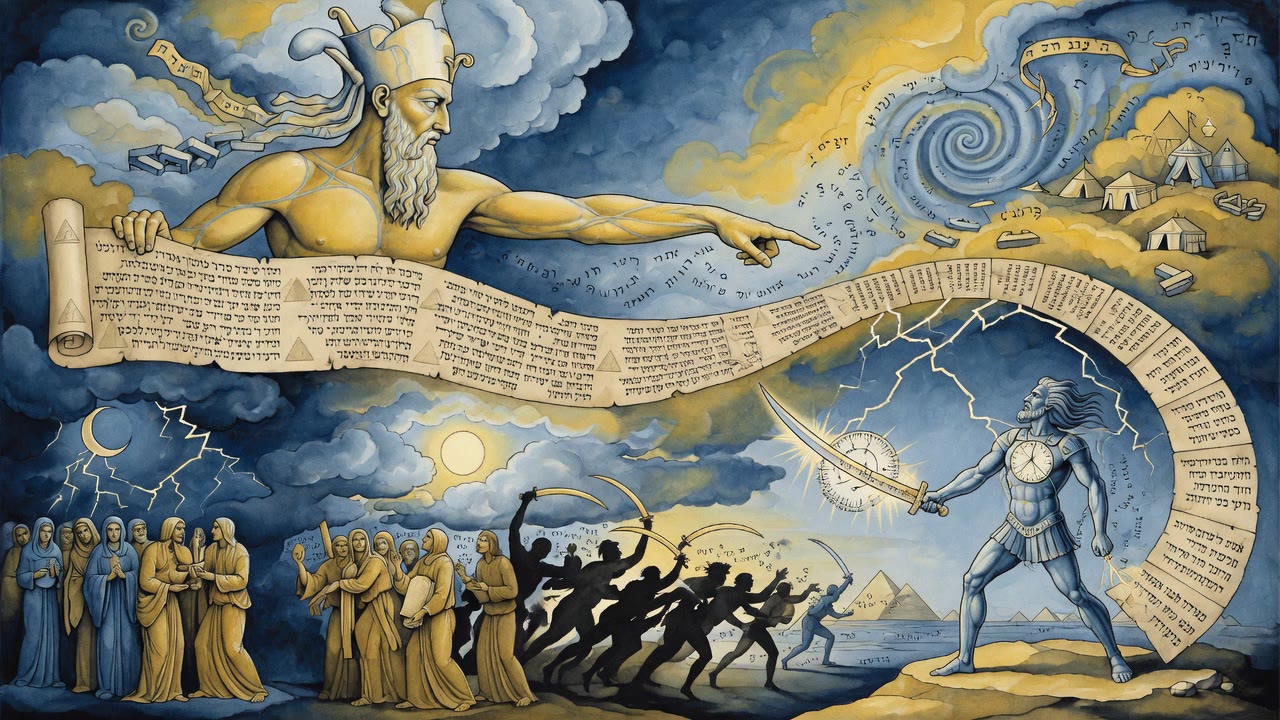
Amalek fought as a magician of hours. He knew which soul was fated for night death and which for day, and he timed the blade to the decree. Night took the night-doomed. Day took the day-doomed. Precision made the war feel like fate rather than choice. Joshua met craft with craft. He chose the hour of counterstrike and turned the enemy's clock against him. The war was steel and knowledge of seasons of life.
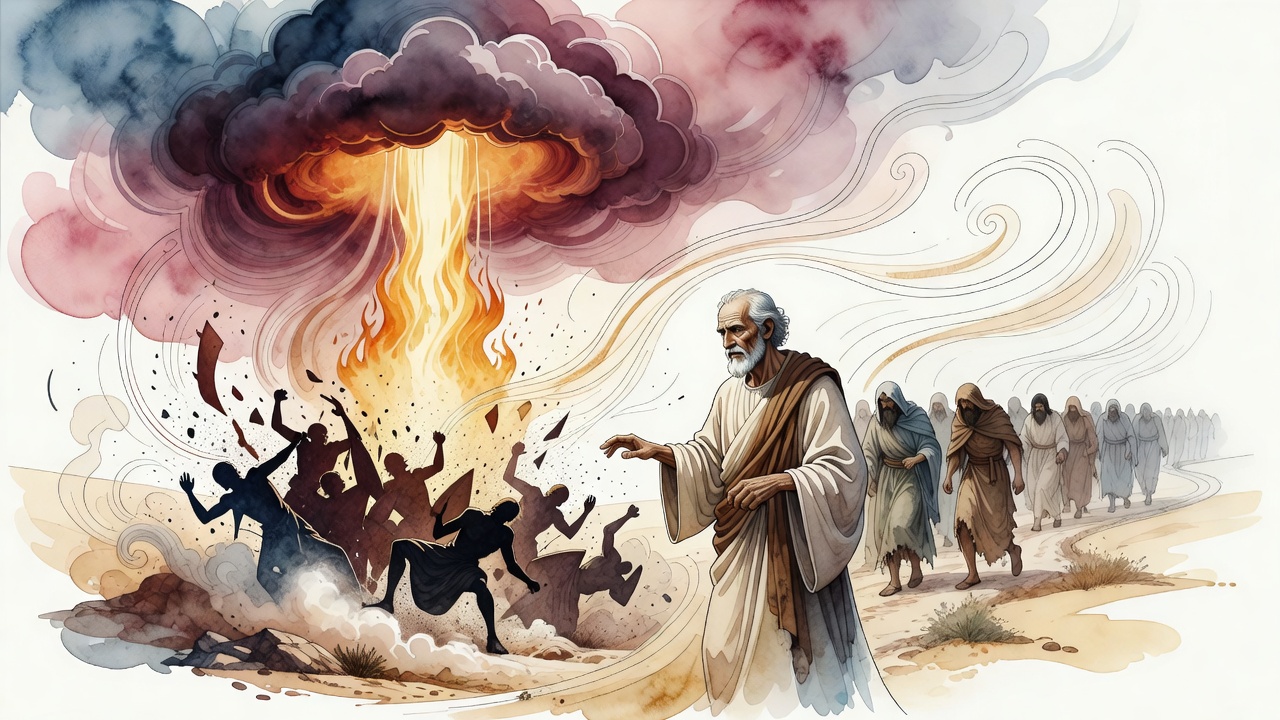
Joshua destroyed Amalek, his sons, and the armies under them, those Amalek led and those his sons led. Victory did not copy mutilation. Where Amalek shamed corpses, Joshua used a clean sword and kept the line between justice and rage. How a people wins matters as much as whether it wins. The camp that later writes Amalek into memory writes also a commander who refused to become the thing he killed.
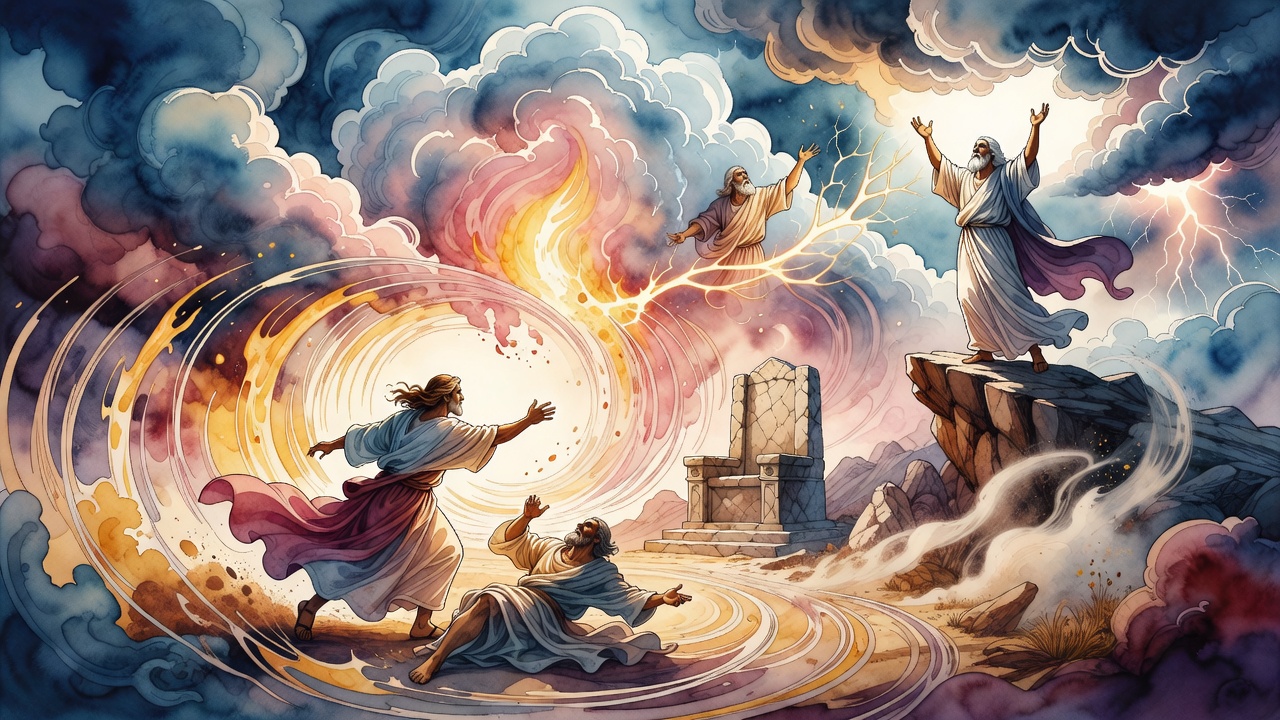
Moses on the hill and Joshua in the plain answered together, body and prayer, until the sun's path and the army's path aligned. Hands raised and hands armed shared one battle.
My Miracle and Eternal War
The altar name after the battle spoke of a miracle that was not Israel's alone. Heaven's own honor rode on the defense of a people Amalek tried to erase. Midrash hears in the wording a wonder worked for God as well as for Israel, because an attack on the covenant people is an attack on the Name bound to them. The fight did not end in one valley. Tradition hears in it a war across ages, a command to remember and not forget, because a hatred that waited through Egypt will wait through other empires if no one names it.
Brick lists, false brotherhood, night strikes, and timed replies form one story of an enemy who studied prophecy only to dodge its cost and steal its victims. Israel learned that some foes do not want land. They want the end of a name. Against that hunger, even a clean sword must keep its edge, and memory must stay sharper than the trick of a voice calling from the dark with a stolen roster.
The Rear Guard and the Long Debt
Amalek struck the rear, the tired, the slow. Cowardice dressed as strategy. The same hand that held Egyptian name-lists chose the weakest bodies to open the war. What began as Esau's order and Amalek's patience became a wound the people would dress every year in the command to blot out the memory of Amalek while never forgetting what Amalek is. Forgetting would be another form of the trap.
Locust speed, blood thirst, and a ledger that warped Abraham's prophecy into an excuse for erasure still sit under the short battlefield scenes. Mercy once shown to Amalek was not returned. The camp that survives such a foe learns to test every friendly call against the archive of who actually kept them alive in Egypt and in the sand. Joshua's clean steel and Moses' raised hands remain the double answer. Magic hours can be met. Stolen names can be refused. The rear can be guarded. The debt Amalek tried to dodge became, instead, a permanent place in Israel's calendar of vigilance.
← All myths